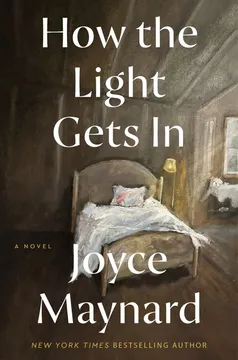


Plot Summary
Prologue
Years before the main story, four-year-old Toby is found face down in the family pond, still wearing a homemade dinosaur tail. His mother, Eleanor, races after the doctors as they carry him into the hospital, while his sisters, Alison and Ursula, and his father, Cam, wait for news.
Toby survives, but his brain is permanently injured. A quarter century later, Eleanor remembers not the medical verdict but Cam calmly trying to buy candy while their son lies near death. In the memory, the lost snack becomes a measure of the gulf between her panic and Cam’s composure, and the beginning of a blame she cannot release.
The opening makes the accident both a medical emergency and the family’s enduring origin story. Eleanor’s memory is selective: the vending machine matters because it gives her anger a concrete object, easier to hold than the helplessness of waiting for Toby’s fate. Cam’s calm may be an effort to manage what can still be managed, but Eleanor reads it as indifference and then as culpability. The scene establishes the novel’s central problem of interpretation. The family members live through one disaster, yet carry different accounts of what it meant and who failed whom.
Ashes in the Burl Bowl
In 2010, four days after Cam’s death, Eleanor drives with Toby to a no-frills crematorium behind a Jiffy Lube. Her other children stay away: Ursula has young children, Al is managing his own struggles, and Cam’s son Elijah is touring with his band. Toby brings a wooden bowl his father made to carry the ashes, and tells the attendant about Cam’s softball and woodworking.
On the drive home, Eleanor remembers why she had returned to the farm a year earlier. At Al’s wedding, Cam had revealed that pancreatic cancer was likely to kill him. Although they had been separated for decades, Eleanor offered to care for him, partly because Toby could not manage his father’s medical needs alone.
The cremation begins with an absence of ceremony, but Toby supplies the human scale the setting lacks by making sure a stranger knows his father was loved. Eleanor’s return to the farm is not a sudden restoration of marriage. It is a choice rooted in shared history and present responsibility, especially her commitment to Toby. The wooden bowl carries Cam’s craft into his death and gives the family a vessel for memory. Eleanor’s feelings remain divided: she can love Cam’s history and resent his betrayals at once. That contradiction is not a puzzle to solve but the emotional ground on which the story proceeds.
The Empty Hammock
Toby’s near-drowning changes the family long before Cam leaves Eleanor. On the day of the accident, Cam falls asleep in a hammock while four-year-old Toby wanders to the pond; Alison and Ursula find their brother and help pull him out. Eleanor performs CPR and calls for an ambulance. Toby survives, but his speech, memory, coordination, and former musical gifts are altered.
Cam devotes himself to therapy and rehabilitation, while Eleanor retreats into work and anger. When Cam begins a relationship with Coco, the children’s former teenage babysitter, he eventually asks for a divorce. Eleanor leaves the farm and signs it over to him. The children first move with her to Brookline, then return to their father, one by one.
The hammock becomes a shorthand for culpability, but the marriage was already fraying under exhaustion, money worries, and the demands of parenting. Eleanor’s fixed image of Cam asleep gives her grief a verdict, while Cam’s later devotion to Toby cannot undo the moment she believes he failed. The children respond in distinct ways: Al withdraws, Ursula tries to restore the family, and Toby follows the parent who can make his world legible. Their movement back to the farm is not simple rejection of Eleanor, but it feels that way to her. The novel shows how children can inherit the emotional meaning of a divorce without possessing its full history.
Care Before the End
After moving back, Eleanor learns Cam’s routines and helps him through the final months of cancer. They walk while he can, play cards with Toby, and sort through his woodworking tools and bowls. Cam gives keepsakes to his children and teaches Eleanor how to operate his truck. As pain worsens, she reads aloud and administers his hospice medication, sitting beside him through nights when breathing becomes difficult.
They revisit an old private joke about trying to save their marriage and catch fish, and Cam admits he had failed at both. Near the end, he thanks Eleanor and apologizes for hurting her. When he dies, she lies beside his body before dawn. Their intimacy is no longer romantic, but some of their old anger has burned away.
Care gives Eleanor a relationship to Cam that neither marriage nor divorce could provide. The work is bodily and practical, not a sentimental reunion: medication, bathing, sleeplessness, and the slow disposal of a life’s possessions. Their old joke lets them name a shared failure without pretending it can be repaired. Cam’s apology matters because Eleanor can finally acknowledge her own part in the rupture, particularly her inability to forgive. The scene suggests that reconciliation need not mean returning to the former arrangement. It can instead mean seeing the other person more fully, while accepting that love, injury, and responsibility have occupied the same history.
Three Children, Three Exits
After the divorce, Al’s private certainty that he is a boy becomes increasingly impossible to hide. His talent for programming gives him a refuge, and he builds the TB-10, an electronic instrument meant to let Toby make music again.
Toby refuses to use it, forcing Al to recognize that love cannot restore the brother he remembers by insisting he return. Al later leaves home, transitions, joins Microsoft, and builds a life with Teresa. Ursula takes the opposite route from separation: she had cooked for Cam after Eleanor left and came to see keeping a family intact as her duty.
As an adult, she blames Eleanor for the divorce and later cuts contact after Eleanor reveals Cam’s affair at a painful moment. Toby, meanwhile, builds a steady life with goats and cheese.
Each sibling makes a different answer to loss. Al seeks control through code and self-definition, but his invention for Toby exposes a limit: the person he loves cannot be repaired into a former version. Ursula turns family stability into a moral obligation, partly because she was a child when it collapsed and believed effort should have prevented it. Toby’s routines offer a third response, one grounded in animals, work, and the present. These differences explain why the siblings do not share a single account of their childhood. Their divergent lives are not merely personality contrasts; they are adaptations to the same rupture.
A Baby Named Spyder
After Cam’s death, Eleanor befriends Raine, the pregnant granddaughter of their former neighbors. When Raine goes into labor at night, Eleanor calls for help while Toby, experienced with goat births, supports her through the delivery.
Raine names her son Spyder, and Toby holds him first, immediately treating him as a little friend. Raine later asks Toby to care for Spyder during her nursing-home shifts. He refuses her offer of pay and rocks the restless baby through the night, humming and inventing stories.
When Raine plans to leave town with Herb, an elderly resident she has begun dating, Toby protests, but she takes Spyder away. His grief makes him stop humming. Eleanor helps him find a place at the volunteer fire station, where he serves children and becomes part of a community again.
Toby’s care is not an imitation of ordinary adulthood; it is a genuine form of competence that others often overlook. His knowledge of animal birth transfers naturally to Raine’s emergency, and his attention helps settle a baby who seems chronically unsettled. The later separation hurts because Toby has formed a real attachment, not because he misunderstands the arrangement. His response to loss is visible in the silence that replaces his humming. Eleanor’s effort to connect him with the fire station acknowledges that care must be reciprocal: Toby can give affection, but he also needs a place where other people recognize his value.
A New Granddaughter
Al and Teresa’s money and professional success cannot secure the thing they want most: a child. Adoption agencies reject them, including one that treats Al’s transition as a reason to place a baby elsewhere. They turn to IVF, and Teresa gives birth to Flora.
At a family gathering held more than a year after Cam’s death, the siblings and Elijah scatter some of Cam’s ashes at the waterfall. Coco arrives late and admits she once wanted to belong to Eleanor’s lively family. Eleanor embraces her, recognizing a lost young woman rather than only a rival.
The gathering also marks a change in Eleanor’s understanding of the family: it includes the children of later relationships, old hurts, and people who may not share blood. Toby welcomes Flora with immediate tenderness.
The family’s expansion does not erase its earlier fractures, but it changes the boundaries of belonging. Al’s rejection by adoption agencies exposes how institutions can define a family through narrow assumptions, while IVF gives him and Teresa a path they can shape themselves. Coco’s apology does not absolve her history with Cam, yet Eleanor’s embrace releases her from the need to keep a fixed role for Coco as villain. The ashes at the waterfall turn a place associated with the family’s happiest and most painful moments into shared ground. The scene’s generosity is practical: it allows people with incompatible histories to stand together without pretending those histories match.
The Explorer in Beverly Hills
While consulting on a Hollywood adaptation of her children’s books, Eleanor meets Guy Macdowell, a celebrated Antarctic explorer who campaigns against climate change. They leave a studio party together and begin a relationship built around brief encounters in hotels between his speaking trips and her responsibilities at the farm.
Guy buys her perfume, and Eleanor discovers that desire and pleasure have not disappeared with age. She keeps him secret from her children, valuing a private life that belongs only to her. She eventually asks him to visit the farm and meet Toby.
Guy comes for one afternoon, helps watch a goat give birth, then drives away to meet donors. Eleanor sees that he can enter her world without truly sharing its emotional center, but the relationship continues for years because their time together makes her feel newly alive.
Guy offers Eleanor a powerful but partial escape from the identity she has made almost entirely maternal. Their intimacy is real, yet its structure protects him from the obligations of daily life and leaves Eleanor adapting to his itinerant schedule. The farm visit tests whether their separate worlds can touch: he is moved by the goat’s birth, but his departure confirms that his deepest allegiance remains his expedition. Eleanor’s secrecy preserves pleasure from judgment, though it also keeps the relationship from becoming fully integrated into her life. The novel treats desire in later adulthood as a return of agency, while asking whether an experience can be precious and insufficient at the same time.
The Accusation at the Firehouse
Raine returns briefly, then leaves with Herb and young Spyder, whose absence remains a wound for Toby. Years later, Coco arrives with her boyfriend Jesse and threatens to accuse Toby of abusing Jesse’s son Patrick unless Eleanor pays five thousand dollars. When the family refuses, Jesse and Coco report him.
An investigator questions Toby without a lawyer and interprets his affection for children and knowledge of goat breeding as signs of danger. The fire department suspends him, and the allegation spreads through local newspapers and radio.
At the farmers’ market, customers avoid Toby’s cheese, though one woman publicly stands by him. Al hires an attorney and a private investigator, who uncovers Jesse’s history of similar claims and obtains a confession from a former partner. Authorities suspend the investigation for lack of reliable evidence.
The accusation turns Toby’s most visible virtue, his affection for children, into material that institutions can misread. His openness, normally a bridge to others, leaves him vulnerable when questioned by someone who has no framework for understanding him. The investigation does not merely threaten legal consequences; it removes the fire station and market routines that gave him a public identity. One customer’s loyalty offers a small counterweight, but vindication cannot instantly restore trust or belonging. The episode also reveals the difference between being innocent and being protected. Toby’s family must translate his character into legal language because the system is prepared to classify him before it learns how he lives.
The Light Goes Out
The 2016 election deepens Eleanor’s fear for people like Toby, while Jake, Ursula’s husband, becomes increasingly devoted to Donald Trump and hostile to immigrants and disabled people. The false case against Toby also damages Eleanor’s relationship with Guy.
When she finally tells him how frightened and exhausted she is, he offers practical advice but little emotional presence. In Los Angeles, she cannot resume their familiar physical intimacy and asks to talk instead. Guy resents the change, dismisses the ordinary family life she needs him to understand, and leaves for an early flight.
He gives her the wrong perfume. Eleanor recognizes that their affair had awakened her desire, but could not offer the mutual attention she wanted. She turns back toward her own writing, beginning a graphic novel whose disabled hero protects people dismissed by the powerful.
The election’s public cruelty intensifies Eleanor’s private recognition that affection without attention has limits. Guy’s distance once seemed liberating because it freed her from domestic demands, but the crisis reveals the cost of that freedom: he has little interest in the people who occupy her heart. The wrong perfume condenses a larger failure of recognition. Eleanor does not deny that the affair mattered; she refuses to let its intensity excuse its imbalance. Her graphic novel redirects the energy of disappointment into invention, giving a marginalized hero agency without making him conventionally powerful. Art becomes not an escape from family but a way to imagine moral action beyond her ability to control events.
Gold Through the Cracks
Raine eventually returns to Akersville with Spyder and Billy, an elderly husband who needs care. Spyder is withdrawn, spends much of his time gaming, and has little confidence at school. Toby invites him to the barn, teaches him to milk goats, and gives him a bike and a role at the cheese stand.
When Spyder’s fatherless world feels empty, Toby becomes the steady friend who expects him to return. Meanwhile, Toby is drawn to June Verlander, a deaf potter who repairs deliberately broken bowls with gold lacquer.
She gives him a blue bowl, and their connection grows through quiet attention rather than easy conversation. June later moves in with Toby. Raine pursues sobriety and dreams of a cleaning business, while Toby and Spyder rebuild a practical, affectionate partnership around goats and work.
The return of Spyder allows the novel to convert an earlier loss into a relationship that can be renewed, though not returned to its beginning. Toby gives the boy skills, responsibility, and a place to belong rather than trying to make him socially conventional. June’s kintsugi bowls echo this ethic: damage remains visible, but it need not define the whole object. Her silence does not make her unreachable; Toby’s patient attention creates a language between them. Raine’s hopes for sobriety and work show that repair is not exclusive to the most sympathetic characters. The section links care to sustained practice, the repeated acts that make a person feel expected and seen.
A Donor No One Knows
Toby develops acute myeloid leukemia, and doctors say a bone marrow transplant is his only treatment. His siblings and Eleanor are not suitable donors, so a registry search produces a less-than-ideal match.
Chemotherapy leaves Toby vulnerable to infection, and he spends months isolated at Dana-Farber, separated from his family by glass. He misses his bicycle, goats, firehouse, and the people who make his ordinary days. The transplant brings remission, and he returns to the farm, where Spyder has kept detailed records of every goat.
During the pandemic, Toby’s weakened immune system makes isolation necessary again. When the cancer later returns, doctors have no better donor option. The family faces the possibility that the first transplant has failed and that time is running out.
Illness strips away the routines that have made Toby’s life meaningful, while isolation makes ordinary affection physically dangerous. The glass between mother and son recalls the earlier hospital crisis, but now Eleanor understands more clearly what she cannot repair through vigilance. Toby’s catalog of what he misses is not a complaint about fairness; it is a precise account of a life he values. The first remission offers hope without security, and the relapse exposes the limits of medical rescue. Spyder’s goat records preserve a piece of Toby’s world during his absence, turning a practical task into evidence that relationships can continue across separation.
Flora’s Hidden Kinship
When Toby’s leukemia returns, Al and Teresa bring the family together and reveal that Toby was Flora’s sperm donor. They had first tried adoption, then IVF, and chose Toby after careful counseling to ensure he understood and freely agreed.
The secret explains the special resemblance and closeness between uncle and niece, but the family hears it first as a possible way to save Toby: Flora may be a close bone marrow match. Tests confirm that she is.
Although she is only nine, a guardian and hospital ethics committee accept her informed wish to donate after reading her account of Toby as the person she would trust to rescue her. Flora’s cells are collected and infused into Toby. This time the donor is not a stranger in a registry but a child whose love for him is already unmistakable.
The revelation joins two forms of kinship that the novel has kept in conversation: biological relation and chosen family. Toby has already been Flora’s devoted uncle; learning he is her genetic father does not displace Al, whose parenthood is grounded in daily love and responsibility. The same fact that might have become a source of secrecy instead becomes a gift the family can share. Flora’s age makes consent ethically complex, so the story does not treat affection as sufficient by itself; adults assess her understanding and hear her reasons. The transplant converts an intimate bond into material care, while leaving the outcome uncertain until Toby’s body accepts the cells.
The Farm Opens Again
After Toby begins recovering, Ursula’s long COVID leaves her unable to care for herself or her children. She asks Eleanor to take Lulu and Orson, then proposes moving to the farm with them. Eleanor pauses before agreeing, recognizing that she has spent a lifetime making herself available at the expense of her own work and desires.
Ursula, too, has changed: weakened and frightened, she accepts her mother’s care, and the two share a tenderness absent for years. Later, Ursula tells Eleanor she has long loved Kat and wants a life with her.
Jake, now sober and ashamed of his political extremism, apologizes and repairs Eleanor’s gutters. Coco dies in the woods before she and Elijah can reconcile. These developments do not erase old harm, but they alter who can speak honestly and who can ask for help.
The reversal is not that Eleanor finally becomes useful to Ursula, but that she can help without surrendering the self she has built. Her pause recognizes a boundary as a condition for sustainable care, not a refusal of love. Ursula’s illness temporarily loosens the defensive identity she has maintained, making room for a request that is both practical and emotional. Her disclosure about Kat allows Eleanor to respond without moralizing, while Jake’s apology demonstrates that accountability can coexist with continuing damage. Coco’s death forecloses repair with Elijah, reminding the family that some conversations arrive too late. The section makes reconciliation uneven, contingent, and still meaningful.
The Trophy Case Shatters
Spyder’s attempt to join the school Mathalon team ends in humiliation, and he later discovers his bicycle has been stolen. After Raine, drunk and lonely, kisses Toby, Spyder walks in, misreads the scene, and disappears with Jesus, his beloved goat.
He kills the animal and hides in the woods. Days later, he enters the empty junior high during vacation with his grandfather’s pistol and shoots apart the trophy case, including the display for the Mathalon team. Police surround him as he points the gun at his own head.
Toby runs into the hallway, reaches Spyder without touching him, and patiently explains that Raine initiated the kiss and that he remains Spyder’s friend. He reminds the boy of their shared life and future at the farm. Spyder lowers the weapon and gives it to the police.
The climax brings together the book’s most consequential misreadings: Spyder sees betrayal where there was none, while adults have repeatedly mistaken Toby’s openness for incapacity or danger. The shattered trophies make school’s public hierarchy literal, but the deeper crisis is Spyder’s belief that exclusion has left him with no future. Toby does not argue that the boy has done nothing wrong; he acknowledges the hurt, the dead goat, and the consequences while refusing to withdraw affection. His response is neither a speech nor a rescue by force. He offers a relationship sturdy enough to hold shame without turning it into a final identity.
A Life Still Opening
No students are present during the shooting, and Toby’s words give Spyder a way to surrender before the officers intervene. Eleanor watches her family gather outside the school, including Ursula, June, and Raine. The scene changes how she measures Toby’s life.
She once mourned the brilliant, musical child he had been before the pond, and feared that his injury had left only a diminished future. Now she sees a man whose patient affection has kept Spyder alive, helped June trust him, and bound the family across divorces, illness, and grief.
Eleanor does not mistake suffering for a gift or claim that every wound was necessary. She simply recognizes that the life they have made is real, valuable, and not reducible to what the accident took away.
Eleanor’s insight is not that tragedy improves people, a claim that would turn injury into a moral instrument. Rather, she stops treating the counterfactual Toby as the only life worth grieving. The actual Toby has capacities that conventional measures cannot register: sustained attention, loyalty, and an instinct for meeting another person without humiliation. His intervention does not make his disability beneficial; it reveals the ethical force of the person he became. Eleanor’s changing perspective also loosens her need to repair every family member’s pain. She can acknowledge loss without letting it cancel what remains, a shift from control toward witness.
Epilogue
The epilogue follows the family beyond the main story. Toby and June build a life together, while Spyder returns from treatment, earns his GED, and eventually leads the cheese business with Veronica. Flora later receives a kidney from Toby, repaying his earlier bone marrow gift. Ursula marries Kat, and Jake rebuilds a life around coaching and sobriety.
Raine creates the cleaning business she imagined. Eleanor finishes Mineral Man, publishes her most successful book, and begins a relationship with Quince. None of these futures erases grief or guarantees ease. Eleanor’s eventual happiness comes from a life assembled imperfectly, with work she loves, people she cherishes, and room for what cannot be repaired.
The future sketch resists the neatness of a conventional happy ending. Characters continue to encounter illness, disappointment, and difficult choices, but they also gain new forms of competence and connection. Toby’s later kidney donation to Flora completes a reciprocal exchange without reducing either of them to biology. Spyder’s future echoes Toby’s influence as he becomes a dependable adult for his own children. Eleanor’s success and partnership arrive not as compensation for earlier suffering but as parts of a life she has finally allowed herself to inhabit. The epilogue’s optimism is therefore conditional: goodness does not cancel damage, but it can grow alongside it when people keep showing up.
Analysis
How the Light Gets In follows Eleanor as she learns that love cannot be measured by how successfully a parent prevents loss. Her early life as an orphan helps explain why she invests so much of herself in making a dependable family. When Toby is injured, that investment turns into vigilance and blame. She tries to protect her children from pain, then takes their sorrow as evidence that she has failed. The novel’s family members reveal different consequences of this impossible task: Ursula tries to keep the family intact at any cost, Al builds an identity and career beyond others’ expectations, and Toby creates a meaningful life through care that conventional measures underestimate.
The book’s moral center is not that suffering makes people better. Toby’s injury, Eleanor’s estrangement from Ursula, Spyder’s neglect, and the family’s illnesses are losses, not gifts disguised as lessons. Rather, the narrative asks what people do after loss has already altered the available choices. Eleanor’s growth comes from relinquishing control without relinquishing love. She learns to keep her own work and desires in view, while accepting that adult children may reject her account of the past and that reconciliation cannot be demanded as a reward for good intentions.
The story also tests how society assigns value. Institutions repeatedly misread Al’s gender, Toby’s openness, and Spyder’s intelligence. The school’s trophies, the adoption agencies, the investigator’s report, and the political rhetoric surrounding disability all rely on narrow judgments of normality and merit. Against these systems, the novel places acts of attention: Toby remembering a child’s name, June repairing a bowl, Spyder learning to sell cheese, and Eleanor making a story about a hero who protects the overlooked.
Its hope is deliberately modest. A family does not return to its former shape, and not every relationship is repaired. Yet care can be renewed, identities can change, and a life can become good without becoming perfect. The cracks remain. What enters through them is not a guarantee of happiness, but the possibility of seeing one another more truthfully.
Review Summary
How the Light Gets In receives an overall rating of 4.19/5, though reviews are polarized. Many readers praised the emotional depth, memorable characters—especially Toby—and Maynard's authentic portrayal of family complexity across a 15-year span. However, recurring criticisms include excessive repetition of events from the prequel, Count the Ways, and heavy-handed political commentary around Trump, COVID, and other social issues, which many readers felt disrupted the story. Most agree the book is best appreciated after reading the prequel.
People Also Read





Characters
Eleanor
The devoted, searching motherA writer and illustrator, Eleanor has spent much of her life defining herself through the people she cares for. She is observant, imaginative, and capable of fierce devotion, but her need to protect her family can become anxiety, resentment, and self-erasure. She carries a painful history of childhood loss, which helps explain her determination to give her children the stable home she lacked. As a narrator of her own life, she is thoughtful but not omniscient; she gradually revises judgments she once treated as settled facts. Her creative work, friendships, sexuality, and need for solitude are not side interests. They are parts of a self she must learn to value alongside motherhood.
Toby
The tender-hearted goat farmerEleanor and Cam’s youngest child, Toby lives with a lasting brain injury from an early childhood accident. He speaks and moves differently from most people, and needs help with complex paperwork and some daily decisions, but his attention, memory for people, practical animal knowledge, humor, and capacity for love are exceptional. He builds a life around goats, cheese-making, rocks, music, bowling, and service at the fire station. Toby does not define himself by what he has lost, though he understands that others often do. His openness can make him vulnerable, yet it also allows him to form relationships without the guardedness that shapes much of his family.
Cam
The gifted, easygoing fatherEleanor’s former husband and father of Al, Ursula, and Toby, Cam is a red-haired woodworker whose playful nature makes him beloved by children and neighbors. He is generous with his craft and skilled at creating a warm, imaginative home. His relaxed temperament also has a cost: he can be inattentive to practical demands and fail to see how deeply Eleanor’s anger is building. His relationships with his children are grounded in shared rituals, projects, and time outdoors. Cam’s character resists a simple verdict. He can be loving and careless, charming and disappointing, and the family’s different memories of him reveal how selectively people experience even those they love.
Al
The inventive, self-defining sonEleanor and Cam’s eldest child, Al knows from childhood that he is a boy, despite being assigned female at birth. He is private, analytical, and deeply gifted with computers, often using technical work as a refuge from a world that misreads him. His invention of the TB-10 is an attempt to help Toby recover a lost musical ability, though he learns that support cannot mean demanding that Toby become someone else. Al’s adult life brings professional success and a loving marriage to Teresa, while his wish to become a father exposes him to social prejudice and disappointment. He is loyal to his family, but tends to express care through action more easily than disclosure.
Ursula
The family’s vigilant keeperEleanor and Cam’s middle child, Ursula is earnest, organized, and intensely committed to keeping people together. As a girl, she tries to repair the family after Toby’s injury and her parents’ separation, taking on emotional work no child can complete. As an adult, she seeks order through marriage, parenting, and career, and is especially sensitive to what she sees as instability. Her anger at Eleanor is tied to grief and a powerful fear of repeating her parents’ story. Ursula’s reserve can look like coldness, but it also protects her from feeling overwhelmed. Her relationships are shaped by a tension between loyalty to family and the need to define a life of her own.
Spyder
The lonely boy seeking a placeRaine’s son, Spyder grows up amid instability, adult relationships, and stretches of neglect. He is quiet, guarded, and easily dismissed by classmates, but Toby sees his intelligence and gives him meaningful work with the goats and cheese business. Spyder’s ambition to become a banker reflects his wish to help people who are judged as poor or unworthy. He struggles to trust that friendship can last, especially when shame and anger take hold. The boy’s relationship with Toby is central to his sense of being recognized. His story examines how a young person can be shaped by both chronic exclusion and the rare adult who consistently expects him to return.
Raine
A young mother improvising survivalRaine is the granddaughter of Eleanor’s former neighbors and the mother of Spyder. She is impulsive, funny, resourceful, and often overwhelmed, making choices that reveal how little support she has had rather than any simple lack of feeling. Her approach to relationships is practical and sometimes risky; she looks for security in older men who can offer housing or money. Raine works hard, cares for vulnerable people, and wants a steadier life for her son, even when addiction and poor judgment interfere. Eleanor initially sees her mainly through her failures as a parent, then begins to recognize the history and labor behind them.
Guy Macdowell
The driven polar explorerGuy is a prominent explorer and climate activist whose life is organized around documenting Antarctic ice loss and persuading people to protect the continent. Charismatic, physically tough, and accustomed to commanding attention, he has spent years away from ordinary domestic life. His intense focus gives his work purpose but limits his capacity to engage with the family concerns that matter to Eleanor. Their relationship awakens her desire and independence, while also testing her willingness to accept emotional distance. Guy is not simply selfish or heroic: he is a man whose devotion to a global cause is sincere and whose personal blind spots remain consequential.
June Verlander
The quiet maker of repaired bowlsJune is a deaf goat farmer and ceramic artist who communicates through sign language and attentive observation. She lives on her family’s farm, where she works with animals and makes kintsugi bowls, deliberately breaking pottery and repairing it with visible gold seams. June is reserved but not emotionally inaccessible. She notices what others overlook and prefers presence to small talk. Her connection with Toby develops through shared patience, practical work, and respect for each other’s distinct ways of experiencing the world. Her artistry and silence make her a counterpart to Eleanor, a person whose inner life is rich even when she does not explain it to everyone.
Flora
Al and Teresa’s beloved daughterFlora is the daughter Al and Teresa have long hoped to raise. Cheerful, perceptive, and unusually close to Toby, she shares his interest in goats, rocks, humming, and simple games. She treats him as a trusted person rather than defining him by his disability. Her bond with Toby is important to both of them, offering him a form of connection he has always wanted and giving her a devoted uncle. Flora is also raised in a family that takes questions of identity and belonging seriously. Her presence links the next generation to the history of the siblings without making her responsible for repairing it.
Elijah
The musician who bridges familiesCam and Coco’s son, Elijah grows up as a younger half brother to Al, Ursula, and Toby, though the siblings treat one another simply as family. A touring musician, he shares a close, uncomplicated bond with Toby and often communicates through music. He is compassionate without being naïve about his mother’s struggles, and he can move between the different branches of the family with unusual ease. His relationship with Toby recalls the care Toby gave him as a child, then returns it in adulthood.
Teresa
Al’s perceptive, steady partnerAl’s wife, Teresa is a successful technology executive whose Mexican American family matters deeply to her. She is warm, practical, and alert to the social judgments that complicate Al’s path to parenthood. Her partnership with Al is built on mutual respect, including her acceptance of his identity and her willingness to make consequential family decisions together. Teresa also meets Toby as a whole person, not as a problem to be managed.
Jake
Ursula’s loyal, troubled husbandUrsula’s longtime partner, Jake is a former coach who values teamwork and sees himself as a devoted family man. His own childhood was shaped by abandonment and a parent’s drinking, which fuels his vow to avoid divorce. Over time, financial disappointment and political resentment distort his sense of loyalty and lead him toward extremism. Jake is capable of kindness and commitment, but those qualities do not excuse the harm caused by his choices. His character explores how a person can be both loving and dangerous to the people closest to him.
Coco
The former babysitter turned stepmotherCoco first enters the family as a teenager who babysits Eleanor and Cam’s children and brings playfulness to the farm. She later becomes an important adult in the children’s lives. Her history with the family is tangled with desire, rivalry, and the roles of wife and mother. Coco’s later struggles with pain, addiction, and unstable relationships complicate the version of her that Eleanor once held onto. She is neither a simple villain nor an uncomplicated victim; her choices harm people, while her vulnerability remains visible.
Jason
Eleanor’s candid, steadfast friendJason is Eleanor’s oldest friend and closest equivalent to a brother. A therapist, he is protective, direct, and willing to challenge her when she puts everyone else first. His life with his partner, Hank, offers Eleanor a picture of companionship with fewer family demands, though he cannot fully understand her maternal obligations. Jason’s affection is expressed through practical invitations, frank advice, and reliable presence.
Quince
The patient firehouse friendQuince is an Akersville police officer and former teammate of Cam’s. He knows Toby through the town’s bowling and firehouse circles and treats him with respect. His steady manner helps make the local community feel personal rather than anonymous. He is also interested in Eleanor, though she is initially reluctant to make room for romance.
Ralph
Toby’s practical farm partnerRalph is a retired dairy farmer who helps Toby manage the goats and cheese operation. He understands that Toby needs meaningful work, not merely supervision, and contributes reliable expertise without taking over. His presence gives the farm a practical support system beyond Eleanor and Cam’s family.
Hans Verlander
June’s reserved fatherHans raises prize-winning goats and understands his daughter’s abilities better than her reserve might suggest. He shares practical knowledge with Toby and helps make room for the connection between Toby and June without forcing either of them to explain it.
Jesse
Raine’s coercive boyfriendJesse is Raine’s boyfriend and the father of Patrick. He is willing to use allegations about a child to pressure Eleanor’s family for money. His role exposes how easily a vulnerable person can be used as an instrument in an adult scheme.
Miriam
Elijah’s musician partnerMiriam is a musician who joins Elijah’s touring band with her mbira. She is warm and supportive, and becomes part of the family through shared travel, music, and the couple’s plans for a life together.
Plot Devices
The pond and the hammock
The family’s defining ruptureThe pond is where Toby’s childhood changes after a near-drowning, while the hammock fixes Eleanor’s attention on Cam’s failure to notice him in time. Together, the two objects become the family’s most persistent image of the accident. The pond is also part of the farm’s ordinary beauty, which makes the danger harder for Eleanor to accept: catastrophe arrives in a familiar place, not an obvious threat. The hammock functions less as proof than as a memory Eleanor turns into evidence. As she later revises her account of Cam and herself, the image remains painful but loses its power to explain every event that followed.
Goats and Wheel of Joy
Toby’s work and chosen familyThe goats give Toby an arena where care, memory, and skill are visible. He knows each animal’s habits, helps with births, and makes cheese with support from Ralph and later Spyder. The business provides routine and a small income, but its deeper function is social: people can contribute, learn, and belong through shared work. The goats also bring the story’s larger questions down to practical scale. A difficult birth requires observation and patience, while a lonely animal needs attention. Toby’s farm life is not presented as a substitute for an ordinary life. It is a life with its own expertise, pleasures, obligations, and relationships.
Kintsugi bowls
Visible repair without erasureJune’s bowls are made by breaking pottery and reconnecting the pieces with gold, leaving the seams visible rather than disguising them. The practice becomes a quiet counterpoint to Eleanor’s wish to restore the family to an earlier, unbroken form. A repaired bowl remains marked by its history, but the damage is incorporated into a new object with its own beauty and usefulness. Toby’s admiration for the bowls also creates a bridge to June, whose way of attending to objects resembles his attention to people and animals. The image informs the novel’s treatment of survival without claiming that injury is necessary or automatically ennobling.
Mineral Man and the TB-10
Art turns care into inventionAl’s TB-10 is a device that produces music through movement, built first in hopes of giving Toby a way to play again. Toby prefers listening, teaching Al that help can become pressure when it is designed around recovering a past self. Years later, Eleanor’s graphic novel centers on Mineral Man, a disabled hero modeled partly on Toby. The figure lets her imagine a form of justice for people who are mocked or ignored, while the TB-10 eventually finds a life beyond its original purpose. Together, the inventions show how care and creativity can make new possibilities, even when they cannot reverse what has happened.
The school trophy case
Public success versus human worthThe trophy case gathers the honors that school recognizes: sports, debate, and the Mathalon team. Spyder’s humiliation at failing to enter that world helps set up his later attack on the case. Its glass display makes status look permanent and official, while its trophies tell only a narrow story about who has ability. When Spyder shatters it, the act is dangerous and destructive, but it also externalizes his belief that the institution has no place for him. Toby offers a different measure of belonging, based on friendship, work, and future responsibility rather than awards.
Download PDF
Download EPUB
.epub digital book format is ideal for reading ebooks on phones, tablets, and e-readers.








