

Key Takeaways
Stop treating social anxiety as proof that your real self is defective
Fear is not identity. Social anxiety is the fear of being scrutinized and found lacking. It ranges from familiar awkwardness to a disorder that causes serious distress or keeps someone from work, relationships, or other valued parts of life. The book estimates that about 13% of Americans experience the disorder at some point, while social nerves in particular situations are nearly universal.
Reserve can coexist with courage. As a young man, Mohandas Gandhi struggled to speak before unfamiliar groups. He later became a public leader, showing that overcoming fear does not require replacing a quiet personality with a showy one. The goal is to let a less frightened version of the self participate in life.
The distinction between temperament and impairment is clinically useful: a person can be quiet without needing repair, while still seeking help when fear constricts daily life. Gandhi makes the distinction memorable because his public influence did not depend on becoming socially effortless. The prevalence figures also reassure, but broad self-reports and a formal diagnosis are not interchangeable. Normalizing anxiety should reduce shame, not minimize the burden faced by people whose avoidance has become disabling.
Avoidance quiets fear now while teaching your brain to fear more
Relief reinforces retreat. Jim grew up feeling watched and judged, a lesson reinforced by a mother who worried about neighborhood gossip. As a teenager, he liked Deena but hid whenever he saw her after a friend told him she liked him. Avoiding her eased his immediate fear, but also prevented him from learning whether his imagined rejection would happen.
The pattern compounds. Years later, Jim was isolated and regretted the lost possibility. After reconnecting with Deena, he sought help and began practicing ordinary social situations, including small talk at work and ballroom dancing. The change came from entering life while anxious, not waiting for anxiety to disappear first. Each retreat can feel protective while quietly strengthening the belief that the situation is dangerous.
This is a clear example of negative reinforcement: a behavior becomes more likely because it removes an unpleasant feeling. The short-term payoff helps explain why avoidance can be so stubborn, even when its long-term cost is obvious. Jim's story also shows that exposure is not a guarantee of a perfect outcome. It is a way to replace imagined certainty with real information, including the possibility of awkwardness, rejection, or a welcome surprise.
Keep your cautious temperament; challenge the learned fear layered over it
Caution can be useful. Behavioral inhibition is a tendency to pause or withdraw around unfamiliar people and situations. In Cynthia Garcia Coll's toddler study, some children watched new toys and people closely before approaching, while others rushed in. Follow-up research found that inhibited temperament increased risk, but did not determine who would develop social anxiety: 34% of the inhibited adolescents studied were socially anxious, compared with 9% of the uninhibited group.
Introversion is different. An introvert may prefer solitude because it restores energy. Social anxiety makes someone avoid situations they might otherwise want, then feel relief rather than genuine contentment. The book compares social awareness to an apple tree: fruitful when kept in balance, overwhelming when it grows into constant monitoring.
Separating temperament from fear prevents a common mistake: treating every preference for quiet as a symptom. The developmental findings support risk rather than destiny, a distinction central to responsible use of personality research. The apple-tree image also suggests that sensitivity can be a resource when it is not commandeered by threat. Still, evolutionary explanations for why a trait persists are hypotheses about population-level advantage, not proof that anxiety benefits every individual.
Make the Inner Critic name its evidence before obeying its warnings
Vagueness magnifies threat. The Inner Critic is the self-critical voice that predicts humiliation and urges concealment, often while demanding flawless performance. Before a speech, anxious participants in one study recalled fewer positive descriptions of themselves and more negative ones. Worry before an event and replaying it afterward can keep that distorted picture alive.
Replace means reasoning, not cheerleading. First make the fear specific: who might judge, and what might they notice? Then ask how serious the consequence would be, how likely it is, and how coping would work if it happened. A vague prediction such as everyone will think I am strange becomes a testable concern about a few people noticing a shaky voice. Realistic thinking is more credible than forced optimism.
The method resembles a basic scientific habit: turn an unfalsifiable forecast into a claim that can be examined. Specificity limits the mind's ability to smuggle an entire social catastrophe into a word like everyone. The questions also restore a sense of agency by considering coping, not only probability. The approach is most useful when applied flexibly; not every anxious thought needs a courtroom trial, and repeated debate can itself become another form of rumination.
Use self-kindness as a launchpad for courage, not an excuse to retreat
Embrace means supportive attention. Self-compassion is responding to difficulty with mindfulness, kindness toward oneself, and recognition that struggle is part of being human. Mindfulness means noticing thoughts and feelings without treating them as facts. Instead of accepting I am socially incompetent as truth, a person can notice that this is a thought occurring during anxiety.
Kindness still asks for effort. The book contrasts a cruel swimming coach, who shames a struggling child, with a firm but supportive coach who offers a correction and encourages another attempt. In one study, a brief mindfulness exercise reduced distress after socially anxious participants recalled an embarrassing experience; distraction did not produce the same effect. Compassion can make hard action more manageable without pretending the fear is gone.
Self-compassion is often mistaken for lowering standards or granting oneself permission to avoid. The coaching example makes the stronger case: encouragement and honest feedback can coexist. This aligns with learning environments where psychological safety helps people attempt difficult tasks without making mistakes feel like threats to their worth. Mindfulness is a skill, not a switch, and a short exercise is not a replacement for tailored treatment when anxiety is severe or persistent.
Begin before confidence arrives, and let repeated action supply evidence
Exposure is practice, not bravado. Exposure means deliberately entering a feared situation rather than avoiding it. Photographer Brandon Stanton was nervous approaching strangers in New York, but repeated conversations taught him that most people were approachable and that he could handle rejection. Psychologist Albert Ellis, then a shy teenager, challenged himself to speak with women on park benches. Over a month, he approached more than 130; most encounters were pleasant, and the feared catastrophe did not occur.
Make the practice concrete. A Challenge List turns a broad wish such as being confident into observable steps, such as asking a question after class or attending a gathering and speaking with two people. Measure success by doing the action, not by feeling calm or controlling another person's response. Repetition helps correct the mismatch between dreaded predictions and ordinary outcomes.
This approach fits behavioral learning: expectations change more reliably when experience supplies counterexamples than when reassurance merely argues against fear. Graded practice matters because jumping straight to an overwhelming situation can reinforce helplessness rather than competence. The aim is not to prove that every stranger is safe or every attempt will go well. It is to build a more accurate estimate of risk and a stronger belief that discomfort can be endured.
Choose a role that gives social moments a useful structure
A mission reduces guesswork. In a study, socially anxious women performed far less comfortably during unstructured small talk than during a conversation with a clear goal. Giving them a task, such as getting to know someone at a party, nearly closed the performance gap with less anxious participants.
Use scaffolding, not a disguise. Johnny Carson found structure in performing, but accounts of his life suggest that his entertainer persona was built partly to win approval. A physician named Aisha chose a different role: advocate for families affected by autism. Speaking for people she cared about made leadership meetings easier, and practice helped her speak more as herself. A useful role is chosen for a purpose that matters to the person, then used as temporary support rather than a mask built to satisfy someone else.
Roles are effective because they shift attention from self-evaluation toward a shared task. That resembles how clear responsibilities improve coordination in teams: fewer choices need to be improvised at once. The distinction between scaffolding and disguise is important, since performance can either enable authentic action or deepen dependence on approval. A role should widen participation, not become a rigid script that prevents responsiveness to the people present.
Drop protective habits that accidentally tell people to keep away
Safety behaviors conceal feared flaws. These are actions used to prevent a feared judgment, such as avoiding eye contact, rehearsing every sentence, clinging to a friend, or leaving when an attractive person enters. They may reduce anxiety briefly, but can make someone seem distracted, distant, or uninterested. A woman in researcher Lynn Alden's example left rooms whenever a man she liked appeared, inadvertently signaling that she did not want contact.
Test what happens without them. In studies by Alden and Charles Taylor, socially anxious participants held brief conversations after identifying and dropping their usual protective habits. They looked less anxious and were liked more by conversation partners, who described them as friendlier and more engaged. The useful experiment is to identify one such habit, set it aside in a manageable situation, and observe the actual response.
Safety behaviors reveal a social paradox: efforts to prevent rejection can produce the very distance that seems to confirm it. The experiments are persuasive because they assess both the anxious person's impressions and the partner's response. Still, the point is not to remove every support or accommodation. A person can retain reasonable aids while testing habits whose main function is hiding, especially when those habits block the interaction they want.
Aim attention at the person, not your private anxiety monitor
Self-monitoring consumes bandwidth. Self-focused attention means tracking one's sensations, emotions, and performance while interacting. Diego, a medical student, concentrated on sounding competent and managing his anxiety during patient care. He missed instructions, lost his place in examinations, and seemed distracted to supervisors. When he practiced listening to patients and attending to the task, his work improved.
Feelings are not a live broadcast. The illusion of transparency is the mistaken belief that other people can readily see one's internal state. Anxiety can make a pounding heart or a blush feel glaringly obvious, but a video of a presentation often gives a more accurate view than memory filtered through distress. In Mei's case, the recording showed a capable speaker with some tension, not the incoherent wreck she had imagined. Direct attention toward the conversation and check impressions against evidence.
Attentional control links emotional regulation with performance: monitoring the self leaves fewer resources for listening, learning, or responding. Video feedback is valuable because it externalizes a judgment that otherwise relies on an anxious internal narrator. This does not mean symptoms are invisible or that observers never notice them. It means visibility is not the same as condemnation, and noticing the other person usually yields better information than repeatedly checking one's own state.
Trade flawless charm for ordinary warmth and imperfect participation
Perfectionism turns conversation into an exam. Rosie, a graduate student, believed she had to be witty, articulate, confident, and entertaining at every gathering. Those standards made her freeze. The book recommends aiming for ordinary participation rather than flawless performance. In a classic study, listeners rated a competent quiz contestant as more likable after he made a small, harmless mistake and spilled coffee. A modest flaw made him seem human and approachable.
Anxiety can hide existing skills. Socially anxious people may already listen carefully, ask questions, and respond considerately, but self-consciousness makes these abilities harder to access. Lowering the bar can help. Vivian's anxiety appeared as irritability and criticism rather than silence, while Rosie withdrew. Both were trying to avoid rejection. Warmth and curiosity matter more to friendship than performing as the most impressive person in the room.
The case against perfectionism is not a case against competence. High standards can help when they are realistic and satisfying, but social interaction is not a solo performance with a flawless score. Research on first impressions often distinguishes warmth from competence, with warmth especially important to judgments of approachability. That insight should not erase genuine skill gaps or cultural differences in conversational norms; practice can address those without turning every pause into evidence of personal failure.
Do not let alcohol claim skills that practice can build
Short relief can teach dependence. The book describes people who drink before social events to steady themselves, drink afterward to quiet self-criticism, or drink heavily when they finally go out. Alcohol can temporarily reduce anxiety, but relying on it can teach the brain that social situations are manageable only with a drink. One study cited in the book found an average reduction in social anxiety with each drink, while other research linked social anxiety to hazardous drinking and negative consequences.
The risk is not evenly distributed. People with social anxiety may drink less overall yet be more vulnerable to risky drinking when they do drink. The book reports that Social Anxiety Disorder is associated with more than four times the risk of an alcohol use disorder. The practical distinction is simple: drink by choice, not as the price of admission to social life.
Alcohol offers rapid relief, which makes it a potent learning signal: the person may credit the drink rather than their own conversational capacity. That attribution can narrow future choices and increase risk. The population findings do not mean that every anxious drinker has a disorder, or that abstinence is required for everyone. They do support watching for reliance, escalating intake, and consequences, and seeking qualified help when control becomes difficult.
Grow friendship through repetition, disclosure, and clear invitations
Friendship is cultivated over time. A study of married student housing at MIT found that residents were most likely to be friends with people they encountered repeatedly, often neighbors or people whose apartments lay along common routes. Repeated contact, not instant chemistry, helped relationships form. For someone new to a city, the useful choice is an activity with the same people returning regularly, followed by continuing to show up.
Give connection something to grow on. Disclosure means sharing small, personal details in a gradual, reciprocal way, rather than keeping every exchange at small talk or revealing too much too soon. Then show interest: initiate a greeting, suggest a specific coffee date, or attend an invitation. Research on popularity cited in the book distinguishes dominance from being genuinely liked. Kindness, cooperation, and trustworthiness are stronger foundations for lasting connection.
This account makes friendship less mysterious by treating it as a social process with conditions: repeated access, mutual self-revelation, and initiative. That perspective is especially useful for adults, whose routines often reduce unplanned contact. It also avoids presenting a single event or personality type as the answer. Repetition alone cannot create trust where people are unsafe or unkind, so the practical aim is regular contact with people who show basic respect and reciprocal interest.
Analysis
The book's strongest move is to redefine social anxiety as a maintainable loop rather than a fixed identity. Temperament and experience may raise vulnerability, but avoidance, self-monitoring, perfectionistic standards, and concealment keep the alarm convincing. Its stories make this mechanism concrete: Jim's decades of hiding from Deena show how short-term relief can become long-term regret, while his dance practice demonstrates that action can precede confidence. The practical sequence is coherent: question predictions, respond with compassion, enter manageable feared situations, drop behaviors that obstruct connection, and redirect attention outward.
The account also offers a humane correction to the cultural assumption that confidence means extroversion. Quietness, empathy, and caution need not be eliminated; fear that blocks a valued life is the target. Its emphasis on warmth in friendship is a useful endpoint because it replaces social performance with mutual attention and trust. The evidence is broad, spanning developmental, cognitive, and interpersonal research, but many individual studies are small laboratory experiments. A five-minute conversation or a recorded speech cannot capture every workplace, cultural norm, disability, or power imbalance. Some people face real discrimination or unsafe social environments, so an anxious prediction is not automatically false. Likewise, severe or disabling symptoms may need individualized professional care, not self-help alone. The most defensible reading is therefore neither that all fear is irrational nor that exposure guarantees acceptance. Instead, practice can improve calibration: distinguish actual danger from anticipated humiliation, learn that awkwardness is survivable, and choose connection when it fits one's values. The book is most persuasive when it treats confidence as evidence accumulated through action, not a personality costume or a prerequisite for beginning.
Review Summary
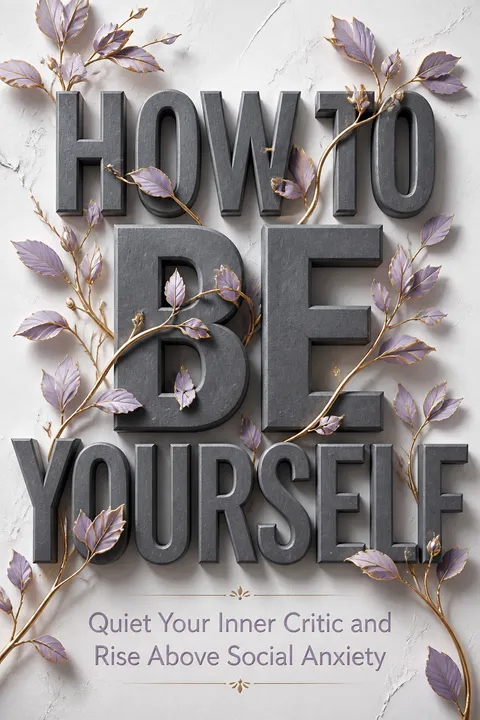
How to Be Yourself receives praise for its practical advice on overcoming social anxiety. Readers appreciate Hendriksen's compassionate approach, relatable examples, and humor. The book offers strategies for challenging negative thoughts, embracing imperfection, and gradually facing fears. Many find it helpful for understanding and managing social anxiety, though some critics feel it lacks depth or contains too many anecdotes. Overall, readers value the book's accessible insights and tools for building confidence in social situations.
People Also Read










Glossary
The Reveal
Feared exposure of a flawThe Reveal is the socially anxious person's fear that other people will discover a supposed deficiency and reject or humiliate them for it. The feared flaw may involve visible anxiety, appearance, character, or social ability. The term describes the imagined exposure, not proof that the flaw exists or that other people are judging.
behavioral inhibition
Caution around noveltyBehavioral inhibition is a temperamental tendency to pause, withdraw, or respond cautiously when encountering unfamiliar people, places, or events. It can promote careful assessment, but it is also associated with a higher risk of social anxiety. It is a risk factor rather than a diagnosis or a fixed prediction of someone's future.
Inner Critic
Harsh inner warning voiceThe Inner Critic is the self-critical voice that predicts social failure, labels the person as deficient, and urges concealment or avoidance. It often claims to be protective while also demanding flawless performance. Its warnings can feel factual during anxiety, but they are interpretations that can be examined rather than automatic instructions.
Replace
Reality-check anxious predictionsReplace is a cognitive strategy for answering the Inner Critic with more specific, realistic thinking rather than forced positive affirmations. It clarifies exactly what is feared, considers how serious the outcome would be, estimates its likelihood, and identifies how the person could cope. The aim is a balanced appraisal, not a guarantee of success.
Embrace
Respond with self-compassionEmbrace is the book's approach of meeting anxiety with mindfulness, self-kindness, and recognition that struggle is part of shared human experience. Instead of fighting every anxious thought, a person notices it, responds as a supportive friend would, and continues toward a valued action. Compassion supports effort rather than excusing permanent retreat.
safety behaviors
Habits meant to hide flawsSafety behaviors are actions used to prevent a feared social judgment or reduce anxiety, such as avoiding eye contact, rehearsing sentences, clinging to a companion, or leaving a room. They can bring immediate relief, but may block corrective learning and make a person appear distant or disengaged.
Challenge List
Graduated social practice planA Challenge List is a set of concrete social actions that a person wants to take but currently avoids or finds intimidating. Tasks range from manageable to more difficult and are defined by behavior, not by a desired feeling. Progress means attempting the action, regardless of whether anxiety disappears or the outcome is ideal.
self-focused attention
Monitoring oneself during interactionSelf-focused attention is directing attention inward toward one's sensations, anxiety, appearance, or performance during a social situation. It can consume attention needed for listening and responding, while encouraging the person to judge the interaction from anxious feelings rather than external evidence.
illusion of transparency
Believing feelings are visibleThe illusion of transparency is the tendency to overestimate how clearly other people can detect one's internal emotional state. During social anxiety, a pounding heart or racing thoughts may feel obvious to the person experiencing them, even when observers see little or no sign of distress.
post-event processing
Replaying social interactions negativelyPost-event processing is the repetitive review of a social interaction after it ends, usually concentrating on perceived mistakes, awkward pauses, or imperfect responses. This selective review can make an event seem worse in memory and strengthen anxiety about future interactions, even when nothing harmful occurred.
anticipatory processing
Rehearsing feared outcomes beforehandAnticipatory processing is the extended pre-event cycle of imagining what may go wrong, predicting others' judgments, and mentally rehearsing escape or defense. It can last far longer than the social event itself, heightening distress without necessarily improving preparation or performance.
worry mismatch
Gap between dread and outcomeWorry mismatch is the difference between the severe outcome a person predicts before a social challenge and what actually happens during it. Repeated practice can recalibrate expectations by showing that many feared consequences do not occur, and that uncomfortable outcomes are often manageable.
FAQ
What's How to Be Yourself about?
- Focus on Social Anxiety: The book delves into social anxiety, exploring its roots and effects on self-perception and daily life.
- Practical Strategies Offered: Ellen Hendriksen provides tools and techniques to manage anxiety and build confidence in social settings.
- Empowerment Through Authenticity: It encourages readers to embrace their true selves and form genuine connections with others.
Why should I read How to Be Yourself?
- Expert Guidance: Written by clinical psychologist Ellen Hendriksen, the book combines scientific insights with relatable anecdotes.
- Addresses Common Struggles: It normalizes feelings of social anxiety and offers hope for change, making it relatable for many.
- Empowering Approach: The book provides a roadmap for personal growth, encouraging readers to take control of their social anxiety.
What are the key takeaways of How to Be Yourself?
- Social Anxiety is Common: Understanding that social anxiety affects many people can be a powerful first step toward managing it.
- Cognitive-Behavioral Techniques: The book introduces strategies to challenge negative thoughts and replace them with constructive ones.
- Importance of Connection: Building meaningful relationships is essential for happiness and well-being, and the book encourages small steps toward this goal.
How does Ellen Hendriksen define social anxiety in How to Be Yourself?
- Self-Consciousness on Steroids: Social anxiety is described as an intense fear of being judged or scrutinized by others.
- The Reveal: This concept refers to the fear of exposing something embarrassing or flawed about oneself.
- Spectrum of Social Anxiety: Social anxiety exists on a spectrum, from mild awkwardness to severe impairment, and understanding one's place on this spectrum can aid in addressing it.
What specific methods does How to Be Yourself recommend?
- Specify, Specify, Specify: Clarifying fears and worst-case scenarios helps in addressing and challenging them.
- Mindfulness Techniques: Exercises like the 5-4-3-2-1 technique help redirect focus away from anxious thoughts.
- Challenge List: A personalized list of tasks that push individuals out of their comfort zones, serving as a guide for facing social fears.
What is the significance of the Inner Critic in How to Be Yourself?
- Voice of Self-Doubt: The Inner Critic amplifies feelings of inadequacy and fear, predicting failure and discouraging social risks.
- Megaphone Effect: It makes its voice louder, drowning out positive thoughts and reinforcing negative beliefs.
- Challenge the Inner Critic: Recognizing and challenging its messages can reduce its power and build self-confidence.
How can mindfulness help with social anxiety according to How to Be Yourself?
- Present Moment Awareness: Mindfulness helps reduce anxiety about future interactions by focusing on the present.
- Non-Judgmental Observation: Observing thoughts without judgment helps detach from the Inner Critic's harsh assessments.
- Grounding Techniques: Exercises like the 5-4-3-2-1 technique help ground individuals in reality during anxious moments.
What role does self-compassion play in How to Be Yourself?
- Kindness to Oneself: Self-compassion involves treating oneself with kindness, counteracting the harshness of the Inner Critic.
- Acknowledging Shared Humanity: Recognizing that everyone experiences social anxiety fosters connection and understanding.
- Encouragement to Try Again: Viewing mistakes as growth opportunities helps build resilience and willingness to face challenges.
What is the Challenge List and how is it used in How to Be Yourself?
- List of Social Challenges: A personalized list of tasks to confront social fears, serving as a guide for gradual exposure.
- Incremental Progress: Completing tasks builds confidence and reduces anxiety over time.
- Encouragement to Take Action: Emphasizes taking action before feeling ready, helping individuals realize confidence follows action.
How does How to Be Yourself address perfectionism?
- Unrealistic Standards: Perfectionism involves setting excessively high standards and linking self-worth to meeting them.
- Dichotomous Thinking: Perfectionists often see anything less than perfect as a failure, creating fear of social situations.
- Encouragement to Dare to Be Average: Embracing imperfection reduces pressure and fosters authentic connections.
What role does alcohol play in social anxiety, according to How to Be Yourself?
- Temporary Relief: Alcohol is often used to alleviate social anxiety, providing temporary confidence and reduced inhibitions.
- Long-Term Consequences: Reliance on alcohol can lead to increased anxiety and potential disorders.
- Encouragement to Nurture Courage: The book promotes cultivating genuine confidence without alcohol, fostering authentic interactions.
What are the best quotes from How to Be Yourself and what do they mean?
- “Your anxiety is not credible.”: This quote challenges the exaggerated fears associated with social anxiety.
- “You can do hard things.”: It reminds individuals of their capability to face challenges and grow from them.
- “You are enough just as you are.”: Emphasizes self-acceptance and recognizing one's inherent worth without external validation.
About the Author
Other books by Ellen Hendriksen

Download PDF
Download EPUB
.epub digital book format is ideal for reading ebooks on phones, tablets, and e-readers.








