

Key Takeaways
Build people skills through daily conduct, not charisma or forced charm
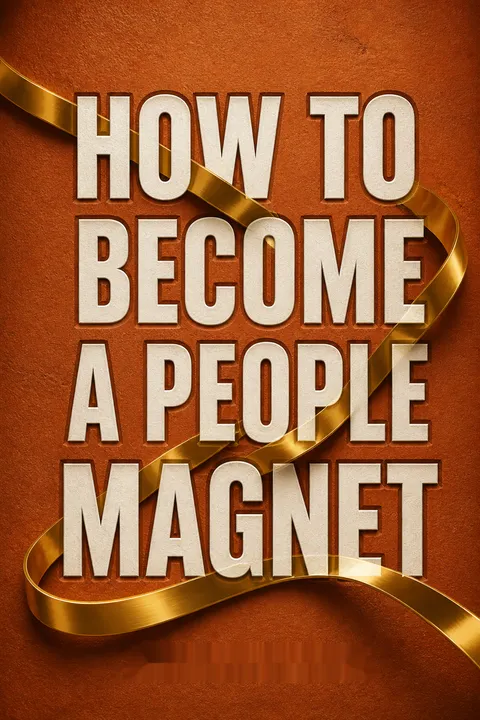
Relationships are part of success. Reklau’s central claim is that work, happiness, and opportunity depend heavily on how people treat one another. A “people magnet” is not someone who charms every room or makes everyone agree. It is someone who reliably helps others feel respected, heard, and valued. The book offers 62 practical behaviors, from remembering names to admitting mistakes, as habits to practice rather than tricks to deploy.
Practice beats performance. Reading advice is not enough. The author urges readers to choose a few behaviors and apply them in ordinary conversations, at work, and at home. The aim is willing cooperation and stronger relationships, not approval at any cost.
What's useful here is the shift from personality to conduct. Charisma can seem like a fixed trait, but behaviors such as listening without interrupting or following through on a commitment are observable and learnable. That makes the book's promise accessible to quieter people, too. Its large catalog is less a single theory than a reminder system, which can be practical but also risks making conversation feel like a checklist. The strongest test is whether a behavior expresses genuine regard, not whether it reliably produces a desired response.
Make people feel noticed before asking them to notice you
Attention signals importance. The book begins with a blunt premise: people naturally pay close attention to their own concerns. Rather than treating this as a moral failure, Reklau suggests using it to make conversations more generous. Ask about the other person’s work, interests, family, or plans, and give the answer room to breathe. Remembering a name, avoiding interruptions, and making sure quieter people in a group are included all communicate that their presence matters.
Recognition must be sincere. A compliment or question used only to win approval can feel like a sales tactic. The point is not to flatter indiscriminately. Notice something real, show honest interest, and let the other person finish their thought before redirecting the conversation to yourself.
Attention is a scarce social resource, so giving it can be more memorable than delivering an impressive story. The section also identifies a useful distinction between recognizing someone and merely praising them: recognition requires noticing what is actually happening. Still, a name repeated too often or questions delivered like an interview can feel calculated. Genuine attention leaves room for reciprocity, pauses, and moments when the other person does not want to share.
Listen to understand, not to load your next reply
Listening takes visible effort. Reklau calls focused, responsive attention active listening. It means attending to the speaker rather than silently preparing a solution or waiting for a gap to take the floor. Face the person, avoid cutting them off, ask a relevant follow-up, and invite them to continue when their story is unfinished. These small signals show that the conversation is not just a contest for speaking time.
Advice can wait. The author recommends asking before offering a solution, since people may want understanding more than instruction. In a complaint, he advises letting the person explain the problem, checking that their meaning has been understood, and only then discussing what to do. Listening can uncover the real issue before anyone wastes effort solving the wrong one.
Active listening is more than silence. The follow-up question and accurate reflection help distinguish attention from passive waiting, while asking permission before advising protects the speaker's agency. This is especially valuable when the listener has status or authority, because unsolicited solutions can close down useful information. The method does not require agreement with everything said. It requires demonstrating comprehension before moving to judgment, correction, or action.
Frame influence around the other person's real needs
Start with their motives. A request becomes more persuasive when it addresses what the other person actually values, not what the persuader assumes everyone values. Reklau applies this to sales, hiring, leadership, and relationships: learn what problem the other person wants solved, then explain honestly how a proposal could help. A job applicant, for instance, should understand what the employer needs before describing relevant experience.
Evidence can travel through others. The book also recommends social proof, meaning examples or testimonials from other people that make a claim more credible than self-praise alone. A satisfied customer’s account may carry more weight than a seller declaring a product excellent. The ethical boundary is important: understanding someone’s motives should help them make a good decision, not disguise pressure or steer them toward something against their interests.
This approach resembles needs-based negotiation: the conversation begins with interests rather than a fixed pitch. It can create mutual benefit, especially when the proposer has taken time to understand the other party's constraints. Yet persuasion is not automatically fair because it uses accurate information. A person can identify another's desire and exploit it. The useful question is whether the offer genuinely serves the other person's interests, including interests they may not have stated aloud.
Use small courtesies to make respect visible
Respect lives in details. Saying thank you, arriving on time, greeting people, and writing a note of appreciation are modest acts, but they show that another person’s time and effort count. Reklau recommends expressing gratitude directly and specifically rather than assuming people know they are valued. He also cites research associating manager recognition with higher team productivity, and reports that writing a gratitude letter can improve the writer’s well-being for months.
Praise the contribution. The book advises noticing useful behavior and naming what was done well, rather than offering empty approval. A specific acknowledgment tells someone what mattered and why. These gestures work best as ordinary habits, not occasional grand performances. Their purpose is to make appreciation part of the relationship, not to create a debt that the recipient must repay.
Rituals such as a thank-you note make an otherwise invisible attitude legible. They also interrupt the tendency to notice only what remains unfinished. The productivity and well-being claims are reported by the author without enough detail here to assess their precise scope, so they should not be treated as guaranteed outcomes. The interpersonal case does not depend on sweeping claims: people often need clear evidence that their effort has registered, and sincere specificity provides it.
Let consistent actions and honest admissions carry your reputation
Reliability is built in small moments. People judge trust not only by what someone promises but by whether the promise is kept. Reklau warns against making commitments for the sake of impressing others, and recommends being truthful when a commitment cannot be met. His Volkswagen workplace anecdote makes the point concrete: after damaging his boss’s tire while using the car, he could have stayed quiet, but he admitted what had happened and helped fix it. The admission strengthened trust because it made him accountable.
Repair beats denial. Mistakes are inevitable; evasions are a choice. Acknowledging an error, apologizing, and taking responsibility can protect a relationship better than excuses can. The author connects this to self-respect as well: repeatedly failing to honor one’s word can undermine confidence in one’s own commitments.
Trust is cumulative, but a single moment of candor can reveal the character behind it. The tire story is effective because the admission carried a cost: the author accepted responsibility rather than optimizing for his immediate comfort. Still, admitting fault is not a substitute for preventing repeated harm. A credible apology includes repair and changed behavior, not just a disclosure that makes the confessor feel honest.
Disagree without making the other person feel small
Protect dignity during disagreement. Reklau argues that arguments often harden positions instead of changing minds. Publicly proving someone wrong may secure a point while damaging goodwill, especially if the correction attacks their intelligence or status. He suggests listening first, acknowledging any part that may be valid, and expressing uncertainty where it is genuine. Looking for common ground can keep a difference of opinion from becoming a personal contest.
Peace is not automatic agreement. The book sometimes pushes agreeableness too far, as if disagreement were rarely necessary. A more useful reading is to avoid arguments driven mainly by ego, not to conceal important differences. In a serious decision, respectful disagreement may be essential. The aim is to challenge the claim without humiliating the person who holds it.
The valuable distinction is between disagreement and status combat. Once someone feels their competence or identity is under attack, evidence can become secondary to self-defense. Courtesy can keep a channel open for reasoning. However, avoiding friction is not always the same as preserving a relationship, and habitual agreement can hide real concerns. The principle works best when respect shapes how a disagreement is raised, not whether an honest disagreement is raised at all.
Give hard feedback privately, clearly, and with a workable next step
Make correction useful. When criticism cannot be avoided, the book recommends discussing it in private, focusing on a specific behavior rather than labeling the person, and identifying how the situation could improve. Its feedback sandwich places positive acknowledgment before and after the corrective point. The praise should be real, not a sugary disguise for a reprimand. The author also advises watching tone and body language, which can change how a message is received.
Hear the complaint first. For complaints, Reklau recommends letting the other person explain, asking questions, and confirming the issue before proposing a fix. This helps distinguish the problem as experienced by the person from the problem as assumed by the listener. The goal is not to soften every truth until it disappears. It is to make candor easier to hear and act on.
Private, behavior-focused feedback reduces unnecessary threats to dignity, while a concrete next step turns judgment into usable information. The sandwich technique can help a tense conversation begin and end constructively, but a rigid formula is easy to detect and may make praise sound insincere. Specificity is more important than the packaging: identify the action, its effect, and a feasible improvement. Listening to complaints also treats criticism as information rather than mere disrespect.
Set expectations that invite people to rise, not shrink
Belief shapes opportunity. The Pygmalion effect is the idea that expectations can influence another person’s performance. Reklau describes psychologist Robert Rosenthal’s school study: teachers were told that certain randomly selected students showed unusual promise, and those students later performed better on tests. The book uses the study to argue that people may grow when others treat their potential as real. In practice, this means naming strengths, expressing confidence, and offering support instead of defining someone by a temporary decline.
Praise what can be repeated. Acknowledging a specific improvement gives people a clearer signal about what is working. It can encourage effort without pretending every performance is excellent. The author’s emphasis is on helping others see a capable version of themselves and giving them reason to act in line with it.
Expectations can become part of a social environment: they affect who receives attention, patience, challenging work, and encouragement. That makes the idea more consequential than simply thinking positively about someone. The study, as summarized here, supports a role for teacher expectations but does not mean praise alone produces ability. Confidence is most constructive when paired with resources, clear standards, and honest feedback, rather than used to excuse unequal support or overlook a person's needs.
Demonstrate the conduct you ask others to adopt
Example carries authority. Reklau argues that people are more likely to take a standard seriously when the person promoting it follows it too. He retells an anecdote about a mother asking Gandhi to tell her child to eat less sugar. Gandhi postponed the advice, then explained that he had needed to change his own sugar habit first. The story makes a simple point: advice can sound hollow when the adviser is not willing to practice it.
Change your own contribution. A manager who asks staff to answer calls should answer them as well; a partner who wants healthier routines can begin by changing their own routine. The book does not claim one person can control another. It proposes modeling the behavior, then allowing others to choose whether to follow.
Modeling replaces moral authority with demonstrated practice. It can make a request more credible and reveal whether the requested standard is realistic. The Gandhi story is an illustrative anecdote, not evidence that example always changes another person. Its strongest lesson is about integrity: consistency reduces the gap between stated values and visible behavior. That gap matters especially for leaders, whose conduct quietly defines which rules are real.
Stay empathetic without surrendering authenticity or boundaries
Understanding is not submission. The book encourages readers to consider what another person may be feeling, ask rather than assume, and avoid treating every slight as a verdict on their worth. Forgiveness, in this account, can release resentment without granting someone continued access after harmful behavior. Reklau is explicit that people skills are not people-pleasing: a person can be kind and still set limits or leave a relationship that repeatedly causes harm.
Accept imperfect fit. Not everyone will like one another, and trying to become a different person to win universal approval is futile. The book also warns against expecting perfection from friends, partners, or oneself. Clear questions, realistic expectations, and boundaries let empathy coexist with self-respect.
This is the necessary counterweight to advice about agreement, niceness, and accommodation. Empathy can widen interpretation, helping someone distinguish deliberate harm from a bad day or a misunderstanding. Boundaries then translate that understanding into a decision about acceptable conduct. Forgiveness should not be confused with reconciliation, and positivity should not silence a person describing real distress. A durable relationship requires room for both care for others and honest protection of one's own limits.
Analysis
The book is best understood as a field guide to interpersonal conduct, not a tightly unified psychological theory. Its 62 tips repeatedly return to a small set of mechanisms: people want to feel significant, attention communicates regard, trust depends on consistency, and influence works better when it begins with another person’s interests. The repetition is partly a strength. A reader is likely to remember a few behaviors, such as asking follow-up questions, naming a contribution, or admitting an error, more readily than an abstract theory of charisma.
Its strongest material is concrete and reciprocal. The damaged tire anecdote gives accountability a human cost, and the advice to hear complaints before solving them turns respect into a practical procedure. The book also usefully distinguishes kindness from surrender: forgiveness need not mean continued access, and not every relationship can be repaired by better technique. This matters because a manual for influence can easily become a manual for appeasement.
The central tension is between authentic concern and instrumental tactics. Asking about someone’s needs can be generous, but it can also be a way to steer them toward the speaker’s preferred outcome. The book recognizes this danger and repeatedly insists on sincerity, yet its advice to secure agreement, use testimonials, or let someone believe an idea is theirs can still encourage manipulation if separated from that ethical constraint. A sound application asks whether the other person benefits, can disagree freely, and understands the choice.
Some claims are expressed too absolutely. Arguments do not always fail, agreement is not always wise, and positive expectations cannot replace training, resources, or accountability. Read selectively, the book offers a useful discipline: make respect observable, favor curiosity over assumption, and treat social influence as a responsibility. Its value lies less in becoming universally liked than in making everyday interactions more trustworthy and humane.
Review Summary
Readers are divided on "How to Become a People Magnet". Some find it practical and insightful, praising its easy-to-implement strategies for improving social skills and relationships. Others criticize it as repetitive, obvious, and lacking depth. Many compare it to Dale Carnegie's work, with mixed opinions on its originality. The book's 62 tips cover topics like active listening, empathy, and positive communication. While some readers appreciate the concise format and actionable advice, others feel it oversimplifies complex interpersonal dynamics and promotes people-pleasing behavior.
People Also Read





Glossary
Active listening
Attentive, responsive listeningA way of listening that gives the speaker focused attention instead of preparing a reply or rushing to offer advice. It includes allowing the person to finish, asking relevant questions, showing engagement, and checking that their meaning has been understood. The book presents it as a practical way to help others feel heard and to learn what is actually troubling them.
Social proof
Evidence from other peopleA persuasive signal based on what other people have experienced, said, or done. In the book, a customer’s testimonial or a former colleague’s assessment can make a claim more credible than a person’s self-description alone. Social proof is most trustworthy when the example is relevant and genuine, rather than selectively presented to disguise weaknesses or manufacture consensus.
Pygmalion effect
Expectations influence performanceThe idea that expectations held by one person can affect how another person performs. The book explains it through Robert Rosenthal’s school study, in which teachers were told that randomly selected students showed unusual promise. Reklau argues that confidence, encouragement, and attention can help people develop abilities, while noting that belief should be expressed through supportive treatment.
Feedback sandwich
Positive framing around correctionA feedback technique that begins with a genuine positive observation, identifies a behavior that needs improvement, and ends with further sincere encouragement. The book recommends keeping criticism private, describing behavior rather than attacking character, and offering a practical way forward. The structure is intended to preserve dignity, though it becomes ineffective if the praise feels formulaic or insincere.
Mirroring
Subtle matching of behaviorAdjusting aspects of one’s posture, gestures, voice, or language to resemble those of another person. The book presents mirroring as a way to increase comfort and rapport, while warning against exaggerated imitation or using it to manipulate. Its practical value depends on naturalness and attention to the other person, not mechanically copying every movement.
Selective perception
Attention shaped by focusThe tendency to notice some features of experience more readily when attention is already directed toward them. Reklau uses the example of people suddenly noticing a type of car after considering buying one. Applied to relationships, focusing on another person’s strengths can make those strengths more visible, though it should not require ignoring genuine problems.
FAQ
What's "How to Become a People Magnet" about?
- Purpose of the book: "How to Become a People Magnet" by Marc Reklau provides 62 strategies to build powerful relationships and positively impact the lives of everyone you meet.
- Focus on people skills: The book emphasizes the importance of understanding human nature and developing skills to connect with others effectively.
- Practical advice: It offers practical tips and techniques that can be applied immediately to improve personal and professional relationships.
- Goal of the book: The ultimate aim is to help readers become more influential and likable, enhancing their social and professional success.
Why should I read "How to Become a People Magnet"?
- Improve relationships: The book provides actionable strategies to enhance your ability to connect with others, which is crucial for personal and professional success.
- Increase influence: By applying the techniques, you can become more persuasive and influential in your interactions.
- Boost happiness: Reklau argues that strong social relationships are a key predictor of happiness, and this book helps you build those connections.
- Practical and accessible: The tips are straightforward and can be implemented in everyday situations, making it easy to start seeing results quickly.
What are the key takeaways of "How to Become a People Magnet"?
- Understanding human nature: Recognize that people are primarily interested in themselves and use this knowledge to engage them effectively.
- Effective communication: Focus on listening actively and speaking in terms of the other person's interests to build rapport.
- Positive interactions: Make people feel important and appreciated, and avoid criticism and arguments to maintain harmonious relationships.
- Authenticity and humility: Be genuine and humble in your interactions, which fosters trust and likability.
How does Marc Reklau suggest making a good first impression?
- Smile: A sincere smile can make a significant positive impact in the first few seconds of meeting someone.
- Be confident: Handle yourself with pride and confidence, as this influences how others perceive you.
- Be authentic: Show genuine interest in others and be yourself, which helps in forming a lasting positive impression.
- Avoid overanxiety: Being overly anxious can make others doubt your sincerity or intentions.
What is the most important subject of any conversation according to Marc Reklau?
- Focus on them: The most important subject in any conversation is the other person. People love to talk about themselves.
- Use "you" and "your": Replace "I," "my," and "mine" with "you" and "your" to make the conversation more engaging for the other person.
- Ask questions: Encourage others to talk about themselves by asking questions about their interests and experiences.
- Show genuine interest: Demonstrating real interest in the other person makes them feel valued and appreciated.
How can I make people feel important, as suggested in "How to Become a People Magnet"?
- Acknowledge their worth: Recognize and appreciate the unique qualities and contributions of others.
- Use their name: People love hearing their own name, so use it often in conversations to make them feel special.
- Listen actively: Give your full attention when someone is speaking, showing that you value their thoughts and opinions.
- Offer sincere compliments: Praise people honestly and sincerely for their achievements and qualities.
What does Marc Reklau say about handling criticism?
- Avoid criticism: Criticism is often counterproductive, leading to defensiveness and resentment rather than improvement.
- Constructive feedback: If criticism is necessary, offer it as constructive feedback, focusing on behavior rather than the person.
- Use the sandwich method: Start with praise, provide the feedback, and end with another positive comment to soften the impact.
- Private discussions: Always give feedback in private to avoid embarrassing the person and damaging the relationship.
How does "How to Become a People Magnet" suggest dealing with arguments?
- Avoid arguments: Arguments rarely lead to positive outcomes and often damage relationships.
- Agree when possible: Find common ground and agree with others to maintain harmony and goodwill.
- Stay calm: Control your temper and listen to the other person's perspective without interrupting.
- Focus on solutions: Instead of arguing, work together to find a solution that satisfies both parties.
What role does authenticity play in "How to Become a People Magnet"?
- Be yourself: Authenticity is crucial for building trust and genuine connections with others.
- Avoid people-pleasing: Don't agree with others just to please them; be honest about your thoughts and feelings.
- Embrace vulnerability: Acknowledge your strengths and weaknesses, which makes you more relatable and trustworthy.
- Consistency: Ensure that your words and actions align, reinforcing your authenticity.
How can I use body language effectively according to Marc Reklau?
- Mirroring: Subtly mirror the other person's body language to build rapport and make them feel comfortable.
- Positive gestures: Use open and positive body language, such as smiling and nodding, to convey friendliness and agreement.
- Be aware: Pay attention to your own body language to ensure it aligns with your verbal messages.
- Observe others: Notice the body language of others to better understand their feelings and reactions.
What are some of the best quotes from "How to Become a People Magnet" and what do they mean?
- "Smile and win in all relationships." This emphasizes the power of a smile in creating positive first impressions and fostering goodwill.
- "Make people feel important, and they’ll always be on your side." Highlighting the importance of acknowledging and valuing others to build strong relationships.
- "Be the example of what you want to see in the world." Encouraging readers to lead by example and inspire others through their actions.
- "Don’t tell people what to do. Make them happy about what you are telling them to do." Suggests using positive reinforcement and motivation rather than direct orders.
How does Marc Reklau suggest boosting self-esteem in others?
- Give genuine praise: Offer sincere compliments that highlight the person's strengths and achievements.
- Encourage self-acceptance: Help others see their worth and potential, fostering a positive self-image.
- Be supportive: Provide encouragement and support, especially when they face challenges or setbacks.
- Avoid negative comparisons: Focus on individual strengths rather than comparing them to others, which can undermine self-esteem.
About the Author



Download PDF
Download EPUB
.epub digital book format is ideal for reading ebooks on phones, tablets, and e-readers.








