


Key Takeaways
Make reliability your reputation, then let completed work speak for you
Deliver before you announce. Fox’s term WACADAD is an acronym for the principle that actions matter more than promises. Keep commitments, meet deadlines, and turn ideas into finished work. People who consistently deliver stand out in organizations where many propose and few execute. To make that work visible, volunteer for demanding projects, ask senior colleagues what problems need solving, and prepare carefully for high-profile presentations. The point is not to boast, but to give others solid evidence of your contribution.
Execution earns trust. Fox draws on a management maxim that creativity without implementation is irresponsible. A proposal matters when it becomes a tested solution. This approach also applies to ordinary commitments: if you say you will do something, follow through, and if circumstances prevent it, communicate promptly and do what you can to make it right.
What's striking is how this turns reputation from a branding exercise into a record of observable behavior. In organizations, reliability lowers the coordination burden: colleagues can plan around someone whose promises predict action. That is a real form of influence. Yet execution should not become a demand for silent overwork or unquestioning compliance. Some projects fail because the target is wrong, not because effort is lacking. Strong professionals pair follow-through with the judgment to surface flawed assumptions and renegotiate commitments before a missed deadline becomes a surprise.
Get close to customers, because revenue and reality meet there
Customers reveal the future. Fox argues that companies depend on people who win and retain customers, making customer-facing work a powerful route to organizational influence. Salespeople hear objections, notice competitors, and see whether products arrive on time and meet real needs. Those signals can expose problems long before internal reports do. Even employees far from sales can learn by visiting customers, joining field calls, or asking frontline staff what customers repeatedly request.
Follow the evidence. The book warns against treating office opinion as knowledge. When colleagues say they think a product or process works, ask what facts support that view. Talk to customers and users, then identify missing information, which Fox calls data gaps. A company that listens to its market can spot emerging needs; one that only listens to itself risks mistaking polished internal discussion for customer insight.
This is a practical argument for reducing the distance between decision-makers and the consequences of their decisions. It resembles the idea of a feedback loop in engineering: a system corrects itself only when information about its output returns to the people steering it. Customer contact can therefore improve both strategy and humility. Still, customers do not always know what they will value, and the loudest requests may not represent the whole market. Frontline testimony is most useful when combined with broader evidence, not treated as a perfect forecast.
Choose career moves that buy access, responsibility, and relevant experience
Design your own route. Fox rejects the idea that Human Resources will map an ambitious employee’s path to the top. Instead, identify the experience that senior leaders in your organization have had, then seek assignments that build comparable skills. He favors line roles, such as sales, product management, or plant leadership, because they connect more directly to customers and profits than many staff roles do. He also recommends accepting the strongest-paying suitable role, arguing that salary can shape later raises, visibility, and promotion decisions.
Study the real gatekeepers. Fox calls the background, experience, or affiliations that make someone acceptable to an organization’s inner leadership group “invitation credentials.” Learn what those credentials are and decide whether they are attainable. If a company’s leadership pipeline is closed to your background, moving to a more open organization may be wiser than waiting for recognition that its structure is unlikely to grant.
This advice offers a useful distinction between stated promotion criteria and the experiences that actually confer credibility. Career research often emphasizes sponsorship and access to consequential assignments, not performance alone. The book’s candor about insider networks helps readers investigate those mechanisms instead of assuming that merit is evaluated in a vacuum. Its salary rule, however, is too absolute to serve as universal advice. A larger paycheck can bring responsibility, but pay may also reflect negotiation, market timing, or bias. Access and learning matter alongside compensation.
Surface bad news early, and make calmness part of your authority
No hidden elephant. Fox uses “elephant” for a serious problem that people know about but avoid discussing. Concealing a mistake gives it time to grow and can make the eventual damage worse. Report important problems promptly, explain what is known, estimate the risks, and offer possible responses. Ask for help when needed. The book illustrates the value of calm disclosure with a winery crisis: when the winemaker resigned during the critical grape harvest, the president calmly asked managers what they would do if the winemaker had died, then appointed their proposed replacement.
Keep judgment available. Panic, anger, and snap decisions make it harder to understand a situation. Fox recommends pausing before reacting and distinguishing decisions that can be reversed from consequential choices that are difficult to undo. Keep your manager informed about project progress and emerging risks, so they are not blindsided and can help manage the response.
The winery story captures an important feature of crisis leadership: composure is not the absence of urgency, but the ability to keep options visible while others feel cornered. Early disclosure also supports organizational learning, because facts can be examined before blame dominates the discussion. A necessary qualification is that transparency must include accountability. Reporting a problem as though the reporter had no connection to it can undermine trust if that is untrue. Clear ownership, accurate facts, and a proposed next step make candor more credible.
Build influence by making other people feel seen and successful
Notice the people who help. Fox recommends learning colleagues’ names, understanding their roles, and thanking the less visible people whose work enables yours. He suggests regularly meeting with a useful colleague outside one’s own department to ask how things are going, and creating chances for senior leaders to recognize specific contributions. A handwritten thank-you note or a precise acknowledgment can carry more weight than a generic compliment.
Share the credit. Managers who claim other people’s work weaken their teams and their own reputations. Fox argues that giving contributors full credit makes a leader more attractive to work for, while fair recognition encourages people to keep contributing. He also advises building relationships with peers’ staff, since people across reporting lines can help work proceed even when a colleague is uncooperative. The point is to practice respect consistently, not only when someone has power over a promotion.
This section treats relationships as working infrastructure rather than decorative networking. Recognition communicates that a contribution has been noticed, while credit-sharing helps preserve the trust needed for people to cooperate across boundaries. The advice is strongest when appreciation is specific and sincere. It becomes weaker if lunches, notes, and praise are deployed merely to collect favors. Research on reciprocity suggests that mutual support is powerful, but transactional warmth is easy to detect. The more durable approach is to value people even when their immediate usefulness is not obvious.
Trade visible busyness for protected thinking, preparation, and finished work
Make time to think. Fox recommends setting aside a daily hour for planning, problem-solving, and reviewing goals, then capturing ideas in a dedicated notebook. He suggests turning those notes into daily, weekly, monthly, and annual action lists. Periodically working away from the office, such as at a library, can create uninterrupted space for detailed tasks that get crowded out by meetings and messages.
Do the hard preparation. The book contrasts productive work with the “rocking chair syndrome,” its term for activity that creates motion without progress. The difference is often homework: checking facts, preparing for a customer call, revising a presentation, or finishing one more draft. Fox also advocates arriving early and staying briefly after the workday to prepare for tomorrow, while warning against routinely taking office work home. The underlying goal is concentrated output, not simply longer hours.
The distinction between activity and progress remains useful in workplaces that reward responsiveness more visibly than thoughtful work. Protected attention makes it easier to solve complex problems, while written notes reduce the chance that useful ideas vanish into the day’s interruptions. The book’s strict schedule prescriptions deserve flexibility: early starts and extra hours can quietly become a test of privilege for people with caregiving duties, disabilities, or long commutes. A better measure is whether focused time produces valuable work without making chronic overextension the price of advancement.
Test new ideas cheaply, then scale proven winners without needless reinvention
Learn through small trials. Fox’s innovation advice is to develop an idea through prototypes, samples, or other inexpensive tests rather than endless meetings. Gather feedback, adjust the concept, and abandon it if evidence shows it does not work. He also distinguishes reversible decisions, which can be changed with limited cost, from decisions such as major acquisitions or executive hires, which are much harder to undo. The distinction helps managers match the speed of a decision to its consequences.
Protect what works. Innovation does not mean changing every successful product. Fox points to Mickey Mouse and Ivory soap as examples of companies continuing to invest in familiar offerings that customers valued. The discipline is to experiment where uncertainty is high and avoid tampering with a proven formula without a reason. For a promising concept, the initial idea need not be perfect, but its development and launch require careful execution.
The combination of experimentation and restraint is more sophisticated than a simple call to innovate. Small tests limit the cost of being wrong, while attention to proven offerings protects the value already created. This resembles staged investment: commit more resources as evidence improves, especially when a decision is difficult to reverse. Yet past success can also create complacency, and customer preferences change. The challenge is not to preserve a product unchanged forever, but to separate its durable value from habits or features that no longer serve users.
Lead by investing in capable people, not accumulating staff or paperwork
People are productive assets. Fox urges managers to hire for integrity, intelligence, and a willingness to take responsibility, then give capable employees trust, training, praise, and room to work. He argues that paying fairly, or somewhat above the expected rate for an exceptional contributor, can yield more value than saving small amounts across a larger, less effective team. Leaders should teach others what their teams do, reward unusual contributions, and give credit to the people who earned it.
Keep resources pointed outward. The book criticizes managers who build large departments to increase their own status, and organizations that let forms, reports, and procedures crowd out customer-facing work. Fox calls the incremental growth of such red tape “bureaucratic creep.” His test is whether a process helps the organization serve customers, make products, or solve problems. If not, it may be consuming effort without creating comparable value.
The strongest idea here is that a leader’s output includes the capabilities of the team, not just personal accomplishments. Training, autonomy, and fair recognition can increase both performance and retention. This is consistent with human-capital thinking, which treats skill and trust as investments rather than overhead. The advice to overpay or grant irregular surprise bonuses is less reliable as a general system: unexplained rewards may feel arbitrary and damage fairness. Strong leadership pairs generosity with transparent standards, while still resisting procedures that exist mainly to preserve themselves.
Plan ambition around a life you can sustain, not just a title
Set goals beyond promotion. Fox recommends writing career and personal goals across several time horizons, then breaking long-range aims into smaller actions. He also urges employees to keep learning through reading and to add a substantial new interest each year. Physical fitness, hobbies, and vacations are presented as ways to maintain energy and broaden perspective, not merely as rewards after work is complete.
Protect your closest relationships. The book asks readers to treat family commitments as seriously as important client meetings: schedule time together, listen without distraction, and include family in plans when work demands travel or extra effort. It also warns against letting office parties, drinking, smoking, or social media habits erode judgment and attention. Some of these rules are severe, but the larger point is clear: career growth should not depend on neglecting health, family, or a life outside the company.
This is a useful corrective to the idea that ambition requires constant availability. A career is a long-duration project, and rest, health, and supportive relationships help make sustained effort possible. The book also treats vacations as a test of whether work has been organized well enough to function without one person present. Its prohibitions on socializing are more debatable: informal contact can build trust and improve coordination. The relevant distinction is not work versus pleasure, but whether a habit strengthens judgment and relationships or simply consumes attention.
Analysis
This book is a compact manual of organizational realism. Its 77 rules favor demonstrated contribution over self-promotion, proximity to customers over internal speculation, and trustworthiness over theatrical leadership. The voice is deliberately blunt, and the advice often works by reversing a common career instinct: do not assume Human Resources will design a path, do not confuse motion with output, and do not treat proximity to senior executives as a substitute for results. The organizing idea is that advancement follows a chain: learn what creates value, deliver it, make the work legible, and become someone others can rely on.
The most durable insights are also the least dependent on a particular corporate era. Customer contact, clear communication, early disclosure of problems, credit-sharing, thoughtful hiring, and disciplined experimentation remain useful across industries. The book’s practical stories make these rules easier to picture, especially the winery leader who responded to a harvest emergency by calmly identifying a workable replacement. That scene demonstrates a form of leadership based on keeping the organization operational rather than performing panic.
The book is less persuasive when it presents personal preferences as universal laws. Its prescriptions about salary, office parties, drinking, travel, and extra hours assume a particular model of corporate life and sometimes mistake conformity for competence. Its account of inner-circle credentials is perceptive about informal power, but risks treating exclusionary norms as facts to accommodate rather than structures that can change. The best reading is therefore neither literal obedience nor dismissal. Treat each rule as a hypothesis about incentives: test what creates value in a specific organization, preserve the practices that build trust and customer understanding, and reject the ones that reward exhaustion, bias, or empty status. The result is a useful guide to organizational behavior, not a guarantee of becoming CEO.
Review Summary
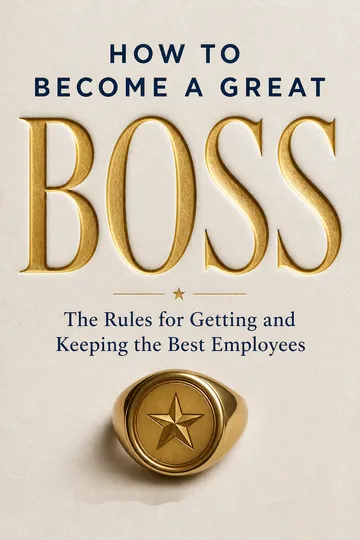
How to Become CEO by Jeffrey J. Fox offers concise advice for climbing the corporate ladder. Readers find it practical and inspiring, with tips on professionalism, time management, and leadership. While some advice seems dated or extreme, many appreciate its straightforward approach and applicability to various careers. The book's short chapters make it easy to read and reference. Critics note it lacks depth in some areas, but overall, it's considered a valuable resource for those aspiring to advance in their careers, regardless of CEO ambitions.
People Also Read










Glossary
WACADAD
Actions outweigh promisesAn acronym expressing the idea that completed work matters more than verbal commitments. In practice, it means keeping promises, meeting deadlines, and converting proposals into results. The book presents reliable execution as a way to distinguish oneself from colleagues who make commitments but fail to follow through.
invitation credentials
Traits valued by insidersThe experiences, background, skills, or affiliations that make someone acceptable to an organization's informal leadership circle. These vary by company. They might include experience in sales, engineering, or a favored division. The concept encourages employees to identify how senior leaders were prepared and to assess whether that route is realistically open to them.
data gaps
Missing decision-critical factsInformation that a person or organization lacks but needs to make a sound decision. The book contrasts verified knowledge with statements based only on belief or opinion. Finding data gaps means identifying what is unknown, then gathering evidence from customers, users, or other relevant sources instead of relying on confident internal speculation.
administrivia
Small tasks with consequencesA term for routine administrative chores, such as expense reports, paperwork, and report reviews. These tasks may seem minor, but neglecting them can create larger problems. The book encourages completing them efficiently while resisting the tendency to let administrative work displace activities that directly help the business.
scattergram
Unsorted writing ideasA preliminary collection of the points, facts, and ideas intended for a written communication. The material is recorded before it is organized or prioritized. The technique helps a writer begin by gathering relevant content, then structure and edit it into a clear message.
zero draft
First rough writing attemptAn initial version of a written communication that is expected to be rewritten and condensed. It is a working draft, not a finished product. The term emphasizes that clear business writing usually requires successive revision rather than an attempt to produce perfect prose immediately.
bureaucratic creep
Gradual growth of red tapeThe incremental accumulation of rules, forms, procedures, policies, and other administrative demands in an organization. The term describes how such requirements can expand over time and consume attention without improving products or customer service. The book advises questioning whether each process helps the organization accomplish meaningful work.
Heller seller
Persistent, prepared persuaderA forceful salesperson who identifies a customer's needs, connects an offer to those needs, makes the sales approach, and directly asks for a decision. The term also applies to internal persuasion, such as winning approval for a project. Persistence and preparation matter more than a naturally outgoing personality.
About the Author


Download PDF
Download EPUB
.epub digital book format is ideal for reading ebooks on phones, tablets, and e-readers.








