

Key Takeaways
Treat failure as information, not a verdict on your worth
A lesson, not a sentence. At three, Day tried to help her sick sister with a hot-water bottle, but filled it with cold water and failed to tighten the cap. The mistake taught her that good intentions do not replace experience. Later failures were larger, but the central idea remained: things going wrong can clarify what matters and change future choices. The podcast she built around people’s failures became a success, an irony she acknowledges rather than hides.
Honesty reduces isolation. Day sees public perfection as a reason people fear taking risks or admitting mistakes. Her podcast invited successful guests to share three failures, and listeners responded that hearing difficult experiences made them feel less alone. This is not a claim that every loss becomes useful, or that people must disclose private pain. The point is that honest reflection can make failure less shameful and more survivable.
The distinction between an event and a verdict is the book’s most useful move. A failed attempt can supply information about preparation, fit, timing, or luck without defining the person who tried. Sharing such stories also corrects the misleading impression that other people’s lives are seamless. Still, meaning is not automatic: some losses remain painful, and demanding a lesson too soon can burden the person who suffered. Reflection helps when it is chosen, not imposed. The book is strongest when it treats openness as an invitation to connection rather than a compulsory performance of resilience.
Stop trading your real self for a place in the group
Belonging has a price. As a child in Northern Ireland, Day stood out for her English accent during the Troubles. At secondary school, classmates mocked her photograph and excluded her. She responded by speaking less, hiding her interests, and later copying the popular girl at a new school. The strategy worked socially, but it taught her to edit herself according to other people’s expectations.
Outsiderhood also taught her to notice. Being out of step made Day an observer, a skill she later used as a journalist and novelist. It also gave her empathy for people who feel they do not belong. But adapting can slide into people-pleasing: she spent years seeking approval without asking whether she liked the people whose approval she wanted. Social acceptance can be useful, but it is a poor substitute for self-knowledge.
The story captures a tension between adaptation and authenticity that is often oversimplified. Reading a group before entering it can be sensible, especially where exclusion carries real costs. The danger is not adaptation itself, but losing track of when a useful social skill has become self-erasure. Day’s account also resists the comforting idea that hardship automatically produces strength. Outsiderhood sharpened her attention and empathy, but it also left a lasting habit of seeking approval. The practical question is whether a change in behavior helps someone participate, or teaches them to disappear.
Let results teach you without turning them into identity
A score is limited evidence. Day’s 47 percent in chemistry haunted her partly because her surgeon father loved science, so the grade felt like a failure as both student and daughter. At a later school, academic success became part of her identity. Then she failed her first driving test after the car rolled back slightly on a hill. On her second attempt, she passed despite accumulating several minor errors, because the first failure had loosened her need to be perfect.
The next attempt matters. Tennis coach Brad noticed that after every missed shot, Day berated herself so thoroughly she could not focus on the next one. His advice was to move on to the next shot. The lesson applies to exams and sport alike: inspect the specific mistake, correct what can be corrected, and do not turn one result into a judgment on your entire ability.
This section makes a valuable distinction between evaluation and identity. Exams and competitions do provide consequential feedback, and some results affect access to future opportunities. But treating every result as a measure of personal worth adds pressure without improving the performance. The driving test shows how perfectionism can make a small setback feel catastrophic, while the tennis lesson turns attention back toward an actionable next move. The most useful response is neither to dismiss results nor worship them. It is to ask what the result actually measures, what it does not measure, and what the next attempt can change.
Treat your twenties as a transition, not a test you failed
Real life is less scripted. Day expected her twenties to resemble television: stylish housemates, effortless romance, and a glamorous media career. Instead, she worried about work, relationships, and whether she was having the decade correctly. She had a full-time journalism job and a long-term boyfriend, yet felt dissatisfied with both. The pressure came partly from comparing ordinary life with fictional versions of youth that made uncertainty look like failure.
Uncertainty can be developmental. In therapy, Day was offered the idea that her twenties might be a gestation period, a time for reflection before the next phase took shape. Guests described similar confusion: writer Olivia Laing left university and struggled to find a way back into professional life; Phoebe Waller-Bridge faced years of disappointing auditions before writing her own material. A slow or indirect route is not proof that a life has gone wrong.
The book’s account is especially helpful because it treats the decade as a period of identity formation, not merely a race toward career and romantic milestones. That perspective can relieve unproductive comparison, particularly when cultural stories make adulthood look neat and fast. Yet calling a difficult stretch developmental should not obscure material constraints: insecure work, high costs, and unequal access to opportunity can make uncertainty more punishing for some people than others. The framing works best as permission to revise a plan, not as reassurance that every detour will resolve neatly.
Stop dating your imagined script; pay attention to the person present
People are not plot devices. After divorce, Day returned to dating and discovered that apps, unread messages, and awkward first dates gave her plenty of room to invent explanations. A delayed reply could become evidence that she had done something wrong. She also learned that people have their own histories and communication habits, which cannot be decoded from a perfect sequence of texts.
Listen to your own boundaries. One date, Jonathan, brought a camp bed to Day’s flat because he disliked her mattress, then made a cruel remark about her age and fertility when she ended things. Day had spent weeks doubting her judgment, but his comment made the mismatch unmistakable. Her experience argues for vulnerability without surrendering discernment: rejection is not always a personal indictment, and a desire for connection does not require accepting behavior that violates one’s values.
Romantic uncertainty invites mind-reading: people fill gaps in communication with stories shaped by their own fears. Day’s experience suggests a better division of labor. The other person’s motives may remain unclear, while their observable behavior and its effect can still guide a decision. That distinction protects against both self-blame and endless excuse-making. It also keeps vulnerability from being confused with passivity. Openness makes intimacy possible, but boundaries help establish whether the relationship on offer is actually mutual and respectful.
Say no to invisible work, then create the career you want
Competence can become a trap. As a young journalist, Day said yes to assignments she did not want, including a risky overnight stay with a roadkill chef because she feared seeming difficult. At the Observer, she became known for accepting Q&As, a low-profile task that required substantial work but brought little recognition. She hoped reliability would lead to advancement, but spent years doing the same work for the same pay.
Make your own opening. A Harvard Business Review report cited in the book found that women were asked to do non-promotable office tasks more often than men and accepted them more often. Day’s fictional character Howard Pink became an assertive alter ego who helped her remove apologetic language and practice saying no. When the paper rejected her request for a different contract, she left and built a freelance career around the writing she wanted to do.
The section connects an individual habit to a workplace pattern: the person who reliably absorbs unrecognized tasks may become indispensable in the wrong way. Saying no is not merely an exercise in confidence; it can protect time for work that is visible, valued, and aligned with a career goal. Day’s invented alter ego offers a practical rehearsal device, though structural inequity cannot be solved by personal assertiveness alone. Employers determine how work is allocated and rewarded. Individual boundary-setting matters, but fair systems must also stop treating invisible labor as an inexhaustible resource.
Invest in friendship without demanding exclusive ownership
Friendship can expand. At nine, Day felt replaced when her best friend Susan befriended a new classmate, Rachel. She interpreted the new friendship as proof that she mattered less, although Susan’s affection for Rachel did not cancel her friendship with Day. The episode taught her that friendship is not a limited supply reserved for one person.
Chosen love is substantial love. When Day’s marriage ended and she suffered a miscarriage, friends offered housing, practical help, company, and reassurance. She came to see these relationships not as consolation prizes for romantic disappointment, but as central bonds in her life. She also recognizes that friendships change and sometimes end without a clear explanation. Being a good friend means showing up when it matters, listening, and allowing the other person a life beyond the friendship.
The childhood triangle shows how easily insecurity turns another person’s new connection into a perceived rejection. Friendship often asks for a different kind of security than romance: not exclusivity, but trust that affection can coexist with other attachments. Day’s later experience makes this more than a comforting theory, since friends provide concrete care during crisis. Still, closeness is not an obligation to remain in every friendship indefinitely. The book’s strongest account holds both truths together: invest generously, but do not treat another person’s changing needs as proof that the friendship was never real.
Question the family role you learned before adulthood
Intent and impact differ. As the younger sister, Day tried to keep up with her older sibling and learned to present herself as capable. At thirteen, she spent a month in Russia with a host family, far from home and unable to communicate easily. Her parents had checked that the arrangement was safe and believed she could manage, yet she remembers waking frightened and trying not to cry. The experience strengthened her independence while reinforcing her habit of hiding distress.
A role is not a life sentence. Tara Westover’s memoir, as discussed in the book, offers a more extreme example: she loved her family but eventually needed distance because her family denied abuse and blamed her for naming it. Her story shows that love does not require accepting someone else’s account of events. Family histories can explain adult habits, but adults can question those habits and choose different boundaries.
This section avoids a simple indictment of parents. Caregivers can act from love and still leave a child with a lasting lesson about what emotions are safe to express. Understanding that gap can help adults revise inherited roles without denying the good in their families. Westover’s story also clarifies that perspective and affection can coexist with distance. That is a difficult balance, and not every family conflict has the same stakes. The essential distinction is between recognizing a family’s influence and granting it permanent authority over one’s identity.
Do not make motherhood the measure of a woman's completeness
Fertility is not a reward. Day assumed that marriage and a settled career would be followed by children. After years without a pregnancy, she learned that fertility could be unpredictable, and that medical treatment offered no guarantee. Two IVF cycles failed; a later spontaneous pregnancy ended in miscarriage. When she froze her eggs, she obtained three, fewer than she had hoped. These experiences made her confront both grief and the limits of what she could control.
Child-free lives are not all the same. Day resists the idea that being without children is either a tragedy or an effortless freedom. She is sad not to be a mother, while also finding meaning in writing, friendship, and work. Some people choose not to have children; others try and cannot. The social habit of treating them as incomplete erases that difference and makes a private loss harder to discuss.
The value of this account lies in refusing a tidy resolution. Day does not transform infertility into a hidden blessing, nor does she treat motherhood as the only life worth wanting. That distinction matters because praise for a child-free person’s freedom can feel as dismissive as pity. Fertility treatment also reveals a broader limit of achievement thinking: effort and good planning cannot guarantee a biological outcome. Respectful support therefore begins by asking what the person wants, rather than imposing either optimism or consolation.
Make your body a home, not a beauty project
The ideal has a price. Day spent a week trying the lifestyle associated with Gwyneth Paltrow’s Goop recommendations. It involved specialized treatments, an expensive facial, a vaginal steam, and an exercise class whose membership cost far more than most people could afford. The week revealed that maintaining a celebrity image could consume time as well as money, and was not a realistic standard for ordinary life.
Value what your body does. Day describes years of wanting to be thinner despite knowing that appearance is not a measure of human worth. Fertility treatment and miscarriage shifted her attention toward her body’s inner life and physical capacity. A friend described her body as strong because it seemed able to move through the world. That reframing does not erase insecurity, but it offers a different question from whether the body looks perfect: what can it feel, do, and carry?
The chapter exposes the hidden labor beneath an image marketed as effortless. Once beauty is treated as a personal project, a person can mistake the ability to buy time-consuming treatments for a moral duty to pursue them. Focusing on function offers a more durable source of appreciation, while leaving room for pleasure in clothing, exercise, or grooming. The challenge is not to shame people for caring about appearance, but to notice when comparison has turned ordinary self-care into a permanent test that no one can finally pass.
Use anger as evidence that a boundary or injustice matters
Sadness can conceal rage. After a younger partner ended their relationship while Day was nearing forty and still hoped to have children, she initially understood her response as grief. Over time, she recognized anger: at the partner’s delayed honesty, at the unequal reproductive timeline, and at herself for remaining silent. She describes a childhood decision to suppress anger because it seemed to make her less likable, a habit that followed her into adult relationships and work.
Name the feeling accurately. Day connects women’s reluctance to show anger with cultural stories that cast angry women as irrational or dangerous, while treating men’s anger as authority. She argues that anger can identify a boundary or injustice and can be turned toward writing or action. This is not a case for treating every angry impulse as correct. It is a case for noticing what the feeling may be revealing before disguising it as shame.
Anger can carry information that politeness obscures: a limit has been crossed, a loss has been ignored, or an unequal arrangement has been normalized. Naming it can make a response more deliberate rather than more destructive. The necessary nuance is that emotion alone does not settle what should happen next. Anger can misread a situation, and its expression can affect other people. The book’s contribution is to make anger thinkable, particularly for women trained to translate it into self-criticism, while leaving judgment and responsibility intact.
Measure success by fit, not by applause or flawless reviews
Achievement may not satisfy. Robert Pattinson told Day that celebrity could not fill an inner emptiness, while actors Nicole Kidman and Simon Pegg described feeling alone or depressed despite professional success. Day’s first novel was rejected by publishers and harshly reviewed after publication. The criticism hurt, but it also forced her to ask whose judgment she trusted and whether she believed the book had honestly told the story she wanted to tell.
Choose your measures. Day found the podcast unusually satisfying because she controlled its form and could make it without knowing whether it would be popular. Its eventual success was welcome, but its value did not depend on downloads alone. She uses therapy to examine how thoughts and judgments shape her reactions, and tries to distinguish useful criticism from noise. Success feels more meaningful when the work fits the person doing it, not merely the audience watching.
External recognition is a noisy proxy for fulfillment. It can confirm that work reached people, but it cannot determine whether the work matches a person’s values or repairs private dissatisfaction. Day’s examples make that gap vivid, from an Oscar that did not resolve loneliness to a podcast that felt worthwhile before it became popular. Still, internal standards need contact with reality: outside criticism can reveal weaknesses that affection or self-belief may miss. A sound measure combines personal fit with a willingness to learn from informed, specific feedback.
Analysis
How to Fail is a memoir organized around a deceptively simple premise: failure can become useful when it is examined without allowing it to define the person who failed. The book moves through school, romance, work, friendship, fertility, family, anger, and public success, but its recurring subject is selfhood. Day repeatedly discovers that she has been living according to imagined evaluations: the popular girls’ judgment, the exam grade, a partner’s wishes, a workplace’s demands, or the social assumption that women should become mothers. Her failures expose the distance between those outside measures and what she actually wants.
The narrative gains force from its shifts between comic detail and real loss. A cold hot-water bottle, a disastrous date, or an awkward exercise class makes the account approachable, while infertility, miscarriage, divorce, and family estrangement show that not every setback can be made light. Interviews with public figures extend the memoir into a chorus of different experiences. Their stories do not function as proof that success follows failure; rather, they show how varied the meaning of failure can be, and how often public achievement conceals private uncertainty.
The book’s strongest argument is not that failure is secretly good. It is that failure is inevitable, and shame makes it harder to learn or seek support. Its emphasis on openness is persuasive because the stories are specific and self-implicating, not polished testimonies of effortless growth. The limitation is that retrospective clarity can make painful events seem more instructive than they felt at the time. Some readers may also have fewer resources, choices, or safety nets than Day did. Her own acknowledgment of privilege helps, but cannot make her path universal. The book is best read as an invitation to examine a particular life, not a formula for converting every hardship into personal growth.
Review Summary
How to Fail by Elizabeth Day receives mixed reviews, with an average rating of 3.95/5. Many readers appreciate Day's honest reflections on failure and find the book relatable and insightful. Some praise her writing style and the book's ability to provide comfort and perspective. However, critics argue that Day's privileged background makes some of her "failures" less relatable. The book's content is described as part memoir, part self-help, with anecdotes from Day's life and celebrity interviews. Some readers found certain chapters more engaging than others.
People Also Read




Glossary
office housework
Low-visibility workplace tasksNon-promotable work that keeps an organization running but often brings little recognition or career benefit. Examples include filling in for colleagues or organizing office events. The book cites research reporting that women are asked to do this work more often than men and accept it more frequently, potentially leaving them with less time for visible, advancement-related work.
anxious attachment model
Fear-driven relationship patternA way of relating in which a person looks to a partner for reassurance and fears that ordinary distance signals rejection or abandonment. Day uses the term to describe her habit of monitoring partners’ affection, downplaying her needs, and trying to secure closeness by pleasing them. The book connects the pattern to early relationships, while presenting it through personal experience rather than as a diagnosis.
bicornuate
Heart-shaped uterine structureA description of a uterus with a deep indentation at the top, giving it two upper sections. Day learned through imaging that her uterus had this shape, likely because of a congenital abnormality. Her consultant explained that it might affect pregnancy and could increase some risks, while also stressing that its individual effects were uncertain.
blastocyst
Later-stage developing embryoAn embryo that has developed for several days after fertilization and reached a stage with roughly 70 to 100 cells. In the book’s IVF explanation, the cells begin separating into an inner cell mass, which can develop into fetal tissue, and trophoblast cells, which contribute to the placenta. Not every fertilized egg develops to this stage.
kintsugi
Repair with visible goldA Japanese craft tradition of repairing broken pottery with lacquer and powdered gold, leaving the cracks visible rather than disguising them. Day encounters it as a metaphor for recovering after heartbreak: the damaged object is reassembled, but its history remains part of its appearance. The image suggests repair without pretending that the break never happened.
FAQ
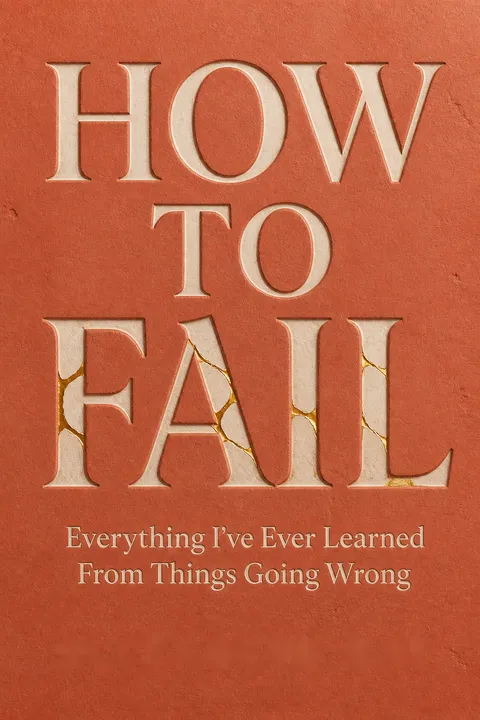
What's How to Fail: Everything I’ve Ever Learned From Things Going Wrong about?
- Exploration of Failure: Elizabeth Day explores her personal experiences with failure in various life aspects, such as relationships, career, and self-acceptance.
- Lessons from Mistakes: The book emphasizes that failure is a crucial part of growth, offering insights into how it can lead to greater self-awareness and resilience.
- Candid Storytelling: Through anecdotes and reflections, Day illustrates how embracing failure can lead to unexpected opportunities and personal evolution.
Why should I read How to Fail?
- Relatable Experiences: The book resonates with anyone who has faced setbacks, providing comfort and understanding for those feeling isolated in their struggles.
- Empowering Perspective: Day encourages readers to view failure as a stepping stone rather than a stumbling block, promoting a healthier mindset towards challenges.
- Inspiring Insights: Filled with wisdom and humor, the narrative is both informative and enjoyable, encouraging readers to embrace their imperfections.
What are the key takeaways of How to Fail?
- Embrace Vulnerability: Day highlights the importance of being open about failures, suggesting that vulnerability can lead to deeper connections and understanding.
- Redefining Success: The book challenges traditional notions of success, advocating for a broader definition that includes personal growth and self-acceptance.
- Learning from Experience: Each chapter focuses on different failures, illustrating that every setback carries valuable lessons contributing to personal development.
What are the best quotes from How to Fail and what do they mean?
- “Failure is the condiment that gives success its flavour.”: This quote suggests that failures enrich our achievements, making success more meaningful.
- “You can’t control how someone else hits the ball to you.”: Emphasizes life's unpredictability, reminding readers to focus on their responses and actions.
- “You cannot script life.”: Highlights life's inherent unpredictability, encouraging readers to embrace uncertainty for growth.
How does Elizabeth Day define failure in How to Fail?
- Personal Interpretation: Day defines failure as a subjective experience, shaped by individual expectations and societal pressures.
- Cultural Context: She discusses how society stigmatizes failure, leading to shame, but argues it should be viewed as a natural part of life.
- Growth Opportunity: Day posits that failure is essential for learning and growth, providing opportunities to reassess goals and values.
What personal experiences does Elizabeth Day share in How to Fail?
- Childhood Memories: Day recounts early experiences of failure, such as helping her sick sister, shaping her understanding of inadequacy.
- Relationship Struggles: She shares stories about her failed marriage, learning about self-worth and communication's importance.
- Career Challenges: Day discusses professional setbacks, including journalism pressures, illustrating how these experiences built her resilience.
How does How to Fail address the topic of self-acceptance?
- Journey to Self-Love: Day emphasizes self-acceptance as a continuous journey, often hindered by societal expectations and insecurities.
- Reframing Negative Thoughts: Encourages readers to challenge their inner critic, recognizing imperfections as part of being human.
- Empowerment through Vulnerability: Advocates for embracing flaws and sharing them to foster connection and understanding.
What methods does Elizabeth Day suggest for coping with failure in How to Fail?
- Reflective Practice: Encourages reflecting on failures to extract lessons, promoting a mindset of growth rather than defeat.
- Open Conversations: Highlights discussing failures openly with friends and loved ones to reduce isolation and shame.
- Embracing Imperfection: Suggests accepting imperfections and being kind to oneself for greater resilience and fulfillment.
How does How to Fail explore the impact of societal expectations on personal failure?
- Cultural Pressures: Discusses how societal norms dictate success, leading to feelings of inadequacy when not met.
- Gender Dynamics: Examines how women are socialized to prioritize others’ opinions, exacerbating feelings of failure.
- Redefining Success: Calls for re-evaluating success, advocating for personal definitions aligning with individual values.
What role do relationships play in How to Fail?
- Interpersonal Connections: Illustrates how relationships can support or trigger feelings of failure, emphasizing healthy communication.
- Learning from Others: Shares stories of friends and interviewees facing failures, highlighting community's importance in challenges.
- Self-Discovery through Relationships: Suggests relationships serve as mirrors, reflecting insecurities and aiding personal growth.
How does Elizabeth Day’s writing style contribute to the themes in How to Fail?
- Candid and Humorous: Day’s humor and honesty make reflections relatable, allowing readers to connect with her experiences.
- Narrative Structure: Organized thematically, each chapter focuses on different failure aspects, creating a cohesive narrative.
- Empathetic Tone: Invites readers to reflect on their experiences, fostering shared understanding around failure.
How does How to Fail address the topic of work?
- Workplace Realities: Shares experiences in journalism, detailing challenges faced, including office politics and conformity pressures.
- Redefining Success at Work: Encourages rethinking professional success, arguing fulfillment should come from passion and authenticity.
- Importance of Boundaries: Emphasizes setting workplace boundaries to maintain mental health, reflecting on struggles with overcommitting.
Download PDF
Download EPUB
.epub digital book format is ideal for reading ebooks on phones, tablets, and e-readers.








