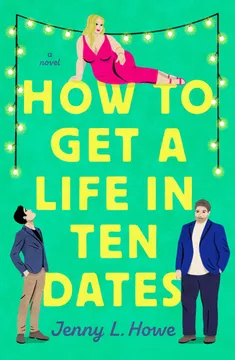


Plot Summary
Annie’s Awkward Exit
At twenty-five, Haleigh Berkshire has endured enough bad dates to recognize a disaster almost as soon as it sits down. Her first meeting with Annie, a woman she had enjoyed messaging, collapses into painful silences and Haleigh’s increasingly desperate trivia. Her best friend, Jack Brooks, calls the bar and gives her a ready-made excuse about her mother, letting Haleigh leave without humiliating either of them.
Back at Jack’s house, pizza and their familiar video-game rivalry restore her good humor, but his casual affection stirs feelings she has spent years trying to bury. She wants a break from dating, yet she cannot quite stop hoping that someone else might make her feel as understood as Jack does.
The opening makes dating feel less like a quest for romance than a repeated test Haleigh fears she is failing. Her trivia is both a comic defense and a practical attempt to rescue a conversation that Annie is not sustaining. Jack’s intervention shows the intimacy of their friendship through action: he knows when she needs an exit and how to arrange one. But that same ease sharpens Haleigh’s dilemma. The person who makes her feel safest is also the person she has trained herself not to want. Her humor does not erase anxiety; it gives her a way to remain visible while managing it.
Ten Dates, One Bargain
An invitation to celebrate her older sister Joey’s law-school graduation and engagement at a Vermont estate gives Haleigh a new problem: the weekend will invite questions about her work and love life, and she has no suitable plus-one.
Her mother and grandfather already worry that Haleigh’s freelance editing and dog-walking are unstable, while roommate Stanton urges her to date more deliberately. With Jack’s help, Haleigh proposes that five people in her circle each choose two dates.
Every match must know she is fat, agree to answer her playful questionnaire, and accept that Haleigh will judge the date honestly. If none works, her family must stop pressuring her for six months. She also hopes the experiment will spare her from attending Joey’s celebration alone.
The bargain gives Haleigh a form of agency, but it is deliberately limited agency: other people choose the dates, while she sets the terms for how they will be judged. That compromise reflects her exhaustion. She wants help, not another lecture about being too picky, and the six-month reprieve makes the experiment feel like a boundary with a measurable consequence. The party concentrates several pressures into one event: sibling comparison, financial insecurity, and the public expectation of couplehood. Her plan is comic in its elaborate questionnaire, yet serious in purpose. She is trying to make her family witness the work and uncertainty hidden inside modern dating.
Scooter Steals Brunch
Haleigh’s first setup is Pete Winslow, a landscaper recommended by her mother, who arrives at brunch with Scooter, his emotional-support cockatoo. The bird dances, shouts, interrupts conversation, and finally swoops away with Haleigh’s bagel while Pete chases it through the restaurant.
The date ends without a second meeting, but it does interrupt Haleigh’s spiraling worries about money and her precarious freelance income. At home, she overhears Stanton and his boyfriend, Ryan, discussing furniture and fears they are preparing to move her out.
Before she can ask, Stanton introduces Brian Lee, a veterinarian and co-owner of a dog daycare, who needs help correcting an adoption flyer. Their first exchange makes Haleigh laugh, and she wonders if Brian might be worth knowing.
Scooter’s antics turn the first setup into farce, but the consequences are not merely comic. Haleigh has to decide whether a date can be a failure without becoming evidence that something is wrong with her. The bird makes that distinction easier: the evening goes badly for reasons beyond her body or personality. Her panic about Stanton and Ryan’s plans reveals a deeper vulnerability, the fear that every imperfect part of her life may suddenly cost her a home. Brian’s brief appearance matters because it offers a different kind of encounter, one based on her skill and humor rather than a family member’s guess about compatibility.
Dana’s Uphill Match
Joey’s first choice for Haleigh is Dana Jackson, a medical student who loves hiking, climbing, and the outdoors. On a cold trek through the Blue Hills, Haleigh tries to keep conversation moving with random facts, while Dana answers with scientific knowledge of her own. They admire the view together and share a few laughs, but their interests do not converge: Dana has no television, while Haleigh loves books, games, and the comfort of indoor life.
A bird dropping on Haleigh’s shoe becomes the day’s final joke, and Dana helps clean it before they agree they are not a match. Haleigh leaves grateful for a pleasant date, yet the absence of a spark brings her back to the uncomfortable question of why connection feels so rare.
Dana’s date is important because it is not a catastrophe. Haleigh and Dana behave kindly, laugh, and share a memorable view, yet goodwill cannot manufacture a shared rhythm. This lets the book distinguish basic decency from romantic fit without turning either woman into the problem. Haleigh’s attempts to entertain Dana also reveal a familiar habit: when silence appears, she assumes responsibility for filling it. The failed match challenges her belief that every date must be rescued by performance. The bird mishap punctures the pressure to make the outing meaningful, leaving her free to acknowledge a simple truth: they enjoyed parts of the day, but wanted different days.
Bradley’s Oyster Lesson
Haleigh’s grandfather Roger chooses Bradley Cooper, a polished portfolio manager, for her next date. Bradley takes her to an expensive restaurant, orders food she has declined, and treats her borrowed dress as more interesting than her.
Then he questions her budget, retirement savings, and lack of a business plan, transforming dinner into a judgment of her life. When he tries to feed her an oyster after she refuses, Haleigh is close to panic. Jack arrives pretending her apartment has flooded, giving her a way out.
He takes her for Chinese food and books, then massages the tension from her shoulders. Haleigh appreciates the rescue but insists she does not always need saving, even as Jack’s care makes it harder to deny how much she wants him.
Bradley’s offense is not simply snobbery. He uses financial advice to define Haleigh as a problem he can manage, then overrides her choices at the table. The pressure lands because money is already a source of anxiety, and because her family’s concern about stability has taught her to hear criticism as proof of failure. Jack’s rescue provides immediate comfort, but Haleigh’s insistence that she can manage herself marks an important distinction between support and control. She wants Jack beside her, not in charge of her. The scene also exposes how a familiar intimacy can become emotionally risky when one person still hopes it means more.
Hawaii’s Unfinished Rules
As Haleigh worries about losing her room when Stanton and Ryan move in together, Stanton assures her she can stay. Still, Bradley’s questions have pushed her to pursue steadier work and plan for independence. The pressure brings back the history she and Jack avoid discussing. Five years earlier in Hawaii, they confessed their love, slept together, and spent the trip acting like a couple.
When they overslept and missed their flight, Jack panicked about school and work, then called Haleigh a mess. Later, he apologized for crossing the friendship line, and Haleigh hid her own hurt and love behind a set of rules: no plus-ones, no touching, no discussing Hawaii, and no saying the words that might reopen the wound.
The flashback explains why the present friendship is built from both extraordinary closeness and deliberate avoidance. Hawaii did not fail because the attraction was false. It failed when Jack’s need for order met Haleigh’s flexibility under stress, and his fear came out as an attack on the identity she most resists. His later apology focuses on crossing a boundary, while Haleigh’s silence leaves her own interpretation unspoken. The rules protect their friendship, but they also freeze its emotional history in place. Haleigh’s current search for work echoes the same fear of being judged as a mess, showing how romance and adulthood press on one shared insecurity.
Dumplings Change Everything
Brian calls Haleigh to ask her out after she corrected his adoption flyer, and their dumpling dinner quickly becomes the first date she has genuinely enjoyed in years. He shares the menu, helps her manage chopsticks, and laughs with her when a hot dumpling splashes across his sweater. Haleigh admits she has no conventional job and is trying to build a stable life; Brian treats her work as real rather than embarrassing.
Their easy conversation leads to a kiss outside the restaurant. Later, he invites her to meet the puppies at Sundae’s Sanctuary and helps her prepare for an interview at a publishing house. Haleigh begins to imagine a future with someone new, though Jack remains the person she instinctively wants to tell everything to.
Brian’s appeal lies in the way he makes room for Haleigh’s unpolished self. The spilled dumpling could have become another occasion for embarrassment, but both of them treat it as part of the fun. His response to her employment situation is especially consequential: he does not turn insecurity into a lesson, so she can speak honestly without first defending herself. This does not instantly erase Haleigh’s attachment to Jack. Instead, it gives her evidence that intimacy might be possible elsewhere. Her attraction to Brian is genuine, but the impulse to report the date to Jack shows that her emotional habits have not yet caught up with her experiment.
Seven Dates, No Spark
The remaining setups test Haleigh in increasingly specific ways. Connie talks through an entire subtitled action film, Erik spends their dog-friendly date reminiscing about his ex, and Mike’s enthusiasm for a football game ends with cider and salsa spilled across Haleigh’s clothes.
None is cruel, but each confirms that politeness cannot substitute for connection. By now Haleigh is texting Brian regularly and planning to see him again. Jack, who has delayed choosing his own dates, finally asks Haleigh not to decide yet and insists he wants a chance to win.
His sudden urgency unsettles her. The experiment was supposed to prove that dating was exhausting, not make her choose between a new possibility and the best friend she has never managed to forget.
These dates work as a sequence of mismatches rather than a single grand rejection. Their variety matters: one is socially overwhelming, another emotionally unavailable, and another simply incompatible with Haleigh’s interests. The pattern strengthens her case that dating requires discernment, not gratitude for anyone willing to show up. Jack’s request changes the experiment’s meaning. He has been helping Haleigh search for a partner while withholding that he wants to be considered one. His delay makes the timing emotionally consequential: he speaks up only after Brian has shown Haleigh that she can feel attraction outside their friendship. The contest becomes less about winning ten dates than about who gets to define the future.
Valentine’s Rules Fray
At Stanton’s Valentine’s party, Haleigh and Brian settle together on the couch, trading trivia, discussing books, and leaning into each other while Jack watches from nearby. Jack arrives with donuts after initially seeming reluctant to attend, then gives the new couple space rather than forcing himself into their conversation.
Brian leaves after a kiss with Haleigh, and an intoxicated Jack falls asleep in her room. Before he does, he tells her he loves her, then seems unable to explain himself.
The next morning he claims not to remember, though Haleigh recognizes his nervous habits as signs he is avoiding the subject. Soon afterward, she receives an interview invitation from High Tower Publishing, a chance to pursue the editorial career she once wanted.
The party makes the friendship rules visible as choices rather than abstract promises. Jack can step aside and respect Haleigh’s growing connection with Brian, yet his affection surfaces when alcohol weakens his self-control. Haleigh is left with an emotionally charged statement and no reliable explanation. Her uncertainty is not simply romantic indecision; she fears that naming what she wants could destroy the friendship she has protected for years. The job invitation provides a parallel opening. For the first time, Haleigh has a concrete route toward professional independence, so her identity is no longer organized only around finding a date or satisfying her family’s expectations.
The Date Jack Chose
Joey helps Haleigh prepare for her first publishing interview, and Brian rehearses questions with her before encouraging her to trust her enthusiasm. After the interview, Haleigh goes out with Ethan, a literary-theory doctoral student Jack selected.
Ethan dismisses the mysteries Haleigh loves and treats emotional intimacy as unnecessary, while his friends quietly confirm that his condescension is familiar. Jack unexpectedly arrives at the bookstore where the date continues and drives Haleigh away. In the car, she confronts him for choosing such a poor match.
Jack admits he cannot keep watching her date other people and reveals that he is the final person on his own list. He wants another chance with Haleigh, acknowledging that their first attempt ended because he hurt her and both of them avoided the truth.
Ethan’s date is a deliberate failure of recognition: he sees Haleigh’s tastes as evidence of limited intelligence, while Jack’s choice reveals that he has not fully understood what makes her feel respected. His arrival, however, exposes the motive beneath his matchmaking. Jack has been using the experiment to delay his own confession until he can no longer tolerate the risk of losing Haleigh to someone else. The confession is not a magical cure for their history. Haleigh still remembers the insult from Hawaii and asks for time. Her response preserves agency: she can want Jack and still require him to reckon with how they broke.
Two Futures, One Heart
Jack and Haleigh reconnect cautiously, including a playful mini-golf date that revives childhood memories and lets them test new tenderness without pretending the past never happened.
Meanwhile, Brian remains attentive and supportive, but their next brewery date reveals a gap: he does not enjoy reading, one of Haleigh’s deepest pleasures. Their shared music-bingo card also exposes how easily they can miss each other’s references. Haleigh does not treat either difference as proof that Brian is wrong for her, but she cannot ignore what books mean to her.
When High Tower invites her to a second interview, she has new hope and a new complication. Her family learns she is seeing both men and urges her to give herself time rather than make a decision out of fear.
The love triangle is not a contest between a good man and a bad one. Brian offers warmth, patience, and the freedom of a new beginning; Jack offers a shared history that Haleigh cannot replicate elsewhere. The reading mismatch matters because it touches a practice central to how she experiences the world, not because romantic partners must share every hobby. Likewise, Jack’s attentiveness cannot by itself erase the risk created by their past. Haleigh’s indecision is therefore psychologically credible: each relationship answers a different need. Her family’s advice helps shift the question from who is objectively better to what kind of life she wants to build.
The Interview She Lost
At her second interview, Haleigh has researched High Tower’s list and prepared a thoughtful idea about expanding its catalog, but anxiety silences her when the question comes. She leaves convinced she has ruined her chance. Rather than call Brian, she goes to Jack, who is already having a difficult day.
He wraps her in a blanket, listens as she explains the interview and the move she is planning, and reminds her how much she has done while afraid. Haleigh then notices the bookshelves, familiar stories, favorite foods, and cozy colors in Jack’s home. He has quietly shaped the house around what she loves. The room makes her see that Jack knows her deeply, but she still has to decide whether that knowledge is enough to risk trying again.
The failed interview externalizes Haleigh’s fear that one moment of anxiety can invalidate years of effort. Jack does not solve the publishing decision or insist she stop feeling disappointed. Instead, he offers a different account of the evidence: she applied, prepared, and walked into a situation that frightens her. This reframing helps Haleigh recognize growth without pretending the setback does not hurt. The details of Jack’s home sharpen the romantic stakes because care has been expressed through sustained attention, not grand gestures. Yet a thoughtfully arranged room cannot guarantee a relationship will work. The decision still belongs to Haleigh, and it depends on whether their old patterns can change.
Marshmallow Leaves the Claw
After Jack takes Haleigh to their childhood arcade, he spends far too much money trying to win a small blue narwhal plush she once admired. The effort recalls their old mini-golf memory of a narwhal and shows how carefully he stores the small things she loves. Haleigh recognizes that her bond with Jack is not just old longing; it is a daily understanding neither of them has found elsewhere.
They go home together and sleep together again, this time with adult confidence and care. Haleigh then meets Brian to explain that she needs to pursue her history with Jack rather than keep him waiting. Brian accepts the truth graciously, and Haleigh accepts a permanent communications role at Sundae’s Sanctuary, where she can use her editorial skills.
Marshmallow is a modest object carrying a large emotional history. Jack’s persistence at the claw machine is not valuable because the toy proves he is a perfect partner; it matters because he remembers what Haleigh notices and what gives her delight. Their renewed intimacy confirms attraction, but Haleigh’s decision also rests on recognition of their shared daily life. Ending things honestly with Brian prevents the romance from treating him as disposable. Accepting work at Sundae’s gives Haleigh another form of resolution: she chooses a career that fits her abilities and values, rather than measuring success only by conventional prestige.
A New Set of Rules
When Haleigh brings Jack lunch at work, she sees his boss reprimand him over a team member’s mistake and a colleague’s decision to report it. Jack tries to protect the struggling employee, but the confrontation shakes his confidence. The next morning, anxiety keeps him from going to work, and Haleigh helps him make a practical plan: contact his boss, address the incident, take real time off, and tell his therapist when he is struggling.
A month later, Haleigh brings Jack as her plus-one to Joey and Whitney’s celebration. Joey admits she is proud of her sister, and Jack proposes with the narwhal plush holding the ring. Haleigh accepts, and they replace their old friendship restrictions with promises that match their new commitment.
The final test is not whether Haleigh and Jack can recover their chemistry, but whether they can respond differently when stress returns. Jack’s work anxiety echoes the pressure that helped fracture their first attempt, while Haleigh’s support now includes practical steps rather than rescue or silence. They face the problem as partners, each allowed to be vulnerable without becoming a burden. At the celebration that once symbolized Haleigh’s fear of comparison, Joey’s pride gives their sibling relationship a more generous shape. The proposal does not erase the old rules so much as transform their purpose: boundaries that once prevented intimacy become commitments to honesty, care, and a shared future.
Analysis
The novel treats romance as one strand in a larger question of how to build a life without using conventional milestones as proof of worth. Haleigh’s family reads steady employment, marriage, and financial planning as signs that adulthood is under control. Haleigh’s work history and anxiety make those standards feel especially sharp, but the story does not resolve her insecurity by having her imitate Joey or suddenly become a conventional success. Her eventual job at Sundae’s Sanctuary draws on the skills she already has and the animal-centered world she enjoys. The choice is modest in status but meaningful in fit.
The ten-date experiment gives the comedy a useful structure while exposing the limits of matchmaking. Haleigh encounters an assortment of people, and the failed dates have different causes: poor listening, incompatible interests, overconfidence, or simple lack of chemistry. Her body is not framed as the reason a date fails. Instead, Haleigh names her fatness plainly and insists that potential dates know what she looks like. That boundary is an act of self-respect, not an apology. The novel locates the problem in assumptions and mismatches rather than in her desirability.
Jack and Haleigh’s history complicates the friends-to-lovers premise. Their first attempt was not defeated by a lack of love, but by fear, inflexibility, and an injury neither knew how to discuss. The rules they made afterward preserved daily closeness at the cost of emotional candor. Their renewed relationship becomes credible only when the past is named and both learn to respond differently under pressure. Haleigh supports Jack through a work-related anxiety spiral with practical planning, while Jack recognizes her effort without measuring her against his own orderliness.
The ending therefore joins romantic commitment to mutual recognition rather than rescue. Haleigh chooses Jack because their shared history includes attention, humor, and a capacity to adapt, not because he can eliminate uncertainty. The engagement changes their rules from barriers against intimacy into promises of care. The book’s quiet argument is that a life can look unconventional from the outside and still be sturdy, joyful, and deliberately made.
Characters
Haleigh Berkshire
The fact-loving editorHaleigh is a plus-size woman who freelances as an editor and walks dogs, building a life that does not fit her family’s conventional picture of security. She loves books, video games, odd facts, and the animals in her care. Her humor helps her move through awkward situations, while anxiety can make money, work, and dating feel precarious. Haleigh does not regard her body as a flaw, but she knows other people may judge it, so she insists that dates know she is fat before meeting her. She is loyal to her best friend, Jack, and often puts his needs beside her own. Her challenge is to trust that she can choose a life on her terms without dismissing her own needs as evidence of failure.
Jack Brooks
The careful best friendJack is Haleigh’s closest friend since childhood, a steady presence whose dry humor and practical care are woven through her daily life. He works in medical billing and coding, values order, and takes pride in being dependable. His anxiety and OCD shape his need for routines, while perfectionism makes work pressures difficult to set down. Jack is deeply attentive to Haleigh, but his fear of damaging their friendship has helped keep important feelings unspoken. Their shared history gives him an unusually intimate understanding of her, though understanding someone does not automatically prevent harm. He must learn to acknowledge what he feels and communicate before stress or fear turns into silence.
Brian Lee
The gentle veterinarianBrian is a veterinarian and co-owner of Sundae’s Sanctuary, an animal daycare and adoption-oriented business. He meets Haleigh through a flyer she corrects and is drawn to her humor, candor, and willingness to be herself. Brian is warm without being overbearing, and he has worked through shyness by deliberately entering social situations and seeking therapy. He treats Haleigh’s unconventional employment with respect, supports her career ambitions, and enjoys her lively perspective. Their connection offers Haleigh a genuine chance at romance outside her long history with Jack. Brian’s presence also makes clear that kindness and attraction matter, even when two people ultimately discover that their lives do not align in every important way.
Joey Berkshire
The driven older sisterJoey is Haleigh’s older sister, a high-achieving Harvard law student engaged to Whitney. Organized and ambitious, she tends to express concern by offering practical solutions, especially about Haleigh’s work and dating life. Her habits can feel controlling to Haleigh, who has spent years being measured against Joey’s polished successes. Joey is not simply a rival or a scold; she is also anxious about the many consequential choices awaiting her after graduation. Her difficulty is recognizing when care becomes pressure, while Haleigh’s is hearing concern without automatically translating it into judgment.
Stanton Bakshi
The generous roommateStanton is Haleigh’s roommate, a television-show host and producer with a flair for style, parties, and dramatic declarations. He gave Haleigh a place to live when she needed one and helped her find work as a freelance editor. His encouragement often comes wrapped in teasing, and his enthusiasm for matchmaking can turn Haleigh’s private life into a friendly competition. He wants his friends to experience the happiness he has found with Ryan, but he also respects Haleigh’s independence when she makes clear what she needs.
Christine Berkshire
Haleigh’s protective motherChristine is Haleigh and Joey’s mother, a caring woman whose retirement has not quieted her worries about her daughters. She wants Haleigh to have security and companionship, and sometimes tries to help by setting her up with people she barely knows. Her concern comes from affection, but her assumptions can make Haleigh feel that an unconventional life is a temporary problem to be corrected.
Roger Saulnier
The matchmaking grandfatherRoger, whom Haleigh calls Pépère, is her eighty-year-old grandfather and a devoted widower. Opinionated about work, marriage, and grocery-store logistics, he believes the stability of his own long marriage offers useful guidance. His matchmaking can be blunt and out of step with Haleigh’s preferences, yet his affection is unmistakable. He wants her to be cared for, even when his idea of care rests on a different generation’s expectations.
Whitney Edgemount
Joey’s lively fiancéeWhitney is Joey’s fiancée and a future lawyer whose ambition is matched by a warmer, more colorful social style. She shares Haleigh’s enthusiasm for fashion, books, and television, and often offers a more relaxed presence than Joey. Whitney cares about Haleigh’s happiness without treating her as a project, giving the sisters’ family gatherings a source of humor and ease.
Ryan
Stanton’s journalist boyfriendRyan is Stanton’s boyfriend, a journalist with an easy smile and a domestic life that is beginning to intertwine with Stanton’s. He is considerate toward Haleigh and makes clear that Stanton’s relationship does not require her to leave their home. His calm presence offers a counterweight to Stanton’s theatrical energy.
Everly
Brian’s creative business partnerEverly is an artist and one of the people behind Sundae’s Sanctuary. She notices Haleigh’s writing and editing skills and sees practical value in them. Her offer of work helps connect Haleigh’s freelance experience to a more sustainable role without asking her to abandon the animal-centered community she enjoys.
Logan
Stanton’s gruff cameramanLogan works with Stanton on his television production and is Brian’s business partner at Sundae’s Sanctuary. His gruff manner is softened by his affectionate relationship with Everly and his commitment to their shared work.
Dana Jackson
The adventurous medical studentDana is a medical student Joey sets up with Haleigh. She enjoys hiking, running, yoga, and climbing, and brings scientific knowledge to Haleigh’s conversational fact-sharing. She is kind and funny, but their interests and preferred lifestyles do not naturally converge.
Pete Winslow
The bird-owning landscaperPete is a landscaper chosen by Haleigh’s mother for a brunch date. He brings his emotional-support cockatoo, Scooter, and remains patient through the bird’s disruptive behavior. He is a well-meaning match whose circumstances make a quiet first date impossible.
Scooter
The disruptive cockatooScooter is Pete’s white cockatoo, recognizable by his yellow crest and talent for repeating phrases. At brunch, he dances, shouts, interrupts Haleigh, and flies off with her bagel, turning an ordinary setup into a spectacle.
Bradley Cooper
The overbearing financierBradley is a successful portfolio manager Roger selects for Haleigh. He is status-conscious and confident in his financial expertise, but his habit of overriding Haleigh’s preferences makes his version of help feel intrusive rather than supportive.
Connie Maldonaldo
The outspoken film criticConnie is a film critic and one of Joey’s setup choices. She is outspoken and energetic, but her habit of reading subtitles aloud during a movie overwhelms Haleigh’s attempt to enjoy a shared evening.
Erik Randall
The shy VA nurseErik is a nurse at Roger’s VA and one of his choices for Haleigh. Polite and soft-spoken, he struggles with small talk and repeatedly returns to memories of his former relationship, leaving little room for a new connection.
Mike Dow
The sports-loving bartenderMike is a bartender at the Rose Tavern and a familiar face to Haleigh. On their date, his enthusiasm for a football game eclipses their conversation, and a celebratory accident leaves Haleigh covered in cider and salsa.
Ethan Windmore
The condescending academicEthan is a doctoral student in literary theory and a date Jack arranges for Haleigh. He is intellectually confident and dismissive of popular mysteries, making conversation feel like a contest rather than an exchange.
Annie
Haleigh’s silent first dateAnnie is a video editor Haleigh meets through a dating app. Their online conversations had seemed promising, but their in-person date stalls, revealing how little chemistry they share face to face.
Dylan
Jack’s conscientious coworkerDylan is a new member of Jack’s work team. She is attentive to problems affecting the department and acts when she believes an issue needs to be reported, becoming a source of tension between Jack and his boss.
Twinkie
Jack’s affectionate rottweilerTwinkie is Jack’s large rottweiler and a familiar fixture in Haleigh’s life. He sprawls between them on the couch, seeks Haleigh’s company, and adds a warm, unruly presence to Jack’s carefully maintained home.
Plot Devices
The ten-date experiment
Turns pressure into a pactHaleigh’s family and friends choose two dates each, giving her a concrete way to show them what her dating life actually feels like. The experiment includes rules about disclosure, a questionnaire, and taking Haleigh’s assessment seriously. If the dates fail, she earns a six-month break from questions about being single. The structure supplies the novel with a comic succession of mismatches while giving Haleigh a boundary she can defend.
The friendship rules
Keep old feelings containedAfter Haleigh and Jack’s first romantic attempt ends painfully, they create rules against plus-ones, touching, secrecy about dating, discussing Hawaii, and saying the words that could reopen their feelings. The rules allow them to remain close, but also prevent them from addressing why the relationship failed. As the story progresses, the experiment and Haleigh’s dates put pressure on those boundaries, revealing that rules can preserve a friendship while also postponing necessary honesty.
Haleigh’s questionnaire
Makes dates reveal themselvesJack helps Haleigh devise an unconventional questionnaire built around playful choices, from hypothetical crimes to animals and imaginary worlds. The answers give Haleigh a glimpse of each date’s tastes and temperament before they meet. The form is comic, but it also offers a safer route into personal conversation. It makes clear that Haleigh values curiosity, humor, and openness more than a conventional résumé.
The skeleton-key necklace
Grounds Haleigh through panicHaleigh wears a bronze skeleton key she bought after researching the symbolism of keys in high school. When anxiety rises, she holds it and uses the cool metal as a sensory anchor while practicing grounding exercises. The necklace connects a private coping ritual to her wish for greater control over her life. It does not remove uncertainty, but helps her remain present enough to make decisions while afraid.
Marshmallow the narwhal
Turns memory into a promiseThe small blue narwhal plush recalls a childhood mini-golf outing when Jack helped Haleigh learn that narwhals are real. Years later, she notices the toy in an arcade claw machine, and Jack remembers how much she likes it. Its connection to their shared past makes it a tangible marker of the small memories that bind them. The plush later reappears at the family celebration, linking their childhood friendship to the future they choose together.
Download PDF
Download EPUB
.epub digital book format is ideal for reading ebooks on phones, tablets, and e-readers.








