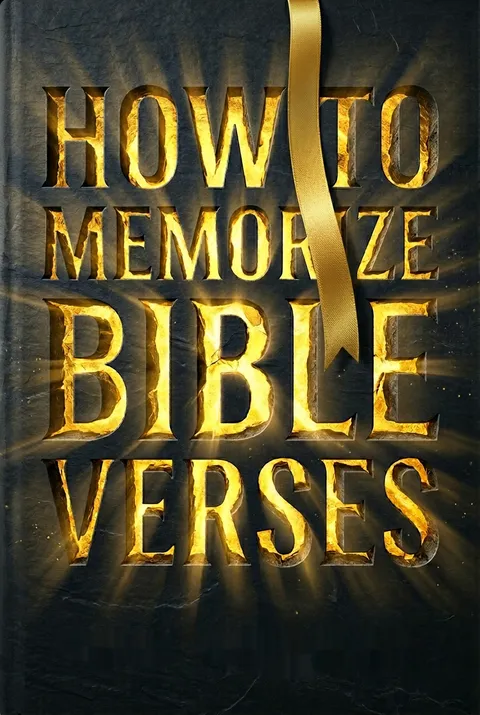


Key Takeaways
Memorize scripture as a portable practice, not a test of religious knowledge
A guide for daily life. The book presents memorization as a way to keep biblical teaching close at hand, so it can shape decisions, steady the reader in difficulty, and support a daily relationship with God. Scripture, in this view, is not merely something to read during a quiet moment. It is a source of direction that can be recalled when the book is no longer open.
Purpose comes before technique. The author frames the Bible as God's guidance and encouragement, then treats memorization as a way of carrying that guidance into ordinary life. This devotional purpose gives the practical exercises their point: remembering the words matters because the reader hopes to understand and live by them.
The book's strongest organizing idea is that memory serves a practice, not a performance. That framing can make repetition feel less like cramming and more like preparing language for moments when reflection is difficult. It also invites a useful distinction: recalling a verse can offer comfort or a moral prompt, but it does not automatically settle what a situation requires. Meaning depends on context, interpretation, and judgment. Treating memorized words as a companion to discernment preserves the book's devotional aim without turning recall into a substitute for thought.
Test several memory methods before deciding how a verse sticks
Four possible routes. The book groups its suggestions around reading, movement, visual imagery, and listening. A reader who remembers text on the page might use repeated reading or letter cues. Someone who prefers movement could recite while walking or attach gestures to phrases. Visual methods include rewriting, posters, and pictures. Auditory methods include singing a verse or listening to a recording.
Try, then choose. The book offers descriptions to help readers identify a preferred approach, but it also advises trying several techniques if the best fit is unclear. These categories are best used as a menu, not a diagnosis: the practical question is which method helps a particular person recall a particular passage.
The practical strength here is permission to experiment. A person may find that sound helps with one passage while writing helps with another, especially when the text is unfamiliar or lengthy. The categories also make a vague task concrete: change the way the verse is encountered and see what improves recall. Their limitation is the temptation to treat a preferred method as a fixed identity. A more flexible approach is to combine modes and judge them by results, rather than assuming that a label explains all memory.
Break long passages into chunks, then join the chunks from memory
Build the sequence in parts. To teach progressive repetition, the book uses Romans 3:24 and divides its wording into three short sections. The reader practices the first section, adds the second, then recites the whole verse. This reduces the burden of holding a long sequence at once while keeping the order clear.
Use letters as prompts. Another reading technique turns the first letters of a verse's words into a compact cue. The reader recites from that cue, then tries again without it. The book suggests repeating each stage several times and, once the verse seems secure, taking a short break before another attempt. The point is to move from supported recall to unaided recall.
Chunking helps because a long string becomes a set of manageable units, while joining the units protects the order between them. The letter-cue technique adds a retrieval prompt without displaying the whole passage, which can reveal whether the words are actually available from memory. A useful refinement is to keep checking the complete sequence: mastering separate fragments does not guarantee fluent recall from beginning to end. The book's brief pause also encourages a small test after practice, rather than relying only on the feeling that repetition has worked.
Make recall harder gradually by removing the words you can see
Fade the support. The book's fill-in-the-blanks exercise starts with a written verse that the learner reads several times. A helper then erases some words, and the learner supplies them; more words disappear as recall improves. The same gradual removal can be done with a visible verse, turning a full prompt into a partial one and eventually into none.
Write, then test. For visual practice, the author also recommends copying a verse repeatedly, including 30 to 40 rewrites, and using colorful cards or posters. These tools make the words easy to revisit. The important step is not simply seeing them again, however. Covering or erasing the text creates a chance to retrieve it without a complete prompt.
There is a valuable shift here from familiarity to retrieval. Re-reading can make words feel recognizable without proving that they can be produced independently. Removing text turns the exercise into a test, and the gradual reduction avoids making the first attempt unnecessarily discouraging. The book's many rewrites may suit some learners, but repetition alone can become mechanical. Pairing each round of writing with a closed-book attempt gives the practice a clearer purpose: discover what is missing, correct it, and test again.
Give a verse a sensory cue through movement, pictures, or melody
Attach words to an experience. The book suggests linking phrases to gestures or walking while reciting. Its example for Romans 3:24 assigns actions to successive parts of the verse, so the body helps prompt the next words. For visual learners, it recommends a poster, colors, or an image connected with the passage. A cross, for instance, can serve as a reminder for a poster featuring John 3:16.
Let sound carry the sequence. Auditory practice includes fitting a verse to a familiar tune or recording one's own voice and replaying it. The author suggests saying a short verse clearly several times before listening back. These methods create cues beyond the printed page, giving the learner more than one route back to the words.
A gesture, image, or melody can act as a retrieval cue: encountering it brings part of the remembered sequence to mind. These cues can also make practice less monotonous, an advantage for a task built on repetition. The methods are not interchangeable, though. A picture may recall a passage's theme without preserving its exact wording, while a tune may help with sequence but encourage changes to phrasing. When accurate recitation matters, sensory aids work best alongside a final check against the chosen Bible text.
Schedule one verse daily, then revisit the week's verses
Make practice small and regular. The book recommends memorizing when rested, ideally in the morning, or at night if mornings are too busy. It also advises returning to earlier verses during the week instead of treating each new passage as a one-time task. A notebook of favorite verses gives the learner a place to keep material for later review.
Use a ready-made starting list. The one-month plan supplies 28 verse references, grouped into four weeks. It includes passages such as John 3:16-17, Psalm 27:1, and Galatians 5:22-23. The reader is told to find the wording in a Bible and apply the suggested methods. The schedule offers structure, while the weekly review keeps earlier selections in circulation.
A modest daily target lowers the effort required to begin, while revisiting previous material counters the natural loss that follows a single practice session. The month-long list is useful because it removes the small but real chore of choosing what to learn each day. Still, a fixed schedule is only a starting point: some passages take longer than others, and a missed day need not invalidate the routine. A sustainable plan should allow review and adjustment, not make completion of all 28 references the only measure of success.
Learn what a verse means before asking memory to keep its words
Meaning gives words a place. The book cautions that memorization should include understanding, not just reproduction. Its broader argument is that scripture can guide daily choices, offer reassurance during hardship, and shape conduct. Knowing what a passage means makes it more useful when a reader wants to apply it, rather than leaving a string of remembered words disconnected from the situation.
Connect the passage to a need. The author encourages readers to turn to relevant verses when facing a particular difficulty and to keep especially valued passages in a notebook. This combines interpretation with practical access: understand the teaching, remember it, and make it easy to find again when circumstances call for reflection.
Meaningful encoding gives memory more structure: ideas and relationships can support recall better than a bare sequence of words. It also guards against treating memorization as an end in itself. Yet applying a passage responsibly requires attention to its context, not only a personal association or immediate emotional effect. A useful practice is to ask what the verse says in its surrounding passage before deciding what it means for a present problem. That care can deepen, rather than weaken, the book's aim of bringing scripture into daily life.
Use memorized verses as prompts for decisions, comfort, and daily conduct
Recall with a purpose. The book describes memorized scripture as a source of guidance, strength, and comfort. It suggests turning to biblical teaching when facing a choice, using familiar passages to steady oneself during stress, and sharing a relevant verse with someone who needs encouragement. Its emphasis is practical: remembered words are meant to accompany life beyond the memorization session.
Let practice reach other people. The author connects learning scripture with following its teaching and with offering comfort to others. In this account, memorization serves both inward reflection and outward care. A verse kept in memory may give a person language for reassurance or a reminder of the values they hope to follow, especially when there is no Bible open nearby.
This gives memorization a social dimension: remembered language can help people express care when they struggle to find their own words. It also links private study with conduct, an important check against collecting verses as verbal trophies. At the same time, a passage should not be presented as a guaranteed solution to another person's distress or as an automatic answer to a complex decision. Listening, context, and the other person's needs matter. Used with that humility, a memorized verse can be an invitation to reflection rather than a conversation-ending pronouncement.
Analysis
This is a short devotional instruction manual, not a systematic study of memory or biblical interpretation. Its structure is straightforward: establish why scripture matters to the author, explain practical methods, offer a 28-reference monthly plan, and urge readers to stay committed. The central promise is that memorization can make biblical language available for guidance and comfort in ordinary situations.
Its strongest practical contribution is variety. Readers are not given one supposedly universal trick; they can read, write, move, visualize, sing, record, and gradually remove prompts. Several methods also contain a useful learning cycle: encounter the verse, divide or cue it, attempt recall, check errors, and repeat. The advice to revisit verses and understand their meaning helps connect memory with retention and application. The book is most useful when treated as a toolkit that readers can adapt rather than a rigid program.
The weakest claim is the suggestion that identifying a learning style determines the best method. The book presents reading, kinesthetic, visual, and auditory categories as a way to choose techniques, but its own advice to try multiple methods points toward a more practical conclusion: effectiveness can depend on the task and the individual passage, not just a stable learner type. Likewise, statements that scripture supplies answers or removes worry express the book's faith commitments, not guaranteed outcomes for every reader. Memorization can support reflection and comfort, but does not by itself settle interpretation or resolve a difficult problem.
The book's chief value, then, is modest and usable. It turns an abstract intention to remember scripture into repeatable actions and gives those actions a spiritual purpose. Its advice is strongest when exact recall, understanding, regular review, and thoughtful application are treated as parts of one practice. The techniques help the reader hold words; context and judgment help determine how to live with them.
Glossary
Learning Style
Preferred way to practiceThe book uses this phrase for a reader's preferred route to memorizing text, grouping approaches into reading, kinesthetic, visual, and auditory methods. Each category is paired with techniques, such as writing, movement, imagery, or listening. The book recommends trying different approaches when a reader is unsure which works best.
Acronyms
Initial-letter memory cuesIn this technique, the learner takes the first letter of each word in a verse and groups the letters into a compact prompt. The prompt is used to help recite the full verse, then removed so the learner can test unaided recall. The book presents this as a reading-oriented memorization method.
Repetitive Reading
Repeated, cumulative recitationA method that divides a verse into short sections and practices them in sequence. The learner repeats the first section, adds the next section, and then recites the whole verse several times. The book uses this approach to make a longer passage easier to learn in stages.
Write and Rewrite
Repeated written practiceA visual memorization technique in which the learner copies a verse repeatedly until its wording becomes familiar. The book suggests using paper or a whiteboard and gives 30 to 40 rewrites as a possible amount of practice. The method is presented for readers who find written and visual repetition useful.
Fill in the Blanks
Progressive word removalA practice in which a verse is written out, read several times, and then gradually erased by a helper. The learner supplies the missing words as more of the text disappears, eventually attempting to reproduce the complete verse from memory. The book recommends paper or an erasable whiteboard.
Music and Singing
Tune-based verse practiceAn auditory technique that places a verse's words into a familiar melody and repeats them by singing. The book suggests using a hymn or another known tune, with accompaniment if the learner plays an instrument. Music provides a sound pattern that can help prompt the verse's sequence.
Recording and Listening
Self-recorded audio reviewA method in which the learner records a verse spoken clearly several times, then listens to the recording repeatedly. The book suggests using a voice recorder or another recording device and says playback can be repeated, including before sleep. It is offered as an auditory way to practice recall.
Download PDF
Download EPUB
.epub digital book format is ideal for reading ebooks on phones, tablets, and e-readers.








