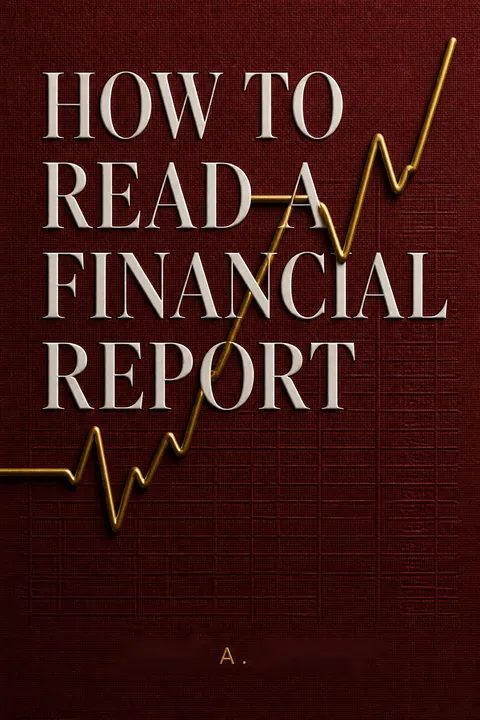


Key Takeaways
Read profit, financial position, and cash as three views of one business
Three questions, three statements. The income statement shows sales, expenses, and profit over a period. The balance sheet records assets, liabilities, and owners’ equity at one date. The statement of cash flows tracks cash moving through operations, investment, and financing. None can replace the others. In the book’s example, operating activities generated $3.105 million in cash, while net income was $2.642 million. Yet the company’s total cash fell by $470,000 after investments, borrowing, stock issues, and dividends were included.
Read them together. A profitable company can still run short of cash or carry too much debt. A cash increase alone does not prove that it earned a profit. The three statements provide different evidence about performance, resources, obligations, and the use of money.
The three-statement view is a compact way to resist a common error: treating one vivid number as a complete verdict. Profit captures performance under accounting rules, cash captures liquidity movement, and the balance sheet captures accumulated claims and resources. Each answers a different question, much like a dashboard with separate measures for speed, fuel, and engine temperature. The framework is useful precisely because the measures can disagree. Its limitation is that the statements are still summaries: they show what was recorded, not every operational cause behind it.
Trace each sale and expense into the balance sheet
Accruals place events in time. Accrual-basis accounting records revenue when earned and expenses when incurred, rather than waiting for cash to arrive or leave. A credit sale raises sales revenue and accounts receivable; collection later turns the receivable into cash. Products bought or made stay in inventory until sold, when their cost becomes cost of goods sold. An unpaid bill can create an expense and a liability before payment, while an advance payment can sit in prepaid expenses until the period it benefits.
Follow the connection. These links explain why profit differs from cash flow and why the balance sheet changes as business activity occurs. They also reveal where estimates and judgment enter. Sales returns, doubtful customers, damaged inventory, and future warranty work can all affect the timing or amount recorded.
This account-by-account method makes accounting less like a set of labels and more like a causal map. Each transaction has consequences that travel across statements, so a change in revenue may leave a footprint in receivables before it appears in cash. That perspective helps readers ask better questions: what asset or liability supports this reported result, and when will it convert into cash? The approach also exposes an important boundary: a plausible accounting entry is not proof that the underlying sale is sound or collectible.
Treat receivables and inventory as cash parked in the operating cycle
Time determines tied-up capital. The operating cycle runs from acquiring or making products, through holding and selling them, to collecting customer payments. The example company’s average customer took five weeks to pay, leaving $5 million in accounts receivable at year-end. If collection time fell to four weeks without losing sales, receivables would decline by $1 million, freeing cash and potentially reducing borrowing.
Inventory has the same trade-off. The company held products for an average of 13 weeks. Reducing that period to 10 weeks would release a projected $1.95 million, but stock that is too lean can mean missed orders. Turnover ratios become more useful when translated into weeks or days. Compare them with the company’s own history and competitors, then ask whether the time spent waiting is commercially justified.
The cash-cycle lens converts abstract balance-sheet totals into management questions about time. A receivable is not simply an asset; it is cash the company has earned but cannot yet use. Inventory is not merely stock on shelves; it is capital committed before a sale is completed. This makes operational efficiency and financial health visibly connected. Still, faster is not always better. Tighter credit can weaken customer relationships, and minimal inventory can damage service. The meaningful target is not the smallest balance, but an acceptable balance for the business model.
Expect growth to consume cash before it produces more
Expansion needs working capital. More sales often require more receivables and more inventory, tying up cash while the business waits for customers to pay and products to sell. In the example, planned growth raised net income by 15%, yet operating cash flow fell from $3.105 million in the prior year to $2.731 million. In a no-growth scenario, cash flow would have been $3.427 million. Higher profit did not mean more cash was immediately available.
Decline can release cash. When sales contract, receivables and inventory may shrink, releasing cash even as profit weakens. That temporary cash benefit is not proof that a declining business is healthy. Managers must distinguish a productive investment in growth from a cash squeeze, and determine whether released cash should support recovery or reduce debt.
Growth is often discussed as if it were an uncomplicated good. The cash-flow analysis adds a financing dimension: a company may need to fund the gap between paying for activity and collecting its proceeds. This resembles a timing problem in any expanding system, where capacity must be built ahead of its payoff. The lesson is not to avoid growth, but to budget for its cash demands. The opposite case also deserves care: shrinking operations may improve cash temporarily while eroding the business’s future earning power.
Never mistake depreciation or retained earnings for cash
Depreciation allocates past cost. In financial reporting, depreciation spreads the recorded cost of a long-lived asset across periods of use. It is not a cash payment in the period recorded. The example company recorded $785,000 of depreciation, which is added back to net income when calculating operating cash flow. Accumulated depreciation is deducted from original asset cost to calculate book value, which is not necessarily current market or replacement value.
Retained earnings are not a cash reserve. This balance records accumulated profit kept in the business, less distributions to owners. The company’s $2.642 million net income and $750,000 in dividends increased retained earnings by $1.892 million. That accounting increase does not identify which assets hold the value. The company could have retained earnings invested in inventory, buildings, receivables, or other assets rather than cash.
These distinctions matter because accounting terms can sound more tangible than they are. Depreciation describes a cost-allocation rule, not a pile of money set aside for replacement. Retained earnings describes a source of equity, not a checking account. Understanding the distinction prevents balance-sheet labels from being mistaken for spendable resources. The useful caution is that book values are designed to report historical cost allocation under rules, not to provide a current appraisal. Operational decisions about replacement and liquidity therefore need evidence beyond these accounting balances.
Use ratios as warning lights, not universal verdicts
Ratios sharpen questions. The current ratio compares current assets with current liabilities and offers a rough test of short-term debt-paying capacity. The example company’s was 2.18, above the commonly cited 2-to-1 guideline. The acid-test, or quick, ratio excludes inventory and prepaid expenses because they may be slower or harder to convert into cash. The debt-to-equity ratio compares all liabilities with owners’ equity; the example’s 0.54 indicated moderate leverage. Times interest earned compares earnings before interest and tax with interest expense.
Profitability also needs a denominator. Return on sales shows net income as a share of revenue; return on equity compares net income with owners’ capital. The example reported a 5.1% return on sales and an 11.4% return on equity. These results need comparison with past performance, industry conditions, risk, and alternative uses of capital, not a mechanical pass or fail.
Ratios compress a large set of statements into signals that can be compared and investigated. Their value is diagnostic: an unusual movement can point toward slower collections, excess inventory, rising debt, or thinner margins. Their danger is false universality. A ratio that is comfortable in one industry may be weak in another, and even a healthy-looking balance can conceal poor-quality assets. Ratios work best as prompts for explanation, especially across multiple years, rather than as self-contained investment conclusions.
Classify costs before deciding whether price or volume drives profit
Different costs respond differently. A management profit report can separate operating expenses into sales-revenue-sensitive costs, such as commissions; sales-volume-sensitive costs, such as packaging and delivery; and fixed costs, such as rent and salaried staff over the short term. This internal view gives managers more decision-useful information than an external income statement that may combine many costs into one broad line.
The example makes price powerful. With other factors held constant, a 5% sales-price increase raised profit margin before fixed expenses by 22.3%. A 5% increase in sales volume raised it by only 5%, because variable costs rose along with the extra units sold. But customers may resist higher prices, and greater volume may require added capacity. The calculation informs the decision; it does not settle the market response.
The distinction between price-sensitive, volume-sensitive, and fixed costs reveals why equal percentage changes in sales do not produce equal changes in profit. It also shifts management attention from revenue growth alone toward the structure of contribution and capacity. This is especially useful when budgets are being debated: each proposed change can be traced through the costs it activates. The model is necessarily conditional, however. It assumes other factors remain unchanged, while real customers, competitors, and production limits may respond to the very price or volume change being considered.
Question accounting choices without treating every estimate as fraud
Methods shape reported results. Acceptable choices about sales timing, inventory costing, depreciation, bad debts, and warranty costs can change profit and asset values. Conservative methods tend to recognize profit later; aggressive methods tend to recognize it sooner. Managers may also shift discretionary spending, adjust estimates, or accelerate shipments to influence a period’s reported result. The book calls this massaging the numbers and distinguishes it from cooking the books, which falsifies transactions or conceals real obligations.
Look for patterns and explanations. Consistent methods help year-to-year comparison, while abrupt changes or a widening gap between profit and operating cash flow deserve attention. Accounting choices do not alter the cash that actually moved during the period, although window dressing can make the year-end cash position appear stronger by recording later receipts too early.
Skepticism is most useful when it is calibrated. Accounting requires estimates and policy choices because business events do not always arrive with a single obvious measurement. That discretion creates room for legitimate judgment, bias, or deliberate deception, which should not be collapsed into one category. A reader can focus on incentives, consistency, and the relation between earnings and cash without assuming guilt from every estimate. The most revealing clues often lie in changes over time and in whether management explains them clearly.
Read footnotes and audit opinions as evidence with limits
The statements leave things out. Footnotes explain accounting methods and disclose matters such as debt terms, leases, lawsuits, pensions, and stock options. They are part of the financial report, not optional background, because the main statements are compressed summaries. Yet management has discretion over clarity and detail, and technical, vague notes can make material risks hard to assess.
An audit is not a guarantee. A clean opinion means the auditor found no material departure from reporting standards, not that every transaction was checked or that fraud is impossible. Auditors use samples and risk-focused tests. A qualified opinion flags a significant exception; an adverse opinion says the statements are misleading, while a disclaimer means the auditor cannot provide an opinion. Audits improve credibility, but readers should still inspect the opinion and disclosures.
This is a useful account of institutional trust: financial statements gain credibility through shared standards, disclosure, and independent examination, but each safeguard has a scope. The footnote is where many assumptions become visible, while the audit report clarifies what the auditor did and did not conclude. Neither is a substitute for comprehension. Dense technical language can comply formally while frustrating actual understanding, so readers should treat opacity itself as a reason to seek clarification, not as proof of misconduct.
Use reports to understand a business, not to outguess every investor
Start with the financial architecture. Financial statements help reveal a company’s profit record, debt burden, cash needs, ownership structure, and ability to meet obligations. They are historical reports, not direct valuations of a business or forecasts of its future. A private company’s book equity, for example, does not establish what a buyer would pay for the business as a going concern.
Compare before concluding. A quick screen is to compare the percentage change in sales with changes in net income and operating assets. If sales rise 10% while inventory jumps 50%, the mismatch merits investigation. Ratios and trends can help an investor understand what they own, but the book cautions that public-market information is widely available, making it unlikely that basic ratio calculations alone will uncover a secret the market has missed.
The most durable use of financial reports may be informed participation rather than market-beating prediction. Statements help investors and lenders know the structure of the enterprise they are backing, while comparisons expose questions that headline earnings can hide. This is a modest but important standard for analysis: better understanding can improve judgment even when it does not create an informational advantage. Historical numbers remain incomplete guides to future value, which also depends on competition, strategy, and events not yet reflected in the accounts.
Analysis
The book’s central achievement is to turn financial statements from three separate documents into a connected model of business activity. Its teaching sequence follows the movement of economic events: sales create receivables, production creates inventory, delayed payments create liabilities, and cash-flow adjustments reveal the timing gap between earning and collecting. That structure is more valuable than memorizing account definitions because it explains why the numbers differ and where readers should look for causes.
Its strongest practical insight is that profit, solvency, and cash are distinct managerial responsibilities. The growth example makes the distinction memorable: earnings can improve while operating cash falls because more resources are tied up in receivables and inventory. This is not merely an accounting curiosity. It is a financing constraint that can shape whether a business can expand without borrowing, issuing shares, or drawing down cash.
The book also gives readers a disciplined form of skepticism. It explains how permissible accounting policies and estimates affect reported outcomes, distinguishes manipulation from outright fraud, and describes what an audit opinion can and cannot establish. This avoids two easy but unhelpful positions: trusting every polished report, or assuming every accounting judgment is deceptive.
Some guidance needs contextual judgment. Conventional ratios such as a 2-to-1 current ratio are heuristics, not laws of business health. The text acknowledges variation, but readers should emphasize company history, industry economics, asset quality, and the timing of obligations. Likewise, cash flow is not inherently superior to earnings: a temporary release of cash during decline can accompany deteriorating prospects, while investment in growth can depress current cash while building future capacity.
The most productive reading habit is therefore investigative. Identify the question, find the statement that addresses it, trace the connected accounts, compare periods, and consult the footnotes for the assumptions behind the figures. Financial reports do not tell the whole story, but they provide a structured way to ask much sharper questions about it.
Review Summary
How to Read a Financial Report is highly praised for its clear explanations of financial statements and their interconnections. Readers appreciate its accessibility for non-accountants and its practical approach to understanding financial reports. Many find it useful for personal investing and business management. The book is commended for demystifying complex financial concepts and providing valuable insights into interpreting financial data. Some readers note that while it's an excellent primer, it may not be suitable for those seeking advanced knowledge.
People Also Read









Glossary
Accrual-basis accounting
Records earned activityAn accounting method that recognizes revenue when it is earned and expenses when they are incurred, rather than when cash is received or paid. It uses accounts such as receivables, inventory, prepaid expenses, and payables to assign business activity to the period it belongs to and to report assets and liabilities.
Operating cycle
From purchase to collectionThe recurring sequence in which a business acquires or makes products, holds them until sale, sells to customers, waits for payment, and receives cash. Its length affects how much capital is tied up in inventory and receivables, and helps explain a company’s need for cash and financing.
Cash flow from operating activities
Cash from core operationsThe cash generated or used by a company’s profit-making activities during a period. Under the indirect method, it begins with net income and adjusts for noncash expenses and changes in operating assets and liabilities. It differs from net income because revenue and expenses are recorded on an accrual basis.
EBITDA
Earnings before selected chargesAn abbreviation for earnings before interest, income tax, depreciation, and amortization. It is sometimes presented as a cash-flow measure, but it leaves out cash effects from working-capital changes and excludes interest and income tax payments. The book cautions that EBITDA should not be mistaken for cash flow from operating activities.
Massaging the numbers
Shifting reported resultsManagement actions that influence the timing or estimates used to record legitimate revenue and expenses, often to smooth earnings or move profit toward a desired level. The term differs from accounting fraud, which involves falsifying transactions or hiding real assets, expenses, or liabilities. The boundary can become unclear when manipulation is pushed too far.
Window dressing
Improving reported year-end appearanceA practice that makes a company’s financial position appear stronger at a reporting date without improving its underlying condition. The book’s example is holding the books open after year-end and recording cash collections received in the new period as though they arrived before year-end, making cash look higher and receivables lower.
Quality of earnings
Trustworthiness of reported profitA judgment about how reliably a company’s reported earnings reflect its economic performance. Readers consider the accounting methods, estimates, consistency, and whether operating cash flow supports the reported profit. The phrase has no single precise definition, but it generally concerns the integrity and credibility of earnings.
Acid test ratio
Near-cash coverage of liabilitiesA liquidity ratio that compares cash, short-term marketable securities, and accounts receivable with current liabilities. It excludes inventory and prepaid expenses because they may take longer to convert into cash or may not be available to pay debts. It is also called the quick ratio.
Return on equity
Profit relative to owners’ capitalA profitability ratio calculated by dividing net income available to common shareholders by shareholders’ equity. It indicates the earnings generated relative to the owners’ recorded investment in the business. Interpretation requires comparison with industry results, risk, and alternative investment opportunities.
FAQ
What's "How to Read a Financial Report" by John A. Tracy about?
- Purpose of the Book: The book aims to demystify financial reports, making them accessible to business managers, investors, and anyone interested in understanding a company's financial health.
- Focus on Financial Statements: It provides a detailed explanation of the three primary financial statements: the income statement, balance sheet, and statement of cash flows.
- Emphasis on Cash Flows: A unique feature of the book is its emphasis on understanding cash flows, which are crucial for assessing a business's financial condition.
- Educational Approach: The book is structured to gradually build the reader's understanding, starting with basic concepts and moving to more complex financial analysis.
Why should I read "How to Read a Financial Report"?
- Improve Financial Literacy: It enhances your ability to read and interpret financial statements, a critical skill for business decision-making.
- Investment Insights: Investors can gain insights into evaluating a company's financial health and making informed investment decisions.
- Practical Examples: The book uses practical examples and exhibits to illustrate financial concepts, making it easier to grasp complex ideas.
- Comprehensive Coverage: It covers a wide range of topics, from basic accounting principles to advanced financial analysis, making it suitable for both beginners and experienced readers.
What are the key takeaways of "How to Read a Financial Report"?
- Interconnected Financial Statements: Understanding how the income statement, balance sheet, and cash flow statement interrelate is crucial for a complete financial analysis.
- Cash Flow Importance: Cash flow is a more reliable indicator of a company's financial health than profit alone, as it shows the actual liquidity position.
- Accounting Methods Matter: The choice of accounting methods can significantly impact reported profits and financial condition, highlighting the need for careful analysis.
- Footnotes are Essential: Footnotes in financial statements provide critical additional information that can affect the interpretation of the financial data.
What are the best quotes from "How to Read a Financial Report" and what do they mean?
- "Profit is an accounting-determined number that requires much more than simply keeping track of cash flows." This highlights the complexity of profit calculation beyond mere cash transactions.
- "Cash flows are the heartbeat of every business." Emphasizes the critical role of cash flow in maintaining business operations and financial health.
- "The market will fluctuate." A reminder of the inherent volatility in financial markets, underscoring the importance of understanding financial reports to make informed decisions.
- "Retained earnings is not—I repeat, is not—an asset." Clarifies a common misconception, stressing that retained earnings represent accumulated profit, not cash or physical assets.
How does John A. Tracy explain the importance of cash flows in the book?
- Cash Flow vs. Profit: Tracy explains that cash flow provides a more accurate picture of a company's financial health than profit, as it reflects actual cash available.
- Cash Flow Statement: The book details how to read and interpret the cash flow statement, which shows cash inflows and outflows from operating, investing, and financing activities.
- Cash Flow Analysis: Understanding cash flow helps in assessing a company's ability to meet its obligations, invest in growth, and return value to shareholders.
- Practical Examples: Tracy uses examples to illustrate how changes in cash flow can impact a business's financial condition and decision-making.
What are the three financial statements discussed in "How to Read a Financial Report"?
- Income Statement: Reports a company's financial performance over a specific period, detailing revenue, expenses, and profit or loss.
- Balance Sheet: Provides a snapshot of a company's financial condition at a specific point in time, listing assets, liabilities, and shareholders' equity.
- Statement of Cash Flows: Shows the cash generated and used during a period, divided into operating, investing, and financing activities.
- Interconnections: The book emphasizes how these statements are interconnected and how changes in one can affect the others.
How does the book address the reliability of financial reports?
- Accounting Standards: Tracy discusses the role of generally accepted accounting principles (GAAP) in ensuring consistency and reliability in financial reporting.
- Audits: The book explains the importance of audits by independent CPAs in verifying the accuracy of financial statements.
- Potential Manipulations: It warns about the potential for accounting fraud and the importance of understanding the methods used to prepare financial statements.
- Footnotes and Disclosures: Emphasizes the need to read footnotes for a complete understanding of a company's financial situation.
What is the significance of footnotes in financial statements according to the book?
- Additional Information: Footnotes provide essential details that are not included in the main financial statements, such as accounting policies and contingent liabilities.
- Clarification of Numbers: They help clarify the numbers reported in the financial statements, offering insights into the assumptions and estimates used.
- Risk Assessment: Footnotes can reveal potential risks and uncertainties that might affect a company's financial health.
- Transparency: They contribute to the transparency of financial reports, allowing stakeholders to make more informed decisions.
How does John A. Tracy explain the concept of retained earnings?
- Definition: Retained earnings represent the cumulative profit that a company has reinvested in the business rather than distributed as dividends.
- Not an Asset: Tracy clarifies that retained earnings are not cash or physical assets but a component of shareholders' equity.
- Impact on Financial Health: Retained earnings can indicate a company's ability to fund growth and weather financial downturns.
- Connection to Profit: The book explains how net income increases retained earnings, while dividends decrease it.
What are some common accounting methods discussed in the book?
- Inventory Valuation: Methods like FIFO (first-in, first-out) and LIFO (last-in, first-out) can significantly impact reported profits and inventory values.
- Depreciation: Different methods, such as straight-line and accelerated depreciation, affect the timing of expense recognition.
- Revenue Recognition: The timing of when revenue is recognized can vary, affecting reported income.
- Impact on Financial Statements: The choice of accounting methods can lead to significant differences in financial statements, affecting analysis and decision-making.
How does the book address the impact of growth and decline on cash flow?
- Growth Penalty: Growth often requires additional investment in assets, which can temporarily reduce cash flow despite increased profits.
- Decline Reward: Conversely, a decline in sales can free up cash as assets are liquidated, even if profits decrease.
- Steady-State Scenario: In a no-growth scenario, cash flow is stable and primarily driven by depreciation and net income.
- Strategic Implications: Understanding these dynamics helps managers plan for capital needs and assess the sustainability of growth strategies.
What is the role of financial statement ratios in analysis according to the book?
- Performance Evaluation: Ratios like return on sales and return on equity help assess a company's profitability and efficiency.
- Solvency and Liquidity: Ratios such as the current ratio and debt to equity ratio provide insights into a company's ability to meet its obligations.
- Investment Decisions: Ratios like earnings per share (EPS) and price/earnings (P/E) ratio are crucial for evaluating stock investments.
- Comparative Analysis: Ratios allow for comparisons with industry benchmarks and historical performance, aiding in strategic decision-making.
Download PDF
Download EPUB
.epub digital book format is ideal for reading ebooks on phones, tablets, and e-readers.








