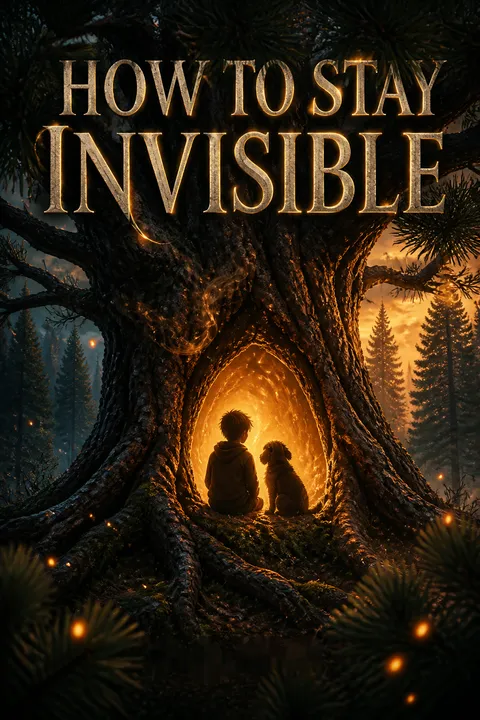


Plot Summary
The Empty Trailer
Twelve-year-old Raymond Hurley1 is used to his parents14 forgetting him. They have moved so often that River Mill is his third town and middle school this year, and he sometimes walks the three miles home when his mother14 fails to collect him.
One November evening, he reaches their rented trailer to find his belongings packed, the doors locked, and Rosie,2 his beloved dog, waiting outside. The landlord tells him Raymond’s parents14 returned their keys and left hours earlier.
His father14 has also vanished from the sawmill after taking his wages in advance. Raymond1 remembers an earlier abandonment that put him in a children’s home, and fears being sent back there. He takes Rosie2 and his few possessions to the school, still pretending his parents14 might return.
The abandonment is not a sudden break from a secure childhood. It is the final, unmistakable form of a pattern Raymond has spent years explaining away. His first response is to protect himself from the truth by inventing ordinary reasons his parents might be absent. That denial is psychologically credible: believing they will return lets him preserve attachment to people who repeatedly fail him. His fear of the children’s home also makes asking authorities for help feel dangerous, even when he is in immediate need. Rosie matters as more than company. Caring for her gives Raymond a relationship in which attention is reliable and reciprocal, a fragile alternative to the parental bond he cannot stop hoping for.
A Schoolday in Hiding
After spending the night in the school’s baseball dugout, Raymond1 hides his bags and Rosie2 in the woods, then slips into the cafeteria with the arriving students. He meets Harlin,3 a talkative classmate who shares his orange and keeps trying to befriend him. In science, Raymond1 uses a battery and a gum wrapper to light a candle, then pockets supplies for his camp.
Ms. Marcus,6 his English teacher, quietly leaves toothpaste in his cubby after noticing what he wrote for a class exercise. Raymond1 does not ask what she knows. Following Rosie2 deeper into the woods, he finds a hollow fallen tree large enough to shelter them. He builds a fire with his improvised method and gathers wood and water, turning a place to hide into a rough camp.
Raymond’s competence is real, but it has been shaped by neglect rather than chosen as an adventure. The same habits that once helped him endure an unsafe home now help him construct shelter, conserve supplies, and move unnoticed through school. Harlin and Ms. Marcus offer small acts of connection, yet Raymond receives kindness as something to manage cautiously, not trust. His silence is not indifference; it is a learned strategy for limiting the consequences of being seen. The hollow tree gives that strategy a physical form: it protects him, but it also lets adults continue not knowing that he is alone.
Hunger Makes the Rules
Raymond1 catches a small fish for Thanksgiving, but when he later eats a dead bass he finds by the river, violent sickness leaves him too weak to stand. Rosie2 stays beside him until he can make the slow walk back to the school dumpsters, where he finds bananas, apples, peanut butter, and canned sausages.
He begins salvaging cafeteria leftovers and learns that the river cannot be trusted to feed them every day. A minnow caught in a bottle trap eventually lets him catch catfish more reliably.
Cold and hunger still threaten the camp, so Raymond1 takes Harlin’s3 offer of birthday candy and gum, though his birthday is months away. At the Winter Jamboree, Harlin3 wins NASCAR tickets, then trades them for the sleeping bag Raymond1 needs to survive the coming cold.
The wilderness plot turns on practical knowledge, but the book refuses to make survival look effortless. Raymond’s resourcefulness can solve specific problems, such as starting a fire or trapping minnows, while hunger and illness expose the limits of improvisation. His decision to eat the dead bass is less a foolish lapse than a choice made under deprivation, where immediate need overwhelms careful judgment. The sleeping bag brings another kind of rescue: Harlin gives up a cherished prize without being asked twice. Raymond has tried to make himself invisible enough to need nobody, yet his continued survival increasingly depends on other people noticing what he needs.
The Coyote’s Warning
During the snowy school break, a coyote15 approaches Raymond1 and Rosie2 in the woods. It plays roughly with Rosie,2 then injures her leg when she bites to protect Raymond.1 He cleans the cut, packs it with snow, and tries to keep her from licking it, but the wound swells and turns infected. With Rosie2 feverish and barely able to walk, Raymond1 carries her toward town on Christmas Day, only to find the shops closed.
An older fisherman from the river recognizes the danger and brings them to his cabin. The man, Stigs,5 reveals that he is a former army surgeon and treats Rosie’s2 wound himself. Raymond,1 exhausted and hungry, falls asleep while Stigs5 works. When he wakes, Rosie2 is resting safely, and Stigs5 has made him a hot meal.
Rosie’s injury forces Raymond across a boundary he has defended since the abandonment: he must depend on a stranger. His earlier wilderness successes have taught him that careful effort can solve many problems, but infection is beyond what he can safely handle. Stigs earns trust through action rather than reassurance. He treats Rosie, feeds Raymond, and does not immediately force him to explain himself. The scene also reverses Raymond’s usual role. He has been Rosie’s caretaker, but now his own fear and physical collapse make it impossible to pretend he can manage everything alone. Help arrives not as a grand rescue, but as a person willing to stay and do difficult work.
A Cabin Before January
Stigs5 lets Raymond1 remain at the cabin while Rosie2 recovers, and Raymond1 helps gather eggs, chop wood, repair the chicken coop, and cook meals. The ordinary tasks and steady warmth make the cabin feel unlike the institutions Raymond1 fears. As they work, Stigs5 tells him about his own childhood in an orphanage and the losses that have left him living alone.
Raymond1 recognizes a kind of loneliness he understands, though he does not reveal that his parents14 have abandoned him. He has told Stigs5 they are away and will return after New Year’s. When Rosie2 can walk again, Raymond1 leaves the cabin with food, medicine, Stigs’s5 old hat, and a knife. Stigs5 offers help if Raymond1 needs it, but Raymond1 cannot bring himself to tell the truth.
The cabin offers Raymond a brief experience of care built from routine. Stigs does not need Raymond to perform gratitude or disclose his history before he can share food and work. That steadiness gives Raymond a glimpse of family life as a set of repeated actions, not a sentimental ideal. Yet safety does not erase the habits that abandonment has created. Raymond lies about his parents because his past has taught him that disclosure can lead to removal and loss of control. Stigs’s own history gives him insight into Raymond’s guardedness, but empathy alone cannot make Raymond ready to risk dependence. Leaving is therefore both a return to hardship and an assertion of the only independence he knows.
A Friend Tells the Truth
Back at River Mill, Raymond1 resumes his hidden routine and begins a science project with Lexi,4 a red-haired classmate who proposes testing how drinks stain teeth. Harlin3 is suspended after punching Joseph Banker,7 who mocked Harlin’s3 imprisoned mother.
When Harlin’s father later arrives at school in an agitated state and police take him away, Raymond1 stays beside his friend.3 In the principal’s office, he finally admits that his own parents14 have been gone for more than a month. Harlin3 does not expose him; instead, he offers to bring supplies if Raymond1 needs them.
Raymond1 also gives Harlin3 a small wooden car for his birthday, a handmade gesture that returns some of the care Harlin3 has shown him. Their friendship becomes less one-sided because Raymond1 has begun to share what hurts.
Harlin’s crisis makes visible the difference between a secret and a burden. Raymond has concealed his situation to avoid intervention, but watching Harlin face public humiliation and family instability changes what silence means. He does not reveal everything; he offers only the fact that his parents are gone. Even that limited disclosure is a significant shift from his long-standing belief that safety requires saying nothing. Harlin responds without demanding details, showing a form of friendship that respects boundaries while making practical help available. Raymond’s carved gift matters for the same reason: he is no longer only receiving kindness. He is beginning to participate in relationships through chosen acts of care.
The Secret at the River
As winter deepens, Raymond1 struggles to stay warm, finish schoolwork, and keep food in camp. Stigs,5 worried by Raymond’s1 evasions, asks Social Services about his family. Raymond1 hears this as a threat of being sent back into care and runs from their next meeting at the river, leaving his fish behind.
He avoids Stigs5 afterward. At the science fair, Raymond1 and Lexi4 win third place for their teeth experiment, but he feels exposed among parents celebrating their children. Stigs5 appears anyway and apologizes for overstepping, admitting he had been worried.
Raymond1 tells him he will not return to the children’s home, and Stigs5 accepts the boundary without forcing an explanation. Raymond1 embraces him before he leaves. Their bond resumes, though the fear that drove Raymond1 away has not disappeared.
Stigs’s attempt to help reproduces the shape of Raymond’s deepest fear: an adult gathers information, then an institution may take control of his life. Raymond cannot yet distinguish concern from coercion because previous experiences have made them arrive together. His flight is therefore a protective response, even though it damages a relationship he values. At the science fair, the contrast between other students’ families and Raymond’s isolation sharpens his shame. Stigs’s return matters because he does not argue Raymond out of that fear or demand trust as proof of affection. The embrace signals a negotiated closeness: Raymond can accept Stigs while still deciding what he is not ready to tell.
The Dance He Almost Misses
Raymond1 tells Stigs5 he has no clothes for the school dance, and Stigs5 lends him a shirt and trousers kept in his closet. After a haircut and hot shower at the cabin, Raymond1 arrives at the gym to find Harlin3 dancing confidently, while Lexi4 has come with her friends.
Raymond1 spends most of the evening watching rather than joining in. Just as he gathers the nerve to approach Lexi,4 Joseph7 asks her to dance, and Raymond1 leaves. Lexi4 follows him outside, where they exchange shy compliments before she returns to the gym.
The next day, Raymond1 tells Stigs5 what happened and admits he wishes he had acted sooner. Stigs5 encourages him not to let chances pass unused. Raymond1 returns to school and keeps building his friendships, but his private camp remains vulnerable to discovery.
The dance translates Raymond’s fear of visibility into a small, recognizable risk. He accepts borrowed clothes, lets Stigs cut his hair, and enters a room where he cannot control how others see him. But the moment he has practiced internally never arrives as planned. Joseph’s approach to Lexi triggers Raymond’s familiar retreat, while Lexi’s decision to follow him outside complicates his assumption that missing the dance means losing the connection. Stigs’s advice is not a cure for Raymond’s hesitation; it gives him language for a pattern he may eventually change. His outward social life is growing, but the hidden camp still depends on secrecy.
Joseph Finds the Hollow
After Lexi4 invites Raymond1 to study at her house, he cannot explain that he has no ordinary home or way to get there. Shame makes him withdraw from her and even snap at Harlin.3
Then Joseph7 follows him into the woods and finds the hollow, sleeping bag, drying clothes, Rosie,2 and Hank,15 the coyote Raymond1 has gradually befriended. Joseph7 panics at the sight of Hank15 and runs back toward school. Certain that adults will come to take him away, Raymond1 packs his few possessions, wrecks the shelter, and flees with Rosie.2
He sends Hank15 away and hides beside a stretch of river he does not know well. While trying to fish, Raymond1 steps into a cottonmouth’s path. The snake bites his calf; poison and shock overwhelm him before he can reach his supplies.
Joseph’s discovery turns Raymond’s chosen invisibility into an impossible condition. Until now, secrecy has protected him from authorities, but it has also kept friends from understanding what he needs. His withdrawal from Lexi is not a rejection of her; it is the shame of being unable to meet the ordinary terms of friendship, such as visiting someone’s home. When Joseph sees the camp, Raymond acts as though exposure can be outrun. Destroying his shelter and abandoning Hank are desperate attempts to regain control, but they leave him less safe than before. The snakebite makes the cost immediate: isolation has narrowed his options at exactly the moment he needs help.
Found Beside the River
When Raymond1 fails to appear at school, staff and police search the woods. Rosie2 runs to Stigs,5 who follows her to Raymond,1 where Hank15 stands nearby. The rescuers mistake the coyote for a threat and shoot him before realizing Raymond1 has been bitten by a cottonmouth. At the hospital, Raymond1 learns Hank15 is dead and grieves the animal who had guarded and fed him.
Harlin,3 Ms. Marcus,6 and Stigs5 visit, and Raymond1 begs not to be sent back to a children’s home. Stigs5 explains his connection to Ms. Marcus:6 she had been engaged to Stigs’s son, whose death left them both carrying grief. Stigs5 tries to take Raymond1 in, but the agency places him with foster parents Alice11 and Thomas Adams12 in nearby Commerce.
The rescue saves Raymond’s life but cannot preserve the entire world he built. Rosie’s bond with him becomes the path back to human help, while Hank’s death reveals the danger of interpreting unfamiliar behavior without context. Raymond’s grief is sharpened by the fact that the people who come to save him cannot know what Hank meant to him until afterward. The hospital also brings separate losses into relation: Ms. Marcus’s concern, Stigs’s guardedness, and Raymond’s distrust all have histories that were invisible to one another. Stigs’s attempt to provide a home is sincere, but the placement decision shows that affection does not automatically grant an adult authority to protect a child.
No Longer Invisible
While recovering, Raymond1 meets Alice11 and Thomas Adams,12 foster parents who show him photographs of the children they have raised and promise he can bring Rosie.2
Lexi4 visits secretly at night and, after hearing how the abandonment led him to the woods, reveals that she left toothpaste in his cubby and the five dollars in his math book because she had noticed what he needed. Raymond1 apologizes for hiding his life, and they kiss. Harlin3 and Lexi4 continue visiting, while Stigs5 tells Raymond1 he can return to fish and see him.
Stigs5 also buries Hank15 overlooking the river. When the Adamses11 take Raymond1 and Rosie2 home, their mention of spaghetti recalls the rare family meal he once cherished. Raymond1 cannot know yet what his new home will become, but he is ready to be seen.
The resolution does not erase Raymond’s losses or promise that trust will come easily. Instead, it gives him several relationships that can hold different parts of his life: the Adamses offer a household, Harlin offers loyal companionship, Lexi sees needs he tried to conceal, and Stigs remains connected through fishing and care for Rosie. Lexi’s quiet gifts reveal that Raymond was not as unseen as he believed, though her help could not by itself solve the danger he faced. The final meal echoes his best childhood memory, but this time he enters it with a wider circle of possible support. His change is not from self-reliance to dependence; it is from believing he must survive alone to allowing others to know him.
Analysis
How to Stay Invisible makes survival both a practical problem and a learned psychological strategy. Raymond1 can start a fire, catch fish, construct shelter, and stretch scraps of food, but those skills do not resolve the central danger: he is a child managing an adult-sized burden without a safe adult. The wilderness is harsh, yet it offers clear rules. Cold requires insulation; hunger requires food; a wound requires care. Human relationships are harder because help has previously carried the threat of separation and institutional control.
The novel carefully distinguishes independence from isolation. Raymond’s1 competence deserves respect, but it should not be mistaken for proof that he does not need care. His routines keep him alive while also making his suffering legible only to Rosie,2 then gradually to Harlin,3 Lexi,4 and Stigs.5 Each friendship develops through concrete acts: sharing food, giving up a prize, completing a science project, offering a warm bed, or showing up at a hospital. These gestures counter Raymond’s1 expectation that attention will arrive only when he has done something wrong.
The story also treats visibility as an ethical responsibility. Teachers can recognize Raymond’s1 intelligence and still miss the crisis underneath it; classmates can notice his clothes without understanding why they are worn. The eventual intervention is necessary, but it is not painless. Hank15 is killed because rescuers misread the scene, and Raymond1 loses the woodland life that had become his refuge. Safety cannot be presented as a simple return to normal.
The ending offers hope without promising instant healing. The Adamses,11 Harlin,3 Lexi,4 and Stigs5 do not replace one another or erase Raymond’s parents.14 Instead, they form a network of possible care. Raymond’s1 movement from hiding to wanting to be seen is therefore not a conversion into effortless trust. It is the first difficult decision to let other people know enough to stand beside him.
Review Summary
How to Stay Invisible is a deeply emotional middle-grade novel about a 12-year-old boy abandoned by his parents. Readers praise its heartwrenching yet hopeful story of survival, resilience, and found family. Many were moved to tears by Raymond's struggles and the kindness he encounters. The book is compared to survival classics like "Hatchet" and "My Side of the Mountain," but with added emotional depth. While some found the ending abrupt, most gave it high ratings for its compelling narrative and important themes of invisibility and empathy.
Characters
Raymond Hurley
Resourceful hidden childRaymond is a bright, observant twelve-year-old whose frequent moves and unreliable parents14 have taught him to keep his needs private. He is practical under pressure: he improvises fire, food, and shelter from what he can find, and he works hard to protect Rosie2. His self-reliance is both a strength and a defense. Earlier experiences in a children’s home have taught him that asking adults for help can mean losing control of his life, so he studies people carefully before trusting them. At school he tries to disappear, yet he notices kindness and longs for ordinary family rituals. His development centers on learning that accepting care need not erase his independence.
Rosie
Faithful canine companionRosie is Raymond’s1 small, sandy-brown dog and most dependable companion. She stays close through moves, hunger, cold nights, and unfamiliar woods, offering affection without asking Raymond1 to explain himself. Her vulnerability makes Raymond’s1 caretaking instinct concrete: he shares scarce food with her and risks seeking help when she is injured. Rosie is not merely a comfort to him; their relationship gives him a daily responsibility and a dependable source of mutual attachment. Her reactions also help Raymond1 read the woods and the people around him.
Harlin
Unlikely loyal friendHarlin is Raymond’s1 tall, thin classmate, a nonstop talker with an enduring passion for racing cars. Raised by his grandmother13 in River Mill, he wants connection and keeps offering it even when Raymond1 answers briefly or tries to leave. His friendliness is not polished, but it is generous: he shares food, remembers what matters to Raymond1, and does not require him to become more outgoing before treating him as a friend. Harlin carries his own family difficulties beneath his cheerful manner. His openness gives Raymond1 a model of friendship that can survive awkwardness, silence, and painful truths.
Lexi
Quietly attentive classmateLexi is a red-haired student in Raymond’s1 science class who is curious, capable, and more observant than he first realizes. She approaches him through shared work rather than forcing intimacy, and their teeth experiment gives them a reason to spend time together. Lexi is comfortable challenging classmates who behave cruelly, but she also has her own insecurities about school and athletics. Her attention to small details allows her to recognize needs Raymond1 tries to hide. She represents a friendship built on practical collaboration, respect, and the possibility of being known without being pressured.
Stigs
Gruff river guardianStigs, an older fisherman and former army surgeon, lives alone in a modest cabin near the river. He speaks sparingly and often disguises tenderness with gruffness, but his care is visible in what he does: he treats Rosie2, feeds Raymond1, shares work, and teaches him to fish and manage the cabin. His past includes isolation and profound grief, leaving him wary of closeness even as he recognizes loneliness in others. He understands why a child might resist help, but his concern can lead him to act before Raymond1 is ready. Their bond grows through shared tasks and quiet company.
Ms. Marcus
Watchful English teacherMs. Marcus is Raymond’s1 English teacher, known for being strict without shouting and attentive without making a spectacle of students. She notices his academic ability, his changing performance, and the small signs that he may need support. Her help is careful, including a quiet gesture that allows Raymond1 to accept something without public scrutiny. She also understands that pressing a guarded child can make him retreat. Her connection to Stigs5 gives her concern a personal history, though Raymond1 does not initially know it.
Joseph Banker
Provoking classmateJoseph is a student who uses mockery and social pressure to unsettle classmates, especially Raymond1 and Harlin3. He is quick to exploit sensitive family information and often assumes that public confidence gives him control of a situation. His behavior helps make school feel unsafe for Raymond1, but it also draws out moments when Raymond1 chooses to defend a friend or stand his ground. Joseph is not the source of Raymond’s1 deeper hardship; he is a peer whose cruelty makes that hardship harder to conceal.
Mr. Rosen
Encouraging science teacherMr. Rosen teaches Raymond’s1 science class and gives students hands-on problems that reward curiosity and experimentation. He recognizes Raymond’s1 ingenuity when Raymond1 finds a way to light a candle with a battery and gum wrapper. His class supplies practical knowledge that Raymond1 later adapts to survive. Mr. Rosen’s encouragement is genuine but mostly limited to the classroom, showing how a student’s abilities can be visible to a teacher while the circumstances shaping his life remain hidden.
Mr. Brewer
Demanding math teacherMr. Brewer is Raymond’s1 former football-coach math teacher, whose classroom runs on drills, quizzes, and strict expectations. When Raymond1 falls asleep from cold and exhaustion, Mr. Brewer publicly makes him stand for the lesson, worsening Raymond’s1 fear of being noticed. He also appears within the school’s wider social world, where students’ needs are not always understood. His role shows how ordinary discipline can become humiliating when adults do not see the conditions behind a child’s behavior.
Mrs. Harding
Firm school principalMrs. Harding is River Mill Middle School’s principal, a commanding administrator who handles student conflict and school safety. She disciplines the boys involved in the basketball-game incident and later coordinates the response when Raymond1 is missing. She tries to be fair within the information she has, though the school does not initially understand Raymond’s1 circumstances. Her practical authority contrasts with Raymond’s1 fear that any adult intervention will send him back into care.
Alice Adams
Prospective foster motherAlice Adams is one of the foster parents who agrees to welcome Raymond1 into her home. She speaks to him directly and acknowledges that living together will require adjustment rather than pretending the change will be effortless. She and her husband12 have cared for foster children before and remain connected to them. Her warmth gives Raymond1 a possibility he has little experience imagining: a household where a child can be included in ordinary plans and treated as a person with a future.
Thomas Adams
Practical foster fatherThomas Adams is Alice’s11 husband and Raymond’s1 prospective foster father. He shares photographs of the family they have built through fostering and speaks openly about welcoming Raymond1 and Rosie2. His work brings him regularly between Commerce and River Mill, giving Raymond1 a tangible link to the friends and places he may miss. Thomas’s practical friendliness, especially his interest in learning to fish from Raymond1, offers connection without treating the boy only as someone to be rescued.
Harlin’s grandmother
Steady family caretakerHarlin’s grandmother raises him in River Mill and works shifts that sometimes leave him waiting after school. She sets rules and consequences when he gets into trouble, while still providing the stable home and affection he depends on. Her presence gives Harlin3 a family connection unlike Raymond’s1, though his household also carries unresolved difficulties. She is a practical, largely offstage caretaker whose reliability matters to Harlin’s3 sense of belonging.
Raymond’s parents
Unreliable absent parentsRaymond’s mother and father move from town to town and repeatedly fail to provide dependable care. Raymond1 remembers moments when life with them felt gentler, which helps explain why he continues hoping they will return even after years of neglect. Their instability has taught him to cook, clean, and manage alone, but it has also made ordinary dependence feel dangerous. The parents are largely absent from the action, yet their choices shape nearly every decision Raymond1 makes.
Hank
Playful wild companionHank is the coyote Raymond1 gradually comes to know around his woodland camp. His energetic, puppy-like behavior contrasts with the threat Raymond1 initially expects from a wild animal. Hank sometimes brings prey, keeps close to camp, and becomes part of Raymond1 and Rosie’s2 uneasy household. Their companionship depends on patience and observation rather than taming or ownership, reflecting Raymond’s1 growing ability to recognize care in forms he did not expect.
Mrs. Bradsher
Impatient school secretaryMrs. Bradsher works at the middle school’s front office and repeatedly stays late when Raymond’s mother14 fails to pick him up. Her frustration reflects the visible inconvenience of Raymond’s1 situation, while the reasons for it remain out of her sight.
Mr. Ingle
School custodianMr. Ingle handles cafeteria cleanup and takes the trash outside. His routine unknowingly gives Raymond1 access to discarded food, turning an ordinary school task into part of the boy’s survival system.
Plot Devices
The Hollow Tree
Concealed woodland shelterThe fallen tree gives Raymond1 and Rosie2 a place to sleep, store possessions, and build a small camp within reach of River Mill Middle School. Its hollow offers protection from rain and some cover from discovery, while the roots and surrounding woods provide materials for fires, insulation, and repairs. The shelter makes Raymond’s1 independence possible, but it also embodies his isolation: each improvement helps him survive without revealing his situation to adults. When another student finds the camp, the safety Raymond1 has built from concealment collapses.
Gum Wrapper Fire
Improvised survival technologyRaymond1 remembers Mr. Rosen’s8 science lesson and uses a battery with a narrow strip of foil from a gum wrapper to create enough heat for tinder to catch. The method lets him make a fire without matches during his first nights in the woods. Harlin3 later gives Raymond1 more gum, believing it is a birthday present, and the wrappers become a scarce but useful resource. This device connects Raymond’s1 school intelligence to immediate survival: classroom knowledge becomes practical only because he has learned to adapt it under pressure.
Discarded Food
Unsteady food supplyRaymond1 saves cafeteria leftovers and searches school dumpsters after dark, finding everything from fruit and bread to canned meals. The food keeps him and Rosie2 alive when fishing fails, but it is inconsistent and sometimes spoiled. His failed attempt to eat a dead bass shows the cost of desperation, while bottle traps and better fishing practices help him become less dependent on chance. The school’s discarded meals expose the gap between institutional abundance and Raymond’s1 hunger, turning routine waste into both a survival resource and a quiet indictment of the adults who overlook him.
The Bingo Sleeping Bag
Friendship made tangibleRaymond1 fixates on the Winter Jamboree’s sleeping bag because his hollow tree offers little protection from the coming cold. He finds money for the bingo entry, but another child wins the prize. Harlin3, who has won NASCAR tickets he deeply wants, trades them for the sleeping bag and gives it to Raymond1. The object changes Raymond’s1 nights, but its larger purpose is relational: Harlin3 sees a need Raymond1 has tried to hide and gives up something meaningful without making Raymond1 earn it. The sleeping bag makes friendship materially useful rather than merely reassuring.
Being Invisible
Protection through concealmentRaymond’s1 practiced invisibility governs how he moves through school, hides in the woods, and responds to adults who offer help. It began as protection from embarrassment and danger, but becomes a barrier to friendship and rescue. He avoids telling Stigs5 the truth, cannot explain his living situation to Lexi4, and destroys his camp when Joseph7 discovers it. The strategy works until the physical risks of living outside overwhelm his control. The story’s movement toward being seen is not a rejection of privacy; it is Raymond1 learning that secrecy can protect him from interference while also cutting him off from people willing to help.
FAQ
```markdown
Synopsis & Basic Details
What is How to Stay Invisible about?
- A Boy's Secret Survival: How to Stay Invisible follows Raymond Hurley, a twelve-year-old boy abandoned by his neglectful parents in a rural North Carolina town. He secretly lives in a hollowed-out tree in the woods behind his middle school, navigating a double life of attending classes by day and surviving in the wilderness by night with his loyal dog, Rosie.
- Navigating Isolation and Connection: The story explores Raymond's fierce independence and his deep-seated fear of the foster system, which drives his need for invisibility. Despite his efforts, he forms unexpected bonds with a talkative classmate, Harlin, a kind science partner, Lexi, and an old, reclusive fisherman named Stigs, who becomes a surrogate father figure.
- The Cost of Secrecy: As winter deepens and his secret is threatened by a bullying classmate, Raymond faces increasing challenges, culminating in a crisis that forces his hidden life into the open. The narrative ultimately becomes a poignant journey of learning to trust, accepting help, and discovering the profound value of being seen and loved.
Why should I read How to Stay Invisible?
- Heartfelt Exploration of Resilience: Readers should delve into How to Stay Invisible for its raw, yet hopeful, portrayal of a child's resilience in the face of extreme neglect. Raymond's ingenuity and determination to survive against all odds are deeply inspiring, offering a powerful narrative on overcoming adversity.
- Rich Character Development: The novel excels in its nuanced character arcs, particularly Raymond's transformation from a fiercely independent, emotionally guarded boy to one who tentatively embraces connection. The supporting cast, from the boisterous Harlin to the quietly empathetic Lexi and the gruff but kind Stigs, adds layers of warmth and complexity, making their relationships a central, compelling draw.
- Themes of Belonging and Trust: Beyond survival, the book masterfully explores universal themes of abandonment, the search for belonging, and the difficult journey of learning to trust. It highlights how small acts of kindness can profoundly impact a lonely soul, making it a moving read for anyone interested in the human capacity for empathy and the transformative power of community.
What is the background of How to Stay Invisible?
- Rural North Carolina Setting: The story is set in the fictional, spread-out farming community of River Mill, North Carolina, which provides a backdrop of both natural beauty (woods, river) and isolation. This rural environment is crucial for Raymond's ability to remain hidden, but also emphasizes his vulnerability and the distance from immediate help.
- Middle School as a Microcosm: The middle school environment serves as a contained social world where Raymond attempts to blend in, highlighting the challenges of being an outsider and the subtle dynamics of peer relationships. It contrasts sharply with his wild, solitary life, underscoring the duality of his existence.
- Exploration of Neglect and the System: The narrative implicitly critiques the failures of the social welfare system and parental neglect, drawing on Raymond's past experiences in a children's home. This background informs his deep distrust of adults and his desperate efforts to avoid being "found out," adding a layer of social commentary to his personal struggle.
What are the most memorable quotes in How to Stay Invisible?
- "How to stay invisible.": This phrase, appearing in Chapter 6, encapsulates Raymond's core survival strategy and the central theme of the book. It defines his existence, highlighting his learned ability to blend in and avoid detection, which is both his shield and his greatest barrier to connection.
- "There are worse things than being alone, Raymond.": Uttered by Stigs in Chapter 14 and echoed by Ms. Marcus in Chapter 15, this profound statement becomes a recurring motif. It challenges Raymond's ingrained belief that isolation is preferable to the pain of potential abandonment, subtly guiding him towards the understanding that true connection, even with its risks, is ultimately more fulfilling than absolute solitude.
- "For the first time in a very long time, Raymond didn't want to be invisible anymore. For the first time in a very long time, Raymond wanted to be seen.": The concluding lines of the book powerfully summarize Raymond's emotional arc and the story's ultimate message. This quote signifies his profound transformation, marking his acceptance of a new future where he embraces vulnerability and the possibility of belonging.
What writing style, narrative choices, and literary techniques does Maggie C. Rudd use?
- Third-Person Limited Perspective: Rudd employs a close third-person limited point of view, primarily focusing on Raymond's internal thoughts and experiences. This narrative choice immerses the reader deeply in Raymond's isolated world, allowing for a profound understanding of his fears, hopes, and the constant calculations required for his survival, enhancing the emotional impact of his journey.
- Simple, Direct Prose with Vivid Imagery: The writing style is straightforward and accessible, yet punctuated with vivid, sensory descriptions of the natural world and Raymond's physical sensations. For instance, descriptions of "bright orange and pink rays split the sky" or Raymond's "stomach growled in earnest" ground the reader in his immediate, often harsh, reality, making his struggles tangible.
- Foreshadowing and Symbolic Motifs: Rudd skillfully uses subtle foreshadowing, such as Raymond's past experience in a children's home, to build tension and explain his deep-seated fears. Recurring motifs like the river (representing both sustenance and danger), the hollowed tree (a sanctuary and a symbol of his hidden life), and the animals (Rosie, Hank) serve as powerful symbols that deepen the thematic exploration of survival, loyalty, and the wildness within.
Hidden Details & Subtle Connections
What are some minor details that add significant meaning?
- The Dentist's Toothbrush: Raymond's meticulous oral hygiene, stemming from a second-grade dentist visit (Chapter 1), is a seemingly minor detail that highlights his self-sufficiency and a deep-seated need for control and order in a chaotic life. It symbolizes his attempt to maintain dignity and normalcy despite his dire circumstances, a small act of self-care that contrasts sharply with his parents' neglect.
- Ms. Marcus's "Question of the Day": In Chapter 2, Ms. Marcus's question, "If you could have anything in the world that you wanted, what would it be?", elicits Raymond's internal answer of "Parents" before he writes "Spaghetti." This subtle detail reveals his profound longing for a stable family, even as he tries to mask it with a more mundane, practical desire, underscoring his emotional vulnerability.
- The "Bright Spot" on the TV: Raymond's memory of his father throwing a bottle at the TV, leaving a "bright spot" where characters would "momentarily disappear" (Chapter 11), is a poignant detail. It subtly symbolizes his own feeling of disappearing from his parents' lives and the fractured reality he inhabits, where people and stability are fleeting and easily lost.
What are some subtle foreshadowing and callbacks?
- Stigs' and Ms. Marcus's Shared Wisdom: Stigs' statement, "There are worse things than being alone, Raymond" (Chapter 14), is a direct callback to Ms. Marcus's identical sentiment in Chapter 15 during an English class discussion about Edgar Allan Poe. This subtle echo foreshadows their deeper, shared connection through personal loss and their mutual understanding of Raymond's isolation, hinting at the network of care forming around him.
- The "MILL WORKERS WANTED" Sign: In Chapter 1, Raymond's parents stop for gas in River Mill and see a "MILL WORKERS WANTED" sign, leading to their temporary stay. This seemingly innocuous detail foreshadows their transient nature and their pattern of making impulsive, short-term decisions that directly impact Raymond's stability, ultimately leading to his abandonment.
- Raymond's Past in the Children's Home: Raymond's recurring memories of the children's home, particularly the painted-shut window and the constant fighting (Chapter 1), serve as powerful foreshadowing of his deep-seated fear of the system. These flashbacks explain his extreme measures to stay invisible and his reluctance to seek help, driving much of his initial behavior and choices.
What are some unexpected character connections?
- Ms. Marcus and Stigs' Tragic Past: The revelation that Ms. Marcus was engaged to Stigs' deceased son (Chapter 25) is a profound and unexpected connection. This shared grief explains Ms. Marcus's quiet empathy for Raymond and Stigs' reclusiveness, adding a layer of tragic backstory that binds these two caring adults and indirectly influences their support for Raymond.
- Joseph Banker's Father and the Police: Joseph's casual mention that his "dad works for the police department" (Chapter 9) is a subtle detail that later gains significant meaning. It explains how Joseph might have known about Harlin's mother and, more critically, how Raymond's secret was eventually exposed, as Joseph's father's involvement in the search for Raymond leads to his discovery.
- Harlin's Father's Struggles: Harlin's father, who "played ball with my son growing up" (Chapter 16), is revealed to have "had a hard time." This connection to Stigs' past and Harlin's own struggles with his father's "sickness" (Chapter 17) creates a parallel narrative of generational pain and the impact of parental issues, deepening the understanding of Harlin's character and his empathy for Raymond.
Who are the most significant supporting characters?
- Stigs: The Wounded Healer: Stigs, the gruff ex-army surgeon, is pivotal not just as a rescuer but as a mirror for Raymond's own trauma. His personal losses (wife, son) and subsequent isolation allow him to understand Raymond's pain without judgment, offering a unique blend of practical survival skills and emotional wisdom that Raymond desperately needs. His quiet presence and eventual vulnerability are key to Raymond's healing.
- Harlin: The Unwavering Friend: Harlin's relentless, unselfconscious friendship is crucial in breaking Raymond's cycle of invisibility. His genuine loyalty, exemplified by trading the NASCAR tickets for the sleeping bag (Chapter 10), teaches Raymond the value of unconditional support and the joy of having someone who truly "sees" him, even when Raymond tries to hide. Harlin's own family struggles also provide a parallel narrative of resilience.
- Lexi: The Observant Empath: Lexi's significance lies in her quiet observation and proactive, yet subtle, acts of kindness. From leaving toothpaste and money (Chapter 25) to her unwavering support in the science project and her late-night hospital visit, Lexi represents the power of gentle, non-judgmental care. Her presence introduces Raymond to the possibility of romantic connection and the comfort of shared vulnerability.
- Ms. Marcus: The Silent Advocate: Ms. Marcus, Raymond's English teacher, is a vital adult figure who consistently offers support without overstepping Raymond's boundaries. Her subtle interventions—the toothpaste, the five-dollar bill, her concern for his grades, and her understanding of Joseph's bullying—demonstrate a deep, quiet advocacy. Her personal connection to Stigs further solidifies her role as a compassionate adult who understands the complexities of Raymond's hidden life.
Psychological, Emotional, & Relational Analysis
What are some unspoken motivations of the characters?
- Raymond's Fear of the System: Raymond's primary unspoken motivation is his profound fear of being re-entered into the foster care system, stemming from his traumatic experience in a children's home (Chapter 1). This fear drives his extreme self-reliance and his desperate need to remain invisible, influencing every decision he makes, from hiding in the woods to his reluctance to accept help.
- Stigs' Need for Connection and Redemption: Stigs' gruff exterior hides a deep loneliness and a desire for connection, particularly after the loss of his wife and son. His willingness to help Raymond and Rosie, despite his initial reclusiveness, is motivated by a subconscious need for purpose and perhaps a chance at redemption for past perceived failures, as hinted by his regret over Ms. Marcus (Chapter 25).
- Lexi's Empathetic Observation: Lexi's quiet acts of kindness, like leaving toothpaste and money, are driven by an unspoken empathy and keen observation. She notices Raymond's struggles without him having to articulate them, suggesting a sensitivity to others' hidden pain, possibly influenced by her own experiences with Joseph's bullying and her family's dynamics.
What psychological complexities do the characters exhibit?
- Raymond's Duality of Independence and Longing: Raymond exhibits a complex psychological state, fiercely independent and resourceful due to abandonment, yet deeply longing for connection and family. His internal monologue often reveals this conflict, such as when he tells himself he doesn't need his parents but "never quite believed himself" (Chapter 8), showcasing the emotional toll of his self-imposed isolation.
- Stigs' Grief and Protective Instincts: Stigs' character is marked by profound grief and a struggle with past trauma, particularly from his military service and the loss of his family. His initial gruffness is a defense mechanism, but his protective instincts towards Rosie and Raymond reveal a deep capacity for care, suggesting a man grappling with his own emotional wounds while trying to prevent others from suffering similar fates.
- Harlin's Outward Cheer vs. Inner Vulnerability: Harlin presents as an outwardly cheerful, talkative, and somewhat oblivious character, but his psychological complexity lies in his hidden vulnerability. His intense loyalty to Raymond and his emotional reaction to Joseph's taunts about his mother (Chapter 9) reveal a sensitive core beneath his boisterous exterior, demonstrating how he uses his outgoing nature as a coping mechanism.
What are the major emotional turning points?
- Harlin's Gift of the Sleeping Bag: Harlin's decision to trade his coveted NASCAR tickets for the sleeping bag Raymond desperately needed (Chapter 10) is a major emotional turning point. This selfless act of friendship profoundly impacts Raymond, breaking through his emotional defenses and showing him that he is truly cared for, fostering a nascent sense of belonging.
- Rosie's Injury and Raymond's Plea for Help: Rosie's severe paw injury (Chapter 11) forces Raymond to abandon his strict invisibility and seek help from Stigs. This moment is critical as it prioritizes Rosie's well-being over his own fear of exposure, marking a significant shift in his willingness to trust and rely on others, even strangers.
- Raymond's Confession to Harlin: In Chapter 17, after witnessing Harlin's distress over his father, Raymond's spontaneous confession, "My parents leave me all the time... I haven't seen them in over a month," is a powerful emotional turning point. This act of vulnerability, sharing his deepest secret, solidifies his bond with Harlin and marks his first step towards breaking his cycle of isolation.
How do relationship dynamics evolve?
- Raymond and Harlin: From Reluctance to Unconditional Loyalty: Their relationship evolves from Raymond's initial attempts to avoid Harlin's persistent friendliness (Chapter 2) to a bond of deep, unconditional loyalty. Harlin's unwavering support, culminating in the sleeping bag exchange (Chapter 10) and his defense of Raymond at school (Chapter 17), teaches Raymond the profound value of true friendship and the comfort of being accepted for who he is.
- Raymond and Lexi: From Academic Partners to Budding Affection: What begins as a practical partnership for a science project (Chapter 15) gradually blossoms into a tender, unspoken affection. Lexi's quiet empathy, her subtle acts of kindness (toothpaste, money, Chapter 25), and her willingness to break rules for him (watching The Outsiders, Chapter 23) slowly chip away at Raymond's guardedness, introducing him to the possibility of a deeper, more intimate connection.
- Raymond and Stigs: From Stranger to Surrogate Family: Their dynamic transforms from a wary interaction between a desperate boy and a reclusive old man (Chapter 12) into a surrogate father-son relationship. Stigs provides not only practical survival skills and a safe haven but also emotional understanding and a model of resilience. Their shared silences and Stigs' eventual vulnerability about his own losses (Chapter 21) forge a bond that offers Raymond a taste of the stable family he craves.
Interpretation & Debate
Which parts of the story remain ambiguous or open-ended?
- The Ultimate Fate of Raymond's Parents: The story deliberately leaves the ultimate fate of Raymond's parents unresolved, stating only that they are "still unfound" (Chapter 26). This ambiguity emphasizes that Raymond's journey is about his own healing and future, rather than their return or accountability. It leaves readers to ponder whether they will ever reappear and the long-term psychological impact of this unresolved abandonment on Raymond.
- The Long-Term Impact of Raymond's Trauma: While Raymond finds hope and a new family, the narrative leaves open the question of how his deep-seated trauma and learned self-reliance will manifest in his new life. His final thought, "Maybe everything was going to work out," (Chapter 26) suggests hope, but the lingering effects of his past experiences, such as his difficulty trusting, are likely to be a continuous, subtle challenge.
- The Future of Raymond's Friendships with Harlin and Lexi: Raymond's move to Commerce means a physical separation from Harlin and Lexi, leaving their future interactions somewhat open-ended. While Mr. Adams promises Raymond can visit River Mill, the practicalities of maintaining these crucial friendships over distance are left to the reader's imagination, highlighting the bittersweet nature of new beginnings.
What are some debatable, controversial scenes or moments in How to Stay Invisible?
- Joseph's Role in Raymond's Exposure: Joseph Banker's persistent bullying and his eventual discovery of Raymond's camp (Chapter 24) is a controversial element. While he acts as a catalyst for Raymond's rescue, his actions are driven by malice and insecurity, raising questions about the ethics of his "discovery" and whether the end justifies the means. Readers might debate if Joseph's character is purely antagonistic or if his actions, however cruel, inadvertently led to Raymond's salvation.
- The Police Shooting of Hank the Coyote: The tragic death of Hank, the coyote, at the hands of the police during Raymond's rescue (Chapter 25) is a highly debatable moment. It forces readers to confront the clash between human intervention and the wild, and the often-misunderstood nature of wild animals. Was it a necessary action for perceived safety, or a tragic consequence of human fear and misunderstanding, especially given Hank's protective behavior towards Raymond?
- The Social Worker's Initial Inaction: The scene where a social worker visits Raymond's home in Maryland but fails to intervene (Chapter 3) is a controversial depiction of systemic failure. Her reluctance to enter the house and her quick acceptance of Raymond's mother's "we're fine" raises questions about the efficacy of the system and the challenges faced by neglected children who are too afraid or conditioned to speak up.
How to Stay Invisible Ending Explained: How It Ends & What It Means
- A New Beginning with the Adamses: The story concludes with Raymond being placed with Alice and Thomas Adams, a kind foster couple in Commerce, who welcome him and Rosie into their home. They offer a stable, loving environment, promising to include him in family life and even allowing him to visit River Mill. This ending signifies Raymond's transition from a life of hidden survival to one of open belonging.
- The Shift from Invisibility to Being Seen: The final lines, "For the first time in a very long time, Raymond didn't want to be invisible anymore. For the first time in a very long time, Raymond wanted to be seen," encapsulate the profound thematic resolution. Raymond's journey culminates in his acceptance of vulnerability and the desire for genuine connection, moving beyond the self-protective shell he built. The "How to Stay Invisible ending explained" is about shedding that very invisibility.
- Bittersweet Hope and Lingering Grief: While hopeful, the ending is also bittersweet. Raymond leaves behind his friends, Harlin and Lexi, and grapples with the tragic loss of Hank, the coyote, a symbol of
Download PDF
Download EPUB
.epub digital book format is ideal for reading ebooks on phones, tablets, and e-readers.








