

Key Takeaways
Stop breaking your own heart by abandoning yourself to earn love
The pattern starts early. Roxanne recalls being four when her grandfather told her he did not love her. Her mother protected her, but Roxanne also watched her mother repeatedly make herself available to relatives who hurt her. She learned that love could mean enduring mistreatment and putting others first. As an adult, she answered every notification, rushed to help, and felt compelled to repay even small kindnesses. Being needed briefly made her feel valuable, but the pattern left her drained and vulnerable to unhealthy relationships.
Care is not self-erasure. The book does not argue against connection. It asks readers to notice when belonging seems conditional on constant service, and to begin offering themselves the same attention they give away. A useful question is whether a choice reflects genuine care or fear that someone will leave.
What's striking is how the story links adult habits to childhood observation without treating those habits as destiny. Developmental psychology similarly recognizes that children learn relationship expectations by watching caregivers, then carry those expectations into new settings. That can make people-pleasing feel like kindness rather than a strategy for safety. The distinction matters: generosity chosen freely can nourish a relationship, while generosity driven by fear often produces exhaustion. The book's emphasis on self-respect is useful, though dependence on others is not inherently unhealthy. Humans need mutual support. The goal is not self-sufficiency at all costs, but reciprocity that leaves room for both people's needs.
Treat perfection as a moving target, not an entry requirement
Approval became a performance. After Roxanne was excluded from her first school, her mother helped her start over at a more structured one. A promise of a surprise encouraged a rapid change in her behavior. The reward was a handwritten note and tickets to see Michael Jackson at Wembley. The experience built confidence, but it also helped turn approval into something she could earn by being exceptionally good. Later, she compared her appearance, home, and career with polished social-media images, and delayed opportunities until she felt she measured up.
Begin before you feel finished. Roxanne argues that perfection is subjective, shifting with the observer and the culture. She suggests treating life as a process of trying, learning, and adjusting, rather than waiting to become flawless. Authenticity means accepting the present self while remaining open to growth.
The useful distinction here is between high standards and perfectionism. High standards can guide practice; perfectionism makes self-worth depend on an unreachable result. That difference appears in research on performance and motivation, where learning goals tend to support experimentation better than proving one's worth. The school story also shows how praise can shape behavior in complicated ways: encouragement helped Roxanne adapt, but a reward can become a template for seeking approval. The answer is not to dismiss achievement. It is to separate the value of the person from the quality of a particular performance, so mistakes can inform the next attempt rather than invalidate the self.
Build a life from your values, not inherited milestones
A respectable path can still be wrong. As a first-generation British-Trinidadian, Roxanne understood why education mattered to her mother, who had worked hard to create better opportunities. Yet university felt wrong from the beginning. She repeated her first year nearly three times while trying to meet expectations, then finally told her mother she could not continue. Her mother was initially disappointed, but supported her once Roxanne spoke honestly and had a plan. Leaving university brought uncertainty, depression, and student-loan debt, but it also made room for a path more suited to her.
Honesty restores choice. Roxanne's point is not that education is a mistake. It is that someone else's hopes cannot substitute for a person's own direction. She urges readers to name what is not working, make a considered choice, and accept that changing course can carry real costs.
This story handles a tension often flattened by advice to simply follow one's passion. A parent's expectations may carry love, sacrifice, and hard-won knowledge, especially in migrant families where education can represent security. Respecting that history does not require repeating its exact choices. Self-determination is strongest when it includes both autonomy and realistic planning: What matters, what resources are available, and what are the consequences of changing direction? Roxanne's account makes room for the cost of her decision rather than selling it as an effortless triumph. That honesty helps readers distinguish a chosen risk from an impulsive escape.
When helping others makes you resentful, redirect energy toward your own life
Rescue can hide avoidance. Roxanne spent years trying to improve the lives of a relative and friends, including lending money, offering opportunities, and using her online platform to promote their work. When those efforts did not produce the changes she wanted, she felt angry and unappreciated. She came to see that she had been investing in other people's potential partly because it was easier than confronting her own direction. She also noticed how irritation at others could expose something she struggled with herself: she disliked lateness while often running late, until therapy helped her use time blocking.
Check the motive. The book calls attention to projection, meaning that a person's reactions to others can sometimes reveal disowned hopes or insecurities. Before offering more help, ask whether it is wanted, sustainable, and genuinely the other person's choice.
The insight is strongest as a prompt for curiosity, not a universal explanation of anger. Projection can help someone examine why a behavior feels especially charged, while also revealing an unmet need or value. But another person's conduct may genuinely be harmful, and not every complaint is a disguised confession. The practical test is to hold both possibilities: What does this reaction reveal about the self, and what responsibility belongs to the other person? That balance prevents introspection from becoming self-blame. It also clarifies the limits of helping. Support respects another person's agency; rescue quietly assumes that one person knows the correct life for someone else.
Protect your time with boundaries, not resentment
Access can be renegotiated. Roxanne describes people who had come to expect immediate replies and unlimited availability. She began turning off WhatsApp notifications and reserving time for her own priorities. Her mother made a larger change at 60, when she decided to stop pursuing a close relationship with siblings who repeatedly hurt her. She wrote to them explaining that she was stepping back. The cold response confirmed how little the old arrangement had offered her, but she kept building a quieter life on her own terms.
State the limit clearly. Roxanne describes boundaries as protections, not punishments. A reader can explain what is changing, pause before agreeing to requests, and reduce contact when someone repeatedly ignores a stated limit. The book's chapter prompts, called Think, Ask, Do, move from reframing a belief to reflection and then a practical step.
Boundaries are often misunderstood as attempts to control another person's behavior. More precisely, they identify what someone will do to protect their own time, safety, or attention. That framing makes the advice actionable: a limit is not complete until it includes a response the person can carry out. The story of Roxanne's mother also shows that boundaries may provoke resistance from people accustomed to the old arrangement. One caution is essential: the idea that people teach others how to treat them can become victim-blaming when power, money, disability, or danger constrains someone's choices. A boundary is a tool for agency, not evidence that mistreatment was invited.
Start over as often as needed; your timeline is not a verdict
Recovery rarely follows a neat plot. Roxanne describes several fresh starts: the grief after her friend Kyle died by suicide, leaving university, depression after leaving a prison job, and the inner emptiness that followed entrepreneurial success. She rejects the movie version of hardship, where one crisis produces a clean transformation and the story ends. In her account, growth involved setbacks and repeated attempts, not a single decisive comeback.
Milestones have no universal clock. Social media can make other people's visible achievements look like a schedule everyone must follow. Roxanne counters this with elders who kept pursuing new experiences: her 89-year-old friend still had dreams, and another acquaintance bought a Harley-Davidson at 70. Starting again does not erase the past. It gives someone another chance to choose a direction with the understanding they have now.
The book's nonlinear view aligns with a more realistic picture of behavior change: progress often includes returns to old habits, revised goals, and periods of low capacity. A setback can offer information without proving that a person has failed. Roxanne's elders make a vivid counterweight to age-based scripts, showing that aspiration need not expire after early adulthood. Still, rejecting social timelines should not mean ignoring real constraints. Health, money, caregiving, and access shape what is possible at a given moment. A humane timeline is neither a race nor a fantasy of unlimited time. It lets people adapt their goals without turning circumstance into a verdict on their worth.
Treat intuition as information, then make room to hear it
Quiet reveals what noise covers. Roxanne defines intuition as an instinctive awareness of personal truths, which may arrive as thoughts, feelings, or bodily reactions. She also recommends paying attention to doubt rather than treating it automatically as an enemy. During therapy, she realized she could not remember the last time she had simply noticed the world around her. She recalled a London taxi ride, when sunlight and a vivid sky briefly pulled her out of distraction. That memory prompted her to create a simpler morning routine: prepare the day ahead, keep her phone elsewhere, journal, stretch, and meditate.
Listen without rushing. Her therapist summarized the task as aligning attention with intentions. A short period without a phone can help someone notice what they feel before outside opinions dominate the day.
The attention practice is a grounded way to approach a concept that can otherwise sound mystical. Quiet does not guarantee a correct answer, but it can make competing inputs easier to notice. Cognitive science distinguishes fast, intuitive judgments from deliberate reasoning; each can be useful, and each can mislead. Anxiety, trauma, and urgency may also produce strong bodily signals. Treating intuition as information rather than an unquestionable command preserves its value while inviting a reality check. Roxanne's modest routine matters for the same reason: it changes the conditions for attention instead of demanding that a person manufacture instant clarity.
Ask for help before isolation turns pain into a private emergency
Receiving support takes courage. After Roxanne's mother died during the pandemic, Roxanne was stranded in the Caribbean, grieving and increasingly isolated. Local people offered care, and a fisherwoman who knew her online work urged her to stop surrendering her life to despair. Roxanne eventually contacted people in her wider network and returned to work. She also began therapy, though she initially withdrew after a difficult session. Her therapist continued checking in until she was ready to engage. Roxanne describes that support as pivotal to her survival.
Support is not surrendered self-worth. The book distinguishes asking for help from depending on another person to decide one's value. Help can be a chosen, temporary source of steadiness while someone retains responsibility for their own choices. Roxanne's practical invitation is to identify one manageable problem and ask a trusted person for assistance.
This account makes a compelling case against equating independence with isolation. Social support can provide emotional containment, practical resources, and a bridge to professional care when a person has little capacity to act alone. The distinction between support and dependency is useful, although real relationships often include mutual reliance rather than clean categories. Roxanne's story also shows why help should not be reduced to inspirational words: community care mattered, and so did therapy. When grief includes suicidal thoughts or severe distress, professional support is especially important. A request for help is not a failure of self-reliance; it can be one of the ways a person stays safe enough to recover agency.
Speak plainly before swallowed hurt becomes displaced anger
Silence can travel outward. Roxanne describes a former partner who avoided confronting his abusive mother. He called this keeping the peace, but the distress accumulated. He became increasingly angry and began lashing out at people who were not the source of the original conflict. After a breakdown, therapy helped him reconnect with friends and express himself more directly. Roxanne recognized a version of the same pattern in herself: staying quiet, replaying conversations, and then resenting the people she believed had silenced her.
Practice the words first. She suggests writing down what she wishes she had said, keeping the focus on her own feelings, and rehearsing until the statement feels natural. This preparation can make an honest conversation less intimidating and help replace rumination with a clear request or limit.
The account captures an important interpersonal pattern: avoided conflict does not always disappear; it can reappear as withdrawal, resentment, or disproportionate anger elsewhere. Practicing a sentence in advance can lower the cognitive load of a difficult conversation and help keep it specific. Still, speaking directly is not always safe or productive. When another person is threatening, coercive, or unwilling to engage, distance, documentation, or support from a trusted third party may be wiser. The deeper principle is not confrontation for its own sake. It is to stop pretending that silence has resolved a problem, and to choose the form of communication that best protects the person speaking.
Forgive with boundaries, and release bonds that have run their course
Forgiveness changed the terms. Roxanne's mother had been hurt by her father, yet encountered him years later living alone and in poor condition. She chose to help him, but no longer accepted harmful behavior without response. If he crossed a line, she could end the visit. Roxanne initially resisted the renewed relationship, then saw her mother offer care from a position of choice rather than obligation. Later, her grandfather helped Roxanne arrange to bring her mother's remains home. The experience softened Roxanne's view of him without erasing the harm.
Not every ending needs repair. Roxanne also applies this principle to friendships. Some fade as people's lives and values change; others need to end because they are damaging. She recommends acknowledging the separation with respect when possible, rather than clinging to a bond simply because it once mattered.
This is a valuable distinction between forgiveness and unrestricted access. A person may release some bitterness, offer limited care, or choose not to reconcile; these are different decisions. Roxanne's mother's boundaries make the story more persuasive than a simple claim that forgiveness fixes relationships. The friendship discussion extends the same agency to bonds that have naturally faded. A necessary caution is that forgiveness can be imposed as a moral demand, especially on people harmed by abuse. It should remain optional and personal. Reconciliation requires evidence of changed behavior and a realistic sense of safety, while letting go can be an ethical choice even when the other person never apologizes.
Analysis
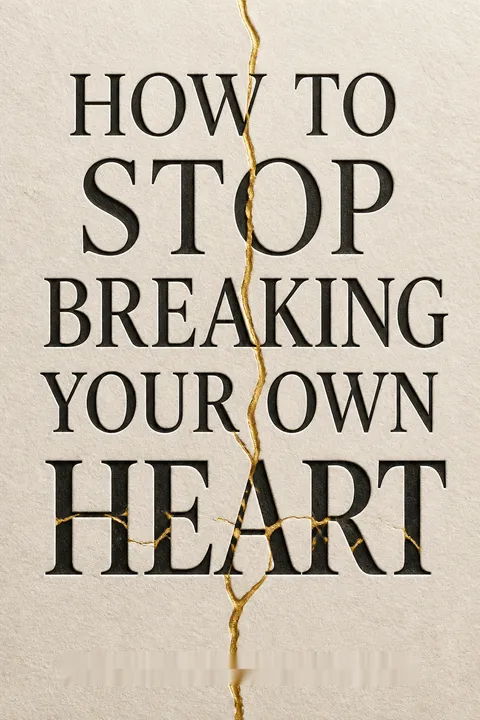
This is a memoir-led guide to self-trust, organized as a movement from recognizing harmful patterns, to practicing repair, to protecting the changes. Its argument is that heartbreak is not only something other people cause. People can deepen their own pain by abandoning their needs, chasing approval, performing perfection, trying to control others, or staying silent about mistreatment. Roxanne makes this argument through a life story shaped by family abuse, a close bond with her mother, grief, depression, online success, and repeated attempts to rebuild.
The personal narrative gives the advice its force. Roxanne does not present boundaries as an abstract virtue: her mother spends decades seeking a family bond that repeatedly wounds her, then chooses a different relationship with her father on limits she can enforce. Nor does the book reduce healing to a single breakthrough. University, business success, bereavement, and recovery each expose different versions of the same question: whose expectations are guiding this life? This makes the book particularly useful to readers who recognize themselves in overfunctioning, self-neglect, or fear of disappointing others.
Its strongest contribution is the distinction between care and self-erasure. Helping is not automatically healthy, forgiveness is not equivalent to access, and solitude is not the same as loneliness. The recurring practical prompts translate reflection into small actions, such as delaying a reply, writing down a difficult feeling, or asking for assistance. The emotional openness also counters the polished success narratives that make repeated struggle feel like personal failure.
Some claims need careful handling. Suggestions that people attract partners who match their insecurity, or that they teach others how to treat them, can accidentally imply blame for abuse. A more protective reading is that self-respect may help someone identify unsafe patterns and choose a response when circumstances allow, but responsibility for mistreatment belongs to the person who mistreats. The book is most convincing when it pairs personal agency with compassion and professional support. Its central promise is not a perfect self, but a more honest relationship with oneself, one that can survive setbacks and make room for help, change, and chosen connection.
Review Summary
How to Stop Breaking Your Own Heart receives mostly positive reviews, praised for its relatable content, personal anecdotes, and practical advice on self-improvement. Readers appreciate Roxanne's approach to healing, setting boundaries, and living authentically. Many find the book inspiring and life-changing, with valuable insights on overcoming people-pleasing and self-sabotage. Some critics note that the content may not be entirely original, but most readers find it accessible and impactful. The book's unique format and perspective on mental health are particularly commended.
People Also Read







Glossary
self-sabotage
Learned self-defeating behaviorRoxanne uses self-sabotage for behaviors that harm a person or obstruct movement toward a healthier life. She connects these patterns to past trauma and to relationships where destructive behavior becomes normalized. The term includes more than deliberate self-harm: avoidance, accepting mistreatment, or repeatedly neglecting one's own needs can also keep a person stuck.
intuition
Inner awareness of personal truthsIn the book, intuition is an instinctive awareness of one's personal truths and a guide toward choices that feel more aligned. Roxanne describes it as potentially appearing through thoughts, emotions, or bodily sensations. She also treats doubt as something worth examining, while acknowledging that its message may reflect fear or a concern that deserves attention.
Think, Ask, Do
Reflect, question, actThink, Ask, Do is Roxanne's recurring end-of-chapter prompt structure. Think invites the reader to reconsider an internal belief, Ask offers a question for examining a situation, and Do proposes a practical step. The sequence links reflection to action, so a chapter's general lesson can become a specific experiment in daily life.
aligning your attention with your intentions
Directing focus toward chosen prioritiesRoxanne uses this phrase for bringing daily attention into closer agreement with what a person wants their life to reflect. Her example is replacing automatic phone-checking with a simple morning routine that includes journaling, movement, and quiet. The aim is to notice personal thoughts and priorities before distraction and outside opinions take over.
FAQ
What's "How to Stop Breaking Your Own Heart" about?
- Self-Improvement Focus: The book by Meggan Roxanne is a guide to overcoming self-sabotage, setting boundaries, and healing from people-pleasing behaviors.
- Personal Journey: It draws from Meggan's personal experiences, including her struggles with depression, family dynamics, and the loss of her mother.
- Empowerment and Healing: The book emphasizes the importance of self-love, vulnerability, and the power of forgiveness in personal growth.
- Practical Advice: It offers practical steps and reflections to help readers nurture and protect their hearts, encouraging them to live with intention and authenticity.
Why should I read "How to Stop Breaking Your Own Heart"?
- Relatable Experiences: Meggan shares her personal journey, making the book relatable for anyone who has faced similar struggles with self-worth and relationships.
- Actionable Insights: The book provides practical advice and exercises to help readers implement changes in their lives.
- Emotional Support: It serves as a comforting reminder that healing is a journey and that readers are not alone in their struggles.
- Inspiration for Change: The book encourages readers to embrace their vulnerabilities and take control of their lives, fostering a sense of empowerment.
What are the key takeaways of "How to Stop Breaking Your Own Heart"?
- Self-Love is Crucial: The book emphasizes the importance of cultivating self-love and setting boundaries to protect one's emotional well-being.
- Healing is a Journey: It highlights that healing is an ongoing process that requires patience, self-reflection, and the willingness to confront past traumas.
- Vulnerability is Strength: Meggan advocates for embracing vulnerability as a means to connect with others and foster personal growth.
- Forgiveness and Letting Go: The book underscores the power of forgiveness in healing relationships and moving forward in life.
What are the best quotes from "How to Stop Breaking Your Own Heart" and what do they mean?
- "Healing has a gentle way of surprising us when we least expect it." This quote highlights the unexpected nature of healing and the importance of being open to it.
- "Your time is diamonds." This emphasizes the value of time and the need to protect it by setting boundaries and prioritizing self-care.
- "We are the source of infinite love." It reminds readers that love and validation should come from within, rather than relying on external sources.
- "Life is a journey that is meant to flow freely as we continue to evolve organically." This encourages readers to embrace life's natural progression and trust the process of personal growth.
How does Meggan Roxanne suggest we stop people-pleasing in "How to Stop Breaking Your Own Heart"?
- Set Clear Boundaries: Meggan emphasizes the importance of establishing boundaries to protect one's time and energy from being drained by others.
- Prioritize Self-Care: She advocates for putting oneself first and ensuring that personal needs are met before attending to others.
- Recognize Self-Worth: The book encourages readers to understand their inherent value and not seek validation from external sources.
- Practice Saying No: Meggan advises practicing the art of saying no to requests that do not align with one's values or priorities.
What advice does Meggan Roxanne give on setting boundaries in "How to Stop Breaking Your Own Heart"?
- Communicate Clearly: Meggan stresses the importance of clearly communicating boundaries to others to avoid misunderstandings.
- Be Consistent: She advises maintaining consistency in enforcing boundaries to ensure they are respected by others.
- Understand Personal Limits: The book encourages readers to recognize their limits and not overextend themselves to please others.
- Reassess Relationships: Meggan suggests evaluating relationships to determine if they respect one's boundaries and contribute positively to one's life.
How does "How to Stop Breaking Your Own Heart" address self-sabotage?
- Identify Patterns: Meggan encourages readers to identify patterns of self-sabotage and understand their origins.
- Replace Negative Habits: The book provides strategies for replacing harmful coping mechanisms with healthier habits.
- Embrace Vulnerability: Meggan highlights the importance of embracing vulnerability as a means to overcome self-doubt and build resilience.
- Seek Support: She advises seeking support from friends, mentors, or therapists to help navigate the journey of overcoming self-sabotage.
What role does forgiveness play in "How to Stop Breaking Your Own Heart"?
- Healing Relationships: Forgiveness is presented as a powerful tool for healing relationships and moving forward in life.
- Releasing Resentment: Meggan emphasizes the importance of releasing resentment to free oneself from emotional burdens.
- Self-Forgiveness: The book encourages readers to forgive themselves for past mistakes and embrace self-compassion.
- Empowerment Through Forgiveness: Forgiving others is portrayed as an empowering act that allows individuals to reclaim their peace and happiness.
How does Meggan Roxanne suggest we embrace vulnerability in "How to Stop Breaking Your Own Heart"?
- View Vulnerability as Strength: Meggan reframes vulnerability as a strength that fosters connection and personal growth.
- Share Personal Stories: She encourages sharing personal stories and experiences to build empathy and understanding with others.
- Practice Self-Compassion: The book advises practicing self-compassion and being gentle with oneself during moments of vulnerability.
- Create Safe Spaces: Meggan suggests creating safe spaces where vulnerability is welcomed and supported by trusted individuals.
What does "How to Stop Breaking Your Own Heart" say about living with intention?
- Align Actions with Values: Meggan emphasizes the importance of aligning daily actions with personal values and intentions.
- Be Present: The book encourages being present in each moment and appreciating the beauty of everyday life.
- Set Clear Goals: Meggan advises setting clear goals and intentions to guide one's actions and decisions.
- Reflect Regularly: She suggests regularly reflecting on one's life to ensure it aligns with personal intentions and aspirations.
How does "How to Stop Breaking Your Own Heart" suggest we nurture and protect our hearts?
- Listen to Intuition: Meggan advises tuning into one's intuition to guide decisions and protect emotional well-being.
- Practice Kindness: The book encourages practicing kindness towards oneself and others to foster a nurturing environment.
- Live Authentically: Meggan highlights the importance of living authentically and embracing one's true self.
- Let Go of Control: She suggests letting go of the need to control every aspect of life and allowing room for destiny to unfold.
What is the significance of the title "How to Stop Breaking Your Own Heart"?
- Self-Reflection: The title invites readers to reflect on how their actions and choices may contribute to their own emotional pain.
- Empowerment: It emphasizes the power individuals have to change their behaviors and protect their hearts from further harm.
- Healing Journey: The title suggests that healing is an active process that requires self-awareness and intentional change.
- Focus on Self-Love: It underscores the importance of self-love and self-care in preventing self-inflicted heartbreak.
Download PDF
Download EPUB
.epub digital book format is ideal for reading ebooks on phones, tablets, and e-readers.








