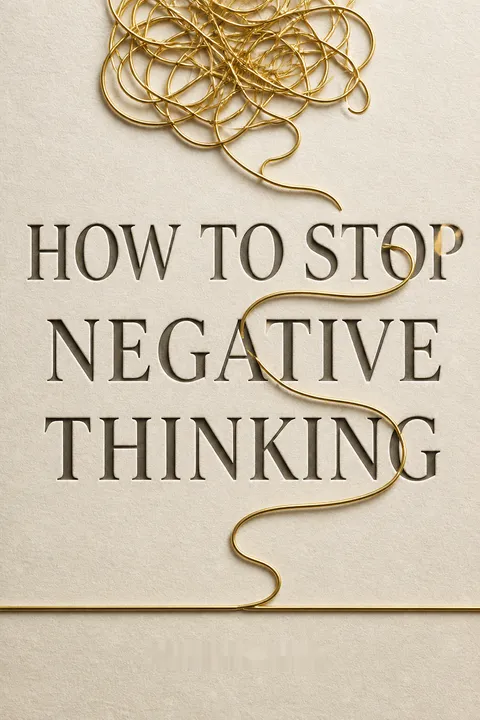


Key Takeaways
Stop blaming yourself: a threat-sensitive brain can mistake worry for protection
Your brain scans for danger. Negativity bias is the tendency to notice and remember unpleasant information more strongly than positive information. The book links this tendency to survival: missing a threat could be costly, while overlooking a pleasant event usually is not. In a study it cites, psychologist John Cacioppo found stronger brain activity in response to negative images than positive ones. That helps explain why a resolved argument may linger longer in memory than a happy afternoon.
Stress can narrow perspective. The body’s alarm response can be useful in immediate danger, but frequent stress may make it harder to consider alternatives and solve complicated problems. A sudden worry about a child near traffic, for instance, may be protective. The goal is not to erase caution, but to notice when an alarm is sounding without a present threat.
What's useful here is the distinction between a mental habit and a moral defect. An alarm system is designed to react quickly, not to assess every situation with perfect precision. That image can reduce shame while preserving responsibility for what happens next. The limit is that an evolutionary explanation does not establish the cause of every person's distress, and the brain claims in popular accounts can be simplified. The practical value remains: treat a negative reaction as a signal to examine, not as proof that the danger is real or that something is wrong with the person having it.
Name the distortion before treating every thought as evidence
Thoughts arrive in patterns. The book groups common errors such as all-or-nothing judgments, assuming what others think, predicting failure, filtering out praise, and turning one setback into a rule about the future. Someone who makes one mistake at work might conclude they are incompetent, although the mistake alone cannot support that conclusion. Naming the pattern creates room to check it rather than automatically obey it.
Write down the evidence. The book recommends recording real examples of recurring thoughts and asking what is known, what is assumed, and what other explanations fit. Its mental models offer further checks: probability asks how likely an outcome is, while the idea that a map is not the territory reminds readers that their interpretation may be incomplete. These tools are meant to be practiced gradually, not mastered all at once.
The move from a global label to a specific thought is a powerful change in scale. “I am a failure” is difficult to test; “I made an error in this report” can be investigated and repaired. This resembles the scientific habit of separating observation from interpretation. The approach works best when evidence is genuinely considered in both directions. Turning every feeling into a courtroom cross-examination can become another form of overthinking, so a useful test should lead toward a decision or next action rather than endless debate.
Turn rumination into a small next step, not another rehearsal
Replaying is not resolving. The book distinguishes ordinary overthinking from rumination, its term for repeatedly dwelling on distressing past events or feared future ones. Paul, a man dealing with a breakup, replays his ex-partner’s insults and builds a future story in which he will never find another relationship. The book separates the one claim he can check, that he gained some weight, from sweeping judgments about his character and future.
Convert worry into a plan. State the problem in one sentence, identify manageable steps, and make the first step something that can be done now. In a study cited by the book, 91.4% of worries reported by people with generalized anxiety disorder did not occur. That figure is not proof that any individual concern is baseless. It does show why repeated mental rehearsal can consume energy without reliably predicting what will happen.
The distinction between rehearsal and problem-solving is especially valuable because rumination can feel productive. A thought loop offers the sensation of preparation while postponing the uncertainty of action. A concrete first step tests whether a problem is actionable and can produce information that thinking alone cannot. Still, some concerns cannot be fixed immediately, and action is not always the right response. In those cases, identifying what remains unknown, or deciding when to revisit the issue, can be more useful than demanding a solution on the spot.
Interrupt spirals by changing state, then examine the first thought
Break the loop early. When one worry starts collecting other worries, the book suggests changing the activity or surroundings, writing thoughts out, or briefly using an image to interrupt attention. A 15-minute brain dump means writing whatever is bothering you without editing, then disposing of the page. The point is to move thoughts from a private loop into a visible form that can be sorted later.
Settle the body, too. Slow breathing with a longer exhale is offered as a way to reduce arousal; the book also suggests checking whether hunger, fatigue, or alcohol may be worsening judgment. Self-distancing means thinking about a problem using your name or a third-person perspective, as if advising someone else. The book cites a study in which children using a favorite character worked longer on a repetitive task than children using first-person self-talk.
This section treats attention and bodily state as part of the thinking process, rather than assuming that better reasoning is available on command. That is a practical insight: a short pause can make an otherwise inaccessible perspective easier to reach. The methods differ in strength and suitability, so a personal toolkit is more sensible than trying every trick at once. In particular, interruption should not become avoidance. A useful reset creates enough calm to return to the concern, assess it, and choose a response.
Make room for painful feelings instead of forcing positivity
A feeling is not a verdict. Toxic positivity is the pressure to display optimism despite pain, often through messages that dismiss grief, fear, or anger. The book argues that suppressing a thought can keep attention fixed on it. In a white-bear experiment it describes, people told not to think about a white bear signaled that the thought had returned more often than people allowed to think about it.
Acknowledge, then choose. Writing down an emotion or noticing an intrusive thought can make it possible to respond without treating it as a command. The book stresses that unwanted images or thoughts are not the same as intentions, and advises against reshaping an entire life around them. When thoughts become obsessive, frightening, or disruptive, it recommends seeking professional help rather than relying only on self-help exercises.
The important distinction is between acceptance and surrender. Acknowledging fear does not mean endorsing its predictions, and recognizing anger does not require acting it out. This avoids the false choice between forced cheerfulness and being consumed by distress. The advice is especially relevant for intrusive thoughts, which can be upsetting precisely because they conflict with a person's values. However, persistent or severe symptoms deserve skilled assessment. Normalizing an experience should reduce shame, not minimize the need for care.
Practice realistic optimism by collecting evidence of progress
Aim for balance, not cheerfulness at any cost. The book does not recommend replacing negative thinking with blind optimism. It asks readers to check whether a threat is real, notice what remains good, and treat setbacks as information. Colonel Sanders serves as an example: the book recounts his failed businesses and other hardships before his chicken franchise succeeded, challenging the polished story that successful people simply move from idea to triumph.
Give positive experiences attention. Suggested practices include recording a daily good moment, expressing gratitude, and changing self-condemning statements into specific, workable ones. A study cited in the book involved 300 college students, some of whom wrote weekly gratitude letters for 12 weeks; the letter-writing group reported improved feelings. The book also distinguishes affirmations, short repeated statements, from self-talk, the ongoing inner conversation that can guide effort.
The strongest version of optimism is not a prediction that everything will work out. It is a willingness to keep looking for options after the first interpretation has failed. Recording positive evidence can counter the mind's tendency to retain setbacks, while Sanders's story makes achievement look less effortless and therefore more human. Affirmations are less useful when they contradict what someone can currently believe. A modest, credible statement connected to a concrete action is more likely to support agency than a grand declaration that ignores real constraints.
Reduce mental load with routines, self-care, and a smaller toolkit
Lower avoidable strain. The book connects mental clutter with unfinished decisions, excess information, and a disorganized environment. It recommends simplifying repeat choices, writing down tasks, limiting news or social media that worsens mood, and clearing one small area at a time. It also emphasizes basic care: adequate sleep, movement, nourishing food, breaks, and time for enjoyable activities. The aim is not a perfect routine, but a body and day that make clear thinking more possible.
Choose a few tools. The author warns that a long menu of techniques can itself overwhelm someone who already struggles to decide. The proposed approach is to select one or two practices that seem useful, try them consistently for a few weeks, and track what changes. The book also recommends building routines around sleep and activity, rather than expecting motivation to appear on demand.
The environment is not a cure for every source of distress, but it can reduce the number of small demands competing for attention. That makes routines a form of cognitive support, not merely an exercise in discipline. The book's advice to test a few methods is particularly sound: self-help should be an experiment, with results observed rather than assumed. Its lifestyle suggestions should remain proportional, though. A plant, tidy drawer, or improved bedtime can help create supportive conditions, but none should be presented as treatment for a serious mental health condition.
Shrink feared situations into steps small enough to attempt today
Build a gradual path. For social anxiety, the book advises identifying situations that cause discomfort and moving toward them in manageable stages. Someone who has stayed indoors might begin by walking to the end of the street, then sitting outside, before attempting a crowded event. The purpose is not to force a dramatic breakthrough, but to make contact with a feared situation while keeping the step realistic.
Separate danger from discomfort. The book suggests writing down a plausible worst-case outcome and considering how it could be handled. It also notes that social cues can be misread, so tone, expressions, and context deserve attention before concluding that others are judging. When another person's behavior is the problem, the book recommends direct, calm language about its effect and a boundary if it continues.
Small steps turn a vague command to “be brave” into an observable practice. They also allow a person to learn whether an expected catastrophe actually occurs and what coping resources are available. This should not be confused with approaching genuinely unsafe situations; exposure is appropriate for disproportionate fear, not for tolerating abuse or avoidable danger. The distinction between internal alarm and external threat is crucial. Where mistreatment is real, assertiveness, distance, and support may be more appropriate than repeated exposure.
Treat life-disrupting distress as a reason to seek help, not self-blame
Notice when self-help is not enough. The book says to consult a doctor or mental health professional when distress interferes with ordinary functioning, such as work, sleep, relationships, or leaving home. It lists symptoms including persistent anxiety, withdrawal, panic, depression, and physical problems such as headaches or fatigue. It also recognizes that intrusive thoughts and severe rumination may require more than independent exercises.
Keep support in the plan. The book presents its strategies as educational tools, not medical treatment, and recommends professional care when symptoms are persistent or severe. That matters especially when a person feels unsafe or has thoughts of suicide. Seeking assistance is not evidence of weak effort; it is a practical response to a problem whose scope may exceed what a book can address.
The book's self-help plan is most responsible when read as a set of skills, not a substitute for diagnosis or treatment. A reader can practice thought tracking or breathing while also receiving professional care. The threshold of impairment is useful because it shifts attention from self-judgment to consequences: is distress narrowing daily life, relationships, or safety? Clear escalation guidance helps prevent the very common mistake of interpreting persistence as a personal failure. It also respects the limits of generic advice, which cannot account for an individual's history, risks, or clinical needs.
Analysis
The book's central contribution is not a single technique but a sequence: understand why negative thoughts arrive, recognize their patterns, interrupt repetitive loops, reduce stressors, and build more supportive habits. That progression matters because advice to “think positively” often arrives before a reader has learned to distinguish a genuine problem from a distorted prediction. The author instead offers a broad menu of practices, from writing thoughts down and taking small actions to improving sleep and approaching feared situations gradually.
Its most persuasive ideas are practical and psychologically coherent. Rumination can masquerade as problem-solving, while a specific next action can test whether a concern is solvable. Thought labeling helps separate an interpretation from an observable event. Acceptance of painful feelings also avoids the trap of treating distress as a moral failure. These are compatible with common elements of cognitive behavioral approaches, behavioral activation, and mindfulness, though the book does not provide a clinical treatment protocol.
The evidence requires more caution than the confident neuroscience language sometimes implies. Statistics about the proportion of thoughts that are negative, brain regions, hormones, or simple lifestyle interventions should not be treated as universal facts or as explanations for an individual's condition. Some techniques have a clearer rationale than others, and the book's advice occasionally shifts between self-compassion and demanding that readers take control. That tension matters: accountability can motivate action, but shame can intensify the very loops the book seeks to reduce.
The most useful way to apply the material is experimentally. Choose a small number of low-risk practices, observe whether they help, and adapt rather than assuming every suggestion works for every person. Most importantly, self-help should remain a supplement when distress is persistent, disabling, or dangerous. The book's strongest message is that thoughts can be examined and habits can change, not that serious suffering should be solved alone.
Review Summary
How to Stop Negative Thinking receives mostly positive reviews, with an average rating of 4.34 out of 5. Readers praise its practical tips, clear writing style, and comprehensive 7-step plan for overcoming negative thoughts. Many find it helpful in understanding and addressing their negative thinking patterns. Some reviewers describe it as life-changing and a game-changer for personal growth. A few readers, however, found it less impactful or weren't sure they would implement all the strategies. Overall, it's recommended for those seeking to improve their mindset and combat negativity.
People Also Read








Glossary
L.I.B.E.R.T.Y.
Seven-step change planThe book's organizing framework for addressing negative thinking. Its seven stages move from learning how the brain favors negative information, to inspecting thought patterns, responding to negative thoughts and rumination, managing stress, addressing external negativity, and developing positive changes. The framework is intended as a gradual plan rather than a demand to use every technique at once.
Negativity bias
Stronger attention to negative informationA tendency to notice, remember, and respond to negative experiences more strongly than comparable positive ones. The book presents it as a protective bias that can become burdensome when ordinary uncertainty is repeatedly interpreted as danger. It uses this idea to explain why unpleasant memories and worries can dominate attention, while emphasizing that the pattern can be managed.
Rumination
Repeated dwelling on distressA recurring cycle of thinking about painful past events, present feelings, or feared future outcomes without reaching a useful resolution. The book distinguishes rumination from ordinary overthinking by its focus on negative material. It can feel like preparation or problem-solving, but often keeps attention fixed on the same concern instead of producing a concrete plan.
Self-distancing
Taking a third-person perspectiveA technique for gaining psychological distance from a problem by thinking about oneself using one's name or a second- or third-person perspective. The book compares this with advising a friend: the shift can make it easier to consider a challenge less reactively. It also describes using a favorite fictional character as a temporary perspective-taking aid.
Toxic positivity
Pressure to deny painful emotionsThe insistence that a person should maintain a positive attitude despite pain, loss, fear, or other difficult emotions. The book argues that dismissive reassurance can make people feel ashamed of ordinary distress and discourage them from processing it. A more helpful response acknowledges the emotion without assuming that it defines the whole situation.
About the Author
Other books by Chase Hill


Download PDF
Download EPUB
.epub digital book format is ideal for reading ebooks on phones, tablets, and e-readers.








