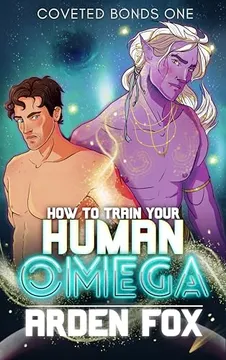


Plot Summary
The Wormhole Takes Them
Pilot Clay1 is killing time aboard the ISE Explorer while its crew studies a strange wormhole, trading jokes with Caldwell5 and Martinez7 about what they will do when the mission ends. Then the anomaly destabilizes. Clay1 pushes the ship’s engines to full reverse, but the wormhole drags them in anyway.
He leaves his own restraints to free Caldwell5 from a jammed safety strap, then barely buckles himself in before impact. The ship emerges among unfamiliar stars, battered and partly powerless. Clay’s1 head is bleeding, and the crew can see that they are nowhere near home. Their first attempt to explain the accident to the local authorities fails before help can arrive.
The opening turns Clay’s casual irreverence into a consequential choice: he risks his own safety to secure Caldwell before impact. That act establishes a capacity for care beneath his jokes and sexual bravado. The wormhole is not a chosen adventure but an involuntary rupture, making the explorers’ vulnerability central from the start. Their scientific confidence cannot protect them from a phenomenon they barely understand, and Clay’s piloting skill cannot restore control. The crash therefore strips away the illusion that competence equals safety, while his rescue of Caldwell quietly foreshadows the moral decisions he will later make under far greater pressure.
Arcay Claims the Pilot
Aldar soldiers board the damaged Explorer and confront Captain Turner,6 who insists that the humans crossed the border by accident. Their leader, Jursin,3 believes him and offers to tow the ship away, but Arcay,2 the powerful Second,2 detects an unfamiliar scent on Clay.1 Arcay2 identifies Clay1 as an omega, a rare category of mate in Aldar society, and declares him his own.
When Turner6 objects, Arcay2 seizes Clay1 and carries him to his ship, brushing aside the crew’s resistance. Clay1 wakes in Arcay’s2 quarters with a healed head wound and no idea why he has been taken. Arcay’s2 explanation, that Clay1 is his omega, only deepens the fear and confusion.
The first encounter is structured around unequal interpretations. Arcay reads Clay’s scent through a rigid social system that treats omega status as a self-evident destiny; Clay experiences the same attention as captivity. Arcay’s decision to heal Clay complicates the image of a simple captor, but care does not cancel coercion. Meanwhile, Jursin’s initial mercy toward the human crew shows that Aldar authority is not monolithic. The conflict begins because Arcay mistakes biological recognition for mutual agreement. His certainty grants Clay no meaningful choice, establishing the ethical problem that romance must confront rather than merely decorate.
A Bargain Turns Coercive
Clay1 mistakes the Aldar attendants’ efforts to bathe and dress him for preparation as food, until a translator finally explains that Arcay2 considers him a mate. Arcay2 offers to release the human crew if Clay1 stays, and Clay1 accepts in the hope that his friends can later return for him. Instead, Arcay2 keeps Clay1 from seeing them and begins a traditional bonding ceremony.
When Clay1 refuses to eat and rejects the claim, Arcay2 pins him, binds his wrists, and uses pheromones to provoke arousal, but stops short of completing the mating when he sees Clay’s1 fear. Later, he frees Clay1 and carries him to bed. The change is real, but Clay1 remains a captive who cannot trust the promise made to him.
The bargain exposes how consent can be distorted by dependence: Clay agrees to remain because his friends’ safety appears to depend on it, not because he accepts Arcay’s claim. Arcay’s culture treats ceremony and rank as legitimate grounds for obedience, while Clay understands his agreement as limited and conditional. His first restraint from forced mating comes not from a complete ethical conversion, but from seeing the fear he has caused. That pause matters, yet does not repair the underlying imbalance. The scene marks the beginning of Arcay’s moral learning and shows why his later tenderness must be measured by whether Clay can freely refuse.
The Biodome Escape
Clay1 waits until Arcay2 sleeps, then slips from his arms and navigates the enormous ship alone. Searching for water in a biodome, he attracts a dangerous animal that bites his leg and drags him toward the foliage. Arcay2 tracks him by scent, spears the creature, and fights off three unmated alphas who try to seize Clay.1
Wounded and bleeding, Arcay2 collapses after driving them away. When he wakes, Clay1 is still there, having helped carry him back and applied healing salve. Their argument over Clay’s1 attempted escape forces Arcay2 to hear how his commands and confinement have frightened him. Arcay2 admits he cannot claim Clay1 against his will, then asks Kesk9 how humans build trust.
The rescue reverses the expected roles without making either character suddenly secure. Arcay protects Clay from the animal and the rival alphas, but Clay also chooses to care for Arcay when escape remains possible. That choice is not submission; it expresses Clay’s own moral boundary against abandoning someone who saved him. Arcay’s wounded body interrupts his authority and makes him dependent on the person he has treated as dependent. Their argument gives him a perspective he has avoided: fear is not evidence of disobedience but a predictable response to force. Empathy begins when he recognizes the consequences of his actions.
A Tournament for Clay
After Clay1 privately initiates sexual contact with Arcay,2 their first intimacy is interrupted by Jursin,3 who discovers Arcay2 has not completed the claim. Jursin3 warns that Clay’s1 potent scent is provoking fights among unmated alphas and orders Arcay2 either to claim him or surrender him. Arcay2 refuses to force the bond, so Jursin3 invokes the Aldar tournament system and makes Clay1 available to challengers.
In the arena, Clay1 watches Arcay2 face Ulgar,4 the Third,4 while already injured from an earlier fight. Ulgar4 exploits that wound and nearly chokes him, but Arcay2 turns the contest around and defeats him. He refuses to kill Ulgar,4 then returns to Clay1 and again declines to claim him without permission.
The tournament converts a private ethical conflict into public law. Arcay’s refusal to force Clay is meaningful precisely because it costs him control and exposes Clay to further danger. Yet the institution that claims to regulate violence still treats the omega as a prize whose fate follows the strongest fighter. Arcay wins within that system but refuses its most possessive conclusion, separating legal victory from personal consent. Clay’s fear for Arcay complicates his resistance without erasing it. The scene tests whether Arcay can remain compassionate under pressure from his peers, and whether Clay can distinguish his growing attachment from an obligation imposed by custom.
Learning to Court Clay
After the tournament, Arcay2 begins studying human courtship instead of assuming a claim should come first. He invites Clay1 to share a meal, dresses for the occasion, and proudly offers him a sour fruit Clay1 can barely tolerate. Clay1 asks for human-style trousers and suggests riding a horse; Arcay2 takes him to the paddock and introduces him to a Kraat, an alien animal that promptly throws Clay.1
Clay’s1 laughter at Arcay’s2 failed attempt to mount it draws Arcay2 into laughter too, a rare break in his solemn composure. Their easy teasing makes the ship feel less like a prison for a moment. Still, Arcay2 leaves Clay1 alone to answer Jursin’s3 summons, and that opening gives Ulgar4 access to his quarters.
Courtship here is funny because Arcay approaches it as a technical problem: he studies human customs, reproduces their visible forms, and misses their emotional spontaneity. The failed ride becomes more intimate than the carefully arranged meal because laughter cannot be commanded or ranked. It gives Clay a glimpse of Arcay beyond the warrior role and lets Arcay experience connection without dominance. Yet the episode’s warmth does not remove structural danger. Clay remains dependent on Arcay’s protection, and the moment Arcay leaves demonstrates that affection alone cannot compensate for weak safeguards in a society where other alphas may treat him as available.
No Rescue Is Coming
While Arcay2 is away, Ulgar4 enters his quarters and pins Clay1 against a wall, intent on claiming him. Arcay2 returns in time, tears Ulgar4 away, and tends the claw wounds on Clay’s1 neck. Jursin3 confines Ulgar4 to his quarters but offers no clear punishment, since Aldar law has no precedent for an unclaimed omega who refuses a mate.
Clay1 challenges the system and asks to see records proving whether Earth has sent a rescue. Jursin3 shows him that no human ship or message has come. Stunned by the crew’s apparent abandonment, Clay1 turns to Arcay,2 who promises he would cross any distance to retrieve him. Clay1 chooses to accept the bond, this time making the decision himself.
Ulgar’s assault makes the danger concrete, but the deeper turning point is the collapse of Clay’s imagined route home. His belief that his crew will return has helped him endure captivity; Jursin’s records remove that hope. The revelation does not make Arcay’s earlier coercion acceptable. Instead, it forces Clay to distinguish between choosing a relationship and choosing under the false expectation of a near-term escape. His decision remains emotionally complicated, shaped by loneliness and danger, yet it is now spoken as his own. The episode also exposes law as a moral lag: Jursin can recognize a problem without possessing rules that protect the person most at risk.
The Bond Takes Hold
Clay1 and Arcay2 consummate the bond, and the intensity of their shared climax opens a channel through which each feels the other’s emotions. Clay1 panics at the sudden mental intimacy and runs; Arcay2 follows, then loses himself in a panic attack fed by their linked fear. Clay1 steadies him with a kiss and learns that the bond is permanent, a fact Arcay2 had failed to explain clearly.
Their uneasy conversation continues at the public celebration, where Ulgar4 appears and stokes Clay’s1 fear. Arcay2 uses their connection to calm him, then gives Clay1 a custom-built space jet. The gift restores something beyond comfort: Clay1 can fly again, using his skill and choosing speed for pleasure rather than escape.
The bond turns romance into a problem of boundaries rather than a simple promise of closeness. Emotional access can comfort, but it also removes privacy and makes panic contagious. Clay’s flight from Arcay is therefore a response to information withheld, not proof that he rejects intimacy outright. Their shared crisis gives Clay a practical way to help Arcay, while the celebration and jet offer public recognition and personal agency. The gift matters because it answers Clay as a pilot, not merely as an omega. Arcay’s affection becomes more credible when it supports an identity Clay already had before captivity.
Humans Behind Glass
While exploring alone, Clay1 discovers a concealed room lined with glass tubes and recognizes Captain Turner,6 Martinez,7 Caldwell,5 and other Explorer crew members inside. He opens the tubes and finds them alive but deeply sedated. Arcay2 orders a guard to help move them to the infirmary, where healers begin treating dehydration and the effects of an unknown chemical.
Caldwell5 wakes in terror at the sight of Arcay,2 then tells Clay1 that the humans were taken one by one after their capture. Clay1 realizes that the crew never left and that he has been enjoying safety and luxury while they suffered. He confronts Arcay,2 who insists he believed Jursin3 had released them. Clay1 sees that Arcay2 did not know, but blames him for failing to verify it.
The hidden laboratory overturns two assumptions at once: Clay’s crew did not abandon him, and Arcay’s promise was not fulfilled. The discovery makes private romance answerable to public consequences. Clay’s guilt comes from judging his friends too quickly and from benefiting while they were confined, while his anger at Arcay focuses on negligence rather than a proven deliberate lie. Caldwell’s fear of Arcay prevents the bond from serving as an easy certificate of innocence. Arcay may be sincere, but sincerity without follow-through has left real people harmed. The scene insists that intimate feeling cannot substitute for accountability.
Freedom Becomes Another Loss
Clay’s1 anger at Arcay2 turns into a vicious argument, and he says the bond is a parasitic link forced on him. Arcay2 accepts the accusation as proof that Clay1 cannot be happy beside him. He arranges the Explorer’s repair, provisions the crew, and orders Lendel8 to return Clay1 to them, keeping himself away because he fears he will stop Clay1 from leaving.
Caldwell5 and the crew pull Clay1 aboard as the wormhole begins to collapse. Arcay2 then seeks Ulgar,4 who admits he kept the humans for experiments on a serum that can create or sever bonds. Arcay2 allows Ulgar4 to wound him, hoping death will free Clay1 from their bond, but Ulgar4 uses the serum and leaves him alive.
This separation is a reversal of the opening bargain: Arcay finally gives Clay the freedom he once withheld, but does so by deciding for him again. His sacrifice is loving in intention and paternalistic in method. Clay’s harsh rejection, meanwhile, is partly an attempt to regain control after betrayal, but it conceals the attachment he cannot yet name. Ulgar’s serum turns that emotional crisis into a political threat, revealing that the missing Aldar and captive humans were part of an effort to manufacture bonds and control others. Arcay’s choice to die rather than hold Clay exposes both genuine change and the lingering belief that he must manage Clay’s fate alone.
Across the Closing Wormhole
On the Explorer, Clay1 feels Arcay’s2 pain through the weakening bond and realizes he cannot leave him to face it alone. He launches the custom jet, crosses back through the unstable wormhole, and finds Arcay2 badly wounded in the observation chamber. Ulgar4 explains that his experimental serum has severed the bond and that he intends to use it to control Arcay.2
Clay1 distracts Ulgar4 and runs for the upper walkway, drawing him away from Arcay.2 Arcay2 recovers enough to attack; the two fight above the chamber, and Ulgar4 falls over the railing. Clay1 is left hanging from the walkway until Arcay2 pulls him to safety. As Arcay2 collapses, Clay1 admits he wants to stay. Their bond reforms as Arcay’s2 happiness reaches him.
Clay’s return is the novel’s clearest act of freely chosen attachment. He does not come back because the bond compels him to behave dutifully; he comes because he has recognized what Arcay means to him and acts despite the danger. The rescue is mutual: Clay draws Ulgar away, while Arcay’s remaining strength saves Clay from falling. Their reunion does not erase the earlier coercion or conflict, but it changes the terms of commitment. The bond’s spontaneous return is less an argument that fate was right all along than a fantasy resolution in which shared feeling becomes possible only after Clay has exercised agency.
A Ring by Choice
Healers save Arcay,2 and the novel moves forward to his gradual recovery. The serum’s effects do not hold, and Clay1 and Arcay’s2 bond returns, though neither can explain exactly how. A month later, Clay1 studies Aldarian while Arcay2 paces anxiously around the room.
He has arranged a gold ring modeled on human custom, then asks Clay1 to marry him, unsure whether he has understood the tradition correctly. Clay1 accepts, joking that marriage is a small commitment beside the soul bond they already share.
Arcay2 slips the ring onto his finger. Their relationship now includes both Aldarian bonding and a human promise, chosen and understood by both partners. The pilot1 who began the story resisting commitment has found a home he no longer wants to flee.
The ending does not treat cultural difference as something one partner must simply absorb. Arcay learns the human meaning of marriage and uses that knowledge to make a proposal rather than assuming the Aldarian bond is sufficient. Clay’s acceptance is shaped by the life they have built, not by the initial claim. His joke acknowledges that the legal custom is less binding than their supernatural connection, while still valuing the gesture because it recognizes his history and language of commitment. The ring thus functions as a small corrective to the novel’s coercive beginning: the final promise is offered, explained, and accepted rather than declared on someone else’s behalf.
Analysis
The novel’s central conflict is not simply whether Clay1 and Arcay2 are attracted to each other. It is whether attraction can become ethical when one person begins with overwhelming power over the other. Arcay’s2 society treats biology, rank, and custom as sufficient explanations for possession. Clay’s1 resistance forces Arcay2 to confront the gap between protecting someone and deciding for them. His growth is measured not by how fiercely he fights rivals, but by whether he can tolerate refusal and make room for Clay’s1 own judgment.
Clay’s1 emotional arc complicates a simple opposition between freedom and commitment. At first, he treats attachment as a threat because closeness might expose his perceived selfishness and invite abandonment. His friends’ captivity makes that fear tangible: he assumes they left him, while they have in fact fought to remain together. His romantic choice develops through concrete experiences of mutual care, including tending Arcay’s2 wounds, comforting him during panic, and returning when Arcay2 is in danger. The story frames belonging not as an escape from autonomy but as a relationship that must be repeatedly chosen.
The novel also makes language and custom active sources of conflict. The translator’s errors turn routine gestures into apparent threats, while Arcay’s2 literal understanding of courtship makes his early attempts both awkward and revealing. The Aldar tournament promises order but preserves a system in which omegas are treated as prizes. Ulgar’s4 serum pushes that logic further by converting connection into a technology of control. Against both systems, the ending joins Aldar bonding with a human wedding ring. The gesture cannot erase coercion or harm, but it acknowledges that lasting intimacy requires explanation, accountability, and consent rather than strength alone.
Characters
Clay
Restless human pilotClay is a capable human pilot whose jokes, casual hookups, and refusal to promise permanence help him keep emotional distance. He is quick to act when someone is in danger, as his choice to free Caldwell5 before impact shows, but he often hides care behind sarcasm. In Aldar society, his omega status makes others treat his body as a social claim rather than his own decision. Clay resists that role even as attraction and loneliness complicate his response to Arcay2. His central psychological tension is between autonomy and intimacy: he fears that commitment will expose his flaws and trap him, yet he also longs to be chosen without having to perform a safer version of himself.
Arcay
Aldar warrior SecondArcay is the Aldar ship’s formidable Second, a high-ranking alpha trained to command, fight, and protect. He has spent much of his life expecting that strength and tradition will make his choices self-evidently right. Clay’s1 refusal disrupts that certainty, while Arcay’s attraction makes him vulnerable to emotions he has little practice naming. Beneath his intimidating bearing, he is earnest, curious, and capable of tenderness, though his first instinct is often to control what frightens him. His relationship with Clay1 challenges him to distinguish protection from possession and to learn that care requires listening, patience, and a willingness to let another person choose.
Jursin
Aldar First and commanderJursin is the First, the highest-ranking alpha aboard the Aldar ship and the authority who mediates disputes among the high alphas. He is accustomed to weighing individual desire against the safety and order of his people. His decisions reveal both the reach and the limits of Aldar law, especially when an unprecedented human omega does not fit established rules. Though stern and commanding, he has a softer domestic side around his mate11, showing that authority does not erase attachment.
Ulgar
Ambitious ThirdUlgar is the Third among the high alphas, a physically powerful and stubborn rival to Arcay2. He believes rank and strength determine who deserves authority, and he treats Aldar mating customs as a competition whose outcome should reward the strongest claimant. His ambition makes him alert to weakness and opportunity, while his contempt for emotional restraint sets him against Arcay’s2 growing willingness to reconsider tradition. Ulgar embodies the ship’s most forceful version of its established hierarchy.
Caldwell
Clay’s closest crewmateCaldwell is Clay’s1 fellow pilot and closest friend aboard the Explorer. He jokes with Clay1 but is also willing to risk himself for the crew, and his loyalty becomes clearest when he refuses to leave Clay1 behind. After the Aldar capture him, his fear and confusion give Clay1 an important human perspective on what has happened. Caldwell’s easy affection helps reveal the difference between Clay’s1 fear of commitment and his genuine capacity for friendship.
Captain Turner
Explorer’s steady commanderCaptain Turner leads the human exploration crew and tries to explain their accidental arrival in Aldar territory before events turn violent. He is practical under pressure and protective of his people, challenging the Aldar when they try to take Clay1. His authority comes from experience and responsibility rather than physical dominance, a contrast that briefly puzzles the Aldar. Turner represents the crew’s attempt to meet an unknown power through discipline and diplomacy.
Martinez
Expectant father and crewmateMartinez is one of Clay’s1 crewmates, a married man preparing for the arrival of his child. His plans for family life contrast with Clay’s1 preference for casual encounters and freedom from commitments. He offers Clay1 earnest, sometimes unwelcome advice, but his domestic focus is not presented as superiority. Instead, he gives the crew a clear personal stake in returning home safely.
Lendel
Arcay’s careful attendantLendel is one of Arcay’s2 beta attendants, formal, cautious, and often anxious about protocol. He carries out Arcay’s2 instructions but is not blind to Clay’s1 discomfort, sometimes hesitating when obedience would make the human’s captivity worse. His careful nature contrasts with Kesk’s9 livelier curiosity. Lendel also helps Arcay2 learn about human courtship, acting as a practical bridge between unfamiliar customs.
Kesk
Arcay’s curious attendantKesk is Arcay’s2 other beta attendant, quick-moving, inquisitive, and unusually informal with his superior. He gathers shipboard news rapidly and is willing to advise Arcay2 when his assumptions about Clay1 are failing. Kesk’s humor and relative ease make him a useful counterweight to Lendel’s8 formality. His suggestions help Arcay2 begin considering human customs as more than oddities.
Silvun
Aloof FourthSilvun is the Fourth among the high alphas, a measured and dependable council member. He has little personal interest in mating and tends to assess disputes through duty and precedent. His calm manner contrasts with the rivalry between Arcay2 and Ulgar4.
Trilla
Jursin’s omega mateTrilla is Jursin’s3 mate and tends a small garden within the Aldar ship. Their gentle practicality tempers Jursin’s3 severity, and they can correct him without being intimidated by his rank. Trilla offers Arcay2 a glimpse of affection that includes honest counsel.
Tarro
Loyal Aldar guardTarro is an Aldar guard trusted to protect Arcay’s2 quarters. He is loyal and comparatively kind-hearted, though his obligations place him within the ship’s chain of command. His careful handling of Clay1 reflects a gentler temperament than many of the alphas around him.
Plot Devices
The wormhole anomaly
Unplanned passage between worldsThe unstable wormhole pulls the ISE Explorer into Aldar territory and creates the crisis that separates Clay1 from Earth. It initially seems like a force that might return the crew home, but it remains dangerous and eventually begins to collapse. The same passage carries Clay1 back toward Arcay2 after the human crew departs, making it both the accident that begins the story and the narrowing route that forces Clay1 to choose where he belongs.
Omega pheromones
Scent ignites attraction and dangerClay’s1 unusually potent omega scent is what alerts Arcay2 to his presence aboard the Explorer. In Aldar society, omegas are rare and highly sought after, so the scent draws attention from unmated alphas and helps make Clay1 vulnerable to rivals. It also intensifies Arcay’s2 physical attraction and complicates both men’s ability to separate desire from choice. The pheromones explain the Aldar response, but they do not make coercion consensual or remove Clay’s1 right to refuse.
The soul bond
Shared emotions test intimacyAn Aldar mating bond joins Arcay2 and Clay1 through an ongoing emotional connection. They can sense each other’s feelings, and the link can steady one partner when the other is distressed. Its intensity also overwhelms Clay1 after their first bonding, because the connection arrives without a clear explanation and seems to leave him no privacy. The bond shapes the couple’s central question: whether deep intimacy can coexist with autonomy. Its severing and return are major plot revelations.
The translator
Miscommunication becomes legibleThe Aldar translator converts speech between Panlin and their language, allowing Clay1 to understand the attendants and Arcay2. It is imperfect at first, producing alarming mistakes that make routine preparation sound like threats of poisoning or butchery. Those errors create comic confusion, but they also emphasize how little Clay1 can know while held among people whose customs and language are unfamiliar. As Arcay2 and Clay1 improve their shared communication, the device becomes less necessary and their understanding more personal.
Ulgar’s bonding serum
A synthetic bond enables controlUlgar4 develops a chemical compound intended to create or remove bonds beyond the Aldar’s traditional alpha and omega pairing. He uses humans as experimental subjects, and those bound to him can feel his presence while he does not share their emotions, a one-sided connection that gives him control. The serum also severs Arcay’s2 natural bond, leaving him alive and vulnerable. Its existence reframes the missing Aldar and imprisoned humans as part of a deliberate project rather than isolated disappearances.
Download PDF
Download EPUB
.epub digital book format is ideal for reading ebooks on phones, tablets, and e-readers.








