

Plot Summary
A Wedding Left Behind
At Hogwarts in 1998, Hermione Granger1 and Draco Malfoy2 return to finish their education after the war, but their old hostility survives the library and Christmas holidays. By 1999, Hermione1 is engaged to Ron Weasley,4 and Draco2 taunts the couple1 in Diagon Alley. The next year, Hermione1 leaves Ron4 at the altar after hearing he doubts their marriage can repair their strained relationship.
Draco2 finds her crying in her wedding dress, lets her strike him, and listens as she admits she wants to escape the life everyone expects of her. She leaves Britain and spends the next years wandering Europe. Their brief encounters in Istanbul and Ireland end in warnings, wary bargains, and no reconciliation.
The opening makes Hermione's central conflict concrete: she is not rejecting love so much as a future chosen by inertia. Ron offers security and familiarity, but she cannot inhabit the role of wife while grief and uncertainty remain unresolved. Draco is still cruel, yet his willingness to let her hit him briefly turns their hostility into a form of recognition. Their encounters establish a pattern: each sees the other's damage before either can admit tenderness, and every meeting ends with distance rather than repair.
Hermione Enters the Ring
After the war, Hermione1 discovers that fighting gives her a way to quiet memories she cannot otherwise control. In France she enters lutin tournaments, then learns boxing from daemons in Turkey and knife work in Norway. By 2003 she has returned to London, working bouts in the basement of Seamus Finnigan's pub, the Arsonist.
Ron4 sees her bruises and suspects Marcus Flint21 is abusing her, so Harry3 follows her to a match instead. Hermione1 beats Millicent Bulstrode after reading her weaknesses, then disarms her when Bulstrode breaks the rules and uses magic. Harry3 recognizes that Hermione1 has become a formidable fighter, not a victim, and approaches her with a job that could give her a new purpose.
Hermione's physical training is both agency and self-medication. She studies opponents with the same concentration she once applied to schoolwork, turning observation into a way to regain control over a body and life that war made feel fragile. The ring gives her immediate, measurable consequences: she reads Bulstrode, wins, and protects herself when the contest turns dangerous. Harry's mistaken suspicion also matters. Her friends still interpret visible pain through old assumptions, while Hermione has built an identity they have not yet learned to recognize.
Draco Builds Deathstar
After the war, Draco2 finishes his N.E.W.T.s and briefly believes he can begin again. Katie Bell20 forgives him, and they start a relationship, but employers reject him because of his name and Death Eater past.
Narcissa's illness and death deepen his insomnia; he turns to potions, then loses Katie20 when his addiction and distance become impossible to ignore. Theodore Nott5 offers him a paid mission to kill Antonin Dolohov in a Russian prison, and Draco2 discovers he has a talent for making explosives.
He later joins Blaise Zabini's7 contract-killing business, Deathstar Enterprises, using tailored poisons and his own destructive draughts. Harry3 repeatedly offers him legitimate Ministry work, unaware that Draco2 is already earning money through murder.
Draco's criminal career grows from exclusion, grief, and a need to control outcomes. Potions offer precision where his social world offers only rejection, and explosives turn his interest in chemistry into a form of power. His relationship with Katie briefly gives him a chance at ordinary life, but he cannot stop treating motion as progress: he keeps moving, using substances and work, without confronting what is happening inside him. His growing skill does not redeem him; it makes him useful to people who can profit from the parts of himself he cannot govern.
The Ministry Makes a Team
By September 2003, three low-ranking Wizengamot members in France, the United States, and Scandinavia have been killed with untraceable poison and a sign of infinity left at each scene.
Minister Kingsley Shacklebolt16 cannot spare Aurors for a covert international inquiry, so Harry3 proposes hiring outsiders who can move through political circles. He recruits Hermione1 for her combat skills and Draco2 for his potion knowledge and experience running Deathstar Enterprises.
Hermione1 and Draco2 object to being forced together, but Harry3 insists the job needs both of them. Draco2 hides his criminal business behind a sham event-planning company, and Percy Weasley18 hires it to organize the Ministry's annual address, giving the pair a plausible reason to attend political gatherings.
The partnership is built on strategic necessity rather than trust. Harry sees complementary skills where Hermione and Draco see one another's worst qualities, and his authority forces them into proximity before either is emotionally ready. The event-planning cover is comic, but it also exposes the story's central tension: respectable institutions and criminal networks can use the same skills, while public legitimacy is often a disguise. Draco's hidden company makes him useful to the Ministry precisely because the Ministry does not know what he really does.
A Madam Hears the Secret
Harry3 sends Hermione1 and Draco2 to Dionisia Trelawney, known as Lady Revel, for information about the poisonings. They arrive separately at her Knockturn Alley house, argue over why each has come, and are forced into one of her games: Hermione1 must remove Draco's2 clothes for each piece of information.
Lady Revel identifies the poisoner as a master potioneer and hints at a hidden society, but a message from Harry3 interrupts before she can explain. Their visit ends with the pair thrown out, while Harry3 confirms they are now covert Ministry operatives.
Meanwhile Percy18 puts Pansy Parkinson6 in charge of his conference paperwork, giving the former Slytherin a legitimate reason to stay close to the Wizengamot and an unexpected reason to notice him.
Lady Revel turns information into currency, and her game makes the pair's professional cover physically intimate before either is ready to admit any attraction. The incomplete clue is structurally important: it introduces a secret organization without explaining its reach, leaving the protagonists dependent on dangerous intermediaries. Pansy's work with Percy creates a parallel relationship built on competence rather than immediate affection. Each character is placed in a role that conceals a different truth: event planner, informant, former Death Eater, and newly appointed judge.
A Kiss Becomes Cover
At the Witch Weekly benefit, Hermione1 and Draco2 attend as Ministry consultants while the Daily Prophet's attention makes their supposed romance useful cover. When a waiter asks Draco2 to leave because of his past, Hermione1 publicly defends him, even as senior Warlocks avoid taking her side. Draco2 pulls her close to hide their argument from the watching guests, and the resulting photograph appears to show a kiss.
Their fake relationship is soon announced as genuine, giving the press a simpler story than espionage. The event also reveals that someone has placed a poisoned drink for Percy.18 Pansy6 spots the danger and intervenes, while the assassin, Morrison, is cornered and takes his own life before they can learn who hired him.
The public kiss is not a romantic resolution but a tactical misreading that becomes useful. Hermione's defense of Draco costs her social ease, yet it is consistent with her refusal to accept public punishment as proof of justice. The poisoned drink confirms that the threat is active inside supposedly respectable spaces, while Morrison's suicide denies the investigators the name they need. The press's appetite for a love story becomes another form of cover, but it also starts shaping the characters' lives in ways they did not choose.
Three Private Entanglements
The case's public confusion runs alongside private relationships. Pansy,6 hired to organize Percy's18 Ministry address, discovers that his fussy work habits conceal a serious, attentive man, and she begins to want more than professional contact. Daphne Greengrass8 meets Cad,9 a mysterious man who appears as a Ministry clerk and later admits to being a thief; she is drawn to him despite her family's plans to marry her to Marcus Flint.21
Marcus21 and Oliver Wood22 continue their volatile pattern of fighting and sex, while Harry3 and Theo Nott5 maintain a secret relationship outside their public lives. These connections remain unstable, shaped by duty, secrecy, and the fear that intimacy will demand more than any of them can safely give.
The ensemble romances mirror the central pair without duplicating them. Pansy and Percy are drawn together through labor and mutual competence; Daphne and Cad through danger and a taste for risk; Harry and Theo through secrecy and a shared understanding of damage; Marcus and Oliver through competition that blurs into desire. Each pair negotiates a different form of concealment. The story treats attraction not as a cure for trauma but as a new pressure that can expose what characters have spent years hiding.
New York Opens the Net
Harry3 sends Hermione1 and Draco2 to New York to work with Daisy Carnegie,17 MACUSA's young Head Auror. Daisy17 gives them the crime reports and a tour of the Woolworth headquarters, but her enthusiasm and access to evidence make them wonder whether she is helping or watching them. They secretly enter her office to inspect older poison cases, using a staged bout of passion to distract her aide while they search.
Their inquiries link the killings to a wider pattern, but Harry's3 warning not to trust anyone grows more urgent when Daisy's17 family invites them to a private reception. They travel under the public explanation of a romantic holiday, while each new appearance increases the scrutiny surrounding them.
The trip changes the scale of the story. What began as a British investigation now crosses national boundaries, and even the official ally, Daisy, becomes difficult to read. The pair's staged intimacy functions as both cover and a rehearsal for feelings they refuse to name. Their office break-in is not a triumphant spy sequence so much as a sign of distrust: they cannot rely on the authorities who possess the evidence, so they make themselves clandestine even among their supposed partners.
A Father Falls Silent
At the Carnegie family's reception, Hermione1 and Draco2 search for signs of the Club and discover Daisy17 has been kidnapped. Her father, Emmett, admits he helped a stranger enter the house, hoping to protect his daughter17 and preserve his own position. Nico Flamel12 appears, takes the missing poison files, and kills Emmett when he realizes the witnesses can expose him.
Draco2 uses one of his potions to disable Nico,12 and he and Hermione1 escape with Daisy,17 but the Ministry's altered surveillance footage makes Daisy17 appear to have murdered her father. President MacArthur suspends Daisy17 and refuses to accept Harry's3 account without evidence. Harry3 cannot protect her openly without exposing the covert mission.
The Carnegie incident transforms suspicion into personal cost. Daisy's own father has helped the conspiracy, whether from fear or ambition, and his death leaves her blamed by the institution she led. Harry's moral loyalty collides with his official limitations, while Draco's ability to make a lethal potion saves the others but also sharpens Hermione's awareness of the life he leads. The altered footage shows that the Club can do more than kill: it can manufacture a plausible public truth.
Cadmus Was Never a Fable
After the New York crisis, Harry3 encounters Cad,9 Daphne's8 mysterious companion, and discovers that he is Cadmus Peverell,9 the brother said to have died in the tale of the Deathly Hallows. Cad9 explains that he and his brothers, Antioch10 and Ignotus,11 discovered ways to outlive ordinary human limits, then built the League of Eternality to influence Ministries and governments.
Cad9 says his brothers betrayed him repeatedly, and that he returned from a horcrux after Voldemort revived him. He now wants revenge and believes the Club is behind the poisonings. Harry,3 Theo,5 and Daphne8 are left weighing whether Cad9 is a useful witness or another manipulator with a personal agenda.
The revelation converts a bedtime story into political history and makes immortality a practical source of power rather than a mythic prize. Cad's account also complicates the idea of a clean villain: he is both a victim of his brothers and a dangerous man shaped by centuries of retaliation. His grievance is credible, but his willingness to use people keeps him from becoming a simple ally. The Peverells' longevity has not made them wise; it has allowed old family conflicts to survive long enough to become institutions.
A Proposal in Transit
At the international Apparition Point, Draco2 and Hermione1 run into Ron4 and Mel24 while leaving for Paris. Draco,2 already frustrated by Ron's4 hostility, blurts out a proposal to Hermione in front of a crowd and the press. Hermione1 accepts because refusing would expose their cover, and the Daily Prophet instantly treats the engagement as real.
Their pretense now carries consequences: Draco's2 father demands that they follow Malfoy courtship customs, and the couple2 must begin living together to sustain the story. Hermione1 is unsettled by the speed of the deception, while Draco2 treats the engagement as another problem to manage, even as their attraction grows harder to dismiss.
The accidental proposal makes performance more binding than either character intended. Public narrative becomes a force that shapes private choices: they must now behave as a couple because the world believes they are one. Hermione's acceptance is tactical, not a romantic declaration, but the forced intimacy keeps exposing real tenderness beneath the lie. Draco's family customs add an older, more coercive meaning to marriage, while the pair try to preserve agency inside a story already being written for them.
A Club Inside the Ministry
After the Carnegie crisis, Antioch Peverell10 visits the couple in their hotel room and reveals that he knows they have been investigating the Club. He threatens their families and friends unless they continue the case for him, turning their covert Ministry work into forced service for the very organization they suspect.
Harry3 is also warned that his official authority may not protect them. Back in London, Hermione1 and Draco2 discover that they can no longer trust ordinary Ministry channels, while Antioch10 expects them to report to him. Their supposed engagement becomes a second cover, explaining why they are always together as they search for an enemy who can reach them anywhere.
Antioch's ultimatum collapses the boundary between investigation and coercion. The pair are no longer merely infiltrating a conspiracy; they are being used by it, with people they love held as leverage. This reverses the familiar spy fantasy of mastering deception: here, secrecy means vulnerability, because every concealed fact can be turned into a threat. Their fake engagement becomes useful precisely because it is visible, while their real loyalties must remain hidden.
The Revel House Burns
After returning to London, Draco2 and Hermione1 investigate a fire that has destroyed Lady Revel's house. Beneath the ruins they find a hidden vault, a vial containing a memory-like secret, and Dionisia's body. The secrets she collected powered a network of leverage over people across the wizarding world.
Parvati Patil,13 who served Dionisia as a divinist, warns Blaise7 that the house's magic is collapsing and that the stolen secrets could corrupt everyone connected to them. Blaise7 and Theo5 argue over whether the secrets can be used as political leverage or must be destroyed. Their disagreement turns a private criminal asset into a threat capable of destabilizing the entire Club.
The vault gives secrecy a physical form: an archive that can be stolen, corrupted, or wielded. Dionisia's death does not simply remove an informant; it destabilizes the mechanism by which she controlled powerful people. Blaise sees an opportunity for independence, while Theo recognizes the danger of turning coercion into another business asset. Parvati's warning adds an alternative kind of knowledge to the story, one that is neither institutional nor easily tested, yet increasingly difficult to dismiss.
Bagman Buys His Way Back
Ludo Bagman,14 eager to escape his debts and restore his public standing, works with Dolores Umbridge15 to redirect the investigation. Umbridge15 plans to draw the Club's attention by escalating the poisonings, while Bagman14 hopes to return to favor by presenting himself as the expert who can solve them.
They identify Emmanuel Gagnon, a potioneer who developed performance-enhancing adrenaline, as a convenient scapegoat. Bagman14 uses old connections to pressure Auror Bastien Janvier and secure an introduction to the French investigation.
The Ministries accept Gagnon's potion as the explanation, although Harry3 and the others remain uneasy: the motive is thin, the timing is convenient, and Bagman's14 sudden cooperation feels less like justice than self-preservation.
Bagman's scheme exploits the public's hunger for closure. A technically plausible potion and a disgraced former official offer an easy ending, even though neither explains the full pattern. Umbridge and Bagman are not partners in a shared ideal; each uses the other to regain power and evade consequences. Their plot shows how institutions can mistake a satisfying story for a true one, especially when the person supplying the answer is also the person who most needs to be believed.
Paris Claims Another Body
In Paris, Draco2 and Hermione1 attend a reception for the new Warlock replacing a murdered official. They meet Auror Bastien Janvier, whose hospitality includes a room at the city's hidden wizarding hotel, while Ludo Bagman14 quietly works to secure his return to the investigation. At the reception, Draco2 and Hermione1 detect poison and track a disguised attacker marked with a Zodiac symbol.
They disarm him and question him, but he kills himself before revealing who hired him. Nico Flamel12 then appears, explains that the attacker belonged to the Club's assassin network, and pressures the pair to keep investigating while concealing what they know from Antioch10 and Ignotus.11
The failed interrogation repeats the earlier pattern of reaching an enemy only to lose the answer at the moment of capture. The Zodiac mark confirms that the Club has organized killers, not merely political influence, while Nico's intervention reveals that its own members are divided and hiding information from one another. The pair are trapped between factions that all claim to know what is best, and the lack of reliable testimony leaves them dependent on people who may be lying for reasons they cannot yet see.
The Club's Secret Has Teeth
Blaise7 takes the secrets from Dionisia's ruined house, hoping they will give him leverage independent of his mother's criminal network. Parvati13 warns him that the magic is unstable and that the person who holds it will face a costly choice. Blaise7 distrusts her visions, but he keeps her near while he and Theo5 debate how to use the secrets without becoming their next victims.
Elsewhere, Theo5 and Harry's3 private relationship strains under Theo's5 need to conceal his plans. Harry3 wants honesty; Theo5 fears that telling him would make Harry3 complicit. Their intimacy remains real, but Theo's5 silence begins to create the very distance he claims he is trying to prevent.
The secret network is more than a plot device: it embodies the temptation to turn knowledge into control. Blaise sees leverage; Parvati sees consequence; Theo sees danger but cannot yet surrender the possibility of acting alone. Harry and Theo's relationship makes that choice emotionally legible. Theo's secrecy is partly protective, but it also reproduces the abandonment he fears, making concealment both a shield and a self-fulfilling wound.
A Marriage Becomes a Trap
As the Ministry case appears to close, Draco2 and Hermione1 are publicly engaged and must move into a house together to preserve the story. Lucius Malfoy insists on old family courtship customs and reveals that their binding ceremony carries serious consequences. Hortense and Thibaut arrive to supervise the preparations, while Hermione1 struggles with the house's history and Draco's2 grief for Narcissa.
They complete the binding ritual, promising mutual support and honesty even as their marriage remains a cover. The promises land differently than either expects: Hermione1 wants to protect Draco,2 and Draco2 begins to recognize that she is no longer merely a partner he can push away.
The ceremony converts a practical lie into an ethical commitment. Its language is not simply romantic decoration: the promises of honesty and support become pointed challenges for two people who survive by withholding information. Hermione's empathy risks becoming another form of control, while Draco's self-protective distance risks making his promises empty. The ritual does not resolve those contradictions; it raises the stakes by giving them a shared bond before they have learned how to trust one another.
A False Murder Unravels
Theo5 proposes drawing the Club's attention by making the Wizengamot believe it narrowly escaped another assassination. Pansy,6 already tasked with Percy Weasley's18 safety and conference planning, helps prepare the Ministry event, while Cad9 supports the scheme and keeps his aims hidden.
At the same time, Ludo Bagman14 and Ifan Hawkworth23 maneuver to frame one another and seize influence, and Ignotus11 pursues his own alliance with Harry.3 The planned attack becomes a real emergency when Pansy6 confronts a would-be killer in Percy's18 office and kills him to protect Percy.18 Elsewhere, Hermione1 and Draco2 struggle to keep their engagement believable while their private attachment grows more difficult to deny.
The scheme is meant to imitate danger, but the characters' overlapping agendas make imitation unstable. Theo's attempt to control appearances, Bagman's opportunism, Ifan's ambition, and Ignotus' appeal to Harry all turn the same public event into competing stages. Pansy's decisive violence is especially consequential: she is no longer only a decoy or planner but an active protector who will bear the moral and legal consequences of her choices. The supplied text ends with the wedding and larger conspiracy unresolved.
Analysis
The story treats espionage as an extension of the characters' private defenses. Hermione1 studies opponents and institutions because observation gives her control; Draco2 turns potion-making into a way to shape outcomes that once seemed beyond his reach; Theo5 hides plans because he believes secrecy can protect the people he loves. Their methods work, but each method also reproduces the harm it is meant to prevent. The novel's central irony is that a world organized around secrets eventually makes intimacy feel like another security risk.
The Peverell brothers10 enlarge this personal conflict into history. Their immortality lets family grievances accumulate into political machinery, but time has not made them wiser or less dependent on one another. Antioch's10 rule, Ignotus's11 resentment, and Cadmus's9 revenge all grow from the same failure: each brother treats love as something that can be subordinated to purpose, then discovers that the resulting loss cannot be managed like a political problem. The League's hidden network literalizes this damage by turning private knowledge into power.
Against that machinery, the ensemble's relationships offer imperfect alternatives. Pansy6 and Percy18 approach intimacy through work and trust; Daphne8 and Cad9 must confront the cost of loving someone whose loyalties are divided; Harry3 and Theo5 struggle to distinguish protection from concealment. Hermione1 and Draco's2 engagement begins as a public lie, yet its rituals force them to make promises they cannot treat casually. The supplied text ends with the central conspiracy unresolved, but the emotional movement is clear: both protagonists are learning that choosing someone does not erase damage. It means staying present while that damage is named, negotiated, and sometimes repaired.
Review Summary
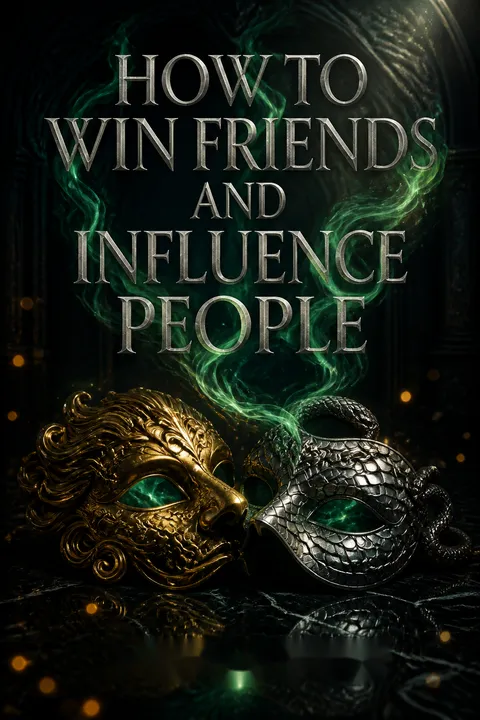
How to Win Friends and Influence People received mixed reviews, with an average rating of 3.94/5. Readers praised the clever plot, witty banter, and complex character relationships, particularly enjoying the Dramione pairing and unexpected side romances. Many found the story hilarious and engaging. However, some criticized the excessive length, numerous POV shifts, and convoluted plotlines. Several reviewers noted the story's unique blend of genres, including mystery, humor, and romance. While some struggled with the pacing and character overload, others appreciated the intricate storytelling and creative world-building.
Characters
Hermione Granger
The boxer with a conscienceA brilliant witch and war hero who returns to London after years abroad, Hermione channels grief and restlessness into boxing, research, and work. She studies people as carefully as opponents, but her instinct to help can become intrusive when she assumes she knows what others need. Her history with Ron4 and her forced partnership with Draco2 expose a woman trying to distinguish genuine care from the familiar roles others expect her to play. She is courageous, practical, and more emotionally vulnerable than she likes to admit; she wants agency, but often finds herself protecting everyone around her before asking what she wants.
Draco Malfoy
The alchemist in exileA former Death Eater and gifted potioneer, Draco turns his knowledge into a secret career making tailored poisons and explosive potions. Rejection from respectable society, grief, and addiction have left him defensive and suspicious of kindness. He hides vulnerability behind sarcasm and treats self-destruction as a form of control, yet he is observant, patient, and capable of loyalty. His partnership with Hermione1 forces him to work beside someone who sees through his evasions. He resists needing anyone, even as his actions reveal how strongly he wants to be trusted and chosen.
Harry Potter
The weary Head AurorNow Head Auror, Harry tries to protect the postwar world without relying on the hero worship that follows him. He recruits Hermione1 and Draco2 because he recognizes that their abilities fit a covert investigation better than the Ministry's strained resources do. His moral instinct is generous, sometimes to the point of trusting people before he understands them. In private, he seeks companionship without public scrutiny, and his connection with Theo5 exposes a more uncertain, ordinary Harry beneath the legend. He remains loyal to his friends, even when his official duties and personal conscience pull in opposite directions.
Ron Weasley
The earnest former fiancéRon is an Auror, Harry's3 oldest friend, and Hermione's1 former fiancé. He is loyal and warm-hearted, but his concern can turn into possessiveness when he fears losing someone he loves. His relationship with Hermione1 carries years of affection, conflict, and unresolved embarrassment; his newer relationship with Mel24 offers a different, less familiar kind of closeness. Ron often acts before he has fully understood what he feels, then struggles to explain himself. His instinct to protect his friends is genuine, though it does not always give them the space they need.
Theodore Nott
The secretive strategistTheo is Draco's2 closest associate in the contract-killing business and an exceptionally patient observer. He can disappear into a room's background, collect information, and build a plan without drawing notice. His childhood under a severe father left him wary of dependence and skilled at hiding what he wants. He keeps his relationship with Harry3 private, partly from fear of exposure and partly because he distrusts the cost of being known. Beneath his dry humor and capacity for violence is a person who longs for loyalty but believes that asking for it makes him vulnerable.
Pansy Parkinson
The velvet-gloved fixerPansy is an accomplished deceiver, duelist, and occasional assassin who uses her social polish as readily as her wand. She has survived public disgrace without surrendering her pride, and she understands that charm can be a tool rather than a confession of softness. Her work planning Percy's18 conference brings her into a connection she cannot easily dismiss. Pansy is quick to defend herself with wit, yet she is also capable of decisive loyalty when someone's safety is at stake. She dislikes being underestimated, especially by people who mistake her appearance for a lack of nerve.
Blaise Zabini
The polished operatorBlaise is a controlled, highly persuasive criminal operator who inherited his mother's network and knows how to separate feeling from action. He values self-determination and distrusts luck, fate, and anyone else's promises. His decision to take the secrets from Lady Revel reflects his ambition to control his own future, though Parvati's13 warnings unsettle his certainty. Blaise prefers leverage to vulnerability, but his fascination with Parvati13 begins to challenge the clean boundaries he has built around himself.
Daphne Greengrass
The quiet social strategistDaphne moves through pureblood society with a practiced calm that conceals how little freedom she has over her own future. Her mother treats marriage as a political arrangement, and Daphne has learned to keep her true intentions private. She is clever, observant, and more capable with a wand than her delicate appearance suggests. Her attraction to Cad9 unsettles her carefully managed betrothal to Marcus21, yet she is not simply waiting to be chosen; she wants to decide what sort of life she will accept.
Cadmus Peverell
The brilliant estranged brotherCadmus is the middle Peverell brother, a gifted enchanter with a sly, restless mind and a talent for seeing where others are vulnerable. He has spent much of his life at odds with his brothers and is difficult to trust, even when his grievances are justified. He treats revenge as a long game and people as pieces he can move, but he is also capable of affection and unexpected honesty. His connection with Daphne8 draws out a side of him that does not fit neatly into his preferred identity as a villain.
Antioch Peverell
The commanding founderAntioch is the eldest Peverell brother and the forceful architect of the League of Eternality's influence. He is ambitious, charismatic, and convinced that power must be used to shape the world. His confidence can look like certainty, but it also hides a deep need to control the people closest to him. Antioch understands loyalty as both affection and utility, which makes his relationships with his brothers especially volatile. He is not easily frightened, but he is unsettled when the machinery he built begins to move without his direction.
Ignotus Peverell
The scholar seeking controlIgnotus is the youngest Peverell brother, an inventor and scholar who seeks answers where his brothers seek influence. He is brilliant, introspective, and often trapped between loyalty to his family and his own conscience. His capacity for devotion can make him vulnerable to manipulation, particularly when someone offers the understanding he has long wanted. He dislikes conflict but is not harmless; centuries of secrecy have taught him how to act decisively when he believes a cause is worth the cost.
Nicholas Flamel
The Club's anxious alchemistNico is an ancient alchemist whose pursuit of continued life brought him into the Peverells'10 orbit. He is clever, socially skilled, and deeply invested in the League, yet his strongest loyalty is personal rather than political. His relationship with Ignotus11 gives him a reason to remain close to a group whose methods he does not always approve. Nico uses secrets and careful bargains to survive, but he is not as detached as he wants others to believe.
Parvati Patil
The reluctant seerParvati possesses a form of sight that comes through images and impressions, while her twin once received the voices. After the war, Parvati is trapped in Lady Revel's world of secrets and must use abilities she never wanted. She is observant and guarded, with a strong sense of how much knowledge can cost. Her connection to Blaise7 unsettles her assumptions about herself, especially because she has spent so long treating her visions as a burden rather than a gift.
Ludo Bagman
The desperate gamblerA former quidditch star and Ministry official, Ludo is charming, opportunistic, and driven by the need to win. He once used his popularity to escape consequences and has spent years avoiding debts and rebuilding his reputation. Ludo is good at persuading people to help him, but his confidence often outruns his judgment. He sees every crisis as a chance to return to power and every alliance as a temporary wager.
Dolores Umbridge
The ruthless political survivorDolores is a calculating former Ministry official who sees power as protection against a world that has never treated her gently. She is patient when it benefits her and merciless when she senses weakness. Rather than trust others, she builds leverage and keeps people close through threats. Her alliance with Ludo14 is practical, not affectionate: each believes the other can help restore what they have lost.
Kingsley Shacklebolt
The constrained MinisterKingsley leads a Ministry still struggling to recover from the war. He wants to do right by the public, but the Wizengamot and political pressure repeatedly limit what he can accomplish. His long experience makes him careful, sometimes too careful for Harry's3 more direct instincts. Kingsley understands that a Minister's authority is less absolute than it appears, and he carries the burden of choosing which compromises might prevent greater damage.
Daisy Carnegie
The suspended American AurorDaisy is MACUSA's young Head Auror, energetic, skilled, and stubbornly confident in her instincts. She works hard enough to earn her position, but her intensity can make her difficult to read. A family crisis and political suspicion put her professional identity under pressure. She is ambitious, yet not merely careerist; she wants to protect people and prove herself without being reduced to her family's name.
Percy Weasley
The meticulous new WarlockPercy is the newest member of the Wizengamot, a meticulous official who finds purpose in rules, schedules, and the careful execution of his work. His seriousness is often mistaken for stiffness, and his family history has left him eager to prove that he belongs in public service. Pansy6 sees more in him than his lists and formal manners suggest. He can be unexpectedly sincere, though he does not always notice the emotional meaning of what he says.
Rhys Hawkworth
The fighter seeking directionRhys is the youngest of seven brothers and grew up outside the Hogwarts system, trained by his sister-in-law in boxing after violence entered his life. He uses fighting to feel grounded and to keep part of his lost family close. His relationship with his father23 is strained by expectations Rhys has never fully accepted, while his interest in Hermione1 puts him in the path of secrets he does not control. He is earnest, physically capable, and still trying to decide what sort of man he wants to be.
Katie Bell
Draco's complicated former loveKatie is a Ministry employee whose relationship with Draco2 began with forgiveness and a desire to believe people could change. She is practical and compassionate, but she does not mistake sympathy for the ability to repair someone else's life. Her history with Draco2 remains emotionally charged, even as she tries to build something new. She is not a passive figure in the story; her decisions and associations place her near the conflict's central secrets.
Marcus Flint
The bruising former championMarcus is a former professional quidditch player with a competitive streak that spills into nearly every part of his life. He is blunt, combative, and more tender than his public manner suggests, particularly with Oliver22. His family's expectations press him toward a strategic marriage, which he treats as a practical arrangement rather than a romantic ideal. Marcus values winning, but he also understands the difference between possessing someone and choosing them.
Oliver Wood
The driven former keeperOliver is a former professional keeper whose dedication to quidditch can become obsession. He and Marcus21 share a long history of competition, resentment, and attraction, though Oliver wants a more stable future than Marcus21 can easily promise. He is direct, stubborn, and less comfortable with emotional ambiguity than he is with physical confrontation. His return to the sport would offer purpose, but it also threatens the life he has built around Marcus21.
Ifan Hawkworth
The ambitious WarlockIfan is a prominent Warlock and father to seven sons, including Rhys19 and Cadell. He values family, public order, and political stability, but his principles become difficult to separate from ambition. He expects his children to serve a larger purpose and can justify hard choices as necessary for their future. His relationship with Rhys19 is shaped by affection, authority, and the pressure to preserve the family's place in a changing wizarding world.
Melibea Warbeck
The glamorous designerMel is a celebrated designer and the daughter of a famous singer. A childhood spent traveling has made her independent, socially fluent, and accustomed to being admired without necessarily being known. She values honesty and emotional directness, and her relationship with Ron4 offers a kind of grounded intimacy she has rarely experienced. Mel can be playful and bold, but she is not simply a glamorous accessory; she is perceptive about the people around her and unwilling to pretend she is unaffected.
Herpo the Foul
The wandering immortalHerpo is an ancient dark wizard and a long-standing associate of the Peverell brothers10. He values movement and freedom, rarely staying in one place long enough to be pinned down. His relationship with Antioch10 is intimate but unsettled, shaped by a recurring return and departure. Herpo is clever, practical, and alert to danger, though his loyalty has limits. He knows more about the Club than he lets on and is often the one who sees the human cost of Antioch's10 decisions.
Plot Devices
The Deathstar Cover
Hides a criminal enterpriseDraco's2 company presents itself as an event-planning business, allowing him and his associates to accept Ministry contracts without revealing that their real work involves surveillance and contract killing. Percy Weasley's18 annual address gives the cover a credible public purpose and brings the team close to the people they need to protect. The alias also captures the group's black humor and Theo's5 taste for puns. As a device, it lets the story move between the Ministry's formal world and the criminal networks beneath it, while constantly risking exposure whenever a supposed client asks for details.
Tailored Potion Weapons
Turn potions into targeted violenceDraco's2 expertise allows him to create poisons and explosive draughts designed for a specific target, including potions that can be delivered through letters or other objects. His work is precise, secretive, and dangerous, making him valuable to the Ministry while also exposing the life he has built outside it. The later use of performance-enhancing adrenaline as a poison complicates the investigation, since a substance associated with sport can be altered into an undetectable weapon. The device links Draco's2 scientific skill to the novel's questions about control, guilt, and the blurred line between protection and killing.
The Infinity Club
Connects immortality to political powerThe League of Eternality, also called the Infinity Club, is a secret society built around the Peverell brothers10 and a network of influential people in Ministries across the world. Its members can manipulate political outcomes, recruit assassins, conceal crimes, and prolong their lives through powerful magic. The infinity symbol left with poisoned Warlocks becomes the visible clue to an organization that has spent centuries hiding in plain sight. The Club is not a single unified villain: its founders disagree, conceal information from one another, and turn personal grievances into political danger.
Lady Revel's Secret Vials
Make private knowledge a weaponDionisia Trelawney collects people's secrets in magical vials and uses the network they form as a source of leverage. The secrets are more than stored memories: together they create a powerful magical system that can influence or endanger the people tied to them. After Dionisia's house burns, Blaise7 and others try to decide whether the collection can be used for their own protection or must be destroyed. The vials turn gossip, guilt, and blackmail into tangible resources, while raising the danger that a secret can remain powerful long after its owner is gone.
The False Engagement
Turns cover into commitmentA photographed kiss becomes the public story that Draco2 and Hermione1 are a couple. Their accidental proposal at the international Apparition Point escalates the lie into an engagement, giving the press an easy explanation for their constant proximity and giving the Ministry a convenient cover for covert work. Malfoy family customs then force them toward a binding ceremony, while their feelings become harder to dismiss. The device works because the pretense has real consequences: it changes where they live, how they behave in public, and what they promise each other, even before either is certain what the relationship means.
Download PDF
Download EPUB
.epub digital book format is ideal for reading ebooks on phones, tablets, and e-readers.








