

Key Takeaways
Use your chart as a prompt to become more yourself, not a verdict.
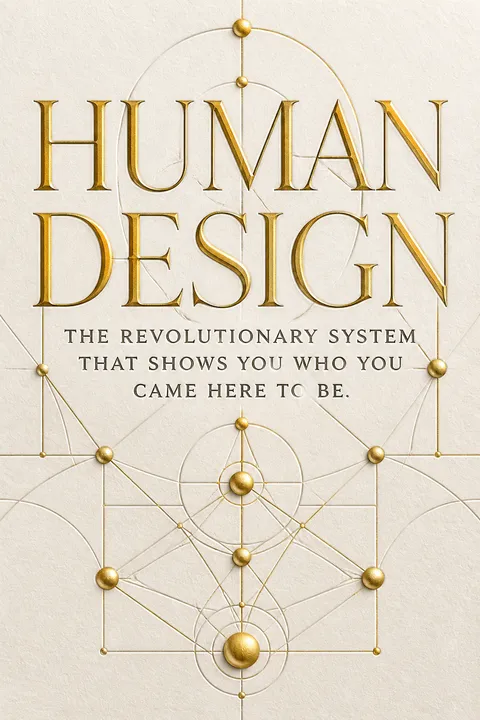
A map of identity. Human Design is a spiritual system created by Ra Uru Hu in 1987. It combines astrology, the I Ching, chakra concepts, and the Kabbalistic Tree of Life. Using birth date, place, and time, it generates a chart that the system interprets as a map of a person's energy and natural tendencies. The book frames this as a way to notice where conditioning has obscured one's authentic preferences, not as a program for becoming someone new.
Start with an experiment. The chart is organized around Energy Type, Strategy, Authority, Profile, and Gifts. Zoe encourages readers to try the suggestions in ordinary decisions and watch what happens, rather than accepting descriptions on faith. Because even a small difference in recorded birth time can alter a chart, the method depends on accurate birth information.
What's useful here is the invitation to test self-descriptions against lived experience. Reflective tools can help people name preferences they have overlooked, but labels also shape what people notice about themselves. A chart that says someone is a natural leader, for instance, may encourage confidence, or make ordinary uncertainty feel like failure. The distinction between a prompt and a verdict protects the reader's agency. Human Design's spiritual account of birth data is not established as a scientific personality measure, so practical value should be judged by whether a suggestion helps someone make clearer, kinder choices, not by treating the chart as proof of destiny.
Match work to your Energy Type instead of copying another person's pace.
Five ways of operating. In Human Design, an Energy Type describes how a person's energy is said to work. The book outlines five: Manifestors initiate and tend to work in bursts; Generators draw energy from activities that excite them; Manifesting Generators combine that response with a tendency to pursue multiple interests and change direction; Projectors are framed as guides who notice how people or systems could work better; Reflectors are described as highly responsive to their surroundings.
Fit beats imitation. Zoe argues that copying a standard workday or a relentlessly productive colleague can leave someone depleted or ineffective. A Projector, for example, may do valuable work through observation and focused guidance, not by matching another person's hours. The aim is to notice which activities leave a person energized, satisfied, or drained, then use that information to adjust their workload and expectations.
The strongest practical idea is that output is not a reliable measure of contribution. Work design research and occupational psychology likewise distinguish hours spent from the quality, fit, and sustainability of work. The book's types can function as memorable shorthand for different rhythms, especially when they legitimize rest or varied interests. The risk is treating a category as a biological fact. Energy also changes with sleep, health, caregiving, workplace power, and material constraints. A useful type description should open options, not excuse an employer from making work humane or persuade someone that exhaustion is an immutable feature of their identity.
Use your type's Strategy to stop forcing the wrong doorway.
A route into action. Strategy is the system's term for a preferred way to engage with opportunities. The book assigns a different approach to each type. Manifestors are advised to inform people about what they are initiating, which reduces surprise and helps others decide whether to join. Generators and Manifesting Generators are encouraged to respond to something concrete that sparks a felt yes, rather than inventing a direction from scratch. Projectors are told to make their abilities visible and wait for genuine interest before offering guidance.
Wait for the signal. Reflectors are encouraged to let possibilities recur over time, rather than acting on a first impulse. Zoe presents this as being carried by life, with bigger choices tested across different moods and phases. These strategies are not instructions to avoid action; they are meant to help people choose how to enter action with less friction.
These strategies translate an abstract identity system into observable behaviors: communicate a plan, notice a response, make expertise legible, or give a decision time. That concreteness is a genuine strength because habits can be evaluated in context. The Projector advice also resembles a sound principle of communication: guidance is more likely to help when the recipient is receptive. Still, waiting for an invitation can become passivity, and following excitement can overlook obligations or risk. The strategies work best as questions for choosing an approach, with practical constraints and reciprocal communication kept in view.
Use bodily Authority for personal choices, not endless mental forecasting.
A decision process. Authority is Human Design's name for the way a person is supposed to make personal decisions. Zoe argues that the mind is better used to observe the outside world than to predict every outcome of one's own life. The system names several Authorities: Emotional Authority calls for time to see how a choice feels beyond a passing high or low; Sacral Authority looks for a physical yes or no; Splenic Authority listens for a quick instinct; Ego Authority attends to what one genuinely wants.
Different routes to clarity. G Center Authority uses speaking or writing to hear one's own thinking. Mental Authority distinguishes intuitive knowing from habitual thoughts. Lunar Authority, assigned to Reflectors, waits for clarity to develop over time, especially for major choices. The book recommends practicing on small decisions first and noticing whether the method proves useful.
This section's best contribution is its resistance to false certainty. Deliberation can become rumination when people demand complete forecasts from incomplete information. Pausing, naming a preference, or talking through alternatives can expose assumptions that silent analysis misses. At the same time, bodily signals are information, not infallible commands. Anxiety, trauma, social pressure, and temporary mood can all shape felt responses. A careful decision process can combine intuition with evidence, consultation, and an honest assessment of consequences. The book's techniques are most defensible as ways to access neglected information, rather than as guarantees that a particular inner signal is divinely correct.
Treat recurring discomfort as feedback, not proof you're failing.
Two kinds of signal. Human Design calls a type's positive alignment its Signature, and the discomfort associated with being out of alignment its Not-Self. Zoe describes the Signature and Not-Self as signals to notice, not moral grades. In the book's framework, Manifestors look for peace and watch for anger; Generators and Manifesting Generators look for satisfaction and watch for frustration; Projectors look for success and watch for bitterness; Reflectors look for surprise and watch for disappointment.
Use the feeling as a question. Frustration, for example, may prompt a Generator to ask whether they have taken on too many obligations that do not excite them. Bitterness may prompt a Projector to redirect attention from criticizing a closed listener toward someone receptive to their expertise. The book advises against shame: a difficult feeling is presented as a cue to examine a choice or context, not evidence that a person is defective.
The framework turns vague distress into a possible diagnostic prompt, a move that fits emotion-regulation approaches that treat feelings as signals without making them commands. Asking what a feeling might be responding to can restore choice. Yet any single emotion can have several causes: anger may reflect a boundary violation, but also fatigue or fear; disappointment may signal an unmet need, not a mistaken identity. The value lies in curiosity and context. Readers should neither suppress discomfort as mere misalignment nor assume every unpleasant feeling demands an immediate life change.
Read your Profile as an inner and outer tension, not a personality cage.
Two numbers, two perspectives. A Profile is a pair of numbers in a Human Design chart. The first is said to describe the inner self, while the second describes how a person appears to others. The system assigns six themes: 1 seeks knowledge, 2 has natural abilities, 3 learns by experimenting, 4 builds through relationships, 5 is drawn to solving problems for others, and 6 models an ideal or mature way of being.
Contrasts can coexist. A 3/5 Profile, for example, combines a private drive to learn through trial and error with an outward image of someone who can solve problems. Zoe argues that the combination is not a contradiction to eliminate. Profiles are intended to explain why self-perception and others' impressions may differ, and why a person's strengths can appear through a mix of apparently opposing tendencies.
The inner-and-outer distinction is psychologically useful even without accepting the chart's spiritual explanation. People behave differently in private and public, and feedback can reveal strengths that feel invisible from the inside. The six labels can also make contrasting tendencies easier to discuss without treating either as hypocrisy. But a fixed profile can invite confirmation bias: people may interpret every experience as evidence for the assigned type. A flexible reading is more productive. Use the description to ask where a pattern appears, where it does not, and what other people observe, rather than forcing a whole life into two numbers.
Pair what comes easily with what genuinely holds your attention.
Purpose as a combination. The book's model treats Gifts and passions as distinct ingredients. In the chart, the numbered Gates are said to represent innate Gifts, while a person's interests reveal the subjects or activities that draw their attention. Zoe summarizes the relationship as Gifts plus passions creating Purpose: a talent indicates how someone might contribute, while a passion suggests where to apply it.
Make the pairing concrete. Someone drawn to astrology might use a gift for clear explanation in one-to-one readings, or a gift for visual design to make custom charts. A lawyer whose strength is bringing people together could apply that ability to conflict resolution or team relationships. The book also argues that small everyday skills count. Enthusiasm, careful research, or making people feel included can be valuable precisely because they seem ordinary to the person who possesses them.
This pairing offers a useful alternative to choosing a career by prestige alone. Skills answer what a person can contribute; interests help identify where that contribution might feel meaningful. In career design, the two dimensions can be explored separately and then combined in several possible roles, rather than assumed to point toward one ordained job. The caution is that ease is not the same as excellence, and passion does not automatically create demand or income. Training, opportunity, and feedback matter. The book's strongest practical implication is to test combinations in real settings and learn which ones help both the person and the people they serve.
Test the design in daily life, keeping only what improves your choices.
Begin with one change. Zoe presents living one's Design as a gradual process of deconditioning: noticing expectations learned from family, culture, or work, then making room for more authentic preferences. Readers are not asked to overhaul everything at once. The conclusion recommends beginning with the parts of the system that feel most compelling and looking for tangible changes in everyday life.
Keep the evidence personal. A reader might try pausing before a major commitment, declining an activity that consistently drains them, or telling others what they are starting. Then they can observe whether the change improves clarity, energy, relationships, or results. The book's central claim is that authenticity can benefit other people as well as oneself, because distinct abilities complement one another. Its most grounded invitation is to experiment, reflect, and keep what proves helpful.
Small tests protect readers from turning an appealing worldview into an all-or-nothing identity. A brief experiment can generate useful self-knowledge without requiring a person to reorganize a career or relationship around a chart. It also creates room for revision: a strategy may help in one setting and fail in another. The book's expansive claim that each person's authentic expression benefits the collective is inspiring, but it can underplay conflicts between personal preference and shared duties. A practical test should track effects on others as well as on the self, and allow for negotiation rather than assuming authenticity automatically produces harmony.
Analysis
This book presents Human Design as both a spiritual account of individuality and a practical vocabulary for making choices. Its narrative moves from the birth chart to type, strategy, decision authority, personality profile, and gifts, then gathers those layers into the claim that fulfilling work begins with accepting one's natural way of operating. The reader is encouraged to replace conformity with self-observation: notice what energizes, what drains, which settings feel supportive, and how decisions become clearer.
The system's breadth makes it difficult to summarize without either flattening its detailed chart vocabulary or reproducing its many type and gift descriptions. The most valuable through-line is simpler: use a description as a hypothesis, test it in life, and revise behavior based on what happens. The five Energy Types offer memorable distinctions between initiating, responding, guiding, and adapting. The Authority section adds a practical counterweight to endless analysis, while the Signature and Not-Self language gives readers a way to notice emotional friction without treating it as personal failure.
The book's strengths are permission and specificity. It validates rest, varied interests, quiet expertise, and relational contributions that conventional productivity culture can overlook. Its weaknesses arise when spiritual claims are presented with certainty. The text does not establish that birth time reveals a soul-selected blueprint, nor does it offer evidence that chart categories reliably predict personality or outcomes. The advice should therefore not replace medical, psychological, financial, or career guidance.
A balanced reading separates the usable prompts from the metaphysical explanation. Readers can ask whether they prefer bursts or steady routines, whether they need time before deciding, or whether they offer better guidance when invited, without assuming these preferences were fixed at birth. The book is most useful as a structured invitation to self-inquiry, and least useful when a chart becomes a reason to stop questioning oneself or one's circumstances.
Glossary
Human Design
Birth-chart self-inquiry systemA spiritual system developed by Ra Uru Hu in 1987, combining elements of astrology, the I Ching, the chakra system, and the Kabbalistic Tree of Life. It uses a person's birth date, time, and place to produce a chart, which is interpreted through categories such as Energy Type, Strategy, Authority, Profile, and Gifts.
Energy Type
Pattern of energy useA primary Human Design category said to describe how a person's energy operates and where it works most effectively. The system names five types: Manifestor, Generator, Manifesting Generator, Projector, and Reflector. The book uses these categories to discuss different patterns of initiating, responding, guiding, resting, and engaging with other people.
Strategy
Preferred way to engageA Human Design term for the recommended way a person engages with opportunities, based on their Energy Type. The book assigns informing to Manifestors, responding to Generators and Manifesting Generators, waiting for invitations to Projectors, and allowing life to carry Reflectors through repeated signals and time. It is presented as a practical guide to reducing resistance.
Authority
Personal decision-making signalThe Human Design term for the process said to provide reliable guidance for an individual's personal decisions. The system identifies different forms, including Emotional, Sacral, Splenic, Ego, G Center, Mental, and Lunar Authority. Each is associated with a distinct route to clarity, such as waiting through an emotional wave, noticing a gut response, or talking a choice through.
Signature
Feeling of alignmentIn Human Design, the positive emotional signal associated with operating in alignment with one's Energy Type. The book names peace for Manifestors, satisfaction for Generators and Manifesting Generators, success for Projectors, and surprise for Reflectors. It is meant to help a person notice when their way of acting feels congruent with their design.
Not-Self
Signal of misalignmentA Human Design term for the uncomfortable emotional signal associated with acting outside one's supposed design. The book pairs anger with Manifestors, frustration with Generators and Manifesting Generators, bitterness with Projectors, and disappointment with Reflectors. It frames these feelings as prompts for reflection rather than evidence of personal failure.
Profile
Two-part personality patternA two-number feature of a Human Design chart. The first number is interpreted as describing the inner self, and the second as describing how a person appears to others. Each number from 1 to 6 has a theme, including learning, natural ability, experimentation, relationships, problem-solving, and role modeling. The paired numbers form one of twelve Profiles.
Gates
Chart-linked gift themesNumbered features in a Human Design chart, each associated in the book with a particular human gift or capability. The chart's colored numbers are interpreted as gifts a person inherently possesses. The book describes these gifts as ways to contribute, while suggesting that a person's interests help indicate where to apply them.
Informing
Manifestor communication strategyThe strategy assigned to Manifestors in Human Design. It means openly telling relevant people what one is initiating or planning, without asking them for permission. The book presents informing as a way to reduce friction and help others decide whether they want to participate, while allowing the Manifestor to retain independence.
Responding
Answering a concrete promptThe strategy assigned to Generators and Manifesting Generators. Rather than trying to invent a life direction through abstract thought, a person notices a concrete opportunity, question, or stimulus and checks for a bodily sense of interest or disinterest. The book treats this response as a guide to where energy and attention should go.
Being Invited
Projector invitation strategyThe strategy assigned to Projectors. The person is encouraged to make their abilities and perspective visible, then offer guidance when another person shows genuine interest or asks for it. The book distinguishes this from giving unsolicited advice, arguing that receptive audiences are more likely to value and use a Projector's insight.
Being Carried
Reflector timing strategyThe strategy assigned to Reflectors, who are described as highly responsive to people, places, and changing conditions. Rather than making major decisions on a first impulse, the book advises noticing whether an opportunity keeps returning and allowing time, including different moods or phases, to reveal whether it remains appealing.
Download PDF
Download EPUB
.epub digital book format is ideal for reading ebooks on phones, tablets, and e-readers.








