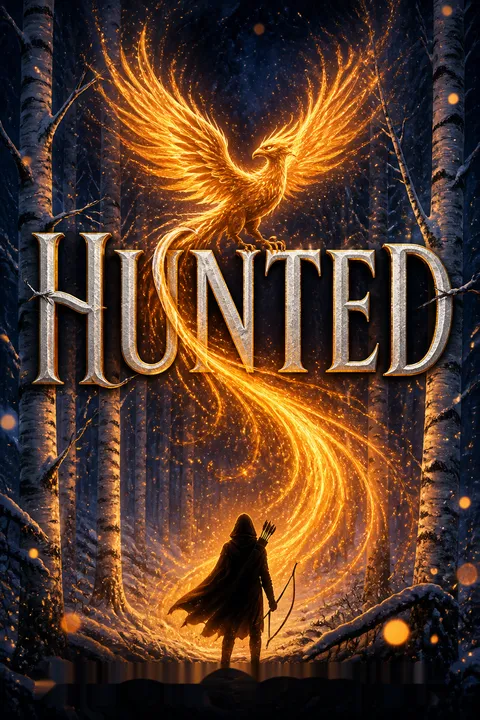


Plot Summary
Prologue
The Beast senses that a change is coming, but cannot tell what it will bring. Inside him, two ways of measuring time and two opposed natures pull against each other.
He paces his den, trapped between animal instinct and human longing, while the winter forest waits beyond his reach. The coming storm is only weather. The true change has not yet arrived.
The opening gives the Beast an interior life before Yeva can meet him, but keeps that life divided and unreadable. His plural sense of self hints at a conflict more complex than a man turned into an animal: instinct and memory occupy the same body without becoming reconciled. The approaching storm makes change feel physical, while his inability to predict its meaning establishes the book’s central tension. Neither Yeva nor the Beast can know in advance whether desire will free them or deepen their captivity.
Caravan Lost, Home Unmade
Yeva, the youngest daughter of merchant Tvertko, watches the forest from the baronessa’s parlor while her sisters Lena and Asenka fit more comfortably into the life of town. A visitor arrives during a storm with news that Tvertko’s caravan has been destroyed and its men killed. The venture had carried nearly all the family’s fortune, along with money entrusted by other merchants.
Tvertko sells the house and possessions, finds places for most of the servants, and takes his daughters and the loyal Albe to his old hunting cabin. Yeva longs for the woods but sees the cost: her father is ashamed, her sisters’ futures are uncertain, and the family has lost the security that once made their choices seem simple.
The financial collapse turns Yeva’s private dissatisfaction into a material crisis. Her father’s ambition was not mere greed: he wanted to widen his daughters’ world beyond a town cut off by raiders. Yet the loss exposes how much freedom depends on resources, especially for women whose futures are negotiated through marriage. Yeva’s return to the cabin looks like a dream fulfilled, but it arrives through ruin and carries obligations she cannot solve by simply becoming a better hunter.
Solmir's Unwanted Proposal
At the cabin, Solmir, a skilled hunter and ward of the baron, explains that he had noticed Yeva’s interest in hunting long before she understood his attention. He asks her to marry him and promises a shared life in the forest, as well as security for her family. Yeva refuses, unsettled by marriage even though Solmir seems to offer the life she had imagined.
Her sister Asenka hides her heartbreak and insists she is glad for Yeva, though Yeva later hears her crying alone. Rather than face that wound or settle into cabin life, Yeva retrieves her bow and begins hunting again. The work feeds her family and restores her confidence, but it also sharpens her sense that she is seeking something beyond survival.
Solmir’s proposal is appealing precisely because it solves practical problems while leaving Yeva’s deeper restlessness untouched. She cannot yet distinguish fear of marriage from fear of accepting a life that others have already defined for her. Asenka’s generosity complicates Yeva’s choice: her sister’s pain is not a reason Yeva must surrender her own future, but neither can Yeva pretend the decision affects only herself. Hunting gives Yeva competence and relief, though not an answer to what she wants.
Tvertko Hunts Alone
As Yeva brings game home, Tvertko returns from the deeper forest convinced that an intelligent creature is driving animals away and tracking him. He remembers a Beast he once encountered before he gave up hunting for Yeva’s mother, and becomes fixated on killing it for the reward its hide might bring. Yeva asks to join him, but he refuses and leaves with his dog Pelei.
He does not return for weeks. Then Pelei reaches the cabin alone, frantic and snow-covered. Yeva understands that her father may be injured or dead, and that waiting will erase the dog’s trail. She gives Solmir responsibility for her sisters and Albe, promising to marry him if she comes back, then follows Pelei into the forest.
Tvertko’s return to hunting is driven by both financial desperation and an older, unresolved hunger for the life he abandoned. His fixation makes him appear to Yeva as a man losing his reason, but it also mirrors her own tendency to let one need crowd out every other responsibility. Yeva’s bargain with Solmir is an act of care as much as romantic consent: she cannot leave her family unprotected. Following Pelei makes her choose immediate action over the uncertainty of waiting.
Blood Beneath the Snow
Pelei’s tracks lead Yeva to a clearing marked by blood, Tvertko’s abandoned weapons, and the remains of a human body. She assumes the Beast has killed her father. When the enormous creature appears, she shoots it with Tvertko’s bow and wounds it. Grief and revenge drive her to follow its blood trail instead of retreating.
In the clearing where she catches up, the Beast has arranged dead rabbits as bait and lies apparently helpless. Yeva approaches with her axe raised, but the Beast springs up, knocks her down, and leaves her unconscious. She wakes chained in a lightless cell, injured, without her weapons or pack. Her hunt has ended with her captive in the lair of the creature she blames for everything.
Yeva’s first encounter with the Beast is shaped by a false certainty: she sees blood and a body, then supplies the explanation her grief demands. The trap reverses the hunter’s confidence, revealing that skill alone cannot protect someone whose attention has narrowed to vengeance. Her choice to pursue the wounded creature is understandable, but it also repeats Tvertko’s dangerous pattern of letting a single quarry define the entire world. Captivity begins when Yeva’s desire for certainty makes her vulnerable.
A Voice Behind Stone
A hidden presence brings Yeva food, willow bark, a lamp, and eventually warmth, though it refuses to free her or explain who holds her. Confined in the dark, Yeva speaks to fill the silence. She tells stories from her childhood and describes her sisters, Albe, and the father she cannot bear to discuss.
Her unseen helper listens, sometimes asking her to continue, and she begins to imagine him as a fellow prisoner. When illness weakens her, he removes her manacle and leads her blindfolded to a heated room, warning her never to uncover her eyes.
She recovers there, sharing tales with the voice and giving it the name Ivan. Their fragile companionship grows from small acts of care, even as Yeva remains unable to see the person who provides them.
The cell strips away the sensory world in which Yeva has always felt most capable, so speech becomes a survival tool rather than mere company. Her stories let her preserve relationships she fears she has abandoned, while also giving the unseen listener a form of human contact. The helper’s care is real, but the conditions of captivity remain coercive. The tension between kindness and control is not a contradiction to be resolved quickly; it is the emotional ground on which trust begins to form.
The Blindfold Falls
When Yeva finally pulls away her blindfold, she sees the Beast’s fanged face above her and stabs him with her small knife. He returns her to the cell, then orders her to train as a hunter. He needs her to capture an unnamed quarry from a world she cannot yet perceive, and threatens her family to make her obey.
Yeva’s anger keeps her alive through the forced archery practice, but the Beast’s struggle to explain his purpose suggests a spell limits what he can say. He eventually lets her hunt freely in the forest, insisting he will watch her. Yeva knows he is still her captor, yet she begins to understand that his secrecy and command over the woods conceal a problem he cannot solve alone.
The revelation of the Beast’s face destroys Yeva’s imagined distinction between a compassionate ally and a monstrous captor. Her knife is both self-defense and a broken promise, which makes the Beast’s rage about betrayal as significant as his physical power. Training changes the balance between them only slightly: Yeva gains competence, but he controls the conditions of her practice and exploits her love for her family. The spell creates a narrative puzzle, while the threat keeps that puzzle from becoming a safe intellectual game.
A Hound in the Valley
The Beast teaches Yeva to listen for the forest’s magic and imagine its hidden patterns until she can see creatures ordinary eyes miss. On a solitary hunt she meets the spirit Borovoi, then becomes entranced by a Firebird trapped beneath a frozen pool. Breaking the ice releases a rusalka, a drowned spirit that drags Yeva underwater.
Yeva kills it with her knife but nearly freezes after escaping. The Beast finds her, carries her back, and saves her life. Later, Doe-Eyes, the family’s delicate hunting dog, finds Yeva in the woods. The Beast’s instinctive defense of Yeva sends Doe-Eyes crashing into a tree and breaks her leg. Yeva refuses to abandon the dog, forcing the Beast to guide them to his home.
The forest’s magic answers Yeva’s longing, but it does not reward desire with safety. The Firebird’s apparent vulnerability draws her into danger because she wants the wonder more than she attends to the ice beneath her feet. The Beast’s rescue and his attack on Doe-Eyes expose the conflict between his human attachment and predatory reflexes. Yeva’s insistence on carrying the injured dog introduces a different kind of hunting: she must protect a dependent creature rather than pursue a prize.
The Castle's Hidden Heart
The Beast brings Yeva and Doe-Eyes to a ruined castle in the valley and gives Yeva a room above the dungeon. She splints the dog’s leg, explores the empty halls, and begins making a livable corner of the building. The Beast hunts for food and later brings Yeva to his hidden turret room, where he has preserved books and personal keepsakes.
When he sees how the ruined library grieves her, he lets her use his collection. Their daily hunts grow more intimate as Yeva learns to follow magical traces, while the Beast teaches without revealing his quarry. His small kindnesses make her feel at home, even as she continues to believe that she must eventually avenge her father.
The castle turns captivity into a contested domestic space. Yeva does not become free, but her work with food, fire, and Doe-Eyes lets her make choices within the limits imposed on her. The Beast’s private library offers evidence of a self beyond the creature’s public violence, and his response to Yeva’s grief is an act of recognition rather than command. That recognition unsettles her because it makes revenge emotionally harder without making the original harm disappear.
The Knife Finds Its Mark
After discovering that the Beast sleeps in the turret, Yeva creeps in with a carving knife and stabs his throat. He dies briefly, then heals before her eyes and tells her he has tried and failed to end his own life. He also reveals that he found Tvertko already dead in the forest.
Her father had died from age, illness, and the strain of losing his fortune, not from the Beast’s attack. The Beast admits he took Yeva because he needed a hunter with her father’s skills. With the revenge that sustained her now impossible and misdirected, Yeva breaks down. The Beast leaves her food, her tools, and solitude rather than forcing her to speak.
The failed killing dismantles Yeva’s organizing story: that the Beast murdered her father and that killing him would make grief manageable. His immortality is not simply a power but another form of captivity, while his confession restores the difference between responsibility and blame. Yeva must now mourn without an enemy who can absorb her pain. The Beast’s decision to leave her alone matters because he recognizes her need without claiming to cure it.
Home Is Not Enough
Yeva leaves the Beast’s valley and discovers that only a year has passed outside. Her sisters are back in their old home: Lena is married to Radak and expecting a child, while Asenka works at the leech’s shop. Solmir has kept his promise to protect them. Though the family welcomes Yeva, she learns that Asenka still loves Solmir and that he loves her in return.
Yeva releases him from their engagement, and he asks Asenka to marry him. She stays for their wedding, but a vision of the Beast as a wolf with no humanity convinces her that his curse is consuming him. Yeva takes her father’s bow and leaves again, choosing to return to the danger she once escaped.
Home restores Yeva’s relationships but does not erase the self she formed in the forest. Her choice to release Solmir is an ethical correction: gratitude cannot obligate her to marry him, and affection cannot justify standing between two people who love each other. Yet returning to the Beast is not a rejection of family so much as a newly chosen responsibility. The vision makes her fear that his isolation has allowed instinct to overwhelm the person she came to know.
The Feather's History
Yeva reaches the valley and finds the castle empty, its fires cold and the Beast gone. In the turret she discovers a history book marked at the name Eoven, the youngest prince of the former royal family, and recognizes the Firebird feather the Beast left for her. She understands that the Beast once called himself Ivan and that the Firebird is tied to his curse.
Following its song, Yeva seeks help from Lamya, a dragon who appears as a woman, and Borovoi, the foxlike forest spirit who once misled her toward danger. Lamya explains that Yeva’s affection strengthened the Beast’s human nature, while her departure has left the wolf dominant. Borovoi sends her north, where the Firebird can be found.
The history book converts a private mystery into a recoverable past, but it offers no simple cure. Yeva’s relationship with the Beast has altered the balance inside him, making intimacy consequential without making her responsible for every part of his curse. Lamya and Borovoi embody the forest’s resistance to single meanings: beauty can entice, guidance can mislead, and a creature can hold more than one nature. The northward quest tests whether Yeva wants the Firebird itself or what she imagines it will grant.
The Firebird's True Price
At the source of the river, Yeva finds the Firebird inside a hidden cave. It offers itself as the final reward of her lifelong search, and its enchantment makes her forget Eoven. Yeva remembers the Beast and shoots. The Firebird vanishes, leaving her trapped behind ice; to survive, she burns its feather, her bow, and the pages of her father’s storybook.
The Beast breaks through the ice, but arrives as a mindless wolf. Yeva tells him a changed version of the tale of Ivan and the wolf, naming their shared curse as endless wanting. She admits she does not know how their story ends, only that she wants to return with him. Her choice brings Eoven’s human self back, and they leave the cave together.
The climax refuses the expected bargain in which the heroine captures a magical prize and receives a finished life. Yeva must destroy the object she has pursued since childhood, then surrender the bow and stories that once seemed to define her, simply to stay alive. Her retelling does not defeat the wolf through force; it gives the Beast a narrative in which he can recognize himself. The resolution depends on choosing a relationship over the fantasy of completion, while leaving the future open rather than sealing it with a conventional reward.
Epilogue
Yeva and Eoven return to the Beast’s valley with Doe-Eyes, where spring has replaced the endless winter. Their family will welcome Eoven, and the couple may live near town, in the forest, or travel toward the distant lands Yeva once imagined.
They have not decided whether they will marry or where they will settle. For now, they walk beside the river as the Firebird’s song continues to call from beyond the mountains. Their life together begins without a fixed destination.
The epilogue makes uncertainty part of the reward. Yeva and Eoven are not handed a settled identity or a final domestic arrangement; they are given the capacity to keep choosing. The open possibilities echo Yeva’s former restlessness, but the difference is that she no longer treats the next place or achievement as the single missing piece that will make her whole. The Firebird still sings, so longing remains. It has become a companion to living rather than proof that life has not yet begun.
Analysis
Hunted reworks the Beauty and the Beast story around a heroine whose primary conflict is not whether she can love a monster, but whether she can identify what she wants without turning desire into a demand for completion. Yeva repeatedly imagines that the next condition will settle her: freedom from society, life in the forest, revenge for her father, return to her family, or possession of the Firebird. Each choice offers something real, yet none can bear the impossible burden of making every other longing disappear.
The novel gives this restlessness a material and social context. Yeva’s family loses its wealth, making marriage and security urgent rather than abstract. Her hunting skill is both a source of agency and a response to deprivation. That dual role matters: self-reliance lets her protect her family, but it can also become a tunnel through which she excludes grief and intimacy. Her pursuit of revenge works in the same way. Believing the Beast murdered Tvertko allows Yeva to postpone mourning by converting loss into a solvable task.
The Beast is not made harmless by his loneliness. He imprisons Yeva, threatens her family, and uses her skill for his own purpose. The story’s emotional argument depends on retaining those harms even as it reveals his vulnerability and the divided nature of his being. Yeva’s eventual compassion is meaningful because it follows confrontation and choice, not because captivity is recast as courtship. Likewise, the Beast’s release of Yeva gives her the possibility of leaving, which makes her return an act of agency rather than obedience.
Fairy tales function as both map and trap. Their patterns help Yeva perceive a magical world, but their promise of a final reward encourages the belief that life can be completed by finding the right prize. Yeva’s last choice rejects that bargain. The Firebird matters, but it cannot substitute for a relationship, a home, or an ongoing life. The ending does not cure longing; it changes its meaning. Yeva and Eoven can keep wanting what lies beyond them while choosing the people and places already within reach.
Review Summary
Hunted is a well-received Beauty and the Beast retelling with a Russian folklore twist. Readers praise the atmospheric setting, strong family bonds, and unique take on the classic tale. The protagonist, Yeva, is a skilled huntress who seeks revenge against the Beast. Many appreciate the slow-burn romance and the author's handling of potentially problematic elements. While some found the pacing slow, most enjoyed the lyrical writing and magical elements. Overall, it's considered a compelling and enchanting retelling that offers a fresh perspective on the beloved story.
People Also Read

Characters
Yeva
Restless forest hunterTvertko’s youngest daughter, Yeva was taught to hunt by her father and feels most herself among trees, tracks, and snow. Town society presses her toward a narrower role, while her own desires are difficult for her to name. She is observant, resourceful, and capable of acting decisively, but can become so focused on one goal that she neglects what else she values. Her tenderness toward her sisters and dogs sits beside an appetite for danger and wonder. Yeva’s central struggle is not simply whether to choose a safe life or an adventurous one, but how to recognize the difference between wanting a meaningful life and believing that one achievement will finally complete her.
The Beast
Cursed double natureA powerful, intelligent creature dwelling in the black wood, the Beast is both a hunter and a prisoner of forces he cannot explain. He can be frighteningly violent, yet he shows patience through practical acts of care and a private devotion to books and stories. His speech and behavior shift between guarded control and animal impulse, leaving those around him uncertain which nature will prevail. He needs Yeva’s skill for a purpose he cannot disclose, and his loneliness makes her attention matter more than he wants to admit. The Beast embodies the painful coexistence of instinct, memory, longing, and conscience, none of which can simply erase the others.
Tvertko
Hunter turned merchantYeva’s father once ranged farther into the forest than other hunters, then gave up that dangerous life to build a merchant’s fortune and raise his daughters. He loves his family and wants them to have opportunities beyond their isolated town, but his pride makes failure difficult to bear. His old stories teach Yeva to read the natural world, and his example gives her both a source of skill and a model of longing that can become consuming. Tvertko’s return to the woods is driven by more than money: it is an attempt to recover a self he believes he has lost.
Asenka
Tender, steadfast sisterYeva’s older sister, Asenka works at a leech’s shop, where her patience and compassion make her valuable to the sick. A twisted foot causes her pain and affects her movement, but it does not define her abilities or her quiet strength. She knows Yeva unusually well and offers affection without demanding that Yeva become more conventional. Asenka’s feelings for Solmir make her reluctance to claim happiness a source of tension within the family. She tends to protect others by minimizing her own needs, a generosity that is loving but can also keep her from speaking plainly.
Lena
Practical elder sisterYeva’s older sister and the household’s capable manager, Lena values security, order, and the bonds that keep her family together. Her practical nature often makes her the one who notices what must be done next, from arranging a home to tending to Asenka. Beneath her teasing and scolding is a deep fear of losing the people she loves. Lena’s relationship with Radak gives her a life of her own, but she remains fiercely invested in Yeva’s safety and choices. She is not merely the conventional sister against Yeva’s wildness; she is a devoted person trying to make uncertain circumstances livable.
Solmir
Loyal hunter and heirSolmir is a skilled hunter and the baron’s ward, raised close to power without being born to it. He is earnest, kind, and drawn to Yeva’s genuine interest in the work he loves, rather than to the social role she is expected to play. His devotion is expressed through action, especially his willingness to protect Yeva’s family through hardship. He is also capable of idealizing a future before understanding what the people around him truly want. Solmir’s decency matters because it lets Yeva refuse him without making him a villain, and makes room for his feelings and Asenka’s to become visible.
Doe-Eyes
Yeva's loyal houndA slim, gentle hunting dog, Doe-Eyes belongs to Tvertko but attaches herself most closely to Yeva. She is bred for speed rather than harsh winters, yet repeatedly follows Yeva into danger. Her loyalty is physical and unmistakable: she finds Yeva in the forest, stays near her while injured, and offers warmth when Yeva is close to death. Doe-Eyes gives Yeva companionship without judgment, while her vulnerability forces Yeva to care for another creature instead of pursuing her own quarry.
Radak
Lena's devoted partnerA merchant and Lena’s fiancé, Radak is away on business when Tvertko’s fortunes collapse. He searches for Lena and remains devoted through the family’s difficult circumstances. His loyalty helps restore stability to the household, and his quiet understanding of Yeva’s need for independence makes him more perceptive than she expects.
Galina
Yeva's candid friendA former member of the baronessa’s circle, Galina is one of the few women near Yeva’s age who treats her as a person rather than a rumor. Married and expecting a child when Yeva returns, she listens without forcing Yeva to turn her experience into a simple story. Her concern helps Yeva examine feelings she has avoided naming.
Lamya
Dragon in human formLamya is a dragon who can appear as a beautiful woman and move through the forest without regard for cold or ordinary limits. Her manner is languid and alluring, but her knowledge is precise and her perspective resists simple categories. She offers Yeva insight into the Beast’s divided nature while embodying the seductive danger of mistaking desire for fulfillment.
Borovoi
Foxlike forest spiritBorovoi is a forest spirit who can appear as an old man or a red fox. He offers answers according to the rules of his nature, but those answers can lead travelers into peril if they misunderstand what they asked. Clever and teasing, he represents a world where guidance is not the same as rescue and where the question itself shapes what a seeker receives.
The Firebird
Elusive magical quarryThe Firebird is a radiant, elusive creature whose song draws people toward it. In Yeva’s childhood stories it represents the greatest wonder a hunter might pursue. The bird’s power lies not only in its magic but in what it awakens in those who seek it: the conviction that the next prize, discovery, or reward will finally satisfy every desire.
Albe
Faithful household servantRaised in Tvertko’s household from childhood, Albe remains with the family after their fortune disappears. He is clumsy and eager to help, but his loyalty is sincere, and Yeva regards him as closer to a brother than a servant.
Pelei
Tvertko's scent houndPelei is Tvertko’s shaggy scent hound, built for cold weather and tracking. His return to the cabin without Tvertko alerts Yeva that something has gone wrong in the forest.
Plot Devices
The Firebird
Embodies endless wantingThe Firebird begins as the wonder Yeva most wants to find, a creature from the stories her father told her. Its song later draws her toward danger and makes her mistake a magical reward for the answer to her life. The bird also connects Yeva’s childhood imagination to the Beast’s hidden history. Its importance changes as Yeva learns that a desired object cannot guarantee fulfillment; the crucial question is what she is willing to choose when the prize is finally within reach.
The Feather
Carries a trail of cluesA Firebird feather links the Beast’s preserved history to Yeva’s own childhood stories. It helps her recognize the Beast’s connection to the name Ivan and gives her a source of warmth and light when she is trapped in the Firebird’s cave. The feather is not a weapon or a simple solution. Its changing uses keep the Firebird present in the story while forcing Yeva to decide whether the symbol matters more than the living person she has come to know.
The Magic Wood
Reveals hidden naturesThe forest contains ordinary animals as well as spirits and magical beings that become visible through attentive listening. The Beast teaches Yeva to perceive its music, while its creatures reveal that familiar appearances can conceal different natures. The wood also alters the experience of time: Yeva leaves its valley after a long stay but finds only a year has passed outside. It acts as a testing ground for her hunting skill and her assumptions about what counts as human, animal, danger, or home.
Fairy-Tale Patterns
Turn stories into instructionsThe stories Tvertko tells Yeva are not decorative references; they give her a practical language for reading the enchanted wood. Their recurring patterns, including three-part trials and warnings that must be interpreted carefully, help her understand Borovoi’s answers and the Beast’s silence. Yeva also reshapes the tale of Ivan and the wolf when the Beast has lost his human self. The story becomes a means of recognition, not a formula that guarantees a happy ending.
The Two Natures
Makes identity a struggleThe Beast’s existence holds human memory and animal instinct in one body, and the balance between them shifts with his isolation and his relationship with Yeva. The same device appears in Lamya, who is both woman and dragon, and throughout a forest where appearances do not reveal a creature’s whole nature. It prevents a simple division between civilized and wild, or monster and man. The conflict is not solved by removing one side but by allowing the divided self to become whole.
Download PDF
Download EPUB
.epub digital book format is ideal for reading ebooks on phones, tablets, and e-readers.








