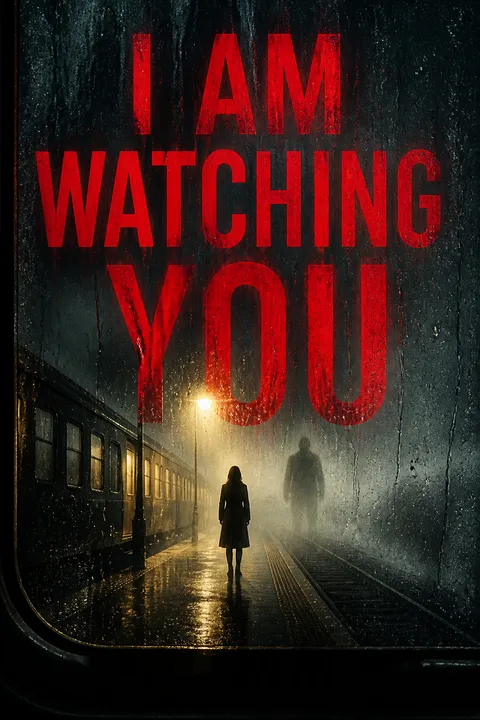


Plot Summary
The Train Witness
On a train to London, florist Ella Longfield watches sixteen-year-old Anna Ballard and her friend Sarah charm two young men, Karl and Antony, who have just left prison. The men reveal their records, then encourage the girls to meet them after the theatre. Sarah grows close to Antony, and Ella overhears them having sex in a train toilet.
Shocked by Sarah’s choice and unsure whether her concern is moral judgment or genuine danger, Ella returns to her seat instead of warning the girls’ parents. The next morning, a news report shows Anna’s photograph and announces she is missing. Ella recognizes the girl she watched on the train and understands that her decision to stay out of the affair cannot be undone.
Ella’s inaction is not simple indifference. She considers intervening, then interprets her shock as evidence that she may be prudish and out of touch. That self-doubt gives her a reason to retreat just when the girls’ vulnerability is clearest. The scene makes spectatorship an ethical act: Ella sees fragments, but she cannot know which fragment matters until afterward. Her decision is therefore shaped by uncertainty rather than cruelty, a distinction that offers little comfort once Anna disappears. The ordinary privacy of a train carriage becomes the first stage of a story about people watching, misreading, and mistaking distance for innocence.
Anna Vanishes in London
Anna’s parents, Henry and Barbara, learn that the girls went to a club instead of following their planned theatre trip, and police tell them Ella heard about Karl and Antony.
Sarah initially denies meeting the men, calling Ella’s account false; only CCTV of the pair getting off the train together forces investigators to identify them publicly. The delay lets Karl and Antony flee Britain. Sarah insists she and Anna had planned to meet later, then gives the police little that explains how they separated.
Her parents and the Ballards search for answers while Anna’s sister Jenny and their friends struggle with guilt over abandoning the London trip. With no body, no clear account, and two suspects gone, every family member begins building a different explanation.
The investigation is obstructed not by one clean lie but by partial truths that fit each person’s needs. Sarah protects herself from exposure; the police lack corroboration; Ella’s testimony is both valuable and incomplete. Their competing accounts turn a missing person into a screen for private fears. Henry’s insistence that Anna is sensible, for instance, helps him endure the search but also narrows what he can imagine about her choices. The chapter’s uncertainty is structural, not merely atmospheric: each withheld fact redirects attention, and the absence of a body leaves grief without the boundary that might let the families begin to understand what happened.
The Witness Becomes News
A year later, the anniversary appeal revives the case and exposes Ella as the woman who watched Anna and Sarah meet the men without intervening. Reporters identify her as a florist, customers turn wary, and online abuse forces her to close her shop temporarily.
Barbara Ballard, still hoping Anna may be alive, visits the shop but does not confront Ella. After black postcards arrive accusing Ella of failing Anna, she assumes Barbara sent them and secretly hires Matthew Hill, an ex-police officer turned private investigator, to warn her away.
Matthew doubts Ella’s theory and urges her to report the cards. Ella resists because she fears causing Barbara more pain, repeating the same habit of choosing silence while telling herself she is protecting someone.
The public converts Ella’s complex hesitation into a simple moral verdict, then makes her live inside that verdict. The postcards intensify the pressure by giving her guilt a physical form she can hide, destroy, or misattribute. Her decision to hire Matthew privately shows that she wants intervention without the consequences of formal intervention: help, but no police; accountability, but no exposure. This contradiction echoes her choice on the train. Matthew’s professional skepticism offers a counterweight, yet Ella’s need to spare others repeatedly overrides sound judgment. The case has become not only a search for Anna, but a test of how guilt can distort the very actions intended to relieve it.
Trouble at Home
Ella’s husband, Tony, discovers that their seventeen-year-old son Luke has been hiding a serious problem: his girlfriend Emily is pregnant. Ella and Tony meet Emily’s parents, offer to support the young couple, and even consider raising the baby if Emily chooses adoption.
Before they can settle into that possibility, Emily miscarries, leaving Luke distressed and withdrawn. Ella’s attention has been so consumed by Anna’s case that she has missed her son’s collapse.
Meanwhile, someone keeps sending threatening cards, and strange disturbances at Ella’s flower shop make her feel watched. She conceals some of the danger from Tony and works alone despite his warnings. Her family’s grief and tenderness now sit beside her unresolved guilt, while the unseen watcher closes in.
Luke’s pregnancy and loss make Ella confront the difference between caring about a distant victim and noticing the person already asking for care at home. She and Tony respond generously, but their support cannot prevent Emily’s miscarriage or erase Luke’s grief. The subplot complicates Ella’s self-image as a responsible mother: her compassion is real, yet fixation has made her inattentive. At the same time, the anonymous surveillance turns her private shame into a literal vulnerability. She hides danger to spare Tony, reproducing the secrecy that damaged the investigation. Family love appears here as active care, but also as a capacity that can be strained when fear is managed alone.
Sarah Breaks Under Pressure
Before the anniversary broadcast, Jenny, Tim, and Paul confront Sarah about why she and Anna became separated in London. They admit they feel guilty for abandoning the planned trip, but their questions make Sarah feel blamed for Anna’s disappearance.
Terrified that the television appeal will bring forward witnesses who can expose her lies, Sarah swallows a dangerous quantity of paracetamol. She survives, though doctors monitor her liver for days, and she admits she never clearly intended to die so much as to stop the panic.
While recovering, Sarah learns that the friends regret their accusations and that the broadcast has generated new leads. She still conceals what happened at the club, and her dread shifts from the overdose to the prospect of having to tell the truth.
Sarah’s overdose emerges from a trap she has helped construct. She wants Anna found, yet fears that finding the truth will expose her selfishness, sexual shame, and failure to protect her friend. The pills become an attempt to stop uncertainty rather than a settled wish for death, but the distinction does not make the danger less real. Her friends’ remorse matters because it reveals that their blame was also displaced guilt: they had chosen other plans and now want Sarah to carry the consequence. Survival does not immediately produce honesty. Instead, the hospital leaves Sarah alone with the facts she has avoided, making recovery a slow return to agency.
Henry’s False Alibi
Henry has asked Barbara to support his original claim that he was at home the night Anna vanished. After the anniversary appeal, he admits he was away and says he had been drinking near Hexton station, where police later place his car.
Investigators uncover his affair with April, a local woman, and Henry grows more frightened of the shame and suspicion his lies invite. Anna had learned of the affair before leaving for London and was furious with him.
As the police press him about the station and his changing story, Henry spirals into despair, takes his shotgun into a barn, then calls for help before he can shoot himself. Police detain him after the armed stand-off, leaving Barbara and Jenny to face both his secrets and the continuing absence of Anna.
Henry’s lies arise from shame, but each attempt to contain that shame makes him look more culpable. His affair is not merely a private marital wound: Anna knew about it, and his deception contaminates the family’s search for her. His near-suicide shows how guilt can become both self-punishment and an escape from the need to explain oneself. Barbara’s anger is sharpened by years of marital estrangement and by her sense that she was left alone during the first hours of the search. The story lets Henry be flawed without making him the answer to every mystery, exposing the danger of treating a damaged family as proof of criminal guilt.
Two Sisters Tell
After leaving hospital, Sarah travels to Devon to find her estranged sister Lily, who lives in a shared home for people recovering from trauma. Sarah explains that their father, Bob, texted her on the night Anna disappeared, asking the girls to meet him at his London hotel. She also admits that Anna wanted to leave the club and that Sarah refused to go with her.
Lily reveals that Bob had sexually abused her and that Sarah herself remembers one disturbing incident from childhood. Their mother had dismissed Lily’s disclosure, and the sisters had stayed silent for years. When the apparent hostage crisis in Spain later proves not to involve Anna, Sarah and Lily decide to tell police everything, including the message and Sarah’s false account.
The sisters’ disclosure does more than introduce a suspect. It explains why Sarah’s judgment of danger has been so unstable: her childhood taught her that a trusted adult could violate boundaries and that speaking up might not bring protection. Lily’s self-isolation and Sarah’s self-blame are different survival strategies, but both depend on silence. Their decision to approach the police is therefore an act of mutual recognition, not simply a new investigative lead. The revelation also exposes how the family’s tidy account of divorce concealed unresolved harm. Yet Bob’s possible connection to Anna remains a hypothesis, and the sisters’ courage does not guarantee that their suspicions are correct.
The Spanish Hostage
A witness recognizes Karl in Spain, where he has been living under another name, and local police surround his apartment after gunshots are heard. Television coverage shows him holding a blonde woman at a window, and the Ballards fear Anna has been found alive.
Matthew, now a new father, studies a clearer photograph and notices that the woman’s shoulder and hip proportions do not match Anna’s known build. He alerts his former police colleague Melanie, who passes the concern to the family liaison officer.
The woman is eventually confirmed as Karl’s girlfriend, and the stand-off as a staged attempt to obtain a getaway car. Karl and Antony are arrested, but both appear to have alibis for Anna’s disappearance. The false rescue leaves her family without a suspect.
The televised hostage image turns hope into spectacle. The Ballards are forced to watch a possible rescue unfold through a screen, while each new report raises their expectations without supplying reliable knowledge. Matthew’s insight depends on careful comparison rather than dramatic intuition: a small physical discrepancy punctures the story that everyone wants to believe. His new experience of fatherhood deepens his sensitivity to the family’s fear, but it does not make him certain. The episode also exposes the costs of uncontrolled media circulation, as public pictures interfere with police negotiation. When Karl proves unrelated, the failure is not just investigative; it reopens the emotional wound of having mistaken resemblance for reunion.
The Ten Tors Photograph
With Karl and Antony apparently cleared, Matthew agrees to hear Barbara’s request for a private review of Anna’s case. Ella joins him at the farm, where a photograph from a Ten Tors event catches her attention: she recognizes the curly-haired boy as the young man she saw on the train. Barbara insists he was away in Scotland, but Jenny says he has recently been searching old photographs and asking about someone Anna liked.
Ella remembers that a map magnifier was left outside her shop, then realizes her son Luke has been arranging job interviews with people from the same Ten Tors group. Luke is alone at the florist’s. Matthew calls Melanie to send officers there, while Ella tries repeatedly to reach her son.
The photograph transforms an old memory from background noise into evidence. Ella had not recognized the boy in the carriage because she was focused on the men who openly approached the girls; her recollection now corrects the investigation’s narrow attention to Karl and Antony. The clue is strengthened by ordinary details: a piece of equipment, a local youth group, and Jenny’s account of someone revisiting old images. Together they make a pattern without yet proving what it means. Ella’s guilt becomes useful only when she stops treating it as a verdict and starts treating memory as information that must be checked. The urgency shifts from retrospective blame to protecting Luke.
Tim’s Secret Flat
On the night Anna vanished, she left the club after Sarah refused to go with her. In the rain she met Tim, a childhood friend she believed had unexpectedly found her, and he offered shelter while arranging a taxi. At his supposedly empty flat, Anna noticed photographs of herself hidden in a walking book and magazines documenting her life.
Tim blocked her way when she tried to leave, then attacked her and strangled her with a belt. His fixation was not sudden: he had watched Anna for years and could not tolerate her attention shifting to other people. Before she died, Anna struggled to reach the door and called out in her mind to her family and dog. The friend she trusted had been tracking her all along.
The revelation makes the novel’s title literal and morally disturbing. Tim’s watching is not care, though he interprets it as protection; it is possession disguised as intimate knowledge. Anna recognizes the danger through concrete evidence, the photographs and marked pages, but discovers it too late to escape. Her earlier separation from Sarah leaves her isolated, yet the narrative does not make Sarah responsible for Tim’s violence. The crucial betrayal is Tim’s conversion of childhood closeness into entitlement. His familiarity with Anna’s habits gives him access, while her trust supplies the opening. The scene redefines every prior appearance of the quiet friend as a performance built around surveillance.
Luke Fights Back
At Ella’s shop, Luke meets Tim, who has answered the advertised part-time position. Tim shows him an old Ten Tors photograph and presses him about whether he knew Anna. When Luke refuses to engage, Tim locks the shop door and pulls a knife. He cuts Luke’s arm and thigh, then drives him to the floor.
Luke grabs the shop’s red-handled secateurs and strikes back, stopping the assault but suffering severe injuries to his leg and shoulder. Ella and Matthew reach the shop as police respond to the warning. Tim is taken into custody, while Luke is left fighting to recover. The attack confirms that the postcards and stalking were not random harassment: Tim had followed Ella’s family after linking Luke to Anna.
Luke’s ordinary kindness, including his attempt to help his mother find a replacement worker, becomes the path through which Tim reaches him. The shop’s familiar tools shift abruptly from instruments of care to means of survival. Luke’s resistance is not a triumph without cost; he lives, but the injuries will shape his recovery and his family’s sense of safety. The scene also resolves Ella’s earlier uncertainty about whether she imagined someone moving around the shop. Her fear was real, though she had misread its source. Tim’s violence shows how an obsession can expand from its original target to anyone imagined as a rival or witness.
Anna Is Found
Police trace Tim’s concealed flat, the place he had used as a private bolt-hole rather than renting it as his father’s will required. Inside, they find Anna’s body in a freezer and diaries filled with photographs and disordered notes about watching her.
Investigators reconstruct Tim’s false Scotland alibi: he posted enough images to suggest he was away, then returned and boarded the London train in disguise before following Anna and Sarah.
Karl and Antony’s departure had sent the case in the wrong direction, while Henry’s affair and Bob’s history created additional suspicions that did not explain Anna’s disappearance. Tim is charged with murder and attempted murder, though he survives his injuries. The truth ends the search, but it cannot restore the lives the search consumed.
The solution is not a single confession but a convergence of material evidence: the hidden room, the body, the photographs, and the fabricated travel trail. Tim’s archive records a fantasy of intimacy while demonstrating its opposite: he has observed Anna without knowing her, reducing her to a person whose attention he believes he can regulate. The false leads matter because they arose from genuine secrets, not arbitrary distractions. Henry’s affair and Bob’s abuse harmed people, but neither explains this crime. The ending grants factual closure while withholding emotional repair. Finding Anna answers where she was; it cannot answer why a friend made watching her a substitute for loving her.
Epilogue
After the case, Barbara visits Ella and explains that Jenny sent the first two postcards out of anger. Tim sent the later cards after Jenny confided that Ella suspected her mother, and then began watching Ella’s shop and Luke. Ella declines to involve the police over Jenny’s part, understanding how grief and blame made the family lash out.
Barbara also asks Ella to design Anna’s coffin flowers as a meadow of greenery, primroses, and other wild blooms rather than a conventional wreath. As they speak, Barbara admits she may let Henry return because she misses him. Ella begins sketching the arrangement, offering the family a tender task where the investigation had left only absence.
The final meeting does not erase blame; it gives blame a human scale. Jenny’s postcards are cruel, but they come from grief and anger rather than the wider menace Ella feared. Barbara’s request for meadow flowers turns her memories of Anna into a concrete act of care, while Ella’s willingness to make them without charge answers her original failure with service rather than self-exoneration. Neither woman claims that flowers can repair what happened. Their shared work simply creates a ritual suited to a young life, not a conventional symbol of an old person’s death. The possibility of Henry’s return remains uncertain, preserving the novel’s sense that truth can arrive without making every relationship whole.
Analysis
I Am Watching You builds its suspense around the unstable difference between seeing and understanding. Ella witnesses a consequential encounter but cannot know its outcome; Sarah knows what happened at the club but hides the parts that implicate her; the police possess fragments that point in several directions. The novel refuses to treat incomplete knowledge as a simple excuse or a simple crime. Instead, it shows how shame, fear, and loyalty determine which facts people can bear to disclose.
The title’s idea of watching shifts meaning as the story unfolds. Ella’s attention begins as passive observation, then becomes a source of guilt. Tim’s surveillance is more sinister because he mistakes access to Anna’s image for a claim on Anna herself. Between those poles, Matthew tries to make observation accountable by comparing evidence rather than trusting the story that feels most comforting. The book suggests that attention is not care unless it respects another person’s autonomy.
Its secondary family stories deepen that claim. Sarah and Lily have learned to keep painful truths inside a family that prefers a manageable explanation. Henry’s affair becomes a false lead because real moral failures can resemble evidence of a different crime. Ella’s distraction from Luke shows that concern for one victim can coexist with neglect of someone nearby. The characters are not sorted neatly into innocent and guilty; they are people whose choices have consequences, but whose mistakes do not make them responsible for another person’s violence.
The ending offers factual resolution without emotional repair. Anna is found, Tim’s long obsession is exposed, and the false leads fall away. Yet the families remain altered, Luke must recover, and Ella cannot return to the person she was before the train. The final floral arrangement gives grief a form that can be made with care, not a cure. The novel’s most durable lesson is therefore modest: when certainty is unavailable, truthful attention, timely disclosure, and respect for others’ choices matter more than the comfort of a clean explanation.
Review Summary
I Am Watching You is a psychological thriller that polarizes readers. Some praise its suspenseful plot and multiple POVs, while others criticize its slow pace and underdeveloped characters. The story follows the disappearance of a teenage girl and its aftermath, exploring guilt, secrets, and relationships. Many readers found the ending unexpected but divisive, with some feeling it lacked proper buildup. Despite mixed opinions, the book's intriguing premise and emotional depth resonated with many, though some felt it fell short of its potential.
People Also Read










Characters
Ella Longfield
The burdened witnessElla is a florist, wife to Tony, and mother to Luke. On the train to London she notices Anna and Sarah meeting two men, but her uncertainty about whether to intervene becomes a lasting source of guilt. She is conscientious and observant, yet prone to overthinking until reflection turns into self-reproach. Her instinct is to protect people, sometimes by withholding information from them, which can leave her more isolated than safe. Her shop offers order and creative control through careful arrangements, a contrast to the unpredictable consequences of the case. Ella’s perspective asks how an ordinary person can act responsibly with incomplete knowledge, and whether remorse can become useful without pretending to undo a choice.
Anna Ballard
The missing daughterAnna is the sixteen-year-old daughter of Henry and Barbara and the younger sister of Jenny. Her friendship with Sarah began in childhood and was rooted in shared games, music, and the welcoming life of the Ballard farm. She is beautiful, sociable, and often treated as more sheltered than she feels. Anna has ambitions of her own and can be impatient when others dismiss them, but she is also loyal to the people closest to her. The trip to London represents a step toward independence for her and Sarah. Through memories and testimony, Anna remains more than the missing girl in the headlines: she is a young person whose choices, friendships, and future matter.
Sarah Headley
Anna’s conflicted friendSarah is Anna’s oldest friend, the daughter of Margaret and Bob, and the younger sister of Lily. She grew up between the modest home she shared with her family and the generous farmhouse that became a second home. Intelligent and ambitious, she is also deeply sensitive to comparison, especially when Anna receives attention she longs for herself. Sarah wants to be desired and accepted, but social pressure and shame make her hide choices that leave her friend exposed. Her silence is rooted in more than fear of blame: it is entangled with painful experiences at home. Sarah’s story examines how self-protection can become deception, and how honesty requires support as well as courage.
Henry Ballard
The guilty fatherHenry is Anna and Jenny’s father, a farmer whose family land has increasingly become a tourism business. He is proud of the farm and uneasy about how much of its inherited work he has converted into income from holiday lets. His love for his daughters is expressed through routines, memories, and practical work, but his reluctance to face conflict leaves important truths buried. Henry and Barbara have grown distant, and his choices carry consequences he struggles to admit. He tends to measure himself against the standards of a good father and farmer, then retreat when he falls short. His perspective adds a portrait of guilt that is real without automatically making a person guilty of the crime being investigated.
Tim Blackhouse
The childhood friendTim grew up alongside Anna, Sarah, Jenny, and Paul, often welcomed into the Ballard home despite his mother’s limited attention. He belongs to a close childhood circle whose members later drift apart as school, work, and adult plans pull them in different directions. Tim is remembered through the group’s shared history and through his connection to the Ten Tors challenge. His outward place in the circle makes him difficult for others to see clearly; familiarity can encourage trust even when people no longer know one another well. Tim’s role in the story invites attention to the gap between being present in someone’s life and genuinely understanding them.
Matthew Hill
The ex-police investigatorMatthew is a former police officer who now works as a private investigator. He is a friend and trusted colleague of Detective Sergeant Melanie Sanders, and husband to Sally. Matthew is methodical, skeptical of easy explanations, and willing to challenge a client’s preferred theory. He left the force after a child died during a pursuit, an event that continues to shape his judgment and his discomfort with risk. The arrival of his daughter changes how he understands parents under pressure and sharpens his empathy without blunting his analytical habits. Matthew’s instinct to help with Anna’s case is complicated by the limits of his authority and the professional boundaries he has already crossed.
Luke Longfield
Ella’s loyal sonLuke is Ella and Tony’s seventeen-year-old son. He enjoys cooking, has worked in his mother’s flower shop since he was young, and has completed the Ten Tors challenge, which gives him an unexpected connection to the Ballard circle. His academic confidence falters as he faces the possibility of becoming a father and then the grief of losing the pregnancy with Emily. Luke is caring and eager to be useful, qualities that lead him to help his mother find a replacement worker. He is also a young man trying to manage adult consequences before he feels ready. His subplot forces Ella to recognize the needs of her own household while she remains consumed by Anna’s disappearance.
Lily Headley
Sarah’s estranged sisterLily is Sarah’s older sister, living in a shared Devon home after leaving her family. She is an artist who has adopted a bohemian style and a chosen name among people who support one another through trauma. Lily can seem distant and guarded, but her distance is a way of preserving fragile boundaries after a painful family history. Her relationship with Sarah is marked by affection, resentment, and years of things neither sister knew how to say. Lily’s recovery is uneven, and she remains wary of being pressured into disclosures before she is ready. Her home offers Sarah an alternative kind of family, built around consent, care, and the possibility of speaking at one’s own pace.
Barbara Ballard
Anna’s hopeful motherBarbara is Henry’s wife and the mother of Anna and Jenny. She is known for feeding the children who gather at the farmhouse and for showing love through practical gestures, especially cooking and care. After Anna disappears, Barbara clings to the possibility that her daughter may still return, gathering accounts of missing people who were eventually found. Her hope keeps her moving, but it also places her at odds with Henry’s bleak certainty. The marriage has its own old injuries, and the crisis exposes how little they can rely on one another. Barbara’s grief is active and searching, driven by a mother’s refusal to let uncertainty become a final answer.
Tony Longfield
Ella’s protective husbandTony is Ella’s husband and Luke’s father, a retail manager working toward a promotion. He loves Ella and becomes increasingly protective as the postcards and unexplained disturbances unsettle her. Tony prefers practical solutions, such as closing the shop or strengthening its security, while Ella tends to turn inward and analyze her responsibility. Their marriage is affectionate, but Ella’s secrecy about the private investigator and her visit to Cornwall strains his trust. Tony’s steady care helps ground Ella when guilt makes her unreliable to herself, though he cannot make her abandon the search for meaning.
Jenny Ballard
Anna’s older sisterJenny is Anna’s older sister and a member of the childhood group that includes Sarah, Tim, and Paul. She is deeply affected by the disappearance and feels guilty about choosing a concert over the London trip. Jenny wants to help her parents, yet the pain of being expected to act as the surviving daughter makes family gatherings difficult. She is also fiercely loyal to her friends and resists Henry’s attempts to decide who may support her. Jenny’s mixture of anger, grief, and protectiveness shows how loss can turn ordinary family choices into evidence people use against themselves.
Bob Headley
Sarah’s distant fatherBob is Sarah and Lily’s father, estranged from the family after a painful breakdown in the household. He has since built a career as a manager in the haulage industry and remains a complicated figure in Sarah’s memories. His distance leaves Sarah with questions she has struggled to raise with her mother, while his past behavior makes her wary of trusting him. Bob’s presence matters less through daily contact than through the silence and uncertainty his departure leaves behind. His character reflects how a family can preserve an outwardly ordinary account of separation while its children carry unspoken fears.
Karl Preston
The ex-prisoner on the trainKarl is one of the two men Ella sees approach Anna and Sarah on the train. Recently released from prison, he presents himself as candid about his past and eager to show the girls around London. His confidence and familiarity with the city make his invitation sound protective, even as the girls have little reason to trust him. Karl’s involvement sends the investigation abroad and makes him a compelling suspect. He is linked to Antony through their prison release and shared travel, but the police must distinguish suspicious behavior from proof of what happened to Anna.
Antony
Karl’s fellow ex-prisonerAntony is Karl’s companion, recently released after serving time for theft. On the train he tells Sarah that he has a young son and regrets his inability to support him, a disclosure that appeals to Sarah’s sympathy. Their quick intimacy complicates Ella’s judgment and becomes part of the first account police investigate. Antony’s story about fatherhood helps explain why Sarah is drawn to him, but the details of their connection remain unclear to those outside the carriage. He is one of the two men whose flight makes the search for Anna harder.
Melanie Sanders
Matthew’s police allyMelanie is a detective sergeant working in Cornwall and Matthew’s close friend from their years in the police. She remains connected to the Ballard inquiry through local family liaison work and is frustrated by the London team’s handling of the case. Melanie is direct, capable, and loyal, though her willingness to share information with Matthew puts her professional standing at risk. Their friendship carries old affection and mutual trust, but she pushes him to acknowledge the career he left behind. Melanie’s role links Matthew’s private investigation to the official search without making either route straightforward.
Emily
Luke’s young girlfriendEmily is Luke’s girlfriend and the daughter of parents who are protective of her future. Her unexpected pregnancy forces both families into a serious conversation before either teenager feels prepared. Emily’s choices and grief are her own, and the adults’ support cannot remove the emotional weight of what happens. Her relationship with Luke reveals his capacity for care as well as the strain of growing up quickly.
Caroline
Lily’s steady hostCaroline owns the Devon home where Lily lives with other people recovering from trauma. She provides a place where residents can set boundaries and decide when to seek outside help. Practical and compassionate, Caroline supports Lily while also considering Sarah’s age and wellbeing. Her home gives the sisters space to speak outside the family habits that have kept them silent.
Paul
A friend in the old circlePaul is one of the childhood friends who grew up around the Ballard farmhouse alongside Anna, Sarah, Jenny, and Tim. He and Sarah were known as the academically capable pair, and he becomes part of the group trying to support the Ballards. Like the others, he carries guilt about not joining the London trip, though he has no clear way to know what might have changed.
Plot Devices
Ella’s train testimony
A witness’s incomplete viewElla’s observations on the train provide the first evidence that Anna and Sarah met Karl and Antony. Her account is valuable because she remembers the men’s prison histories and the girls’ plans, but it is incomplete because she does not know what happens after she leaves the carriage. Her delayed decision to report what she heard introduces the book’s central problem: a witness can provide accurate details while misjudging which details matter. The testimony also shapes public opinion, turning Ella into a symbol of bystander failure and leaving her vulnerable to shame and harassment.
The black postcards
Guilt made materialAnonymous postcards arrive at Ella’s home, first accusing her of failing Anna and later suggesting that someone is watching her. Their messages push Ella toward secrecy, especially when she assumes Barbara sent them. The cards work as both threats and misdirection: they intensify Ella’s fear while giving her a false explanation for who is monitoring her shop. The police find no useful prints, and their sources are only disclosed near the end. Their changing senders connect community anger, family grief, and Tim’s obsession with surveillance.
The Ten Tors photograph
A memory becomes evidenceAn old photograph of the children at a Ten Tors event allows Ella to recognize a boy she saw on the London train. Its importance rests on the way it joins otherwise separate facts: the childhood friend group, the event Luke also attended, and the person Ella remembers from the carriage. The photograph first appears to preserve an innocent shared history, but later becomes a route into the investigation’s neglected suspect pool. It demonstrates that evidence can remain visible without being understood until someone makes the right connection.
The televised hostage
Hope distorted by imagesWhen Karl is found in Spain, news coverage shows him holding a blonde woman at an apartment window. The Ballards and viewers fear the woman may be Anna, and each repeated broadcast magnifies that hope. Matthew compares the image with Anna’s known appearance and notices that the woman’s proportions do not match. The hostage turns out to be Karl’s girlfriend, and the confrontation was staged. This device shows how photographs can appear conclusive while hiding the crucial distinction, and how live media can interfere with police work and deepen the family’s distress.
The watching diaries
Obsession disguised as carePhotographs, marked books, and diaries reveal that someone has been observing Anna over a long period. The materials are introduced in fragments, first through Ella’s uneasy sense that the shop is watched and later through the clues connected to the childhood group. When investigators find the hidden flat, the records explain how the watcher built a false sense of intimacy from repeated observation. The device turns the novel’s motif of watching into evidence of control: the watcher believes surveillance means protection, while the records show a refusal to let Anna possess an independent life.
FAQ
Synopsis & Basic Details
What is I Am Watching You about?
- Moral Quandary on Train: A woman overhears a conversation between two young girls and two ex-convicts on a train, sparking a moral dilemma about whether to intervene.
- Disappearance and Aftermath: A year later, one of the girls disappears, leading to a police investigation and a community grappling with guilt, blame, and the search for answers.
- Unraveling Secrets: The story explores the complex web of secrets and lies surrounding the disappearance, revealing the hidden motivations and psychological struggles of the characters involved.
Why should I read I Am Watching You?
- Psychological Depth: The novel delves into the complex emotions of guilt, responsibility, and the impact of inaction, offering a thought-provoking exploration of human nature.
- Suspenseful Mystery: The story is a compelling mystery with unexpected twists and turns, keeping readers engaged as they try to piece together the truth behind Anna's disappearance.
- Character-Driven Narrative: The book features a cast of flawed and relatable characters, each with their own secrets and motivations, making for a rich and emotionally resonant reading experience.
What is the background of I Am Watching You?
- Contemporary Setting: The story is set in the present day, reflecting modern concerns about crime, social media, and the impact of media coverage on personal lives.
- Psychological Thriller Genre: The novel draws on the conventions of the psychological thriller genre, exploring the inner turmoil and hidden motivations of its characters.
- Focus on Ordinary Lives: The story highlights how ordinary lives can be disrupted by tragedy, emphasizing the vulnerability of individuals and families to unexpected events.
What are the most memorable quotes in I Am Watching You?
- "I made a mistake. I know that now.": This opening line from Ella sets the tone for the novel, highlighting the theme of regret and the consequences of inaction.
- "You disgust me, Dad...": This recurring line, spoken by Anna, reveals the deep-seated conflict and hidden truths within the Ballard family, adding to the emotional weight of the story.
- "You need to watch, you see, because it is extremely important – to work out the difference between how people behave when they know they are being watched . . . and when they don't.": This quote from the unseen watcher reveals the manipulative nature of the antagonist and the theme of observation.
What writing style, narrative choices, and literary techniques does Teresa Driscoll use?
- Multiple Perspectives: The story is told from the viewpoints of several characters, providing a multifaceted understanding of the events and their emotional impact.
- Foreshadowing and Suspense: Driscoll uses subtle hints and clues to build tension and anticipation, keeping readers guessing about the truth behind Anna's disappearance.
- Psychological Realism: The novel delves into the inner thoughts and motivations of its characters, creating a sense of psychological realism and emotional depth.
Hidden Details & Subtle Connections
What are some minor details that add significant meaning?
- The Map Magnifier: The seemingly insignificant map magnifier that Ella finds at her shop later becomes a crucial link to Tim, revealing his connection to Luke and his twisted obsession.
- The Red Secateurs: Ella's favorite red-handled secateurs, which go missing and reappear, symbolize the intrusion and violation she feels, foreshadowing the danger she faces.
- The Color Pink: The recurring motif of pink, associated with Anna's childhood and possessions, symbolizes the loss of innocence and the tragedy of her disappearance.
What are some subtle foreshadowing and callbacks?
- The Train Toilet: The initial shock Ella experiences when she overhears Sarah and Antony in the train toilet foreshadows the later revelations about Sarah's hidden life and the dangers of the club.
- The Primroses: The primroses that Ella brings to Barbara, which were Anna's favorite flower, foreshadow the later revelation that Tim was also obsessed with them, connecting him to Anna's disappearance.
- The Sky Channels: The early conflict between Ella and her son Luke over Sky channels foreshadows the later revelation of Luke's secret relationship and the challenges of parenting teenagers.
What are some unexpected character connections?
- Tim and Luke: The connection between Tim and Luke through the Ten Tors challenge, initially presented as a coincidence, becomes a crucial link in the investigation, revealing Tim's twisted obsession.
- Ella and Barbara: The initial animosity between Ella and Barbara, fueled by guilt and blame, evolves into a shared understanding of grief and loss, leading to a surprising connection.
- Sarah and Lily: The estranged sisters, Sarah and Lily, find common ground in their shared trauma and their father's abuse, leading to a renewed bond and a quest for justice.
Who are the most significant supporting characters?
- DS Melanie Sanders: Matthew's police contact, Melanie, provides crucial information and support, highlighting the importance of collaboration and trust in solving complex cases.
- Cathy Bright: The family liaison officer, Cathy, offers a glimpse into the police's perspective and the challenges of supporting families during a crisis, while also revealing the limitations of the official investigation.
- Tim Blackhouse: Initially presented as a friend, Tim's character evolves into a key suspect, revealing the hidden dangers lurking beneath the surface of seemingly ordinary lives.
Psychological, Emotional, & Relational Analysis
What are some unspoken motivations of the characters?
- Ella's Need for Control: Ella's actions are driven by a need to control the situation and make amends for her inaction, often leading her to overthink and overanalyze.
- Henry's Desire for Redemption: Henry's lies and secrets stem from a desire to protect his family and redeem himself for his past mistakes, even as his actions cause further harm.
- Sarah's Fear of Exposure: Sarah's lies and evasiveness are motivated by a deep-seated fear of being judged and exposed for her actions, leading her to conceal the truth about the night Anna disappeared.
What psychological complexities do the characters exhibit?
- Ella's Guilt and Paranoia: Ella's guilt over her inaction leads to paranoia and a constant need to analyze her actions, highlighting the psychological toll of responsibility.
- Henry's Self-Destructive Tendencies: Henry's guilt and despair manifest in self-destructive behaviors, such as lying and isolating himself, revealing the psychological impact of loss and regret.
- Sarah's Self-Loathing and Fear: Sarah's self-loathing and fear of judgment drive her to conceal the truth and engage in risky behaviors, highlighting the psychological impact of trauma and shame.
What are the major emotional turning points?
- Ella's Discovery of the Postcards: The arrival of the postcards marks a turning point for Ella, as she realizes that her inaction has made her a target and that she is not as safe as she thought.
- Henry's Confession to the Police: Henry's decision to confess his lies to the police marks a turning point in his character arc, as he finally confronts his guilt and takes responsibility for his actions.
- Sarah's Overdose Attempt: Sarah's overdose attempt is a major emotional turning point, revealing the depth of her inner turmoil and her struggle to cope with the guilt and shame she carries.
How do relationship dynamics evolve?
- Ella and Tony: The relationship between Ella and Tony is tested by the stress of the investigation and Ella's guilt, but ultimately their bond is strengthened by their shared love for their son and their commitment to each other.
- Henry and Barbara: The relationship between Henry and Barbara deteriorates as their secrets and lies are exposed, highlighting the destructive impact of mistrust and betrayal.
- Sarah and Lily: The relationship between Sarah and Lily evolves from estrangement to a renewed bond, as they confront their shared trauma and support each other in their quest for truth and justice.
Interpretation & Debate
Which parts of the story remain ambiguous or open-ended?
- The Unseen Watcher's Identity: While Tim is revealed as the postcard sender and stalker, the novel leaves open the question of whether there was another unseen watcher, adding to the sense of unease.
- The Full Extent of Tim's Obsession: The novel hints at the depth of Tim's obsession with Anna, but leaves some details ambiguous, allowing readers to imagine the full extent of his twisted mind.
- The Long-Term Impact on the Characters: The novel concludes with a sense of closure, but leaves open the question of how the characters will continue to cope with the trauma and loss they have experienced.
What are some debatable, controversial scenes or moments in I Am Watching You?
- Ella's Decision Not to Intervene: Ella's initial decision not to intervene on the train is a controversial moment, sparking debate about the responsibility of bystanders and the consequences of inaction.
- Sarah's Actions in the Club: Sarah's decision to leave Anna alone in the club and her subsequent lies to the police are controversial, raising questions about her loyalty and responsibility.
- Henry's Affair and Lies: Henry's affair and his lies to his wife and the police are controversial, highlighting the complexities of human behavior and the impact of secrets on relationships.
I Am Watching You Ending Explained: How It Ends & What It Means
- Tim's Obsession Revealed: The ending reveals that Tim, a seemingly harmless friend, was the one who had been watching and stalking Anna, and that he was responsible for her death.
- The Cycle of Guilt and Blame: The ending highlights the destructive cycle of guilt and blame, as the characters grapple with their own responsibility for the tragedy and the consequences of their actions.
- The Fragility of Hope: The ending underscores the fragility of hope and the difficulty of finding closure in the face of loss, as the characters are left to pick up the pieces of their shattered lives.

Download PDF
Download EPUB
.epub digital book format is ideal for reading ebooks on phones, tablets, and e-readers.








