

Key Takeaways
Choose a partner who adds joy, not proof that you are complete.
Love is not rescue. The book rejects the idea that one destined soulmate will finish a person’s life. With billions of people in the world, compatibility is not limited to one magical match, and even a good match depends on timing. A relationship is worth choosing because it enriches an already meaningful life, not because being single feels like failure. The authors argue that being alone is preferable to staying with someone who makes life worse.
Keep your own center. The same principle applies after a breakup: losing a partner does not erase the life that existed before them. The book uses a damaged favorite garment as a comic image for a disappointing relationship: it is sad to lose, but not proof that nothing good remains.
What's striking is the shift from romantic scarcity to personal choice. That frame can reduce the pressure to treat a relationship as a certificate of worth, and it makes leaving a poor fit psychologically imaginable. It also avoids the soulmate trap without dismissing love. A useful nuance is that self-sufficiency need not mean emotional self-containment. People can rely on one another and still remain whole. The strongest version of the book's point is not that nobody needs anybody, but that affection should be chosen freely rather than used as a cure for a supposedly defective self.
Address the insecurity beneath your dating pattern before seeking another fix.
Find the real snag. Before dating, the book asks readers to examine what repeatedly undermines their confidence or choices. That might be unresolved grief, a behavior they regret, or a harsh belief about their appearance or intelligence. Its advice is to identify the issue, make a practical plan, and notice whether the change improves life. Oprah Winfrey’s account of seeking approval from hurtful partners illustrates how public success can coexist with private insecurity.
Choose useful support. The authors recommend allowing ordinary sadness after a breakup, while interrupting endless replay and self-blame. They also suggest therapy for serious or persistent problems. Their own body-focused advice often veers into pressure to lose weight or alter appearance. The more durable lesson is to work on what causes distress, not to treat a particular body type as the entry ticket to love.
The valuable distinction here is between self-reflection and self-punishment. Naming a pattern can create room for deliberate change, while shame tends to make people hide the very information they need to understand themselves. Oprah’s example gives that distinction emotional weight: achievement alone does not guarantee self-trust. At the same time, the book sometimes collapses confidence into looking conventionally attractive. That narrow standard risks converting every insecurity into a cosmetic project. A more humane reading separates agency from conformity: address what genuinely harms well-being, and do not mistake social approval for evidence of personal growth.
Meet people through a full life, and use apps as one route.
Let life do some work. The book recommends pursuing activities that are enjoyable even if nobody attractive appears: sports, reading groups, volunteering, travel with friends, or social gatherings. That way, meeting someone is a possible benefit, not the only purpose of leaving home. It cautions against workplace romances because a breakup can make ordinary workdays uncomfortable, while friend-of-friend introductions may offer useful context.
Make online dating practical. The authors treat apps as an additional way to meet people beyond an immediate social circle. They advise using recent, representative photos, writing a brief profile with specific details, and moving toward a public in-person date instead of endless messaging. A profile should communicate something real rather than promise that its owner likes travel, laughter, and fun, traits so broad they reveal almost nothing.
The useful idea is to make dating one activity inside a life, rather than turning every outing into an audition. That reduces pressure and gives potential partners a more accurate view of a person's interests. Online dating can widen access, but it also encourages snap judgments based on compressed profiles and images. Specificity helps counter that flattening, although no profile can carry the full context of a person. The advice to meet publicly and promptly is especially practical: conversation in person tests compatibility better than trying to infer character from a long exchange of carefully edited messages.
Judge interest by effort and consistency, not your forensic reading of texts.
Watch the pattern. The book treats follow-through as more informative than a clever message. Does the person make plans, keep them, show curiosity, and make room for time together? A stream of late-night invitations or conversations that never become dates may reveal a mismatch between what each person wants. The authors also favor moving on when interest remains lukewarm rather than investing indefinitely in someone who is merely appealing on paper.
Use the filter gently. The book discusses the “Fuck Yes” idea: mutual enthusiasm is a useful sign, while persistent uncertainty may be a reason to stop pursuing the connection. Yet one delayed reply is not a reliable verdict. A pattern of low effort matters more than the punctuation, timing, or length of a single text.
This is a welcome move away from romantic detective work. In ambiguous situations, people can spend disproportionate attention interpreting tiny signals instead of asking whether the relationship actually feels reciprocal. Looking at repeated behavior offers a more stable basis for judgment. Still, the enthusiasm test can be too blunt if applied to every early interaction. Shyness, stress, or different communication habits can obscure interest without making it absent. The sounder rule is to assess whether both people contribute over time, then seek clarity if the evidence remains mixed.
Keep early dating real: curiosity beats the relationship you invent in your head.
Do not date a fantasy. The book calls premature mental storytelling “Emotional Masturbation”: imagining a future together before knowing enough about the person. The imagined partner may already be a spouse, co-parent, or perfect fit while the actual person remains a near-stranger. That fantasy can make ordinary flaws easy to excuse and disappointment more painful. The suggested correction is to stay curious about who is actually present.
Do not assume exclusivity. Until both people have agreed to it, the book says not to treat a connection as exclusive or claim a partner role through social media. It also cautions against monitoring a new date’s accounts for clues. Its advice to hold back can become game-playing, but the underlying point is sound: keep expectations proportionate to what has been discussed, and let trust grow from real interactions.
The concept captures how imagination can rush ahead to relieve uncertainty. A future fantasy feels emotionally satisfying, but it can replace the slower work of learning another person’s habits, values, and limits. Restraint is useful when it means staying attentive to evidence. It is less useful when it means hiding ordinary feelings to preserve leverage. Relationships need both pacing and vulnerability. The distinction is whether caution protects clear judgment or becomes a strategy for controlling the other person's response.
Name what you want, and stop investing in someone who keeps you undefined.
Ask for clarity. The book describes the “Almost Boyfriend” as someone who behaves warmly enough to sustain hope but avoids a committed relationship. A person who says they do not want a relationship, repeatedly evades a direct conversation, or offers attention without meaningful follow-through may be signaling that they want something different. The authors advise judging actions alongside words and ending the arrangement if it no longer suits you.
Respond to disappearance. If someone ghosts, the book recommends accepting the loss rather than sending a barrage of messages or waiting indefinitely for an explanation. A direct conversation about exclusivity can be uncomfortable, but it is clearer than trying to trigger jealousy or decode social media. The book often promotes strategic withholding; its sturdier advice is to state a need and make decisions based on the answer.
This section is strongest when it treats clarity as a boundary rather than a prize to be won. A person does not have to prove that the other party is malicious before deciding that ambiguity is unsatisfying. Clear questions make room for honest incompatibility, which is more useful than prolonged speculation. The complication is that not everyone can articulate intentions quickly, and commitment should not be forced on a timetable. The key test is not whether two people use the same label immediately, but whether their expectations and behavior can be discussed without evasion or coercion.
Build commitment around the person present, not the makeover you hope for.
Accept the current version. In a serious relationship, the book warns against choosing a partner on the assumption that a troublesome habit, ambition, or temperament will change. It asks whether the person as they are now is someone worth building with. Shared values and compatible timing matter: two people may care deeply for each other while wanting different things at different points in life.
Discuss the next step. Moving in, engagement, and marriage should follow conversations about what each person wants, not pressure from friends’ announcements or family expectations. The authors suggest that a relationship should show signs of shared plans and mutual excitement. If an important future goal remains unspoken or one partner consistently resists discussing it, that uncertainty deserves attention rather than an ultimatum designed to force a desired answer.
The distinction between acceptance and hoped-for reform is central to durable choice. People can grow, but a partner cannot responsibly be treated as a renovation project. The book's emphasis on timing also helps explain why affection alone may not solve a mismatch in life plans. Its advice is most useful when paired with a second question: which differences are tolerable, and which violate a core need? Acceptance should not mean enduring harm or abandoning a life goal. It means choosing knowingly, rather than bargaining with an imagined future version of someone.
Treat sex, money, and milestones as conversations, not tests of your worth.
Keep intimacy mutual. The book sees sex as important to a relationship and encourages partners to talk about what feels good, what does not, and how to keep intimacy from becoming automatic. It also notes that a mismatch in desire deserves discussion rather than blame. Its rules about when to have sex are inconsistent, but its better point is that sex should be a mutual choice, not a bargaining chip or a guarantee of commitment.
Protect shared and individual interests. The authors discuss dividing expenses, retaining work and financial independence, considering a prenuptial agreement, and treating moving in as a major change. They also favor the man paying more often, reflecting the book’s traditional gender assumptions. Whatever a couple chooses, clear agreements about money, household labor, and future plans are more reliable than tests of who cares more.
The book recognizes that love is lived through practical systems, not only romantic feeling. Money, domestic labor, and sexual expectations can create resentment when couples rely on assumptions instead of explicit agreements. The same principle applies to financial independence: having personal resources can preserve choice, not undermine commitment. The book's gendered payment rules and emphasis on staying physically attractive are less universal. They risk making one partner responsible for maintaining desire while obscuring the mutual work of care, consent, and shared responsibility.
End betrayal or dead-end relationships cleanly, then reclaim your attention.
Do not confuse persistence with repair. The book treats cheating as a decisive breach of monogamous trust and urges readers not to excuse repeated betrayal. More broadly, if a relationship is no longer wanted, it recommends ending it directly and with an explanation appropriate to the relationship’s depth. After a breakup, the practical advice is to reduce contact, stop checking the ex’s accounts, and reconnect with friends and activities.
Do not mistake return for change. The authors warn that an ex may reappear when loneliness or convenience makes the old connection appealing. They advise asking what is genuinely different and whether the relationship was unusually meaningful, rather than returning simply to avoid being alone. Their claim that a truly right partner would never leave is too absolute: a breakup can end a relationship without proving that either person lacked value.
The emphasis on reclaiming attention is especially relevant when social media turns separation into a steady stream of new information. Reducing exposure can make it easier to grieve without repeatedly reopening the wound. The book is also right that reconciliation should require more than nostalgia. Its strongest language about cheating and being left, however, can turn a complex event into a verdict on character or worth. Accountability matters, but so do context, safety, and the possibility that people end relationships for reasons other than lack of love.
Analysis
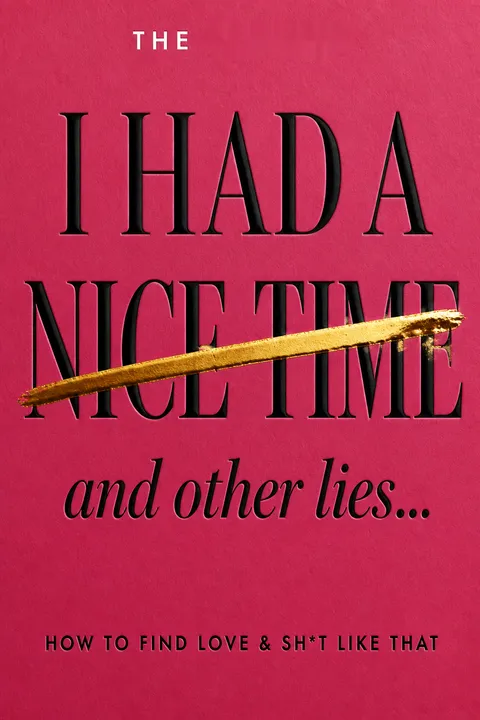
This book turns dating advice into a comic field guide, following a reader from single life through early encounters, commitment, and marriage. Its recurring argument is that a relationship should improve an already valuable life, not rescue someone from being alone. That premise gives the book more substance than its intentionally irreverent voice first suggests. It also makes rejection, ghosting, and breakups less catastrophic: a poor match is not evidence that the reader is unlovable.
The most useful practical distinction is between observable behavior and imagined intention. Plans, follow-through, mutual effort, and explicit conversations matter more than endlessly interpreting texts or social media. The book’s coined terms give memorable names to common traps, especially projecting a future onto someone barely known and lingering in a connection that one person refuses to define. Humor lowers the embarrassment around these experiences and lets the advice feel conversational rather than clinical.
The book also contains a tension it never fully resolves. It urges independence and self-respect, yet repeatedly advises strategic withholding, jealousy, and managing a man’s attention. Those tactics can make dating feel like a contest instead of a process of discovering compatibility. The advice is also written largely for heterosexual, urban, conventionally feminine readers, and its assumptions about men, money, appearance, and courtship are not universal. Some body-image recommendations and claims about what men want are presented as common sense rather than carefully supported evidence.
A modern reading should preserve the book’s durable core while discarding its narrow prescriptions: seek mutual enthusiasm, communicate directly, keep a life beyond romance, and choose a person as they are. Confidence is not a requirement to be perfectly healed or physically polished before dating. It is the ability to notice what a relationship is actually offering, decide whether that is enough, and act without treating another person’s approval as the final measure of personal worth.
Review Summary
I Had a Nice Time and Other Lies... received mixed reviews, with an average rating of 3.65 out of 5. Some readers found it hilarious and empowering, appreciating its honest advice and humor. Others criticized it for being mean-spirited, fatphobic, and trying too hard to be edgy. The book's dating advice was seen as both insightful and problematic by different readers. Many appreciated its straightforward approach, while others found it offensive or outdated. Overall, opinions were divided on whether the book's humor and advice were helpful or harmful.
People Also Read



Glossary
Emotional Masturbation
Premature romantic fantasizingThe book’s term for mentally building an elaborate future with someone before knowing them well. It includes imagining marriage, children, or a shared life after only a few dates. The authors argue that this fantasy can obscure the person’s actual qualities and magnify disappointment if the connection does not develop.
Almost Boyfriend
Uncommitted romantic entanglementA person who gives enough attention or affection to sustain hope but does not agree to a committed relationship. The book describes this as a confusing middle ground between casual involvement and partnership. Its advice is to evaluate what the person says and does, ask for clarity, and leave if the arrangement conflicts with what one wants.
Awkward Texting Dynamic
Uncomfortable text interactionThe book’s label for a pattern of messaging that makes communication feel confusing or unpleasant. Examples include excessive sarcasm, unclear jokes, poor spelling, erratic contact, or invitations made with little notice. The authors treat texting style as an early clue about compatibility and intentions, while advising readers not to overinterpret isolated messages.
Fuck Yes theory
Mutual enthusiasm testA dating principle discussed in the book and attributed to blogger Mark Manson. It proposes that if either person feels persistently uncertain or lukewarm, continuing to pursue the connection may waste time. The book finds the general idea useful but acknowledges that early dating can involve caution and uncertainty, so the principle is best applied to sustained patterns.
Courtesy Fumble
Offer to pay gestureThe book’s name for briefly reaching for one’s wallet when a date’s bill arrives, even while expecting the other person to pay. It presents the gesture as a way to signal politeness without insisting on splitting the cost. This advice reflects the book’s traditional assumptions about dating roles, not a universal rule for couples.
The Game
Dating self-presentationThe book uses this term for the way people manage how they appear to potential partners. It compares dating behavior to marketing: people signal qualities they hope others will notice without stating them outright. The authors see some self-presentation as unavoidable, but their framing can also encourage strategic ambiguity instead of direct communication.
Nicegirl
Approval-seeking dating personaThe book’s caricature of a woman who follows social expectations, suppresses her preferences, and accepts poor treatment to seem agreeable. The term is used to contrast passive people-pleasing with confidence and self-respect. Its satirical definition can be memorable, but it risks treating kindness itself as weakness rather than distinguishing kindness from self-erasure.
back-burner bro
Casual backup romantic interestA person kept in a casual or flirtatious orbit as a possible source of attention or intimacy if another relationship ends. The book describes this arrangement as acceptable only when both people understand what it is. It warns that concealed expectations or emotional dependence can turn a supposedly casual connection into a source of hurt.
About the Author
Other books by The Betches

Download PDF
Download EPUB
.epub digital book format is ideal for reading ebooks on phones, tablets, and e-readers.








