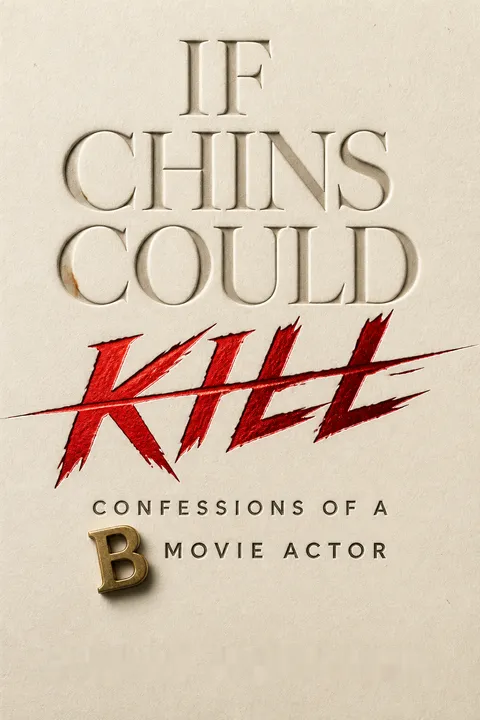


Key Takeaways
Build a life around the work you love, not its glamorous image
Play became a compass. Campbell’s childhood in suburban Detroit was full of woods, forts, homemade games, and unruly experiments. At eight, he watched his father perform in a community musical and realized that acting might let adulthood keep some of childhood’s playfulness. He pursued theater, then worked a summer stock season for no pay, folding flyers, building sets, and learning backstage jobs. The experience showed him that performance was not just applause. It was a shared, demanding craft.
The working life mattered. Campbell’s story is not a march toward celebrity so much as a search for a way to keep making things. He describes himself as one of Hollywood’s many working actors, not a star with a glamorous, uninterrupted ascent. That distinction shapes the memoir: the subject is the labor, improvisation, and uncertainty behind a career that began with fun.
What's striking is how a childhood desire to preserve play becomes a practical career choice, not a sentimental slogan. Motivation research often distinguishes intrinsic interest, doing an activity because it is engaging, from external rewards such as status or money. Campbell’s early theater work fits the first pattern, while his later accounts show how fragile it can become under financial pressure. The memoir’s useful question is not whether work should always feel fun, but whether a person can keep enough agency and curiosity to remain connected to the work itself.
Turn shared enthusiasm into a crew before waiting for permission
Friends supplied the infrastructure. Campbell and his Michigan friends, including Sam Raimi, Josh Becker, Scott Spiegel, and Mike Ditz, started making Super-8 films as teenagers. They pooled cameras, projectors, costumes, and whatever else they could find. On shoots, jobs overlapped: the person who arranged the film stock might produce, direct, act, and haul equipment. Their early films were often slapstick, built from pies, boxes, stunts, and whatever locations were available.
Practice created capability. They filmed in alleys, staged falls on a staircase, and learned by making mistakes in public. Campbell once hit his head on concrete during a stunt, but the group kept experimenting. Their collective experience mattered more than formal titles. Years of small projects gave them trust, shared shorthand, and practical skills they could bring to a feature.
This is a vivid case of a community of practice: people learn a craft by doing real tasks together, gradually taking on more responsibility. The group’s informality lowered the cost of experimentation and let skills circulate across roles. But informal collaboration has limits. It can conceal uneven workloads, unclear authority, and safety risks, especially when enthusiasm substitutes for planning. The strongest lesson is not that every project should be run by friends, but that a small team can build serious competence when it repeatedly makes, reviews, and improves tangible work.
Test the idea cheaply before asking investors to believe in it
A prototype made the pitch visible. Before raising money for their first feature, Campbell, Raimi, and producer Rob Tapert made the short film Within the Woods. It cost about $1,600 and let them test whether they could make a horror film that moved an audience. A screening at their old high school got a strong reaction, and a Detroit newspaper review became evidence they could show potential backers.
The numbers were daunting. Their initial feature budget reached $150,000, and the filmmakers had little experience or track record. They formed a limited partnership, prepared legal disclosures, and spent months pitching investors. Their projection that investors would double their money in two years proved wrong: investors broke even after six. The prototype helped establish credibility, but it could not remove the underlying risk.
The prototype functions as both a creative test and a credibility device. In entrepreneurship, a low-cost experiment can reduce uncertainty before a larger commitment, but it rarely proves that a full-scale venture will succeed. That distinction is clear here: audience response to a short film demonstrated some ability, not the economics of feature production or distribution. The book also shows that trust is part of the pitch. Investors were betting on people with little formal experience, so visible evidence and careful disclosure mattered alongside the idea.
Treat distribution as a second craft, separate from making the film
A finished picture was not a product yet. After filming Evil Dead, the group still needed a 35mm version, promotional photographs, a trailer, posters, and technical materials that foreign distributors could use. The team learned that shooting a film and selling one required different knowledge. Early distributors rejected the picture, and the filmmakers had to find a sales agent who understood horror and independent production.
A champion changed the odds. Sales agent Irvin Shapiro helped them prepare the materials and take the film to markets. At Cannes, horror writer Stephen King saw it and praised it publicly. That endorsement helped critics and buyers take a closer look. The film sold territory by territory, eventually reaching audiences abroad and returning money to investors, though only after six years.
The account exposes a common asymmetry in creative work: creators often invest heavily in production while treating access to audiences as an afterthought. Distribution is not merely publicity. It includes formats, rights, sales relationships, and materials that make a work usable in different markets. The King endorsement mattered because it reduced uncertainty for people who had not yet seen the film. Yet a famous advocate is an unpredictable advantage, not a strategy that can be reliably reproduced. The durable lesson is to develop the route to an audience alongside the work.
Let constraints spark invention, but don't confuse hardship with excellence
Necessity produced homemade tools. During Evil Dead, Sam Raimi’s ambitious camera ideas outstripped the budget. The crew built inexpensive rigs from lumber, saw horses, duct tape, and household materials. A greased track let the camera glide, while a handheld board-mounted camera created a rough, fast-moving point of view. The devices helped translate limited resources into a visual style rather than simply accepting the limits.
The conditions were brutal. A planned six-week shoot stretched to twelve weeks in rural Tennessee winter. The crew faced freezing equipment, cold interiors, difficult terrain, injuries, and dwindling personnel. Actors endured glass contact lenses, heavy makeup, cold nights, and repeated physical punishment. Their persistence got the film made, but the memoir also makes clear that exhaustion and danger were not artistic requirements.
The homemade rigs illustrate a useful engineering principle: constraints can force a team to identify what an effect actually requires, rather than assuming it requires expensive equipment. But a distinction matters between resourcefulness and avoidable harm. The book’s comic tone makes grueling conditions memorable, yet the same conditions can normalize unsafe production practices. Creative ingenuity is most valuable when it preserves the goal while reducing unnecessary risk. A tight budget may invite invention; it does not make injuries, inadequate preparation, or prolonged exhaustion proof of commitment.
Creative control can disappear when the budget and audience change
A bigger production brought new power. Evil Dead was made with little money and substantial freedom. The group’s next studio film, Crimewave, began with a budget of about $2.5 million and brought executives, union rules, costly locations, and more complicated production demands. The film ran into trouble, was reedited and reshot, and failed commercially. The creators had to accept decisions they would not have made independently.
Scale did not guarantee satisfaction. Army of Darkness had a much larger budget, yet the studio removed about fifteen minutes from Raimi’s original cut after test audiences found the film too long and its ending too bleak. Campbell’s experience complicates the assumption that bigger budgets automatically improve creative work. More resources can enlarge the possibilities, but they also increase the number of stakeholders with influence over the result.
This contrast resembles a basic problem in organizational design: as a project grows, coordination costs and competing objectives grow with it. A small group can make decisions quickly, while a studio must answer to financing, marketing, and audience testing. Those pressures are not inherently irrational, but they can flatten distinctive choices if every unusual feature is treated as a sales risk. The memoir is strongest when it shows both sides: independent control is creatively valuable, but freedom alone cannot guarantee quality, financing, or a viable audience.
Treat acting as practical collaboration, not just emotional display
The job includes the whole set. Campbell’s account of acting is grounded in preparation, timing, blocking, and cooperation with crew. On fast television shoots, actors may have little rehearsal and only a few takes. He argues for knowing lines well enough to respond to changes, understanding how camera movement and focus affect a performance, and communicating clearly with sound teams. He also describes learning to block scenes before reducing them to camera angles.
Professionalism is ordinary behavior. On Brisco County, Jr., veteran actor Ernest Borgnine stayed on set through long, hot days rather than retreating to his trailer. Campbell presents that patience as a model of respect for the crew. His own practical tricks include using written prompts when a last-minute line change will not stick and preparing enough to support other performers.
The emphasis on collaboration corrects the romantic image of acting as private inspiration delivered to a passive camera. Film performance is interdependent: focus, sound, timing, and continuity determine whether a moment can be used. This resembles work in other high-coordination settings, where individual excellence depends on making one’s contribution legible to others. The caution is that efficiency can become an excuse for rushed direction or thin rehearsal. Practical craft should help performance survive production constraints, not erase the need for artistic attention.
Measure success by the life a career makes possible
Visibility was not the same as fulfillment. Campbell wanted to work, not to chase fame at any cost. His television career brought exposure, but The Adventures of Brisco County, Jr. also required relentless promotion and travel. When the show was canceled, he felt relief as well as disappointment. Work on Hercules and Xena in New Zealand offered a more satisfying creative atmosphere, partly because the production felt less dominated by Hollywood politics and ambition.
Ambition had a private cost. Campbell’s years away for film work contributed to the collapse of his first marriage. He describes his wife’s frustration with an unstable life and long absences, not as a villainous obstacle but as a reasonable limit. The memoir’s career story therefore includes a question beyond achievement: what does the pursuit of work ask from the people who share a life with the worker?
This is a more demanding account of career success than a simple ranking of roles or earnings. Work is embedded in relationships, time, place, and personal autonomy. The idea connects to boundary theory, which studies how work and private life compete for attention and how people manage the border between them. Campbell’s experience also cautions against treating sacrifice as inherently noble. A career can be meaningful and still impose costs that a partner or family does not consent to keep paying.
Give the crew and the fans a place in the story
The film is more than its star. Campbell repeatedly highlights people whose work is easy to overlook, from apprentices and production assistants to craft-service workers. On Brisco, Ron Webber cleaned up after horses while preparing food for the crew. Campbell tracked down an old television appearance that confirmed Webber’s earlier acting work and gave him a copy to share with his grandchildren. Small gestures made an invisible career visible.
Audiences complete a film’s life. Evil Dead gained a devoted following years after its initial release, and Campbell’s book tour brought him face to face with fans whose attachments ranged from comic to deeply personal. His memoir honors that enthusiasm while recognizing that actors cannot control how every viewer interprets a performance. The story ends not with a clean victory, but with gratitude for the people who kept the work alive.
The memoir’s attention to crew members expands the usual unit of authorship. Films are credited to directors and stars, but their actual production depends on many forms of skilled labor, often hidden from audiences. Recognition does not redistribute pay or authority, but it does correct the story a culture tells about how creative work gets made. The fan relationship adds another layer: meaning is partly made by viewers, though creators cannot manage every response. Gratitude is appropriate, but it need not imply unlimited responsibility for audience behavior.
Analysis
If Chins Could Kill is a comic memoir whose real subject is not fame but the labor that makes a film career possible. Its organizing movement is from play to craft, from craft to a risky independent feature, and from that feature into a larger industry whose money and reach come with less control. The through-line is a working actor’s attempt to preserve the pleasure of making things while adapting to budgets, sales systems, studios, and family obligations.
The book is especially useful because it treats failure as operational information. The Super-8 feature that found no audience taught the group that quality alone was insufficient. The successful horror prototype showed promise but did not guarantee a return. Their first film required years of fundraising, technical problem-solving, and sales work after production ended. Later, a larger budget did not protect Crimewave from studio intervention or commercial failure. These episodes make creative entrepreneurship concrete: making the artifact, financing it, and finding its audience are distinct tasks.
Campbell’s humor also works as a form of demystification. It turns celebrity into a job, a set into a workplace, and filmmaking into a system of interdependent decisions. The practical observations about blocking, crew communication, and preparation are valuable precisely because they resist the myth that art arises from inspiration alone. At the same time, the memoir’s comic treatment of injuries and grueling shoots sometimes risks making hardship look like proof of authenticity. Its own details support a more careful reading: ingenuity can be admirable without endorsing unsafe conditions.
The book’s strongest ethical claim is its attention to people outside the spotlight. Its account of apprentices, assistants, crew members, investors, and fans challenges the solitary-genius story without pretending that all contributors have equal power. The final measure of a career is therefore not merely visibility or box-office position. It is whether the work remains worth doing, whether its costs are honestly acknowledged, and whether the people who make it possible are remembered.
Review Summary
If Chins Could Kill receives praise for Campbell's humorous and down-to-earth approach to his Hollywood journey. Readers appreciate his insider's perspective on B-movies, TV shows, and the challenges of a working actor. The book's highlight is the detailed account of making the Evil Dead trilogy. Campbell's self-deprecating humor and respect for crew members resonate with fans. While some find early chapters slow, most enjoy Campbell's entertaining storytelling and unique insights into the film industry's less glamorous side.
People Also Read
Glossary
Fake Shemp
stand-in performerA stand-in used when an actor is unavailable, often in a role with little or no dialogue. The term comes from a Three Stooges short that used a substitute after Shemp Howard died. Campbell and his collaborators applied it to replacement performers in their low-budget films, where cast members regularly left before filming was complete.
Shemping
using a stand-inThe practice of filling a missing performer’s place with another actor, often for a brief shot or a character without dialogue. Campbell’s group expanded the term from the Three Stooges’ use of a substitute for Shemp Howard. It became a practical low-budget production method when cast members could not remain for the full shoot.
Chronic Spore Syndrome
Hollywood ambition sicknessCampbell’s joking name for the motivation-sapping effect he attributes to Hollywood’s atmosphere of image management, status seeking, and anxious networking. The supposed symptoms include fear-driven decisions, dissatisfaction with one’s appearance, and seeking out important people rather than enjoyable company. The label is satire, not a medical diagnosis.
Vas-o-Cam
homemade camera trackA low-cost camera-moving rig developed during the making of Evil Dead. Two-by-fours laid across supports created a track, then duct tape and Vaseline helped a wooden camera mount glide smoothly along it. The device offered a simple substitute for a professional dolly when the production could not afford standard equipment.
X tracks
extra sound layersAdditional sound effects or dialogue tracks that Campbell and Sam Raimi secretly added while working on the Evil Dead soundtrack. Their sound supervisor had not provided a formal category for these additions, so the filmmakers placed them on tracks labeled X. The term reflects the pair’s effort to keep enhancing the film’s audio.
Introvision
front-screen projection effectA filming process that uses projection and mirrors to combine live action with projected imagery. In Army of Darkness, Campbell had to perform movements in precise coordination with animated skeletons he could not see directly. The technique required numbered cues and exact timing so live performers could appear to interact with projected figures.
Deadites
Evil Dead fansAn affectionate name for fans devoted to the Evil Dead films. Campbell uses it while describing the audience that sustained interest in the movies long after their original theatrical releases. The term identifies a fandom whose enthusiasm included conventions, memorabilia, return visits to filming locations, and ongoing demand for new editions.
Download PDF
Download EPUB
.epub digital book format is ideal for reading ebooks on phones, tablets, and e-readers.








