

Plot Summary
A Brother Offered as Payment
Allesandro, the crime boss known as Il Padrone, discovers that Dr. Sorini has spent his money on drugs supplied by the rival O'Connel family. While Allesandro interrogates the doctor, his second-in-command, Luca, reports that O'Connel men have also stolen product from a runner under Cliff's supervision. Cliff is summoned to answer for the failure.
To keep his territory, he offers his younger brother, Emilio, as a prospective boy for Allesandro. A photograph catches Allesandro's attention, and he orders Cliff to bring Emilio to the mansion the next morning. Cliff's offer turns a routine dispute between criminal organizations into a personal trap for a college student who has no idea he is being bartered.
The opening sets up a world where people are valued according to usefulness, and Allesandro measures both loyalty and failure in terms of territory. Cliff's decision is presented as an attempt to restore his standing, but it also makes family affection look like just another currency in the organization. Emilio is not yet part of this calculation in his own mind; for the reader, that gap creates the story's first moral shock. The transaction is not a misunderstanding or a rescue gone wrong. It is deliberate, arranged by men who treat power as permission and expect the people beneath them to accept the result.
The Mansion's False Welcome
Nineteen-year-old Emilio is a mathematics student still grieving his mother's death and keeping mostly to his studies. When Cliff asks him to meet, Emilio hopes his distant older brother wants to reconnect. Cliff chooses his clothes, drives him to an imposing mansion, and claims he is proud of him. Inside, Allesandro examines Emilio as a possible possession.
Cliff confirms that he has brought his brother to become Allesandro's boy, then leaves without offering Emilio a real choice. Shocked, Emilio asks what is happening, but Allesandro's guards and authority keep him from leaving. The betrayal lands twice: Cliff has handed him over, and the brother Emilio still hopes to protect has shown no visible remorse.
Emilio's capture works because it is built out of ordinary trust. He follows Cliff not because he is foolish, but because a sibling's invitation carries a history he wants to believe still matters. His grief over their mother's death has already made family connection precious and fragile, so Cliff's staged warmth briefly seems like a chance to recover it. The mansion's polished surfaces sharpen the contrast between hospitality and coercion: Emilio is welcomed only as an object. His inability to interpret the situation at first is a psychological lag, the mind reaching for familiar explanations while the body is already under someone else's control.
Books Bought with Submission
Allesandro gives Emilio a shock collar and explains that he can earn comforts by obeying. Asked what he wants, Emilio asks for books, then struggles to understand what Allesandro expects in return. Luca, presented as a gentler presence, offers hints while secretly following Allesandro's orders.
Emilio eventually agrees to pleasure Allesandro in exchange for books, despite his inexperience and lack of meaningful consent. Allesandro rewards him with children's books, using Emilio's earlier question about age play to make the gift an insult.
The humiliation turns Emilio's fear into anger. Meanwhile, Allesandro tells Luca to undermine Emilio's life outside the mansion, and Luca plants drugs and stolen exam answers in Emilio's dorm room to make his disappearance harder to undo.
The bargain gives Emilio a narrow sense of agency, then exposes how easily that agency can be manipulated. Asking for books is a specific, modest desire rooted in the life he had before captivity; Allesandro converts it into a test whose terms only he controls. The childish reward makes the exchange feel less like negotiation than deliberate degradation. Luca's kindness is similarly unstable, because Emilio's search for an ally is being used to deepen his isolation. The planted evidence extends coercion beyond the mansion: Allesandro is not satisfied with holding Emilio physically. He is preparing to make the outside world doubt him if he manages to escape.
The Playroom's First Lesson
Allesandro takes Emilio into a room equipped for BDSM and makes clear that he will set the rules, including refusing to offer a safe word or discuss limits. He restrains Emilio, uses impact and sexual stimulation, and pushes his body toward an involuntary orgasm. Emilio's physical response confuses and shames him, but it does not change the fact that the encounter is imposed.
Allesandro leaves him exhausted and marked by the experience, then watches him through cameras. Emilio tries to interpret what happened as a lesson he can endure without surrendering his mind. The difference between bodily sensation and consent becomes a source of private conflict, while Allesandro treats Emilio's vulnerability as proof that his methods are working.
This episode makes the book's central power imbalance explicit. Emilio's body reacts under pressure, but his response does not grant consent or erase his fear; the gap between physiology and choice is precisely what leaves him disoriented. Allesandro, by contrast, reads bodily reaction as evidence of ownership, converting an involuntary response into a claim about Emilio's identity. The surveillance cameras extend the violation beyond the room, making even private recovery impossible. Emilio's attempt to separate his inner self from what has been done to him is a survival strategy, not a sign that the harm has been resolved.
Defiance Sealed in Darkness
When Emilio hears that Allesandro may involve Cliff in an upcoming meeting with the O'Connel family, he panics for his brother and confronts his captor. He shoves Allesandro and tries to strike him, insisting Cliff could not have betrayed him willingly. Allesandro uses the collar to shock him, then chains him in a lightless room with his hands restrained.
Emilio remains there for roughly fifty-three hours without food or water. Allesandro's men subject him to further degrading treatment, and Emilio's defiance gives way to exhaustion, cold, and fear that he cannot survive the confinement. When Allesandro finally returns, Emilio is barely conscious and begs for release, surrendering because the alternative has become unbearable.
Emilio's outburst is driven by more than anger at his own captivity. He is still trying to preserve the idea that Cliff might be innocent, because abandoning that belief would mean losing the last version of family he understands. Allesandro exploits this attachment by making Cliff part of the threat. The dark room then attacks Emilio's practical strengths: he cannot observe, study, or use reason to regain control. His eventual plea is a response to extreme deprivation, not an uncomplicated choice to trust his captor. The episode shows how coercive systems can manufacture apparent submission by first stripping away the conditions in which refusal is possible.
Betrayal Inside the Brothel
While Emilio is confined, Allesandro discovers that Lanza, a worker at a family brothel, has secretly contacted the Irish rival organization and stirred suspicion among the other workers. He has Luca bring her before the staff and makes her punishment a warning to everyone who might consider betrayal.
Allesandro also learns that Sergio, the brothel's overseer, failed to prevent the breach and allowed Lanza to operate under his watch. He fires Sergio permanently and appoints Antonio to take charge, giving him a chance to prove himself.
The violence and rapid change in leadership reveal the same rule that governs Emilio's room: Allesandro keeps control by making consequences public and treating every failure as a threat to the whole organization.
This parallel storyline broadens the meaning of Allesandro's authority. His control of Emilio is not an isolated private arrangement but part of a larger system that regulates workers, territory, and information through fear. Lanza's actions are treated as both an individual betrayal and a danger to organizational stability; Sergio is punished for failing to detect it. Antonio's promotion shows that loyalty can bring opportunity, but only within a hierarchy whose terms Allesandro sets. The scene also complicates the distinction between intimacy and governance in this world: the same language of ownership that shapes the captive relationship informs the boss's rule over his criminal network.
The Doctor Keeps Him Alive
Allesandro realizes that Emilio's prolonged confinement has left him severely dehydrated and summons Dr. Conti, a physician forced into service by threats against his young sister. Conti gives Emilio fluids, treats the effects of his confinement, and warns that the student needs close monitoring.
Allesandro orders him to remain nearby rather than return to his own life. When Emilio wakes, he is weak and frightened, and he apologizes to Allesandro because he believes obedience is the only way to avoid the dark room again.
Luca visits with permission, explaining that he serves as Allesandro's second and that Emilio can follow his instructions. Emilio accepts the information but remains wary, reading every kindness as something that may be withdrawn.
Medical care arrives inside the same structure of captivity that caused Emilio's crisis. Conti's skill can keep him alive, but the physician is also coerced, which prevents his presence from becoming a simple rescue. Emilio's apology reflects the logic of survival after deprivation: he has learned that submission may reduce immediate danger, even while he remains emotionally opposed to his captor. Luca's authorized visit offers companionship, but it also makes clear that Allesandro controls who may approach him. Relief is therefore real but unstable, shaped by dependence on people who possess power over Emilio's body and circumstances.
A Video Becomes a Weapon
Allesandro tells Emilio that Cliff's safety depends on Emilio willingly begging for whatever Allesandro chooses during a sexual encounter. Believing his brother may still be in danger, Emilio accepts the condition.
Allesandro and Luca conceal their identities behind masks and voice disguises, restrain Emilio, and record the assault. They add humiliations Emilio had not freely chosen, including marking his back, then leave him for Allesandro to clean and arrange for medical attention.
Luca sends the recording to Emilio's college and helps make it widely visible. The planted drugs and exam answers intensify the damage: Emilio is suspended, and the public evidence makes his old life appear irretrievable. His effort to protect Cliff has instead become a weapon against him.
The staged encounter is built on a false premise: Emilio consents under the belief that he is protecting someone he loves, while Allesandro controls the threat and the terms. The recording turns private abuse into public reputation, extending captivity into education and future employment. Emilio's choices are narrowed at every level, yet the story keeps his motives visible: his actions come from loyalty and fear, not a free embrace of the system. Allesandro's aftercare does not undo the assault; its tenderness arrives from the same person who designed the harm. That contradiction deepens Emilio's confusion without making the coercion less real.
The Warehouse Recognizes Emilio
Before the meeting with the O'Connel family, Allesandro offers Emilio a new position as his boy, promising more freedom but demanding obedience. Emilio accepts because he believes it is the safest path through the night. At the warehouse, Cliff sees the viral video and responds with disgust, disowning Emilio and admitting that he had handed him over.
Allesandro protects Emilio when Cliff strikes him. Then Brendan and Eamon O'Connel arrive. After one of their men is killed during the tense meeting, both brothers fix their attention on Emilio, react with grief and fury, and declare war on Allesandro before leaving. Their response makes it clear that Emilio's presence connects the two families in a way nobody has yet explained.
The warehouse gives Emilio two incompatible readings of his past in quick succession. Cliff's rejection confirms that the brother he hoped to protect has publicly chosen humiliation over kinship. Allesandro's defense offers safety, but it also reinforces the fact that Emilio now depends on the person who captured him. The Irish brothers' recognition introduces a larger history without clarifying it, turning Emilio from a private possession into the center of a criminal conflict. The scene's emotional force comes from the difference between recognition and care: Brendan and Eamon seem to know something about Emilio, but their sudden anger does not yet tell him what he means to them.
The Letter Reveals the Bloodline
Allesandro has Cliff brought back and demands an explanation for the O'Connel brothers' reaction. Cliff reveals that Emilio is not his full brother: Emilio's father was the former head of the Irish family, making Emilio Brendan and Eamon's half-brother. Their mother had planned to tell him, but Cliff says he killed her and stole the letter in which she intended to disclose the truth.
He admits he gave Emilio to Allesandro rather than let him be welcomed by the Irish. When Cliff suggests trading Emilio to the O'Connels, Allesandro refuses and offers Emilio the power to pursue vengeance instead. Emilio stops fighting those holding him and runs to Allesandro. He accepts that the war, not reconciliation, is now his future.
The revelation rewrites Emilio's family history without restoring the family he wanted. His mother's silence was meant to delay a difficult truth until he was ready; Cliff transformed that protection into a reason to kill her and control Emilio's future. The stolen letter becomes evidence of an identity denied to him, while his brothers' recognition suddenly has an explanation. Yet the truth does not produce a safe homecoming. Allesandro frames vengeance as a new source of agency, and Emilio accepts it after betrayal has exhausted his hope of returning to ordinary life. The ending resolves the question of his parentage but leaves the conflict between the criminal families open.
Analysis
Il Padrone builds its plot around the conversion of trust into leverage. Cliff uses Emilio's faith in their sibling bond to deliver him to Allesandro, while Allesandro turns food, books, privacy, sex, and movement into privileges controlled by the captor. The repeated language of choice is therefore unstable: Emilio makes decisions, but the consequences have been arranged by people with far greater power. His compliance is a survival response within coercion, not proof that he has freely accepted his treatment.
The novel also distinguishes physical reaction from consent. Emilio's body responds during imposed sexual encounters, and that response becomes another source of shame because Allesandro treats it as evidence of ownership. The story's psychological conflict lies partly in Emilio's struggle to preserve a sense of self when his captor controls both sensation and interpretation. Luca's role sharpens that problem: he can offer genuine-seeming comfort while remaining an agent of the system that harms Emilio.
Family identity provides the larger reversal. Emilio's grief has made him hungry for a dependable bond, but the brother he trusts has hidden his parentage and destroyed his chance to learn it from their mother. The revelation connects the private betrayal to the public conflict between the Italian and Irish organizations. Yet finding his biological family does not restore safety or belonging. The ending offers vengeance through Allesandro rather than reconciliation, leaving Emilio with agency shaped by a new hierarchy and a war still unresolved. The book's conclusion is thus both an answer and a beginning: the mystery of Emilio's origins closes, while the struggle over what he will become remains open.
Review Summary
Il Padrone is a dark M/M mafia romance featuring Alessandro, a ruthless mafia boss, and Emilio, who is sold to him by his brother. Reviews are polarized: some praise the dark, well-paced storytelling and unique loyalty-building concept, while others criticize lack of character depth, emotional connection, and excessive cruelty without tenderness. Common complaints include weak character development, telling rather than showing, and an unbelievable ending. Many note extreme content warnings are necessary. The book ends on a cliffhanger as the first in the Vendetta series. Ratings range widely from disappointing to captivating.
Characters
Emilio
The stolen mathematicianEmilio is a nineteen-year-old mathematics student whose intelligence and orderly habits offer him a way to make sense of a world he would rather avoid. After losing his mother, he has leaned into study and kept a narrow social life, partly from shyness and partly because he has never felt urgency to pursue romance. His optimism about other people leaves him vulnerable to Cliff's attention, but it is not simple gullibility: Emilio notices shifts in behavior and tries to reason through danger as if it were a problem with discoverable rules. Under captivity, he searches for small choices, allies, and practical leverage. His central tension is between the caring person he has been and the harder self he may need to become.
Allesandro
The city's feared masterAllesandro is the head of a powerful criminal organization, a disciplined man who expects loyalty and considers disobedience a direct challenge to his authority. He has built his household and criminal network around control, using punishments, surveillance, and carefully rationed rewards to keep others dependent on him. His confidence can shade into vanity, yet he is observant enough to notice Emilio's intelligence and unconventional reactions. Allesandro distinguishes between the roles he assigns people, but his idea of care remains entangled with possession and command. He wants those around him to depend on him more than on anyone else, and he regards vulnerability as something to manage rather than meet on equal terms.
Luca
The loyal secondLuca has been Allesandro's closest friend since childhood and now serves as his second-in-command. He is capable, physically imposing, and familiar with the rules of the organization because his own family has long occupied a similar position. Luca obeys Allesandro even when his private reactions complicate that loyalty. He can make Emilio feel safer through patience and attention, but those gestures occur within a system he helps enforce. His divided responses reveal how intimacy, desire, friendship, and hierarchy overlap in Allesandro's household.
Radcliff (Cliff)
Emilio's older brotherCliff is Emilio's older brother, a man whose criminal connections and irregular lifestyle have made him distant from the student he once shared a family with. He cares intensely about status and security, and he is skilled at presenting a useful face to powerful people. Emilio remembers the brother through their shared past and wants to believe that some loyalty remains between them. Cliff's relationship with him is marked by an imbalance of knowledge and power, leaving Emilio unsure how much of their old bond still exists.
Brendan O'Connel
The Irish family's leaderBrendan leads the rival O'Connel organization and approaches negotiations with an expectation of respect. He is composed and deliberate, relying on his brother Eamon as a close adviser. The family places weight on shared identity and loyalty, values that put Brendan at odds with Allesandro's more conditional approach to kinship. His reactions at the warehouse suggest that Emilio's presence carries personal significance, though Brendan's reasons are not immediately clear to those around him.
Eamon O'Connel
Brendan's watchful secondEamon is Brendan's brother and closest strategic ally, a controlled presence whose silence can carry as much force as an argument. He is capable of decisive violence and shares Brendan's commitment to family, though he does not always express it in the same measured way. Together, the brothers represent a rival power with its own rules and loyalties. Eamon's attention to Emilio hints at a connection that reaches beyond the immediate dispute between the organizations.
Dr. Conti
The coerced physicianDr. Conti is a hospital physician whose professional skill is forced into service by threats against his young sister. He understands the danger of Allesandro's organization and does not disguise his contempt for its leader, but he still works carefully to keep Emilio alive. His clinical role creates a brief space where Emilio is treated as a patient rather than property. Conti's resistance is restrained by the people he loves, making him another character caught between personal ethics and coercive power.
Antonio
The adaptable fixerAntonio is a trusted member of Allesandro's circle, valued for his ability to move through different social settings, gather information, and handle problems without drawing attention. Though less forceful than some of Allesandro's men, he is capable and deeply attentive to the expectations placed on him. His appointment to oversee a brothel gives him a chance to demonstrate that usefulness can take forms other than brute strength.
Ignacio
The volatile protectorIgnacio is a tattooed, quick-moving member of Allesandro's inner circle, valued for his loyalty and capacity to act under pressure. His temperament can be volatile, but his attention to Allesandro is unwavering. He is equally alert to Emilio's vulnerability, and his behavior suggests that the group's bonds can extend beyond simple obedience, even when they remain governed by Allesandro's authority.
Marcus
The soldiers' commanderMarcus commands Allesandro's soldiers and organizes security around the meeting with the O'Connel family. Practical and disciplined, he focuses on preparation and keeping the organization ready for violence.
Emilio's mother
The lost family anchorEmilio's mother died before the story begins, leaving him to carry grief alongside the ordinary demands of college. She had hoped to protect him until he was ready for a difficult truth, and her absence shapes his longing for family stability.
Lanza
The double-dealing workerLanza works within the brothel connected to Allesandro's organization. Her choices draw attention to the risks of divided loyalties and to the harsh scrutiny placed on people working under the family's authority.
Sergio
The failing overseerSergio manages a brothel within Allesandro's network. He is responsible for keeping the business under control, and his failure to notice trouble puts his position in jeopardy.
Dr. Sorini
The compromised doctorDr. Sorini is a physician who has been paid by Allesandro but becomes entangled with drugs supplied by the O'Connel organization. His compromised judgment helps trigger the conflict that places Emilio in danger.
Giavonna and Teodoro
The devoted aunt and uncleAllesandro's aunt Giavonna and her husband Teodoro offer warmth, food, and family rituals within the criminal world surrounding them. Their hospitality contrasts with the fear that governs Allesandro's household, while Teodoro's awareness of the organization's politics shows that their kindness does not make them naïve.
Plot Devices
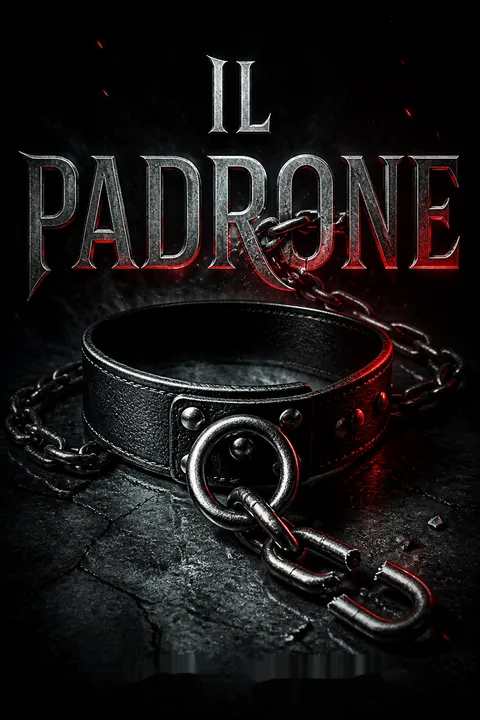
The shock collar
Remote control of movementAllesandro gives Emilio a collar that can deliver an electric shock and limits where he can go. It makes the imbalance of power immediate and physical: a threat or a small gesture from Allesandro can turn into pain without warning. The collar also shapes Emilio's calculations. He studies its rules and the limits Allesandro sets, trying to distinguish a real opportunity from another trap. As the story progresses, it becomes a visible reminder that obedience is being enforced, not freely chosen.
Earned comforts
Rewards used as leverageAllesandro treats books, clothing, food, and furnishings as privileges Emilio must earn and can lose. Because the comforts are small and concrete, they give Emilio something to bargain for, but the arrangement never grants him control over the rules. A request can be reframed as an insult, and a reward can be withdrawn after defiance. The system turns everyday needs into measures of obedience, making dependence part of the punishment while allowing Allesandro to present coercion as a series of choices.
The hidden cameras
Surveillance as ownershipAllesandro monitors the rooms used for Emilio through cameras, including moments when Emilio believes himself to be alone. The recordings let Allesandro watch fear and distress from a distance and later document staged sexual abuse. Surveillance makes privacy nearly impossible, while the threat that an image can be shared turns control of Emilio's body into control of his public identity. The camera footage becomes central to the criminal household's methods of manipulation and to the destruction of Emilio's place at college.
Fabricated evidence
Destroying the escape routeLuca plants drugs and future exam answers in Emilio's dorm room so that an investigation will make Emilio appear guilty of serious misconduct. The false evidence is designed to work alongside a recorded sexual encounter circulated to the college community. Together, these inventions make Emilio's return to his former life seem increasingly impossible. The tactic gives Allesandro power beyond the mansion: if Emilio escapes, he will face a world primed to doubt him rather than help him.
The stolen letter
Concealed family historyA letter from Emilio's mother holds the truth about his father and the family he never knew. Cliff steals it before Emilio can learn what she intended to tell him, keeping Emilio's identity hidden and enabling Cliff to make decisions on his behalf. The missing letter gives the final revelation a physical source, tying Emilio's grief for his mother to the conflict between the two criminal families. Its contents explain why the O'Connel brothers react so strongly when they see him at the warehouse.
Download PDF
Download EPUB
.epub digital book format is ideal for reading ebooks on phones, tablets, and e-readers.








