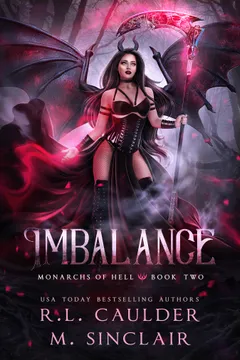


Plot Summary
The Summit Breaks
At the royal summit, King Roarke and Queen Ava14 of Tenebris seize control, using magic-nullifying cuffs and wards to disable their rivals. Colt4 watches his parents17 die; the rulers of other houses are killed or taken prisoner, including Ama's father,13 King Alaric.13 Drayven2 carries the injured Ama1 while Adrien's3 shadows keep the surviving heirs together.
Alaric13 breaks through the estate's wards long enough to send them through a portal, sacrificing his own escape. As Ama1 lies unconscious, Drayven2 remembers meeting her as a child, when she offered him friendship without knowing his parents hoped to use him against her. He recognizes that he has loved her for years, and that his old lies helped leave her isolated.
The coup turns political suspicion into intimate loss: the heirs are not merely displaced from power but forced to watch parents die or disappear. Drayven's childhood memory complicates the rescue. His betrayal of Ama was not born from simple cruelty; it grew from the convenience of believing adults who confirmed his own fears. That explanation does not erase the harm, but it makes his present devotion an act of accountability rather than an uncomplicated romantic destiny. Alaric's choice to save the heirs also gives Ama a painful inheritance: survival purchased by a father's sacrifice.
A Bond Under Ash
In the valley beyond the portal, grief fractures the group. Colt4 blames Ama1 for distracting him from the coup, while Nico6 struggles with the discovery that his parents15 aided the attack. Adrien3 explains that an old book describes a time when hybrids and pure-bloods lived together and found fated partners; the six heirs recognize Ama1 as the center of their own bonds.
The revelation comforts Ama1 but cannot resolve their distrust or fear. As an earthquake builds, smoke rises from a nearby volcano. Ama's1 magic surges, and she collapses. In the strange cavern she enters while unconscious, a voice9 speaks to her from a stone tomb beside a river of magma. She wakes with no explanation for the encounter, only its unsettling promise of a return.
The group receives two kinds of destabilizing knowledge at once: their society's account of hybrid history is false, and their private desires may be shaped by an ancient bond. The first revelation makes political conflict legible; the second makes personal feeling harder to interpret. Ama's comfort is real, but so is her need to choose how she responds to the men around her. The volcanic disturbance gives the supernatural discovery physical urgency, while the cavern voice creates a separate, unexplained intimacy. The story's central question begins to widen: not only who can be trusted, but what forces are already claiming Ama.
The Beast at the Cliff
The heirs head north through the darklands, hoping to find the hidden hybrid settlement Adrien's3 book described. A gigantic Umbra drives them through the forest and nearly sends Nico6 over a cliff. The group attacks together, but the creature overwhelms them until a shadowed hound kills it. The animal transforms into a bloodied young man, Jace,8 who kisses Ama1 before the others can stop him.
He explains that he sensed her distress and came to protect her. Suspicious of the pure-blood heirs, Jace8 initially intends to separate Ama1 from them, but she insists they travel together. He cuts his palm, and his hybrid blood reveals a concealed stairway down to a thriving city. The first refuge they have found may also be a place that distrusts them.
Jace's entrance reverses the group's assumed roles: the supposedly dangerous hybrid rescues the heirs, while the pure-bloods arrive as outsiders whose history makes them suspect. His immediate claim on Ama mirrors the possessiveness already developing among the other men, but Ama's insistence that they all enter establishes a boundary before anyone can define her choices for her. The concealed entrance gives hybrid blood a literal key to safety, turning ancestry from a stigma into access. Yet sanctuary is not automatically acceptance. The city's welcome will test whether the heirs can tolerate being judged by the same inherited categories they have used against others.
Inside the Hidden City
The Kingdom of Impurus is bright, communal, and populated by hybrids whose mixed traits are ordinary rather than shameful. While Ama1 takes shelter in a spa, Jace8 sends Colt4 to secure rooms at a pub, where patrons beat and threaten him for being pure-blood. Jace8 had arranged the encounter to make Colt4 feel the hostility Ama1 has endured; when she learns this, she grabs Jace8 by the throat and warns him not to endanger her mates.
Pelia,11 a seer descended from the family18 guarding the city's protective barrier, checks on Ama1 and explains its history. She also urges Ama1 to set boundaries with men who are grieving. The city offers belonging, but Ama1 still chooses to seek help for the people who once denied it to her.
Colt's humiliation is an intentionally uncomfortable mirror, not a clean equivalence between histories. He receives a brief taste of a prejudice Ama has lived with, and his recognition matters because it changes what he can plausibly dismiss. Jace's lesson is ethically compromised: empathy produced through a staged beating still puts someone in danger without consent. Ama's response makes clear that solidarity cannot be built by repeating the harm one claims to oppose. Pelia offers a different model of guidance, inviting Ama to trust her own judgment rather than prescribing whom she should forgive.
Tenderness Meets Jealousy
After Colt4 apologizes for blaming her and shaming her over the mate bonds, Ama1 accepts a fresh start. In the salt pools, she chooses to be intimate with Damien5 and Adrien,3 who respect her limits and leave her first sexual experience for another time. Later, she and Finias7 become lovers; he admits that his parents'14 abuse left him feeling like a pawn, and Ama1 tells him that he helped her feel worthy of love.
Their recurring dream presence9 returns, speaking to her from the volcanic cavern and challenging the idea that her mates are enough. Meanwhile, Nico,6 overwhelmed by grief and jealousy, tries to distract himself with other women, fights Adrien,3 and publicly wounds Ama1 by reducing her bond with Finias7 to sex. She closes her door on him.
Ama's intimacy is framed through consent and self-definition, not as a reward for choosing a particular partner. The men who attend to her needs help her inhabit desire without treating inexperience as a deficiency. Finias's confession links erotic trust to a larger recovery from parental violence: being wanted becomes evidence against the belief that he exists only to serve others. Nico takes the opposite route. He converts vulnerability into provocation, hoping to secure exclusivity by making Ama feel guilty for loving more than one person. His behavior exposes the danger of treating a bond as entitlement rather than a relationship that requires care.
A Crowned Engagement
The next morning, Jace's8 royal procession reveals that he is the prince of Impurus. His parents, King Cyrus10 and Queen Safiya,10 welcome Ama1 but resist helping the Kingdom of Pura unless she commits to Jace.8 At a ball, they announce the pair's engagement without her consent. Ama1 rejects the arrangement and makes clear that her six other bonds are not disposable.
Jace's parents10 argue that an alliance requires a marriage, so Jace8 proposes a duel: if Ama's1 group wins, Impurus will provide an army; if his side wins, she must remain. Pelia11 insists on a blessing before the contest and warns Cyrus10 that pride is putting both kingdoms at risk. The duel becomes the price of assistance, while Ama1 refuses to let hospitality disguise coercion.
Impurus's apparent openness is tested by its royal family's attempt to turn Ama into a diplomatic guarantee. Their pressure echoes the political logic that made her a target in Pura: her body and bonds are treated as instruments for stabilizing rule. Ama's refusal is therefore more than a romantic preference. She demands that an alliance respect the person it claims to protect. Jace's duel offers a measurable alternative to marriage, but it still makes military aid conditional on a contest. Pelia's intervention names the deeper danger: a kingdom can oppose old prejudice and still reproduce domination when its leaders confuse authority with consent.
Victory Before the March
Pelia11 blesses the fighters, and Jace's8 champions face Ama's1 mates one by one. The contests expose the heirs' different strengths: Finias's7 runes and Drayven's2 scythe work prove decisive, while Nico6 concedes his match. Damien's5 Hellhound defeats a powerful Hellhound-Dark Elf hybrid by exhausting his opponent's rune magic, then loses control of his own bloodlust.
Ama1 approaches him despite the danger, and her presence helps him settle. Jace8 ultimately concedes to Adrien,3 giving Ama's1 side the victory and securing the army. Damien5 returns to human form and marks Ama1 as his mate, a lifelong bond among Hellhounds. Safiya10 accepts that any future wedding must include all of Ama's1 partners. The victory turns a wary refuge into a committed ally.
The duel makes political recognition bodily: the heirs must demonstrate that they can stand beside the people they are asking to help. Damien's struggle is the scene's emotional hinge. His victory does not make him safe to himself, and Ama's approach succeeds because she recognizes the person within the beast without denying its danger. His mark is an intimate commitment, not a substitute for her consent; she welcomes it. Safiya's acceptance likewise shifts from abstract hospitality to a willingness to include Ama's full family. Impurus's alliance becomes more credible once it makes room for relationships its own rulers initially resisted.
The Scars Beneath Runes
Before the army departs, Cyrus10 questions whether the threat in Pura is real. Finias7 answers by revealing the scars left by his parents,14 who trained and punished him as their assassin. He explains that Roarke14 and Ava14 are ruthless enough to target Impurus once they control Pura.
Ama1 rebukes Cyrus10 for requiring Finias7 to expose private trauma before taking the danger seriously. The king finally orders his officers to plan the campaign. General Pandora12 and her lieutenants outline the divisions of the army and warn that many soldiers resent fighting for the pure-blood kingdom that rejected hybrids.
Jace8 knows the darklands route, while Finias7 can break the wards expected to seal the territories. Their plan is to cross the mountains, reach Mortem, and gather allies before approaching the capital.
Finias's scars are both evidence and a costly demand: a traumatized person must display his body to make a skeptical king believe what his testimony should already establish. Ama identifies that injustice instead of celebrating the disclosure as necessary proof. Cyrus's eventual decision is a political correction, but not a full moral transformation; the army still carries old resentments, and its leaders must plan around them. The campaign's geography makes cooperation concrete. Jace's knowledge, Finias's magic, and the officers' routes are different forms of expertise, none sufficient alone. Trust here is not a feeling but a logistical dependence.
Jace Chooses Their Terms
As the army crosses the darklands, Ama1 asks Jace8 whether he can accept her other mates; he admits that sharing her is difficult, but chooses to stay with her rather than demand exclusivity. At the mountain camp, soldiers insult Drayven2 and tell him that only Ama1 deserves shelter. When one attacks Ama,1 Jace8 carries her to safety and threatens punishment for anyone who harms her or her companions.
He later acknowledges that he cannot ask her to abandon the others. The decision repairs some of the distance between them, but the camp's hostility remains a warning about the army they are leading. Ama1 is not simply bringing allies home; she is asking them to change the terms on which they fight.
Jace's choice matters because he makes it after Ama states the consequence of refusal. His acceptance is not effortless, and the story does not pretend that a fated bond dissolves jealousy. Instead, he decides that loving Ama means respecting the relationships she has chosen. The camp attack tests whether this is merely private sentiment or public allegiance. By defending the entire group, Jace risks his standing with soldiers who already distrust them. The incident also exposes the limits of an army's formal chain of command: orders can punish a specific assault, but changing inherited contempt will require more than one prince's threat.
Love in the Dark
At camp, Adrien's3 fear of losing Ama1 becomes impossible to contain. She takes him beyond the camp beneath his protective shadows, and they become lovers, sharing a first experience for him as well as for her. Adrien's3 shadows shield them, turning his power into a private refuge rather than a weapon.
Later, Colt4 admits that he has repeatedly hurt Ama1 because he feared being left behind and could not bear the vulnerability of loving her. Ama1 forgives him, and he asks only to hold her as they sleep. Their closeness does not erase his earlier cruelty or the group's political danger, but it gives Colt4 a way to act differently. By morning, Ama1 also notices that Nico's6 bed is empty and goes looking for him.
The section pairs two forms of emotional risk. Adrien uses the power that usually separates him from others to create a bounded, shared space; his shadows become protective precisely because Ama consents to enter them. Colt's turning point is less physical than ethical. He names the fear beneath his aggression and accepts that repair cannot be demanded as a reward for confessing it. Ama's forgiveness is active but not amnesia: the relationship can move forward because Colt takes responsibility. Nico's absence interrupts this fragile warmth, signaling that the group's most unresolved bond is not simply waiting to heal on its own.
Nico Refuses the Bond
Ama1 finds Nico6 watching the mountains and tries to reassure him that he belongs with her and the others. He responds by framing her as a possession and insisting that sharing her would leave him with only a fraction of their bond. Ama1 challenges the emotional armor behind his demand and asks whether he is rejecting her.
Nico6 will not answer directly, kissing her instead, so she ends the relationship rather than remain inside his uncertainty. She flies away from camp to grieve alone. The ground shifts beneath her, a stranger9 seizes her, and the darklands vanish as she is pulled through a portal. Her heartbreak becomes a security breach: separated from the group, Ama1 is taken before the army has reached Pura.
Nico's language exposes the difference between wanting closeness and accepting another person's autonomy. He interprets shared love as a loss of ownership, then uses physical intimacy to avoid answering the question Ama has asked plainly. Her departure is painful, but it is also a boundary against being made responsible for stabilizing his self-worth. The timing makes her choice vulnerable: she leaves a protected camp while emotionally overwhelmed. The abduction does not invalidate her boundary; it reveals how quickly private conflict can intersect with political danger. Ama's growing ability to choose for herself is real, but the surrounding world remains capable of taking choices away.
A Promise in Dreams
Ama1 wakes in a dream shared with Drayven,2 who has reached her through the bond while the group searches for her. She remembers being seized and dragged through a passage that distorted her body and senses, but cannot tell him where she is. Their reunion becomes intimate, and Drayven2 admits that the possibility of losing her is unbearable.
Ama1 insists that he must not turn the army back: her father,13 the other captives, and the people of Pura cannot wait while the heirs search blindly. She asks Drayven2 to lead the campaign and come for her only after securing the kingdom. He promises to do so, though the separation visibly devastates him. The dream ends before Ama1 can learn who took her or whether Drayven's2 promise will be enough.
The dream bond creates communication without solving the practical problem of captivity. Ama can reach Drayven emotionally, but not provide a location or a rescue plan. That limit gives her request its force: she chooses the collective mission even when doing so means accepting immediate separation from someone she loves. Drayven's promise is not a heroic rescue vow but a difficult commitment to follow her priorities over his panic. The scene also complicates the familiar romance of protection. To love Ama here is to refrain from making her disappearance the only crisis that matters.
The Devil Awakens
The story shifts to the man who has taken Ama.1 He identifies himself as Lucifer,9 the ancient ruler who had gone into a magical sleep after the hybrid purges devastated his realm. He explains that he awakened when Ama1 called to him through their connection, though she had mistaken their earlier meetings for dreams.
After regaining enough strength to leave his estate, he brought her to his home and intends to keep her there. When Ama1 wakes, she accuses him of kidnapping her and insists that her existing partners are her mates.
Lucifer9 rejects that understanding and declares that she is his destined counterpart. The book ends before Ama1 can escape or test his claim, leaving her rescue, her bonds, and the fate of the advancing army unresolved.
Lucifer's reveal changes the scale of the story without resolving its central conflict. The dream presence was not a private fantasy but a powerful person acting across the boundary between consciousness and the waking world. His history links personal loneliness to political catastrophe: he once withdrew from rule after failing to prevent the destruction of hybrid communities. Yet his return begins with another act of control, as he abducts Ama and asserts authority over her relationships. The ending deliberately refuses to treat destiny as consent. Ama's resistance remains clear, while the story's political and romantic stakes now converge around whether power can learn to protect without possessing.
Analysis
Imbalance links a succession crisis to an older social wound: Pura's hierarchy depends on the belief that pure blood deserves authority, while the hidden hybrid kingdom survives because that belief once turned into mass violence. Ama's1 journey between the two societies makes prejudice tangible in both directions. Colt's4 beating in Impurus resembles Ama's1 lifelong exclusion, but the parallel is not identical; he experiences a fraction of a harm she has endured, and the scene asks whether recognition can lead to change without reproducing the harm as a lesson.
Ama's1 romantic plot develops alongside her political judgment. The fated bonds explain attraction, but the book repeatedly tests whether destiny will be used to excuse possessiveness. Ama1 accepts intimacy on her own terms, confronts Nico6 when he treats her as property, and refuses Jace's parents'10 attempt to make marriage the price of an army. Her capacity to love several men does not diminish her authority over those relationships. The partners who grow closest to her are the ones who learn that devotion requires listening, restraint, and accountability.
The novel also examines how inherited damage becomes political behavior. Finias7 has been trained and abused as a weapon; Colt4 converts grief into blame; Nico6 turns fear of abandonment into control. Their private struggles matter because the heirs are being asked to lead people shaped by similar systems of power. Ama's1 insistence on reform is compassionate, but the story does not make compassion an easy absolution: she sets boundaries, demands action, and keeps her attention on those still imprisoned.
The ending sharply complicates the idea of fate. Lucifer's9 return connects Ama's1 dreams to the history of hybrid persecution and opens a larger political danger, yet his claim over her does not settle what she wants. The book closes with Ama1 captive, the army still advancing, and Drayven2 carrying out her instruction to prioritize Pura. The unresolved cliffhanger is therefore both romantic and political: will a ruler powerful enough to shape the realm learn that protecting someone is not the same as possessing her?
Review Summary
Imbalance receives generally positive feedback, with readers praising its improved pacing and character development over the first book. Many enjoy Ama's emotional maturity, the expanding harem dynamic, and increasing steam levels. Common criticisms include predictable plot twists, too many mates reducing individual character depth, and some characters behaving immaturely for their roles. Several reviewers note cliffhanger endings that leave them eager for the next installment, while others found certain romantic developments rushed or unrealistic.
Characters
Amare, called Ama
Hybrid heir and fighterAma is the daughter of Mortem's king13 and a hybrid in a realm that treats mixed heritage as a threat. She has grown used to isolation, but she is neither passive nor eager to be rescued: she challenges the men around her, makes her own choices about intimacy, and insists that her people deserve a future even when they have mistreated her. Her compassion can pull her toward taking responsibility for everyone, including people who have hurt her. The story's central tension is whether she can lead without confusing forgiveness with surrender, and whether she can accept care without handing over her agency.
Drayven
Reaper heir and first loveDrayven, heir to Mortem, has known Ama1 since childhood and carries the history of their friendship alongside the guilt of later distancing himself from her. He is physically imposing, protective, and more emotionally vulnerable than his severe manner suggests. His instinct is to take charge when Ama1 is threatened, but he must learn that devotion does not entitle him to make her decisions. The possibility of repairing their relationship forces him to face the consequences of old choices rather than rely on the depth of his feelings as proof that he deserves her trust.
Adrien
Wraith heir and strategistAdrien is the thoughtful heir of Obumbratio, more comfortable with books and research than courtly performance. His knowledge of an old history gives the group a new account of hybrids and fated bonds, while his shadows make him a formidable protector. He tends to manage fear by seeking facts and plans, even as the danger reaches his own family. With Ama1, he is attentive and emotionally perceptive; with the other heirs, he can be blunt when their grief turns into cruelty. His challenge is to let vulnerability accompany the control he relies on.
Colt
Fallen heir and grieving sonColt is the heir of Angelus, raised by rulers17 who expected discipline and integrity from him. Their standards have shaped his serious, sometimes rigid sense of duty, but grief can turn that discipline into anger. He is drawn to Ama1 and unsettled by the idea of sharing her, which exposes insecurities beneath his confident exterior. His relationship with her asks him to distinguish honest fear from blame and to take responsibility when his words wound someone he loves. Colt's potential as a leader depends on whether he can treat vulnerability as part of strength rather than its opposite.
Damien
Hellhound heir and guardianDamien, heir of Infernum, is a Hellhound whose fearsome reputation contrasts with his gentleness toward Ama1. He is attentive to her comfort and often steadies the group when grief or jealousy threatens to split it apart. His beast is powerful and difficult to control, a source of both pride and apprehension. Ama's1 acceptance matters because it allows him to be seen as more than the violence others expect from him. Damien's story turns on integrating the protective force within him with the care and restraint he wants to offer.
Nico
Incubus heir and wounded loverNico is the heir of Peccatum, usually charming and flirtatious, but his polish conceals deep uncertainty about being wanted. The crisis strips away much of his familiar confidence and leaves him struggling with grief, family shame, and the prospect of sharing Ama's1 affection. He tries to use seduction and possessiveness to avoid emotional exposure, which makes him capable of hurting the person he longs to keep close. Nico's conflict is not simply jealousy; it is the belief that love becomes meaningless unless it is exclusive and guaranteed.
Finias
Dark Elf heir and assassinFinias is the heir of Tenebris, a skilled assassin whose runes and controlled manner reflect a harsh upbringing. He can be lethal and intimidating, yet he shows unusual tenderness toward Ama1 and a fierce instinct to defend her. His deepest struggle is believing that he has worth beyond the role his parents14 assigned him. Intimacy with Ama1 gives him a relationship built on mutual recognition rather than obedience, while the political crisis forces him to face his family's violence openly. He embodies the cost of training a child to become a weapon.
Jace
Hybrid guide and heirJace is a powerful Hellhound-Wraith hybrid whom Ama1 meets in the darklands. Confident and quick to act, he is wary of pure-bloods because of the history of violence against his community. His instinct to protect Ama1 can become possessive, and he sometimes mistakes control for care. As he learns what Ama's1 other relationships mean to her, he must decide whether his bond is a claim or a commitment. Jace also serves as a bridge between the hidden hybrid settlement and the rulers of Pura, making his personal choices inseparable from political ones.
Lucifer
Ancient dream visitorLucifer first appears to Ama1 as a vivid, commanding figure in dreams connected to a cavern of magma and a stone tomb. He is confident, powerful, and accustomed to treating desire as evidence of destiny. His presence makes Ama1 question whether her dreams are private or part of a larger magical force. He stands apart from the heirs not only in power but in the scale of the history he carries. His motives and the meaning of his connection to Ama1 remain uncertain for much of the story.
Jace's parents, Cyrus and Safiya
Rulers of ImpurusCyrus and Safiya govern the hidden hybrid kingdom and are Jace's parents8. Safiya is warm and eager to welcome Ama1, though her enthusiasm for a royal marriage initially outruns Ama's1 consent. Cyrus is more guarded and prideful, concerned with the security and standing of his kingdom. Both have to confront the distance between offering refuge and truly accepting the people they once considered political outsiders.
Pelia
Seer and barrier guardianPelia is a seer from the family18 entrusted with protecting Impurus's barrier. She combines a maternal presence with a sharp awareness of political danger, and she is willing to challenge the kingdom's rulers10 when their pride threatens its future. Pelia does not give Ama1 easy answers; instead, she directs her toward self-knowledge and reminds her to set boundaries. Her visions make her an important guide, but she leaves Ama1 room to decide what her responsibilities mean.
Pandora
Impurus military generalPandora commands Impurus's military and speaks for the soldiers whose lives will be risked in the campaign. Practical and unsentimental, she makes Ama1 confront the army's likely resistance to defending a kingdom that once excluded hybrids. She is not satisfied by a noble cause alone; she wants a credible plan and an honest account of the danger. Her authority brings a necessary military perspective to a conflict often driven by royal emotion.
Alaric
Ama's father and kingAlaric rules Mortem and is Ama's father1. His devotion to her is central to her understanding of family: despite the obligations of a ruler, he has repeatedly made her feel that she matters beyond her title. He is powerful and decisive, but his choices are shaped by a leader's willingness to place others before himself. Ama's1 faith in his love gives her a reason to keep fighting for Pura.
Roarke and Ava
Rulers of TenebrisRoarke and Ava rule Tenebris, the House of Runes, and are Finias's parents7. They are politically ambitious and committed to preserving the authority of pure-blood houses. Their control of magical defenses and their influence over their territory make them formidable opponents. Their relationship with Finias7 is shaped by a harsh expectation that he serve their designs rather than develop a life of his own.
Marcelo and Anastasia
Rulers of PeccatumMarcelo and Anastasia govern Peccatum and are Nico's parents6. Their choices place Nico6 between loyalty to his family and the values he is trying to build for himself. They occupy a powerful position in the kingdom's political order, where influence and appetite are closely intertwined. Nico's6 struggle to understand their actions reflects how difficult it is to separate inherited family identity from personal responsibility.
Zurie
Ama's steadfast friendZurie is Ama's1 closest friend and one of the few people in Pura willing to be publicly associated with her. Her loyalty gives Ama1 a rare experience of companionship in a childhood marked by exclusion. Even while absent from the central journey, Zurie remains one of the people Ama1 considers when deciding what kind of future Pura deserves.
King and Queen of Angelus
Colt's devoted parentsColt's parents rule Angelus and raise him with firm expectations about responsibility and integrity. Their influence helps shape his ideas of leadership, even when he resists their discipline. They represent the family bond Colt4 fears he has not properly valued.
Queen of Impurus's ancestor
Founder of the refugeQueen Orla belongs to Pelia's11 ancestral line and is remembered for helping establish the hidden hybrid sanctuary. Her inherited magic protects the city from discovery, making her legacy both a defense against persecution and the foundation of Impurus's survival.
Plot Devices
Fated mate bonds
Desire with consequencesThe old books Adrien3 discovers describe a pull between people whose souls are counterparts. Ama1 and the six Pura heirs recognize that their attraction and attachment fit this account, and Jace8 later experiences a similar connection to her. The bonds explain why the group is drawn together, but they do not erase individual choice, jealousy, or the need for consent. The device therefore creates both intimacy and conflict: each partner must decide whether destiny is a reason to care for Ama1 or an excuse to claim her.
Impurus's hidden barrier
Sanctuary behind a veilThe hybrid kingdom is concealed inside the darklands by protective magic inherited through Pelia's family18. Jace's8 hybrid blood reveals the entrance to Ama1 and the heirs, while the kingdom itself can recognize those with hybrid blood and allies. The barrier explains why the persecuted hybrids have survived beyond Pura's reach, and why the settlement is wary of outsiders. Its protection is also political: entering the city means confronting a society built by people who remember what the pure-blood houses did.
Runes and magical wards
Power with limitsRunes give Finias7 and other Dark Elves specialized abilities, including combat magic and the creation of practical objects. Wards can restrict travel or suppress magic, giving the coup's planners control over territory and escape routes. The system is potent but not unlimited: opponents can tire a rune's reserves, and Finias7 believes he can break the barriers sealing the houses. This turns magic into a tactical problem rather than an automatic solution, requiring the group to combine knowledge, stamina, and cooperation.
Dream crossings
Messages across captivityAma's1 visions of a magma cavern first connect her to an unknown presence, while dream sharing allows Drayven2 to reach her after she is taken. These crossings blur the line between unconscious imagery and actual magical contact. The cavern encounters foreshadow the larger force involved in Ama's1 life, but do not give her reliable information or control. Drayven's2 visit offers emotional contact and lets Ama1 direct the campaign, yet cannot reveal her location. Dreams thus create connection while preserving the practical danger of separation.
The devil's blessing
A warning before battlePelia11 performs a ritual blessing before the contest between Ama's1 group and Jace's8 champions. The ritual affects Ama1 more strongly than the others, and Pelia11 warns that the coming events will surpass the duel in importance. The blessing ties the immediate contest to forces older than the rival kingdoms and reinforces Pelia's11 role as an interpreter of danger. It does not prevent injury or settle the political dispute; it signals that the fighters are entering a much larger struggle.
Download PDF
Download EPUB
.epub digital book format is ideal for reading ebooks on phones, tablets, and e-readers.








