

Key Takeaways
Let Max's recovery invite questions, not settle the science.
A family’s turning point. Lansky begins with her son Max, who had major communication and social difficulties and was eventually described by his family as no longer autistic. She attributes his progress to Carcinosin, a homeopathic remedy, and reports changes within days and continued improvement over roughly a year.
More than one change. Their story also includes reducing cow’s milk, speech and language therapy, changes in schooling and family routines, and osteopathic treatment. The account explains why the author became an advocate, but it cannot isolate which factors caused which outcomes. A moving before-and-after story can generate a research question; it cannot establish that a remedy cured autism.
What's striking is the story's power to change a parent's sense of possibility. That value deserves respect without turning a personal account into proof. Autism is a neurodevelopmental condition, not a single disease with one established cure, and meaningful gains can occur through development, education, communication support, and changes in family or school environments. Because several interventions overlapped in Max's case, causal attribution is especially difficult. The humane response is to preserve hope while directing families toward individualized, evidence-based developmental support, not to promise that homeopathy can reverse autism.
Homeopathy rests on matching a remedy's effects to a patient's symptoms.
The central claim. The Law of Similars is the book's defining principle: a substance that produces symptoms in a healthy person is proposed as a treatment for a sick person with a similar symptom pattern. The name homeopathy comes from the idea of similar suffering. Lansky traces the principle to Samuel Hahnemann, who questioned the harsh medical practices of his era and tested cinchona bark on himself after doubting a physician's explanation for its use against malaria.
From observation to system. Hahnemann recorded fever-like symptoms after taking cinchona and inferred that a similar substance might treat a similar illness. He then developed drug provings, tests intended to catalogue a substance's effects. This is the book's account of homeopathy's origin, not evidence that the proposed law reliably predicts effective treatment.
The appeal of a general rule is clear: it promises a coherent method rather than a new drug for every diagnosis. Yet a pattern resemblance is not, by itself, a causal explanation. Modern pharmacology also uses substances that can produce effects related to their therapeutic use, but this does not validate homeopathy's specific method, especially its highly diluted remedies. The useful intellectual distinction is between a hypothesis that organizes observations and a principle demonstrated to improve outcomes. Each remedy and condition still requires rigorous testing.
Look for the whole pattern before treating one isolated complaint.
One person, many symptoms. Lansky contrasts conventional diagnosis, which often separates conditions by organ or specialty, with homeopathy's attempt to interpret physical, emotional, and mental symptoms as parts of one pattern. The system calls its proposed organizing energy the vital force. A headache, digestive trouble, and low mood might therefore be read as connected expressions of a person's overall state, rather than as unrelated problems.
A case is more than a label. The book argues that a remedy should address this whole pattern, not just suppress one symptom. Its examples include patients whose remedy was followed by changes across several complaints. Such accounts illustrate the model, but they do not show that the proposed vital force exists or that a single remedy caused every change.
A whole-person perspective can correct a real weakness of fragmented care: specialists may not always coordinate medications, symptoms, and a patient's daily life. Systems thinking in medicine likewise asks how sleep, stress, environment, and treatment interact. The caution is that noticing connections does not prove a single hidden cause. A useful integrated view should add context to sound diagnosis, not replace it. The vital force remains a historical homeopathic concept, not an established biological entity, so it should be presented as the author's explanatory framework rather than settled physiology.
Ask whether change is healing, suppression, or simply natural fluctuation.
The author's recovery map. Homeopaths in this book distinguish cure from suppression. They argue that a treatment that removes a visible symptom without resolving the underlying problem may be followed by a more serious complaint. They also use the Law of Cure, an observational rule that improvement may proceed from more central or serious symptoms toward less vital areas, and in reverse order of a person's previous symptoms.
A reported example. Lansky describes a man whose psoriasis and joint pain had been treated with steroids. After homeopathic treatment, the joint and abdominal problems reportedly improved while an older skin condition reappeared. The author interprets this as disease moving outward. That interpretation is specific to homeopathic theory. A returning rash or new symptom can also signal relapse, an adverse effect, or a separate illness, so it warrants ordinary clinical assessment.
The section raises an important question: does a treatment improve overall function, or merely change what is easiest to observe? That question belongs in every medical system. But the book's proposed sequence of symptoms is not a validated clinical rule, and the return of an old symptom cannot safely be assumed to signal recovery. Evidence-based care assesses outcomes directly, considers adverse effects, and investigates new symptoms. The strongest practical lesson is to track the whole course of illness with a qualified clinician, rather than interpret worsening as a desirable step in a predicted healing pattern.
Unusual details guide homeopathic prescribing, but they do not validate it.
The case-taking art. Homeopaths seek details that distinguish one person from others with the same diagnosis: when symptoms occur, what worsens or relieves them, their exact sensations, and accompanying physical or emotional changes. A repertory is an index linking recorded symptoms to remedies. The practitioner uses it, along with a materia medica, a reference describing remedy symptoms, to select a proposed best match, called the simillimum.
Specificity matters inside the system. Lansky's example of Max includes his milk craving, sleep position, sweating, musical interests, and intense reaction to mistakes. These details helped his homeopath choose Carcinosin. Unusual details can make an interview more attentive and individualized, but the selection process remains dependent on practitioners' judgments and the reliability of the remedy records.
Detailed interviews can help patients feel heard and surface information that a short, symptom-focused appointment misses. In ordinary clinical practice, context and a timeline also help distinguish causes, comorbidities, and treatment effects. The challenge is confirmation bias: once a practitioner expects a remedy to fit, many ordinary details can be interpreted as confirming clues. Individualization is valuable when it improves assessment and shared decision-making. It does not substitute for blinded comparisons showing that remedy selection predicts better outcomes than careful attention and expectation alone.
Treat dilution claims as hypotheses, not established mechanisms.
How remedies are made. Potentization is the homeopathic process of repeatedly diluting a substance and vigorously shaking the solution, a step called succussion. Hahnemann believed this could increase a remedy's therapeutic power while reducing its material dose. At high dilutions, beyond the point where a molecule of the starting substance would be expected to remain, homeopaths propose that some kind of signature persists.
What the book reports. Lansky discusses experiments involving basophils, water chemistry, and proposed electromagnetic signals. She also describes centesimal and decimal potency scales, plus LM potencies, and emphasizes that dosing is meant to be individualized. The proposed physical explanations remain speculative. There is no established evidence that succussion stores a remedy-specific signal in water or that ultradilutions act as the book proposes.
The distinction between observing an effect and explaining its mechanism is scientifically sound. But a surprising laboratory result needs independent replication, robust controls, and a plausible link to clinical benefit. Water structure and electromagnetic signaling are not established explanations for homeopathic remedies, and claims of digital transmission or persistent signatures remain highly controversial. The practical risk is that technical language can make an unverified mechanism sound settled. Readers should not infer that a remedy is effective or safe simply because researchers have proposed a physical model for it.
Scrutinize small trials and pooled results before calling homeopathy effective.
The author's evidence case. Lansky highlights a 1994 trial of homeopathic treatment for childhood diarrhea involving 81 children who completed the study. The treated group reportedly reached several recovery milestones about one day sooner than the placebo group. She also cites a meta-analysis pooling 89 homeopathic trials, which reported an overall odds ratio of 2.45 in favor of homeopathy.
What those numbers mean. The trials varied in condition, remedy, and method, so the pooled result does not establish that homeopathy works for a particular disease. A small positive trial can justify further research, not broad clinical claims. The book presents these findings as strong support. Larger bodies of modern evidence and reviews have not established reliable effects of homeopathy beyond placebo. It should not replace treatments with demonstrated benefit.
The author is right that medical claims should be judged by evidence rather than dismissed solely because a mechanism seems unfamiliar. But the same standard demands attention to study quality, publication bias, heterogeneity, and replication. Combining unlike trials can produce an impressive average that answers no precise clinical question. The diarrhea trial is worth understanding as a historical result, not treating as a basis for care. The key distinction is between a signal that merits investigation and evidence strong enough to guide treatment. Homeopathy has not met that higher threshold.
Do not blame vaccines for autism or delay evidence-based support.
The book's concern. Lansky suspects that vaccination may have contributed to Max's difficulties. She recounts a change in his behavior after a tuberculosis skin test and discusses claims linking autism to the MMR and other vaccines. In her account, homeopathic remedies are presented as a way to address vaccine-related harm and childhood diseases.
Anecdotes are not causation. A change after an injection does not show that the injection caused it, and the book's cited associations do not establish that vaccines cause autism. Large, well-designed studies have not found a causal link between vaccines and autism. Families should discuss vaccination questions with qualified clinicians and seek developmental assessment and support when concerns arise. The book's personal narrative should not be used to delay those steps or to replace routine medical care.
The passage matters because worried parents often search for a single, preventable explanation for a complex developmental condition. Temporal sequence can feel compelling, but it is a weak causal test: symptoms may become noticeable around the same age that routine vaccinations occur. Autism research supports multiple interacting developmental influences, not a vaccine cause. Clear communication should acknowledge uncertainty where it exists while correcting claims that have been repeatedly tested and not supported. No child should lose access to assessment, education, or communication support because a remedy is promised as a cure.
Expand access without confusing legal permission with clinical proof.
A fight over choice. Lansky recounts homeopathy's decline in the United States amid professional conflict, school closures, and legal restrictions. She then describes health-freedom laws in Minnesota, Rhode Island, and California that created more room for some unlicensed practitioners to work under disclosure and conduct rules. Her argument is that consumers should have meaningful choice among health-care approaches.
Access needs safeguards. The book also notes the shortage of trained homeopaths, limited insurance coverage, and the need for better education. Legal permission is not a finding that a treatment works. A sound system protects patients through transparency about qualifications, clear limits on practice, referral when needed, and honest statements about evidence. Laws change, so readers should check current local rules rather than treat the book's account as legal advice.
Pluralism can protect patient autonomy and make room for approaches that conventional institutions may overlook. It also makes accountability more important, not less. A legal right to offer a service cannot certify its efficacy, just as professional credentials alone do not guarantee good care. The strongest version of health freedom pairs choice with truthful advertising, informed consent, and safeguards against delaying effective treatment. That balance honors the book's concern about monopolies while recognizing that vulnerable patients need more than access: they need reliable information about benefits, uncertainty, and risk.
Analysis
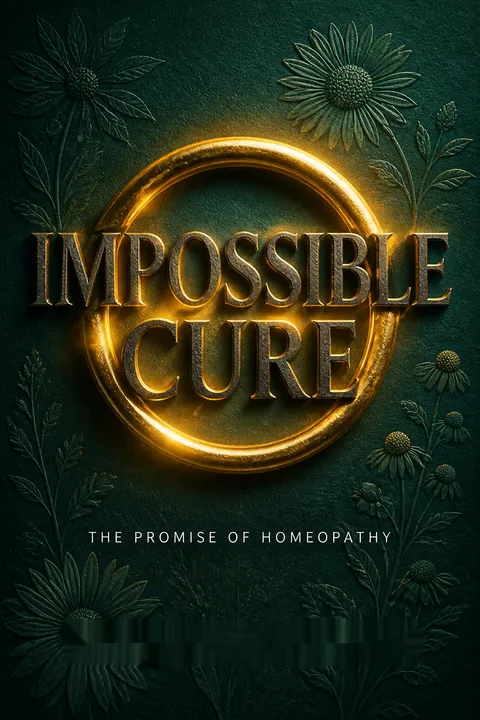
Impossible Cure is part memoir, part history, part primer, and part campaign for homeopathy. Its narrative engine is Lansky's account of her son Max: an intimate family crisis becomes the doorway to a complete alternative model of disease. That structure makes the book compelling, but also makes it difficult to separate observation from interpretation. The remedy, dietary changes, speech therapy, school changes, osteopathic care, and changes at home overlap. The account cannot show which caused which gains.
The book's strongest contribution is its description of homeopathy as a distinct intellectual system. It explains why practitioners attend to personal symptom patterns, why Hahnemann rejected the harsh medicine of his time, and how individualized case-taking differs from diagnosis by disease label. Its history also reveals that medicine is shaped by institutions, economics, law, and professional conflict, not only by data. Those are valuable lenses even for readers who reject homeopathy.
Its weakest move is treating contested clinical claims as if anecdotes, small trials, and proposed physics collectively settle them. A meta-analysis of heterogeneous studies does not prove every treatment works, and laboratory findings do not establish meaningful patient benefit. The book's proposed vital force and water-borne remedy signature are not accepted biological mechanisms. Most importantly, its speculation about vaccines and autism is contradicted by large bodies of research finding no causal link. Those claims require direct correction because parents may make consequential decisions based on them.
A fair reading can preserve the book's historical and philosophical interest while setting a firm clinical boundary. Personal stories can motivate investigation; they cannot establish efficacy. Homeopathy should not replace vaccination, developmental services, urgent care, or treatments supported by reliable evidence. In that light, the book is most useful as a vivid account of how a parent found hope and how a medical minority understands healing, not as a dependable guide to treating serious disease.
Review Summary
Impossible Cure receives mostly positive reviews, with readers praising its clear explanation of homeopathy, scientific approach, and personal anecdotes. Many find it informative and eye-opening, appreciating the author's logical arguments and comprehensive coverage of the topic. Some readers express mixed feelings about the book's stance on vaccines and religious references. Critics argue that the writing can be repetitive and occasionally veers into "woo woo" territory. Overall, the book is considered a valuable introduction to homeopathy for beginners and those seeking alternative treatments.
Glossary
Law of Similars
Like symptoms matchedHomeopathy's central rule, as described in the book: a substance that produces a pattern of symptoms in a healthy person is proposed as a treatment for a sick person with a similar pattern. Hahnemann developed this idea into a system of remedy selection. It is a homeopathic principle, not an established medical law.
drug proving
Testing effects on healthy peopleA homeopathic test in which a substance is given to healthy volunteers, called provers, and the resulting physical, emotional, or mental symptoms are recorded. Homeopaths use these records to describe a remedy and compare its symptom pattern with a patient's. The method differs from conventional clinical trials, which test treatment outcomes in people with a condition.
potentization
Serial dilution and shakingThe homeopathic preparation process of repeatedly diluting a substance and vigorously shaking each dilution, a step called succussion. Insoluble substances may first be ground with milk sugar. Practitioners claim that this process increases a remedy's effect even as the original material becomes extremely diluted. That proposed effect and its mechanisms are not established by mainstream science.
vital force
Proposed organizing life energyHahnemann's term for an immaterial, organizing principle that homeopathy proposes governs health and bodily function. In this model, disease is a disturbance of the vital force, and a suitably matched remedy helps restore its balance. The concept connects homeopathy with older vitalist philosophies, but it is not a recognized measurable entity in modern biology.
simillimum
Best-matching proposed remedyThe homeopathic term for the remedy judged to match a patient's distinctive symptom pattern most closely. Practitioners attempt to identify it by taking a detailed history, selecting characteristic symptoms, consulting a repertory, and comparing possible remedies in a materia medica. The term describes a goal within homeopathic practice, not a clinically validated method of selecting effective treatment.
Law of Cure
Proposed direction of recoveryA homeopathic observation, associated in the book with Constantine Hering, about the order in which symptoms may change during recovery. The proposed pattern moves from more central or serious symptoms toward less vital areas and may include the return of older symptoms. It is used by homeopaths to interpret treatment response, but it is not a validated medical rule.
repertory
Symptom-to-remedy indexA reference work that organizes symptoms into entries, called rubrics, and lists the homeopathic remedies associated with each one. Practitioners use a repertory to narrow possible remedy choices after interviewing a patient. A repertory records homeopathic symptom associations; its listings do not by themselves demonstrate that a remedy treats a disease.
genus epidemicus
Remedies for an epidemic patternA homeopathic term for a small set of remedies selected to match symptoms considered characteristic of a particular epidemic. Practitioners derive the set by comparing cases and may use it to guide treatment or proposed prevention during that outbreak. The term reflects a homeopathic approach to epidemics, not a substitute for public-health prevention or proven treatment.
Download PDF
Download EPUB
.epub digital book format is ideal for reading ebooks on phones, tablets, and e-readers.








