

Key Takeaways
Read the witch hunts as an early-modern war on female autonomy
A modern catastrophe. European witch persecutions gathered force after 1400, peaked in the sixteenth and seventeenth centuries, and continued into the eighteenth. Estimates cited by Chollet range from 50,000 to 100,000 deaths. In many trials, women made up about 80 percent of those accused and 85 percent of those condemned. The charge could attach to healers, widows, older women, or anyone who spoke too boldly. One supposed test offered no escape: a woman who drowned was innocent, while one who floated was condemned as a witch.
The accusation did political work. Chollet argues that the hunts were not simply medieval superstition or the work of the Church alone. Secular courts and respected scholars helped construct the threat, while popular texts spread it. The witch label made women’s independence appear dangerous.
The historical frame is powerful because it shifts attention from whether magic was real to who gained authority by defining it as a threat. That resembles a broader pattern in scapegoating: social distress gets personalized, and punishment is presented as protection. The numbers also matter because they resist the easy assumption that the hunts were a few isolated panics. Still, persecution varied by place and period, and not every accused person shared the same profile. The gendered pattern is clear without requiring every local trial to have had one simple motive.
Make independence materially possible, not merely admirable
Freedom needs infrastructure. Gloria Steinem’s unmarried life challenged the idea that a woman needs a husband or children to be whole. Her independence involved work, travel, friendships, and the freedom to shape her public identity. The title Ms., promoted by Steinem’s magazine, gave women a way to be addressed without announcing their marital status. Chollet also corrects a narrow story of feminist progress: Black women had long worked outside the white housewife ideal, while politicians blamed their family structures instead of confronting poverty and discrimination.
Pressure has a price tag. In the 1980s, welfare rhetoric caricatured recipients as fraudsters, and politicians urged women to find husbands. Chollet’s point is not that marriage is bad. It is that autonomy needs income, social support, and models of lives beyond the couple.
The emphasis on material conditions prevents independence from becoming another motivational slogan aimed at individuals with unequal resources. Social scientists often use the idea of relational autonomy to describe freedom that depends on money, care, and recognition, not just personal resolve. That fits the contrast here between Steinem’s public example and the vilification of women relying on welfare. The chapter’s strongest correction is its attention to race and class. Its broad argument still benefits from resisting a simple opposition between marriage and freedom: supportive partnerships can enable autonomy, while economic hardship can restrict it.
Treat motherhood as a choice, not the test of womanhood
Separate role from experience. Drawing on Adrienne Rich, Chollet distinguishes motherhood as a lived relationship from motherhood as an institution: the social system that treats women’s primary purpose as bearing and serving children. A French survey cited in the book found that only 4.3 percent of women and 6.3 percent of men said they did not want children, a small share that reflects how difficult the choice can be to voice. Yet women without children are not necessarily child-hating, and mothers do not all experience parenting as fulfillment.
Make room for mixed truths. Sociologist Orna Donath interviewed mothers who loved their children but regretted becoming mothers. Their accounts challenge the demand that every mother describe the role as joyful. Chollet argues for taking both the decision not to parent and the regret of parenting seriously, without treating either as a verdict on a woman’s character.
This argument is most useful when understood as expanding the range of socially speakable lives, not as ranking parenthood against childlessness. Reproductive justice adds an important lens: meaningful choice requires access to contraception and abortion, but also the economic and caregiving conditions that make wanted children possible. The book acknowledges that desire can be mixed and shaped by circumstance, which guards against treating every choice as perfectly free. Donath’s interviews are valuable for exposing a silenced experience, though qualitative testimony cannot establish how common regret is. Its importance lies in revealing that the experience exists.
Stop treating women's youth as the admission price for desire
A double standard ages women out. Chollet describes how women are taught to read youth as a measure of beauty, desirability, and social value, while men are allowed to age in public. In France, in 2012, the man was older in eight out of ten cohabiting couples. In Hollywood, a study cited in the book found women stars’ earnings peaked around age thirty-four, while men’s peaked around fifty-one. These patterns shape what audiences expect to see, not just whom individuals happen to find attractive.
Let age add, not erase. The book follows the decision of fashion writer Sophie Fontanel to stop dyeing her gray hair, an act that made visible a kind of beauty rarely shown in magazines. Chollet’s case is not that every woman must reject dye or cosmetic treatment. It is that age should not automatically cancel a woman’s individuality, sexuality, or authority.
The distinction between personal grooming and compulsory youthfulness is essential. A woman can choose cosmetic treatments without endorsing ageism, just as refusing them need not become a new moral test. The sharper issue is unequal permission: men’s visible aging can signify authority, while women’s often gets framed as decline. Media images help normalize that asymmetry, so expanding representations can change what viewers recognize as beautiful or desirable. The book’s account is persuasive as cultural criticism, though social expectations do not dictate every couple’s preferences. Structural patterns and individual relationships should not be mistaken for identical things.
Question the idea that rationality means mastering bodies and nature
A linked history of control. Chollet draws on ecofeminist historian Carolyn Merchant to connect the changing view of nature with the suppression of women. As early modern economies demanded more land, timber, and minerals, nature was increasingly treated as passive material to be controlled. Women, already associated with nature, were likewise cast as disorderly and in need of discipline. Francis Bacon’s influential scientific writing used the language of questioning and compelling nature to reveal its secrets, language that echoed the institutions used to interrogate accused witches.
Knowledge was contested. Female healers and midwives lost authority as male professional medicine grew. Chollet argues that this was not simply a triumph of better ideas: it also involved excluding competitors and discrediting forms of practical knowledge. The history matters now because it invites scrutiny of institutions that equate mastery with understanding.
The connection between gender hierarchy and extractive attitudes toward the natural world helps explain why ecological criticism can feel like a challenge to more than individual habits. It questions a model of knowledge built around control and prediction. Contemporary systems thinking, which emphasizes interdependence and feedback, gives this critique a useful companion. The caution is that science itself is not one unified project, and historical parallels do not prove that every modern scientific practice reproduces misogyny. Chollet’s argument is strongest as a genealogy of institutional ideals, not as a reason to dismiss evidence-based medicine or scientific inquiry.
Do not confuse confidence with intelligence, or prestige with truth
Labels can narrow ability. Chollet recounts a study in which schoolchildren were asked to reproduce the same complex geometric design. When the task was called geometry, girls performed worse than boys. When it was presented as drawing, the girls performed better. The task stayed the same; the expectations around it changed. Chollet connects this to her own experience of struggling with mathematics until a supportive teacher helped her succeed, and to the familiar experience of men confidently explaining women’s own work to them.
Ask who sets the standard. The book argues that fields treated as prestigious, such as mathematics and geopolitics, are often treated as the only serious forms of knowledge. Skills associated with women may then be ignored or downgraded. Chollet does not claim that women share one way of thinking. She asks readers to examine how institutions decide what counts as intelligence.
The classroom example illustrates a mechanism often discussed as stereotype threat: expectations can consume attention and undermine performance, especially when a task signals that one group is presumed less capable. The broader question about prestige also connects to epistemic injustice, where some people receive less credibility because of their social identity. That does not mean every neglected form of knowledge is reliable, or that technical standards are inherently biased. It means standards deserve examination, including who designed them and what they fail to measure. Confidence, like expertise, is evidence to assess, not proof by itself.
Demand care and consent alongside medical expertise
Expertise without listening can harm. Chollet contrasts the knowledge of women healers, who often combined treatment with close attention to patients, with a medical hierarchy that separated diagnosis from care. She recalls the resistance to Ignaz Semmelweis after he showed that doctors’ handwashing sharply reduced deaths from childbed fever. His finding challenged professional pride before it became accepted practice. The example illustrates how institutional authority can obstruct useful knowledge, even when the stakes are life and death.
Patients remain people. Chollet examines routine medical practices, especially in gynecology and childbirth, that can disregard women’s consent or pain. She also highlights the dismissal of women’s symptoms, including Serena Williams’s difficulty being taken seriously after giving birth. Her argument is not to reject medical help, but to insist that expertise should include explanation, attention, and respect for the patient’s account.
Shared decision-making offers a practical bridge between medical knowledge and patient agency: clinicians contribute training, while patients contribute bodily experience, priorities, and informed consent. This is not a contest between science and feeling. In fact, trust can make accurate information easier to exchange. The book’s historical examples expose how professional hierarchies can survive under the banner of neutrality. At the same time, criticisms of particular routines need careful medical evaluation; a patient-centered approach should not become a blanket suspicion of useful screening or intervention. The goal is accountable expertise, not its absence.
Use the witch as a counter-image, not a purchasable costume
A symbol can change the script. Chollet traces how feminists reclaimed the witch as an image of women who live beyond prescribed roles. In 1968, members of the New York group WITCH staged a protest at the Stock Exchange, turning the old accusation into a public symbol of defiance. Today, witches appear in feminist activism and popular culture, offering a picture of authority that does not depend on being a wife, mother, or ingénue.
Beware the market’s makeover. The same symbol now sells candles, crystals, beauty products, and a fashionable version of empowerment. Chollet sees a risk that consumer culture can detach the witch from her history of persecution and resistance. Images still matter: a woman seeing gray hair, age, or independence represented differently may imagine a different life. But symbols do their deepest work when they connect to changed conditions and collective action.
The witch functions as a counter-image: a figure that makes excluded forms of female power imaginable. This resembles the role of narrative in social movements, where changing who counts as a hero can reshape what actions seem possible. Commercial appropriation can blunt that force, but it can also spread symbols beyond activist circles. The important question is whether a purchasable aesthetic opens a path toward political understanding or substitutes for it. Spiritual practice should not be dismissed simply because it is personal, yet private rituals alone cannot dismantle the institutions the witch symbolizes resistance to.
Analysis
Chollet’s book is a feminist genealogy: it links the early modern witch hunts to present-day arguments about women’s independence, motherhood, age, knowledge, and medical authority. Its central move is not to claim that modern society literally repeats the trials, but to show how social rules can inherit their logic. The accusation changes; the policing of women who refuse expected roles persists. The witch becomes a useful figure because she gathers those refusals into one memorable image.
The book’s strongest contribution is its refusal to treat historical violence as safely remote. The hunts were not merely a burst of irrationality before modern reason. They occurred alongside the growth of state institutions, print culture, professional medicine, and new economic arrangements. That makes the story more unsettling, and more useful: progress can create new forms of order while silencing the people whose knowledge or independence threatens it. The book also makes a methodological point. Stories, images, and forms of address are not decorative details; they help determine whose experience is believed and what lives appear respectable.
The four main subjects reinforce one another. A woman without a husband, children, youthful appearance, or deference to authority is more likely to be treated as a problem. The histories of care work and female healing show that this is not just about representation. It affects money, professional access, bodily autonomy, and whose expertise is recognized.
The argument is interpretive rather than a single causal account. The witch trials differed across regions, the estimates of victims remain uncertain, and historical connection does not mean identical modern outcomes. Nor does the critique require rejecting marriage, motherhood, science, or medicine. Its more durable insight is that institutions should be judged by whether they preserve people’s agency and take their testimony seriously. The witch is not a blueprint for every woman. She is a reminder that the boundaries of a normal life were built, enforced, and can be revised.
Review Summary
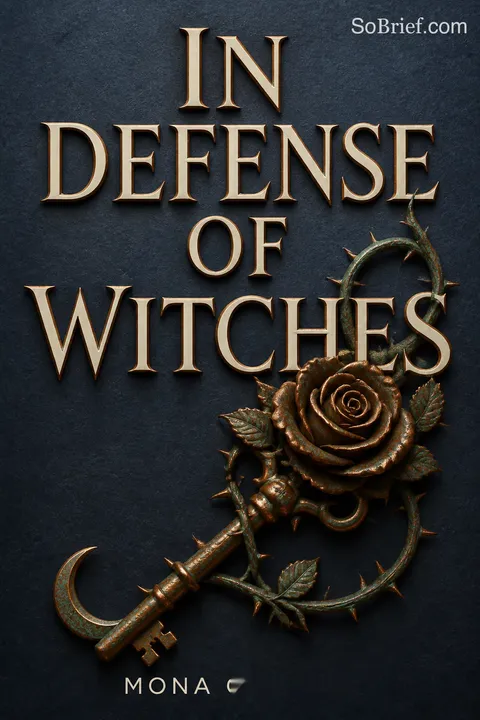
In Defense of Witches receives generally positive reviews for its feminist analysis, though some find it less focused on witchcraft history than expected. Readers appreciate Chollet's exploration of societal prejudices against independent women, particularly regarding motherhood, aging, and medical treatment. Many find it accessible and thought-provoking, praising its well-researched arguments and cultural references. Some criticize its narrow focus on white, cisgender experiences. While not a comprehensive history of witches, it's lauded for connecting historical witch hunts to modern misogyny, offering validation and empowerment to readers.
People Also Read
Glossary
Motherhood as institution
Social rules governing motherhoodA term used by Adrienne Rich and taken up by Chollet to distinguish the social system of motherhood from the lived experience of caring for children. The institution assigns women primary responsibility for reproduction and care, and presents this role as their natural or necessary fulfillment. It can be criticized without dismissing the relationships mothers have with their children.
backlash
Retaliation against feminist gainsA term popularized by Susan Faludi for the cultural and political reaction against advances in women’s rights. Chollet uses it to describe campaigns that claim equality has already been achieved while portraying independent women as lonely, unhappy, or threatening. The message disciplines women by making the pursuit of autonomy appear to lead inevitably to personal failure.
dissolving woman
Identity absorbed into others’ needsChollet uses this idea, associated with Colette Cosnier’s French phrase femme fondue, for the loss of a woman’s independent identity inside family or work roles. A woman may be expected to organize her life around a partner, children, or colleagues while her own ambitions and needs recede. The term highlights an unequal division of labor and recognition, not simply a woman’s personal choice to care.
erotics of ventriloquism
Desire projected onto a partnerChollet’s phrase for a relationship dynamic in which one partner’s desires and assumptions are projected onto the other, who is valued for admiration or compliance rather than recognized as an equal subject. In her discussion of age gaps, she suggests that some men may prefer younger partners partly because they are less likely to challenge their authority. The concept describes a power pattern, not every relationship with an age difference.
scopic drive
Pleasure in controlling observationA specialized psychoanalytic term associated with Sigmund Freud, referring to pleasure in looking at another person as an object and experiencing a sense of control through observation. Chollet invokes it through the fictional address of a doctor in Mare Kandre’s novel. It helps frame the medical gaze as potentially more than neutral inspection when the patient’s body is exposed and the patient lacks control.
FAQ
What's In Defense of Witches about?
- Historical Context: The book explores the historical witch hunts, focusing on the misogyny and violence that targeted women. It examines how these events have lasting societal implications.
- Modern Connections: Mona Chollet connects past witch hunts to contemporary gender issues, highlighting ongoing gender inequality and societal pressures on women.
- Symbolism of the Witch: The witch is portrayed as a symbol of female independence and empowerment, challenging patriarchal norms and inspiring modern feminist movements.
Why should I read In Defense of Witches?
- Timely Relevance: The book addresses current issues of gender inequality, making it relevant to today's feminist discourse and encouraging reflection on historical roots.
- Insightful Analysis: Chollet provides a thorough historical analysis, linking past misogyny to modern societal control over women, offering a deeper understanding of these dynamics.
- Empowerment Message: It inspires women to embrace their identities and resist societal pressures, serving as a call to action for reclaiming strength and autonomy.
What are the key takeaways of In Defense of Witches?
- Historical Continuity: The misogyny of witch hunts persists today in transformed ways, with societal attitudes toward women having deep historical roots.
- Witch as Archetype: The witch symbolizes female power and independence, challenging traditional gender roles and inspiring women to reclaim their agency.
- Critique of Capitalism: Chollet critiques the commodification of feminism, warning against the dilution of feminist ideals in a capitalist framework.
How does Mona Chollet connect witch hunts to modern gender issues?
- Historical Parallels: Chollet draws direct lines between the persecution of witches and societal control over women today, highlighting persistent misogynistic attitudes.
- Cultural Narratives: The book discusses how narratives around women have evolved but still reflect fear of female autonomy, manifesting in social ostracism and legal restrictions.
- Empowerment and Resistance: Understanding these patterns helps women reclaim power and challenge oppressive structures, encouraging resistance against modern "witch hunts."
What role does the witch archetype play in In Defense of Witches?
- Symbol of Power: The witch represents female power and independence, challenging patriarchal norms and inspiring women to assert autonomy.
- Cultural Misunderstanding: Chollet critiques the commodification of the witch figure, emphasizing the need to reconnect with its original symbolism of resistance.
- Inspiration for Feminism: The witch serves as an inspiration for feminists, encouraging them to challenge societal expectations and navigate paths to empowerment.
How does In Defense of Witches address the commodification of feminism?
- Critique of Capitalism: Chollet critiques how capitalism co-opts feminist ideals, turning them into marketable products and diluting the movement's core messages.
- Superficial Empowerment: The book discusses how modern portrayals of witches emphasize superficial empowerment, undermining the historical significance of resistance.
- Call for Authenticity: Chollet calls for a return to authentic feminist principles, prioritizing women's liberation over consumerism and encouraging meaningful engagement.
How does Mona Chollet view the relationship between women and power in In Defense of Witches?
- Power Dynamics: Chollet explores how societal structures suppress female autonomy, viewing women as threats to patriarchal power.
- Reclaiming Power: The book advocates for women to reclaim power by embracing identities and resisting societal pressures, recognizing strength and potential for change.
- Collective Action: Chollet highlights the importance of solidarity among women, arguing that collective action can challenge oppressive systems and create equity.
What specific methods does Mona Chollet suggest for reclaiming women's power?
- Embracing Aging: Chollet encourages women to embrace their age, rejecting societal pressures to conform to youthful ideals and viewing aging as a source of wisdom.
- Challenging Norms: The book advocates for actively challenging stereotypes and expectations, emphasizing the importance of speaking out against ageism and misogyny.
- Building Solidarity: Chollet highlights the need for women to support each other, fostering community and shared experience to reclaim power collectively.
How does In Defense of Witches address the issue of ageism?
- Ageism as Norm: Chollet discusses how ageism is ingrained in societal attitudes, critiquing double standards that allow men to age without scrutiny.
- Impact on Identity: The book explores how ageism affects women's self-perception, leading to feelings of inadequacy and invisibility, and argues for challenging these perceptions.
- Reframing Aging: Chollet advocates for viewing aging as growth and empowerment, emphasizing the value of women's experiences and contributions at all ages.
How does media play a role in shaping perceptions of women according to In Defense of Witches?
- Media Representation: Chollet critiques media for perpetuating stereotypes about women, particularly regarding aging and beauty, and highlights the lack of diverse representations.
- Influence on Norms: The book discusses how media shapes societal expectations, influencing how women view themselves and each other, reinforcing harmful stereotypes.
- Call for Change: Chollet calls for a shift in media narratives to include authentic portrayals of women, believing this can help combat ageism and misogyny.
How does Mona Chollet define the concept of "witch" in In Defense of Witches?
- Witch as Symbol: Chollet defines the witch as a symbol of female power and autonomy, often demonized by patriarchal societies for defying norms.
- Reclaiming the Archetype: The book encourages women to reclaim the witch archetype as a source of strength, helping challenge societal expectations.
- Connection to Feminism: Chollet connects the witch to modern feminism, arguing that women can draw inspiration from this historical figure to recognize and celebrate power.
What historical examples does Mona Chollet provide to illustrate her points in In Defense of Witches?
- Witch Hunts in Europe: Chollet details the historical context of witch hunts, highlighting the persecution of women and societal implications.
- Cultural Representations: The book examines portrayals of witches in literature and media, reflecting societal fears and misogyny, using cultural texts to illustrate points.
- Contemporary Parallels: Chollet draws parallels between historical witch hunts and modern gender inequality, arguing that understanding history is crucial for addressing challenges.
Download PDF
Download EPUB
.epub digital book format is ideal for reading ebooks on phones, tablets, and e-readers.








