

Plot Summary
A Cardboard Funeral
At Tode Hall, the enormous family mausoleum waits for its latest Sir Ecgbert while the late baronet's widow, Emma, endures a funeral organized by three children who scarcely like one another. Their eldest, Sir Ecgbert the Twelfth, insists on driving the estate tractor that pulls his father's cardboard coffin across the park. On a slope, the trailer tips and the coffin breaks open.
Ecgbert's brother Esmé pushes their father's exposed arm back inside, then the brothers hide the wreckage before the mourners arrive. The ceremony proceeds beneath the mausoleum dome, followed by a wake where guests praise the service and leave. Emma has spent decades maintaining the house and is ready to hand it on. Her children, however, seem unfit to inherit.
The funeral makes inheritance look less like a dignified transfer than a practical burden the family cannot handle. The coffin's collapse is comic, but the sons' frantic effort to conceal it exposes a deeper habit: they repair appearances rather than address what has gone wrong. Emma's composure contrasts with their disorder, yet it is not simple serenity. She has kept the estate functioning while her children remained emotionally and practically dependent on her. The old mausoleum, with its decaying stone and rigid family traditions, embodies a legacy that demands care while offering little comfort.
The Heir in Wandsworth
At dinner, Emma tells her children she will leave Tode Hall for the Gardener's House and spend more time in Capri. Ecgbert claims he can take charge, Nicola offers despite despising the family's wealth, and Esmé panics at the prospect of abandoning his life in Australia.
Emma sees none of them as a workable successor. A week later, with her children scattered and the inheritance argument already buried beneath family silence, she contacts Egbert Tode, the son of her husband's estranged younger brother.
Egbert works as a London estate agent and has never met his cousins. His wife, India, quickly grasps why Emma has called and welcomes the possibility of running the great house. Emma invites the couple to consider the move, believing their youth and enthusiasm may keep the estate in the family.
Emma's decision exposes the difference between inheriting a title and being able to shoulder its daily demands. Her children treat succession as a contest over entitlement, while Egbert and India see a chance to build a new life. Yet Emma's smooth manner also conceals how little she consults those whose home and future she is rearranging. Her instinct is to solve a structural problem by selecting people, not by repairing relationships. India's immediate enthusiasm makes her an appealing candidate, but it also suggests how readily she converts a complicated duty into an exciting personal adventure.
The Crypt Has a Body
In London, Violet Dean urges her granddaughter Alice Liddell to apply for Tode Hall's vacant household manager job. Alice's cookery classes are failing, her adult triplets fill her leaking Clapham home with mess, and the Hall holds the happiest memories of her childhood.
Violet worked there for decades and persuades Alice that her experience counts. They travel north for an interview with Egbert and India, who hope Alice's ties to the house will help her fit in. During a tour, Alice, Violet, and Egbert approach the mausoleum and notice a foul smell.
Later, staff find Emma's body inside, her head bloodied beside a candlestick. Egbert assumes she fell, but Alice notices the key looks unusually clean. He calls the police, and amid the shock, offers Alice the job.
Alice's return begins as a practical escape from a stalled life, but the estate immediately joins her private history to a public crisis. Her childhood memories make Tode Hall feel familiar, while the body in the mausoleum turns that familiarity unsettling. Alice's attention to the clean key marks her as observant without making her eager for danger. Egbert, by contrast, reaches for an accident explanation and orderly procedure. The contrast matters: the newcomers need the household to remain stable, so the possibility of murder threatens not only their safety but also the future they have just chosen.
Violet's Last Homecoming
On the train back to London, Violet rejects the official story and argues that Emma was murdered. She remembers Emma's many affairs and suggests that the people around Tode Hall had ample reasons for resentment, including Emma's estranged son.
Alice resists her suspicions, then snaps when Violet presses too hard. That night, fearing she may lose her grandmother before they make peace, Alice returns to Violet's flat and apologizes. Violet accepts the apology and tells Alice that the estate may finally feel like home.
She closes her eyes and dies before morning. Alice buries her, says goodbye to her triplets, and returns north with a small suitcase. The move is no longer an adventure encouraged by Violet. Alice must build a life at Tode Hall without the person who insisted she go.
Violet's death strips Alice of the relationship that has organized her life, even as it confirms the necessity of beginning again. Her insistence on murder is not just a clue; it is an expression of her long familiarity with the estate's people and habits. Alice's anger at being pushed reflects a lifelong defense against emotional demands, but her return to apologize shows that detachment is not indifference. The missed words with her mother haunt her, and she refuses to repeat that ending with Violet. Grief turns the job from a convenient escape into an act of independent commitment.
The Sugar Bowl Guest
On her first night in the Gardener's House, Alice wakes to footsteps and catches a tall figure fleeing through the back door. He leaves a worn man's shoe, and his flight smashes a laptop on the hall floor. In the kitchen, Alice finds an elegant woman sitting with a cup of tea.
The visitor identifies herself as Geraldine Tode, the former Lady Tode and grandmother of the eccentric Sir Ecgbert. She explains that the fleeing intruder was her grandson, who sometimes sees her, though others dismiss his perceptions.
Geraldine insists Emma did not simply fall in the mausoleum and presses Alice to discover who killed her. Alice is unconvinced, but the apparition vanishes into the tarnished silver sugar dispenser, leaving cold tea and a mystery in her new kitchen.
The ghost arrives not as a source of wisdom but as a demanding, class-conscious presence who treats Alice as both employee and investigator. Her certainty about murder challenges Alice's preference for avoiding burdens, while the sugar dispenser makes the supernatural oddly domestic. The scene also gives the house two kinds of hidden history: the aristocratic family past Geraldine claims to know, and the physical signs of someone entering Alice's supposedly private home. The shoe and broken laptop make the haunting difficult to dismiss as a dream. Alice has inherited a household where boundaries, like locks, may not hold.
The Door That Wouldn't Shut
As Alice settles into the Hall, she sees India struggle to win over staff who remain loyal to Emma. On a blustery walk, Alice finds the mausoleum door standing open and cannot make it close. The discovery recalls the clean key beside Emma's body and Carfizzi's insistence that the crypt had not been locked.
Carfizzi appears behind Alice wearing a leather apron and carrying a hammer. He says he is preparing a burial shelf for Emma and urges Alice to leave.
Later, Geraldine tells Alice that Dominic Rathbone, the Hall's archivist and former television actor, had a long affair with Emma. Alice also notices Dominic acting strangely around a shopping bag. The old household's secrets are no longer confined to the crypt; they shape every new alliance.
The open door turns an earlier oddity into a concrete contradiction. Alice does not yet have proof of a crime, but she has learned that the estate's explanations deserve scrutiny. Carfizzi's presence with a hammer can be read as ordinary maintenance or intimidation, and that ambiguity keeps the danger close without resolving it. Meanwhile, the revelation of Emma and Dominic's relationship complicates the household's public respectability. In this place, affection, employment, and access to property overlap so thoroughly that private loyalties can become practical power.
A House Party Turns Dark
India plans a media-filled house party to attract film and television work, then announces a murder-mystery tour to make the guests imagine Tode Hall as a dramatic setting. The guest list includes Hamish Tomlinson, an artist who once had a brief affair with India and has also known Dominic for years.
During a walk, Hamish and India joke about foxgloves and poisoning; she takes leaves back to the Hall. Carfizzi later tells her that Dominic and Emma were lovers for decades, provoking India's jealousy.
At dinner she humiliates Dominic by turning his planned performance into an improvised tour. When Hamish whispers something to him, Dominic punches him and abandons the event. India later goes to Hamish's room, but recoils from the encounter and returns to her own life.
India's party is an attempt to convert social glamour into economic security, but the guests expose how little control she has over the meanings attached to the house. She wants Dominic as a useful celebrity, Hamish as a flattering conquest, and the staff as an audience for her ideas. Instead, past relationships intrude on the performance. The foxglove joke foreshadows genuine danger while also reflecting India's impulsive way of treating other people's discomfort as entertainment. Dominic's violence punctures his polished public persona, revealing that the estate's theatricality cannot keep private resentments safely staged.
The Key in the Cream
The morning after the party, Alice sees Ecgbert at breakfast for the first time since their childhood. Their reunion is awkward and charged, while Hamish taunts Ecgbert about Emma's death. India visits the sick Carfizzi with chocolates, and he accuses her of poisoning him.
She treats the attack as a joke, but he is visibly ill. Meanwhile, Oliver Mellors gives India a letter Dominic left behind. Alice reads it: Dominic claims India knew Emma was dead before the news arrived and killed her after learning Emma might reverse the handover of Tode Hall.
He also warns that India poisoned Carfizzi. Hidden in a costly jar of face cream is the mausoleum key. Geraldine urges Alice to suppress the evidence, but Alice keeps the letter and key rather than destroy them.
The evidence arrives already contaminated by competing motives. Dominic's letter offers a coherent accusation, but its author has a history with Emma and has fled the scene; the key looks incriminating, yet its placement in luxury cream is suspiciously theatrical. Alice's decision not to destroy it is a modest but important break with her usual evasion. India, meanwhile, treats her attack on Carfizzi as mischief, revealing how charm can blur the distinction between play and harm. The mystery now turns on whether Alice can separate a true clue from a story designed to direct blame.
Ecgbert's Hidden Archive
Ecgbert returns to Tode Hall and accuses several people of killing Emma, including Alice, before his childhood recognition softens into familiarity. He tells India he has emails from his mother's computer that may explain the death, but India takes his memory stick and dismisses him.
Ecgbert has backups. He visits Alice at the Gardener's House and explains that he accompanied Emma to the mausoleum on the day she died. After he left her there, the door was open and the key remained in the lock.
His account supplies an opportunity for anyone who came by afterward. Ecgbert has printed the messages and intends to reveal what they show. Before he can gather everyone, the Hall's linked burglar alarm erupts, sending him, Alice, and Geraldine rushing toward the house.
Ecgbert's return joins two forms of recognition: Alice sees the boy she once knew beneath his volatility, while he begins to treat her as someone he can trust. His memories offer a crucial timeline, but his vulnerability to dismissal remains part of the problem. India confiscates his storage device because she wants control of a crisis she cannot manage, not because she has established what it contains. Ecgbert's backups turn his obsessive habits into competence. The alarm interrupts his attempt to reclaim authority, pushing the private family mystery into a public emergency.
The Great Hall Falls
Hamish bolts through the Hall carrying a small bronze shield, and Oliver Mellors tackles him in the Great Hall as the alarm pulses around them. Above, India and Dominic struggle near the gallery rail. Dominic tries to throw her over, but loses his balance and both fall.
India lands on top of him and survives; Dominic is killed. The paper India had carried flutters into the Christmas tree. Ecgbert and Egbert reach the bloodied floor, while Alice shields the children and moves the guests away.
At the hospital, Ecgbert uses the messages and the fallen document to reconstruct Emma's murder: she planned to remove Dominic from her will, and he killed her before she could sign the change. His motive was the £250,000 promised by the original will.
The climax collapses the estate's separate performances into physical consequence. Hamish's theft triggers the alarm, but the decisive violence unfolds above the family and guests, where Dominic's attempt to control India becomes a fatal fall. The unsigned document matters because it represents a change Emma intended but had not completed; law and intention diverge at precisely the point where Dominic's motive becomes legible. Ecgbert's archival diligence finally earns him authority, though the revelation arrives amid grief rather than triumph. Alice's instinct to protect the children gives the chaos a human center.
An Accident on Paper
In the hospital, Carfizzi admits that he planted the mausoleum key in the cream to frame India, and India acknowledges poisoning him with the chocolates. They apologize, with Carfizzi grieving the man he loved.
Ecgbert explains that Dominic killed Emma to stop her signing an addendum that would remove his inheritance. The paper recovered from the tree confirms the planned change, while the emails reveal the quarrel behind it. Rather than take the evidence to police, the family agrees to keep the matter within Tode Hall.
Hamish is taken away after the theft, and the inquest later records Emma's death as accidental. Alice remains at the estate, newly connected to Ecgbert and to a place that once belonged to her childhood. The family has its answer, but chooses not to seek justice.
The resolution refuses the clean moral satisfaction of a solved mystery. The central facts become clear, but the people with the strongest evidence protect the estate and its surviving relationships instead of pursuing public accountability. Carfizzi's false evidence and India's real poisoning show that affection and hostility have both been expressed through reckless acts. The official accidental verdict is not the truth; it is the family's chosen shelter from scandal and legal scrutiny. Alice's decision to stay gives her a future at the Hall, yet that belonging is built alongside a deliberate silence.
Epilogue
After the inquest, India emails Emma's surviving children, Nicola and Esmé, with an invitation to return to Tode Hall and help arrange their mother's funeral. She reassures them that the coroner found no malicious cause, celebrates the estate's plans with Alice, and urges the siblings to come home.
Her buoyant message tries to make the family whole again through logistics, hospitality, and a fresh start. The funeral that opened the story was chaotic and unloved; Emma's still awaits a proper farewell.
The closing email returns the novel to the practical rituals that aristocratic families use to contain disorder. India treats the inquest's verdict as permission to move forward, though the reader knows that the official account is incomplete. Her invitation to Nicola and Esmé attempts to repair family estrangement through the shared work of a funeral, not through confession or accountability. The ending therefore leaves two kinds of closure in tension: Emma's children may finally gather to bury her, while the truth of how she died remains privately known and publicly denied.
Analysis
The novel treats the country house not as a stable inheritance but as an operating system maintained by people who rarely agree on what it is for. Tode Hall earns money through tourists, farming, shops, and its fictional fame, yet its old family structure depends on unpaid emotional labor from Emma and practical labor from staff who resent the new owners. The comic details, from the unstable coffin to the badly managed murder-mystery weekend, expose how the family uses ceremony to disguise incompetence and conflict.
Alice's position is deliberately marginal. She has spent much of her life caring for children and surviving loss, and her apparent laziness protects her from demands that once overwhelmed her. At the Hall, observation becomes a form of agency: she notices the key, the door, the evasions, and the emotional patterns people around her ignore. Her return is not a conventional transformation into a fearless detective. Rather, she learns that refusing responsibility is also a choice with consequences.
The mystery's solution is inseparable from inheritance. Dominic's violence grows out of a threatened financial gift, while Emma's unfinished will reveals the limits of legal intention. The unsigned paper can explain motive but cannot, by itself, correct the past. The family's decision to accept an accidental verdict makes the ending morally unsettled: they preserve the estate and protect one another by withholding what they know. Tode Hall survives, but survival is not the same as justice. The final invitation to Emma's estranged children offers a gentler ritual of repair, though it cannot undo the family's chosen silence.
Review Summary
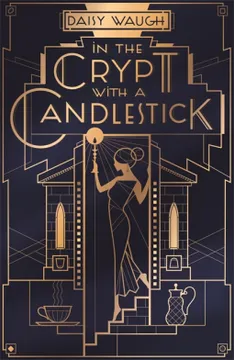
In the Crypt with a Candlestick received mixed reviews, with an average rating of 2.83 out of 5. Some readers found it funny and entertaining, praising its witty dialogue and eccentric characters. However, many were disappointed, expecting an Agatha Christie-style mystery but finding a modern, comedic story with underdeveloped characters and plot. Critics noted the misleading cover and blurb, lack of genuine mystery elements, and inconsistent writing style. While some enjoyed the book's silliness, others found it irritating and poorly executed, failing to live up to comparisons with classic authors like Wodehouse.
Characters
Alice Liddell
The reluctant estate sleuthAlice is a fifty-one-year-old former cookery teacher and mother of triplets whose London life has become cramped, untidy, and emotionally stagnant. She is easygoing to the point of seeming detached, a quality shaped by childhood bereavement and years of managing other people's needs. Her grandmother's memories draw her back to Tode Hall, where she once spent holidays and formed an intense childhood bond with Ecgbert. Alice notices inconsistencies others dismiss, but resists being cast as a detective or rescuer. Her appeal lies in the contrast between her low expectations and her capacity for careful attention. She wants room to live on her own terms, even when the house's secrets begin demanding more of her.
Emma Tode
The polished estate matriarchEmma has managed Tode Hall for decades beside a much older husband whose presence in the estate's affairs was largely ceremonial. Elegant, composed, and socially exact, she has preserved the family's home while quietly longing for a life beyond its obligations. Her politeness can conceal distance, and she is more comfortable arranging people and institutions than exposing her own needs. To her children, she is an authority who has rarely offered uncomplicated warmth; to the staff, she is the center of an old household order. Emma's wish to relinquish control creates the opening through which a new generation enters the Hall, but her private intentions are not as transparent as her public manners suggest.
India Tode
The exuberant new mistressIndia is Egbert's beautiful, impulsive wife, accustomed to trusting instinct and turning ideas into immediate plans. She sees Tode Hall as both a thrilling new home and a platform for ambitious reinvention, from media events to ways of making the estate more profitable. Her warmth is genuine, but it can become self-absorption: she expects people to respond to her charm and struggles when they do not. She wants affection, stimulation, and a sense that her life is exceptional. Beneath her buoyancy is a sensitivity to rejection that shapes her conflicts with the staff and with Emma. Her relationship with Alice offers an unusually direct friendship, one less dependent on status or performance.
Egbert Tode
The dutiful new custodianEgbert, without a c, is the younger cousin selected to run Tode Hall after a career in London estate agency. He is a conscientious husband and father who approaches the estate as an enormous practical responsibility, full of staff, visitors, contracts, and maintenance problems. His decency often makes him cautious; he seeks to keep people calm and avoid unnecessary conflict, even when his own feelings are strong. He loves India and wants her to thrive, while privately wondering whether the life they have chosen is sustainable. His role is to translate aristocratic inheritance into modern management, a task that tests the limits of good manners and reasonable planning.
Sir Ecgbert Tode
The volatile eldest sonKnown as Mad Ecgbert, Sir Ecgbert is the late baronet's eldest son and the Twelfth Baronet. Tall, eccentric, and emotionally unguarded, he lives in a care home among other well-born people considered difficult to manage. He feels keenly that his mother has never loved him as he needs, and family status is tangled with his desire to be acknowledged. His temper and unconventional manner make others underestimate him, while his loyalty to Tode Hall and his obsessive habits reveal persistence beneath the volatility. His childhood friendship with Alice remains a point of unusual intimacy in a life where he is often treated as a problem to be contained.
Geraldine Tode
The imperious elderGeraldine is an earlier Lady Tode, Sir Ecgbert's mother and the family matriarch of a previous generation. She is sharply intelligent, proud of her beauty and lineage, and impatient with people she considers slow or vulgar. Her class consciousness is matched by a more private capacity for attachment, though she rarely expresses tenderness without disguising it as criticism. Geraldine understands the customs and buried loyalties of the Hall better than its current residents, and she enjoys directing others even when she lacks practical control. Her presence connects the estate's present conflicts to its inherited habits, especially the belief that family business should remain inside the family.
Violet Dean
Alice's forceful grandmotherViolet spent much of her working life at Tode Hall, rising from maid to housekeeper, and retains vivid memories of its people and routines. She is blunt, argumentative, and difficult to charm, but her sharpness grows from a strong sense of what people owe one another. After her daughter dies, Violet builds her life around caring for Alice and urging her toward opportunities she would otherwise avoid. She recognizes the Hall as both refuge and workplace, and her confidence in Alice is more practical than sentimental: she believes that a person who has survived disorder can learn to manage responsibility. Her memories help bridge the estate's past with Alice's uncertain future.
Dominic Rathbone
The fading television starDominic is Tode Hall's archivist, a former actor best remembered for playing Tintin in the television adaptation of a novel associated with the estate. His fame has faded, but he still values an audience and knows how to use charm, theatrical timing, and cultivated expertise. He presents himself as a guardian of the Hall's history, while also depending on the estate for work and a place to live. His relationships with the people around him are colored by vanity and old attachments. Dominic's discomfort with being overlooked makes him both a natural performer and a man whose private motives can be difficult to read.
Mr Carfizzi
The house's watchful caretakerCarfizzi is the longtime caretaker and self-appointed butler of Tode Hall, devoted to its routines and to the people he believes deserve loyalty. He manages keys, ceremonies, and household crises with a mixture of competence and possessiveness. His Italian warmth can turn abruptly into reserve, especially when India challenges traditions he regards as essential. He is closely bound to his wife and to the estate, yet his strongest private attachments are harder for others to understand. Carfizzi's knowledge makes him indispensable, but his desire to control information leaves those around him unsure whether he is protecting the household or himself.
Mrs Carfizzi
The guarded household cookMrs Carfizzi cooks for the Hall's residents and has lived for years in the basement flat with her husband. Her English is limited, and she often communicates through brief remarks, gestures, or refusal to explain herself. She is a talented cook whose food and private domestic life remain largely separate from the family's formal household. Her long service has not erased her independence; she chooses whom to accommodate and when to withdraw. Though others treat her as part of the furniture, her decisions and observations matter to the people who depend on her work.
Oliver Mellors
The handsome gamekeeperOliver is Tode Hall's gamekeeper, the son of a former estate employee, and one of the few people who moves easily between the formal house and its working land. His competence and good looks attract attention, though he tends to keep his own counsel. He is accustomed to being given practical tasks and to carrying messages others overlook. The estate's social world often treats him as an attractive fixture, but his connection to its history is deeper than his job title suggests. He represents the labor and land management on which the grand house quietly depends.
Hamish Tomlinson
The poisonous society painterHamish is a successful painter of society pets, an old acquaintance of India, and a man who moves comfortably among wealthy and influential people. He is clever, cold, and alert to status, using wit as a tool for both seduction and insult. His manners are often less generous than his social position suggests, and he treats attention as something he is entitled to command. Hamish's history with India gives him leverage in the household, while his rivalry with Dominic adds another layer of unease to the Hall's already crowded web of old relationships.
Nicola Tode
The socialist artistNicola is one of Emma's adult children, a committed socialist who feels ashamed of the family wealth and the house in which she grew up. She lives away from Tode Hall and supports herself through community work and artistic projects, though her family doubts her qualifications to manage the estate. Her politics are both conviction and a way of keeping distance from an inheritance she distrusts. Nicola is sharp-tongued, defensive, and more perceptive about class than her siblings, but her hostility makes it hard for others to see what she might contribute.
Esmé Tode
The reluctant Australian sonEsmé is Emma's youngest child, living in Australia with his wife and children and running a successful business. He has built a life far from the emotional pressures of Tode Hall, and the prospect of returning feels to him like losing everything he has made. He is often more practical than his siblings, but his panic reveals how deeply the family home still exerts a claim on him. Esmé loves his own family and fears that inherited duty could separate him from them.
Jacko, Drez, and Morman
Alice's grown tripletsAlice's twenty-year-old sons are affectionate and broadly tolerant, but still live at home and leave much of the daily disorder to their mother. Their messy habits help explain why Alice's cooking business has stalled and why she longs for a different life. Though they love her, they are at the age when they need her less, leaving Alice to confront how much of her identity has been organized around caring for them.
Plot Devices
The Tode Mausoleum
A sealed family secretThe vast, decaying mausoleum is the Tode family's traditional burial place and a physical emblem of the inheritance they struggle to preserve. Its difficult path, locked gates, missing keys, and dark crypt make it both a tourist attraction and a place where events can go unseen. Emma's body is found inside, and later discoveries about the door and key challenge the assumption that she simply fell. The mausoleum turns the family's obsession with legacy into a practical mystery about access, opportunity, and who controls the evidence. This device contains a central plot revelation.
The Silver Sugar Dispenser
A ghost's strange doorwayAlice finds a tarnished silver sugar dispenser among Emma's belongings and polishes it while settling into the Gardener's House. The object becomes a means for Geraldine Tode to appear and disappear, making the supernatural part of Alice's daily domestic life. Its small scale contrasts with the grandeur of the Hall and allows the past to enter the kitchen without ceremony. Geraldine uses the connection to press Alice about Emma's death, while Alice's curiosity and growing attachment keep the ghost from remaining a mere nuisance. The dispenser turns an overlooked household object into a link between generations.
The Cream Jar Key
A clue with a false trailA costly jar of face cream arrives with Dominic's letter accusing India of Emma's murder. Hidden inside is the key associated with the mausoleum, making the accusation seem materially supported. Alice notices that the key's placement and cleanliness do not sit comfortably with the bloodied crime scene. The object eventually proves less straightforward than it first appears, since the key has been planted as part of an attempt to direct suspicion. It gives the mystery a tangible clue while demonstrating how evidence can be manipulated to serve personal loyalties. This device contains a plot revelation.
Emma's Will Addendum
A motive left unsignedEmma's plan to change her will becomes central because the document was not signed before her death. An unsigned addendum, together with messages between Emma and Dominic, reveals the conflict over his expected inheritance and her intention to remove him from it. The paper is physically present during the final confrontation, while Ecgbert's stored emails supply the history that makes its importance clear. Because the change was unfinished, the original bequest remained in force, giving the plot a precise financial motive and a reason the truth can be both reconstructed and concealed. This device contains the solution to the central mystery.
Prance to the Music
The Hall's public maskThe famous novel and its television adaptation have made Tode Hall a destination for visitors who know the fictional family better than the real one. The association brings tourist income, themed events, souvenirs, and the possibility of future screen productions. It also irritates the late baronet, who resents being remembered through a story he never valued. India tries to turn the house's fictional glamour into renewed media attention, while Alice and the staff experience the daily consequences of public access. The book's invented world functions as both an economic asset and a performance that obscures the less polished lives inside the Hall.
Download PDF
Download EPUB
.epub digital book format is ideal for reading ebooks on phones, tablets, and e-readers.








