

Key Takeaways
Make God's pleasure the compass for every part of ordinary life
A life aimed beyond itself. Murad presents self-development as more than improving habits or feeling better. Its purpose is to seek God's pleasure and Paradise by purifying and strengthening the whole person: thoughts, character, conduct, and relationships. The Quranic term tazkiya means this combined work of removing what is harmful and nurturing what is good. The destination matters because it gives daily choices a direction: worldly success is temporary, while the believer's ultimate hope lies in the life to come.
No spiritual compartments. Work, family care, honesty, keeping promises, and serving others can all belong to this path when done in obedience to God. Devotion is not a separate corner of life. It is the orientation that gives the rest of life its meaning.
What's distinctive is the book's refusal to separate inner growth from ordinary responsibilities. This resembles values-based approaches in psychology, where long-term commitments help people choose actions that are difficult but meaningful. The religious framework gives those commitments a final horizon beyond personal satisfaction. That can make sacrifice intelligible, though the goal is not empirically testable in the way a clinical outcome is. Readers can still see the practical consequence: a purpose is most credible when it changes how someone works, spends, and treats people.
Treat faith as lifelong practice, not a status you have achieved
Change comes by stages. Murad warns against expecting instant transformation. In his account, the Prophet taught new Muslims according to what they could bear, and the Quran itself was revealed over 23 years. The point is not to excuse inaction, but to make steady effort sustainable. Irada means a firm, sustained resolve, not a passing wish. A person remains responsible for choosing and acting, even when progress is incomplete; no teacher or community can do that inner work on someone else's behalf.
Effort, not perfection. Prayer and reliance on God accompany genuine effort rather than replace it. The book also rejects self-sufficiency: confidence comes from trusting God while using the abilities and time one has been given. Regular small deeds, balanced with family and bodily needs, are more durable than an all-at-once burst that ends in frustration.
The emphasis on gradual formation fits what is known about learning: complex behaviors tend to stabilize through repetition, feedback, and manageable difficulty rather than dramatic vows. Murad adds a moral dimension, insisting that patience does not erase personal responsibility. The tension is productive: a person must act without imagining that every result is under personal control. This combination can prevent both passivity and perfectionism, although it depends on distinguishing realistic pacing from repeatedly postponing a difficult duty.
Let remembrance reach from your tongue into your decisions
Remembering is a way of living. Dhikr means remembrance of God. It includes spoken praise and supplication, but Murad argues that it also includes thoughts, speech, and actions shaped by what God asks. This makes remembrance possible during work and family life, not only during formal worship. The chapter offers four recurring reflections: God knows and sees you; your gifts come from God; events remain within God's power; and life ends in a return to God.
Awareness changes conduct. These reminders are meant to shape choices, not merely produce religious phrases. Gratitude can interrupt entitlement, awareness of being observed can restrain dishonesty, and remembering death can put a difficult decision in perspective. The book calls the heart the center of motives and character, so keeping it alive through remembrance is the beginning of personal reform.
This account treats attention as an ethical capacity. In cognitive science, what people repeatedly bring to mind can influence what they notice and how they respond, though the book frames that process through devotion rather than mental technique. Its most useful distinction is between saying religious words and allowing a belief to govern behavior. A possible limitation is that constant self-monitoring can become anxious if detached from compassion. Murad's emphasis on gratitude and divine mercy helps make awareness less like surveillance and more like relationship.
Make prayer and scripture reshape the person who leaves them
Ritual should have consequences. Murad treats Salat, the prescribed Muslim prayer, as a central form of remembrance, not a box to tick. He recommends planning the day around the five daily prayers, arriving punctually, preparing physically, and learning the meaning of the words recited. During prayer, attention can be supported by lowering the gaze, varying passages, and reflecting on what the words mean. The measure of prayer is not only whether it was performed, but whether it helps restrain harmful conduct.
Read to understand and act. The Quran should be a regular companion, approached as guidance for the present, not only as a text from the past. The book praises steady reading, comprehension, memorization, and putting teachings into practice. It also recommends Tahajjud, voluntary prayer during the night, as a quiet opportunity for reflection, while insisting that worship must remain balanced with other duties.
The chapter's practical advice recognizes that attention is partly designed: environment, preparation, and comprehension affect whether a ritual becomes an occasion for reflection. This connects with research on implementation intentions, where specifying when and how to act can reduce reliance on vague motivation. The stronger claim is ethical: prayer should influence behavior beyond the prayer itself. That is a demanding standard, and it should not be used to shame people whose concentration fluctuates. The book's counsel is to keep practicing while trying to deepen the practice.
Turn gratitude into trust, sincerity, and attentive worship
Gratitude begins the relationship. Murad says that holding firmly to God begins by recognizing that life, abilities, health, and provision are gifts. Gratitude then leads toward worship directed to God alone, rather than divided among status, money, or approval. Sincerity matters more than the outward label of an act: earning a living can be worship when done for a worthy purpose, while a religious act done to impress others loses that sincerity.
Stay attentive to the One addressed. Ihsan is worship with awareness that God sees the worshipper. The book also uses hanif for a person whose devotion is sincere and undivided. Abraham serves as its example: he accepted demanding tests with trust in God. Together, gratitude, sincerity, and trust turn worship from a routine into a relationship that guides ordinary choices.
The argument links gratitude to responsibility rather than mere positive feeling. In moral psychology, gratitude can strengthen social bonds when it prompts acknowledgment and generosity; here, it also directs attention toward the source of life. The distinction between sincere and performative action is particularly sharp because outwardly identical behaviors can serve different motives. Motives are difficult to judge from the outside, however. The book's emphasis on self-examination is therefore more defensible as a private discipline than as a basis for measuring other people's spiritual worth.
Follow the Prophet as a lived guide, not a collection of customs
Example joins principle to practice. The Sunna is the Prophet Muhammad's example in what he said, did, and approved. Murad presents it as more than manners or ritual details: it shows how Quranic guidance can shape a whole life and community. The Prophet's mission included teaching, moral formation, justice, and inviting others to Islam, or da'wa. His conduct, especially his mercy, is presented as a way to make that message visible.
Identity needs lived expression. The book argues that following the Prophet helps Muslims preserve a distinct religious identity, including in societies where Islamic assumptions are not widely shared. That identity is not only asserted in arguments; it is embodied in conduct toward neighbors and strangers. The practical test is whether religious commitment makes a person more trustworthy, compassionate, and useful to others.
The focus on imitation recognizes that ethical judgment is learned not only through rules but through examples that show how rules work in context. Contemporary discussions of moral education make a similar point: people need models of patience, fairness, and care, not just abstract principles. The chapter's strongest safeguard against insularity is its insistence that religious witness should appear as mercy and integrity. Its account also makes a broad claim about cultural difference, so readers should distinguish faithful practice from assuming that every feature of a surrounding society is morally opposed to faith.
Give to loosen wealth's grip, not to purchase applause
Generosity trains the heart. Murad treats sadaqa as voluntary charity and zakat as obligatory giving from qualifying wealth. Both remind the giver that possessions are not absolute private claims. Giving should support family and people in need, as well as the broader cause of Islam. The book rejects charity that humiliates recipients or seeks praise; the giver should not expect gratitude or a worldly return. Even a kind word or a welcoming expression can count as a small act of giving.
Attachment matters more than the balance. Wealth itself is not condemned. It can support family life and good work, but love of possessions can make a person miserly and distracted. Murad urges moderation rather than extravagance or hoarding. The measure of generosity is not simply the amount given, but the sacrifice involved and the sincerity behind it.
This is a psychologically astute account of generosity: giving can loosen the sense that possessions define security or status, while direct aid strengthens a community's mutual support. The distinction between the giver's motive and the recipient's dignity is crucial. Charity can reproduce hierarchy when it is used to demand gratitude or public admiration, a danger the book explicitly recognizes. Its faith-based promise of reward may motivate generosity, but the social value of giving also stands on its own: it meets needs and signals that vulnerable people belong.
Honor people's rights as part of worship, not an optional extra
Other people have claims on you. Murad describes human relationships as responsibilities, not distractions from spiritual life. Family duties come first after personal needs: spouses should support one another, children need love and education, and parents deserve kindness, including when they do not share their child's faith. The same concern extends to Muslim and non-Muslim neighbors, colleagues, employees, and animals. The Prophet's example is invoked to make care concrete, from visiting the sick to paying workers promptly.
Repair harm directly. The book makes a serious distinction between failures in duties to God and violations of other people's rights. If someone has been wronged, divine forgiveness alone does not replace the need to seek that person's pardon or restore what was taken. This makes justice and everyday consideration part of religious accountability, not merely evidence of good manners.
This is one of the book's most consequential ethical claims: devotion is incomplete if it ignores the person who has been harmed. It resonates with restorative justice, which emphasizes repairing damage and acknowledging victims rather than treating wrongdoing as only a private moral defect. The extended circle of responsibility, including non-Muslims and animals, also challenges narrow definitions of community. The demanding breadth can be difficult to operationalize when duties conflict, but the book's emphasis on balance helps resist the idea that piety licenses neglect at home.
Guard the heart from pride, hypocrisy, despair, anger, and cruelty
Success can introduce new dangers. Murad identifies pride, hypocrisy, hopelessness, uncontrolled anger, harmful speech, and sexual misconduct as obstacles to spiritual growth. Pride makes a person disdain truth or other people. Hypocrisy includes performing devotion for an audience or breaking trust. Despair can make effort seem pointless, while anger and careless speech damage relationships and good work. The book's response is practical: examine motives, restrain the tongue, seek forgiveness, and use physical actions such as sitting down when anger rises.
Character is tested socially. These faults are not only private flaws. They can poison families, friendships, and collective religious work. The book's ideal is ongoing humility, not confidence that one has become immune to temptation. Its warning against sexual misconduct likewise includes avoiding the behaviors and situations that can lead toward it, rather than treating self-control as a last-minute decision.
The list combines inward motives with observable harms, which is useful because moral growth needs both reflection and behavioral boundaries. Modern emotion research likewise treats anger as a process that can be interrupted before it becomes action; the book's simple physical redirection offers one such pause. Its strong language about despair and sexual conduct reflects a specific religious ethic, not a neutral clinical framework. A careful reader can retain the practical lesson, interrupt harmful patterns early, while avoiding the mistake of diagnosing others from a single lapse.
Remember death to spend today well, then return through repentance
Mortality makes priorities visible. The book treats death and judgment as certain, while their timing remains unknown. Remembering that uncertainty is meant to sharpen attention, not encourage withdrawal from the world. Murad suggests examining how time, ability, and money are used, and asks readers to consider five areas: work and pursuits, use of physical and mental energy, how wealth is earned, how it is spent, and whether knowledge is practiced.
Accountability includes a way back. Istighfar means seeking God's forgiveness; tawba means turning away from wrongdoing and returning to God. Repentance is more than regret: it includes making amends where another person was harmed and resolving not to repeat the act. The book pairs serious accountability with confidence in divine mercy, arguing that repeated failure is not a reason to abandon the effort to change.
Mortality reflection can clarify priorities because it makes limited time harder to treat as endlessly renewable. The book turns that reflection into a review practice rather than a vague fear of death, giving it a concrete role in daily planning. Its account of repentance also resembles restorative approaches to change: acknowledge the harm, repair what can be repaired, and alter the conditions that produce repetition. The balance between judgment and mercy matters. Without mercy, accountability can collapse into shame; without accountability, regret can become a ritual with no behavioral consequence.
Analysis
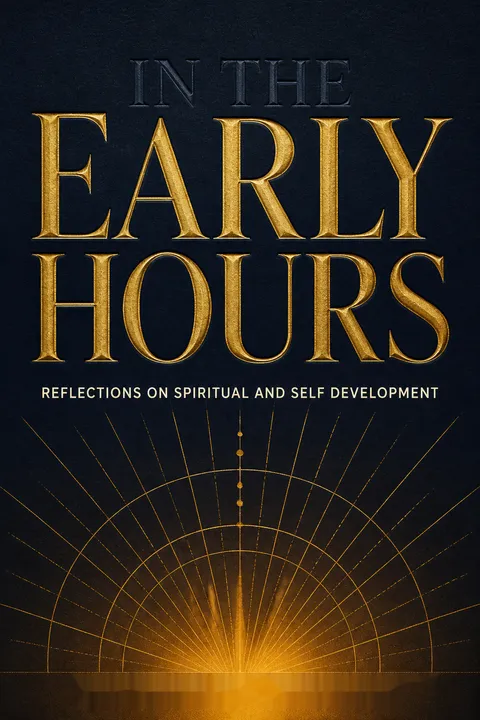
In the Early Hours is a devotional guide to forming a whole life around Islamic faith, not a narrow manual for private spirituality. Its material comes from talks and other works, organized as advice for Muslims seeking self-development. That origin helps explain the book's recurring pattern: it states a Quranic or Prophetic principle, translates it into daily conduct, then returns to the reader's accountability before God.
Its central achievement is integration. Prayer, work, charity, family care, attention to animals, and public conduct belong to the same moral life. The book does not treat ritual as an escape from social responsibility. It repeatedly tests worship by its effects: whether it strengthens honesty, patience, generosity, and justice. The result is a model of self-development in which the heart is the source of action, but action is the evidence that inner change is real.
The framework's motivational force depends on faith in God, revelation, and the Hereafter. Those commitments are theological, not conclusions established by behavioral science. Yet the practical architecture is intelligible beyond that premise: choose a governing purpose, build repeated practices around it, seek a supportive community, examine conduct, and repair harm. The book also contains a productive tension between aspiration and limitation. It calls for total devotion while warning against extremism and acknowledging gradual progress. That balance is essential because a demand for perfection can defeat the effort it is meant to inspire.
The most useful reading is neither as a list of rules nor as a claim that good intentions guarantee good outcomes. It is a sustained invitation to align motives, habits, and relationships with a chosen account of ultimate responsibility. Its strongest test is concrete: does devotion make a person more attentive to God and more careful with the lives entrusted to them?
Review Summary
In The Early Hours is highly praised for its inspirational advice on spiritual and self-development from an Islamic perspective. Readers appreciate its simple language, practical guidance, and focus on strengthening one's relationship with Allah. The book covers topics like prayer, time management, and living purposefully. Many find it deeply moving and reread it regularly for reminders. While some note the title doesn't fully reflect the content, most reviewers highly recommend it for Muslims seeking to improve their faith and daily practices.
People Also Read



Glossary
tazkiya
Purification and growthTazkiya is the process of cleansing the self of harmful qualities while nurturing the capacities needed for moral and spiritual development. In the book, it applies to the whole person, including thought, feeling, character, and behavior. It is a continuing practice directed toward God's pleasure, rather than a status someone can claim to have permanently achieved.
dhikr
Remembrance of GodDhikr means remembering God through words, reflection, and conduct. It includes reciting praises and supplications, but the book gives it a wider scope: work, conversation, and other ordinary actions can also express remembrance when they are performed in obedience to God. Dhikr is presented as a means of keeping the heart spiritually alert and guiding behavior.
irada
Sustained resolveIrada is a firm and continuing intention to pursue a chosen course. Murad distinguishes it from a desire or aspiration that may fade without action. In the book, irada directs effort toward seeking God's pleasure and supports persistence through doubt, hesitation, and difficulty. It is not simply force of will detached from faith, but resolve exercised in reliance on God.
taqwa
God-conscious responsibilityTaqwa is an awareness of God that includes reverence, accountability, and responsibility. The book presents it as a quality strengthened through worship, especially fasting, and expressed by fulfilling obligations and avoiding wrongdoing. It is not merely fear or private piety; it shapes how a person treats God, other people, and the duties of daily life.
Ihsan
Worshipful awarenessIhsan is worship and service performed with awareness that God sees the person, even though the person cannot see God. In the book, this attentive state gives sincerity and moral seriousness to prayer, work, study, and relationships. It describes a quality of devotion, not a separate ritual, and asks the believer to act as though continually accountable before God.
hanif
Undivided devotion to GodA hanif is a person oriented sincerely and wholeheartedly toward God, turning away from false objects of worship and divided loyalties. Murad uses Abraham as the exemplary figure: Abraham trusted God and placed his entire life in God's service. The term therefore conveys uprightness and single-minded devotion, not simply membership in a religious group.
Sunna
The Prophet's lived exampleThe Sunna comprises what the Prophet Muhammad said, did, or approved. In the book, it is both a source of religious guidance and a practical model for living Quranic teachings. Its scope includes worship and personal manners, but also teaching, justice, mercy, and inviting others to Islam. Murad argues that the Prophet's example should shape a whole life.
infaq fi sabilillah
Spending in God's causeInfaq fi sabilillah means using one's resources for the sake of God. The book applies it to giving to people in need and supporting the broader cause of Islam. It includes money, but also time, attention, skills, and effort. The purpose is sincere service, not public praise or a personal return from the recipient.
tawba
Turning back from wrongdoingTawba is a return to God that involves turning away from wrongdoing, not only asking to be forgiven. In Murad's account, sincere repentance includes regret, fulfilling neglected duties, restoring another person's rights, apologizing for injury, and resolving not to repeat the act. It joins spiritual appeal with practical responsibility for the harm done.
Ihtisab
Self-examinationIhtisab is the practice of taking account of one's own conduct before being called to account by God. The book recommends reviewing how time and abilities are used, how wealth is earned and spent, and whether knowledge is reflected in action. Regular self-examination is meant to identify both progress and failure so that gratitude, repentance, and better choices can follow.
FAQ
What's "In The Early Hours: Reflections On Spiritual and Self Development" about?
- Spiritual and Self Development: The book focuses on spiritual and self-development, emphasizing the importance of the early hours of the day for reflection and growth.
- Connection with Allah: It highlights the significance of building a close relationship with Allah through prayer, reflection, and self-purification.
- Practical Guidance: The book provides practical advice and methods for Muslims to develop their spirituality and character.
- Author's Background: Written by Khurram Murad, it draws from his teachings and experiences, particularly those shared during a course for Islamic workers.
Why should I read "In The Early Hours: Reflections On Spiritual and Self Development"?
- Personal Growth: It offers insights into personal and spiritual growth, helping readers to improve their relationship with Allah.
- Practical Advice: The book provides actionable advice and methods for self-improvement and spiritual development.
- Inspirational Content: It includes inspirational teachings and reflections that can motivate readers to pursue a more meaningful life.
- Cultural and Religious Context: It is particularly beneficial for Muslims seeking to deepen their understanding of their faith and its application in daily life.
What are the key takeaways of "In The Early Hours: Reflections On Spiritual and Self Development"?
- Importance of Early Hours: The book emphasizes the spiritual significance of the early hours of the day for prayer and reflection.
- Tazkiya (Self-Purification): It discusses the concept of tazkiya, or self-purification, as essential for spiritual growth and success in this life and the Hereafter.
- Dhikr (Remembrance of Allah): The book highlights the importance of dhikr, or the remembrance of Allah, as a means to purify the heart and attain closeness to God.
- Balanced Life: It encourages a balanced approach to life, integrating spiritual practices with daily responsibilities.
What are the best quotes from "In The Early Hours: Reflections On Spiritual and Self Development" and what do they mean?
- "Our Lord descends each night...": This quote emphasizes the importance of the last third of the night for prayer and seeking forgiveness, highlighting Allah's closeness to His servants during this time.
- "Successful indeed is the one who purifies his whole self": It underscores the significance of self-purification (tazkiya) for achieving true success and happiness.
- "Vie with one another in seeking to attain to your Sustainer's forgiveness": This encourages competition in good deeds and seeking Allah's forgiveness as a path to Paradise.
- "The deeds most loved by Allah [are those] done regularly, even if they are few": It stresses the importance of consistency in worship and good deeds over quantity.
How does "In The Early Hours" define Tazkiya and its importance?
- Definition of Tazkiya: Tazkiya is defined as the purification of the human self from undesirable traits and the nurturing of qualities essential for growth.
- Goal of Tazkiya: The ultimate goal is to seek the pleasure of Allah and attain Paradise through self-purification.
- Success and Happiness: The book states that true success and happiness in this world and the Hereafter depend on tazkiya.
- Comprehensive Process: Tazkiya is an all-encompassing process that involves the mind, heart, character, and behavior.
What is the significance of Dhikr in "In The Early Hours"?
- Remembrance of Allah: Dhikr is the remembrance of Allah, which purifies the heart and is essential for spiritual growth.
- Forms of Dhikr: It includes both verbal utterances and actions done in accordance with Allah's will.
- Continuous Awareness: The book emphasizes maintaining a continuous awareness of Allah in all aspects of life.
- Greatest Deed: Dhikr is described as the greatest deed, leading to forgiveness and the ultimate reward of Paradise.
How does "In The Early Hours" suggest one should relate to Allah?
- Thankfulness to Allah: Being grateful for all blessings and recognizing Allah as the source of everything.
- Exclusive Worship: Worshiping Allah alone and ensuring that all actions are done for His pleasure.
- Love of Allah: Developing a deep love for Allah that surpasses all other loves.
- Trust and Reliance: Placing complete trust in Allah and striving to become a hanif, one who is sincerely devoted to Him.
What are the prerequisites of Tazkiya according to "In The Early Hours"?
- Personal Responsibility: Accepting that self-purification is a personal responsibility that cannot be delegated.
- Genuine Effort: Making a sincere and continuous effort to fulfill one's obligations as a Muslim.
- Sustained Willpower: Developing a strong and consistent willpower to seek Allah's pleasure.
- Reliance on Allah: Having confidence in Allah's assistance and mercy in the journey of self-purification.
How does "In The Early Hours" address the concept of Jihad?
- Striving for Allah's Pleasure: Jihad is described as striving with all means to make Allah's word supreme in one's heart and in the world.
- Comprehensive Effort: It involves a comprehensive effort that includes knowledge, faith, patience, and perseverance.
- Witnessing to Mankind: Part of jihad is witnessing to mankind and inviting others to the path of Allah.
- Personal and Collective Duty: Jihad is both a personal and collective duty to establish Allah's guidance in all aspects of life.
What are the impediments to "Holding onto Allah" as discussed in "In The Early Hours"?
- Pride: Pride is a major impediment that can destroy spiritual achievements and must be avoided.
- Hypocrisy: Hypocrisy, or showing off, is condemned and serves to cloud one's consciousness of Allah.
- Pessimism: Pessimism and hopelessness are acts of disbelief and should be replaced with optimism and hope in Allah's promises.
- Uncontrollable Anger: Anger can disrupt relationships and should be controlled through patience and forgiveness.
How does "In The Early Hours" suggest one should relate to Allah's creation?
- Family Obligations: Emphasizes fulfilling responsibilities towards family members with love and kindness.
- Brotherhood in Islam: Encourages sincere advice, self-sacrifice, and justice in relationships with fellow Muslims.
- Rights of Neighbors: Stresses the importance of treating neighbors, both Muslim and non-Muslim, with respect and kindness.
- Rights of Animals: Recognizes the rights of animals as part of Allah's creation and advocates for their humane treatment.
What is the ultimate objective of life according to "In The Early Hours"?
- Preparation for the Akhira: The ultimate objective is to prepare for the Hereafter by living a life in accordance with Allah's will.
- Balance in Life: Encourages a balanced approach to life, integrating worldly responsibilities with spiritual goals.
- Certainty of Death: Reminds readers of the certainty of death and the importance of preparing for the meeting with Allah.
- Seeking Allah's Mercy: Emphasizes seeking Allah's mercy and forgiveness as essential for attaining Paradise.
Download PDF
Download EPUB
.epub digital book format is ideal for reading ebooks on phones, tablets, and e-readers.








