

Key Takeaways
Treat every fact as a doorway, not a trivia dead end
Follow the connections. Schneider’s answer to how she became good at Jeopardy! is not simply a lucky memory. She remembers information by connecting it to other ideas. Learning that oviparous means egg-laying prompts questions about word roots, biology, and why academic fields often use specialized language. One fact becomes a path into several subjects, not a card to memorize and discard.
Knowledge changes your footing. Schneider argues that curiosity helps people understand the forces shaping society and makes them less vulnerable to scams. She also acknowledges that opportunity, privilege, and her natural memory helped her learn. Her point is not that effort makes everyone equally knowledgeable, but that wanting to understand can keep expanding what a person knows.
The memorable move here is to treat knowledge as a web rather than a warehouse. Connections make new information easier to place and give curiosity its own momentum: a fact becomes interesting because of what it unlocks. The account also avoids a common self-help trap by admitting that talent and social conditions matter. Curiosity is powerful, but it does not erase unequal access to time, education, or safety. The practical lesson is to keep asking what a fact connects to, while remaining honest about who gets the chance to follow those connections.
Let identity emerge from patterns, not one dramatic childhood clue
Clues can arrive quietly. Schneider looks back on a childhood in which she loved stories about a girl, envied girls’ wider choices in clothing, and felt distress as puberty changed her body and voice. Onstage, playing flamboyant roles gave her permission to move and express herself in ways that felt natural. Yet none of these experiences immediately supplied a clear label. She assumed trans people always knew from childhood, so she interpreted her own uncertainty as evidence against herself.
There was no single date. A thought about living as a woman came during a 2011 drive home from rehearsal. It took years, more private experimentation, and the end of her marriage before she accepted that she was trans. In hindsight, she can locate clues across decades, but refuses to turn them into a universal checklist.
This account makes room for self-knowledge that is retrospective, incomplete, and shaped by what a person is able to imagine. That matters because neat origin stories can quietly become tests that exclude people whose lives do not follow the expected sequence. A memory can gain new meaning without becoming proof that the person secretly understood everything at the time. The distinction is useful beyond gender: people often recognize a pattern only after finding language for it. Uncertainty is not necessarily denial, and a life need not produce a dramatic revelation to be real.
Choose a name and daily life that let you inhabit yourself
Ordinary fit matters. When Schneider began transitioning, the name Jenny felt connected to an earlier fantasy, but not right for her adult self. Amy eventually fit because it was simple and unburdened by a story she had to perform. That preference also clarified what transition meant to her: not constant glamour, but the freedom to live ordinary days as herself, including errands and work.
Recognition makes change tangible. At work, she told colleagues that she was now Amy and asked them to use her name and pronouns. She had already painted her nails, which gave the announcement a small, visible prelude. Soon afterward, the office manager gave her a company mug bearing Amy’s name. A routine object made an inward change feel publicly real.
The mug is a small but sharp example of how identity becomes livable through mundane social arrangements. A name on a work account, a greeting, or an object can make belonging concrete in a way abstract approval cannot. The story also pushes back against the assumption that self-expression must be theatrical to count. A person’s chosen identity needs to fit the unremarkable majority of life, not only its most emotionally charged moments. At the same time, naming oneself is personal; one person’s preference for a neutral, everyday name is not a rule for anyone else.
Teach by showing why the subject deserves attention
Enthusiasm is instruction. Schneider remembers teachers who made learning feel alive by demonstrating their own interest. Her mother used a simple water-pouring experiment to show how children reason about quantity. First-grade teacher Mrs. Coleman introduced students to Black historical figures beyond the most familiar names. Mr. Brooks welcomed a student’s playful imitation of Kurt Vonnegut rather than forcing every piece into one approved style.
Standards can be generous. Theater director Fran Pesch demanded pace and effort because the audience deserved a strong show, but she did not humiliate students or ask for the impossible. Across these examples, a good teacher does more than deliver content: the teacher shows why it matters, makes room for exploration, and expects the learner to contribute.
These examples distinguish rigor from severity. High expectations work differently when students can see what the work serves, whether that is understanding a scientific idea, honoring overlooked histories, or respecting an audience’s time. The teacher’s enthusiasm offers an invitation, while the standard gives the invitation shape. That combination is more persuasive than either entertainment without substance or discipline without purpose. There is a useful caution in Mr. Reitz’s occasionally inaccurate extra facts: excitement can make learning memorable, but accuracy still matters. Inspiration should open inquiry, not replace it.
Use performance to rehearse selves ordinary life forbids
A role can offer cover. As a young actor, Schneider could sway, gesture, and speak in ways that felt right while telling herself she was only playing a character. Theater let her express parts of herself without confronting the full risk of doing so outside rehearsal. A role also relieved her of having to invent every action: the script and director supplied a structure when self-judgment made ordinary choices feel dangerous.
The stage joins opposites. Schneider describes theater as drawing both people who want attention and people who want to disappear. A performer can be watched closely while still feeling protected by the character and the shared production. The show depends on a group of people trusting one another to take risks, recover from mistakes, and keep the story moving.
Performance offers a revealing model of rehearsal for change. A person can try a gesture, voice, or social position first within a bounded setting, then notice how it feels. The disguise of character may lower the cost of experimentation, but it can also postpone the question of what the performer wants outside the role. The chapter’s strongest insight is that visibility and protection can coexist. That is not a permanent substitute for safety in daily life, but a temporary space where a person can discover capacities that shame or fear had kept out of view.
Delay judgment long enough to discover another person’s story
First impressions are incomplete. During a lonely period in college, Schneider found comfort in Daria, an animated show about a sarcastic, isolated teenager. At first, she shared the central character’s habit of dismissing other people as shallow or foolish. Over time, the show’s supposedly one-note characters revealed anxieties, class positions, loyalties, and private hopes that Daria had missed.
Attention can reopen a life. Schneider connects that change to Oakland, where encounters with people outside her familiar white liberal circle helped her recognize how limited her own assumptions had been. She came to see that people can understand their own lives even when an outsider finds them confusing. The lesson is not to excuse harm, but to avoid confusing a quick, possibly accurate impression with the whole person.
The distinction between recognizing a behavior and reducing someone to it is ethically useful. A person may indeed be shallow in a particular moment, but that observation does not exhaust their motives or capacities. The animated show functions here as a low-stakes training ground for revising judgments: viewers notice details that the guarded protagonist overlooks. This is not a demand to trust everyone, especially when someone poses a real danger. It is a reminder that curiosity and boundaries can coexist, and that social understanding improves when people are not treated as finished categories.
Treat attention struggles as brain differences, not character flaws
Effort is not always available on demand. Schneider spent years calling herself lazy because she could understand schoolwork yet fail to start or finish it. After trying medication for ADD, she was surprised that a small household task could move from intention to action without an exhausting internal argument. She describes boredom as a persistent problem and notes that attention can also make hidden items, unfinished projects, and routine chores difficult to manage.
Difference includes strengths. Her restless appetite for novelty helped her accumulate broad knowledge, a useful fit for Jeopardy!’s range of topics. Medication eased some difficulties, but she did not want to erase every feature she associated with ADD. Her account presents a condition that can cause real impairment without defining the whole person.
This reframing separates moral judgment from practical difficulty. Calling a person lazy may describe how a missed task looks to others, but it does not explain the mechanisms that make starting or sustaining that task hard. The memoir also resists a simplistic cure narrative: treatment can reduce friction without making every trait undesirable. That balance is important because a strength in one environment may become a burden in another. Neither romanticizing neurodivergence nor treating difference as damage captures the full experience; useful support should address specific obstacles while respecting the person’s own account of what they value.
Build intimacy around honest agreements, not inherited rules
Rules need reasons. Schneider and her first wife, Kelly, chose a nonmonogamous marriage because neither saw sex with another person as automatic betrayal. They agreed that openness depended on communication and boundaries, including safer-sex expectations. The arrangement brought pleasure and helped Schneider challenge shame, but it also involved unequal dating experiences, jealousy, and a broken agreement about contraception.
One model cannot fit everyone. Kelly eventually left the marriage for someone who wanted monogamy. That painful ending did not persuade Schneider that monogamy would have prevented a breakup. She does, however, acknowledge that she sometimes suppressed jealousy rather than admitting it. After transitioning, her understanding of attraction also changed, and her friendship with Genevieve grew into a relationship. Intimacy, desire, and identity did not follow one fixed script.
The account is most persuasive as a case for explicit negotiation, not as proof that one relationship structure is best. Agreements make expectations visible, but they cannot guarantee equal desire, equal opportunity, or immunity from heartbreak. Schneider’s recognition that she sometimes concealed jealousy is especially important: a declared ideal can become another performance if partners feel obliged to appear untroubled. Her experience invites a better question than whether a relationship is conventional: can the people in it speak honestly, revise agreements, and leave without coercion? Those conditions matter in monogamous and nonmonogamous relationships alike.
Let a professional challenge the story you use to survive
Children explain what they can. When Schneider’s mother entered a hospital program for alcohol use, nine-year-old Schneider decided her father had sent her away unfairly. She saw herself as the household’s competent adult and interpreted years of her mother’s absences as excuses. Only later did relatives describe the drinking Schneider had not understood as a child. Her confidence in her interpretation had helped her cope, but it had also concealed how much she had been hurt.
Therapy gave the story room to change. As an adult, after another painful disappointment involving her mother, Schneider finally sought therapy despite believing she did not need it. She credits that choice with helping her reconsider old conclusions and speak more honestly about her feelings.
A childhood explanation can be protective without being accurate. The child’s account in this story turns uncertainty into a manageable verdict: if the adults are unreliable, self-reliance seems safer than needing them. Therapy creates a setting where that verdict can be examined without requiring immediate forgiveness or blame. The memoir’s invitation to seek help is compelling, though therapy is not a guaranteed quick fix and finding a suitable professional can take time. Its practical value is the chance to test a long-held story against evidence, emotion, and perspectives the child could not access.
Treat visibility as work, and protect a life beyond the audience
Fame feels good and costs attention. Schneider won 40 consecutive Jeopardy! games and $1,382,800, then discovered that recognition, gifts, travel, and praise could be exhilarating. But fame had no simple off switch. Strangers could approach during private moments, and a social media post about being mugged quickly became a headline. Leaving her software job did not mean work stopped; it meant managing a new public-facing business built around herself.
Visibility can serve others. Schneider testified in Ohio against a bill restricting gender-affirming care for minors. She had doubted whether her celebrity was useful beside the work of local advocates, who explained that her reach could draw attention they could not command. She came to see public appearances and advocacy as parts of one job, while recognizing the unequal comfort of her own celebrity life.
Fame operates as both a resource and a demand. Public attention can widen access to a cause, but it also turns ordinary speech and private events into potential content. Schneider’s account makes a valuable distinction between visibility as personal reward and visibility as a tool others can use. The risk is that a celebrity’s platform can crowd out the people doing sustained local work. Her example points toward a more responsible role: use reach to direct attention outward, while leaving expertise and leadership with those closest to the issue.
Use symbols and altered states to question assumptions, not evade them
A prompt can uncover a thought. Schneider is an atheist who uses tarot, not because she believes the cards predict the future, but because their images help people shape concerns into stories. A three-card reading about intention, expectation, and reality helped her identify hopes and fears while writing. The cards did not supply a supernatural answer; they gave her a structure for thinking aloud.
Experience can challenge inherited rules. She also describes trying drugs as a way to notice how different states of mind change perception, connection, and energy. Some experiences felt meaningful, including a psychedelic trip that helped her feel less afraid of being alone. She acknowledges risks and does not present her personal experiences as a general prescription.
This section draws a useful line between a tool that prompts reflection and a tool that claims authority over reality. Tarot can function as a set of images through which someone notices what they already fear or hope, but its apparent accuracy should not be confused with evidence that it predicts events. The same caution applies to altered states: a powerful feeling can reveal something about experience without settling what is true or wise. The strongest use of either is inquiry, not outsourcing judgment or minimizing the risks involved.
Analysis
This memoir is organized less like a self-improvement manual than a sequence of questions whose answers keep changing. Its recurring subject is not simply transition, Jeopardy!, or fame. It is the revision of inherited explanations: intelligence as luck, gender as something obvious from childhood, sex as a moral dividing line, attention difficulty as laziness, and self-reliance as proof that no help is needed. Schneider’s anecdotes make those revisions credible because they include embarrassment, contradiction, and imperfect judgment rather than a clean conversion story.
The book’s form matters. Each question begins with a public curiosity about the author, then turns inward toward what the question assumes. “How did you get smart?” becomes a question about how knowledge accumulates and who gets encouraged to learn. “What is a home?” becomes a story about being accepted by people who do not require her to shrink. Jeopardy! fame supplies the broadest audience, but the memoir’s most important evidence is often small: a friend complimenting an outfit, a workplace mug with a chosen name, or a teacher insisting that students give an audience their best effort.
The book is strongest when it treats identity as lived practice rather than a puzzle with one definitive answer. That approach makes space for readers whose histories do not match familiar narratives. Its limitation is also its strength: these are Schneider’s recollections and preferences, not general instructions for every trans person, couple, person with ADD, or drug user. The reader should take the experiences seriously without turning them into rules. The durable method is to stay curious, test the story one tells about oneself, and remain open to evidence that a once-useful explanation has become too small.
Review Summary
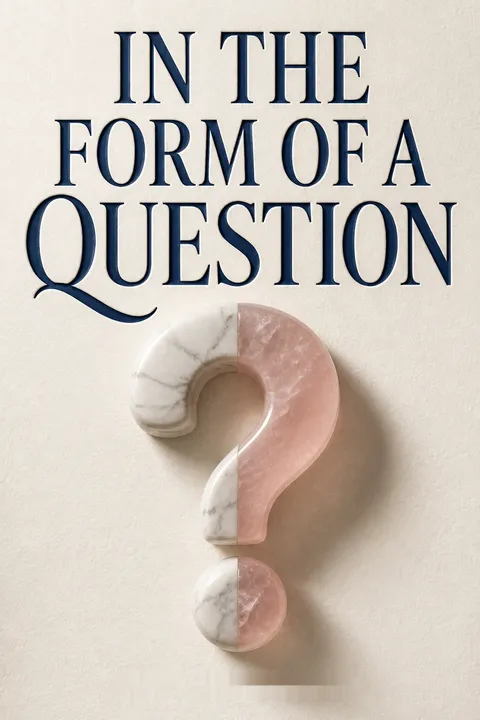
In the Form of a Question received mixed reviews, with an average rating of 3.51/5. Readers appreciated Schneider's honesty, humor, and insights into her life as a transgender woman. Many enjoyed learning about her experiences beyond Jeopardy!, though some wished for more game show content. Critics found the writing style disjointed and the footnotes distracting. Some readers were uncomfortable with explicit content and discussions of drug use. Overall, fans of Schneider and Jeopardy! found the memoir engaging, while others felt it lacked focus and depth.
People Also Read






Glossary
ADD
attention regulation differenceSchneider uses ADD for the attention and executive-function difficulties she describes, including chronic boredom, difficulty initiating tasks, forgetfulness, and unfinished projects. She prefers the term to ADHD because it does not imply that hyperactivity is necessary. The book presents ADD as a source of both impairment and valued traits, not as a complete definition of a person.
deadname
name used before transitionA deadname is a former name, often one assigned at birth, that a trans person no longer uses. Because names are commonly associated with gender, a deadname can feel disconnected from the person’s identity. Schneider describes the term as emotionally charged but fitting, and explains that her former name remained publicly discoverable even after she chose Amy.
egg
not-yet-recognized trans personIn trans community usage described by Schneider, an egg is a trans person who has not yet recognized or accepted that they are trans. The image suggests a self-understanding that has not fully emerged, rather than a person deliberately hiding a settled truth. Schneider uses the term retrospectively for periods when she was questioning but could not yet name her identity.
dysphoria
distress around gendered embodimentGender dysphoria refers here to Schneider’s distress and alienation regarding her body and the changes associated with puberty. She describes hating her appearance, body hair, and voice, and feeling that her body did not belong to her. The term helps explain how this distress affected dating, self-esteem, and her ability to imagine being desired.
polyamory
consensual multiple relationshipsPolyamory is a relationship approach in which people may have romantic or sexual relationships with more than one person, with the knowledge and agreement of those involved. Schneider and her first wife chose nonmonogamy because they did not see sex with others as inherently incompatible with commitment. Their experience also involved boundaries, unequal opportunities, jealousy, and painful changes in the marriage.
Major Arcana
tarot’s larger life storyThe Major Arcana is the group of 22 principal cards in a traditional tarot deck. Schneider interprets them as stages or motifs in a broad human journey, from beginning and uncertainty through relationships, loss, judgment, and return to the world. In her practice, the cards offer symbolic material for reflection rather than supernatural predictions.
Minor Arcana
tarot’s everyday situationsThe Minor Arcana is the group of 56 tarot cards divided into four suits. Schneider connects those suits with dimensions of ordinary life, including emotion, physical experience, creativity, and action. She treats these cards as images for recurring daily situations. Their meanings depend partly on the person interpreting them and the question being considered.
traniversary
transition anniversaryA traniversary is an anniversary marking a significant point in a person’s transition or coming out. Schneider uses the term for the date she came out at work, while also describing transition as a process with several meaningful milestones rather than one universally correct starting date. The term turns a private change into a date that can be remembered and celebrated.
FAQ
What's In the Form of a Question about?
- Personal Journey: The book is a memoir by Amy Schneider, focusing on her life as a transgender woman and her journey of self-discovery.
- Intellectual Curiosity: It delves into themes of intelligence and curiosity, reflecting on Schneider's experiences as a contestant on Jeopardy!.
- Cultural Commentary: Schneider addresses societal issues, particularly gender identity and LGBTQ+ challenges, offering a blend of personal and cultural insights.
Why should I read In the Form of a Question?
- Inspiring Story: Schneider's journey is both relatable and inspiring, highlighting resilience and authenticity in a world with rigid norms.
- Thought-Provoking Themes: The book encourages readers to question their beliefs about gender and identity, fostering deeper understanding.
- Engaging Writing Style: Schneider's witty and candid writing makes complex topics accessible and enjoyable.
What are the key takeaways of In the Form of a Question?
- Embrace Learning: Schneider stresses the importance of being open to learning and evolving one's beliefs.
- Value of Knowledge: Knowledge is portrayed as empowering, serving as both a shield and a sword.
- Authenticity Matters: Living authentically is a central theme, with Schneider sharing her journey of self-acceptance.
What are the best quotes from In the Form of a Question and what do they mean?
- "I wanted to explore as much of that tapestry as I can." Reflects Schneider's passion for knowledge and interconnected learning.
- "If you want to, you can do it, too!" A motivational call to action, suggesting determination can lead to achieving goals.
- "I’m not a boy." A powerful declaration of Schneider's gender identity journey, emphasizing self-recognition and authenticity.
How does Amy Schneider define intelligence in In the Form of a Question?
- Broad Definition: Intelligence is more than academic success; it includes emotional and social intelligence.
- Personal Experience: Schneider reflects on her own experiences, highlighting the diversity of intelligence types.
- Desire to Learn: True intelligence is rooted in the desire to learn and understand the world.
What challenges did Amy Schneider face during her transition?
- Fear of Rejection: Schneider feared losing relationships and support from friends and family.
- Societal Expectations: She faced societal pressures and stereotypes complicating her journey.
- Personal Struggles: Internal battles with self-acceptance and external challenges in a sometimes hostile world.
How does In the Form of a Question address the topic of gender identity?
- Personal Narrative: Schneider shares her experiences of questioning her gender identity.
- Cultural Context: Her story is placed within a broader cultural context, discussing societal attitudes.
- Empowerment Through Authenticity: Emphasizes the power of living authentically despite societal pressures.
How does Amy Schneider's experience on Jeopardy! influence her perspective?
- Public Recognition: Her success brought public recognition, navigated with pride and humility.
- Intellectual Validation: The show validated her intellectual abilities and love for knowledge.
- Platform for Advocacy: Visibility allowed her to advocate for transgender rights and awareness.
What insights does In the Form of a Question offer about the importance of knowledge?
- Knowledge as Power: Knowledge empowers individuals, providing tools to navigate the world.
- Lifelong Learning: Promotes lifelong learning, encouraging curiosity and openness to new experiences.
- Connection to Identity: Pursuit of knowledge is linked to personal growth and self-understanding.
How does In the Form of a Question address the topic of mental health?
- Personal Struggles: Schneider discusses her mental health challenges, including dysphoria and anxiety.
- Therapeutic Insights: Advocates for therapy and self-reflection as tools for growth and acceptance.
- Community Support: Highlights the role of supportive relationships in mental well-being.
What role does tarot play in In the Form of a Question?
- Icebreaker for Conversations: Tarot facilitates deeper conversations beyond small talk.
- Symbolic Exploration: Cards serve as a metaphor for exploring life and identity.
- Personal Reflection Tool: Tarot helps Schneider gain insights into her life and decisions.
How does In the Form of a Question explore the theme of curiosity?
- Curiosity as a Driving Force: Central theme guiding Schneider's decisions and experiences.
- Learning from Experiences: Curiosity leads to learning from successes and failures.
- Connection to Others: Fosters meaningful conversations and relationships, promoting openness to new ideas.
Download PDF
Download EPUB
.epub digital book format is ideal for reading ebooks on phones, tablets, and e-readers.








