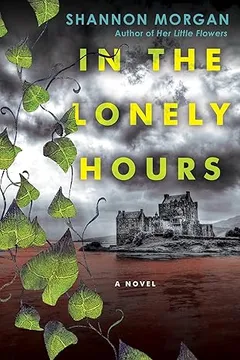


Plot Summary
Prologue
On Samhain in 1990, Alice Maundrell sits beside her incapacitated mother, Bitsie, and tells her that the daughter Bitsie had sent away has been found working in Italy. Alice admits nothing that might bring comfort: she lies about the continuing search for the missing Maundrell Red and needles Bitsie with reminders of those she has harmed.
Outside the window, shadows gather. Alice has glimpsed a girl in the garden and a man inside the castle, ghosts unable to find each other. She wonders whether Bitsie’s malice will persist after death, then promises that the darkness of Samhain is more than her mother understands.
The prologue frames the castle as a place where family history survives its owners, not as an inert backdrop but as pressure carried through stone, ritual, and memory. Alice’s treatment of Bitsie reverses their old power arrangement, yet her victory is compromised: she uses the same deliberate withholding that once controlled her. Her mention of a daughter found in Italy creates an intimate mystery before the main story begins, while the separated ghosts turn unresolved attachment into a literal condition of the island. The prologue’s menace is therefore double. The supernatural may be real, but the most immediate cruelty has always been human.
The Castle Comes Due
Edwina Nunn, called Edie, has built a cautious life in England with her fifteen-year-old daughter, Neve, after her husband Joshua’s death. A Scottish solicitor tells her that a relative she never knew, Lord Percy Maundrell, has left her Maundrell Castle, a remote Highland estate. Edie’s questions about her birth go unanswered, while Percy’s note urges her to sell the supposedly cursed property.
Neve sees a chance for adventure and takes the decision out of her mother’s hands by arranging a week away from work. They drive north through increasingly isolated roads, and Edie’s grief and old fear of rejection rise with every mile. Near nightfall, they finally see the castle standing on an island in a red loch.
The inheritance offers Edie exactly what her life has lacked, a past with names and a place, but its arrival is not simple repair. Percy’s apology acknowledges an injury without explaining it, and his warning makes the gift feel like an obligation disguised as wealth. Edie’s first response is defensive practicality, a strategy shaped by abandonment and sharpened by bereavement. Neve’s insistence pushes against that strategy, revealing their different griefs: Edie avoids fresh attachment because loss has made safety feel sacred, while Neve seeks movement and risk. Their journey begins as a family dispute over travel, but beneath it lies a shared need to know whether they belong anywhere beyond one another.
Red Water, Restless Dead
At the castle, Edie and Neve meet Fergus MacKenzie, the wary caretaker, then explore rooms prepared for failed hotel and museum ventures. That night Neve sees a woman pass through her, and both women watch ghostly Roman ships move across the loch.
By morning, the spectacular red water seems less like a welcome than a warning. In the gardens, Neve is touched by invisible cold near a dark grotto, while Cameron, a microbiologist studying the loch, explains that algae give the water its color and that local stories give the island a darker reputation.
He knows the place’s legends and admits the castle feels watchful. Though Edie wants to leave, Neve insists they stay long enough to search for the missing Maundrell Red, and Edie reluctantly agrees.
The novel makes the supernatural arrive through the ordinary intimacy of a mother and daughter sharing a bedroom, so fear becomes something they test together rather than something either can dismiss alone. The Roman fleet and the woman in the corridor establish that the dead are not merely local folklore, while Cameron’s scientific explanation of the loch offers a rational foothold without explaining the hauntings. Edie’s decision to stay is not a conversion to Neve’s appetite for the uncanny. She accepts the search because it gives Neve purpose and might help answer her own questions. The castle’s commercial failures quietly suggest that whatever inhabits it has already defeated people who came with plans and resources.
The Walls Keep Records
Neve digs through the museum displays and learns that Maundrells across generations died on Samhain, the same date as Edie’s birthday. She begins mapping the diamond’s history, while Edie explores the castle and hears writing scratch itself onto walls.
The writer is Alice Maundrell, whose fragments describe a childhood under Bitsie’s contempt and her brothers Jasper and Theodore. Edie also encounters the ghost of Mungo, a large, frightened man searching for Lottie, and sees a young girl wandering the gardens.
The castle’s history becomes personal rather than merely eerie. Cameron warns that the Maundrells were feared locally, while Fergus and village grocer Hamish Macleod hint at secrets surrounding the family and its missing jewel. Edie begins to suspect that the ghosts are trying to tell her something.
The records in this section arrive in incompatible forms: a public family tree, curated museum exhibits, living villagers’ gossip, and Alice’s private writing on walls. Each supplies a different kind of truth, and none is sufficient alone. Neve treats the past as a solvable investigation, sorting dates and suspects, while Edie experiences it as an emotional encounter with people whose pain resembles her own. Mungo’s search for Lottie makes grief visible as repetition, not simply memory. Alice’s words also unsettle the assumption that family history can be recovered through official documents; the family tree records deaths, but the walls preserve what the family chose not to say. Their inquiry becomes a contest over who controls the account of the past.
Lottie Guards Mungo
In 1965, fifteen-year-old Charlotte, known as Lottie, spends her days protecting her autistic cousin Mungo, whose mother Greer died after his birth. Their grandmother, the formidable Bitsie, regards Mungo as shameful and permits Dr. Kincaid to subject him to electroconvulsive treatments intended to change him.
Lottie hides Mungo when she can, but her mother, Vida, and brother Percy often submit to Bitsie’s demands. Lottie also sees Percy’s secret tenderness toward his school friend Ashley Templeton and understands that Bitsie means to punish them for their relationship.
She is frightened into silence by her grandmother’s threats, especially the threat of sending Mungo away. The Macleods, servants and relatives by marriage, offer the care and warmth the Maundrell household withholds.
Lottie’s care is not sentimental: it consists of practical protection, routines, and an effort to interpret what Mungo cannot easily explain. The adults around her call coercion treatment, using medical authority to dress social prejudice as benevolence. Mungo’s vulnerability is compounded by the family’s shame, while Percy and Ashley face a parallel effort to make their identities acceptable through force. Bitsie’s control works because everyone understands the cost of defiance and because she can turn love into leverage. Lottie’s silence is therefore neither passivity nor consent. It is a survival calculation made by a child who has learned that the people with the least power are often made responsible for protecting everyone else.
The Macleod Claim
Neve discovers that Ernest Maundrell found the Red in South Africa with his valet, Lachlan Macleod, and that Ernest’s will promised the stone to Lachlan for his service. The Maundrells kept it, and the Macleod family’s claim gives the old theft a human grievance. Neve also learns that the diamond disappeared in 1965 and three people died on Samhain the following day.
She places the island’s ten residents under suspicion, including Jasper, Vida, Alice, Mungo, Lottie, Percy, Ashley, the Macleod servants, and Dr. Kincaid. Meanwhile, Alice’s wall-writing recounts her secret affection for a man she calls D and her mother’s cruelty toward the family. The clues deepen Edie’s hope that Alice may know who gave birth to her.
The will changes the diamond from a family heirloom into contested property. The Maundrells’ version of ownership depends on possession and status, while Lachlan’s claim rests on a promise made by the man who found it. Neve’s investigation recognizes that injustice can create motive without proving guilt; she is careful enough to distinguish a legitimate claim from a theft. Edie, by contrast, reads Alice’s writing for a route into her own origins, making the same archive serve two urgent but different needs. The contrast matters: Neve wants a culprit and a location, Edie wants a mother. Both assume hidden facts can mend a present wound, though the coming revelations will complicate that hope.
The Island Closes In
As Samhain approaches, Neve is drawn into a dreamlike episode in which shadows lead her toward the grotto and a blue-painted woman urges her to spill blood into the well. Edie and Cameron reach her before the act is completed, but Neve remembers only a dream and a cut palm.
Snow then engulfs the island. When Edie tries to leave, the car will not start, and Fergus says the road over Haggs Pass is impassable. He suspects someone has made a pact with the Witch, whose bargain may claim more than the person who asks.
Edie’s search for Alice grows urgent, but the castle’s ghosts and the approaching holiday make every corridor feel dangerous. The family is now physically trapped just as the island’s supernatural pressure becomes harder to dismiss.
The Witch’s apparent attack complicates the usual division between predator and victim. Neve is physically guided toward a blood offering, yet the scene also resembles a plea for help from a presence whose history remains obscured. Edie responds as a mother first, struggling to protect Neve without understanding what is happening. The blizzard removes the option of retreat, turning the inheritance into confinement and forcing both women to confront what they have already witnessed. Fergus’s account of bargains introduces a moral problem: a request may be interpreted according to the petitioner’s deepest values, not their stated wishes. The scene’s uncertainty is purposeful. It asks whether terror comes from the Witch’s intent, the human meaning imposed on it, or both.
A Theft Made Useful
In the 1965 timeline, Bitsie announces that the Maundrell Red has vanished and orders the household to search for it. Alice turns attention toward Mungo by claiming he recently took her sapphire necklace, although Lottie knows he said Alice gave it to him.
Lottie realizes her aunt is manipulating the search but cannot see why. She later finds a bag of clothes and money hidden near the grotto, evidence that Percy and Ashley plan to flee together. Their secrecy leaves Lottie hurt and unsure whether to help them.
Around the same time, Bitsie summons Dr. Kincaid and demands that he treat Percy and Ashley for their relationship. The Red’s disappearance, the threatened treatment, and Mungo’s familiar hiding places converge, making the boy an easy scapegoat.
The theft turns household suspicion into a weapon. Alice’s accusation works because the family already regards Mungo as unreliable, while Lottie’s knowledge of his kindness has little authority beside an adult’s convenient story. Percy and Ashley’s escape plan offers a different response to coercive power: rather than argue for acceptance, they hope to leave its reach. Yet secrecy protects them at Lottie’s expense and makes it harder for her to act on their behalf. The section shows how a family can create its own evidence by deciding in advance whose account counts. Mungo’s habits, which should invite accommodation, are instead used to make him a believable culprit.
Samhain Takes Its Due
On Samhain, Dr. Kincaid arrives in a devil costume while Bitsie wears a plague doctor’s mask. Bitsie reveals she has leverage over the doctor and orders him to begin electrical aversion treatment on Percy and Ashley, with Vida assisting.
Lottie tries to warn the boys, but Bitsie has her restrained. When Ashley’s treatment becomes dangerously intense, Mungo rushes in to protect his friend. The machine malfunctions, and the electrical current kills Ashley and then Mungo. Lottie falls and strikes her head while trying to reach him.
In the confusion, Bitsie focuses on recovering the Red rather than grieving the boys. Injured and disoriented, Lottie leaves the room believing she must find the diamond, while the family’s silence protects the cruelty that caused the deaths.
The deaths are not an accident in any morally meaningful sense, even though the machine’s final failure is described as a malfunction. Bitsie creates the conditions: she compels treatment, overrides caution, and treats human beings as instruments of reputation. Vida’s participation shows how care can be corrupted when a person believes obedience is the only way to limit harm. Mungo’s intervention is consistent with his attachment to Ashley, but the family’s system has made his loyalty fatal. Lottie’s head injury blurs her memory at the very moment she needs it to resist Bitsie’s version of events. The scene refuses the comfort of a single villainous act; cruelty succeeds through hierarchy, complicity, and silence.
Alice Names Her Daughter
In the present, Neve proves that several reported hauntings were manufactured with projectors, cameras, and recordings hidden around the castle. Mungo helps her locate the equipment, then leads Edie to the room once occupied by Alice. Alice’s writing reveals that she had a second child after Bitsie forced an earlier pregnancy to end.
Bitsie told Alice the baby had died, but secretly sent the infant to an orphanage. The child was Edie, named Florence Charlotte Maundrell. Alice had spent decades believing her daughter dead, then learned she survived and asked Percy to find her. Edie’s search for her birth family is answered with both recognition and fresh grief: her mother loved her, but neither was allowed to know the other.
This revelation repairs one false belief while exposing the machinery that produced it. Edie was not unwanted by Alice; Bitsie’s control severed mother and child by manipulating the most devastating fact a parent could hear. The distinction does not erase Edie’s childhood loneliness, but it changes its meaning from personal rejection to deliberate concealment. Alice’s communication through writing is also a form of belated testimony. She cannot alter the life she missed, yet she can correct the record for the daughter who has arrived. Neve’s discovery of fake ghosts offers a striking counterpoint: some apparitions were built to deceive, but Alice’s words are a genuine attempt to restore truth.
Cameron’s Inheritance
Cameron and Fergus’s hostility becomes impossible to ignore, and Edie later finds Fergus dead in the grotto, stabbed with gardening shears. Cameron admits he killed him because Fergus knew Cameron had killed Alice years earlier and was urging him to confess. He reveals that he is Gordon Kincaid’s son.
His father treated Mungo, expected the Red as payment, and went to prison after being blamed for deaths on the island. Cameron has spent years searching for the jewel and installed fake hauntings to drive visitors away. He believes Alice stole the Red and that the Macleods’ claim no longer matters because they are dead. When Neve says she has worked out where the diamond is, Cameron grabs her and demands its location.
Cameron’s grievance is historically grounded but ethically useless as an excuse. His father was exploited by Bitsie and punished for crimes he did not commit, yet Cameron converts that injustice into a private license to kill. His fabricated ghosts literalize the way stories can be manufactured to control access and direct belief. The revelation also reframes the castle’s failed businesses: their departures were not simply evidence of haunting, but outcomes Cameron engineered. Edie and Neve have to distinguish genuine supernatural harm from deliberate human deception, a task made harder because both coexist. Cameron’s final demand shows how a legitimate injury can harden into the same possessive logic he claims to oppose.
The Pict Grave Opens
Cameron’s attack on Neve throws Edie against a Pict stone beside the well. The stone breaks loose, crushing Cameron as he falls into the water. Its collapse exposes a peat-preserved mass grave containing at least fifteen beheaded people, including a baby and the blue-marked woman Neve saw in her dream.
Edie recognizes that the Witch was one of the ancient dead, not simply a supernatural villain from local legend. The shadows descend over the bodies with the tenderness of a family reunion, then enter them and disappear.
The island’s oppressive sorrow lifts. With the burial finally uncovered, Edie understands that the Witch’s repeated appearances may have been attempts to draw attention to her people and break the curse that kept them trapped.
The revelation transforms the story’s supernatural grammar. The Witch’s frightening pursuit of Neve was not reducible to malice; it was also a desperate effort to make the living uncover a crime that had remained physically hidden for millennia. That does not make her methods harmless, but it restores the historical violence behind the legend. The mass grave is the novel’s most concrete archive: unlike family letters, its bodies cannot be edited into respectability. The shadows’ return to the dead reads as release rather than attack, changing the emotional meaning of darkness without denying its earlier terror. Human explanation and supernatural reality meet here, but neither cancels the other.
The Red Falls Silent
Neve reasons that Percy and Ashley hid the Maundrell Red in the grotto while preparing to escape, using Mungo’s many hiding places to conceal it. She finds a loose stone behind the well and reaches into the cavity, uncovering the diamond with a tin soldier and a shell. Its beauty immediately stirs possessive desire in both mother and daughter.
As Lady Elizabeth appears in her plague mask, Edie sees that the jewel still feeds the family’s fixation. Lottie arrives and asks Neve to release it. Edie takes the Red from her daughter and drops it into the well. Lady Elizabeth unravels, and Mungo finally reaches Lottie. The two ghosts leave together, hand in hand, ending the separation that has defined their afterlife.
The diamond’s power is psychological as well as supernatural: even Edie, who has watched it destroy lives, feels its invitation to possess and protect it. Neve’s wish to use it for the castle is understandable, but the jewel makes every practical argument sound like a justification for keeping it. Edie’s choice interrupts the inheritance of obsession by refusing to convert a beautiful object into security or status. Lottie’s plea matters because she asks for release, not revenge. Mungo and Lottie’s reunion offers a resolution unavailable to the living characters in 1965, while the disappearing ghosts make clear that letting go can be an act of care rather than surrender.
A Family Across Haggs
Edie and Neve cross the snowbound bridge and reach Hamish and Lorna Macleod’s shop, where the siblings recognize Neve’s resemblance to their uncle Duncan. They explain that Duncan loved Alice, and Edie understands he was her father. He died years earlier, but his relatives welcome Edie and Neve as family and show them Alice’s final message to him.
Police arrive to investigate Fergus’s murder, while archaeologists begin examining the ancient burial. The Nunns have lost the Red and cannot undo the years of separation, but Edie no longer has to imagine herself as a child nobody wanted. Back at the castle, she begins to see the island as part of her history rather than merely a prison, and Alice’s presence returns to greet her.
The resolution answers the opening question of belonging without pretending that knowledge can restore lost time. Edie learns that her father loved Alice, but the relationship reaches her through cousins, a card, and the history of a man already dead. This is a quieter inheritance than the castle: a family willing to make room for her without requiring wealth, secrecy, or proof of worth. The police and archaeologists represent different forms of public accountability, one addressing a recent murder and the other a buried ancient crime. Edie’s changed view of the castle remains tentative. She has not made its past benign, but she can now choose how to live with it.
Epilogue
In 1990, as Bitsie lies dying, Alice tells her that the Witch’s shadows are coming and refuses to summon a doctor. She reveals that after Bitsie destroyed her hopes of motherhood, Alice made a pact intended to take the Maundrell Red, then guided suspicion toward Mungo. Her revenge contributed to the deaths of three people.
Later, after learning that Florence still lived, Alice made another pact to keep Bitsie alive and powerless, so her mother would endure the helplessness she had inflicted on others. Bitsie dies with the Red still consuming her thoughts. Alice feels relief, not freedom, and closes the room behind her.
The epilogue prevents the reader from treating Alice’s pain as an uncomplicated justification for revenge. Bitsie’s abuse shaped Alice, but Alice recognizes that she helped create the conditions for innocent deaths by making Mungo useful to her vengeance. Her two pacts mirror the difference between wanting an aggressor punished and wanting to reproduce the aggressor’s power. Keeping Bitsie alive lets Alice reverse their roles, but it does not return her children or restore the life she lost. The final quiet departure offers no cathartic forgiveness. Alice has ended the immediate contest and remains alone with what she chose to do.
Analysis
In the Lonely Hours treats inheritance as more than money or property. Edie receives a castle, but what she truly needs is an account of her origins that does not end in abandonment. The novel lets that search unfold through conflicting archives: a solicitor’s papers, museum exhibits, family trees, village memory, Alice’s writing, and the bodies hidden beneath the grotto. Each source has limits. Official records preserve names and dates while suppressing abuse; family stories convert violence into legend; private testimony arrives late but can still correct the record.
The Maundrell household shows how power disguises itself as care. Bitsie invokes family reputation and medical treatment to justify coercion, while Vida’s professional identity does not prevent her from participating. Mungo and Percy and Ashley suffer under different versions of the same demand: their needs and identities must be altered for the comfort of others. Lottie’s caregiving exposes the moral failure of adults who confuse dependence with lesser personhood. The historical violence is specific, but its psychological pattern is recognizable: institutions and families can make cruelty seem orderly when authority names it necessary.
The supernatural plot complicates rather than replaces this human account. The Witch is feared because her bargains are opaque, yet the living repeatedly misunderstand what she wants. The island’s curse gathers human tragedy into a story of supernatural punishment, a story that may be easier to bear than admitting how much harm people cause by choice. Cameron’s fake ghosts sharpen the contrast between fabricated fear and genuine haunting, while the ancient grave makes legend answer to material evidence.
Ultimately, healing requires relinquishing possession. Edie cannot recover the years stolen from Alice, and Neve cannot turn the Red into an uncomplicated resource. By dropping the jewel, Edie rejects the cycle that has made beauty, status, and control more valuable than people. Her newly found family does not erase the past; it gives her somewhere beyond it to stand.
Review Summary
In the Lonely Hours is a gothic mystery set in a haunted Scottish castle, receiving mostly positive reviews averaging 3.65/5. Readers praised its atmospheric setting, dual timelines, and touching portrayal of autism through the beloved character Mungo. Many enjoyed the blend of Scottish folklore, family drama, and supernatural elements. Common criticisms included slow pacing, an overwhelming number of ghosts, and protagonists who seemed unrealistically unbothered by hauntings. The mother-daughter relationship between Edie and Neve resonated with many readers, though some found Neve irritating.
Characters
Edwina Nunn
The guarded inheritorEdie is a widowed care aide and Neve’s mother, a practical woman whose steadiness was built around a life without known relatives. She loves Joshua’s memory and is still learning how to parent a daughter moving quickly toward independence. Her deepest vulnerability is the old belief that she was unwanted, so the Maundrell inheritance draws her toward both hope and anticipated rejection. Edie uses planning and caution to keep fear manageable, but the castle forces her to revise what she considers possible. Her compassion is active rather than abstract: she listens to the dead, protects Neve, and gives people the dignity of being understood. She is not naturally fearless; her courage comes from choosing action while frightened.
Neve Nunn
The relentless investigatorNeve is Edie’s fifteen-year-old daughter, sharp-tongued, curious, and resistant to being treated as a child. Her pink hair and irreverent humor mark her wish to define herself, while her grief for her father remains close beneath her bravado. She turns the castle into a research project, sorting old records and testing explanations rather than retreating from the frightening. Her determination can become fixation, particularly when the Maundrell Red seems to offer a practical solution to the family’s problems. Neve’s bond with Edie shifts as they share danger and speak more honestly about grief, protection, and the possibility of love after loss.
Alice Maundrell
The hidden chroniclerAlice is Bitsie’s quiet daughter and an observant presence in the Maundrell household. She records family events in diaries and notices the motives others try to conceal. Years under her mother’s control have made her cautious, secretive, and skilled at surviving through observation rather than open confrontation. Alice’s inwardness should not be mistaken for innocence: she understands the household’s power games and knows how to influence them. Her story links private memory to the larger mysteries of the castle. Through her writing, the reader encounters a woman shaped by longing, fear, and a fierce need to preserve her own account of what happened.
Mungo Maundrell
The devoted magpieMungo is a large, severely autistic member of the Maundrell family who speaks of himself in the third person, relies on familiar routines, and treasures stories and small found objects. His world is made navigable through trusted people, repeated activities, and places where he can hide. He is especially attached to Lottie and forms a strong friendship with Ashley. Mungo’s family often treats his needs as a burden or a problem to be corrected, while Lottie and the Macleods recognize his capacity for affection and joy. The novel presents his distinctive communication without reducing him to it: he has preferences, loyalties, humor, and a powerful sense of who belongs to him.
Charlotte Lottie Maundrell
Mungo’s steadfast keeperLottie is a fifteen-year-old Maundrell who has become Mungo’s closest companion and informal protector. She is observant, imaginative, and hungry for a life beyond the island, but her loyalty keeps her close to the person who depends on her. Bitsie’s threats make Lottie cautious, yet she continues to challenge the household’s treatment of Mungo. She is also a young girl negotiating ordinary adolescent desires, including her unreturned attraction to Ashley, inside a family where affection is dangerous currency. Lottie’s courage is imperfect and costly. She feels jealousy, fear, and resentment, but repeatedly chooses care over the easier escape.
Elizabeth Bitsie Maundrell
The controlling matriarchBitsie is the American-born Maundrell matriarch, a former socialite who has turned the remote castle into a small kingdom. She prizes status, obedience, and the Maundrell Red, and treats those around her as extensions of her will. Her beauty and polished manners conceal a capacity for calculated humiliation and coercion. Isolation and lost social power may have sharpened her need to dominate, but the novel does not mistake explanation for excuse. Bitsie’s authority works through family loyalties, money, medical influence, and the fear that rebellion will bring harm to someone more vulnerable. She is most dangerous when she frames control as protection.
Cameron
The charming trespasserCameron is a microbiologist who studies the unusual saline ecology of Loch na Scáthanna and has made the castle his unofficial base. He is curious, irreverent, and socially confident, with an instinct for teasing away other people’s fear. His fascination with the island mixes scientific interest with a personal history he does not readily disclose. Cameron can appear generous and perceptive, particularly with Edie, but his charm also makes it difficult to know what he is withholding. He represents the appeal of a stranger who seems to understand the place better than its new owners, while his presence raises questions about the difference between curiosity, entitlement, and trust.
Fergus MacKenzie
The wary caretakerFergus is the old caretaker retained to keep a presence on the Maundrell island. He is difficult to understand at first, guarded with outsiders, and more comfortable with whisky than explanations. His local knowledge includes the island’s customs, weather, ghosts, and long memory of the Maundrells. Though he can seem surly or evasive, he shows practical concern for Edie and Neve when the weather turns dangerous. His relationship to the castle is marked by both familiarity and unease.
Percy Maundrell
The reluctant heirPercy is Jasper’s son and Lottie’s brother, raised inside the expectations of the Maundrell name. He resists Bitsie’s authority more openly than his father does, though his anger does not always translate into effective action. His relationship with Ashley gives him a private source of tenderness and a reason to imagine a different life. Percy is caught between inherited privilege and the suffocating rules attached to it.
Ashley Templeton
Percy’s loyal friendAshley is Percy’s school friend and guest at Maundrell Castle. Handsome and composed, he is also kind to Lottie and earns Mungo’s trust. His closeness with Percy places him inside the Maundrell family’s dangerous private conflicts, despite his lack of blood ties. Ashley’s willingness to remain with Percy shows a loyalty that is both loving and vulnerable in the social climate of the 1960s.
Jasper Maundrell
The worn-down fatherJasper is Bitsie’s son, a former soldier whose injuries and family disappointments have left him physically and emotionally diminished. He retains a gentleness that distinguishes him from his mother, especially in his concern for Mungo and Lottie. Yet his instinct to avoid confrontation limits how much protection he can offer. Jasper’s grief for an earlier love shadows his marriage and shapes his distance from Vida.
Vida Maundrell
The compliant motherVida is Jasper’s wife and the mother of Percy and Lottie. A nurse by profession, she can present herself as practical and medically informed, but she is also deeply invested in the Maundrell family’s reputation. Her relationship with Bitsie is unusually aligned, and she often helps enforce the household’s rules. Vida’s self-justifications reveal how a person may participate in harm while believing that proximity to authority makes the harm safer.
Gordon Kincaid
The compromised doctorGordon Kincaid is the doctor Bitsie employs to treat Mungo and a man whose professional standing is compromised. He accepts the Maundrells’ money and becomes entangled in their private demands. His clinical authority gives the family’s prejudices a veneer of expertise, while his dependence on Bitsie’s promises weakens his ability to act independently. He is an important figure in the novel’s examination of medicine used without meaningful consent.
Duncan Macleod
Alice’s quiet suitorDuncan is a member of the local Macleod family who makes regular deliveries to Maundrell Castle. Quiet and private, he is connected to Alice through a relationship that must remain hidden within the rigid household. His presence links the isolated castle to the village beyond the bridge and offers a counterpoint to the Maundrells’ inherited power: affection can persist without title, wealth, or public recognition.
Hamish Macleod
The village greengrocerHamish runs the greengrocer in Haggs with his sister Lorna. Curious and awkward around Edie, he is among the first villagers to approach the new owners. He knows the island’s history and carries the Macleod family’s long connection to the Maundrell estate. His blunt warnings and practical help give Edie a bridge between the castle’s sealed world and the ordinary community nearby.
Lorna Macleod
The observant village kinLorna is Hamish’s sister, direct, practical, and less hesitant than he is about saying what she thinks. She watches the Nunns closely and remembers the relationships and family stories that the castle’s official records omit. Her welcome is grounded in ordinary hospitality rather than ceremony, making her an important link between Edie’s questions and the people of Haggs.
The Witch
The blue-marked presenceThe Witch is the figure associated with the ancient well, Samhain, blood bargains, and the shadows that move across the island. Local stories depict her as a dangerous force, but accounts of her motives vary and are often shaped by fear. She appears to Neve as a blue-marked woman and seems to act through dreams and the shadows. Her presence connects the island’s oldest violence to the later tragedies of the Maundrell family.
Ernest Maundrell
The diamond’s discovererErnest is the Maundrell ancestor who finds the Red in South Africa. His will and the story of his expedition become central evidence in Neve’s investigation into who had a rightful claim to the stone.
Lachlan Macleod
The promised heirLachlan accompanies Ernest Maundrell as his valet in South Africa and is promised the Red for years of service. His family’s claim to the jewel complicates the Maundrells’ assumption that possession is the same as ownership.
Plot Devices
The Maundrell Red
A jewel that commandsThe rare red diamond is both family treasure and contested inheritance. Its discovery in South Africa, Ernest Maundrell’s promise to Lachlan Macleod, Bitsie’s possessiveness, and its disappearance in 1965 give the historical mystery its central evidence. The stone’s beauty also intensifies desire in people who encounter it, making ownership feel like destiny and practical need. Neve searches for it to understand the island and imagine funding the castle; Cameron wants it as restitution for his father. Its final location and destruction are part of the ending, so this device contains spoilers.
Alice’s wall writing
A diary without paperAlice communicates with Edie by making fragments of her private thoughts appear on walls. The writing begins as childhood memories and family observations, then reveals events she could not safely record or say aloud. Its form lets a dead character revise the official family history and gradually connect Edie to the Maundrell past. The writing is selective, interrupted by fear, and not always immediately legible, so it functions as both archive and suspense mechanism. It also makes the act of being heard a central part of Alice’s relationship with the living.
The Witch’s well
A site of bargainsThe ancient well inside the grotto is the focus of local stories about the Witch, blood offerings, and Samhain. Characters believe they can bargain there for what they most desire, but the terms are interpreted in ways they do not control. The well draws Neve into a dangerous dream and becomes the site where the Maundrell Red is hidden. Its position above a peat-preserved burial also makes it the literal threshold between the island’s legends and its buried history. The well’s role in the final revelation is a spoiler.
Manufactured hauntings
Fear built with equipmentHidden projectors, cameras, and sound devices create several apparitions and noises in the castle. The effects encourage visitors to believe the estate is too haunted to occupy, serving a human purpose beneath the supernatural atmosphere. Neve’s methodical observations expose some of the tricks, while genuine ghosts remain present at the same time. This distinction prevents the mystery from resolving into either total fraud or total explanation: the castle contains real dead and deliberate deception. The identity and motive of the person who arranged the apparatus are spoilers.
Mungo’s hiding places
A child’s private mapMungo collects small objects and conceals them in secret places around the castle and island. The hiding spots reflect his attachment to play, repetition, and found treasures, but they also become useful to the adults and children around him. Lottie knows many of them through years of caring for him, and Neve learns to earn his trust through stories. The caches direct attention toward the missing diamond and reveal how easily Mungo’s habits can be misunderstood or exploited. They connect the present investigation to the friendships and losses of 1965.
Download PDF
Download EPUB
.epub digital book format is ideal for reading ebooks on phones, tablets, and e-readers.








