

Plot Summary
The Hospital's Silent Witness
Two days after the warehouse shoot-out, Sophie Gracewell lies bruised in a hospital bed while detectives probe her connection to the Falcones and her injured uncle, Jack. She hides what she knows, afraid that speaking to police will expose the family and put her mother at risk.
Falcone adviser Felice interrupts the interview and intimidates the detectives by naming their families, making clear that his honeyed manners conceal a lethal threat. Later, Elena Falcone, mother of Luca and Nic, visits Sophie and warns her to stay away from her sons. Sophie has saved Luca’s life, but Elena sees only a girl who has unsettled her family. Nic remains nearby, torn between guilt for shooting Jack and his feelings for Sophie.
The hospital makes Sophie’s silence less a choice than a survival strategy. Police procedure offers no safe exit when the people she might accuse can reach beyond the room, while Felice turns private information into a weapon against the investigators. Elena’s visit narrows the same bind to its intimate form: Sophie is blamed for the family’s disorder even after saving Luca. Her attraction to Nic therefore begins under pressure, not innocence. Care and danger arrive through the same person, complicating her ability to trust her own desire.
Blade Beneath the Pillow
When Sophie is discharged, Millie helps her dress, and Nic comes to say goodbye. Sophie cannot forgive him for shooting Jack, so she lets him leave rather than return to the Falcone world with him. At home, nightmares, panic and sleeplessness make ordinary rooms feel unsafe. She finds Luca’s switchblade in her clothes and carries it everywhere, taking comfort in its weight until she cuts her own palm while asleep.
Millie tries to coax her outside, reminding her that hiding cannot make life predictable. Their trip to the movies briefly loosens Sophie’s fear, but a purple-haired girl watches them and later follows Millie’s car. Sophie’s recovery has begun, yet vigilance is already replacing rest.
The switchblade gives Sophie a portable sense of control, but its comfort is dangerous precisely because it feels practical. Her injury reveals how trauma has moved from memory into habit: she arms herself even while sleeping. Millie counters that contraction with friendship and routine, not with false assurances that nothing bad can happen. The outing shows recovery as an exposure to uncertainty rather than a clean return to normal life. The pursuing car then makes Sophie’s fear both psychologically credible and materially justified.
Mercedes at the Mansion
At one in the morning, Nic appears in Sophie’s garden, breaking their agreement to stay apart. He says he misses her, then asks whether she knows where Jack is hiding, naming possible Mafia allies. Sophie refuses to help him hunt her uncle and sends him away. The next day, she spots the black Mercedes near the deserted Priestly mansion and tries to confront its purple-haired driver, but neighborhood gossip Rita Bailey interrupts and the girl escapes.
At the diner, Dom and Gino are waiting in an SUV, watching the business for reasons they will not explain. Sophie realizes the Falcones may be tracking Jack, while the Mercedes suggests someone else is tracking her. She and Millie decide to return Luca’s switchblade at the Falcone mausoleum.
This stretch converts Sophie’s vague paranoia into a conflict over information. Nic’s late-night visit is emotionally sincere, but his questions expose the way family duty keeps intruding on intimacy. Meanwhile, the Mercedes and the Falcone stakeout place Sophie between competing surveillance systems. She is watched because each side believes she may lead to Jack, although she herself lacks the power or knowledge they imagine. Returning the switchblade becomes an attempt to reclaim agency: she chooses where the object goes, rather than letting fear dictate how she carries it.
Secrets Among the Tombs
Inside the Falcone mausoleum, Sophie finds Luca beside his grandfather’s tomb and returns the switchblade. Their uneasy conversation opens the family history behind the feud.
Luca explains that the Falcones killed the Marino boss and his wife decades earlier, but their twin sons vanished; Donata, Elena’s sister, later married into the Marino family and gained control. The old rivalry has never truly ended, despite a truce. Sophie also learns that Luca’s grandfather’s carved number records 113 killings, a legacy his family expects Luca to inherit.
Felice’s missing wife, Evelina, has a place prepared beside him, though she disappeared while pregnant. When Luca reveals the Marinos may be sheltering Jack, Sophie leaves furious at his judgment and newly aware that the peace is fragile.
The mausoleum turns family history into physical architecture: names, numbers and empty spaces preserve violence as inheritance. Luca’s account makes the conflict more than a dispute over Jack, because each generation has treated old losses as instructions for new retaliation. The missing Marino twins and Evelina’s vacant place also introduce absence as an active force. Sophie’s discomfort with Luca’s inherited role contrasts with the reverence the family gives it. Her anger is not just moral disapproval; it is resistance to being recruited into a past that others regard as destiny.
Eden's Red Invitation
The purple-haired stranger finally approaches Sophie at the diner. She is Sara Marino, Donata’s daughter, and she has been sent by Jack with an invitation to meet him at Eden, Donata’s nightclub. Sara warns that Jack needs Sophie soon and that the situation is unsafe. Before Sophie can decide what to do, Nic arrives after watching the diner.
He kisses her, then takes the card from her pocket and warns her away from Marino territory. Sophie promises not to go if he promises the same, but she intends to break her word. With Millie’s support, she dresses for the club and enters using Jack’s name. Sophie hopes she can persuade her uncle to leave Chicago before the Falcone-Marino truce collapses.
Sara’s approach gives Sophie the information she has been denied, but the message comes wrapped in the same coercive family logic she wants to escape. Nic’s kiss and theft fuse tenderness with surveillance: he gains the card by exploiting their attraction, then calls the act protection. Sophie’s own lie mirrors his, though her aim is to prevent a war rather than advance one. Eden is therefore not a reckless detour alone. It is Sophie’s attempt to make a decision on her own terms, even when every available choice has been shaped by someone else.
Calvino Falls at Eden
At Eden, Sophie finds Jack with Donata, red-haired Eric Cain and a crowd of Marinos. Jack admits he wants money and power, refuses to leave, and reveals that he and Donata plan to retrieve something from a safe at Gracewell’s diner. Sara quietly advises Sophie to pretend she will help, but the crowd surges before she can escape.
The Falcones arrive to seize Jack. Nic attacks Eric, and the club erupts into a fight; Sophie is knocked down and trapped beneath Calvino Falcone’s body, which is covered in stab wounds. She crawls out in shock as the crowd scatters. Luca finds her, and Nic brings Millie to the alley. Sophie learns Calvino is dead, while Felice’s men force Sara into an SUV.
Eden is where Sophie’s hope of negotiation meets the adults’ actual use for her: Jack sees her as a tool, and Donata’s circle treats her consent as expendable. The failed Falcone raid intensifies that pattern. Sophie is not merely caught between two sides; their armed plans make her body part of the battlefield. Calvino’s death gives retaliation a new target, while Sara’s abduction carries violence out of the club and into the next generation. The night also breaks Sophie’s romantic confidence in Nic, whose presence is inseparable from the operation.
Promises Buried in Water
The Falcones take Sophie and Millie to Felice’s estate, where Valentino is furious that the raid failed and Calvino died. His young relatives grieve, while Felice’s family begins treating Sara as a prisoner to punish Donata.
Sophie runs toward the garden and sees Sara beaten, with Calvino’s son CJ being urged to continue the assault. Sophie and Millie refuse to leave her. Valentino promises Sara will be returned through negotiations, and Nic assures Sophie the promise is sound. They go home believing her safe.
Days later, Sophie reads that Sara’s body has been found in Lake Michigan and that Rico Falcone has been killed in prison. At the Council, she will learn Nic helped dispose of Sara and mark her body, but for now the newspaper turns trust into guilt.
The promise fails because Sophie mistakes a family’s capacity for procedure as evidence of its restraint. The Falcones speak of negotiation while permitting a child to be weaponized in front of relatives, so the moral breach is visible before the body is found. Sophie’s choice to believe Nic is psychologically understandable: she wants proof that affection can interrupt the clan’s logic. The news destroys that hope and redirects her anger inward. Her guilt is disproportionate, but it reflects the burden placed on her to compensate for decisions made by armed adults.
Prison Advice, Falcone Shelter
After learning of Sara’s death, Sophie visits her father, Michael, in prison and tells him what Jack has done. Michael is horrified to learn Jack is under Marino protection and urges Sophie to take her mother and leave Cedar Hill before the feud reaches them. Outside the prison, Luca tells Sophie that the missing Marino twins may have resurfaced and warns that Donata could use her.
He offers Falcone protection if she needs it. On the drive home, a car swerves toward them; Luca draws his gun, but the threat proves to be reckless teenagers, not assassins. He buys Sophie a doughnut and picks wild violets for her. When she returns home, Donata is waiting in the kitchen with her mother.
The prison visit gives Sophie the direct parental guidance she has lacked, but its practical clarity arrives too late to feel simple: leaving means abandoning their home and livelihood. Luca’s offer complicates that advice by presenting protection from the family that has also endangered her. Their near-attack briefly makes the danger tangible, while the shared doughnut and flowers create a quieter form of care. These small gestures matter because Sophie is learning to distinguish attention from safety, though she has not yet found a way to secure both.
Donata's Price of Allegiance
Donata tells Sophie that the Marinos plan to raid Gracewell’s, take the hidden safe’s contents and kill the Falcones guarding it. She wants Sophie to lure the underboss into the trap. When Sophie refuses, Donata presses a gun to Celine’s throat, forcing Sophie to promise cooperation. After Donata leaves, Celine admits she only pretended to agree and says they must escape, though they lack money.
Sophie decides to ask Luca for help instead. At Evelina, she tells him about the planned ambush and asks for a place to hide with her mother. Luca says he must persuade the family to grant Sanctuary. The Falcone Council is called, and Sophie waits while the family gathers to decide whether to shelter her.
Donata makes allegiance a literal hostage arrangement, using Sophie’s love for her mother to manufacture consent. The threat strips away any fantasy that Sophie can remain neutral through silence. Celine’s false promise shows that mother and daughter share an instinct to protect each other, even when secrecy has left them isolated. Sophie’s appeal to Luca is therefore neither romantic surrender nor simple trust; it is a calculation made under threat. Sanctuary’s formal vote exposes how even refuge in this world must be authorized by a family that holds power over life and belonging.
Sanctuary on Trial
While the Council assembles, Sophie watches Nic and Dom spar in the Falcone training room. Nic loses, then provokes Luca into a fight over Luca’s judgment and leadership. Their struggle escalates until Nic hurls Luca through a window. Sophie follows Luca upstairs and tends his cuts. He kisses her, and she returns it, briefly finding comfort in their closeness.
Nic interrupts them and the brothers descend to the Council. The exchange has not resolved Sophie’s request, but it reveals how fragile the family’s unity is under pressure. She enters the meeting room as an outsider whose safety depends on a vote, carrying both the intelligence about Donata’s attack and feelings she cannot safely separate from the Falcone family’s politics.
The sparring room turns conflict into ritual, but Nic’s escalation shows that ritual cannot contain the pressure beneath it. Luca’s injury exposes the cost of his role as mediator and protector, while Sophie’s impulse to care for him draws her closer before the Council can decide whether she belongs. The kiss offers emotional relief, yet it happens inside a house where personal bonds are instantly subject to public consequences. Sophie’s appeal for refuge is consequently also an appeal to be seen as a person rather than as leverage, a distinction the coming meeting will test.
Eyes of a Marino
At the Council, Falcone relatives debate whether Sophie deserves Sanctuary or is too dangerous to shelter. Nic argues that she could help them find Jack, while Luca argues that she deserves protection because she saved his life.
Felice then claims Sophie is descended from Don Vincenzo Marino, and Valentino supports the accusation with prison records and a photograph of Michael’s Marino crest tattoo. The evidence connects Michael to one of the missing Marino sons and Jack to the other. Sophie insists she knew nothing, but Valentino confirms the records.
Nic, shaken, says she can stay only if she proves herself by killing a Marino. Luca urges her to run. She escapes the mansion before the Council can decide her fate, now believing that neither family will accept her as innocent.
The revelation destabilizes Sophie’s identity by making ancestry appear to explain every event she thought accidental. The Council’s evidence is powerful because it converts private history into a public verdict, and the family treats that verdict as more trustworthy than Sophie’s own account. Nic’s demand that she kill to prove belonging shows how quickly intimacy can be subordinated to institutional loyalty. Luca’s warning offers no rescue from the revelation, only a chance to escape its immediate consequences. Sophie’s flight is the first act available to her that does not require a family’s permission.
Key to the False Life
Sophie returns home and confronts Celine, who admits that Michael was born Vincenzo Marino and that she knew he had killed Angelo Falcone. Michael and Jack were hidden after their parents were murdered, given new identities, and raised far from the Mafia. Celine says Michael chose an ordinary life and hid the truth to protect Sophie, though she also concealed the murder from her daughter.
Sophie finds a box of birth records, old photographs and newspaper clippings proving the family’s history. A brass key in the box appears to fit the concealed safe at the diner. With the Marinos threatening them and the Falcones aware of her identity, Sophie and Celine decide they need money to flee, despite Sophie’s dread of taking it.
The box changes the meaning of Sophie’s family without making its love false. Michael’s new name was an attempt to choose a life beyond inherited violence, yet concealing the cost of that choice left Sophie unable to understand the danger gathering around her. Celine’s motive is protective, but protection through silence has become another form of control. The key gives the women a possible material escape, while also connecting them to the criminal history they hoped to leave behind. Sophie must decide whether survival can justify using what her family hid.
Money Behind the Lino
At the diner, Sophie uses the key to open a hidden safe concealed behind cupboard lining. A second safe requires a combination, which she enters using the date Michael and Jack’s parents were murdered. Inside are stacks of cash, Falcone switchblades, a list of names and Evelina’s ruby ring. Sophie takes some money, but Jack arrives, knocks Celine unconscious and fills a duffel bag with the rest.
His admission that Michael kept Falcone trophies confirms that his father’s past was more violent than Sophie knew. As the Falcones attack the diner, Donata enters and reveals Sophie’s visit to Luca was the point of her plan: she wanted to draw him into range. Jack turns on the gas and holds Sophie between himself and the approaching brothers.
The safe is both escape fund and archive, collapsing the distance between ordinary family property and organized revenge. Sophie expects money to be the key to freedom, but the weapons and target list show that the same cache has sustained the feud. Jack’s arrival removes any remaining distinction between the uncle who once helped the family and the criminal who now treats them as resources. Donata’s explanation exposes Sophie’s attempted defiance as something she anticipated and exploited. The trap works because every side reads Sophie as a route to someone else.
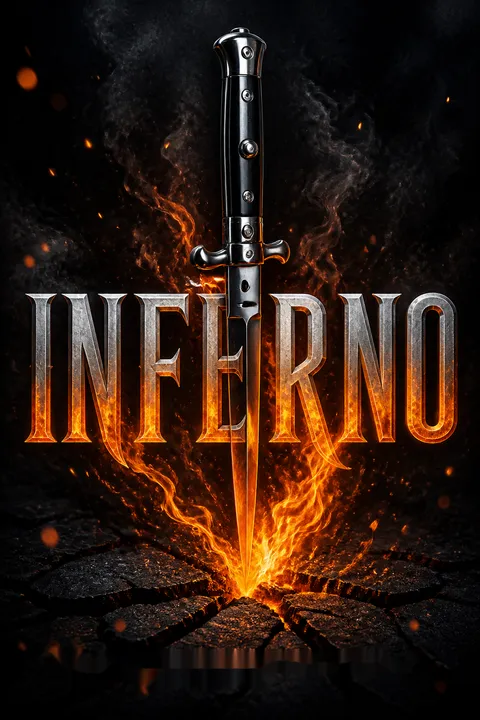
The Diner Becomes Inferno
Celine wakes and moves toward the stove, but Jack slams her against the island as the gas spreads through the kitchen. Luca and Nic force open the back door with guns raised, then lower them when Sophie warns them about the gas. Jack drags Sophie into the diner’s serving area, and Donata ignites the fumes. The explosion throws Sophie across the room and sets the kitchen ablaze.
Jack and Donata escape with the money. Sophie enters the smoke to reach Luca and Nic, both unconscious, and drags them through the blown-out back door. She goes back for Celine but cannot reach her through the flames. Firefighters and police arrive; Celine dies at the scene, while Sophie, Luca and Nic survive with injuries.
The explosion is the physical culmination of the novel’s competing claims on Sophie: Jack uses her as a shield, Donata uses her as bait, and the Falcones arrive as targets and would-be rescuers. Her warning gives Nic the chance to lower his weapon, but it cannot undo the trap already set. Sophie’s choice to return for Luca and Nic reflects her instinct to save lives, even as she cannot save the person whose safety has governed every decision. Celine’s death transforms the conflict from inherited danger into irreversible personal loss.
After the Fire
After the fire, Sophie retreats into shock and refuses Michael’s calls. When Nic visits, she rejects his offer of revenge and tells him that his lies, his gun and his divided loyalties are not love. She remembers that he aimed at her in the diner and could not lower his weapon until she warned him about the gas.
Luca later sits with her as she begins to face Celine’s death. Sophie accuses him and the Falcones of bringing violence into her home, then breaks down. He confirms that he pulled her from the flames when she tried to reach her mother. They kiss, but Luca stops, unwilling to use her grief as consent, and leaves his switchblade and Evelina’s ring beside her.
Sophie’s grief makes her reassess love through actions rather than intensity. Nic’s passion cannot erase the fact that he aimed a gun at her, and the language of revenge offers a future built from the same machinery that killed Celine. Luca’s presence is not morally clean, but he listens to Sophie’s anger and tells her what happened in the fire. His refusal to continue the kiss marks a boundary where desire yields to care. The switchblade and ring become charged objects: inherited violence and abandoned devotion, both placed in Sophie’s hands without dictating what she must become.
Escape Through the Garden
Jack calls Sophie and then returns to Cedar Hill, expecting her to come with him to Donata. Sophie pretends to cooperate, packs a decoy bag and slips out through the garden. When Jack catches her on the wall, she cuts his face with Luca’s switchblade and escapes through neighboring yards. She reaches Evelina and asks Luca to let her stay.
Sophie says she will help the Falcones kill Jack and Donata, though she does not want to live as a Marino. Luca accepts her choice without forcing a family name on her. The novel ends with Sophie crossing the Falcone threshold, no longer trying to pretend the underworld has not shaped her life, but determined to choose what she does inside it.
Sophie’s escape is a practical act of self-preservation, but it also reverses the earlier pattern in which relatives decided where she belonged. She uses the switchblade not as a talisman but as a tool, and the cut that lets her flee makes the object’s meaning newly hers. Her offer to fight is dangerous and unresolved; it does not signal uncomplicated conversion to the Falcone cause. Instead, she claims a form of agency within constraints she cannot simply erase. The final threshold is less a homecoming than a deliberate entry into a life she intends to shape.
Analysis
Inferno makes inheritance a force that behaves less like destiny than an institution: families preserve it through names, weapons, stories, money and the expectation that children will avenge the dead. Sophie’s discovery that her father hid a criminal identity does not simply replace one family history with another. It shows how secrecy can protect a child from knowledge while also leaving her unprepared when the past returns. The adults repeatedly call their violence protection, yet their protective acts place Sophie and Sara in the roles of bait, witness or bargaining piece.
The romance develops inside that contradiction. Sophie is drawn to Nic’s tenderness, but his loyalty to the Falcone code repeatedly outranks her safety. Luca offers a different kind of intimacy, grounded less in promises than in listening, practical care and limits. Neither connection removes the violence around her. The novel therefore resists treating love as a cure for an abusive social order; affection matters only when it changes what someone is willing to do.
Millie and Celine provide alternatives to Mafia kinship. Millie’s chosen loyalty gives Sophie a place to laugh and speak plainly, while Celine’s devotion is real even when her secrecy harms their trust. After Celine’s death, Sophie’s grief cannot be solved by a new family or a revenge promise. Her final decision to seek the Falcones is morally unsettled, but it is also the first time she enters that world with open eyes and makes a choice herself. The ending offers agency, not absolution: Sophie can choose her next action, even if she cannot undo the history that shaped it.
Review Summary
Inferno receives high praise from readers for its intense plot, character development, and slow-burn romance. Many consider it superior to the first book, with Sophie's growth and Luca's expanded role being highlights. The mafia storyline is thrilling, with unexpected twists and emotional depth. Readers appreciate the realistic portrayal of relationships, both romantic and platonic. The writing style is engaging, keeping readers hooked throughout. Some criticize certain character decisions, but overall, the book is highly recommended for its blend of action, romance, and intrigue.
People Also Read


Characters
Sophie Gracewell
Reluctant underworld survivorSophie is a sharp, funny seventeen-year-old whose ordinary life has been broken open by Mafia violence. She notices details, questions authority and often acts before fear can stop her, qualities that make her brave but also expose her to danger. Her loyalty to her mother and Millie anchors her, while her attraction to Nic and growing connection with Luca complicate her judgment. Sophie wants a life chosen freely, not assigned by blood or by the men who control the families around her. Her humor is a defense and a social gift, but it cannot keep grief or responsibility at a distance.
Luca Falcone
Conflicted Falcone underbossLuca is a disciplined assassin and the Falcone underboss, caught between the role his family expects and his own discomfort with inherited violence. He speaks bluntly, often masking concern with teasing or severity, and takes responsibility for his brothers even when he cannot control their choices. Sophie unsettles his practiced distance because she acts according to conscience rather than family instruction. His capacity for tenderness does not erase his involvement in the Mafia world; it makes his conflict more visible. Luca’s loyalty is both a source of strength and a constraint that shapes every relationship he allows himself to have.
Nic Falcone
Passionate Falcone soldierNic is a Falcone soldier whose attraction to Sophie is genuine but inseparable from his family’s demands. He is attentive and tender in private, yet trained to treat threats as problems to be eliminated. That division makes him difficult to trust: his care can be real even when his actions serve a violent agenda. Nic values loyalty and protection, but his definitions of both are shaped by the Mafia. His emotional intensity draws Sophie toward him, while his inability to separate love from duty exposes the cost of that intensity.
Millie
Fearless best friendMillie is Sophie’s loyal best friend, quick with jokes and quicker to challenge Sophie when fear begins to shrink her life. She uses humor to puncture the Mafia family’s self-importance, but she is not naïve about the danger surrounding them. Her courage is practical: she drives Sophie, stays beside her, and speaks when Sophie is overwhelmed. Millie’s loyalty is not blind agreement. She offers Sophie a relationship outside the competing family claims, a reminder that friendship can be chosen rather than inherited.
Celine Gracewell
Protective, grieving motherCeline is Sophie’s mother, a dressmaker who tries to preserve a stable home while carrying fears she rarely names. She turns to gardening as a way to keep her hands and thoughts occupied, even as money and family secrets press in. Celine’s protectiveness is fierce, but her instinct to conceal painful truths leaves Sophie without the knowledge she needs. She is loving, resourceful and visibly exhausted by the effort of holding the household together. Her relationship with Sophie is tender, though silence sometimes stands between them.
Michael Gracewell
Imprisoned fatherMichael is Sophie’s father, serving time for killing Angelo Falcone. He remains emotionally attached to his wife and daughter and worries about their safety from prison, where his ability to protect them is sharply limited. Michael is a quiet, private man whose attempt to give his family an ordinary life depends on keeping his past concealed. His choices raise difficult questions about protection, guilt and whether a person can escape a violent inheritance by refusing to speak of it.
Jack Gracewell
Dangerous maternal uncleJack is Sophie’s uncle and the manager of the family diner, a charismatic man whose affection for Sophie coexists with a talent for manipulation. He is ambitious, financially driven and deeply entangled in criminal dealings. Jack frames his actions as protection and family loyalty, but he repeatedly places Sophie and Celine in danger to advance his own plans. His history with Michael gives him a powerful hold on Sophie’s understanding of family, even as his choices test that bond.
Valentino Falcone
Falcone family bossValentino is the Falcone boss and Luca’s twin brother. He is controlled, strategic and conscious of how each decision affects the family’s standing. His authority depends on keeping emotion subordinate to calculation, though grief and pressure can break through that composure. Valentino sees protection and retaliation as matters of family survival, a logic that makes him formidable and morally difficult to read.
Felice Falcone
Honeyed family adviserFelice is the Falcone consigliere, an elegant man whose charm is sharpened by intimidation. He gathers information and uses it to control a room, making even polite gestures feel threatening. His grief for his missing wife and his devotion to the Falcone family coexist with a ruthless appetite for revenge. Felice’s confidence in family legend often turns history into justification for present violence.
Elena Falcone
Falcone matriarchElena is the Falcone matriarch and mother of Luca, Nic and Valentino. She is proud, severe and deeply invested in the family’s continuity. She interprets Sophie’s influence on her sons as a threat to their loyalty, and her fear tends to emerge as accusation rather than vulnerability. Her Sicilian heritage and status give her authority in a world where women’s power often operates through family alliances.
Donata Marino
Ambitious Marino leaderDonata leads the Marino family and is Elena’s sister. She is calculating, politically ambitious and skilled at turning personal grief into strategic purpose. Her daughter matters deeply to her, but sorrow does not soften her methods; she treats pressure and leverage as ordinary tools of command. Donata’s elegance conceals a willingness to threaten people directly, and her rivalry with the Falcones is both political and intimate.
Sara Marino
Restless Marino daughterSara is Donata’s teenage daughter, a creative young woman who longs for a life beyond the criminal family that surrounds her. Her dramatic appearance and awkward humor conceal a thoughtful, compassionate nature. She recognizes Sophie’s discomfort because she shares it, and she tries to help her navigate a world where family commands are difficult to refuse. Sara represents the possibility of wanting something different even when escape seems uncertain.
Dom Falcone
Provocative Falcone brotherDom is a Falcone family member with a taunting, combative manner. He enjoys provoking Sophie and his brothers, often using humor to disguise how firmly he belongs to the family’s violent culture. His past connection to Millie complicates the girls’ view of him, but he seldom makes it easy to trust his intentions.
Gino Falcone
Young Falcone lookoutGino is a younger Falcone who moves easily among his brothers and the family’s operations. He can seem playful or inattentive, yet he carries the expectations of a household where young people are brought close to violence early. His presence helps show how the Mafia’s rules are taught across generations, not only enforced by its leaders.
Paulie Falcone
Measured family mediatorPaulie is a large, calm Falcone relative who often tries to restrain the family’s more volatile members. His manner is gentler than Felice’s, and he values proportion when anger threatens to dominate a decision. Paulie’s quiet authority suggests that the family contains competing moral instincts, even if restraint rarely controls the outcome.
CJ
Grieving young FalconeCJ is Calvino Falcone’s twelve-year-old son. He is desperate for approval and surrounded by adults who frame violence as a measure of maturity and loyalty. His vulnerability is difficult to separate from the dangerous expectations placed on him, making him a stark example of how the family trains children to inherit its conflicts.
Calvino Falcone
Falcone enforcer and fatherCalvino is a Falcone enforcer and CJ’s father. He is associated with the family’s capacity for intimidation and with the harsh world in which his son is being raised. His role connects domestic authority to the criminal code that governs the Falcone household.
Evelina
Missing Falcone wifeEvelina is Felice’s missing wife, remembered through a ruby ring and the tomb prepared beside his. Her absence hangs over the Falcone family as an unresolved question about what life inside that dynasty costs.
Rita Bailey
Neighborhood busybodyRita Bailey is a longtime Cedar Hill resident who notices when Sophie and Celine disappear from local life. Her curiosity can be intrusive, but she also offers ordinary community concern in a story where trust is scarce.
Plot Devices
Omerta
Silence enforced by fearThe Mafia vow of silence explains why Sophie lies to police despite knowing who is responsible for the violence. It is not merely a code of loyalty: Felice’s threats show that breaking it can endanger relatives and expose the speaker to retaliation. Omerta makes official help feel inaccessible and repeatedly forces Sophie to choose between truth and immediate safety. Its pressure also distinguishes Sophie from the families, since she must decide what loyalty means rather than inherit a settled answer.
Luca’s switchblade
A portable claim to safetyLuca’s engraved switchblade passes from his clothes to Sophie’s bedside, then into her pocket as she tries to manage fear. Its weight gives her a sense of protection, but she cuts herself while sleeping, revealing that the weapon has become part of her trauma rather than a solution. Sophie returns it at the mausoleum, later uses it to escape Jack, and ultimately receives it back from Luca. The blade tracks her changing relationship to danger: from anxious dependence toward deliberate action.
Eden invitation
A summons into enemy territorySara delivers Jack’s crimson card inviting Sophie to Donata’s club, Eden. The invitation promises a private meeting but draws Sophie into a dangerous confrontation between the Falcones and Marinos. Nic steals the card after kissing Sophie, yet she goes anyway, believing she can persuade Jack to leave before a war begins. The card turns Sophie’s wish for answers into the event that lets Donata exploit her movements and lure Luca toward the diner.
Sanctuary Council
Refuge by family voteSanctuary is a formal Falcone promise of protection to someone outside the family by blood. Sophie’s request requires a Council vote, making refuge dependent on the very hierarchy she hopes will protect her. The debate exposes different Falcone priorities: some members see Sophie as innocent, others as a useful route to Jack, and others as a threat because of her family ties. The Council becomes the setting for the revelation that changes how everyone interprets her identity.
The hidden safe
Family history locked awayThe concealed safe at Gracewell’s holds cash, switchblades, a list of Falcone names and Evelina’s ruby ring. Michael’s brass key and the date of his parents’ murder open it, linking the family’s attempt to flee to the history they tried to bury. The contents reveal that the diner has been tied to the feud in ways Sophie did not understand. Jack’s arrival turns the safe from a possible escape fund into the center of the siege that destroys the family business.
Blood for Blood Series

About the Author
Other books by Catherine Doyle







Download PDF
Download EPUB
.epub digital book format is ideal for reading ebooks on phones, tablets, and e-readers.








