

Plot Summary
The Cobra Leaves Skin
Talia Kestenbaum, a Miami tattoo artist with no tattoos of her own, is finishing a cobra design on customer Roy when she runs out of brown ink. Her boss, Zayn Bahrami, is unexpectedly absent, so she breaks into his locked office and borrows several unusual pigments from his private supply. The colors make the tattoo startlingly vivid.
Soon after Roy leaves for the bathroom, he screams, and Talia finds a living black cobra with red eyes and a rattling tail beside his fallen body. The snake matches the design she just inked. Talia tries to call emergency services, but the creature lunges at her before she can get help. She falls, hits her head, and loses consciousness.
The inciting disaster grows directly out of Talia's ordinary work and impulsive boundary-crossing. Her artistic confidence makes the impossible plausible before she can name it: she has treated the ink as pigment, not as a medium with agency. The cobra is also an external version of the risk she habitually jokes away. Her quick wit helps her manage customers, but when Roy is hurt, humor cannot restore control. The episode establishes the novel's central bodily question through a literal image: what can art make, and who bears the consequences when creation escapes its maker?
A Ring From Paper
Police find no snake and insist Roy's injuries came from a fall, while Talia realizes that his tattoo has vanished. Alone in the shop, she examines Zayn's unlabeled, jewel-like inks and tests them by drawing a ring on paper. The next morning, she finds the shop locked and sees the cobra inside.
She races to Zayn's apartment, where a brilliantly colored parrot begs for help, then discovers an old grimoire covered in unreadable symbols. The bird bites her finger; her blood makes the writing glow and become legible. Her paper design has also become a real diamond ring. Now convinced Zayn's disappearance and the living tattoo are connected, Talia takes the grimoire and parrot back to the shop.
Talia's first proof arrives through objects, not explanations. The ring turns a private wish into material fact, while the blood-stained grimoire translates her body into a key. Her response is characteristically practical: she tests, observes, and carries the evidence home rather than waiting for an authority figure to validate her. Yet her investigation is not purely rational. The absent Zayn matters to her emotionally, and her fear for him is inseparable from fascination with his hidden life. The book makes knowledge intimate and costly: Talia can read the truth because her own blood has activated it.
Through the Filing Cabinet
Talia learns to read the grimoire's runes and activates a portal hidden in Zayn's filing cabinet while escaping the cobra. She lands in the Fae Realm and finds Zayn, his parrot familiar Hibiscus, and the serpent she accidentally created. Zayn explains that fae magic is hidden from ordinary human sight, but Talia's rare Rh-null blood, called gold blood, can spark and control magic beyond the limits of ordinary bloodlines.
He had hired and protected her partly because other fae might kill her for it. Before he can fully explain, the succubus Salen arrives with an order from her father, Sol. Talia's newly visible magic makes her a target, so Zayn gives her a temporary concealment tattoo and takes her with him to find a rare flower.
The revelation changes Talia from an observer of magic into its most valuable instrument, but it does not make her feel powerful. Her gift first appears as exposure: crossing realms strips away the protection that had kept her unremarkable. Zayn's care is therefore ethically complicated. He has guarded her, but withheld the reasons and shaped her life around risks she did not know existed. The romance inherits that asymmetry. Talia must decide whether trust can be rebuilt when protection has also meant concealment, and whether her own agency can survive being treated as a resource.
The Glaistig's Dance
Before they leave, Zayn tattoos a temporary ward on Talia to mask her gold glow, then explains that he is an incubus whose glamour can intensify desire. Talia wrestles with what that means for their earlier night together, while Zayn insists he did not use magic to influence her. In the forest, a banshee's scream signals an approaching death.
A glaistig appears and tries to lure Zayn into a dance before attacking Talia for her blood. Zayn shoots the creature with a poisoned arrow, but Talia is scratched and cut in the struggle. He heals her wounds with a potion and gives her protective leggings made from siren scales, then hurries her onward through the dangerous woods.
This encounter turns attraction into a question of consent rather than a simple romantic obstacle. Talia suspects that Zayn's supernatural nature may have compromised her past choices, while he has reason to fear his own capacity to influence others. The glaistig makes predation literal: beauty, invitation, and danger occupy the same body. Talia is not yet a trained combatant, but the scene gives her a clearer moral vocabulary. She wants Zayn, yet she also wants the desire between them to be freely chosen, not explained away as magic.
The Kiss That Feeds
At night, Zayn and Talia shelter behind a protection rune while wolves gather outside. The ward fails to keep a giant fachan from entering the campsite and attacking them. Zayn is struck by the creature's poisoned club and collapses. Talia distracts the monster with a rock, then uses an acid-secreting mushroom on an arrow to blind it.
When Zayn remains unconscious and the fachan closes in, she kisses him to transfer energy, reviving him enough to kill their attacker. He wakes later furious that she fed him without consent, and Talia recognizes the hypocrisy in having judged his appetites while crossing his boundary herself. She apologizes. Zayn accepts the apology, tends her injuries, and they continue toward the nearest Waypoint.
The rescue makes Talia's competence real, but it does not excuse her choice. She acts under immediate threat, then has to confront the difference between intention and consent. Her apology matters because she does not defend herself with the emergency alone; she recognizes that fear can justify urgency without erasing another person's autonomy. Zayn's anger likewise reveals care without romanticizing it. He is frightened by what he might do when weakened, and he treats Talia's safety as more important than the nourishment she can provide. Their bond deepens through accountability, not simply through desire.
The Waypoint Breaks
On the way to the Waypoint, Talia learns that Hibiscus is Zayn's familiar, a creature linked to a piece of his soul, and that ordinary blood incarnates are soulless beings subject to magical control. At the Waypoint, a hooded figure reaches for Talia's father's locket. Zayn cuts off its grasping hand, but the portal separates them, and Talia falls onto a sea cliff far from him.
Enchanted mermaids sing to draw her over the edge. She falls into the ocean and nearly drowns before a cursed siren saves her in exchange for a vial of gold blood. The siren recognizes Talia as an outsider and gives her a vial of kraken ink, which she needs to work on breaking her curse.
The Waypoint turns travel into a test of attachment: Talia loses Zayn, but not the objects and knowledge that connect her to him. Her father's locket, once a private keepsake, becomes the target of an unknown attacker, making family history part of the danger. The siren encounter complicates the story's predator-prey logic. The creature demands blood, yet also saves Talia and offers a tool for her own liberation. In this realm, help rarely arrives without a bargain, but the bargain need not make either party wholly villainous.
The Satyr's Seder
A satyr named Lamswyth, or Lam, finds Talia on the beach and takes her to his cliffside home while she waits for Zayn. Lam's fae wine leaves her disoriented, and his interest in her blood makes her realize he also sees her as a possible resource. Zayn arrives and threatens Lam before confirming Talia is unharmed.
Their argument exposes the larger danger: Sol, Salen's father and the ruling power in the Fae Realm, owns Zayn's service through a Dominion Rune. After Sol's forces killed Zayn's family during the Blood Wars, Zayn accepted a binding deal to survive and preserve his family's knowledge. Lam knows where the rare delphiniums grow, so the three set out to retrieve them.
Lam's hospitality is both refuge and hazard, a small-scale version of the political order that governs the Fae Realm. Talia's vulnerability is not only physical; exhaustion and unfamiliar customs make it difficult to judge what she has agreed to. Zayn's rage at Lam reveals how much he fears others treating Talia as he has been treated. The Dominion Rune reframes Zayn's secrecy as survival under coercion, while also exposing the cost of his silence. Talia's trust must now accommodate a painful fact: the man she loves has been forced to serve the people who destroyed his family.
Flowers Above the Sea
Lam leads Zayn and Talia up the cliffs to a moonlit ledge where the alabaster delphiniums grow. The flower can produce ink that either conceals magical blood or, paired with the right rune, counters a binding spell. Sol wants the pigment, and Zayn's Dominion Rune prevents him from refusing the order or even explaining everything directly.
He gives Talia a one-use Waystone and pages from his grimoire, then instructs her to take the flowers and escape alone. She must return to Zayn's office, make the ink, conceal her own blood, and later tattoo a counter-rune on him. When Lam climbs back with the blossoms, Talia takes them and runs, leaving Zayn behind to delay their pursuers.
The flower quest becomes a choice between obedience to coercion and loyalty freely given. Zayn cannot openly rebel, so he transfers knowledge, tools, and risk to Talia, trusting her artistic precision more than his own ability to escape the rune. That trust is a major change in their relationship: he stops treating her only as someone to shield and asks her to act as an equal. Talia's departure is not abandonment. It is the most active form of partnership available to them, though the plan requires her to survive without the person who has guided her through the realm.
Biscuit's Last Flight
Hibiscus guides Talia across the moonlit plain toward a Waypoint, while she carries the flowers and the Waystone. Three vampires appear, dragging a wounded fae behind them. After the banshee's scream distracts them, their captive escapes, but the vampires catch and kill him. One vampire uses stolen magic to control Hibiscus and orders the familiar to attack Talia.
She refuses to abandon him, lures him back with an almond, and activates the Waystone to return to Zayn's office. A vampire follows through the portal. Hibiscus bursts into rainbow fire to destroy it, then crumbles into ash. Talia gathers his remains in a silver box, grieving the loss of Zayn's soul-bound companion before forcing herself to continue the plan.
The familiar's sacrifice makes the costs of magical control painfully specific. The vampires do not merely take blood; they use a victim's stolen capacity to dominate another living being. Talia's refusal to leave Hibiscus is an act of love that also puts the plan at risk, and his final defense saves her at the price of a shared spiritual bond. Her response echoes the grief she has never resolved over her father: she packs the ashes away and keeps moving. Survival is not presented as emotional recovery, but as the decision to act while devastated.
Salen Finds the Ink
Back on Earth, Talia follows Zayn's grimoire to prepare delphinium ink and begins drawing the concealment rune on her ankle. Salen arrives early, recognizes Talia's glowing gold blood, and tries to feed on her. Talia fights back and inadvertently extracts several of Salen's tattoos, gaining access to their runic effects.
Salen summons Zayn through the Dominion mark on her wrist, then orders him to prepare the ink for Sol and keep Talia in the shop. Zayn returns battered from his escape attempt and hands Salen the pigment, unable to disobey. She leaves, promising to return with her father, while Talia realizes that the stolen runes may give her a way to resist the orders controlling Zayn.
Salen's attack makes the language of ownership explicit: she sees Talia's rare blood as property and Zayn's body as an instrument she can command. Talia's accidental extraction reverses that dynamic, though she does not yet know how much control she has gained. Her lie about the ink buys little time, but it reveals the limits of concealment when an adversary can read magical signatures. Zayn's return under compulsion is a devastating reminder that willpower alone cannot undo an imposed system. The only viable resistance now requires Talia to learn and use the same magic that threatens them.
The Chain Reverses
As Salen leaves, Talia uses one stolen rune to transform her into a rat and traps her in a container. Zayn warns that Salen's commands still govern him, and he cannot release the ink or let Talia escape. Talia studies the grimoire's Chaining Rune, then uses her genuine desire for Zayn to draw close enough to bind him to the tattoo chair.
She means to tattoo the counter-rune, but Zayn's compulsion breaks through the binding and closes his hand around her throat. Before she can finish, her mother, Dee Dee, arrives and unleashes a banshee-like scream that shatters the shop windows and knocks Zayn unconscious. The sonic blast also breaks the ink bottle, leaving the counteraction pigment ruined.
Talia's plan repeats the bodily violation she has spent the journey condemning, and the narrative does not let good intentions erase that resemblance. She chooses the chain because the alternative is allowing Zayn's captors to use him again, but she still recognizes the moral cost. The scene's sudden interruption by Dee Dee shifts the story's center of power: Talia has not inherited every answer from Zayn, and her family carries its own hidden magic. The destroyed ink raises the stakes just as Talia seems close to succeeding, forcing her to find another route rather than treating a clever plan as a guaranteed victory.
The Kraken Rune
Dee Dee admits that she has inherited banshee abilities and that Talia's father gave her the protective locket to shield her. While Dee Dee manages the police and Roy returns to repair the windows, Roy's living cobra tattoo kills the rat that had been Salen. Talia remembers the siren's kraken ink and the rune the creature carved to break its curse.
She mixes the ink with her blood and tattoos that counter-rune onto Zayn while he is still bound to the chair. The process nearly kills him, but he survives and wakes with his own will restored. Talia asks whether he loves her; Zayn confirms that his fear of claiming her came from believing his feelings were unreturned. They embrace, and the binding is broken.
The resolution depends on knowledge gathered from a being Talia initially had every reason to fear. The siren's ink becomes a form of reciprocity: Talia once paid blood for rescue, and now uses what she learned to free someone else. Dee Dee's confession also revises Talia's understanding of her family without making her father's death or the locket less meaningful. Zayn's confession completes the emotional reversal. Talia had interpreted his restraint as indifference, while he had mistaken her silence for lack of love. Freedom arrives through a shared correction of those assumptions, not through power alone.
A Dinner Before War
With Zayn free, he finishes Talia's concealment tattoo using the last usable drops of delphinium ink, and her glow disappears. The pair restore the shop's shattered windows and door, while Zayn alters Roy's memories so the tattoo incident will not expose the Fae Realm. Dee Dee accepts Zayn as part of the family, despite threatening him moments earlier, and insists he attend Shabbos dinner.
Sol is still expected to arrive, and Zayn initially plans to face him alone. Talia refuses to be left behind, so they agree to prepare for the danger together after dinner. The story closes with Talia and Zayn reunited but not safe: their next task is to confront the power that still rules the Fae Realm.
The ending restores everyday details without pretending the crisis is over. A repaired shop, a concealed glow, and a family dinner give Talia a temporary way back into ordinary life, but each repair is provisional. Roy's altered memory protects him while also showing how much truth must be hidden to survive. Dee Dee's invitation folds Zayn into a human ritual that is noisy, comic, and emotionally demanding, a sharp contrast to the coercive order he has endured. Talia's insistence on going with him marks her final shift from protected apprentice to chosen partner. The ending resolves their immediate separation while deliberately leaving political liberation unfinished.
Analysis
Inked links artistic creation to bodily autonomy. Talia begins as a professional who can draw on other people while refusing to tattoo herself. That division collapses when Zayn's inks make her work animate, and later when her own blood activates runes. Art is no longer a controlled image placed on skin; it can become a creature, a weapon, a shield, or a binding. Each new capacity asks who has the right to make decisions about another body.
The romance develops through the same ethical problem. Zayn fears that his incubus nature makes desire suspect, while Talia initially mistakes his restraint for rejection. Their attraction is real, but neither can treat intensity as proof of consent. Talia's decision to feed him after the fachan attack and her later use of seduction to bind him are not presented as uncomplicated heroism. She must acknowledge the harm in acting without permission, even when she hopes to save him. That self-correction distinguishes intimacy from possession.
The political plot enlarges this conflict. Sol's Dominion Rune turns Zayn into a skilled creator whose labor and body belong to someone else. Salen's power allows her to treat other people as resources, while vampires literally consume blood and steal magical control. Against these forms of extraction, Talia's most important acts are reciprocal: she accepts a bargain with the siren, carries knowledge between realms, and uses what she learns to help free Zayn.
Grief complicates her courage. The locket, the memory of her father's illness, and Hibiscus's sacrifice all connect love with the fear of failing someone at the crucial moment. Talia cannot undo her past, but she can choose what she does with the next chance to act. The ending offers emotional reunion without a false political victory. The couple has recovered agency and chosen one another, while Sol's power remains intact. Their future must therefore begin with a harder test: whether trust can become a form of resistance.
Review Summary
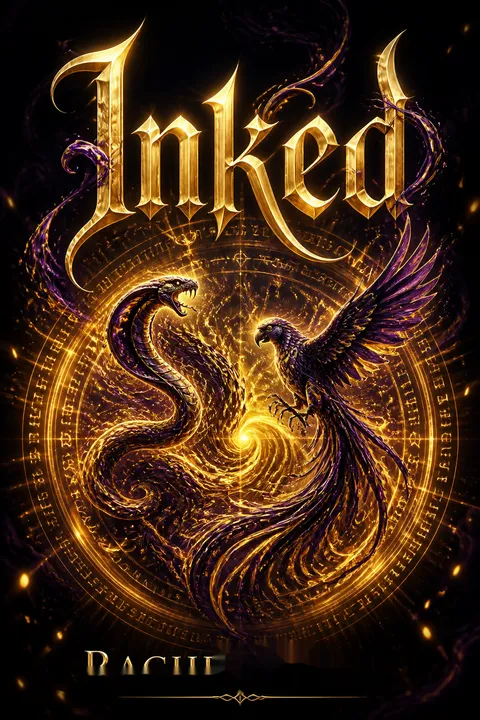
Inked by Rachel Rener is a widely acclaimed urban fantasy romance with a unique magical system based on blood types and tattoo ink. Readers praise the humorous writing, vivid worldbuilding, and lovable characters, especially the Jewish mother and Biscuit the parrot. The story follows Talia, a tattoo artist who discovers a hidden magical world. While some found the protagonist frustrating at times, most reviewers were captivated by the fast-paced plot, steamy romance, and creative magic system. The book is highly recommended for fans of urban fantasy and romantasy.
Characters
Talia Kestenbaum
Artist with restless nerveTalia is a twenty-five-year-old tattoo artist who left art school before graduating and built an independent life in Miami. Her quick humor and impulsive curiosity help her face embarrassment, but they can also propel her past sensible boundaries. She is deeply attached to her family, especially the father whose locket she wears, and grief has made her wary of being helpless when someone she loves is in danger. Talia's gift is not simply artistic skill; she notices how lines, colors, and small imperfections alter an image, then applies that precision to unfamiliar magical work. Her development centers on learning that courage requires more than action. She must also respect consent, accept help, and trust her judgment without assuming every burden belongs to her.
Zayn Bahrami
Secretive tattoo masterZayn owns the Miami tattoo shop where Talia works and is a gifted artist whose discipline can look like emotional distance. He is observant, exacting, and generous in practical ways, but he keeps crucial parts of his life private, partly from caution and partly from shame. His attraction to Talia is complicated by his fear that his nature makes intimacy exploitative, so he often chooses restraint even when it hurts them both. Beneath his composure lies a survivor shaped by profound loss and a powerful obligation he did not freely choose. Zayn's central conflict is the gap between what he can create for others and what he believes he deserves for himself. He values loyalty, but has difficulty allowing anyone to share the cost of protecting him.
Dee Dee Kestenbaum
Talia's forceful motherDee Dee is Talia's Brooklyn-born Jewish mother, a loving and relentlessly involved presence whose anxious calls and dramatic opinions often overwhelm her daughter. Her humor and fierce protectiveness conceal a serious sensitivity to danger, and she is far more observant than Talia gives her credit for. Dee Dee wants Talia close, safe, and connected to family, even when her attempts to secure those things become intrusive. Their relationship runs on argument as a familiar form of intimacy: both women know how to provoke one another, but neither mistakes friction for a lack of love. Dee Dee's bluntness gives Talia a model of loyalty that is imperfect, noisy, and unwavering.
Hibiscus, called Biscuit
Zayn's feathered familiarHibiscus is Zayn's brilliant, rainbow-feathered familiar, a curious and stubborn creature with a talent for finding useful runes and an appetite for almonds. Talia calls the bird Biscuit, a nickname Hibiscus accepts and soon treats as part of their growing bond. The familiar is playful, expressive, and more perceptive than its limited speech first suggests. Its connection to Zayn is unusually intimate, making it both companion and living extension of his emotional life. Hibiscus often supplies the practical cue that Talia misses, but refuses to behave like a tame tool. Its independent will is precisely what makes its loyalty meaningful.
Salen
Predatory royal enforcerSalen is a glamorous succubus and the daughter of Sol, whose orders she carries into Zayn's life. She uses beauty, confidence, and social power as instruments, expecting other people to yield because they have usually been taught to do so. Her manner can be playful, but the playfulness masks a clear sense of entitlement to bodies, labor, and magical resources. Salen's relationship with Zayn is shaped by the hierarchy that protects her and constrains him. She treats affection as leverage rather than mutual vulnerability, making her a personal as well as political threat to Talia.
Sol
Ruler of the new orderSol is Salen's father and the dominant political power in the Fae Realm. Though he is not often present in person, his commands shape Zayn's choices through a binding magical mark. Sol values control over cooperation and seeks rare magical materials that could extend his power. His authority grew in the aftermath of the Blood Wars, when the old courts were weakened and vulnerable. The fear attached to his name is not merely personal; it reflects a realm in which law and force have become difficult to distinguish.
Lamswyth, called Lam
Satyr with a hidden refugeLam is an old satyr who lives in a hidden home carved into the cliffs and knows the Fae Realm's terrain and its dangers. He is an Endower, able to channel borrowed magic into useful effects, and he trades in knowledge as readily as in goods. His hospitality is genuine but not uncomplicated; he can be flirtatious, self-interested, and careless about how fae customs affect a human visitor. Lam also remembers the court before its collapse and understands the compromises that kept some survivors alive. His mixture of warmth, appetite, and hard-earned caution makes him an uneasy but valuable ally.
Roy
Biker with a living tattooRoy is a burly, good-humored tattoo client who arrives at Talia's shop for an elaborate cobra design. He is straightforward and trusting, and his easy banter makes him one of Talia's familiar regulars. Roy does not understand the magical forces tied to his tattoo, but he responds to danger with more courage than his blustering manner suggests. His friendship with Talia gives the magical plot a foothold in the ordinary world, where a strange event can injure an unsuspecting customer and threaten the shop's livelihood.
Talia's father
Keeper of the locketTalia's father died after a long illness, leaving her with a gold locket that she wears constantly. He was gentle and attentive, and his illness shaped Talia's fear of needles and her lasting sensitivity to medical helplessness. The locket keeps his presence close while carrying a history he never explained to her. In Talia's memory, he represents both the comfort of being loved and the pain of having unfinished words.
Nick
First responder at the shopNick is a red-haired emergency responder who checks Talia after she falls at work. He is calm, competent, and skeptical of her account of the snake, responding to the evidence available rather than the impossible explanation she offers. His ordinary professional perspective underscores how easily supernatural events can be dismissed when they leave no conventional proof.
Officer Wilcox
Skeptical police officerOfficer Wilcox investigates Roy's injuries and searches the tattoo shop for the missing snake. She is practical and courteous, but has no reason to accept Talia's description of an impossible cobra. Her brief appearances show the gap between the evidence visible to ordinary authorities and the magical events shaping the story.
Plot Devices
Gold blood and blood classes
Magic's living fuelFae magic depends on different blood types, which determine whether a person can extract, endow, create, or control magical effects. Talia's exceptionally rare Rh-null blood is called gold blood and can both spark and control magic, making her valuable to people who want power and vulnerable to those who would exploit her. The system gives bodily difference a direct political consequence: what is medically dangerous for Talia becomes an extraordinary magical resource. Her blood also makes her creations unusually powerful, tying every act of magic to questions of consent, ownership, and risk.
The grimoire and runes
Art becomes spellcraftZayn's grimoire records the precise symbols and procedures needed to activate magical wards, portals, bindings, and other effects. The runes depend on exact line order, angles, and materials, so Talia's artistic training becomes a practical magical skill. Ink acts as a catalyst, and blood can activate or alter the result. The book also shapes the plot's investigative structure: Talia deciphers it, finds a way through it, and uses its instructions to attempt both concealment and liberation. Its hidden writing makes knowledge contingent on access to Talia's blood.
The gold locket
A shield from her fatherThe locket Talia inherited from her father is a fae talisman that masks magical signatures from many supernatural observers. Zayn repairs and strengthens its protective rune, but crossing into the Fae Realm and awakening her own magic weakens its concealment. The locket links Talia's unresolved family history to the immediate threat around her: it is both a source of protection and an object that attracts attention. Its presence also gives her a tangible connection to her father as she enters a world he may have known more about than he revealed.
The Dominion Rune
A magical chain of commandSol's Dominion Rune binds Zayn to three rules: he cannot harm Sol or his family, cannot deliberately harm himself to escape, and must carry out their orders unless those orders violate the other rules. The mark turns political domination into a physical constraint and explains why Zayn cannot simply refuse, flee, or disclose everything. It also creates the central practical problem of the final act: Talia must find a way to counter the binding without letting its commands force Zayn to hurt her. The rune makes the struggle over autonomy visible on the body.
Familiars and incarnates
Creation with a soulMagical tattoos can become living incarnates when blood and enchanted ink meet, as Talia discovers when Roy's cobra leaves his skin. Most blood incarnates are soulless creations that can be controlled or abused, while a true familiar shares a piece of its maker's soul and possesses independent feeling. Hibiscus is Zayn's familiar, not merely a magical pet, and the distinction gives the story a way to examine the difference between making a creature and taking responsibility for it. The Waystone, another magical object, provides one-use transport when Talia must flee alone.
Gilded Blood Series
Download PDF
Download EPUB
.epub digital book format is ideal for reading ebooks on phones, tablets, and e-readers.








