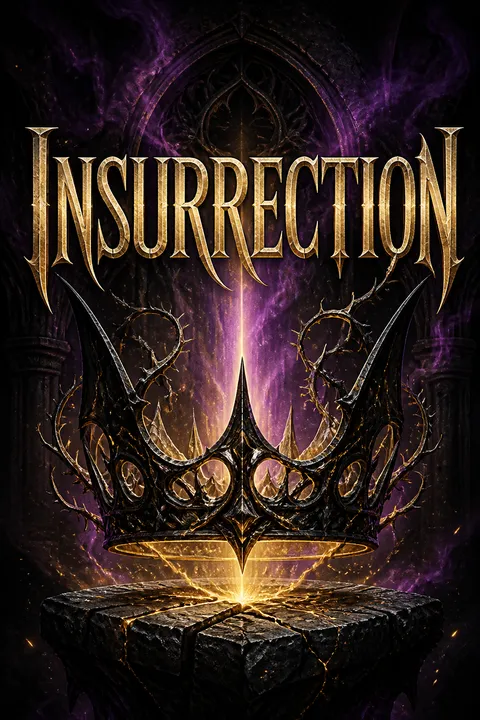


Plot Summary
The Hybrid on the Ledge
Eighteen-year-old Amare, called Ama, returns to the House of Death through a storm and finds Lily waiting on her usual landing ledge. Lily attacks while Ama struggles to fly in the worsening weather, then calls her an unworthy Reaper because Ama is a hybrid. Ama knocks Lily down with a wing and escapes into the castle, where she is still the only person who looks and feels conspicuously different.
Her friend Zurie urges her to tell her father, King Alaric, but Ama refuses to punish Lily’s family for Lily’s cruelty. She is already lonely in her own territory, and the coming Summit, where six houses choose a ruler, promises to make that isolation political as well as personal.
The opening makes exclusion physical: Ama cannot land safely in her own territory without passing through a bully’s gauntlet. Her hybrid body is not a secret, but its meaning is imposed on her by a society that treats ancestry as a measure of legitimacy. Ama’s refusal to report Lily is not simple passivity. She is trying to preserve fairness in a culture that offers her little fairness in return. Her instinctive kindness toward servants and her reluctance to punish an entire family complicate the easy image of a reckless, angry princess. The Summit gives this private wound public stakes.
A Prince in the Courtyard
After another bitter encounter with Drayven, the powerful Reaper who once humiliated her, Ama reaches the courtyard and meets Finias, prince of the House of Runes. The tattooed dark elf has come to satisfy his parents’ political demands, though he would rather escape their control. He and Ama turn a wary introduction into easy laughter, until Drayven arrives and orders Finias away.
Finias answers by punching him unconscious, then accompanies Ama into the throne room. There, King Alaric reveals that a catastrophe in the human world is creating too many souls for his Reapers to guide, so he must go help. Ama must represent the House of Death at the Summit, with Drayven assigned to travel beside her.
Finias enters as a deliberate contrast to the people Ama knows: dangerous by reputation, but attentive to her dignity. His immediate defense is exhilarating, though it also raises the danger of confusing protection with possession. Drayven’s command exposes the old hierarchy Ama has been fighting, while Alaric’s assignment forces her to confront it on a larger stage. The crisis beyond their realm gives the political plot an ethical foundation: the Summit is not only a contest for status, because Alaric’s absence creates a real burden of care. Ama accepts partly from love for her father, not confidence in herself.
Lessons in Bloodlines
Before leaving, Ama studies the six houses with Otto, her tutor, who explains which rulers might support the House of Death and warns that bloodline prejudice will work against her. He also recommends using her Succubus allure to influence powerful heirs. Ama refuses to treat her inheritance as a political tool, even though suppressing that side of herself leaves her struggling to feed.
In town with Zurie, she collides with Colt, prince of the House of Fallen, and spills a drink on him. Colt assumes she is using her power to seduce him, then learns she is the hybrid princess he has been sent to investigate. He condemns the bartender who insults her, but still intends to use what he learns for his house’s advantage.
This section makes Ama’s political dilemma intimate. Otto’s advice treats her body as a resource, echoing the social prejudice that has already made her distrust half her own nature. Her refusal is an act of self-definition, but it also leaves her with an unresolved need: as a hybrid, she must manage two forms of power and cannot simply wish one away. Colt’s mistaken suspicion shows how reputation precedes evidence. His defense of Ama against a slur hints at a moral independence he has not yet applied to his political mission. Both heirs enter the Summit carrying inherited agendas they may not fully endorse.
The Summit’s Cold Welcome
At the Summit estate, Ama meets Damien, heir to the House of Hellfire, whose warmth makes the unfamiliar court less forbidding. During the formal gathering, Drayven identifies the rulers and heirs of the six houses, including Finias, Colt, Nicolas of the House of Sin, and Adrien of the House of Shadows.
King Celorn of the House of Fallen immediately attacks Ama’s right to be present, calling her hybrid birth a stain on the proceedings. Ama answers without retreating, pointing out that he has no authority to overrule the Supreme. Celorn leaves with Queen Kahli, while Colt watches Ama closely and Damien’s parents show guarded sympathy. Ama has not won their trust, but she has refused to enter the room as an apology.
The Summit converts the discrimination Ama has endured privately into an official test of legitimacy. Celorn’s insult is not merely personal; it represents a political system that equates purity with fitness to govern. Ama’s response matters because she refuses both submission and the temptation to perform respectability for her opponents. She claims authority through the rules already governing the room, rather than asking the rulers to recognize her humanity. Damien’s discreet welcome offers a different model of power, one grounded in hospitality. Colt’s attention remains ambiguous, reminding the reader that apparent kindness and political allegiance are not yet the same thing.
The Balcony and the Kiss
At the opening feast, Ama’s unguarded delight in her food provokes Celorn, who insults her before the assembled rulers. When he escalates, Adrien, heir to the House of Shadows, hides her in his shadows and carries her to a balcony. He tells her that the rulers of the Houses of Sin and Runes were not appointed by the sleeping Lucifer; they killed their way into power, and the other houses concealed the history to prevent war.
Ama resents being kept ignorant, but recognizes the trust Adrien has placed in her. Their talk about purpose and the realm’s future becomes intimate. When Ama warns that her kiss might drain his soul, Adrien kisses her anyway. Her magic does not harm him, and she kisses him back.
Adrien’s revelation reframes the Summit’s doctrine of purity: the houses policing bloodlines have themselves built authority through violence and concealment. The hidden history also explains why Ama’s father might protect her from political knowledge, but protection still feels like exclusion to someone repeatedly denied agency. Her conversation with Adrien offers a rare relationship in which intellectual curiosity and emotional safety reinforce each other. The kiss has concrete significance beyond romance: it challenges the belief, planted in Ama by past humiliation, that her Succubus nature makes intimacy inherently dangerous. Her power responds not as a weapon, but as a part of her that can meet another person without destroying him.
Drayven’s Confession
After seeing Ama kiss Adrien, Drayven confronts her and claims she belongs with him. Ama demands to know why Adrien survived a kiss that Drayven once said had nearly killed him. Drayven admits that the earlier accusation was false: as a teenager, he had been encouraged to treat Ama as a threat to his possible succession, and he used the lie to isolate her and keep others away.
He also confesses that he wanted her but feared what those feelings meant. Ama sends him away, unwilling to let remorse erase years of pain. Later, Drayven returns drunk and injured after fighting Finias and sleeps beside her. Ama lets him stay, but the betrayal remains unresolved between them.
Drayven’s confession exposes the violence concealed inside a romanticized claim of protection. His lie may have kept other people at a distance, but it did so by making Ama believe she was dangerous and unworthy of touch. The fact that he acted under political pressure explains his choice without excusing it. Ama’s response is psychologically precise: she neither denies her enduring attraction nor mistakes it for forgiveness. Allowing him to sleep beside her reflects care and uncertainty, not absolution. The scene marks a shift from imagined rejection to known betrayal, giving Ama a clearer basis for deciding what she will accept from him.
Finias in the Dark
While Ama bathes, Finias enters her chambers unseen and tells her he could not bear the distance she created after their first meeting. He admits that his parents sent him to gather information about the House of Death, and that he obeys them because they punish him when he resists. Ama recognizes the danger in trusting a prince with a political mission, yet believes his feelings are his own.
Finias touches her with care, and Ama allows herself pleasure without treating her Succubus nature as something shameful. He asks her to attend the coming ball with him so their connection will be visible. Ama agrees, accepting both the intimacy and the political consequences of being seen at his side.
The scene makes intimacy a negotiation of truth rather than a reward for charm. Finias does not conceal the political assignment that could compromise him, and Ama chooses to hear the confession without reducing him to his parents’ instrument. Her pleasure also challenges her habit of treating desire as evidence that she is becoming like her absent mother. The moment does not settle the danger of their families or the Summit’s power games; it makes those conflicts part of the intimacy itself. Agreeing to attend the ball is both personal trust and a public signal, a choice Ama makes knowingly rather than as a pawn.
A Ball Full of Claims
Before the ball, Colt warns Ama that the Summit is dangerous and offers advice rather than a threat. Finias arrives late, and Ama overhears his parents berating him for failing to secure her vote; his mother strikes him when he refuses to treat Ama as an assignment. Ama comforts him, then enters the ball on his arm.
She also dances with Damien, whose Hellhound wants to mark her, and meets Nicolas, whose Incubus power draws her in. When King Marcelo of the House of Sin uses a dance to demean and sexually threaten her, Colt pulls him away and apologizes for his own earlier behavior. The evening gathers several competing forms of attention around Ama, while she tries to distinguish genuine care from strategy.
The ball places Ama at the center of a contest in which affection, coercion, and political theater can look deceptively similar. Finias’s treatment by his parents reveals that the assassin prince’s danger is also a form of captivity; his loyalty has been shaped by punishment. Damien’s restraint and Colt’s intervention offer alternatives to domination, although neither erases their houses’ agendas. Marcelo’s assault strips away the elegance of courtship and exposes the entitlement beneath his political authority. Ama’s growing confidence does not mean she has become immune to manipulation. Rather, she is learning to judge each man by what he does when her autonomy is at stake.
The Ballroom Breaks
As the evening deepens, Colt tries to speak privately with Ama, and Drayven intervenes. Their confrontation draws in Damien, Adrien, Nico, and Finias, while tension rises far beyond what their usual temperaments warrant. Finias knocks Drayven down, then tells the group that Drayven’s lie made Ama believe her kiss could kill.
The others learn how long she has carried that shame, but their argument becomes another public spectacle. Damien’s Hellhound takes control, scenting Ama and claiming her as his, while Colt and Damien collide. Ama can no longer bear the attention, anger, and competing possessiveness. She forces open the ballroom doors and flees to her quarters, choosing solitude before the gathering can consume her completely.
The brawl externalizes the danger of treating Ama as a prize to protect, win, or possess. Each man may care for her, but their care becomes destructive when it turns into a contest conducted over her body and without her consent. The heightened aggression also contains a clue: the emotions seem unnaturally amplified, and Ama’s flight interrupts the spectacle before it can define her. Her decision to leave is not a retreat from the political struggle so much as a limit set against being overwhelmed. The scene shows that attraction alone cannot establish trust; restraint and respect for Ama’s choices are equally necessary.
The Hellhound Guards Her
A suspicious Incubus waits near Ama’s quarters, then an assassin ambushes her inside, using a drug that blunts her Reaper powers. Ama tears free with her wings and discovers she can wield her Succubus magic to trap the attacker in a lustful trance, but she cannot hold him indefinitely. The assassin is a dark elf from Finias’s house.
Damien arrives in Hellhound form and kills him before he can strangle Ama again. He stays with her, then lets her sleep in his rooms beside his protective beast. The others find the body and realize the attack was planned. Nico suspects his parents helped engineer the ballroom chaos, while Finias acknowledges the assassin’s origin. The princes decide to stand with Ama at the vote.
The attack turns the prejudice against Ama into an immediate attempt to remove her from power. Her newly used Succubus magic is neither frivolous nor corrupting: it buys the seconds she needs to survive when the Reaper side of her has been chemically suppressed. Yet she is not suddenly invulnerable, and Damien’s intervention is decisive. His protection offers comfort, but the rescue also carries a moral cost, since he kills the attacker in her presence. The conspirators’ choice of timing reveals that the Summit’s political theater has become physical danger. For the heirs, loyalty shifts from abstract house interest to the concrete responsibility of protecting Ama.
The Vote Becomes a Coup
At the voting ceremony, the Houses of Shadows and Hellfire support the House of Death, while Celorn favors his own house and condemns Ama. The House of Sin and House of Runes try to discredit her, but Ama arrives and displays the bruises around her throat.
She accuses them of arranging the assassination and notes how the two houses gained power through bloodshed. Finias confirms the attacker came from his house, and the princes refuse to abandon her. Queen Ava answers by ordering the assembled forces to kill everyone present.
A dagger kills King Marcelo; Queen Anastasia is killed as she flees. Dark elf restraints drain the Wraith rulers’ power, and the room erupts into combat. Ama fights with her scythe and magic, but an elemental blast knocks her unconscious. The book ends before anyone escapes or the vote is resolved.
The voting chamber exposes the hypocrisy at the center of the houses’ purity politics: the rulers condemning Ama’s birth have used secrecy and violence to secure their own authority. Her bruised throat makes the threat legible to everyone, while Finias’s confirmation gives her accusation weight beyond personal testimony. The coup is not an orderly revelation followed by justice; it is an attempt to erase witnesses and seize power by force. The princes’ decision to protect Ama crosses inherited loyalties, but the ending refuses to grant them an easy victory. Ama’s collapse leaves the central political conflict unresolved and makes survival, not persuasion, the immediate question.
Analysis
Insurrection makes purity politics concrete by showing how it works on a body before it works in a council. Ama is bullied for her horns, wings, and mixed ancestry; then rulers treat those same traits as grounds to deny her authority. Her private shame is therefore political infrastructure. The Summit does not merely ask whether she is capable of leadership. It asks whether a person rejected by the dominant order can be trusted to preserve that order.
Ama’s growth is not a simple movement from insecurity to confidence. She has always possessed courage and a sense of fairness, but she has internalized the belief that one half of herself is dangerous and the other half must earn acceptance. Each relationship tests a different version of that belief. Drayven’s lie shows how protection can become a rationale for control. Finias offers honesty and tenderness, while his family demonstrates how power can turn kinship into obedience. Adrien connects intimacy with intellectual trust. Damien’s divided human and Hellhound nature parallels Ama’s own struggle to accept multiple inheritances. Colt and Nico confront the pressure to inherit their parents’ prejudices.
The novel also questions the assumption that desire is inherently corrupting. Ama’s Succubus magic can endanger others, but denying it does not make her more virtuous or safer. The story’s sharper distinction is between power used without consent and power acknowledged, negotiated, and directed. That distinction matters in romance, but it matters just as much in government: the rulers who preach restraint rely on secrecy, manipulation, and violence.
The ending deliberately withholds political resolution. Ama exposes the conspiracy, but the evidence does not produce a fair vote; it triggers an assault designed to eliminate the witnesses. Her collapse leaves the story at the point where ideals must become survival choices. The central question is no longer simply whether the houses will accept a hybrid heir. It is whether any of them can build a just order without repeating the coercion that made the old one.
Review Summary
Characters
Amare
Hybrid heir in exileAmare, usually called Ama, is the eighteen-year-old heir of the House of Death, born to a Reaper king and a Succubus mother who left when Ama was young. Her horns, wings, coloring, and mixed magic make her conspicuous in a culture that prizes pure bloodlines. Humor, fashion, books, and kindness help her create small spaces of comfort where she is otherwise treated as an outsider. She is loyal to her father and values fairness, but years of rejection have made it difficult for her to trust affection or accept her own Succubus nature. Her central struggle is to claim authority without copying the cruelty of the people who deny her place.
Drayven
Reaper heir and rivalDrayven is a formidable Reaper who has been groomed by the House of Death’s court as an alternative successor to Ama. His discipline, strength, and political usefulness have shaped him into someone who tries to control situations before they can threaten him. He and Ama have known each other since childhood, and his attention to her is tangled with old hurt, possessiveness, and feelings he has struggled to face honestly. Drayven’s loyalty to Mortem is genuine, but it can conflict with his personal attachments. His character tests the difference between protecting someone and deciding on their behalf, especially when fear makes restraint difficult.
Finias
Rune-marked assassin princeFinias is the prince of the House of Runes, a dark elf whose rune tattoos mark his exceptional power and whose weapons emerge from his own body. He is skilled at violence but socially awkward, playful, and unexpectedly gentle with Ama. His parents treat him as a tool for their ambitions, leaving him hungry for safety, affection, and a life beyond their control. Finias’s impulse to protect Ama can be fierce, and he is drawn to her refusal to let others define her. His appeal lies in the contrast between lethal competence and emotional openness, though his possessiveness and family loyalties create real complications.
Colt
Fallen prince with doubtsColt is the heir to the House of Fallen, a winged prince sent to investigate the House of Death and advance his family’s position at the Summit. He first mistakes Ama’s involuntary Succubus influence for deliberate seduction, but her anger forces him to reconsider his assumptions. Colt values duty to his people and wants the power to improve their circumstances, yet he is increasingly uncomfortable with his father’s prejudice and his house’s rigid ideals. He can be abrasive and jealous, but he also recognizes when Ama is being mistreated and acts to intervene. His conflict is between inherited loyalty and the principles he is beginning to claim as his own.
Nicolas
Incubus heir under pressureNicolas, who prefers Nico, is the prince of the House of Sin. His Incubus nature gives him an easy sensual confidence, but he is more observant and morally conflicted than his parents expect. He dislikes their appetite for power and their efforts to shape him into a reflection of their own values. Ama intrigues him because she is candid, self-directed, and unlike the people who treat desire as a transaction. Nico is not naturally comfortable with emotional vulnerability, and his relationship to his family complicates his attempts to act independently. He must decide whether loyalty means obedience or whether he can oppose people he still loves.
Damien
Hellhound heir and allyDamien is the heir of the House of Hellfire and a young leader who struggles with anxiety, expectations, and control of his Hellhound form. His older brother’s reputation as the ideal successor casts a long shadow, even though Damien is the one expected to inherit the crown. He is warm, generous, and protective, often making others feel welcome without demanding anything in return. His Hellhound side carries stronger instincts and a more dangerous intensity, creating a tension between his considerate human manner and the creature within him. Ama’s acceptance encourages him to be honest about both parts of himself.
Adrien
Quiet Wraith protectorAdrien is the heir of the House of Shadows, a Wraith prince who uses shadow magic and generally keeps to himself. Thoughtful, intellectually curious, and more perceptive than he first appears, he has built a life around privacy and the safety of a small circle. Ama draws him into questions about purpose, power, and connection that he has kept at a distance. He admires her openness and sees her strength beneath her humor. Adrien’s calm can make him seem detached, but his loyalties are deep, and he is willing to act when someone is threatened. His protective instinct must coexist with Ama’s need to choose for herself.
Zurie
Ama’s steadfast confidanteZurie is Ama’s closest friend in the House of Death, a Reaper with lavender-streaked hair and a ghostly heritage. She is affectionate, perceptive, and more willing than Ama to confront the people who mistreat her. Her combat training gives her a practical edge beneath her gentle manner. Zurie offers Ama friendship without making her hybrid nature the center of their relationship, and her straightforward advice helps Ama recognize when she is making excuses for others.
Alaric
Death’s burdened kingAlaric is the King of Death, Ama’s devoted father, and the current Supreme of the six houses. He dislikes the work of ruling but takes his responsibility seriously, striving to prepare Ama while shielding her from the court’s hostility. His bond with his daughter is warm and dependable, shaped by the absence of Ama’s mother. When a catastrophe creates a surge of souls to reap, Alaric trusts Ama with an assignment that carries more weight than she expects.
Lily
A familiar tormentorLily is a Reaper who repeatedly targets Ama with insults and attacks, especially when Ama is isolated. Her cruelty gives personal force to the kingdom’s broader prejudice against hybrids. She is protected by the laws and social structures that make it difficult for Ama to answer her without consequences.
Otto
Court tutor and strategistOtto is Ama’s tutor, an old Reaper who teaches her the history and political alignments of the houses. He values tradition and views power in practical terms, so his advice sometimes treats Ama’s Succubus abilities as tools to exploit. His instruction gives Ama useful knowledge even as his assumptions reveal the prejudice built into her court.
King Celorn
Purist Fallen rulerCelorn rules the House of Fallen alongside Queen Kahli and believes strongly in preserving the house’s traditions and bloodline hierarchy. He is blunt, proud, and quick to treat Ama’s hybrid nature as evidence against her fitness to lead. His hostility reflects a political worldview in which social order is more important than individual fairness.
Queen Kahli
Fallen queen and consortKahli is Queen of the House of Fallen and Colt’s mother. She is composed in public and stands beside Celorn’s leadership, though her response to Ama is less openly aggressive than his. Her role places Colt between affection for his family and growing doubts about the values his parents defend.
King Roarke
Rune king with ambitionRoarke rules the House of Runes with Queen Ava and expects Finias to serve the house’s political aims. He is calculating and severe, treating family loyalty as an obligation rather than a source of care. His ambition and guarded manner make the Rune court difficult to read, especially for outsiders.
Queen Ava
Rune queen and disciplinarianAva is Finias’s mother and Queen of the House of Runes. She is coldly pragmatic and expects her son to obey the political plans made for him. Her sharp discipline contributes to Finias’s sense that affection must be earned through usefulness, a belief Ama challenges simply by treating him as a person.
King Marcelo
Sin king and manipulatorMarcelo rules the House of Sin with Queen Anastasia and embraces a culture where desire and political advantage frequently overlap. He is entitled, sexually aggressive, and skilled at using charm as a means of control. His conduct toward Ama exposes the difference between mutual desire and coercion.
Queen Anastasia
Sin queen and power brokerAnastasia is Queen of the House of Sin and Nico’s mother. She moves comfortably through a court where sexual relationships and political influence are intertwined. Her expectations for Nico reflect the house’s appetite for power, even as he struggles to define himself apart from his parents.
King Victor
Reserved Wraith rulerVictor rules the House of Shadows with Queen Adira. Like many Wraiths, he is private and measured, preferring observation to public display. His relationship with Adrien forms part of a close family circle that contrasts with the harsher dynasties at the Summit.
Queen Adira
Wraith queen and motherAdira is Queen of the House of Shadows and Adrien’s mother. She shares her house’s quiet reserve and keeps close to her family rather than seeking attention in the political theater of the Summit. Her presence helps define the loyal, protective home life that Adrien values.
King Drax
Hellfire’s steady kingDrax rules the House of Hellfire with Queen Emberleigh and is Damien’s father. He favors strength and clear action, but does not share Celorn’s open contempt for Ama. His leadership gives Damien a model of duty, while the expectations of the crown still weigh heavily on the younger prince.
Queen Emberleigh
Hellfire queen and motherEmberleigh is Queen of the House of Hellfire and Damien’s mother. Her guarded warmth toward Ama suggests a capacity for judgment beyond bloodline prejudice. She is attentive to Damien’s volatility and hopes he can fulfill his responsibilities without losing himself to his Hellhound nature.
Maria
Ama’s former tutorMaria taught Ama when she was young and offered her the kindness of a maternal presence. The court removed her from her position after she defended Ama, leaving Ama with an unresolved concern about where she went.
Holden
Damien’s admired brotherHolden is Damien’s older brother, widely admired as the more capable future king. He chose to teach at Infernum’s military school instead of inheriting the throne, leaving Damien to carry expectations he does not feel prepared to meet.
Samuel
Incubus court observerSamuel is an Incubus who appears near the Summit’s residential quarters. His presence around Ama adds to the sense that the political gathering is being watched from beyond the formal council.
Plot Devices
The Six-House Summit
Turns prejudice into policyOnce each century, the six houses choose a Supreme, whose vote breaks ties and whose enhanced powers help restrain the other rulers. The Summit brings Ama into direct contact with the people who can validate or reject her claim to leadership. Its formal meals, speeches, and private negotiations make the process feel both ceremonial and strategic. Because Alaric must leave to reap souls after a disaster in the human world, Ama represents the House of Death at a moment when the vote is especially vulnerable. The gathering provides the political structure for alliances, revelations, and the conflict that ultimately overwhelms the proceedings.
Hybrid Reaper-Succubus Magic
Makes identity a powerAma carries two kinds of magic that her culture treats as incompatible. Her Reaper side uses a scythe to collect souls and can draw energy from the accumulated lust within them. Her Succubus side can affect desire and pleasure, but Ama distrusts it because she associates it with her absent mother and fears harming people without meaning to. The tension between suppressing and accepting that inheritance shapes both her ability to survive and her understanding of intimacy. At the Summit, she begins to use this power deliberately, discovering that it can defend her when her Reaper magic is impaired.
Soul-Reaping and Feeding
Links appetite to survivalReapers collect the souls of the dead, and the souls they reap increase the power their scythes can hold. Ama also relies on Reaper magic to manage the energy needs of her Succubus half, avoiding the sexual feeding she associates with danger and shame. This gives her extra missions and makes others suspect that Alaric is unfairly advancing her. The device ties the supernatural mechanics to her daily choices: her discomfort with one side of her nature has physical consequences, while her father’s accommodation helps her remain alive. It also makes the act of accepting pleasure part of a larger struggle over self-knowledge.
Runes and Shadow Restraints
Makes power visible and vulnerableDark elves mark their bodies with runes that track and express their power, and Finias can summon weapons from his tattoos. Their magic also becomes a political weapon through restraints capable of draining those they bind. Wraiths, meanwhile, manipulate shadows to conceal themselves and move others beyond immediate danger. These distinct systems give the houses recognizable forms of power, while the conflict tests their limitations. Finias’s marks signal both lethal skill and the ways his house measures him. Shadow magic offers concealment and rescue, but the Summit’s attackers arrive prepared to counter it.
The Succession Lie
Turns shame into leverageWhen Ama was sixteen, Drayven claimed that kissing him had nearly cost him his soul. Ama believed she had lost control of her Succubus magic, and the story helped other Reapers treat her as dangerous. The lie began in the House of Death’s political court, which wanted Drayven prepared as an alternative heir, but it also served his personal desire to keep others away from Ama. Its eventual exposure forces Ama to reconsider years of guilt and forces Drayven to take responsibility for harm he framed as protection. The device links the romance conflict directly to the political struggle over who is allowed to inherit.
Download PDF
Download EPUB
.epub digital book format is ideal for reading ebooks on phones, tablets, and e-readers.








