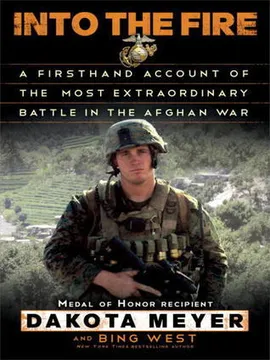


Key Takeaways
When command authority is unclear, caution can become a lethal bottleneck.
A mission without a clear lead. Ganjigal was meant to be a meeting with village elders. Instead, a force entering the steep valley met a coordinated ambush. American and Afghan commanders disagreed about who was in charge, while the team in the field struggled to reach decision-makers at Camp Joyce. Requests for artillery and aircraft were repeatedly delayed or denied. During the battle’s first hour, only 21 artillery shells were fired, and the promised air support did not arrive promptly. Meyer, left behind with the vehicles, heard his team trapped and drove toward them despite orders to stay put.
Caution had a cost. The memoir argues that rules intended to protect civilians became paralyzing when no one could confidently identify the enemy or authorize support. Its central lesson is not that restraint is always wrong, but that a command system must specify who decides under pressure.
What's striking is how a rule can be reasonable in principle and dangerous in operation. Avoiding fire near homes can protect civilians, yet unclear authority and slow approvals leave people exposed when seconds matter. The problem is a mismatch between decision speed and battlefield speed. Organizations facing high-stakes uncertainty need explicit decision rights, reliable communication, and thresholds for action before a crisis begins. Still, this account comes from participants who experienced the delays as abandonment. Their testimony makes the human cost vivid, but it cannot by itself establish every staff member's information or motives.
Practice turns hard-won training into action when conscious thought collapses.
Preparation becomes reflex. Meyer’s instincts were shaped long before Afghanistan. On his family’s Kentucky farm, he learned persistence through chores, hunting, and repeated attempts to start his father’s ATV. In the Marines, he trained in marksmanship, observation, navigation, and mission planning. Sniper school began with 31 students; 13 graduated. Its instructors stressed that shooting skill alone was not enough. A sniper had to plan carefully, maintain discipline, and stay alert.
Skills under pressure. In Ganjigal, Meyer operated machine guns, changed vehicles when one gun failed, and used his rifle at close range. He describes action taking over when thought became impossible. That does not mean training removes fear or guarantees success. It means repeated practice can preserve useful choices when attention narrows and time runs short.
The memoir’s strongest account of expertise is practical rather than glamorous. Rehearsal frees attention for changing conditions because basic actions require less conscious effort. The same principle matters in medicine, aviation, and emergency response, where practiced routines can prevent overload. But automaticity has limits: it helps most when the situation resembles the one rehearsed. Novel threats still require judgment, and confidence can become dangerous if it outruns evidence. The useful standard is not endless repetition alone, but practice that joins technical skill with planning, adaptation, and honest review.
Build teams that know one another's roles before the radios fail.
Trust is built in ordinary hours. Team Monti was a four-person Marine advisory group: Lt. Mike Johnson led, Staff Sgt. Aaron Kenefick handled personnel matters, Doc Layton provided medical care, and Meyer advised on tactics and weapons. Their different temperaments produced teasing and friction, but shared patrols and daily routines made them depend on one another. After a rocket attack at their outpost, the men recognized that the danger was real and promised to support one another.
Cohesion has limits. At Ganjigal, the team was split up before the mission. The members knew each other well, but that familiarity could not repair confusion across the larger command network. Johnson, Kenefick, and Layton were killed. The story distinguishes personal trust, which can steady people under threat, from operational coordination, which also requires clear roles and working communications.
What's useful here is the distinction between closeness and coordination. A team can care deeply about its members and still fail if it lacks a shared picture of the mission, reliable communication, or a plan for separation. In organizational terms, trust is an enabling condition, not a substitute for structure. The relationships at Monti gave the men a source of steadiness, but the operation depended on many units beyond their small group. Strong teams therefore rehearse not only how to work together, but how to communicate across boundaries when normal channels break down.
Local trust cannot be purchased with patrols and promises alone.
Presence is not the same as protection. The advisors worked among roughly 40 villages, while Monti’s American and Afghan forces conducted about ten patrols a week. Patrols often ended with a formal meeting over tea, called a key leader engagement, where elders might ask about promised projects such as a generator. The patrols rarely kept insurgents from moving through the area. Meyer also describes Afghan soldiers leaving without permission, misusing supplies, or treating the war as a job rather than a cause.
Listen to the people who know the place. Hafez, an Afghan interpreter and former soldier, warned the advisors when a village felt dangerous and helped them read local behavior. The book shows that villagers, officials, soldiers, and insurgents could have overlapping loyalties and interests. Its account cautions against assuming that a polite meeting means support or that a whole population shares one view.
The account makes a valuable distinction between access and legitimacy. A patrol may create contact without making residents feel protected, and a promised project can weaken trust if it never arrives. Hafez’s role shows why local knowledge is not decorative intelligence: it can change how a situation is interpreted. At the same time, the memoir is a soldier’s view of a particular district, not a full portrait of Afghan society. Its most defensible lesson is to test assumptions against local knowledge and observable behavior rather than turn a complicated population into a single category.
Courage means returning for others, not merely charging toward danger.
Repeated choices under fire. When Meyer learned that his team was trapped, he and driver Juan Rodriguez-Chavez made repeated trips into the ambush area. Their exposed vehicle drew fire as Meyer used its mounted guns and his rifle to disrupt attacks and help Afghan soldiers escape. The Medal of Honor citation credits their first two trips with evacuating two dozen Afghan soldiers, many wounded. Meyer was hit in the arm, ran out of ammunition, and changed vehicles. He also left the truck to treat wounded men and search for his missing teammates.
Care amid combat. The rescue work did not end with firing back. Meyer applied tourniquets, moved casualties, and carried the bodies of friends and Afghan soldiers. His actions show courage as continued attention to other people, even when the situation offered repeated chances to withdraw.
The rescue scenes complicate the familiar image of bravery as forward motion alone. Meyer’s service combines aggression toward armed attackers with practical care for wounded allies, including people whose names he knew. That combination resembles emergency response more than a simple contest of nerve: assess, act, and keep returning to immediate needs. Yet extraordinary risk should not become an everyday measure of moral worth. The same behavior that saved people depended on training, a capable driver, and support from pilots. Courage is visible here, but it is not a substitute for a system that protects rescuers and those they serve.
Treat survivor guilt as pain to work through, not proof of failure.
The battle followed him home. Meyer blamed himself for not reaching his teammates in time, even though the battle involved failures well beyond his control. After returning to Kentucky, he struggled with anger, sleeplessness, isolation, and heavy drinking. At his lowest point, he tried to fire a pistol he believed was ready; it did not fire because there was no round in the chamber. He later described that moment as a reason to keep going.
Recovery needed people and routine. At a PTSD clinic, counselors taught him to notice negative emotions and choose a constructive response rather than let the feeling dictate the day. A local college dean then drew him into a regular cycling group where members watched out for one another. Meyer found that shared routine and accountability helped where isolation had not. The book presents progress as uneven, not as a quick cure.
The memoir resists the comforting idea that survival automatically brings relief. Meyer’s self-blame persists because it attaches to a value he takes seriously: responsibility for his team. Therapy does not erase that value; it helps separate responsibility from the impossible demand to control every outcome. The cycling group adds a social dimension, giving routine a witness and a reason to show up. That combination is more credible than a story of solitary willpower. The account is one person’s path, however, and should not be mistaken for a universal treatment plan or a claim that recovery follows a straight line.
Honors can recognize valor without resolving grief or self-blame.
Recognition did not feel like relief. In 2011, President Barack Obama called Meyer to say he had signed the Medal of Honor citation. At the ceremony, Meyer felt somber rather than triumphant. He believed the medal recognized the worst day of his life, because his teammates had died and he had not brought them home. The ceremony placed his individual actions inside a wider tradition of military service, but it did not undo the loss.
The medal carried several meanings. Meyer understood that the award honored courage and the people who had sacrificed, yet his private judgment of himself remained harsher than the public recognition. The memoir holds these truths together: a person can act with extraordinary bravery and still grieve, question himself, and feel unworthy of praise.
Public recognition and private meaning operate by different rules. An award can document what others witnessed, give families and institutions a shared language for sacrifice, and still leave the recipient's inner accounting untouched. That gap is especially important when a person measures success by an outcome no individual could fully control. The book does not ask readers to replace grief with celebration. It shows why symbolic honor may matter without functioning as treatment, absolution, or closure. The tension is not a flaw in the medal’s meaning; it is evidence that public judgment cannot settle every private moral question.
Institutions must make accountability visible, especially when paperwork disappears.
The record was part of the fight. After Ganjigal, investigations examined command decisions and fire support. Meyer believed the first inquiry minimized failures, while a second found serious problems. He also recounts how Capt. Will Swenson’s Medal of Honor recommendation, supported by extensive documentation, disappeared within the Army process. It was found and resubmitted after Meyer raised the issue with senior officials. At the time this book was written, Swenson’s recognition remained unresolved.
Procedure is a promise. The account treats awards and investigations as more than administrative details. They tell service members whether sacrifice is recorded consistently and whether leaders answer for decisions. Yet the narrative is also Meyer’s testimony, written with a war correspondent from a particular vantage point. Its accusations call for scrutiny of the record, not blind acceptance or dismissal.
The Swenson episode shows how institutional memory depends on mundane systems: files, signatures, handoffs, and follow-up. When those systems fail, the damage is both practical and symbolic. A missing recommendation can suggest that recognition depends on persistence or access rather than merit. The memoir also demonstrates why accountability requires more than a powerful personal narrative. Independent review, transparent records, and clear explanations can test competing accounts without erasing the human stakes. Institutions earn trust not by claiming perfection, but by making failures legible and correcting them in ways affected people can see.
Analysis
Into the Fire is a combat memoir shaped by two distinct forms of evidence: Meyer’s first-person memory and Bing West’s reconstruction from participants, investigations, and military records. That combination gives the book urgency while making its perspective worth examining. The battle is experienced from inside confusion, but the account also tries to impose a sequence on events that no participant could fully observe. The timeline and appendices help anchor the story, though they cannot remove the limits of memory or settle every disputed interpretation.
The narrative’s central tension is between initiative and authority. Meyer is formed by a culture that prizes discipline, yet his defining actions include disobeying orders when he believes his team is in immediate danger. The book does not simply declare rules useless. It shows a command structure that had restrictive rules without a clearly functioning decision-maker, leaving people closest to the fight unable to get support. That distinction matters: disciplined restraint can protect civilians, but authority without timely information can become paralysis.
Meyer’s story also separates measurable courage from the meaning a survivor assigns to it. His repeated rescues are documented and publicly honored, while his private standard remains whether he saved his teammates. The medal cannot answer that question for him. Nor can his experience alone prove the book’s broader claims about the Afghan war’s strategy or its population. The account is strongest when it stays close to the particulars: an exposed valley, confused authority, failed communication, a tight-knit team, and the aftermath carried by one survivor. It offers a compelling case for preparation, clear command, and visible accountability, while reminding readers that individual bravery cannot repair institutional failure or make a tragic outcome feel fair.
Glossary
Embedded Training Team
Advisors serving with Afghan forcesAn Embedded Training Team, or ETT, was a small group of U.S. military advisors assigned to work with an Afghan Army unit. Members brought different specialties, including leadership, administration, medical care, and weapons tactics. Their job was to train and advise Afghan forces while operating in a dangerous area alongside them.
key leader engagement
Meeting local community leadersA key leader engagement was a planned meeting between military personnel and influential local figures, often village elders. In the book, these encounters included formal conversation over tea and questions about security, insurgent activity, or promised projects. The visits aimed to build relationships, but Meyer describes how they could become routine rituals without changing who controlled the surrounding villages.
Kilo Echoes
Preplanned artillery reference pointsKilo Echoes, abbreviated KEs, were numbered points on a map whose coordinates had been prepared in advance for artillery missions. A forward observer could request fire at a KE and then adjust the rounds toward a target. At Ganjigal, one designated point was intended to help conceal a withdrawal, but the requested smoke support was not provided as planned.
DUSTWUN
Military whereabouts-unknown statusDUSTWUN stands for duty status whereabouts unknown. It is a military status used when a service member’s location is unknown and authorities are trying to determine what happened. In the Ganjigal account, the designation was declared after the command learned that four American advisors were missing. It signals uncertainty, not a final determination that the person is dead.
expertise-induced amnesia
Skilled action bypassing conscious thoughtMeyer uses this term for the experience of performing a well-practiced action without consciously recalling each step. Under intense pressure, familiar weapon-handling movements seemed to happen automatically. The concept helps explain how training supported his actions in combat, but it does not imply that expertise removes fear, ensures good judgment, or makes unfamiliar situations easy to manage.
Download PDF
Download EPUB
.epub digital book format is ideal for reading ebooks on phones, tablets, and e-readers.








