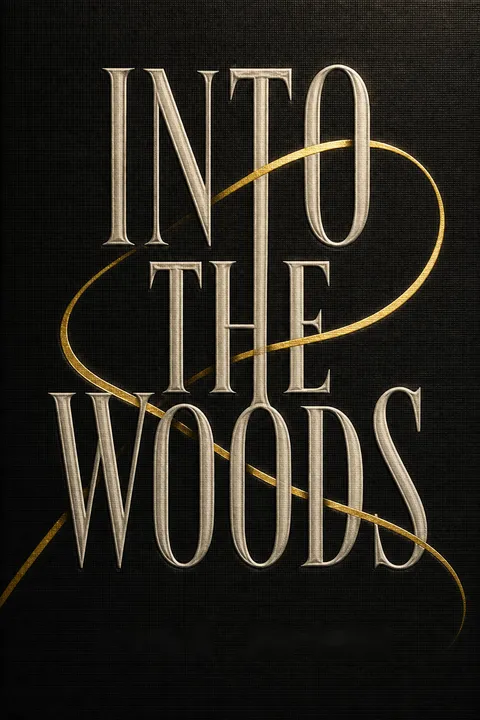


Key Takeaways
Treat story structure as a grammar, not a page-number recipe
Craft is not a cage. Yorke argues against rigid screenwriting commands, such as placing a turning point on one exact page. They describe habits, not causes. A useful study of story asks why certain patterns work, so writers can make informed choices instead of following a template blindly. At its simplest, a story states an idea, tests it against opposition, and reaches a changed understanding.
Learn before you break rules. The book compares writing with painting: disciplined drawing did not stop artists such as Picasso and Mondrian from transforming artistic conventions. Likewise, knowing dramatic craft does not dictate what to write. It gives a writer tools to shape audience attention, then the freedom to bend those tools deliberately.
What's striking is the distinction between a pattern and a prescription. A pattern can help writers diagnose why a middle feels slack; a prescription can make every script feel assembled from the same kit. This also resembles learning a language: grammar enables invention, but no fluent speaker needs to diagram every sentence. The caution is that recurring patterns do not prove a single universal law. Successful examples are easier to notice than failed or unconventional ones. Structure is most useful as a lens for testing choices, not as a verdict on whether a story is legitimate.
Give protagonists concrete goals that push them beyond familiar worlds
Desire starts the engine. A protagonist is the person whose fortunes matter most to the audience. A story begins when a problem unsettles that person's world and they pursue a goal: a detective seeks a killer, a doctor tries to save a patient, or a traveler searches for a way home. Obstacles form the antagonist, which may be a person, a system, an illness, or the protagonist's own fear. Without a goal, the central character has little reason to act, and the story has little reason to move.
Empathy is not approval. Audiences can identify with flawed or even frightening characters without endorsing their behavior. Yorke points to Tony Soprano's appeal as evidence that a protagonist need not be nice. A strong goal lets viewers experience events through a character, including choices they would reject in life.
This account usefully separates emotional access from moral endorsement. Stories can make an audience understand a character's predicament without asking it to excuse the character's actions. That distinction matters beyond fiction: perspective-taking can deepen judgment rather than dissolve it. A goal also gives viewers a practical question to carry through a scene: what is this person trying to change? The limitation is that desire need not always be loud or easily stated. Some stories deliberately make passivity, confusion, or competing group goals their subject, so the writer's task may be to make that tension legible rather than force a conventional mission onto it.
Place the story's decisive new truth near its center
The middle changes the question. Yorke treats three-act and five-act structures as related, not rival systems. Three acts give a broad movement from setup, through conflict, to resolution. Five acts make the long middle easier to shape: commitment to the journey, a major turn, mounting consequences, and a final test. The midpoint is the central turn where crucial knowledge or a new capacity comes into reach. The story then shifts from seeking the answer to dealing with what that answer means.
Michael crosses a line. In The Godfather, Michael Corleone begins as a war hero who sees himself as separate from his family's criminal business. Near the film's center, he murders a corrupt police captain and a rival gangster. The act changes what he believes himself capable of, and the journey back is shaped by its consequences.
The midpoint is a powerful planning tool because it prevents the middle from becoming a corridor between opening and finale. It can change a character's self-understanding, reveal the true nature of a mystery, or do both at once. In cognitive terms, a strong middle often forces a revision of the audience's working model of events. Still, a midpoint is a pattern to look for, not a stopwatch requirement. Some stories distribute revelation gradually, and a turning point can be emotionally central without arriving at an exact fifty-percent mark.
Make every scene turn on a choice or revelation
Small stories build big ones. Yorke calls this recurring structure fractal: the pattern of conflict and change appears at the level of a whole story, an act, and a scene. A scene is not just a stretch of conversation. Someone pursues something, another force resists, and an unexpected response changes what can happen next. That turn becomes the problem the next scene must address. Acts work similarly, with larger reversals redirecting a character's goal.
A secret changes the scene. In an EastEnders scene, Zoe argues with Kat about leaving for Spain. Kat tries to control her, and Zoe insists Kat is not her mother. Kat finally admits the truth. The revelation reverses their relationship and turns an argument about travel into a different story. Ending scenes at such a turn can make viewers want the answer to the new question.
The fractal analogy clarifies how writers can test a scene without reducing it to a formula: does something change, and does that change create pressure for what follows? It also explains why a well-timed cut can feel so propulsive. Mathematically, however, a dramatic scene is not literally a fractal. The useful claim is functional resemblance, not identical structure at every scale. Some scenes gain force through atmosphere or accumulation rather than a sharp reversal, but they still need to alter the audience's expectations or understanding.
Build characters from the gap between their public mask and private need
Contradiction creates dimension. A character's visible persona often protects a vulnerable or unwanted part of the self. The character's conscious want is not always the same as the deeper need that would make them more complete. A confident façade may conceal fear; a quest for success may hide a need for connection. Obstacles expose the gap, and choices reveal which side is gaining ground. Often the antagonist embodies a quality the protagonist lacks or fears.
Michael's self-image erodes. At the start of The Godfather, Michael tells Kay that his family's crimes do not define him. His choices progressively contradict that claim. Yorke also calls attention to the so-called Rubber Ducky moment, a past wound offered as an explanation for present behavior. Such backstory can illuminate a character, but an overly neat explanation may be less compelling than behavior that lets viewers infer the wound.
The mask-and-need model makes character conflict visible without requiring a character to explain themselves. It connects naturally to psychology's distinction between public identity and less acknowledged motives, though those theories are interpretive tools rather than clinical proof. The strongest application is not to diagnose fictional people but to ask what a character's preferred self-image costs them. A further caution: reducing difficult behavior to one formative injury can flatten both personality and social context. Actions, relationships, and circumstances should complicate the explanation rather than merely confirm it.
Show emotion through behavior, and make every explanation serve conflict
Let audiences connect the pieces. The Kuleshov Effect describes how viewers infer meaning from the combination of images. In an early film experiment, the same actor's expression appeared to show different feelings when followed by images such as food or a coffin. Yorke extends the principle to writing: a character's words gain meaning from what the character does, and what the audience already knows. A person tapping a foot can communicate irritation more vividly than a line announcing it.
Information needs a motive. Exposition is background the audience needs, but it can sound unnatural when characters recite facts everyone already knows. Give the speaker a reason to reveal or repeat information, and put resistance or emotional pressure in the exchange. A doctor struggling to tell a family about a death conveys both facts and fear. Subtext is the meaning beneath the literal words, often revealed by the gap between speech and action.
This approach treats the audience as an active interpreter rather than a container to be filled. That participation is one reason images, pauses, and contradictions can carry more emotional weight than explicit explanation. It also has a practical editing test: if a line merely repeats what the scene already shows, it may be doing no work. Yet inference is not always effortless. Viewers bring different knowledge and assumptions, and purposeful ambiguity can become simple confusion. Clear goals and consequences give audiences enough footing to make the intended connections.
Give the opposing side enough truth to threaten your argument
Theme is a question in motion. Yorke distinguishes a story's subject from its theme. A subject might be race or terrorism; a theme asks what the story is testing about that subject. Characters and events then argue different answers, and the ending embodies a conclusion. A powerful antagonist is not merely an obstacle to remove. Their perspective must be credible enough to challenge the protagonist and make the central argument feel earned.
Brookside grows more complex. Writer Jimmy McGovern helped turn the British soap from a one-sided political drama into something richer by giving a family of strikebreakers the same human attention as the union-minded characters. The point was not that every position was equally right. It was that opposition made the drama less like a speech and more like a genuine test of belief.
A serious counterargument strengthens a story because it makes the protagonist's conclusion something achieved under pressure, not simply announced. This is also a useful model for public reasoning: a position tested against its strongest objection is more informative than one protected from challenge. But balanced characterization should not become automatic moral equivalence. Power, evidence, and consequences can differ sharply between opposing sides. The writer can grant an antagonist human complexity while still showing why the antagonist's actions or beliefs cause harm.
Protect a series engine by limiting how much its heroes change
Different formats need different promises. A single drama resolves one complete journey. A miniseries stretches one journey across episodes, with each installment contributing to a larger arc. A series offers a recurring problem of the week, familiar characters, and a home base that the outside world threatens. In shows such as ER, the regular team confronts a new crisis, works through its differences, and restores some order.
Repetition has a cost. A series needs characters to remain recognizable, even though drama naturally pushes them toward change. Yorke argues that many shows struggle after roughly two to three years if their characters neither evolve credibly nor refresh their conflicts. Writers may contain change, reset characters, or forget earlier lessons. The danger is that the cases become louder and more extreme while the show's original human engine grows thin.
The recurring series offers a form of emotional ritual: viewers return to a familiar group and watch it absorb a fresh disruption. That repetition is not merely a budget trick; it can create attachment and a sense of belonging. The opposing pressure is also real: audiences notice when characters repeat the same lesson without consequence. The two-to-three-year lifespan is best read as Yorke's broad industry observation, not a fixed law. A strong series can renew itself through new relationships, institutions, or kinds of conflict without abandoning the qualities that made its world feel like home.
Use stories to order chaos, without mistaking coherence for truth
Stories are journeys through uncertainty. Yorke's central shape is a movement away from a familiar world, into unfamiliar territory, toward a missing answer or quality, and back with consequences. The return may restore a community, change a person, or deliver knowledge. A child who invents a tale about finding treasure in the woods can arrive at this shape without studying screenwriting. Yorke argues that story echoes how people organize experience: a problem appears, evidence accumulates, and an interpretation takes form.
Coherence can mislead. Daniel Kahneman's example of the words bananas and vomit shows how quickly a mind invents a causal link between adjacent facts. Stories make events memorable and meaningful, but sequence alone does not prove cause. Yorke therefore treats the universal shape as a model for understanding narrative, not a final explanation of every story's purpose. Stories may help people rehearse danger, seek justice, or imagine psychological change.
The book's most ambitious idea is that storytelling resembles perception itself: the mind links events, revises interpretations, and seeks a workable account of what happened. That helps explain why narratives can teach, comfort, and recruit empathy. It also names a danger. A neat account can conceal uncertainty, coincidence, or missing voices, especially in journalism, law, and politics. Narrative skill is therefore ethically double-edged. The same structure that makes a confusing experience intelligible can make an unsupported explanation feel inevitable. Good readers and writers should value coherence while checking what the story leaves out.
Analysis
Yorke's most durable contribution is not a new formula for arranging plot points. It is a change in the question writers ask. Instead of treating act breaks, reversals, and character arcs as commands handed down by screenwriting authorities, he asks what those devices do for attention and understanding. The answer he develops is relational: a person encounters opposition, acts, discovers that their prior model is incomplete, and returns to the problem changed. That pattern can be recognized in stories as different as The Godfather, Thelma & Louise, a medical procedural, and a scene in which a family secret surfaces.
The book's argument is strongest when it functions as a practical theory of audience experience. The recurring midpoint offers a way to diagnose a sagging story. The emphasis on action and inference explains why behavior often communicates more than exposition. The insistence on antagonists with genuine force protects theme from becoming an author's lecture. These ideas are useful even when a writer rejects conventional act divisions.
Its broader claims require more restraint. The comparison between dramatic form and cognition is illuminating, but resemblance is not proof that all narrative follows one biological law. Human beings may prefer causal accounts, yet cultures and genres differ in how they represent time, agency, closure, and the individual. The book's own strongest counterweight is its recognition that artists can subvert familiar forms and that multiple explanations for storytelling may coexist. The model should therefore be treated as a map of recurring effects, not a universal blueprint.
That distinction matters beyond fiction. Narrative gives shape to scattered experience, which supports memory and empathy, but it can also convert coincidence into apparent cause and simplify moral conflict into a tidy verdict. Yorke's framework is most valuable when used in both directions: to help creators build compelling journeys and to help audiences notice how a journey has guided their judgment. Structure explains how a story persuades. It does not, by itself, establish that the story is true.
Review Summary
Into the Woods receives mostly positive reviews for its insightful analysis of storytelling structure and theory. Readers appreciate Yorke's exploration of the "physics of storytelling" and his examination of narrative patterns. Many find the book well-written and engaging, praising its depth and practical applications for writers. Some criticize it as repetitive or overly academic. Overall, reviewers value Yorke's perspective on why stories work and how they reflect human nature, though opinions vary on the book's originality and accessibility.
People Also Read






Glossary
Inciting incident
Story's initiating disruptionThe event or decision that draws a protagonist away from the familiar situation and into the story's central problem. Yorke treats it as more than a single explosive event: the opening movement can establish the disturbance, show the character's response, and reach a choice that commits them to a new course.
Midpoint
Central turn in understandingA major shift near the center of a story, when the protagonist gains crucial knowledge, reaches a sought-after object, or first acquires a needed quality. The shift raises the stakes and changes the meaning of the journey. In a mystery, it may reveal what the protagonist is really up against; in a character story, it may expose what the character can become.
Fractal structure
Story patterns repeated at scalesYorke's term for the resemblance between the structure of a complete story and the smaller structures of its acts and scenes. Each scale can contain a goal, opposition, a turning point, and a changed situation. The analogy describes recurring dramatic functions, not a claim that stories are mathematical fractals.
Kuleshov Effect
Meaning created by juxtapositionA film-editing effect in which viewers interpret an image differently depending on the image placed beside it. Yorke uses it to explain how audiences infer emotion, motive, or causality from combinations of shots, actions, and words, rather than receiving meaning only through direct explanation.
Roadmap of Change
Character's progression through changeYorke's model for how a character's flaw or limitation becomes visible, is resisted, and is tested through the story. The character may experiment with a new way of acting, doubt it under pressure, and finally recommit or fail. The pattern describes character transformation across the story's major movements.
Rubber Ducky moment
Backstory wound explaining behaviorA past incident presented as the source of a character's present behavior or emotional defenses. The reveal may clarify a character's history, but Yorke warns that it can become an overly simple explanation, especially when a dramatic confession replaces revealing behavior in the present.
MacGuffin
Object that drives pursuitA tangible object, piece of information, or target that gives characters something concrete to pursue. Its intrinsic value may be less important than the action it generates. A missing artifact, secret document, or unknown identity can organize a plot by giving the protagonist a clear external goal.
FAQ
What's Into the Woods: A Five Act Journey Into Story about?
- Exploration of storytelling structure: The book examines the fundamental structures of storytelling, focusing on three-act and five-act formats, and their psychological roots.
- Universal patterns in stories: Yorke identifies a common framework in narratives, the "journey there; journey back" structure, evident across genres and mediums.
- Practical insights for writers: It serves as both a theoretical exploration and a practical guide, offering insights into crafting compelling narratives.
Why should I read Into the Woods by John Yorke?
- Enhances storytelling skills: The book provides a comprehensive analysis of narrative structure, crucial for effective storytelling.
- In-depth character analysis: Yorke emphasizes character development and its integration with story structure, aiding in creating dynamic characters.
- Engaging and thought-provoking: Filled with examples from literature and film, it inspires readers to think differently about their writing.
What are the key takeaways of Into the Woods?
- Understanding act structures: Yorke explains the significance of three-act and five-act structures as storytelling frameworks.
- Character and change: Characters must undergo change to drive the narrative, often starting with flaws they must confront.
- The importance of conflict: Conflict is essential for tension and character development, with every scene containing a conflict that propels the story.
How does Into the Woods define a story?
- Basic definition: Yorke defines a story as "Once upon a time, in such and such a place, something happened," capturing storytelling's essence.
- Elements of a story: A protagonist faces a problem disrupting their normal life, leading to a journey of conflict and resolution.
- Universal appeal: Stories resonate across cultures and time periods, tapping into fundamental human experiences and emotions.
What is the five-act structure in Into the Woods?
- Detailed breakdown of acts: The five-act structure includes exposition, rising action, climax, falling action, and resolution, each serving a specific narrative purpose.
- Mirroring elements: The first and last acts often mirror each other, reinforcing the protagonist's journey and changes.
- Character development: Each act facilitates character growth, with turning points challenging the protagonist to confront their flaws.
What is the "journey there; journey back" concept in Into the Woods?
- Core narrative structure: This concept describes the archetypal journey protagonists undertake, venturing into an unfamiliar world and returning transformed.
- Symbolic of personal growth: The journey represents internal struggle and growth, reflecting the human experience of facing adversity.
- Universal applicability: It is a common thread in storytelling across cultures and genres, resonating with audiences by mirroring life experiences.
How does Into the Woods address the concept of conflict in storytelling?
- Conflict as a driving force: Conflict is essential for creating tension and engaging the audience, propelling the narrative and character development.
- Types of conflict: Yorke discusses internal (within the character) and external (between characters or forces) conflicts, each shaping the story.
- Resolution of conflict: Conflict resolution is tied to the protagonist's growth, achieving goals and closure, satisfying the audience.
What specific methods does John Yorke suggest for writing?
- Three-Act Structure: Yorke advocates for the classic three-act structure as a foundational storytelling framework.
- Character Arcs: Characters should undergo significant transformation, often catalyzed by a critical midpoint choice.
- Use of Conflict: Incorporate conflict at every narrative stage, with drama emerging organically from character interactions.
What is the "Kuleshov Effect" mentioned in Into the Woods?
- Definition of Kuleshov Effect: A film editing technique showing how juxtaposition of images creates meaning beyond individual shots.
- Application in Storytelling: Filmmakers manipulate audience perception through editing, combining word and image for subtext.
- Impact on Character Interpretation: It conveys complex emotions and motivations without explicit dialogue, allowing deeper audience inference.
How does Into the Woods relate character development to story structure?
- Character flaws drive the narrative: Initial flaws create internal conflict, essential for story progression.
- Change is central to character arcs: Characters must undergo significant change to achieve goals, mirrored in story structure.
- Integration of character and plot: Character development and plot are intertwined, revealing true selves and evolving as the plot unfolds.
What role does subtext play in storytelling according to Into the Woods?
- Definition of Subtext: Underlying meaning or themes not explicitly stated in dialogue, conveying deeper emotional truths.
- Creating Emotional Impact: Subtext enhances emotional resonance, with hidden feelings adding depth to scenes.
- Subtext in Character Interactions: Reveals motivations and conflicts without overt exposition, engaging audiences on multiple levels.
What are the best quotes from Into the Woods and what do they mean?
- “Art consists of limitation.”: Constraints enhance creativity, with structural understanding leading to innovative storytelling.
- “You can’t teach writing.”: Challenges the notion that writing is innate, showing structure understanding improves writing.
- “The real rules are the rules of drama.”: True storytelling principles are rooted in dramatic structure, essential for compelling narratives.
Download PDF
Download EPUB
.epub digital book format is ideal for reading ebooks on phones, tablets, and e-readers.








