

Key Takeaways
Treat emotion as information, then choose how it shapes your relationships
Emotion belongs in the decision. Emotional intelligence, or EI, is the ability to notice emotions in yourself and others, understand their effects, and manage how they influence behavior. It does not mean suppressing feeling or letting feeling rule. It brings emotion and reasoning into the same decision, alongside self-knowledge, self-management, empathy, and social skill.
A dramatic example is US Army brigadier general James Dozier, kidnapped by the Red Brigade in Italy in 1981. He tried to manage his own fear and communicate calmly to his captors, whose anxiety and volatility appeared to lessen. He believed this helped keep him alive. In ordinary life, the stakes are lower, but the principle holds: a person's manner can shape the emotional climate of an interaction.
The strongest feature of this definition is its practical middle ground. It rejects both the fantasy that good decisions are purely rational and the excuse that strong feelings justify any reaction. Dozier's story makes the interpersonal effect vivid: composure can influence a tense exchange without guaranteeing control over another person. EI is most useful as a set of capacities, not a moral ranking. A person can read emotions accurately and still use that skill to manipulate, so purpose and respect matter as much as perceptiveness.
Catch the feeling early, before autopilot chooses your response
Attention creates options. Mindfulness means deliberately noticing what is happening in the present without immediately judging it. It includes observing thoughts, feelings, and bodily signals while interacting with others. Without that attention, familiar triggers can send a person into habitual reactions before they notice what is happening.
Walton suggests putting a name to the emotion and, if possible, its cause. Irritation with a manager's elaborate language, for example, may conceal a feeling of being dismissed or made inferior. Naming the deeper feeling can separate the present exchange from old assumptions and make a more deliberate response possible. A brief check of tense muscles, agitation, or negative thoughts can reveal that a conversation is going badly while there is still time to change course.
This is a useful bridge between bodily awareness and communication. People often treat physical tension as background noise, even though it can be an early warning that attention and judgment are narrowing. Naming a feeling can create distance from it, but a label is only a hypothesis: calling oneself angry does not establish why the anger arose or whether its interpretation is fair. The practical test is whether noticing the feeling helps someone ask a better question, listen more accurately, or choose a less damaging action.
Explain setbacks as temporary and specific, not proof you are doomed
Interpretation shapes persistence. Walton draws on psychologist Martin Seligman's account of learned optimism. A pessimistic explanation tends to treat a setback as lasting, affecting everything, and revealing something defective about oneself. A more optimistic explanation sees it as limited to a situation and capable of changing. This is not a claim that every setback has an easy fix; it is a way to avoid turning one failure into a verdict on an entire future.
In insurance sales research described in the book, new salespeople with optimistic outlooks sold 37 percent more in their first two years than pessimistic colleagues. A specially recruited optimistic group, despite lacking typical sales experience, outsold more experienced pessimists by 21 percent in its first year. Walton recommends testing negative thoughts against evidence and considering alternative explanations.
The value here is not compulsory cheerfulness, but explanatory flexibility. A single failed presentation can be treated as evidence about one preparation strategy rather than evidence of permanent incompetence. That shift preserves room to learn. The sales figures are suggestive, but they do not prove optimism alone caused the difference; selection, support, or other skills may contribute. Optimism can also become recklessness if it discounts real danger. The useful discipline is to keep hope and reality in the same frame.
Put a pause between wanting something and acting on it
Delay protects choice. Self-management includes resisting an immediate impulse when acting on it would undermine a more important aim. The book opens with Anthony, who cashes in a savings bond early to buy a car, forfeiting an extra £5,000 he could have received by waiting six months. His recurring difficulty was not simply liking cars; it was repeatedly letting immediate desire overrule longer-term security.
Walton recommends practical interruptions: breathe, take a short break, redirect attention, or ask how important the situation will seem next month. He recounts Stanford research in which some young children delayed eating a treat by distracting themselves, and later showed better outcomes on several measures. The lesson is to use strategies that make delay manageable, rather than treating self-control as a test of character.
The distraction strategy is more useful than the familiar image of willpower as sheer resistance. It changes what attention is fixed on, making a difficult choice less consuming. The book also presents willpower as a limited resource, but that claim should not be treated as a precise account of a fixed inner fuel tank. Fatigue, stress, context, and the value attached to a goal all affect persistence. The sturdy takeaway is simpler: reduce the heat of the moment, then make the decision with the longer horizon visible.
Listen for the feeling underneath the words, then test your guess
Empathy starts with attention. Sympathy is concern based on how someone else's situation makes you feel. Empathy instead tries to understand that person's perspective and emotional experience. Walton describes it as noticing cues, considering why someone might feel as they do, and responding in a way that shows understanding. It can include reflecting the emotion, asking what would help, and offering support without taking over.
Words are only part of the evidence. Facial expression, posture, eye contact, gesture, silence, and vocal tone can reveal feelings that a person's account leaves out. An angry partner, for example, may also be hurt or sad. Recognizing that possibility can make repair easier than answering anger with a counterattack. But empathy is an informed guess, not mind-reading, so checking one's interpretation matters.
The distinction between empathy and sympathy is especially useful in work that involves helping. Feeling sorry for someone may express care, but it can keep attention centered on the helper's reaction. Perspective-taking asks a harder question: what does this situation mean to the other person? At the same time, nonverbal cues are culturally and individually variable. Averted eyes or silence cannot be read like a universal code. Empathy works best as curiosity paired with verification, rather than confidence in one's ability to decode another person.
Build trust by making the unspoken terms of relationships visible
Relationships need maintenance. Walton describes a psychological contract: the often unstated expectations people hold about mutual support, fairness, and follow-through. When a worker feels that a manager no longer values their contribution, the damage may come not only from a specific decision but from the sense that an implicit promise of mutual regard has been broken.
Relationships deepen through recognition, careful self-disclosure, empathy, and feedback that describes an issue without condemning a person. They can also move backward when trust or attention fades. Walton argues that good relationships require a climate in which people feel valued, not merely an absence of open conflict. In teams, task-focused work needs social connection too. Cooperation depends on people being willing to share information, offer help, and raise problems before resentment takes root.
The idea of an implicit contract helps explain why a small act can carry a large emotional charge: the act may seem to revise what someone thought the relationship promised. Making expectations explicit can prevent needless disappointment, especially around responsibility, availability, and recognition. Still, reciprocity is not always symmetrical. Caregiving, hierarchy, and unequal power can make a simple exchange model misleading. The broader principle is mutual accountability: people need a fair chance to understand what is expected and to speak when the arrangement no longer feels workable.
De-escalate the moment before solving the underlying problem
Calm comes before analysis. Emotional outbursts often follow accumulated frustration, not just the event that finally triggers them. Walton recommends intervening early, keeping one's voice steady, giving the distressed person space, listening, and asking what might help now. Short, clear language and time to think can work better than demands or a contest over who has authority.
During a heated argument, a pause can prevent fresh harm while the original issue remains unresolved. The book advises separating the practical problem from the personal conflict around it. Once both people are calmer, they can return to causes, needs, and possible solutions. This approach is not passivity: it includes setting limits and speaking plainly, while avoiding the assumption that a person in crisis can immediately reason through a complex discussion.
De-escalation respects how stress changes the conditions for conversation. When someone is highly aroused, a dense explanation or forceful correction can add threat rather than clarity. A pause is not avoidance if it includes a clear intention to resume the discussion. Nor does empathy require accepting abusive behavior. The strongest version of the advice pairs warmth with boundaries: lower the temperature, protect safety, and return to the unresolved issue when meaningful problem-solving is possible.
Teach emotional skills by modelling them where children actually live
Children learn through relationships. Emotional literacy includes recognizing feelings, managing them, staying motivated, showing empathy, and using social skills. Walton argues that these abilities develop not only through formal lessons but through repeated practice and the behavior adults model at home and school.
When a child is upset, the suggested sequence is to acknowledge the feeling, set a boundary on harmful behavior, and help the child solve the problem once the emotional intensity has eased. Dismissing fear or hurt may teach a child to hide it rather than manage it. Schools can build emotional skills into ordinary subjects and group work. The book reports that pupils with higher EI scores tended to have fewer behavior problems, stronger concentration, and better peer relationships, though such associations do not by themselves prove what caused the differences.
The emphasis on adult modeling is compelling because emotional regulation is learned in interactions, not just described in rules. A child who sees a caregiver name frustration, apologize, and repair a disagreement gets a visible procedure to imitate. Validation also need not mean agreement: recognizing a child's fear can coexist with limits on aggression. The book's school findings support attention to social and emotional learning, but outcomes can reflect family resources, classroom conditions, and other influences. Programs work best when they improve the environment as well as teach skills.
Give teams ownership of change instead of announcing cuts from above
Participation can reduce uncertainty. In one hospital case, a manager facing overspending and national service targets asked staff to examine demand, capacity, and work processes. A representative group was allowed to shape changes, supported by a facilitator and regular communication. After seven months, the unit met treatment-time standards, reduced costs by 6 percent, and reported a 27 percent rise in staff satisfaction. Two percent of staff had been transferred to another unit.
Walton connects this approach to metanoia, a fundamental change in how a situation is understood. Appreciative enquiry is one method: discover what already works, imagine what could be better, design a route toward it, and deliver changes through action. This does not mean ignoring failures. It shifts the starting question from who is to blame toward what strengths can support improvement.
The case makes a practical point about organizational change: people who understand daily work often hold information that leaders lack, and involving them can increase ownership as well as improve the plan. Appreciative enquiry offers a constructive alternative to beginning with accusation. Its limitation is that a strengths-based process cannot erase hard tradeoffs, such as budget cuts or job transfers. Trust depends on naming those costs honestly. Participation is meaningful when staff can influence decisions, not simply endorse a plan already made.
Protect well-being through connection, movement, attention, learning, and giving
Emotional life reaches the body. Walton describes links among stress, mood, behavior, and physical health, while emphasizing that people can adapt how they respond to pressure. He cites a trial in which volunteers trained in emotional awareness and meditation produced nearly twice as many antibodies after a flu vaccination as an untrained comparison group. He also describes a study of autobiographical writing by nuns, in which those whose early accounts contained fewer positive statements died, on average, nine years sooner. These findings suggest connections, not proof that optimism alone determines health.
His practical well-being advice is to connect with others, be physically active, pay attention to everyday experience, keep learning, and help someone. These activities can add support, engagement, and purpose to ordinary life. They complement medical care; they are not substitutes for it.
This ending is strongest when read as a case for health-supporting conditions, not a promise that emotional skill prevents disease. Social connection, movement, curiosity, and contribution can make daily life more stable and meaningful, while also changing how people cope with stress. The health studies cited are suggestive, but antibody counts and long-term associations do not establish that EI independently caused better outcomes. That distinction matters because people facing illness should not be blamed for insufficient optimism. Emotional practices can support care without being presented as cures.
Analysis
Walton's central contribution is to make emotional intelligence less like a personality badge and more like a sequence of choices. Notice what is happening, interpret it with some humility, regulate the impulse to react, and respond to the people involved. The recurring stories show how this sequence applies across settings: Dozier's calm during captivity, Anthony's short-term spending, a family argument, a child's distress, and a hospital trying to change its work. Together, they frame emotion as both data and influence. It reveals needs, threat, attachment, and motivation, while a person's behavior can alter the emotional conditions others face.
The framework is valuable partly because it refuses a false opposition between competence and care. Listening is not a substitute for analysis; it supplies information that analysis otherwise misses. Assertiveness is not aggression; it makes needs discussable. Optimism is not denial; at its best, it keeps a setback from becoming a totalizing story. The book's most actionable advice follows this logic: name the feeling, pause when arousal is high, check assumptions, and address the actual issue with the other person.
The evidence needs more caution than the practical advice. EI encompasses abilities, habits, personality, and values, which makes it difficult to measure cleanly. Some examples show association rather than causation, and several health and willpower claims are presented more confidently than the evidence warrants. The broad promise of improved success can also obscure structural constraints: no amount of empathy gives an employee control over every organizational decision, and emotional skill cannot guarantee a healthy relationship. These limits sharpen rather than erase the book's useful claim. EI is not a universal solution, but a trainable set of capacities that can improve the quality of choices and interactions under real constraints.
Review Summary
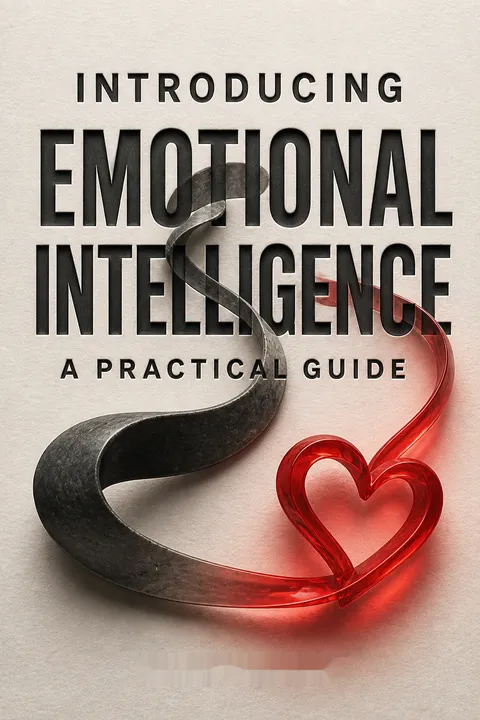
Introducing Emotional Intelligence receives mixed reviews, with an average rating of 3.65 out of 5. Many readers find it helpful in understanding and improving emotional intelligence, praising its concise format and practical exercises. Some appreciate its insights into personal relationships and self-awareness. However, critics note a lack of depth, scientific rigor, and practical application strategies. The book's focus on workplace scenarios is seen as both a strength and weakness, depending on the reader's expectations. Overall, it's considered a good introduction to emotional intelligence, albeit with some limitations.
People Also Read




Glossary
Emotional intelligence
Emotion-aware relationship skillsA group of abilities and skills for recognizing emotions in oneself and other people, understanding how feelings affect thought and behavior, and managing those effects. Walton's practical framework includes self-knowledge, managing one's emotions, understanding others, and managing relationships. The term covers both personal self-management and the social skills needed to work and live with others.
Mindfulness
Attention to present experiencePaying deliberate attention to what is happening in the present, including thoughts, emotions, bodily sensations, and cues from other people, without immediately judging it. In Walton's account, mindfulness helps people notice habitual reactions while they are occurring, creating a chance to choose a more appropriate response rather than operating on autopilot.
Learned optimism
A more flexible explanatory styleMartin Seligman's term for developing a less pessimistic way of interpreting events. Instead of treating setbacks as permanent, universal, and caused by personal defect, a person can examine whether they are temporary, specific, and influenced by circumstances. The approach does not require denying problems; it encourages testing negative explanations and considering alternatives.
Rumination
Repetitive negative self-focusA pattern of repeatedly thinking about distress, past events, or the gap between what one hoped for and what is happening. Walton associates rumination with self-criticism, difficulty disengaging from upsetting thoughts, reduced optimism, and delayed action on interpersonal problems. It can keep attention fixed on causes and blame without helping a person take a useful next step.
Psychological contract
Unspoken relationship expectationsThe implicit expectations people hold about obligations and reciprocity in a relationship. These may concern support, trust, fairness, recognition, or how people will treat one another in difficult circumstances. A perceived breach can damage a relationship even when no formal agreement has changed, because someone feels the other party no longer honors the relationship's assumed terms.
Metanoia
A fundamental shift in perspectiveA change in mindset that makes new interpretations and possibilities available. In the book, metanoia means looking beyond established assumptions about people or organizations. It can help groups move from blame and fault-finding toward reconsidering how they work together, what is already effective, and what future improvements they can create.
Appreciative enquiry
Strengths-based organizational changeA cooperative approach to improvement that begins by identifying what works and using it to imagine and build a better future. Walton presents four stages: discover existing strengths, dream about what might be possible, design how to move toward that vision, and deliver practical changes. It shifts attention from fault alone to potential and shared action.
Mentalizing
Imagining another person's perspectiveThe ability to consider what another person may think, believe, feel, or intend, and use that understanding to guide one's behavior. It supports cooperation, empathy, and the anticipation of how someone might respond. Because it draws on one's own experience, mentalizing can be mistaken; an imagined explanation should not be treated as certain knowledge of another person's mind.
Psychological well-being
A broad sense of functioning wellA model of well-being that includes more than momentary happiness. In the account of psychologist Carol Ryff's work, it includes self-acceptance, positive relationships, autonomy, managing one's environment, meaningful purpose, and continued personal growth. Walton connects these dimensions to emotional intelligence because they shape how people relate to themselves, pursue goals, and maintain connections.
FAQ
What's "A Practical Guide to Emotional Intelligence" about?
- Overview: The book by David Walton provides a comprehensive guide to understanding and developing emotional intelligence (EI). It explores how EI can be applied in various aspects of life, including personal relationships, parenting, and the workplace.
- Framework: It introduces a framework for EI that includes self-knowledge, managing emotions, understanding others, and managing relationships.
- Practical Application: The book offers practical tools and exercises to help readers develop their EI skills and apply them in real-world situations.
- Goal: The ultimate aim is to enhance personal and professional relationships and improve overall well-being through better emotional management.
Why should I read "A Practical Guide to Emotional Intelligence"?
- Improved Relationships: The book provides insights into how EI can improve personal and professional relationships by fostering better communication and understanding.
- Practical Tools: It offers practical exercises and questionnaires to help readers assess and develop their EI skills.
- Comprehensive Coverage: The book covers a wide range of topics, from the basics of EI to its application in specific areas like parenting and workplace dynamics.
- Enhanced Well-being: By developing EI, readers can achieve greater emotional balance, resilience, and overall well-being.
What are the key takeaways of "A Practical Guide to Emotional Intelligence"?
- Self-awareness: Understanding your own emotions is the foundation of EI and is crucial for managing them effectively.
- Empathy: Being able to understand and relate to the emotions of others is essential for building strong relationships.
- Emotional Management: Learning to control impulses and manage stress can lead to better decision-making and improved mental health.
- Practical Application: EI can be applied in various settings, including the workplace, education, and personal relationships, to enhance communication and collaboration.
How does David Walton define Emotional Intelligence in the book?
- Mental Abilities and Skills: EI is described as a set of mental abilities and skills that help manage oneself and work effectively with others.
- Components of EI: It includes self-awareness, emotional regulation, empathy, and social skills.
- Mindfulness and Control: Being mindful of one's emotions and maintaining control over them is a key aspect of EI.
- Emotional Reasoning: Using emotions to enhance thinking and decision-making rather than letting them restrict it.
What are the best quotes from "A Practical Guide to Emotional Intelligence" and what do they mean?
- "Behaviour breeds behaviour": This quote emphasizes the reciprocal nature of human interactions and the importance of being mindful of how one's actions affect others.
- "Optimism is better than pessimism": It highlights the benefits of maintaining a positive outlook, which can lead to better coping strategies and improved mental health.
- "Emotional intelligence is not really new": This suggests that while the term may be modern, the concepts of understanding and managing emotions have been valued throughout history.
- "You possess one of nature’s great miracles – your AMAZING BRAIN!": This underscores the potential for personal growth and change through the development of EI.
How can Emotional Intelligence be applied in the workplace according to the book?
- Leadership and Management: EI is crucial for effective leadership, helping managers to communicate goals, motivate staff, and handle conflicts.
- Team Dynamics: Understanding and managing emotions can improve team collaboration and productivity.
- Customer Relations: Sales and customer service benefit from EI by fostering empathy and understanding customer needs.
- Stress Management: EI helps employees manage stress and maintain a positive work environment, leading to better performance.
What is the Emotional Intelligence Framework presented in the book?
- Self-Knowledge: Understanding one's own emotions and how they affect behavior is the starting point for EI.
- Managing Emotions: This involves controlling impulses, managing stress, and maintaining emotional balance.
- Understanding Others: Empathy and the ability to read social cues are essential for effective interpersonal interactions.
- Managing Relationships: Building and maintaining positive relationships through effective communication and conflict resolution.
How does the book suggest improving self-awareness?
- Mindfulness Practices: Being present and aware of one's thoughts and emotions as they occur is crucial for self-awareness.
- Reflective Exercises: The book includes exercises to help readers reflect on their emotions and understand their triggers.
- Feedback and Reflection: Encourages seeking feedback from others and reflecting on personal experiences to gain insights into one's emotional patterns.
- Emotional Vocabulary: Developing a rich vocabulary to describe emotions can enhance self-awareness and emotional expression.
What role does empathy play in Emotional Intelligence according to David Walton?
- Understanding Others: Empathy is the ability to understand and share the feelings of others, which is crucial for building strong relationships.
- Communication Tool: It helps in effective communication by allowing individuals to respond appropriately to others' emotional states.
- Trust Building: Empathy fosters trust and openness in relationships, making it easier to resolve conflicts and collaborate.
- Emotional Connection: It creates a deeper emotional connection with others, enhancing both personal and professional interactions.
How does the book address the concept of emotional regulation?
- Impulse Control: The book emphasizes the importance of controlling impulses and delaying gratification for better decision-making.
- Stress Management: Techniques for managing stress and maintaining emotional balance are discussed as key components of emotional regulation.
- Cognitive Strategies: Encourages the use of cognitive strategies to reframe negative thoughts and maintain a positive outlook.
- Practical Exercises: Provides exercises to help readers practice emotional regulation in various situations.
What are some practical exercises included in the book to develop Emotional Intelligence?
- Questionnaires and Quizzes: The book includes various quizzes to assess different aspects of EI, such as self-awareness and empathy.
- Reflective Journaling: Encourages keeping a journal to reflect on emotional experiences and identify patterns.
- Role-Playing Scenarios: Suggests role-playing exercises to practice empathy and improve social skills.
- Mindfulness Techniques: Offers mindfulness exercises to enhance present-moment awareness and emotional control.
How does "A Practical Guide to Emotional Intelligence" suggest using EI in parenting and education?
- Emotional Literacy for Children: The book emphasizes teaching children to recognize and manage their emotions from an early age.
- Positive Parenting: Encourages parents to model emotional intelligence through empathy, active listening, and emotional regulation.
- Classroom Strategies: Suggests integrating EI into the curriculum to improve students' emotional and social skills.
- Supportive Environment: Advocates for creating a supportive and emotionally positive environment at home and in schools to foster EI development.
Download PDF
Download EPUB
.epub digital book format is ideal for reading ebooks on phones, tablets, and e-readers.








