

Key Takeaways
A maid from Hawarden became Britain's celebrity, without ever gaining economic independence.
A narrow starting line. Emma was born Amy Lyon in 1765 into working-class poverty. Her father died when she was an infant, and her mother returned with her to a crowded household in Hawarden. At twelve, Emma entered domestic service. The biography reconstructs much of this childhood from sparse records, so details such as the cause of her father's death remain uncertain. It also treats claims about her earliest sexual work as possibilities rather than established fact.
A rise with limits. Emma moved from service to London, where she worked around theaters and artists, became a celebrated model, and eventually entered elite circles. Reinvention helped her escape the future expected for a poor girl, but each step depended on work, attention, and powerful people willing to support her. Her ascent was extraordinary; her dependence was not.
What's striking is how the story holds achievement and constraint together. Emma was neither simply rescued nor wholly self-created: poverty narrowed her choices, while her energy and social intelligence helped her exploit the openings she found. The biography's willingness to mark uncertainty matters, especially when a woman's reputation rests on rumors repeated as fact. Her trajectory also complicates the idea that visibility equals freedom. She became famous, but fame did not give her secure income, legal independence, or protection from the judgments attached to her origins.
Turn the gaze into authorship: Emma's Attitudes made her more than a model.
Performance as invention. Emma's Attitudes were sequences of expressive poses inspired by classical art and myth. Using shawls, costume, movement, and facial expression, she shifted between figures such as Niobe, Medea, and Cleopatra while the audience guessed each role. The effect joined dance, acting, and visual art in a format audiences had rarely seen.
An image that traveled. Emma developed the performance from skills acquired as a model and from studying paintings, sculpture, and local dance. She performed for visitors in Naples, including the writer Goethe, and adapted the material to different audiences. Romney's records list 118 sittings with her between 1782 and 1784. His portraits and their printed copies spread her image widely, influencing dress and making Emma a recognizable public figure beyond the rooms where she performed.
Emma's performance gave her a measure of control over how viewers encountered her. Rather than remain the silent subject of a painting, she supplied the sequence, mood, and interpretation herself. That shift is a form of authorship, even though it operated within a market that profited from looking at her. The distinction is important: controlling a performance is not the same as owning every copy or consequence of an image. Her achievement lies in shaping attention, not escaping the commercial and sexual expectations surrounding it.
Take a patron's protection seriously, but never mistake it for control.
Support with conditions. Patronage means material or social backing supplied by someone more powerful. Charles Greville gave Emma a home, lessons, and a new identity, but demanded that she live quietly, follow his rules, and cut ties with much of her past. When he arranged for her to go to Naples, he let her believe the visit would be temporary. In reality, he hoped to transfer responsibility for her to his uncle, Sir William Hamilton.
Security could become love. Emma eventually formed a lasting partnership with Sir William, who married her in 1791 despite resistance from his family and society. His support brought money, status, and a place in Naples, but her security still rested on his choices and resources. Her skill at pleasing powerful men helped her negotiate these arrangements, but did not make the terms equal.
The episode exposes a bargain that can look like rescue from a distance. A patron may offer genuine affection and opportunity while retaining control over housing, money, movement, and reputation. Emma was not passive: she learned how to negotiate the arrangement and build relationships of her own. Yet the structure left her exposed if a benefactor's priorities changed. The useful distinction is between receiving help and acquiring power over the conditions of one's life. Those are not automatically the same thing.
A title raised Emma's rank while leaving old class judgments intact.
Respectability had gatekeepers. Sir William's marriage made Emma Lady Hamilton, and she worked hard to master the etiquette expected of an ambassador's wife. In Naples, Queen Maria Carolina welcomed her, and Emma became a hostess to visiting aristocrats and diplomats. Her fluency, warmth, and theatrical skill helped her succeed in a role she had never been trained for as a child.
The past remained useful gossip. Queen Charlotte refused to receive her, and English visitors continued to call her vulgar or treat her earlier life as proof that she did not belong. Even those who admired her performances could use her origins to mark the boundary between an accepted lady and an outsider. A title changed her formal position, but it could not compel every court or drawing room to treat her as an equal.
The contrast between Naples and England shows that respectability is not merely an individual achievement. It is also a judgment issued by institutions and social groups that can move the standard when a newcomer approaches. Emma could learn manners, marry a knight, and host distinguished company, yet acceptance remained conditional. This does not make her efforts meaningless. It shows why personal transformation cannot, by itself, dismantle a hierarchy whose members control recognition.
Informal political access carries consequences, not just prestige.
Influence without office. Maria Carolina trusted Emma and used her as a discreet channel to British visitors and officials. Emma helped strengthen relations between Naples and Britain, carried information, and supported efforts to obtain naval protection. Her access mattered partly because an ambassador's wife could move among people without appearing to conduct official business.
Loyalty had a darker side. Emma's political commitments favored the Neapolitan monarchy against revolutionary forces. In 1799, after royalist forces retook Naples, Nelson rejected an agreement offering rebels safe surrender. Executions followed, including that of Admiral Caracciolo. Emma defended the royal cause, helped the queen, and recorded suspected republicans. She was not simply a neutral messenger; her influence was tied to a regime that punished its opponents.
Emma's political role is a reminder that access is not the same as impartiality. Her social skills helped information and people cross boundaries, but the loyalties behind that work shaped who benefited and who was harmed. The biography is strongest when it lets her agency include morally consequential choices, rather than treating influence as automatically admirable. Informal power can be effective precisely because it bypasses visible procedures. That makes accountability harder, not less necessary.
Nelson's arrival transformed an affair into a political and media spectacle.
A meeting with stakes. When Nelson arrived in Naples after his victory at the Battle of the Nile in 1798, Emma welcomed and cared for him. Williams reads the embrace as deliberate stagecraft as well as sincere emotion: Emma recognized that the celebrated admiral could strengthen her position and help protect Maria Carolina. Their relationship soon became intimate, while Emma served as Nelson's interpreter, hostess, and guide to the court.
Private life became public property. Newspapers and caricaturists turned the couple into a national story. Their affair challenged the marriage of Nelson and Fanny, and Emma's pregnancy with their daughter Horatia made the relationship impossible to conceal. Nelson's fame enlarged Emma's audience, but it also made her private choices available for public judgment and satire.
The episode joins romance, political work, and celebrity rather than keeping them in separate compartments. Emma's welcome could express affection and strategic intelligence at once; reducing it to either pure calculation or spontaneous passion misses the conditions around her. The interpretation of her motives remains an inference, not a private confession preserved in a letter. That uncertainty does not erase the consequences: once the affair became public, the pair's personal life shaped their reputations and their access to power.
Do not build an expensive public image on uncertain promises.
Splendor ran on credit. Emma helped make Merton Place a grand home for Nelson, filling it with his images, memorabilia, elaborate furnishings, and space for constant entertaining. The house cost £9,000 to buy, and improvements cost more than £8,000. Nelson encouraged generosity and display, while Emma also spent heavily on his relatives, servants, and guests.
The backing never arrived. Emma expected Nelson's prize money, future success, and public gratitude to provide security. Instead, the debts mounted, and her income after his death could not sustain the house or its household. She resisted giving up Merton, even as it drained her resources. Her generosity was real, but so were poor financial judgment and a dependence on promises that she could not enforce.
Merton was more than a home. It was a stage set for Nelson's heroic identity and Emma's claim to belong beside him. That made spending feel like relationship maintenance and public duty, not merely personal indulgence. The danger was that the image depended on cash flow and goodwill that neither partner fully controlled. The biography does not excuse Emma's choices, but it shows how private generosity and public performance reinforced one another until restraint felt like betrayal.
Britain memorialized Nelson, then refused to provide for the woman he named.
A public hero, a private widow. Before Trafalgar, Nelson asked the government to provide for Emma and Horatia. After his death in 1805, the state staged an enormous funeral, but Emma was excluded from the ceremony. The government honored Nelson's male relatives and declined to support his mistress and daughter, despite his written request.
Fame offered no shelter. Emma kept entertaining and trying to secure help, while debts and demands from relatives and former associates grew. She lost Merton, spent time within the King's Bench prison rules, and eventually fled to France with Horatia. Ill and impoverished, she died in Calais in 1815. Her friends did help at points, but public admiration did not translate into reliable financial protection.
The ending distinguishes symbolic inclusion from material responsibility. Emma could appear in mourning prints and public memory while being excluded from the institutions that distributed money, status, and security. Her friends' rescues matter, so the story is not one of universal abandonment; the sharper point is that private charity had to fill a gap left by the state. A culture can celebrate a woman's usefulness to a hero while refusing to recognize her as someone owed lasting support.
Analysis
This biography is not only a life story. It is an account of how an image becomes a form of power, and how little protection that power may provide. Emma's portraits, performances, dress, and carefully managed appearances moved her from a poor household into rooms where diplomacy and social influence were conducted. Her public identity was not a decorative extra. It was work: she entertained, translated, cultivated relationships, and made herself memorable to audiences who might otherwise dismiss her.
The same visibility that created opportunity also made her vulnerable. Emma could help shape how people saw her, but she could not control who reproduced the image, what stories attached to it, or whether a title would secure acceptance. Her fame depended on markets, patrons, and political relationships that were largely controlled by men. When those relationships weakened, celebrity proved a poor substitute for enforceable rights and stable income.
The narrative also asks readers to hold agency and exploitation together. Emma was repeatedly treated as an object to be transferred, disciplined, or judged. She also made consequential choices, including her support for a monarchy that retaliated against its opponents. Sympathy should not require turning her into a blameless heroine, just as moral criticism should not flatten the conditions that narrowed her options.
The book's evidentiary method deserves attention. Its archival detail restores Emma's own voice and corrects caricatures, but the early years remain difficult to know. The author sometimes reconstructs motives and events from circumstantial clues, and marks some conclusions as probable rather than certain. That is not a flaw to hide. It is a reminder that biographies of people with little power often inherit gaps created by the very inequalities they describe. Emma's story is compelling because reinvention worked, spectacularly, but never became independence.
Review Summary
England's Mistress received mixed reviews, with praise for its vivid portrayal of Emma Hamilton's life and 18th-century society. Critics appreciated Williams' research and engaging writing style. However, some reviewers found the early chapters speculative and criticized the author's sympathetic bias towards Emma. The book was noted for its exploration of celebrity culture, social mobility, and gender roles in Georgian England. Readers were divided on Williams' approach, with some enjoying the narrative style while others preferred a more traditional biographical format.
People Also Read


Glossary
Attitudes
Expressive classical posesA performance form developed by Emma Hamilton in which she used costume, shawls, posture, movement, and facial expression to portray figures from classical myth, art, and history. Audiences watched her shift quickly between characters, often identifying each pose. The performances combined elements of acting, dance, and visual art, and became a major part of her public fame.
Magdalen
Reformed penitent womanIn the book, a Magdalen refers to the ideal of a reformed prostitute associated with the Magdalen hospital for penitent women. The imagined penitent rejected vanity and luxury, adopted plain dress and behavior, and demonstrated moral reform. Greville used this ideal to shape Emma's appearance and conduct as a quiet, obedient mistress.
cicisbeo
Married woman's social escortA cicisbeo was a socially accepted male companion who accompanied a married woman in parts of Italian society. The role could involve public outings and close companionship without automatically being understood as a sexual affair. In Naples, observers could interpret Nelson's presence beside Emma through this convention, even as their relationship became intimate.
tria iuncta in uno
Three joined in oneA Latin phrase meaning three joined as one, used by Emma Hamilton, Sir William Hamilton, and Horatio Nelson to describe their unusual shared household and alliance in Naples and Sicily. The phrase presented the three as a united group, though their relationships and interests were unequal and changed over time.
FAQ
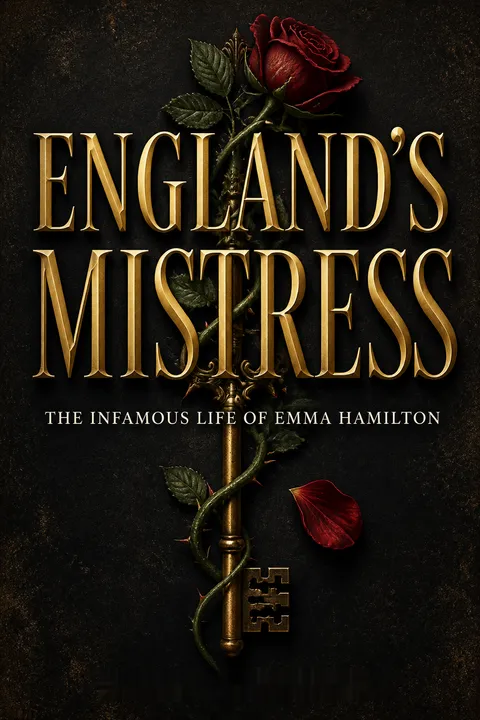
What's "England's Mistress: The Infamous Life of Emma Hamilton" by Kate Williams about?
- Biography of Emma Hamilton: The book delves into the life of Emma Hamilton, a renowned figure in British history known for her beauty, charm, and scandalous affairs.
- Historical Context: It provides a detailed account of the social and political landscape of 18th-century England, highlighting Emma's influence and connections.
- Personal and Public Life: The narrative explores both her personal struggles and public triumphs, including her relationship with Admiral Nelson.
- Cultural Impact: The book examines Emma's lasting impact on British culture and her role as a muse and icon.
Why should I read "England's Mistress: The Infamous Life of Emma Hamilton"?
- Insightful Biography: It offers a comprehensive look at one of history's most fascinating women, providing insights into her complex character.
- Rich Historical Detail: The book is rich in historical detail, making it a valuable resource for those interested in British history and society.
- Engaging Narrative: Kate Williams presents Emma's story in an engaging and accessible manner, making it a compelling read.
- Cultural Relevance: Understanding Emma Hamilton's life helps readers appreciate her influence on art, politics, and society.
What are the key takeaways of "England's Mistress: The Infamous Life of Emma Hamilton"?
- Complex Character: Emma Hamilton was a multifaceted individual whose life was marked by both triumph and tragedy.
- Influence and Power: Despite her humble beginnings, Emma rose to become a powerful figure in British society.
- Historical Significance: Her relationships with influential figures like Admiral Nelson had significant historical implications.
- Cultural Legacy: Emma's life and legacy continue to be subjects of fascination and study in the context of British cultural history.
What are the best quotes from "England's Mistress: The Infamous Life of Emma Hamilton" and what do they mean?
- "Emma was a woman of contradictions..." This quote highlights the complexity of Emma's character, emphasizing her multifaceted nature.
- "Her beauty was both a blessing and a curse..." This reflects the dual nature of Emma's beauty, which brought her both opportunities and challenges.
- "In a world dominated by men, Emma carved her own path..." This underscores Emma's determination and resilience in a male-dominated society.
- "Her legacy is one of both scandal and admiration..." This captures the enduring fascination with Emma's life and the mixed perceptions of her legacy.
How does Kate Williams portray Emma Hamilton in "England's Mistress"?
- Empathetic Portrayal: Williams presents Emma as a sympathetic figure, highlighting her struggles and triumphs.
- Balanced Perspective: The author provides a balanced view, acknowledging both Emma's strengths and flaws.
- Historical Context: Emma is portrayed within the broader context of her time, emphasizing her impact on society.
- Complex Characterization: Williams delves into Emma's personal and public life, offering a nuanced portrayal of her character.
What historical events are covered in "England's Mistress: The Infamous Life of Emma Hamilton"?
- Napoleonic Wars: The book covers the period of the Napoleonic Wars, highlighting Emma's connection to Admiral Nelson.
- British Society: It explores the social and political dynamics of 18th-century Britain, including class and gender issues.
- Cultural Movements: The narrative touches on cultural movements of the time, such as the rise of Romanticism.
- Emma's Influence: Emma's role in significant historical events, including her influence on political and military decisions, is examined.
How does "England's Mistress" explore the theme of power and influence?
- Social Climbing: Emma's rise from humble beginnings to a position of influence is a central theme.
- Relationships with Powerful Men: Her relationships with influential figures like Admiral Nelson are explored in depth.
- Cultural Impact: Emma's influence on art and culture is highlighted, showcasing her role as a muse and icon.
- Legacy of Influence: The book examines how Emma's life and actions left a lasting impact on British society and history.
What role does Admiral Nelson play in "England's Mistress"?
- Romantic Relationship: Nelson's romantic relationship with Emma is a focal point of the narrative.
- Mutual Influence: The book explores how Emma and Nelson influenced each other's lives and careers.
- Historical Context: Nelson's military achievements and their impact on British history are discussed in relation to Emma.
- Legacy: The enduring legacy of their relationship and its cultural significance is examined.
How does "England's Mistress" address the theme of beauty and its consequences?
- Double-Edged Sword: Emma's beauty is portrayed as both an asset and a liability, affecting her life in various ways.
- Societal Expectations: The book explores how societal expectations of beauty influenced Emma's choices and opportunities.
- Personal Struggles: Emma's personal struggles with the consequences of her beauty are highlighted.
- Cultural Perception: The narrative examines how Emma's beauty shaped her legacy and cultural perception.
What challenges did Emma Hamilton face in her life according to "England's Mistress"?
- Social Stigma: Emma faced social stigma due to her humble origins and scandalous relationships.
- Financial Difficulties: The book discusses Emma's financial struggles and efforts to maintain her lifestyle.
- Public Scrutiny: Emma's life was subject to intense public scrutiny, affecting her personal and public life.
- Personal Losses: The narrative explores Emma's personal losses, including the death of Admiral Nelson.
How does "England's Mistress" explore the theme of legacy?
- Enduring Fascination: Emma's life continues to fascinate historians and the public, highlighting her lasting legacy.
- Cultural Impact: The book examines Emma's influence on art, literature, and culture.
- Historical Significance: Emma's role in significant historical events and her impact on British history are discussed.
- Mixed Perceptions: The narrative explores the mixed perceptions of Emma's legacy, from scandal to admiration.
What writing style does Kate Williams use in "England's Mistress"?
- Engaging Narrative: Williams uses an engaging narrative style that brings Emma's story to life.
- Historical Detail: The book is rich in historical detail, providing a vivid picture of 18th-century Britain.
- Balanced Perspective: Williams offers a balanced perspective, acknowledging both Emma's strengths and flaws.
- Accessible Language: The author uses accessible language, making the book enjoyable for a wide audience.
Download PDF
Download EPUB
.epub digital book format is ideal for reading ebooks on phones, tablets, and e-readers.








