

Key Takeaways
Treat adolescence as a developmental stage, not a defective adulthood.
A shared life stage. Across a study of more than 5,000 young people in 11 countries, sensation-seeking generally rose through adolescence, while self-regulation continued to improve into the mid-twenties. Adolescent-like risk-taking and novelty-seeking also appear in animals, and adults have complained about young people for centuries. These patterns are not a Western invention, though cultures shape how adolescence is lived.
A shifting boundary. The book defines adolescence as beginning around puberty and ending when a person takes on a stable, independent social role. That endpoint varies across societies and can extend into the twenties. The central point is biological as well as social: adolescence is a distinct period of development, not simply childhood ending or adulthood malfunctioning.
The cross-cultural and animal evidence makes a strong case that adolescent behavior is not merely a modern cultural stereotype. It does not mean every teenager behaves alike, or that human social behavior can be explained by animal comparisons. The more useful implication is that expectations should account for a real developmental transition while remaining sensitive to culture and individual variation. Calling the period a stage can replace mockery with curiosity, but it should not become a new excuse to treat young people as interchangeable.
Read the teenage brain as remodeling, not malfunctioning.
Connections are reorganized. In four longitudinal studies covering 391 people aged 8 to 30, cortical grey matter generally rose in childhood, then declined through adolescence, while white matter increased. Synaptic pruning is the process by which less-used connections between neurons are removed as the brain refines its networks. Myelination, the insulation of nerve fibers, helps signals travel faster. These changes are especially prolonged in regions involved in planning, self-control, and social understanding.
There is no switch. A decline in grey matter is not evidence that the brain is deteriorating. Different regions change on different schedules, and individuals vary. The book notes that brain development levels off across a broad span, often by the forties, rather than at one precise birthday. MRI measurements show structural patterns, not a direct reading of a person’s judgment or maturity.
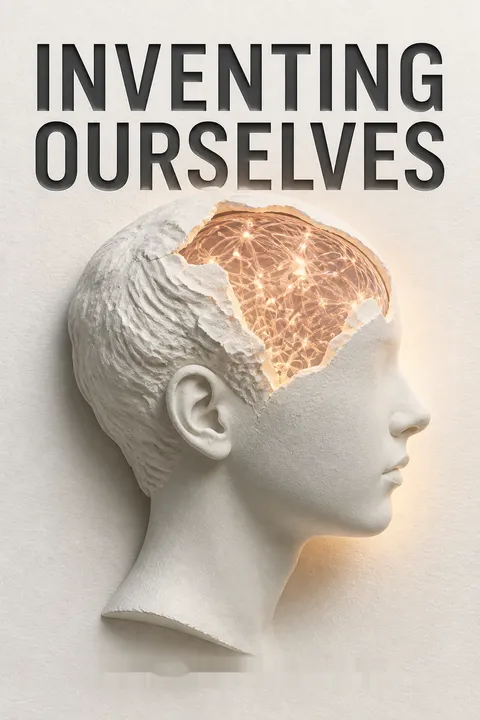
The remodeling image helps correct a common mistake: treating adult performance as the only standard by which a developing brain can be judged. The developmental story is about refinement, not a simple march toward a single ideal endpoint. It also cautions against turning brain scans into personality tests. A structural difference can be associated with a behavior without causing it, and a group average cannot tell a parent or teacher exactly what one young person can handle.
Let young people build identity without diagnosing every awkward moment.
Identity becomes social. A teenage diarist recorded the moon landing on the same day as a note about clothes and a crush, with the personal drama taking precedence. That is not proof of shallow thinking. Adolescence is when tastes, beliefs, group affiliations, and ideas about how others see us become especially important. The looking-glass self is the part of identity formed by imagining how other people judge us. The imaginary audience describes the adolescent sense of being watched and evaluated, even when no audience is present.
Self-consciousness has a body. In a brain-scanning study, adolescents anticipating observation by a peer reported more embarrassment and showed greater stress responses than children or adults. The author’s own experiences in California and Nepal helped shape her emerging commitment to women’s equality, illustrating how encounters and social settings can become part of an identity.
The distinction between self-absorption and self-construction matters. A young person’s attention to appearance or peer judgment can be part of learning how identity works in a social world, rather than evidence of vanity or pathology. Adults also care about evaluation, and social media gives that concern new venues. The useful response is not to dismiss the feeling as imaginary, but to help adolescents separate genuine feedback from assumed judgment and find settings where exploration is safe.
Put peer influence to work, because belonging can steer behavior both ways.
Peers change the stakes. In the Stoplight Task, a driving game, adolescents took almost three times as many risks when friends watched as when they played alone. Adults showed no comparable increase. In another experiment, adolescents reported a sharper drop in mood after being excluded from an online ball-tossing game. These findings suggest that belonging and rejection carry unusual weight during adolescence, though not every young person is equally affected.
Norms can be redirected. In a study across 56 middle schools, a student-led anti-bullying program was associated with a 30 percent fall in reported conflict compared with control schools. Its effect was stronger when socially well-connected students took part. Peer influence is not inherently dangerous. The same force that can intensify risk can also make supportive, prosocial behavior visible and socially rewarding.
The school intervention turns peer influence from a problem to suppress into a feature of the social environment that can be shaped. This resembles a broader principle in group behavior: people often take cues from those whose approval matters to them. Recruiting influential students can spread a norm efficiently, but it also raises a design question. If popularity grants influence, campaigns should ensure that less-connected students are not left out or made more vulnerable.
Change the social payoff before lecturing teenagers about distant danger.
Context changes a choice. A hot context is a situation charged by emotion, excitement, or peers, where social rewards can crowd out long-term consequences. The dual systems model proposes that reward-related brain systems become responsive before the prefrontal systems supporting control have finished developing. It is a useful account, not a complete explanation: individual developmental patterns vary. The book’s see-saw model describes decisions as weighing practical gains and losses alongside social approval, rejection, and connection.
Make prevention immediate. Adolescents often understand health risks, yet may see refusing a drug among friends as a more immediate social threat. Research on anti-smoking messages found greater promise in appeals about secondhand smoke, deceptive marketing, and refusal skills than in warnings focused only on future disease. For early adolescents, other teenagers’ judgments also influenced risk ratings more than adults’ judgments did.
A warning can be factually correct and still lose to the immediate social meaning of a choice. Prevention works better when it addresses the actual decision environment, not an imaginary setting in which a person calmly calculates decades of health consequences. This does not mean manipulating adolescents with shame or fear. It means making safer choices compatible with belonging, independence, and values that matter to them, while recognizing that peer norms can vary from group to group.
Reward the behavior you want teens to learn; punishment alone teaches less.
Feedback shapes learning. In a study comparing adolescents with young adults, both groups learned to choose symbols linked to rewards. Adolescents were less successful at avoiding symbols linked to punishment, and they made less use of information about what would have happened after a different choice. The findings suggest that reward-based feedback may be more effective than punishment alone for some forms of adolescent learning.
Self-control matters, but is not fate. In a long-running study of 1,037 people born in Dunedin, childhood self-control was associated with later health, financial, and social outcomes. The association does not prove that self-control caused those outcomes, or that a childhood score fixes a person’s future. The author also describes research suggesting that self-control can be developed, including a large school-based mindfulness trial that was still underway when the book was written.
This distinction helps educators and parents think beyond compliance. Punishment may stop a behavior in the moment, but it can provide little information about what to do instead. Rewards and clear feedback can make the desired action legible and worth repeating. Yet reward systems can also narrow motivation if every meaningful activity becomes a contest for prizes. The stronger lesson is to notice and reinforce progress while helping young people build the ability to regulate themselves.
Teach perspective-taking as a developing skill, not an automatic adult gift.
Understanding minds takes practice. Mentalizing means inferring what another person thinks, feels, or intends. It supports social understanding, fairness, and communication. In the Director Task, participants follow instructions from someone who cannot see every object they can see, so success requires adopting that person’s perspective. Performance improved through adolescence and into adulthood. Even the adult participants made errors on roughly 45 percent of social trials.
Social reasoning keeps changing. Adolescents also become better at considering another person’s intentions when judging whether an offer is fair. Brain studies show changes in the network involved in mentalizing, but a region’s activity does not reveal exactly what someone is thinking. The evidence points to gradual development in the ability to use another perspective in real time, not a simple switch from lacking to possessing empathy.
The Director Task captures a familiar conversational failure: people default to what they themselves can see, even when another person’s view differs. That makes perspective-taking more than a moral slogan. It is a demanding cognitive skill that can fail under pressure and deserves explicit practice. The caveat is equally important: a person’s scan or one laboratory score cannot establish how considerate they are in everyday life. Performance depends on the task, context, and skills being tested.
Keep investing in adolescent learning; the brain remains trainable.
Learning windows persist. In a training study, 558 adolescents and 105 adults played short cognitive games for up to 20 days. Training in non-verbal reasoning benefited every age group, with the largest gains among late adolescents and adults. Training in judging quantities improved performance mainly in those older groups. A face-recognition task, used as a comparison, showed no training benefit. The results challenge the assumption that earlier teaching is always more effective.
Support the whole learner. Adolescents need roughly nine hours of sleep, yet puberty shifts the body clock toward later sleep and later waking. Early school schedules can therefore leave many short of sleep, which harms learning and mood. The evidence supports continued educational support through adolescence, while cautioning that improvement on a trained skill does not automatically mean a broad rise in intelligence.
The training results make a persuasive case against treating childhood as the only meaningful learning window. They also resist the opposite overclaim: a brief game can improve a particular skill without transforming general intelligence. Educational policy should ask what is being learned, at what age, and whether gains transfer beyond the exercise. Sleep belongs in that discussion because a curriculum cannot make the brain more receptive by scheduling learning when students are biologically struggling to stay awake.
Treat early mental-health symptoms as signals for support, not destiny.
Risk emerges along a path. A survey cited in the book found that three-quarters of mental-health conditions began before age 24. Schizophrenia often first appears in late adolescence or early adulthood. Research on people at higher risk has found differences in brain development before some receive a diagnosis, but those patterns do not yet predict an individual outcome with certainty. Genes can increase vulnerability, while experiences such as social isolation and heavy cannabis use may also matter.
Evidence has limits. A long-running study linked persistent cannabis use before age 18 with later cognitive decline, but association alone cannot settle cause and effect. The book also notes that research on screens and adolescent brain development was scarce; a large survey found moderate screen use was not strongly associated with poorer well-being. These findings argue for informed support, not blanket panic or dismissal.
A developmental perspective can make care more timely without treating a young person as a diagnosis waiting to happen. It directs attention toward trajectories and changing circumstances, rather than assuming that one scan or one symptom explains everything. The same restraint applies to environmental risks: early cannabis use warrants concern, but causal claims require strong evidence. Uncertainty is not a reason to do nothing. It is a reason to offer support without overstating what science can currently predict.
Make room for mid-teen creativity instead of treating turbulence as failure.
New ideas need space. A study of creative thinking found that mid-adolescents performed especially well on a visual task requiring them to find multiple ways to group diagrams. Other forms of creative thinking followed different age patterns, and some continued improving into adulthood. The results do not make teenagers universally more creative. They show that creativity has several parts, each with its own developmental course.
Let teenagers speak for themselves. The author and colleagues helped teenagers create Brainstorm, a play about the developing brain, based on young people’s experiences and performances. The project showed how adolescents could interpret scientific ideas with humor and emotional depth, while prompting adults to reconsider how they treated young people. The book’s closing argument is practical: support exploration and independent judgment, rather than expecting adolescents to become smaller copies of adults.
Creativity is not a consolation prize for incomplete maturity. It can be a real strength during a period of rapid change, and inviting teenagers to represent their own lives can reveal what adult-centered accounts overlook. The evidence still calls for precision: one task cannot stand in for every kind of creativity, and age-group averages conceal substantial individual differences. The best response is neither romanticizing youth nor pathologizing it, but giving young people meaningful opportunities to contribute.
Analysis
The book’s central argument is a change of frame: adolescence is not a damaged version of adulthood but a distinct period in which brain development, social demands, and emerging identity interact. That claim is supported by several kinds of evidence. Longitudinal MRI studies track structural change over time; laboratory tasks test specific behaviors such as inhibition and perspective-taking; animal research offers comparisons; and personal stories show how developmental claims connect to lived experience. Each method answers a different question, and none alone gives a complete portrait of an adolescent.
The strongest practical insight is that behavior depends on context. A teenager may understand a danger in a quiet room and make a different choice among friends, where belonging and reputation are immediate. That distinction changes how adults should approach prevention, teaching, and discipline. It favors shaping environments and social norms over treating risk as proof of ignorance or bad character. The book also resists a simplistic brain-based excuse: development matters, but does not erase individual agency or variation.
Its scientific caution is essential. MRI measures such as grey matter volume are indirect indicators, not transparent readings of thought or maturity. Associations between brain measures and behavior do not establish cause, and findings from small or culturally narrow samples should not become universal rules. The evidence is particularly uneven for newer experiences such as social media, and animal research often relies on male subjects. These limits strengthen rather than weaken the book’s core message: support should be informed by developmental science, but claims should remain proportionate to the evidence.
The result is a humane account with policy consequences. Schools should continue supporting learning through adolescence, take sleep seriously, and allow room for exploration. Mental-health systems should respond early without treating risk factors as destiny. Above all, adults should see young people not as unfinished adults to correct, but as people actively building identities, relationships, and capacities that matter throughout life.
Review Summary
Inventing Ourselves receives mostly positive reviews for its insightful exploration of adolescent brain development. Readers appreciate Blakemore's clear explanations of neuroscience research and her caution against overgeneralizing findings. Many find the book informative and helpful for understanding teenage behavior, though some note it can be dense at times. Key takeaways include the ongoing development of the teenage brain, the influence of peer groups, and the importance of risk-taking experiences. Some readers wished for more practical advice, but overall the book is praised for its scientific approach and engaging content.
Glossary
synaptic pruning
refining neural connectionsThe developmental process in which some connections between neurons are eliminated while others are retained and strengthened. Which connections persist depends partly on experience and use. Pruning helps refine brain networks as they adapt to the environment; a reduction in grey matter during adolescence does not, by itself, mean that the brain is deteriorating.
dual systems model
reward and control develop unevenlyA model proposing that reward-related and emotion-related brain systems become responsive earlier than systems involved in planning and control, including the prefrontal cortex. The proposed timing difference may help explain why adolescents can be especially drawn to rewards and less able to inhibit risky choices in emotionally charged situations. It is a broad explanation, not a uniform pattern in every adolescent.
hot contexts
emotionally charged decision settingsSituations in which emotion, excitement, or social pressure affects a decision. Examples include choosing whether to take a substance at a party or making a choice while friends are watching. Such settings can make immediate social rewards more influential than they would be in a calm, solitary situation.
see-saw model
balances practical and social stakesA model of decision-making that treats choices as a balance between practical consequences and social considerations. A person may weigh physical danger, legal consequences, or immediate benefits alongside approval, embarrassment, connection, or rejection. The book argues that social factors can weigh especially heavily in many adolescent decisions.
looking-glass self
identity shaped by imagined judgmentsThe aspect of self-understanding formed by imagining how other people see and evaluate a person. These imagined judgments can contribute to feelings such as pride, shame, embarrassment, or contentment. Because people appear differently to different observers, the looking-glass self can vary across relationships and situations.
imaginary audience
feeling constantly observedA term for the tendency, especially associated with early adolescence, to imagine that other people are continually watching and evaluating one’s behavior. The imagined audience can make ordinary choices feel socially risky, even when no one is paying attention. The book notes that concern about others’ opinions does not disappear completely in adulthood.
mentalizing
inferring other people's mindsThe ability to attribute thoughts, beliefs, intentions, and feelings to other people and use those inferences to interpret or predict their behavior. Mentalizing supports communication and social judgment, but it can be effortful and error-prone. Its development continues beyond early childhood, including in the use of another person’s perspective during adolescence.
experience-expectant plasticity
development requiring expected inputThe brain’s readiness during development to respond to kinds of environmental input that are normally present, such as speech sounds or visual experience. For a function to develop typically, the relevant input may need to arrive during a sensitive period. This differs from learning-driven brain change, which can occur throughout life.
experience-dependent plasticity
brain change through learningThe brain’s capacity to change in response to particular experiences and learning. Practicing a skill, acquiring new information, or building a memory can alter brain structure or activity. Unlike experience-expectant plasticity, it is not limited to a specific developmental window and remains possible throughout life.
Director Task
tests perspective-taking in actionA task in which a participant receives instructions from a director who can see only some objects in a display. The participant must interpret the director’s words from that limited viewpoint, rather than acting on an object visible only to the participant. It tests the online use of another person’s visual perspective.
Stoplight Task
simulates risky driving choicesA driving video game used to study risk-taking. Players can save time by crossing a yellow light, but risk a crash if the light turns red. Researchers compared decisions made alone with decisions made while friends watched, revealing that peers can change adolescents’ risk-taking in a simulated setting.
FAQ
What’s Inventing Ourselves: The Secret Life of the Teenage Brain by Sarah-Jayne Blakemore about?
- Adolescent brain development focus: The book explores how the teenage brain changes structurally and functionally, emphasizing adolescence as a unique and crucial stage of human development.
- Behavioral explanations: It explains typical adolescent behaviors—risk-taking, self-consciousness, and peer influence—as natural outcomes of brain maturation, challenging negative stereotypes.
- Interdisciplinary narrative: Blakemore combines neuroscience, psychology, and personal stories to illuminate how brain changes shape identity, mental health, and social behavior.
- Societal implications: The book discusses how understanding the teenage brain can inform education, mental health, and public policy.
Why should I read Inventing Ourselves by Sarah-Jayne Blakemore?
- Deeper understanding of teenagers: The book provides a science-based explanation for adolescent behavior, helping parents, educators, and policymakers better support young people.
- Myth-busting approach: It dispels common brain myths (like “10% brain use” and “left-brained/right-brained” thinking) with clear, evidence-based explanations.
- Practical relevance: Insights are directly applicable to parenting, teaching, mental health, and even juvenile justice, making it valuable for anyone interacting with adolescents.
- Engaging and accessible: Blakemore’s writing combines rigorous research with relatable examples and creative projects, making complex neuroscience understandable.
What are the key takeaways from Inventing Ourselves by Sarah-Jayne Blakemore?
- Adolescence is natural and necessary: Teenage behaviors are not signs of dysfunction but reflect essential brain development processes.
- Brain plasticity and vulnerability: The adolescent brain is highly plastic, making it both a period of opportunity for learning and a time of increased vulnerability to mental health issues.
- Peer influence is powerful: Social context and peer acceptance strongly shape adolescent decision-making and risk-taking.
- Education and policy implications: Understanding brain development can improve educational strategies, mental health interventions, and social policies for youth.
How does Sarah-Jayne Blakemore define adolescence in Inventing Ourselves?
- Biological and social boundaries: Adolescence begins with puberty and ends with achieving a stable, independent social role, often extending into the mid-twenties.
- Cross-cultural and historical evidence: Adolescent-typical behaviors are observed worldwide and have been described by thinkers from Socrates to Shakespeare, showing adolescence is not a modern invention.
- Distinct developmental stage: The book emphasizes that adolescence is a unique period with its own biological, psychological, and social characteristics.
What are the main brain changes during adolescence described in Inventing Ourselves?
- Synaptic pruning: The brain eliminates unused neural connections, especially in the prefrontal cortex, making brain networks more efficient.
- Increased myelination: White matter increases, improving communication between brain regions and supporting better cognitive control.
- Functional shifts: Brain imaging shows changes in activity patterns, particularly in regions involved in social cognition and self-reflection.
- Individual variability: There are significant differences in the timing and pattern of brain maturation among individuals.
How does Inventing Ourselves by Sarah-Jayne Blakemore explain adolescent risk-taking and peer influence?
- Dual systems model: The limbic system (reward/emotion) matures earlier than the prefrontal cortex (impulse control), creating a developmental mismatch that encourages risk-taking.
- Peer presence amplifies risk: Experiments show adolescents take more risks when peers are watching, driven by a desire for social acceptance.
- Adaptive value: Risk-taking can foster learning, confidence, and social bonding, and is not always negative.
- Individual differences: Not all adolescents take risks equally; brain development and social context both play roles.
What does Inventing Ourselves by Sarah-Jayne Blakemore reveal about the development of self and identity in adolescence?
- Early self-awareness: Babies show a rudimentary sense of self, but adolescence brings more complex self-reflection and identity formation.
- Social self emerges: Adolescents become highly aware of how others perceive them, leading to increased self-consciousness and evolving beliefs.
- Brain correlates: The medial prefrontal cortex and related regions support growing self-awareness and social cognition during adolescence.
- Identity exploration: Adolescence is a key period for developing moral, political, and personal values.
How does Inventing Ourselves describe the development of social cognition and the “social brain” in teenagers?
- Social brain network: Key regions like the dorsomedial prefrontal cortex, temporo-parietal junction, and superior temporal sulcus mature during adolescence.
- Mentalizing abilities: Adolescents improve at understanding others’ thoughts and feelings, a process called mentalizing or theory of mind.
- Shifting strategies: Brain activity shifts from frontal to temporal regions as adolescents mature, reflecting changes in how they process social information.
- Peer sensitivity: Heightened sensitivity to social evaluation and peer influence is a hallmark of this developmental stage.
What does Inventing Ourselves by Sarah-Jayne Blakemore say about the onset of mental health issues in adolescence?
- Critical period for mental illness: Three-quarters of mental illnesses, including depression, anxiety, and schizophrenia, begin before age 24.
- Brain development differences: Adolescents who develop mental illnesses often show atypical patterns of grey and white matter development.
- Gender and environmental factors: Gender disparities in mental health emerge around puberty, and risks are increased by factors like cannabis use, social stress, and urban living.
- Plasticity offers hope: The adolescent brain’s plasticity means interventions can be effective if applied early.
How does Inventing Ourselves by Sarah-Jayne Blakemore address the impact of substances like cannabis and alcohol on the adolescent brain?
- Cannabis risks: Persistent use before age 18 is linked to lasting cognitive decline, including reduced IQ.
- Alcohol effects: Adolescent binge-drinking correlates with structural brain differences, especially in areas related to self-control and memory.
- Animal studies support findings: Adolescent rats show similar patterns of increased substance use and altered brain responses.
- Potential for recovery: The brain’s plasticity means some damage may be reversible if substance use is reduced.
What educational and policy recommendations does Inventing Ourselves by Sarah-Jayne Blakemore offer based on adolescent brain science?
- Tailored interventions: Educational and mental health programs can be effective well into late adolescence due to ongoing brain plasticity.
- Peer-focused strategies: Health campaigns should leverage peer influence and social norms, not just focus on long-term risks.
- Evidence-based education: The book advocates for educational practices grounded in neuroscience and randomized controlled trials, not popular myths.
- Sleep and learning: Later school start times are recommended to align with adolescents’ natural sleep rhythms and improve learning outcomes.
What are the best quotes from Inventing Ourselves by Sarah-Jayne Blakemore and what do they mean?
- “The teenage brain isn’t broken.” This central message reframes adolescent behavior as a normal part of development, not a problem to be fixed.
- “Adolescence is a time of development and change, just as childhood is.” It highlights the importance of understanding and supporting this life stage.
- “There’s no such thing as an average adolescent.” This quote cautions against stereotypes, emphasizing individual differences in brain development and behavior.
- From the play Brainstorm: “My brain isn’t broken / It’s beautiful…” This poetic metaphor celebrates the complexity, creativity, and potential of the adolescent brain.
Download PDF
Download EPUB
.epub digital book format is ideal for reading ebooks on phones, tablets, and e-readers.








