

Key Takeaways
Stop treating male experience as the human baseline for knowledge
The default hides half the picture. Perez calls the systematic absence of women from data, research, and representation the gender data gap. It begins with a habit of treating men as representative humans and women as special cases. The book traces that habit from accounts of human evolution that centered male hunters to archaeological interpretations that assumed armed Viking graves belonged to men, even when the skeleton was female. Everyday language reinforces the pattern: research cited in the book found that supposedly generic masculine terms are usually imagined as male, not as including everyone.
Absence changes the record. Women also appear less often in news, textbooks, films, and public monuments. Their work can be attributed to men, while histories centered on women are treated as niche. These omissions do more than distort memory. They shape which lives seem typical, which evidence gets gathered, and whose needs are noticed.
The key insight is that representation is part of the machinery of knowledge, not merely a decorative question of visibility. A research community chooses what to measure partly through its assumptions about what counts as normal. Once male experience supplies the template, missing female evidence can look like confirmation that no meaningful difference exists. This creates a feedback loop between cultural memory and scientific practice. The argument is strongest when it identifies repeated institutional patterns, rather than assuming every omission has the same cause. Some gaps reflect incentives, weak methods, or inherited conventions; their effects can still be discriminatory without a deliberate plan.
Ask who uses a system before calling its design gender-neutral
Equal treatment can miss unequal needs. In the Swedish town of Karlskoga, snow was initially cleared from major roads before sidewalks and cycle paths. That order looked neutral, but men were more likely to drive while women were more likely to walk, use public transport, and travel with children or dependents. Women also more often make trip-chains, linking errands and care journeys rather than commuting directly to work. After the town prioritized pedestrian routes, it reduced a risk concentrated among people walking on icy streets. In one Swedish study, women made up 69% of people injured in single-person pedestrian accidents.
Design follows actual use. The same logic applies to toilets, transit routes, and housing. Equal bathroom floor space does not mean equal capacity when urinals serve more people and women generally need more time. Vienna’s gender-conscious housing and street planning instead incorporated transit access, childcare, shops, ramps, and visible shared spaces.
This is a practical lesson in user-centered design: a system should be judged by who can use it safely and effectively, not by whether its rules sound symmetrical. The snow-clearing example is especially useful because it links daily inconvenience to measurable injury and public cost. It also shows why disaggregated usage data matters before budgets harden into infrastructure. A caution is that gender averages do not describe every woman or man. Disability, age, income, and caregiving circumstances also shape mobility, so sex data should open inquiry, not substitute for it.
Count care work as essential labor, not private background noise
The workday does not end at work. The book reports that women perform about 75% of unpaid care work worldwide, including cooking, cleaning, childcare, and eldercare. In Iceland in 1975, roughly 90% of women stopped both paid and unpaid work for a day. The disruption made visible how much daily life depended on labor that normally went uncounted. Yet as women entered paid employment, men did not take on an equal share of routine housework. Women often added paid hours to an existing load, leaving them with less leisure and greater strain.
Workplaces assume a caregiver elsewhere. Long hours, rigid schedules, and career ladders built around uninterrupted availability reward workers with few care duties. Women are more likely to reduce hours or take flexible, lower-paid jobs. Paid leave for fathers can help shift expectations: the book cites Sweden’s non-transferable leave for fathers and evidence that greater paternal leave-taking is associated with higher future earnings for mothers.
Care is a form of social infrastructure: it sustains workers, children, and communities just as roads and utilities sustain commerce. Treating it as a private preference hides who absorbs the costs when employers or governments do not provide support. That framing also clarifies why work-life policies affect economic opportunity, not just family convenience. The evidence supports recognizing and redistributing care, though policy design matters. Leave that only mothers use can cement unequal roles, while nominally equal leave may not change behavior if pay, workplace stigma, or job security make fathers unable to take it.
Audit merit by outcomes, not by confidence in fairness
Fairness needs a test. For decades, women were almost absent from the New York Philharmonic. Blind auditions, in which a screen hid the musician from the hiring panel, changed the selection process. Women’s share of new hires rose sharply, and women later made up more than 45% of the orchestra. The example shows that ability was not the only thing being evaluated when selectors could see candidates. Perez contrasts this with workplace systems that call themselves meritocratic while reviews describe women as abrasive or emotional and reward men more for comparable performance.
Algorithms inherit their inputs. Hiring software can reproduce the same bias when it treats past success, online activity, or a narrow model of a strong candidate as neutral evidence. A job advertisement emphasizing stereotypically masculine traits can also discourage qualified women from applying. Blind screening, transparent pay decisions, and measured outcomes offer more reliable checks than simply declaring a process objective.
The orchestra story demonstrates a broader principle from measurement theory: changing how an observation is collected can reveal bias that participants sincerely fail to notice. It is a compelling case for procedural audits, but not a claim that anonymity solves every barrier. Hiring is only one stage; promotion, assignment of valued work, and workplace climate can restore inequality afterward. Automated systems make this especially important because a consistent decision is not necessarily a fair one. Institutions need to test results across groups, examine what their measures reward, and revise tools when proxies stand in for ability.
Test every tool on varied bodies before calling it universal
Small design defaults can cause large harms. Many products and safety standards have been built around an average male body. Protective equipment made in men’s sizes can fit women poorly, restrict movement, or leave them less protected. The stakes are clearest in cars: the book reports that women in crashes were 47% more likely to suffer serious injury and 17% more likely to die than men, even after researchers accounted for several factors. For years, standard crash tests relied mainly on a male dummy; a scaled-down male model is not a complete substitute for female measurements.
Digital products repeat the pattern. Standard piano keyboards can disadvantage pianists with smaller hands, and voice-recognition systems trained on male-heavy speech data can understand women less accurately. Such failures are not proof that women are difficult users. They are evidence that designers tested too narrow a range of bodies, voices, and everyday conditions.
A design standard quietly defines whose body counts as ordinary. That makes inclusivity a technical quality issue as much as a moral one: products that fail for a large share of users are poorly specified products. The examples also show that a single adjustment, such as making equipment smaller, may not address differences in proportions, strength, posture, or use. Good testing therefore needs relevant measures and representative participants, not a symbolic female version of an existing male model. The reported crash disparities are alarming, although their size can vary with vehicle, crash conditions, and the methods used to measure injury.
Include women in medical research before prescribing universal care
A male evidence base is incomplete. The book describes a medical tradition that treated male bodies as the default, while women were excluded from many studies, especially after the thalidomide scandal prompted restrictions on including women of childbearing potential. Yet sex differences can affect disease, symptoms, and drug metabolism. Women may experience heart attacks without the familiar chest-pain pattern, and the book reports that women were substantially more likely to be misdiagnosed after a heart attack. A patient whose symptoms do not match the textbook pattern can be dismissed instead of correctly assessed.
Research must follow through. Including women is not enough if results are not analyzed by sex. The book describes a cardiac-device analysis in which combining data across trials revealed that women could benefit at a lower diagnostic threshold than guidelines then used. It also recounts long delays in diagnosing endometriosis and other conditions, showing how research gaps and clinical habits can reinforce each other.
The medical case is an unusually clear example of how knowledge gaps translate into preventable risk. Clinical norms influence what doctors recognize, while trial design determines which treatments appear to work. A sound response is not to assume every difference is biological or to prescribe separate care automatically. Researchers need to distinguish biological sex effects from gendered differences in exposure, access, and reporting, then test which distinctions matter for outcomes. The book’s focus on women’s exclusion is persuasive, and its own caveat is important: data are especially sparse for women who also face racial, disability, or class-based barriers.
Put unpaid care into economic accounts and budget decisions
The official economy leaves work out. Gross domestic product counts much paid production but generally excludes unpaid household work. That choice makes caregiving and domestic labor difficult to see in national accounts, even though families and economies depend on it. The book cites estimates that unpaid care could equal a large share of economic output, while stressing that these are estimates because many governments do not collect consistent data. Time-use surveys help reveal who spends time on paid work, direct care, and less visible on-call responsibilities.
Budgets move costs around. When public childcare, social care, or support services are cut, the need does not disappear. It often becomes unpaid work performed by women, limiting their paid employment and income. Investment in childcare and other care services can create jobs while easing that burden. The point is not simply to assign a price to every act of care, but to stop treating the labor as economically irrelevant.
Economic indicators are maps, not the territory. A measure that excludes household production can still be useful for tracking market activity, but it becomes misleading when policymakers treat it as a full account of social capacity. Adding care data can expose tradeoffs concealed by budget language: a public saving may be a transfer of time and cost to households. Valuation methods also deserve scrutiny, since replacement wages and opportunity costs answer different questions. The strongest policy case combines time-use evidence with employment, health, and service data rather than relying on a single monetary estimate.
Give women decision-making power, then make institutions accountable
Presence can change priorities. Studies summarized in the book find that women legislators are more likely to raise issues connected to women, families, education, and care. Research on local councils in India found that reserving seats for women shifted spending toward infrastructure tied to women’s needs. Electoral mechanisms matter: all-women shortlists in Britain and alternating candidate lists in Sweden helped increase women’s representation, while formal quotas can be weakened if parties ignore them in the seats most likely to be won.
A seat is not full influence. Women politicians also face interruptions, exclusion from informal decision-making, sexist abuse, and threats. These pressures can limit what they say, make office unsafe, or push them to leave. Representation therefore needs rules that protect participation, such as fair speaking procedures and enforceable responses to harassment, alongside routes into office.
Representation works partly because lived experience can reveal which costs a supposedly general policy overlooks. The evidence that women’s presence correlates with different legislative priorities gives a practical reason to treat diversity as a governing capacity, not a ceremonial goal. Still, representation is not automatic proof of better policy: elected women differ in ideology, class, race, and constituency, and institutions can marginalize them after election. The useful question is both who gets into the room and who has the authority, time, and safety to shape decisions once there.
Plan for women before crises, not as an afterthought
Disasters magnify existing inequality. After earthquakes in Gujarat and Sri Lanka, reconstruction produced homes without kitchens because planners had not consulted women who did the cooking. During crises, women’s care responsibilities, restricted mobility, and exposure to violence can affect who receives warnings, reaches shelter, or gets medical support. The book reports that women were more likely to die in natural disasters in the countries studied, with the gap smaller where women had higher social and economic status.
Relief must fit real lives. Mixed shelters without private toilets can expose women to harassment and discourage them from seeking safety. Pandemic responses can also fail when plans provide food but overlook water or fuel, forcing women to leave quarantine. In peace negotiations, women’s participation is associated in cited research with agreements more likely to last. Including women is therefore both a rights obligation and a way to identify overlooked risks.
Emergency planning often prizes speed and treats gender-sensitive measures as optional refinements. These cases show why that can be operationally unsound: shelter, sanitation, transport, and care needs determine whether people can follow the plan at all. The account also widens the meaning of disaster harm beyond immediate deaths to include violence, lost livelihoods, and broken support networks. Associations between women’s participation and durable peace do not by themselves prove that representation causes every improvement. They do, however, make exclusion a risky policy choice that requires evidence, not habit, to justify.
Analysis
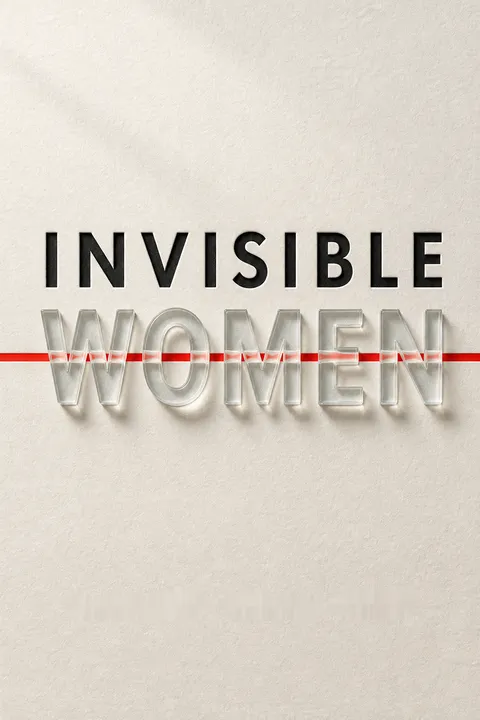
Invisible Women is a wide-ranging investigation of a deceptively simple premise: when institutions treat male experience as universal, they produce incomplete knowledge and then build that incompleteness into ordinary life. Its evidence moves from language and historical memory to transport, employment, technology, medicine, economics, politics, and disaster response. The recurring mechanism is not necessarily deliberate exclusion. It is a sequence: omit women from observation, mistake the resulting sample for humanity, and use the distorted picture to guide decisions. Those decisions then shape who is visible in the next round of data.
The book’s strength is its concrete scale. Snow-clearing, toilets, office temperatures, crash-test dummies, and medical trials make an abstract statistical problem tangible. Its examples also connect justice to institutional competence. A bus route that ignores care trips wastes time; a hiring system that rewards a narrow profile loses candidates; a medical norm based on incomplete trials can miss illness. The argument is most persuasive when it shows how design choices and measurement practices create predictable consequences, even without hostile intent.
A careful reader should distinguish evidence of disparity from proof of its cause. Some figures come from particular places, periods, or methods, and the book reports estimates where systematic data are unavailable. Sex and gender also interact with race, disability, class, age, and local norms. Perez acknowledges that the data on these intersections is especially thin, but that absence limits how confidently broad averages can describe distinct groups. Her central prescription remains robust: collect relevant data, disaggregate it, ask affected people about their experience, and evaluate results after implementation. Data alone cannot settle values or guarantee fairness. It can expose assumptions that have been mistaken for facts, making better decisions possible.
Review Summary
Invisible Women exposes systemic gender bias in data and design across various fields. Readers praise its eye-opening insights into how the world is built for men, affecting women's safety, health, and opportunities. Many found it informative but frustrating, highlighting unconscious biases and the need for change. Some critics noted a lack of intersectionality and trans inclusivity. Despite occasional repetitiveness, most reviewers considered it an important, well-researched work that should be widely read to address gender inequality.
People Also Read









Glossary
gender data gap
missing information about womenThe systematic absence of information about women’s bodies, activities, needs, and experiences from data collection, research, and representation. It includes both failing to gather information in the first place and combining results in ways that hide differences. In the book, this gap helps explain why policies and products designed as universal often fit men better.
male default
men treated as the normThe assumption that male bodies, behavior, and experience represent people generally, while women are treated as exceptions requiring separate explanation. The assumption can appear in language, textbooks, historical interpretation, product design, and research methods. It can operate without conscious intent, yet still make women less visible in the evidence used to make decisions.
sex-disaggregated data
data separated by sexInformation recorded and analyzed separately for females and males rather than reported only as a combined total. This makes it possible to identify differences in outcomes, usage, risks, or access that aggregate figures can conceal. The book argues that collecting data is not enough if institutions fail to analyze it or use findings in policy and design.
trip-chaining
linked journeys for daily tasksA travel pattern in which several shorter trips are combined into one outing, often to manage work, school drop-offs, shopping, and care for relatives. The book notes that women are more likely to make these linked journeys, partly because they perform more unpaid care work. Transport systems built mainly around direct commuting can therefore underserve them.
Yentl syndrome
women treated when symptoms match menA medical pattern in which women are more likely to be recognized, diagnosed, or treated when their symptoms resemble the better-known presentation in men. The term takes its name from a film character who disguises herself as a man to access education. In the book, the syndrome helps explain missed diagnoses, including heart attacks with symptoms labeled atypical.
Henry Higgins effect
making women fit male standardsThe tendency to respond to differences between women and men by changing women to fit a male-designed standard rather than changing the standard itself. Perez names the effect after a character in My Fair Lady who wants a woman to behave more like a man. Examples include requiring women soldiers to match male marching strides or expecting women to adapt to equipment that does not fit them.
brilliance bias
genius imagined as maleA bias that associates exceptional intelligence and innate talent more readily with men than with women. The book connects this perception to patterns in teaching evaluations, career expectations, and children’s beliefs about who can be very smart. When brilliance is treated as a job requirement, fields can appear naturally male even when women have the ability and training to succeed.
Reference Man
standardized male research subjectA notional average male, often described in the book as a young adult man of standard weight, used as a stand-in for the broader human population. Safety limits, medical guidance, and exposure estimates built around this figure may not fit women, whose size, body composition, hormones, and physiology can affect outcomes. The term exposes the false universality of a male reference point.
zombie stat
unsupported statistic that persistsA numerical claim that continues circulating despite weak sourcing or inadequate evidence, often because it provides an intuitively satisfying explanation. The book uses the disputed claim that women make up 70% of people living in poverty as an example. Without reliable individual-level, sex-disaggregated data, neither confidently repeating nor confidently rejecting the figure resolves the underlying knowledge gap.
FAQ
What's Invisible Women: Data Bias in a World Designed for Men about?
- Focus on Gender Data Gap: The book examines how the world is designed around male experiences, leading to a significant gender data gap that affects various sectors like healthcare and urban planning.
- Consequences of Male Default: It highlights the systemic disadvantages women face due to the assumption that male experiences are universal, resulting in policies and designs that overlook women's needs.
- Call for Change: Caroline Criado Pérez advocates for the inclusion of women in decision-making processes to create a more equitable world.
Why should I read Invisible Women?
- Awareness of Bias: The book helps readers understand the subtle and overt biases affecting women's lives daily, shedding light on harmful assumptions and policies.
- Empowerment through Knowledge: It equips readers with knowledge about systemic issues, encouraging advocacy for change and challenging the status quo.
- Engaging and Informative: Criado Pérez uses personal anecdotes, research, and statistics to make complex issues accessible and relatable.
What are the key takeaways of Invisible Women?
- Gender Data Gap Exists: The book emphasizes the significant impact of the gender data gap across sectors like healthcare and urban planning.
- Impact of Male-Centric Design: It illustrates how designs based on male experiences can lead to discomfort and danger for women.
- Need for Inclusive Decision-Making: The author argues for including women in decision-making roles to ensure their needs are considered.
What are the best quotes from Invisible Women and what do they mean?
- “Representation of the world, like the world itself, is the work of men.”: This quote highlights how historical narratives and data have been shaped by men, neglecting women's contributions.
- “Garbage in, garbage out.”: It underscores the importance of accurate data collection; biased data leads to flawed policies.
- “Women’s rights are human rights.”: This statement emphasizes that advocating for women's rights is a fundamental human rights issue.
How does Invisible Women address healthcare disparities?
- Medical Research Exclusion: Women have historically been underrepresented in medical research, leading to a lack of understanding of how diseases affect them differently.
- Symptoms and Diagnosis: The book shares stories of women whose symptoms were dismissed due to a lack of awareness about female-specific health issues.
- Need for Gendered Data: Criado Pérez calls for sex-disaggregated data in medical research to ensure women's health needs are addressed.
How does Invisible Women discuss the workplace?
- Unpaid Care Work: Women disproportionately bear the burden of unpaid care work, affecting their participation in the paid workforce.
- Meritocracy Myth: The book critiques biases in hiring and promotion processes that disadvantage women.
- Need for Flexible Policies: Criado Pérez advocates for workplace policies that accommodate women's needs, such as flexible working hours.
What examples does Invisible Women provide about urban planning?
- Snow-Clearing Policies: A case in Sweden showed how initial policies ignored women's travel patterns, leading to unsafe conditions.
- Transport Planning Bias: Public transport systems often overlook women's complex travel needs due to caregiving responsibilities.
- Gender-Sensitive Design: The author emphasizes designing urban spaces that consider women's experiences and needs.
How does Invisible Women relate to technology and innovation?
- Bias in Algorithms: Algorithms can perpetuate gender biases if trained on data reflecting male experiences.
- Health Tech Innovations: The book highlights the lack of innovation in health tech products designed for women.
- Data Collection Challenges: Better data collection practices are needed in technology development, particularly regarding women's health.
What solutions does Invisible Women propose for closing the gender data gap?
- Inclusive Decision-Making: Criado Pérez argues for including women in decision-making roles to ensure their perspectives are considered.
- Data Collection Improvements: Systematic data collection that is sex-disaggregated is crucial for understanding women's challenges.
- Awareness and Advocacy: The book encourages raising awareness about the gender data gap and advocating for change.
How does Invisible Women illustrate the impact of unpaid care work?
- Economic Implications: Unpaid care work, predominantly performed by women, is often overlooked in economic analyses.
- Time-Use Surveys: These surveys capture the extent of unpaid care work and its impact on women's economic opportunities.
- Advocacy for Recognition: Criado Pérez calls for greater recognition and support for unpaid care work.
What role does the media play in perpetuating gender biases, according to Invisible Women?
- Representation in Media: Women are often underrepresented in media narratives, leading to a skewed perception of their roles.
- Language and Framing: The book highlights how male-centric language can perpetuate gender biases.
- Call for Change: Criado Pérez advocates for more inclusive media practices that prioritize women's voices.
How does Invisible Women illustrate the impact of language and representation?
- Generic Masculine Language: The use of masculine terms can lead to the perception that men are the default human.
- Cultural Representation: The underrepresentation of women in media and history contributes to stereotypes.
- Need for Inclusive Language: The book advocates for language that accurately represents both genders.
Download PDF
Download EPUB
.epub digital book format is ideal for reading ebooks on phones, tablets, and e-readers.








