

Key Takeaways
Schedule retreat as a generous appointment with God, not another religious task.
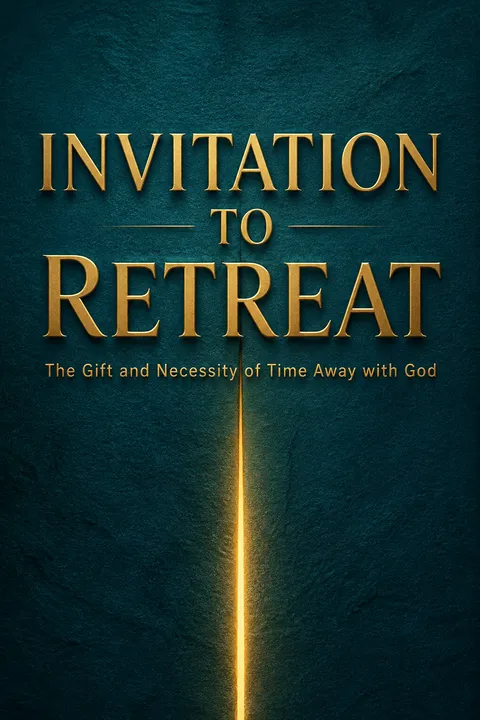
A different kind of retreat. Barton defines spiritual retreat as an extended time apart to give God undivided attention. It is not a work meeting moved off-site, a busy church program, or a vacation built around entertainment. The invitation is relational, not coercive: choose to make room for the God who knows what a tired soul needs.
Rest, wilderness, and Sabbath. The book draws on three biblical pictures: Jesus taking his disciples away after their ministry, the wilderness as a place of both struggle and intimacy with God, and Sabbath as a created rhythm of work and rest. Together they make retreat more than emergency self-care. It is a recurring practice of returning to God before busyness becomes a way of life.
The invitation matters because it recasts rest as relationship rather than a reward for finishing everything. That shift can loosen the guilt that makes rest feel like laziness. It also clarifies the book’s standard: a retreat needs enough protected time and quiet for attention to change, not simply a new location. The spiritual framing is especially resonant for Christians, though the practical need for unhurried attention extends beyond religious life. Access is uneven, however. Caregivers and workers with little control over their schedules may need community support, not simply a stronger personal commitment.
Withdraw far enough to see whether you are fighting the right battle.
A strategic pause. Barton reframes retreat as strategic withdrawal: stepping back when a struggle is draining strength, producing casualties, or no longer working. The pause creates room to recover, tend wounds, see the larger situation, and reconsider the approach. It is not an admission of defeat. The pastor, parent, and entrepreneur introduced in the book each face a different version of danger: overcommitment, a fading sense of self, or choices made without reflection.
Distraction can be danger. Journalist Andrew Sullivan described leaving a relentlessly connected online life after years of constant publishing and checking. On silent retreat, he encountered painful childhood memories without being able to distract himself, and found that the feelings shifted. His story illustrates how retreat can reveal both the battle and the inner life that noise conceals.
The military metaphor gives retreat a useful test: does continued engagement improve the situation, or merely keep momentum alive? That question applies to work, conflict, and digital habits. Sullivan’s account also shows that removing distraction can surface distress, so solitude is not automatically soothing. People facing trauma, depression, or unsafe circumstances may need professional or communal support alongside spiritual practice. Withdrawal is wise when it restores perspective and capacity, not when it becomes a way to avoid necessary action.
Treat chronic exhaustion as information, not a character flaw to overcome.
Find the drain. Barton distinguishes ordinary tiredness after a demanding day from dangerous tiredness that builds when life repeatedly exceeds a person’s capacity. She traces exhaustion not only to packed schedules and digital overload, but also to guilt-driven obligations, difficulty receiving help, performance-based worth, weak boundaries, unresolved grief, and the effort to control what cannot be controlled.
Notice the pattern. The book calls the capacity to remain emotionally distinct while staying connected to others poor emotional differentiation. Without it, another person’s urgency or disappointment can dictate every choice. Jesus’ invitation to his busy disciples to leave ministry for rest is presented as prevention, not punishment. The question is not merely how to recover, but which expectation, relationship, or habit is consuming energy at its source.
This account is valuable because it treats fatigue as diagnostic, not as evidence of insufficient discipline. It also links inner habits to relational systems: boundaries are difficult when identity depends on being useful or agreeable. Yet an individual retreat cannot repair every source of exhaustion. Unmanageable workloads, unequal caregiving, and harmful institutions require changes in responsibilities and conditions, not just private reflection. The most useful reading combines self-examination with a practical audit of who benefits from the exhausted person’s constant availability.
Let your body rest before asking your soul to produce insight.
Rest comes first. Barton describes two kinds of tiredness: ordinary fatigue that may yield to sleep or a day off, and deeper exhaustion accumulated by living beyond human limits. On an eight-day retreat, she listed the many roles she was juggling and arrived in tears, unable to see how to keep meeting every demand. Her spiritual director did not give her another task. He urged her to settle in and simply be.
Start by stopping. The book recommends arranging a retreat so that sleep, food, and rest are available from the beginning. Catherine Doherty’s term poustinia means a quiet place set apart to seek God; entering it may mean doing little more than lying down. Rest is not wasted retreat time. For someone accustomed to producing, accepting care and sleep can itself be an act of trust.
The advice respects a basic constraint of attention: a depleted person has less capacity for patience, reflection, and sound judgment. Beginning with rest also resists the familiar impulse to turn spiritual practice into one more performance metric. Still, persistent or severe exhaustion can have medical, psychological, or economic causes that a retreat cannot diagnose or treat. Rest can be a wise first response without becoming the only response. A useful retreat makes room to notice when additional help is needed.
Build retreat around nourishing rhythms, not a packed spiritual itinerary.
Give the day a gentle shape. Barton argues that human beings thrive within rhythms, from sleep and waking to eating, movement, work, and rest. A retreat can help people notice what their bodies need when they are no longer rushing. The schedule should be spacious: sleep when tired, eat attentively, walk or exercise, and leave room for silence, reading, prayer, or a nap.
Let structure serve attention. The setting may offer prayer services, meals, or spiritual direction; a person retreating alone can create a simple pattern. The point is not to fill every hour. Barton recalls a retreat where social introductions came too early, making a depleted participant feel exposed instead of settled. A good rhythm reduces needless decisions while protecting the quiet and anonymity that let inner attention deepen.
A gentle schedule works like good decision architecture: a few dependable cues can reduce the burden of choosing what to do every moment. The book’s emphasis on bodily rhythms also prevents spirituality from becoming disembodied, as though insight were available on command. Structure can help, but it can also become another standard to satisfy. The practical test is whether a routine supports rest and receptivity. If the schedule creates pressure to keep up, it has stopped serving its purpose.
Borrow the church’s ancient prayers when your own words run dry.
A shared prayer rhythm. Fixed-hour prayer is a Christian practice of praying at set times through the day, often with Psalms, Scripture, traditional prayers, silence, and song. Barton describes discovering that prepared words let her pray without trying to sound profound or invent the right language. The prayers also offered Scripture without an immediate interpretation, leaving space to listen.
A simple pattern works. The book suggests morning prayer, midday prayer, evening prayer, and prayer before sleep, with shorter versions possible. At Barton’s retreats, eight brief services spread across three days gave the group a shared structure while preserving silence. Rooted in Jewish prayer traditions and early Christian practice, the hours link solitary retreatants to a wider community of worship rather than leaving them alone with their thoughts.
Ritual can carry attention when concentration or language is thin. Repeated words also offer a form of cognitive offloading: the person praying does not need to design every moment from scratch. The communal dimension is equally important, since solitude need not mean spiritual isolation. Still, fixed forms are not equally familiar or nourishing to every Christian tradition. Their value lies in helping people attend, not in proving that one format is spiritually superior. A simple adapted practice can preserve the function without copying every form.
Practice absence so care does not become control.
Let others continue without you. Retreat means stepping away from family, work, and causes that matter. Barton admits how uncomfortable it is to miss ordinary moments and to be outside the loop. She argues that this discomfort can reveal attachments that have become excessive, especially the belief that constant presence is the only way to help.
The ministry of absence. This term describes withdrawing so that others can act and God can be present without one person directing every outcome. Barton distinguishes this from neglect: retreat can deepen prayer and prepare a wiser return, but it does not replace necessary care or service. The practice is to plan responsibly, tell loved ones how to make contact in an emergency, and resist the assumption that every problem requires immediate personal involvement.
The idea challenges a common confusion between love and indispensability. In families and organizations, a person who never steps away can unintentionally prevent others from developing their own judgment or relationships. But absence is not automatically generous; it can also shift labor onto someone else. The ethical question is whether the retreat has been arranged with care for those affected. A responsible pause includes communication, contingency planning, and willingness to return to real obligations rather than using spiritual language to evade them.
Release the role that keeps you performing, even in prayer.
Identity beyond achievement. Barton recounts how mentioning her prominent ministry role brought extra attention during an early retreat. She enjoyed the recognition, then noticed that it made her feel expected to perform. Choosing not to identify herself by her title became a way to experience herself as a person seeking God, rather than a résumé in a quiet room.
Name the protective pattern. Barton uses the Enneagram, a nine-pattern framework for examining recurring ways people seek security, to suggest different forms of relinquishment. A perfectionist might stop correcting, a helper might receive care, and an achiever might resist turning retreat into a project. These are prompts for reflection, not assignments to complete. The aim is to notice how familiar strategies can protect self-image while keeping a person from honest rest.
The account is sharp because it shows that performance can follow people into settings supposedly devoted to freedom from performance. Personality frameworks can help make such habits visible, especially when treated as questions rather than verdicts. The Enneagram’s categories should not be mistaken for settled clinical diagnoses or complete explanations of a person. A useful application asks whether a label opens curiosity and change. If it hardens into an identity, the tool may simply give old defenses more sophisticated vocabulary.
Use retreat to notice God’s activity before forcing a decision.
Discernment takes practice. Barton defines discernment as a growing ability to recognize and respond to God’s presence and activity in ordinary life and in consequential choices. Silence is not a technique for producing instant answers. It lets inner commotion settle so questions can emerge without being forced into a solution.
Test the direction. The book encourages attention to calling, desire, Scripture, the character of Christ, love, trusted community, and experiences of consolation or desolation. In this context, those terms describe movements toward or away from spiritual freedom and life. Barton also warns that an appealing, even religiously worthy option may distract from a different good that fits one’s calling more fully. Retreat makes room to examine motives and consequences before deciding.
This method combines inward attention with external checks, a useful safeguard against treating intensity as certainty. Desire can reveal what matters, while community, Scripture, and the likely effects on others can expose blind spots. The account also treats discernment as relational rather than merely analytical: the central question is how to respond faithfully, not just which option maximizes preference. For major decisions, extended reflection should complement practical information and candid advice, rather than replace them.
Protect the freedom to disappoint people when your calling requires it.
Freedom is not impulse. Barton describes spiritual freedom as release from whatever turns a person away from God and the life they are called to live. It is not permission to do anything desired. Her own obstacle was an intense reluctance to disappoint people she loved, combined with an unrealistic hope of meeting every expectation without reaching human limits.
Recalibrate the life. Barton calls patterns of prayer, rest, service, and other spiritual practices sacred rhythms. A rule of life is a considered way of ordering daily life around the person one hopes to become. These patterns need review as circumstances change. She cites Pope Benedict XVI’s resignation as an example of a leader interpreting a deepening desire for prayer alongside events in the church as a signal to step aside.
This insight distinguishes responsibility from people-pleasing. A life organized around avoiding all disappointment is often organized around an impossible fantasy of unlimited time and capacity. Yet the language of calling can also be used to rationalize selfish choices. Recalibration therefore needs humility: consider who bears the cost, which commitments remain binding, and whether trusted people recognize the direction as life-giving. Freedom becomes more credible when it produces a sustainable pattern of care, not merely relief from demands.
Carry retreat home slowly, with signs and practical changes you can keep.
Prepare for thicker air. Barton uses C. S. Lewis’s story of Jill and the lion Aslan to describe returning from retreat. Jill receives guidance in a clear, quiet place, then is warned that life outside will make it harder to see what she has learned. Barton calls the guidance and reminders received on retreat signs: record them so they can be remembered amid ordinary noise.
Make reentry deliberate. The book advises setting realistic expectations, easing back into messages and email, and not sharing more than others or the retreatant are ready to discuss. Gratitude matters too: notice who made the time away possible and listen to what happened while absent. Before leaving, schedule the next retreat. The goal is not to preserve a peak experience untouched, but to return to ordinary life with a clearer direction and a rhythm of coming back to God.
Reentry is where an intense experience becomes either a durable practice or a pleasant memory. Transition rituals, written reminders, and a date for the next retreat turn intention into something easier to act on. The advice to return gradually also respects the difference between a quiet retreat environment and a busy household. Still, insight alone cannot protect a new rhythm from old demands. The clearest sign of integration is a concrete adjustment to the calendar, responsibilities, or habits that helped create the exhaustion.
Analysis
The book’s central claim is that retreat is not an escape from a meaningful life but a discipline that makes meaningful engagement sustainable. Its progression is carefully practical: first recognize danger and exhaustion, then stop, establish rhythms, relinquish control, listen, revise one’s life, and return with care. Personal stories keep these steps from becoming a productivity system disguised as spirituality. The author herself is not exempt from the pressures she describes; her exhaustion, attachment to work, and difficulty disappointing others give the guidance credibility.
The deeper argument concerns attention. Busyness and constant connection do not merely consume time. They can make a person less able to perceive grief, desire, limits, or the needs of others. Silence functions as a condition for noticing, while repeated prayer and bodily rhythms provide structure when attention is scattered. Retreat therefore has both an inward and a social purpose: to help a person become less reactive and more wisely available to others.
The book’s Christian account of God’s presence is its foundation, not a decorative metaphor. Readers outside that tradition may still find value in its analysis of exhaustion, distraction, and the need for protected reflection, but the claims about divine guidance depend on faith commitments the book does not try to prove. Even within its own framework, inner impressions require discernment rather than automatic trust. The strongest version of the argument joins prayer with community, practical judgment, and honest attention to consequences.
A further strength is its refusal to confuse retreat with a perfect schedule. Sleep, silence, prayer, and unplanned emotion all count; productivity does not. The limitation is structural: people cannot always withdraw freely, and individual rest cannot correct unjust workloads or unequal care. The book is most persuasive when retreat is understood not as a private cure for systemic exhaustion, but as one practice that reveals what needs to change and renews the capacity to act on it.
Review Summary
Glossary
Strategic withdrawal
A purposeful step backBarton’s adaptation of the military idea of retreat as a deliberate withdrawal from a damaging or ineffective struggle. The pause creates distance for rest, healing, perspective, and revised action. It is not surrender or avoidance by default. Its value depends on whether stepping back makes a wiser, more sustainable response possible.
Dangerously tired
Accumulated, unsustainable exhaustionA state of exhaustion that develops over time when a person repeatedly lives beyond human limits, works outside their capacities, or ignores what drains them. Barton distinguishes it from ordinary fatigue after a demanding day. It can impair judgment, reduce generosity, and contribute to physical strain, so it calls for more than a night’s sleep.
Poor emotional differentiation
Blurred emotional boundariesA family-systems term Barton uses for difficulty remaining emotionally distinct while staying connected to other people. Someone with weak differentiation may be governed by others’ feelings, demands, or approval rather than by considered values. Greater differentiation allows a person to care about others without automatically taking responsibility for every need or reaction.
Fixed-hour prayer
Prayer at set daily timesA Christian practice of praying at regular points in the day, often using Psalms, Scripture, traditional prayers, silence, and song. Common hours include morning, midday, evening, and before sleep. In Barton’s account, the established words and shared schedule reduce the burden of inventing prayers and connect retreatants with a wider worshipping community.
Ministry of absence
Care through relinquished controlA term associated with Henri Nouwen that Barton uses for the possibility that stepping away can create room for God and other people to act without one person’s constant direction. It challenges the assumption that care requires perpetual availability. It does not mean neglecting responsibilities or replacing needed practical help with prayer.
False-self patterns
Protective habits that constrain freedomRecurring strategies people use to secure worth, safety, or acceptance, such as perfectionism, achievement, helping, or avoiding pain. Barton draws on the Enneagram and other reflective tools to help readers notice these patterns. Retreat offers a setting to loosen their grip, rather than to turn self-awareness into another achievement project.
Enneagram
A nine-pattern personality frameworkA framework Barton uses to describe nine recurring ways people seek security and respond to anxiety. Its patterns suggest different retreat practices, such as receiving care instead of helping or resisting the urge to make everything perfect. In the book it serves as a reflective aid for self-observation, not as a clinical diagnosis.
Discernment
Recognizing and responding to GodBarton defines discernment as a developing capacity to recognize God’s presence and activity and respond to it. It applies both to ordinary life and to significant decisions. The practice draws on silence, desire, Scripture, calling, love, trusted community, and attention to spiritual movements described as consolation and desolation.
Sacred rhythms
Life patterns open to transformationPatterns of attitudes, practices, and behaviors arranged to keep a person receptive to the transforming presence of Christ. Examples include solitude, prayer, Sabbath, self-examination, and care for the body. They are not meant to be rigid rules; they can be reviewed and adjusted as a person’s circumstances, desires, and responsibilities change.
Rule of life
A plan for faithful livingA considered pattern for arranging daily life around who a person hopes to become and how they want to live. Barton frames it as a way to align ordinary practices with the person God created someone to be. A rule of life is meant to be revisited as seasons and responsibilities change, not followed as an unchanging checklist.
Spiritual freedom
Freedom to respond to GodBarton describes spiritual freedom not as permission to pursue every preference, but as release from attachments and pressures that turn a person away from God. It involves a grounded sense of identity and the capacity to respond to Christ rather than being ruled by external expectations, compulsions, or an idealized image of oneself.
Consolation and desolation
Spiritual movements toward or awayTerms from Christian discernment traditions that Barton uses to examine the direction and effects of an experience or choice. Consolation is associated with movement toward God, love, freedom, and life; desolation with movement away from them. They are reflective signs to weigh alongside Scripture, community, motives, and consequences, not instant proof that a choice is right or wrong.
About the Author
Other books by Ruth Haley Barton




Download PDF
Download EPUB
.epub digital book format is ideal for reading ebooks on phones, tablets, and e-readers.








