

Key Takeaways
Learn Hawaiian values in their history, not through resort imagery.
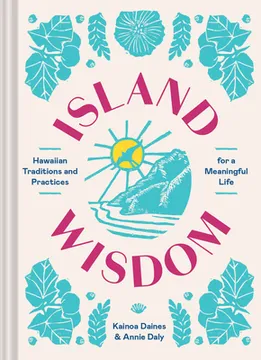
Culture has a history. Island Wisdom is a guide to Hawaiian values, but it also insists that those values cannot be separated from the people and history that shaped them. The authors draw on nearly twenty Hawaiian community members, alongside Kainoa Daines’s experience as a Native Hawaiian and Annie Daly’s reporting, to offer many perspectives rather than claim one voice represents everyone.
The context matters. Polynesian voyagers reached Hawai‘i roughly two thousand years ago and developed systems for surviving in isolation. Foreign trade disrupted those systems; the Hawaiian monarchy was overthrown in 1893, and Hawaiian identity and practices faced suppression. The Hawaiian Renaissance of the late 1960s and 1970s helped renew cultural life, but did not undo colonialism. The book asks readers to learn from Hawaiian traditions without reducing them to vacation aesthetics.
What's important here is the distinction between learning from a culture and treating it as a collection of lifestyle tips. History changes what a practice means: a language, dance, or greeting can carry both everyday use and the memory of suppression. The book's many interviewees also make its authority deliberately plural. That approach is more honest than presenting a single, simplified account. Readers can carry the lessons into their own lives, but should avoid implying that applying a principle makes them owners or representatives of Hawaiian culture.
Use aloha as a decision rule, not a decorative greeting.
Aloha guides conduct. Aloha means more than hello or goodbye. The book explains it through alo, being in another's presence, and hā, breath or life force: connection begins by recognizing another person as fully alive and worthy of respect. Hawai‘i's 1986 Aloha Spirit Law describes it as bringing mind and heart into coordination, a useful image for choices that require both judgment and care.
Its values are practical. Aunty Pilahi Paki's interpretation links aloha to five qualities:
1. Akahai: kindness expressed with tenderness.
2. Lōkahi: unity and balance.
3. ‘Olu‘olu: pleasantness and agreeableness.
4. Ha‘aha‘a: humility and modesty.
5. Ahonui: patience and perseverance.
Together, these values ask not just what feels loving, but what conduct love requires.
The strength of this account is that it refuses to equate kindness with passivity. A decision can be compassionate and still require discipline, honesty, or a firm limit. Balancing emotion with reason also guards against two common errors: treating cold calculation as neutrality, or assuming good intentions automatically produce good outcomes. The law's language makes aloha a public ethic as well as a private feeling. Its challenge is to ask whether a choice protects dignity and relationship, not merely whether it sounds warm.
Make generosity reciprocal, so care strengthens everyone instead of draining one person.
Care circulates. Aloha includes giving food, shelter, attention, and time without keeping a scorecard. But the book stresses that lasting care is reciprocal: people who receive support also find a way to contribute, whether through practical help, positive energy, or another form of service. A woman who welcomes children during their parents' divorce offers them safety and meals, while they help with household tasks.
Make refuge real. A pu‘uhonua is a place of refuge, traditionally a sanctuary where people could seek safety. The idea can also describe a person or home that offers others room to rest, heal, and be forgiven. It is not hospitality for show. It is dependable care, paired with the expectation that everyone has something to give to the shared community.
This model offers a richer account of generosity than either strict self-sufficiency or unlimited self-sacrifice. A refuge works because it provides security, while reciprocity helps keep its support sustainable. Contribution need not be equal in form or timing: a child, a person in crisis, and a host may have very different capacities. The useful question is whether each person is treated as a participant in a relationship, rather than a problem to solve or a resource to extract.
Treat watersheds, farms, forests, and reefs as one shared household.
Land connects life. Aloha ‘āina means love for the land, understood not as scenery but as the source of food, water, and community survival. The traditional ahupua‘a system divided an island into districts running from the mountains to the sea. Families held kuleana within them, including responsibilities such as growing taro or gathering from the forest and ocean, then shared what they produced.
Protect the whole chain. Care for a watershed affects the water and land below it, so decisions about one resource affect many others. Communities enforced rules about taking resources, including restrictions on fishing at certain times. In 2019, Hawaiian elders were arrested while blocking access to construction planned on sacred Maunakea. Their action illustrates how land care can become a serious obligation, not just a personal preference.
The ahupua‘a is a compelling way to picture ecological interdependence: a boundary for managing resources also makes visible how water, food, and human work connect. It shifts attention from isolated consumer choices toward the systems that sustain a community. That does not make every traditional rule transferable to every place. The deeper lesson is to understand local limits and responsibilities before proposing solutions, and to treat people with longstanding ties to a place as central participants in decisions about it.
Earn belonging by learning a place before claiming or displaying it.
Know where you stand. Hawaiian teachings connect identity to place, but the book says belonging can grow even without generations of family roots. Learn where local water comes from, what place names mean, and which histories shaped the streets and landscapes around you. Local music can also teach people to notice a region's weather, plants, and geography.
Visit with respect. In hula practice, an oli, or chant, may be used to ask permission before entering a forest understood as sacred space. The story of Hi‘iaka, a goddess who chants before approaching Kaua‘i, gives that protocol a memorable example. For visitors, the everyday version is to learn local language and customs, follow signs, avoid publicizing sensitive sites, and leave places in better condition than they were found.
Belonging here is an earned relationship, not a claim made by arrival alone. Attention is the first act of care: learning a place's names and resources makes it harder to mistake a living home for an interchangeable destination. Asking permission can also slow a visitor down enough to notice their own impact. Still, symbolic respect cannot replace concrete responsibility. Good intentions matter most when they shape behavior, especially around access, preservation, and the privacy of culturally significant places.
Keep stories alive through practice, while respecting what should stay hidden.
Stories carry knowledge. Mo‘olelo means stories, histories, or traditions. In Hawaiian oral culture, knowledge travels through conversation, chant, song, and hula. Hula is not simply a dance for audiences: students learn chants, histories, and movement under a kumu, or teacher, and the practice helps pass stories between generations. Its history also includes suppression and commercialization, which helps explain why a tourist performance can differ sharply from a sacred or community practice.
Not every meaning is public. Kaona is a hidden or layered meaning, especially in poetry and song. A chant may have an understandable surface and a deeper reference meant for particular people. The book treats this privacy as part of cultural knowledge, not a puzzle outsiders are entitled to solve. Storytelling can preserve memory while still keeping boundaries around what is shared.
Storytelling is presented as both an archive and a relationship. A story survives not only because someone records its words, but because people learn how, when, and with whom to tell it. That distinction helps explain why documentation alone cannot preserve a living tradition. The idea of kaona also offers a useful counterweight to the modern demand for total access. Curiosity can deepen understanding, but respect sometimes means accepting that a story is not an invitation.
Speak and name with care because words direct attention and identity.
Words have weight. Mana means spiritual power or energy; in the book, words and names can carry that force. Hawaiian names may express a place, a quality, or a family connection, and naming a child is treated as a meaningful responsibility. The name Kainoa, for example, was understood by his great-grandmother as evoking calmness of the sea, a meaning that shaped how his family thought about his identity.
A story of Waiau. When a lake on Maunakea began to dry, kumu hula Micah Kamohoali‘i composed and performed a chant envisioning its return, then made the ceremony an annual practice. A blizzard followed the first ceremony and replenished the lake. The book presents this as a story about the power of naming and collective intention, not as scientific proof that a chant caused the weather.
The account is most useful when read on two levels. Within Hawaiian belief, naming and chanting can be spiritual acts that connect people, ancestors, and place. In ordinary life, language also steers attention: naming a place or problem can make it more visible, memorable, and worthy of care. Those meanings should not be collapsed into a claim that speech controls physical events. The story's ongoing ceremony shows how words can organize shared commitment even when their causal power cannot be measured.
Build family through the people who actually raise and sustain you.
Kinship is practiced. ‘Ohana means family, but it can include friends, neighbors, and other people who help raise or care for someone. The book describes communities where adults may guide children beyond their immediate parents, and where calling someone aunty or uncle signals both affection and responsibility.
Feed more than the body. Hānai means bringing someone into a family as if they were one's own. Its meaning includes feeding and raising, but also teaching, mentoring, and offering emotional and spiritual support. In the authors' account, Kainoa's family extends this relationship to Annie. The idea asks readers to look at their own close ties and consider whether care includes knowledge, guidance, and belonging, not only meals or practical help.
This view makes family less a fixed category and more a record of care given and received. It can recognize the people who do real work in a child's life, even when legal or biological definitions miss them. Shared responsibility can also distribute knowledge across generations. The model depends on trust and consent, however; community involvement should not erase a child's or parent's boundaries. Its most valuable invitation is to honor dependable caregivers with both gratitude and accountability.
Let ancestry clarify what you owe, then choose a contribution.
Memory can orient action. Hawaiian teachings encourage people to learn family stories, speak ancestors' names, and understand the places and practices that shaped earlier generations. The book describes three piko, or points of connection: the crown of the head links a person to ancestors, the navel to parents, and the reproductive system to future generations. The image places each person between those who came before and those who may follow.
Responsibility is a privilege. Kuleana means responsibility and privilege, including a role one accepts for the good of a wider community. The canoe offers a simple picture: each seat has work to do, and the whole crew depends on people fulfilling their parts. Kuleana need not be grand. Caring for relatives or sustaining a family practice can be a meaningful contribution.
Ancestry is treated here as an active relationship, not a museum of origins. It can supply models, warnings, and a sense of continuity, while kuleana turns memory into present work. This avoids the trap of making purpose depend on finding one perfect calling. A contribution can be chosen and practiced. At the same time, inherited histories may include harm as well as pride; responsible remembrance requires making room for both, rather than using ancestry only to certify a flattering identity.
Pair emotional conversation with plant knowledge, without rejecting medical care.
Healing begins relationally. Lā‘au lapa‘au is the Hawaiian practice of using plants to treat or support healing. Practitioner Nāpua Harbottle describes beginning with talking story, an open conversation that may reveal grief, family conflict, financial strain, or other sources of distress. Plants may then be used to address physical concerns within a broader approach to well-being.
Tradition is not a substitute for care. The book explicitly says its advice should supplement, not replace, medical or psychotherapeutic support. It shares examples of plants used in Hawaiian practice, such as turmeric, coconut, and aloe, while advising that healing plants be used with guidance from a trained practitioner. The larger lesson is to take emotional, spiritual, and physical dimensions seriously without treating any one method as sufficient for every condition.
The chapter's holistic frame resists reducing a person to a symptom. Conversation may reveal conditions in someone's life that a narrow account of illness overlooks, and cultural practices can make care feel more connected to identity and community. The book's caution about medical support is essential. Traditional remedies vary in evidence and safety, and an emotionally meaningful practice should not delay treatment when needed. Respectful integration means neither dismissing cultural knowledge nor overstating what it can do.
Observe patiently, then act when preparation and circumstances meet.
Patience takes work. Ho‘omanawanui describes active patience: making enough time and space for something to become ready, rather than waiting passively. Farmers know that a crop cannot be rushed without affecting the result; the book applies that seasonal awareness to choices in life. It also emphasizes i ka manawa kūpono, the right time, as a way to resist treating every personal milestone as a deadline.
Learn before declaring mastery. Ha‘aha‘a is humility understood as continued learning. Hawaiian elders teach through close observation, listening, and practice. A lauhala weaver remembers learning by watching his grandmother before she invited him to try. This approach values attention and apprenticeship over instant instructions. Patience is not an excuse to avoid a necessary choice; it is preparation that helps a person recognize when action is appropriate.
The distinction between active patience and delay is crucial. Waiting can be wise when a decision depends on skill, readiness, or conditions outside one's control; it can also become a story that protects someone from risk. Observation offers a test: is preparation increasing, and are relevant conditions changing? Humility helps keep that test honest because it leaves room to learn from others. The aim is not to eliminate ambition, but to let ambition work with timing rather than pretend timing does not exist.
Analysis
Island Wisdom is most persuasive when it treats well-being as a relationship among person, community, history, and land, rather than as a private optimization project. Its four recurring themes, aloha, ‘āina, mo‘olelo, and ‘ohana, reinforce one another. Love requires responsibility; responsibility depends on knowing a place and its stories; stories survive through families and communities; and a community needs reciprocal care to endure. The book's examples make this system concrete, from the mountain-to-sea structure of ahupua‘a to the everyday obligations attached to aunty and uncle.
Its form matters. The authors gather nearly twenty Hawaiian perspectives rather than flattening the culture into a single authoritative doctrine. Kainoa Daines's personal account of uncertainty about his identity gives the book a narrative anchor: cultural grounding is not automatic, even for someone with Hawaiian ancestry. That story also clarifies why practices such as language, hula, and genealogy are not decorative traditions. They can restore connection after historical efforts to suppress it.
The book's central risk is also its central opportunity. Translating Indigenous ideas for a broad audience can make them useful, but may turn them into portable wellness techniques stripped of origin, obligations, and limits. The authors counter this by foregrounding history, naming many teachers, and reminding readers that some knowledge is not meant for everyone. Readers should therefore distinguish between adapting a general ethic, such as caring for local land, and claiming authority over a specific Hawaiian practice.
Some spiritual claims, including the power attributed to chants and mana, are presented through cultural belief and story rather than empirical demonstration. Their significance need not depend on treating them as scientific propositions. Ritual can focus attention, bind a community to recurring care, and transmit memory. The strongest practical reading of the book is therefore neither uncritical adoption nor dismissal: learn the context, honor the people who carry the knowledge, and translate its responsibilities carefully into one's own place and relationships.
Glossary
Aloha
Love and connectionAloha is a foundational Hawaiian principle of love, compassion, respect, and connection. The book relates the word to alo, presence, and hā, breath or life force, emphasizing recognition of a shared humanity. It is also a guide to conduct, calling for care that includes judgment, responsibility, and respect for others.
Aloha ‘āina
Love for the landAloha ‘āina means love for the land. In the book, it describes a relationship in which people recognize their dependence on the land and accept responsibility for its health. It includes caring for resources, learning the history and ecology of a place, and understanding that land, water, food, and community are interdependent.
Ahupua‘a
Mountain-to-sea land districtAn ahupua‘a is a traditional Hawaiian land division, often extending from mountain to sea. Its range could include water sources, agricultural land, forest resources, and access to the ocean. Families held particular responsibilities within the district, and communities shared resources. The system reflects a practical understanding that ecological systems and human livelihoods are connected.
Kuleana
Responsibility and privilegeKuleana means responsibility and privilege, and can refer to a person's role, concern, or obligation within a community. The book presents it as a contribution one takes on and fulfills for the benefit of a wider whole. Kuleana can be a large public commitment or an everyday responsibility, such as caring for relatives.
Mālama
Care and protectionMālama means to care for, tend, preserve, or protect. The book applies the term to land, resources, and people, describing care as an ongoing responsibility rather than a symbolic gesture. Mālama can include protecting a place, nourishing a garden, supporting another person, and trying to leave a setting better than it was found.
Mo‘olelo
Story, history, or traditionMo‘olelo refers to stories, histories, traditions, and accounts. In Hawaiian culture, the book describes storytelling as a way to pass knowledge across generations, including knowledge about place, genealogy, values, and cultural practice. Mo‘olelo may be shared through spoken conversation, chants, songs, and dance, and not every story is intended for every audience.
Hānai
Foster, nourish, or raiseHānai can mean a foster or adopted child, and also to raise, feed, nourish, or sustain someone. The book emphasizes the broader relational sense: bringing someone into a family and supporting them physically, emotionally, and spiritually. Mentoring and teaching can also express hānai, because care includes feeding someone knowledge and belonging.
Pu‘uhonua
Place of refugeA pu‘uhonua is a place of refuge or sanctuary. The book describes traditional sites where people could seek safety and forgiveness, and extends the idea to a home or person who offers others shelter, rest, and acceptance. A pu‘uhonua is more than a welcoming image; it is a dependable space for healing and renewed participation in community.
Kaona
Hidden or layered meaningKaona refers to hidden meaning, concealed reference, or layers of significance in Hawaiian poetry and other language. A song or chant may communicate one idea on the surface while carrying a deeper meaning understood by particular people. The book emphasizes that these layers are not necessarily intended for everyone to uncover or share.
Mana
Spiritual power or energyMana is spiritual power or energy. The book presents it as something associated with people, places, words, and actions, and describes actions as capable of strengthening or diminishing a person's mana. Hawaiian stories about names and chants express this belief. The term refers to a culturally specific spiritual concept, not simply generic confidence or motivation.
Pono
Balance and right conductPono describes balance and right conduct. The book presents it as a continuing effort to notice when relationships or circumstances are out of balance and to respond appropriately. Living pono can mean communicating about a problem rather than hiding it, and accepting one's responsibility to address difficulties that affect family or community.
Ho‘omanawanui
Active patienceHo‘omanawanui is an active form of patience, described in the book as creating time and space for a process to reach readiness. It is not simply passive waiting or giving up on a goal. The idea draws on seasonal knowledge, such as allowing crops to mature, and encourages action when preparation and circumstances align.
Ha‘aha‘a
Humility through learningHa‘aha‘a means humility, with an emphasis on modesty and continued learning. The book connects it to observing carefully, listening, and recognizing that knowledge is not exhausted by one's own experience. A person practicing ha‘aha‘a remains a student, learns from elders and teachers, and avoids treating partial knowledge as mastery.
Lā‘au lapa‘au
Traditional plant-based healingLā‘au lapa‘au is the Hawaiian practice of using plants to treat or support healing. The book describes it as holistic, with practitioners attending to a person's emotional and spiritual circumstances as well as physical concerns. It presents plant knowledge as culturally grounded and advises readers to seek guidance from trained practitioners and not replace needed medical or psychotherapeutic care.
Piko
Connection across generationsPiko literally refers to the navel, and in the book also represents connections across generations. A teaching identifies three piko: the crown of the head, associated with ancestors; the navel, associated with parents; and the reproductive system, associated with future generations. The image situates each person's actions within a lineage extending backward and forward.
Download PDF
Download EPUB
.epub digital book format is ideal for reading ebooks on phones, tablets, and e-readers.








