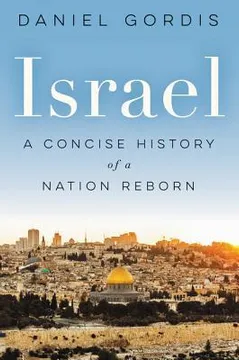


Key Takeaways
Treat Israel as a centuries-old homecoming turned into modern political action.
An old longing becomes politics. Jews had prayed toward Jerusalem, ended Passover with hopes of returning, and carried memories of the land through scripture and ritual for centuries. In the late nineteenth century, persecution and the rise of European nationalism gave that inherited attachment a new political form. Chaim Nachman Bialik’s poetry voiced the yearning; Theodor Herzl organized it into a movement. At the 1897 First Zionist Congress, delegates from different countries adopted a program for a legally recognized Jewish homeland in Palestine.
Memory was not enough. The Zionist project required diplomacy, immigration, settlement, and institutions. Herzl’s political innovation was not inventing the attachment to Zion, but insisting that Jews could act collectively to change their condition. The book traces a passage from remembered homeland to sovereign state, while emphasizing that the transformation brought conflict and enormous human cost.
The distinction between an ancient attachment and a modern political program helps prevent two common errors: treating Zionism as either a timeless inevitability or a plan invented from nothing. The account shows how inherited stories can become politically active when institutions give them a practical route. Yet an old connection, however meaningful to one people, does not by itself settle the rights or aspirations of others who live on the same land. Historical continuity explains why the project mattered to Jews; it cannot alone resolve the political conflict it helped create.
Build a nation through language, land, and institutions, not sovereignty alone.
Statehood began before independence. The early immigrants created settlements, schools, political organizations, and defenses while Palestine was still under Ottoman and then British rule. Eliezer Ben-Yehuda and fellow language activists revived Hebrew as an everyday spoken language, despite resistance from religious authorities and the practical preference of many immigrants for Yiddish. Tel Aviv, founded in 1909, became a Hebrew-speaking urban center; the kibbutz embodied a competing socialist vision rooted in shared labor and agriculture.
Culture made nationhood tangible. Writers, teachers, farmers, and builders helped create a society that could imagine itself as more than a political claim. The First Zionist Congress even raised the idea of a Hebrew university before a state existed. These projects were small and often dependent on outside donors, but they supplied people with common language, institutions, and habits that sovereignty alone could not instantly provide.
This account treats nation-building as a process that takes place in schools, fields, newspapers, and language, not merely in diplomatic declarations. That emphasis explains why cultural projects could make a future state feel imaginable before it existed. It also complicates heroic narratives: the pioneering ideal often depended on philanthropy, and the daily realities drove many immigrants away. A society’s founding myths gain durability when they are embodied in institutions, but they can also conceal who did the labor and whose preferences shaped the new culture.
Expect Zionism to contain rival answers, not one settled doctrine.
One movement, competing futures. The early Zionists disagreed about nearly everything beyond the need to address Jewish vulnerability. Herzl sought political sovereignty; Ahad Ha’am wanted a cultural and spiritual center, fearing a state without Jewish substance. Max Nordau called for stronger, physically confident Jews, while A. D. Gordon believed renewal would come through working the land. Religious Zionists wanted Jewish law at the heart of national revival; many ultra-Orthodox leaders rejected human efforts to end exile. The Uganda proposal made the disagreements impossible to ignore: some saw an urgent refuge, while others would not abandon Palestine.
Disagreement became inheritance. The state later contained these arguments rather than resolving them. Secular and religious, socialist and nationalist, conciliatory and militant currents all helped shape Zionist institutions. The book presents Zionism less as a single blueprint than as an ongoing argument about what a Jewish collective should become.
The movement’s pluralism is not a footnote to its story. It helps explain why Israel’s politics are so often intense: disputes about territory or religion can also be disputes about which version of Jewish history deserves to guide the present. The comparison with a family argument is useful, but incomplete, because political disagreement affects people outside the movement as well. Diversity of vision can prevent one ideology from monopolizing national identity, while unresolved divisions can also make shared decision-making brittle.
Read 1948 as refuge achieved and displacement begun.
A state emerged under fire. After the Holocaust, hundreds of thousands of Jewish survivors still needed a home, while British restrictions blocked immigration to Palestine. The UN voted to partition the territory in 1947. Zionist leaders accepted the plan; Arab leaders rejected it, and fighting intensified. On May 14, 1948, David Ben-Gurion declared Israel’s independence. The new state survived war against neighboring armies, but about six thousand Israelis died, roughly one percent of its Jewish population.
The cost was not only Jewish. Around 700,000 Palestinian Arabs became refugees during the 1948 war. Accounts differ over why people fled, how often forces expelled them, and the intentions behind particular military operations. The book also traces the flight and expulsion of Jews from Arab countries, many of whom settled in Israel. These histories intersect, but they are not interchangeable: their causes, circumstances, and political consequences differed.
Holding refuge and displacement in the same frame is essential to understanding why 1948 remains both a founding achievement and a continuing wound. The book stresses Israel’s existential danger and the unwillingness of Arab leaders to accept partition, while also acknowledging Palestinian loss and contested Israeli actions. A sound historical comparison must resist turning suffering into a competition or using one population’s fate to cancel another’s. The contrast in how new states and host countries handled refugees matters, but it does not by itself explain the full experience of either community.
Measure state-building by who receives citizenship, dignity, and a voice.
Absorption was extraordinary and unequal. Between independence and the end of 1951, roughly 687,000 Jews arrived in Israel, doubling its Jewish population in about three and a half years. The Law of Return opened the country to Jewish immigrants, including survivors and Jews leaving Arab states. With little housing or money, the government placed many newcomers in temporary camps and ma’abarot, which often became long-term homes. Mizrachi immigrants faced cultural condescension and discrimination even as they became citizens.
Democracy had contradictions. Ben-Gurion’s mamlachtiyut, or effort to make the state the central focus of public life, helped unify diverse newcomers and establish institutions. Yet Arab citizens lived under military administration from 1948 to 1966, with restricted movement and unequal access to opportunity. The state’s democratic traditions and commitment to mass immigration were real achievements, but neither automatically guaranteed equal treatment.
The gap between citizenship on paper and dignity in daily life is a useful test of national success. Israel’s founders faced severe constraints, and the scale of immigration was remarkable, but emergency conditions also hardened social hierarchies. The story shows that inclusion is not a single legal act: housing, education, political representation, and freedom of movement determine whether people experience the state as theirs. A country can be both unusually successful at absorbing refugees and responsible for policies that marginalize citizens.
Security can preserve sovereignty, but force keeps creating moral debts.
Self-defense became a national imperative. Repeated attacks, from the destruction of Hebron’s Jewish community in 1929 to cross-border raids after independence, persuaded many Israelis that restraint alone could invite further violence. In 1953, Unit 101 carried out a reprisal raid on the Jordanian village of Qibya after Palestinian infiltrators killed an Israeli mother and two children. The operation killed dozens of villagers, many of them women and children, and drew international condemnation.
Moral scrutiny grew alongside military power. Israeli writers challenged the conduct of the state and its soldiers. S. Yizhar’s novel about a Palestinian village emptied during the 1948 war forced readers to confront the human meaning of expulsion. The 1956 killing of 47 Arab residents of Kafr Kassem led an Israeli judge to define the idea of a manifestly illegal order, one soldiers must refuse. Security decisions could be necessary and still require public judgment.
The section’s strength is its refusal to treat security and morality as separate domains. An operation can aim to deter future attacks and still harm civilians in ways that corrode the society it is meant to protect. The examples also show self-criticism working as a civic practice, through literature, courts, and public debate. Such scrutiny does not erase the danger faced by Israeli civilians, but neither should danger make every tactic immune from examination. The difficult question is how to evaluate immediate protection against long-term political and moral consequences.
Treat 1967 as victory that turned territory into an enduring dilemma.
A brief war transformed the map. In June 1967, after Egypt closed the Straits of Tiran and regional tensions escalated, Israel launched a preemptive strike and defeated Egypt, Jordan, and Syria in six days. Israel captured the Sinai, Gaza, the West Bank including East Jerusalem, and the Golan Heights. The victory reunited Jerusalem for Israelis and produced intense euphoria, especially around access to the Western Wall and other sites sacred to Jewish history.
The new borders created new obligations. About 1.25 million Palestinians came under Israeli rule. Religious Zionists saw the captured land as a return to the biblical homeland and began settling it; others, including Orthodox thinker Yeshayahu Leibowitz, warned that governing another people threatened Israel’s Jewish and democratic character. The debate was not simply about military security. It became a conflict over history, faith, citizenship, and the future shape of the state.
The war’s central paradox is that a victory widely experienced as deliverance also created a governing problem that military success could not solve. Territory is not merely strategic space when people live on it and competing national claims attach to it. The account’s pairing of religious settlement with secular critics usefully resists reducing the debate to religious versus secular politics. Still, framing the issue as a dilemma for Israel can obscure Palestinian agency and political aspirations. A fuller analysis must keep both the state’s security concerns and the governed population’s rights in view.
Make military confidence answerable to evidence and civilian oversight.
The 1973 surprise exposed complacency. After the 1967 victory, Israeli leaders and intelligence officials developed the conceptzia, a confident assumption that Arab armies would not attack until they could overcome Israel’s military advantage. Egypt and Syria launched a surprise assault on Yom Kippur, October 6, 1973. Warnings had accumulated, but senior officials misread or discounted them. Israel suffered heavy losses in the opening days before reorganizing and regaining the initiative.
Democratic accountability followed. The Agranat Commission investigated the failures and removed senior military officials from their posts. Public protests also pressured Prime Minister Golda Meir to resign. The war damaged the aura of invulnerability created by 1967 and weakened the Labor establishment; Menachem Begin’s Likud victory in 1977 ended decades of Labor dominance. Military performance mattered, but so did whether leaders could explain errors and accept consequences.
The conceptzia is a compact warning about the danger of treating past success as reliable evidence about future threats. It also shows that intelligence failure is rarely just a shortage of information; institutions can collect warnings and still fail if their assumptions decide in advance what those warnings mean. The commission and public protest demonstrate democratic correction, though accountability after catastrophe cannot restore those lost. The political transition that followed also reminds readers that voters interpret security failures as judgments on an entire governing order, not merely on a few commanders.
Do not mistake negotiations for peace when violence and mistrust persist.
A diplomatic opening did not settle the conflict. The Oslo Accords of the 1990s created the Palestinian Authority, recognized the PLO as the Palestinian representative, and set out limited Israeli withdrawals intended to lead toward a permanent agreement. Yitzhak Rabin continued implementing the agreements despite attacks, arguing that negotiations and counterterrorism had to proceed together. He was assassinated in 1995 by a Jewish extremist opposed to territorial compromise.
The process lost public trust. Further suicide bombings, disputes over territory and Jerusalem, and the failure of the 2000 Camp David talks deepened Israeli skepticism. Palestinians and Israelis assign responsibility for the collapse differently, and the book emphasizes Arafat’s failure to accept or counter the Israeli proposal. The Second Intifada brought years of deadly violence. The resulting lesson is not that dialogue is pointless, but that signed frameworks cannot substitute for reciprocal commitments, credible enforcement, and public confidence.
The distinction between a negotiation process and a peace settlement is crucial. Agreements can create institutions and expectations, but they remain fragile if leaders cannot persuade their own publics that restraint is mutual. The account’s skepticism about Arafat is clear, while the wider record also includes disputed interpretations of the Camp David talks and the effects of Israeli policy. That complexity matters: assigning blame can clarify responsibility, but a blame-centered story may leave little room to identify conditions under which negotiations could work.
Keep national survival connected to the culture that gives it purpose.
The state’s founding ideal kept changing. Early Zionists often tried to break with religious life and create a self-reliant new Jew. Decades later, secular Israelis such as Ruth Calderon described feeling cut off from the Jewish texts and traditions their predecessors had set aside. A growing cultural movement brought religious and secular Israelis together to study those sources. At the same time, Israel became a technological and economic power, absorbed immigrants from the former Soviet Union and Ethiopia, and remained divided over occupation, religion, inequality, and democratic equality.
The ending is not a neat resolution. The book argues that political sovereignty and cultural renewal can reinforce one another: a Jewish state can provide a home for a varied Jewish life, while tradition can give the state meaning beyond survival. But the society remains plural, and not every citizen shares the same account of its purpose. The challenge is to sustain a common civic home without demanding one uniform identity.
The cultural turn is more than nostalgia for what early Zionism rejected. It suggests that a national project can outgrow its founding opposition: the new identity may need some inherited materials to become intellectually and emotionally complete. The tension is productive when tradition is available for interpretation rather than imposed as a single test of belonging. The same principle applies to national identity more broadly: shared history can create solidarity, but a democratic state must make space for citizens who relate to that history differently.
Analysis
Gordis tells Israel’s history as a national homecoming made through political organization, cultural invention, immigration, and repeated war. His most revealing thread is the tension between transformation and continuity. Zionism sought a self-defending, Hebrew-speaking Jew unlike the vulnerable European Jew, yet the mature state repeatedly returned to the traditions and collective memories that the revolution had tried to displace. The result is not a completed national identity but an argument among competing versions of it.
The book’s narrative form gives events emotional coherence: poetry and personal memory sit beside diplomacy, institutions, and battles. That choice explains why moments such as the 1897 congress, the 1947 partition vote, the Eichmann trial, and the return to Jerusalem in 1967 matter beyond their immediate outcomes. They become episodes through which Israelis interpret their place in history. The focus on narrative is valuable, but it also makes historical selection consequential. A concise account cannot give equal depth to every community, and this one centers Jewish experience and Israeli self-understanding more than Palestinian political and social life.
Gordis does acknowledge Palestinian displacement, Israeli misconduct, social discrimination, and the burdens of occupation. Still, the framing often gives more explanatory space to Jewish vulnerability and security than to Palestinian interpretations of the same events. That imbalance should be noticed without reducing the book to advocacy: its attention to internal dissent, moral criticism, and political failure complicates a triumphalist reading. The most useful way to read it is as a historically grounded, openly interpretive account of how a state became both refuge and contested power. Its central achievement is making clear that Israel’s success cannot be separated from the unresolved costs and debates that accompany it.
Glossary
Zionism
Jewish national revivalA modern movement to establish a publicly recognized Jewish national home in the Land of Israel. It drew on longstanding Jewish attachment to the land, but took political form in the late nineteenth century amid European nationalism and antisemitism. Its supporters disagreed sharply about sovereignty, religion, culture, settlement, and the use of force.
Yishuv
Prestate Jewish communityThe organized Jewish community in Palestine before Israel’s independence in 1948. The Yishuv developed settlements, schools, political bodies, labor organizations, and defensive forces that later became foundations of the state. The term can also distinguish the newer, often secular Zionist community from the older Jewish communities already living in Palestine.
aliyah
Immigration to IsraelA Hebrew term meaning ascent, used for Jewish immigration to the Land of Israel. The book divides early immigration into numbered waves, such as the First and Second Aliyah. The word also carries a religious and historical sense: migration to the ancestral homeland is described not simply as relocation, but as going up.
Haskalah
Jewish Enlightenment movementThe Jewish Enlightenment, active from the late eighteenth through the nineteenth century. It encouraged Jewish engagement with European learning and culture, and challenged the isolation and authority structures of traditional Jewish life. Many early Zionist leaders encountered secular intellectual life through the Haskalah, while retaining different degrees of attachment to Jewish texts and traditions.
Muskeljuden
Physically strong new JewsMax Nordau’s term for the physically confident Jewish men and women he believed Zionism should cultivate. The ideal opposed the image of Jews as physically vulnerable and unable to defend themselves, an image intensified by repeated violence in Europe. It was one influential version of the proposed new Jew, alongside ideals centered on labor, culture, or religious renewal.
mamlachtiyut
State-centered civic identityDavid Ben-Gurion’s concept for making the state central to Israeli public life and collective responsibility. It supported the creation of common institutions and a shared political culture among immigrants from diverse backgrounds. The approach also enabled strong central control, and critics connect it with policies that marginalized dissenting groups and weakened independent institutions.
conceptzia
Assumption of military invulnerabilityAn Israeli term for the confident preconception, especially within military intelligence before the 1973 Yom Kippur War, that Arab armies would not attack unless they could defeat Israel’s military advantage. This assumption led officials to discount warnings and misread preparations for war. The term has come to represent the danger of allowing a prevailing theory to override contrary evidence.
intifada
Palestinian uprisingAn Arabic term meaning a shaking off, used for major Palestinian uprisings against Israeli rule. The First Intifada began in 1987 and relied heavily on mass protest, strikes, stone throwing, and clashes with Israeli forces. The Second Intifada, beginning in 2000, involved much more lethal attacks, including suicide bombings and armed actions.
Gush Emunim
Religious settlement movementA movement founded in 1974 that sought to establish Jewish settlements in territories captured by Israel in 1967. Its supporters viewed settlement as a religious and national return to the biblical Land of Israel. The movement helped make settlement a central and lasting dispute in Israeli politics, challenging governments that considered territorial withdrawal.
Law of Return
Jewish immigration rightAn Israeli law passed in 1950 that grants Jews the right to immigrate to Israel. It expressed the state’s central promise to serve as a home and refuge for Jews wherever they lived. Its definition of eligibility differs from traditional Jewish law, creating continuing questions about Jewish identity, conversion, and citizenship.
Iron Wall
Deterrence before agreementZe’ev Jabotinsky’s strategic argument that Palestinian Arabs would not voluntarily accept Zionist settlement while they believed they could prevent it. He argued that a strong Jewish presence and defensive capacity had to remove that expectation before genuine agreement could become possible. The idea influenced later Israeli right-wing thinking, though it remains contested as a strategy and interpretation of the conflict.
Download PDF
Download EPUB
.epub digital book format is ideal for reading ebooks on phones, tablets, and e-readers.








