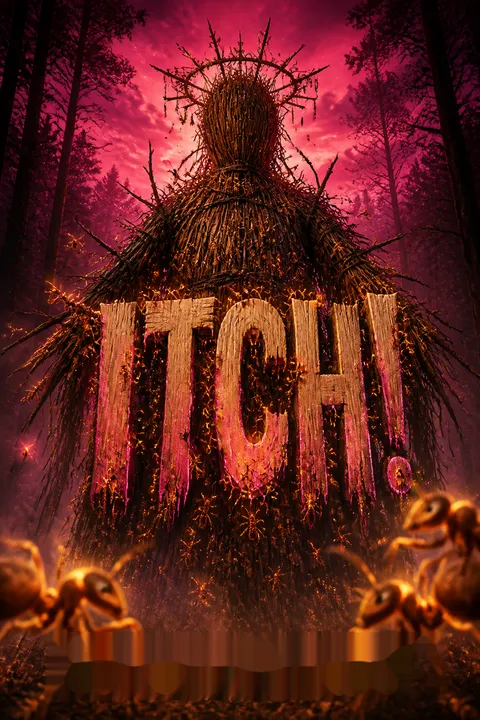


Plot Summary
The Kitchen Ants
In 2001, young Josie1 comes downstairs during a storm to ask her widowed father2 for company. He is preparing pies for Ellwood's Devil's March, impatient with mistakes and still raw from her mother's9 death. When he reminds Josie1 that her mother9 is gone, she begins to cry; he carries her upstairs and agrees to make her warm milk.
Meanwhile, ants cross the kitchen tiles and gather over the meat. Josie1 notices their deliberate movement, but her father2 does not. She falls asleep believing the insects might end up in the festival pies, while the scene leaves a more troubling impression: grief has made her dependent on a volatile parent, and her father's2 domestic rituals already conceal things she cannot understand.
This opening plants the novel's central uncertainty in a child's limited understanding. Josie reads her father's moods as the weather she must manage, while the ants register as an ordinary household nuisance. His tenderness is real but conditional, folded into an effort to quiet and contain her. The festival pies connect domestic life to public ritual before Josie knows what that connection means. The scene also establishes how memory can preserve an image without preserving its explanation. Years later, the insects will return as sensation, evidence, and a force that seems to speak through the body.
A Body in the Knoll
In 2024, Josie Jackson1 walks home from her cleaning shift through the Knoll, the wooded shortcut between Ellwood and Sling. She has recently returned from London after an abusive relationship with Lena4 ended in a head injury, and she is still caught in memories of the attack. Beneath the pines, a stiff, partly clothed figure looks to her like discarded plastic.
The smell and maggots finally unsettle her, but she investigates with a stick rather than touch it. The stick sinks into the woman's7 neck, and ants pour from the wound. Josie1 understands that the figure is a decomposing corpse and screams. Her attempt to find calm in familiar woodland has instead placed her at the scene of a death.
The discovery binds Josie's external investigation to an already damaged sense of reality. She misidentifies the body not because she is careless, but because denial offers a few seconds of protection from an image she cannot yet absorb. Her recent abuse makes that reflex especially legible: she has learned to question her own perception and to minimize danger until it becomes undeniable. The Knoll is both a daily route and a site of local ritual, so the corpse interrupts not only her private recovery but the ordinary geography of home. The ants turn that interruption into an intimate bodily threat.
The Ants Cross Over
Josie1 tries her father2 repeatedly before calling the police, whose operator asks her to remain beside the body until officers arrive. The questions and the cold overwhelm her. She faints, and ants move from the corpse onto her. When she wakes, she is tracing the dead woman's7 face and is horrified to find insects biting beneath her clothes.
Police reach her as she scratches and cries out; hospital staff sedate her and treat the bites. Detective Constable Wilkes5 takes a statement at her bedside, despite Josie's1 exhaustion, and hints that the dead woman7 may be the victim of a crime. Josie1 returns to Ellwood feeling isolated, physically inflamed, and unable to stop replaying the discovery.
The collapse literalizes the novel's governing image of trauma as something that crosses boundaries. Josie is not merely a witness to the corpse; the insects make her feel incorporated into its aftermath. Her involuntary touch of the body echoes her intimate memories of Lena, a disturbing overlap between violation and care that she cannot control. Wilkes's hurried questioning compounds the loss of agency, even as the detective recognizes Josie as a victim. The episode also shifts the mystery from a death Josie found to a danger she carries home, turning private recovery into a bodily investigation.
Laurel's Familiar Face
A television report identifies the woman as Laurel Howell,7 a twenty-six-year-old local who had been missing since September. Her brown hair, freckles, build, and mole resemble Josie's1 closely enough to make the discovery feel personal. Josie1 begins to doubt that the corpse was Laurel7 at all, then studies the Knoll and realizes the body could only have been placed there shortly before she found it.
The path was busy, and the Devil's March had passed through the previous evening without anyone seeing a corpse. Laurel7 must have died elsewhere and been moved. The conclusion leaves Josie1 afraid that someone waited for her to find the body, and she runs from the woods believing she may have been watched.
The resemblance makes identification psychologically unstable: Josie sees Laurel as another person and as a possible version of herself. Her attempts to distinguish their faces are a way of restoring boundaries after the ants have made her feel invaded. The timeline deduction gives that private fear an external basis. Someone moved Laurel's remains and chose a place Josie regularly crossed, which makes the discovery potentially intentional. The woodland is no longer a neutral refuge. It is a landscape whose familiar paths can be used by someone who knows how people move through them.
The Name Emmet Returns
At the King’s Arms, Josie's1 employer Angela3 comforts her and helps her speak about the body. Old Jacob,6 an elderly local folklorist, says other young women11 were found in the Forest over the years, usually displayed where someone would discover them. Laurel's7 neatly braided hair matches a detail he remembers from an earlier case.
He calls the killer2 Emmet and describes a masked figure crowned with feathers and small horns or antennae. Josie1 searches the old reports and finds six unsolved deaths,11 including victims11 whose dark hair and appearance echo hers and Laurel's.7 Jacob's6 account may be folklore, but the names and reports make the pattern harder to dismiss. Josie1 now has a local history to investigate, not just a single corpse.
Jacob's folklore gives Josie a vocabulary for a pattern the community has not openly named. His account is unreliable in details, but his stubbornness preserves knowledge that more respectable channels have allowed to fade. The word Emmet also carries a double meaning that will matter: an old term for ant, and a possible name for a masked figure. The parallel makes the legend feel both explanatory and contaminated by Josie's symptoms. Meanwhile, the six earlier cases suggest that public memory is selective. Ellwood remembers its rituals more readily than the women whose deaths disturbed them.
Laurel's Room of Ants
Josie1 visits Laurel's7 mother, Janet Howell,8 hoping to learn who Laurel7 was before she became a missing-person report. Janet8 describes a kind, artistic daughter whose mood changed after sixteen, when nightmares, hallucinations, drinking, and self-neglect took hold.
In Laurel's7 room, Josie1 finds sketchbooks filled with ants and a masked figure marked with the old spelling of Emmet. She takes one notebook. Later, Wilkes5 tells Janet8 and Josie1 that Laurel7 died seven or eight weeks earlier, was moved between locations, and had several paralysing toxins in her blood.
Her injuries came from a fall after death, not before it. The police now treat the case as murder, and Laurel's7 private drawings appear to connect her suffering to the same imagery tormenting Josie.1
Janet's memories complicate the town's judgment of Laurel. The shift from promising, private artist to publicly stigmatized young woman is not presented as proof of wrongdoing, but as evidence that distress was misread and gossip filled the gaps. Her sketchbooks create a troubling correspondence with Josie's hallucinations, leaving open whether the images describe trauma, a shared threat, or something supernatural. The forensic report gives the mystery firmer ground: Laurel was deliberately poisoned and her body handled after death. Josie's need to understand her is compassionate, but taking the notebook also shows how grief can blur the boundaries of another person's privacy.
Dinner with Lena
Old Jacob6 gives Josie1 a map of the Forest marked with the six earlier body sites, while his house and its collection deepen her suspicions. A medicine cabinet contains bottles labelled with substances later found in Laurel, and an ant terrarium triggers a terrifying episode in which Josie1 imagines eating the insects and hears an urge to kill.
That evening, she returns to her apartment and finds her father2 dining with Lena,4 the ex who put her in a coma. He presents Lena's4 account as a misunderstanding, despite the restraining order. Josie1 leaves in shock and vomits insects and worms outside. Lena4 follows her to the King’s Arms, but Angela3 bars her from entering and keeps Josie1 safe for the night.
This section places emotional betrayal beside investigative suspicion. Josie's father treats a documented assault as a dispute to mediate, repeating the old family rule that his comfort matters more than her account of harm. The poison cabinet makes Jacob look suspicious, but Josie's hallucination prevents easy certainty; even she cannot reliably separate evidence from sensation. Angela's decisive protection offers a sharp counterexample to both father's and Lena's control. Her pub becomes a place where Josie's account is believed without requiring her to prove it through perfect composure.
Bones on the Night Path
After days of retreating into Laurel's7 notebook and Jacob's6 map, Josie1 dreams of an arrow made from insects and wakes outside Nagshead Nature Reserve, barefoot and holding a sack. Human bones lie inside it, near a waymark gouged with three claw-like marks.
The discovery makes Josie1 a person of interest, and Wilkes5 questions her for hours. Meanwhile, the ants seem to multiply beneath Josie's skin. She begins cutting herself to release them, steals alcohol from the pub, and finally tears up its cellar floor while drunk, convinced a colony is burrowing underneath.
Angela3 calls an ambulance and persuades hospital staff not to detain Josie.1 She takes her back to the King’s Arms, where Josie1 accepts medication and, for the first time, the practical care of a friend.
The second discovery destroys the distinction between observer and suspect. Josie wakes at a crime scene with no memory of reaching it, so her body appears to act independently of her intentions. The police's scrutiny intensifies her symptoms, while the insects offer a fantasy of control: if she can cut them out, she can make the fear visible and manageable. Angela's intervention is not a cure, but it interrupts the spiral without reducing Josie to a threat. The scene marks a turning point from solitary endurance toward dependence on a chosen support system.
The Shed Witness
As Josie's1 present-day memories begin to loosen, the story returns to 2005. Grieving and skipping school, the teenage Josie1 follows her father2 to a secluded shed that once belonged to Old Jacob.6 When she challenges him, he hits her in the back of the head with a rock.
She later wakes inside the shed, drugged and barely able to move, while her father,2 wearing a red-and-black mask with feathers and antlers, sexually assaults a bound woman on his workbench. The woman's eyes seem to plead for help, but Josie1 cannot stay conscious. Her father2 gives her a sweet drink, and she returns to her own bed with the memory broken into fragments. The old injury and missing years now have a horrifying explanation.
The flashback reframes Josie's unreliable memory as an adaptation to danger, not a personal defect. A child who depends on her father cannot safely understand what he is doing, so the mind fragments the event and preserves only sensory pieces: the blow, the heat, the mask, the taste of the drink. Her inability to intervene is not consent, though guilt will later make it feel like complicity. The scene also shows how violence is hidden in ordinary care. The drink that once meant comfort becomes a tool for silencing both witness and victim.
Lena Meets the Colony
As spring comes, Angela3 encourages Josie1 to walk alone with Finn.10 Lena4 appears on a country path, taunting her about the restraining order and the life Josie1 supposedly owes her. Josie's1 vision fills with worms and insects, and the colony inside her seems to answer Lena's4 aggression. Ants emerge from Josie's mouth and form a grasping limb around Lena's4 throat.
Before they can crush her, Lena4 reveals that Josie's father2 invited her, claiming Josie1 wanted a reconciliation. The insects withdraw. Josie1 recognizes the lie, refuses to take Lena4 back, and leaves her on the path. The encounter does not erase Josie's1 attachment, but it breaks Lena's4 immediate power over her and gives Josie1 a first, frightening experience of physical agency.
The scene turns Josie's infestation from pure affliction into an unstable capacity to refuse harm. That shift is ethically unsettling: her body can defend her, but it does so through violence she does not fully command. Lena's final revelation exposes the father's recurring role in managing women by manipulating what they believe about one another. Josie's decision to leave rather than retaliate marks a crucial difference between agency and vengeance. She does not need to win Lena's understanding. She needs to stop organizing her life around Lena's version of events.
Puzzlewood's Locked Door
After the confrontation with Lena,4 Josie's father2 takes her to Puzzlewood, a childhood place she once visited with her mother.9 He attempts a rare show of concern, but again minimizes Lena's4 violence as an ordinary lovers' quarrel. Josie1 challenges his account and notices how carefully he has chosen the outing, controlling the transport and the setting.
At a small decorative door in the woodland, he lingers before leaving her with a repaired bicycle and an uneasy farewell. Josie1 does not forgive him, but the trip stirs the memory of places shared with her mother9 and shows how her father2 uses gifts to soften conflict without accepting responsibility. Wilkes,5 meanwhile, has been following them and is soon dismissed from the police force.
Puzzlewood lets the father perform affection in a setting where Josie's childhood nostalgia can be used to disarm her. His gift is materially helpful, yet it cannot repair the deeper injury because he still refuses to recognize the assault. Josie sees the manipulation more clearly than she once could, but she remains susceptible to the hope that he might finally behave as a parent. The outing also makes place itself suspect: treasured locations can be used to manage, confuse, or reclaim another person's memories.
Sawdust Names a Carpenter
At the King’s Arms, the disgraced Wilkes5 finally explains why she fixated on Josie:1 investigators found sawdust on Laurel7 and in the sack of bones. The recurring residue came from sessile oak, processed by one local sawmill and used by a small number of carpenters.
Josie's father2 worked that wood. She tells Wilkes5 about Laurel's7 drawings, Jacob's6 poisons, and the marked locations, then leads her toward a hidden cave at Puzzlewood. Inside, they find another woman's remains, partly preserved beneath leaves and earth, with a neat braid and claw marks carved nearby.
The discovery strengthens the case against Josie's father,2 but the evidence remains incomplete. Wilkes5 is no longer an officer, and the official investigation may not move quickly enough to stop him.
The sawdust converts a personal suspicion into a material chain of evidence. It is neither a complete proof nor a dramatic confession; it is a trace that links bodies to a particular craft and local economy. The cave adds another victim and shows how the Forest's beauty can conceal deliberate storage. Wilkes's dismissal matters because institutional credibility has been damaged just when the investigation needs it most. Josie and Wilkes share evidence, but they do not share authority, leaving them to act in the gap between knowing and being able to prove.
The Mask Under the Floor
After the third body is found, Josie,1 Wilkes,5 and Angela3 search her father's2 neglected cottage. They find sawdust tracked through the house, then break into his garden shed. Its benches and tools have been removed, but a trapdoor opens onto a lined pit sized for a body. Inside rests a varnished mask split between red and black, crowned with antlers and pheasant feathers: the figure Jacob6 called Emmet.
The find confirms that her father2 prepared the disguise and a place to hide bodies, but he has vanished. Police attention falters, Jacob6 falls down his own stairs and is hospitalized, and the third woman remains unidentified. The women are left with strong clues, a missing suspect, and no guarantee that anyone will act on what they know.
The mask is powerful because it strips supernatural folklore back to a human object without removing the horror. Someone made it, stored it, and used it to turn violence into performance. The body-sized pit is more persuasive than the legend because it describes practical preparation. Yet the search does not bring safety or closure: the suspect is gone, the case loses momentum, and an elderly source of local knowledge is incapacitated. The section resists the comforting assumption that discovering truth automatically produces justice.
The Queen Holds a Secret
While Angela,3 Wilkes,5 and the recovering Jacob6 compare the case details, Josie1 remembers that straw appeared with the remains and that her father2 took over making the festival queen. Jacob6 explains that he sold him a secluded woodland shed, tools, and straw for the task.
Josie's1 fragmented memories fill in the horror: her father2 hid living, drugged women inside the effigy, carried them through the Devil's March, and threw the queen from the Devil's Pulpit.
He later retrieved the bodies, stored them in forest timber boxes, and moved them before displaying them for discovery. As a child, Josie1 had seen a victim's eye through the straw and was drugged into forgetting. The town's annual ritual had made its people unwitting carriers of his crimes.
The ritual's force comes from collective participation without informed consent. The villagers carry an effigy whose meaning they believe they understand, while the killer exploits their trust in a shared custom. This does not make the community equally culpable, but it reveals how a tradition can be used to hide violence in plain sight. Josie's recovered memory corrects the shame she has carried for years: she was a child incapacitated by an adult, not an accomplice. The queen becomes a vessel twice over, first for victims and then for the town's unexamined beliefs.
Josie Makes the Queen
With her father2 missing and the investigation stalled, Josie1 refuses to let the Devil's March be cancelled. She asks Jacob6 to teach her how to make the queen properly, restoring the craft he once guarded. In the King’s Arms, she builds a straw figure with a carefully shaped face, while Angela3 and the locals prepare the route and festival.
The March draws a crowd despite the rain. Josie1 wears the red-and-black Emmet mask, choosing to confront the symbol her father2 corrupted rather than hide from it. At the Knoll, she spots him in a mask shaped like an ant. He vanishes into the procession before Wilkes5 can call the police. Josie1 follows, certain he will continue to the Pulpit and the ritual's final act.
Making the queen gives Josie a way to reclaim a practice without pretending it is innocent. Jacob teaches her the form, but she supplies a new understanding of what the figure has carried. Her participation is not submission to the old order; it is an attempt to expose the person who weaponized it. Wearing Emmet's mask is equally ambivalent. Josie uses the killer's image as armor, while risking identification with the violence it represents. The crowded procession provides cover for both her father and the pursuit, turning communal celebration into a tense contest over who controls its meaning.
The Colony Takes Its Due
At the Devil's Pulpit, Josie's father2 stands beside the queen and then bolts into the dark when she moves toward him. Josie1 chases him along the forest path, guided and strengthened by the insects within her. The swarm pins him down as a towering, uncanny presence rises behind her. Josie1 forces her father2 to swallow her braid, then vomits a paralysing mixture of bile and insects into his mouth.
He cannot move or answer when she asks whether he killed her mother.9 The presence urges her onward, and Josie1 presses earth into his mouth until he stops breathing. The supernatural force remains impossible to separate from the colony and Josie's1 own rage. She has ended his violence, but the act is hers.
The climax refuses a clean division between justice, revenge, and supernatural possession. Josie acts against a man whose crimes have escaped ordinary accountability, but the scene's grotesque method makes the cost impossible to sentimentalize. The question about her mother's death remains unanswered, so killing her father cannot restore the past or settle every uncertainty. Her body's infestation becomes both weapon and witness, yet its power is not simply liberating. Josie chooses the final act, while the presence behind her complicates how freely she chooses it.
A Nest Left Behind
Angela,3 Wilkes,5 and Jacob6 find Josie1 beside her dead father.2 At Jacob's6 direction, they follow old customs to dismember and hide the body; he makes Josie1 a book from the preserved skin and hand-pressed willow paper, urging her to write a life of her own. The police never publicly resolve the wider case, and the other victims remain without full answers.
By September, Josie1 lives with Angela3 and Finn,10 no longer trying to earn approval by being obedient. At Symonds Yat Rock, she sees a young woman's bones still hidden below the viewpoint, one braid severed from another. Josie1 leaves with Angela,3 but the final discovery suggests the deaths exceed the cases they have uncovered, and the Devil's influence has not been safely contained.
The resolution offers chosen kinship and a changed self-understanding, not conventional legal closure. Josie and her friends conceal the father's body through the same folkloric logic that once hid his victims, a morally uneasy answer to a system that has failed them. The skin book transforms a history of violence into a blank surface, though its material remains inseparable from what was done. The final bones prevent the story from equating one man's death with the end of harm. Josie may stop performing obedience, but the landscape still holds evidence that has not yet been heard.
Analysis
Itch! links horror to the ordinary systems through which people decide whose account to trust. Josie1 has been trained to doubt herself by a father2 who treats her needs as interruptions and a partner4 who turns dependence into leverage. When she discovers Laurel,7 her first response is not confident investigation but denial, panic, and a desperate effort to distinguish her own body from the corpse. The insect imagery makes that loss of trust visceral. It may be trauma made tactile, a supernatural presence, or both, but its narrative function is clear: the body registers what polite explanations and damaged memories have suppressed.
The novel's central social horror is not simply that a killer2 uses a mask. It is that he uses the village's own customs, labor, and trust to hide his crimes. The Devil's March carries a history of public discipline directed at women, especially those deemed too outspoken or sexually improper. By turning its queen into a concealed victim, the killer2 makes communal tradition complicit without making every villager knowingly guilty. The ritual's comfort and its danger occupy the same space. Josie's1 choice to make the queen herself is therefore neither a simple rejection of tradition nor a surrender to it. She tries to reclaim the craft while confronting the violence embedded in its history.
The book also distinguishes survival from recovery. Josie1 does not become well because she identifies the killer2 or defeats Lena.4 She begins to change when Angela3 offers practical care without demanding obedience, when Josie1 accepts help, and when she stops measuring herself by the approval of people who have harmed her. Yet the ending refuses a neat cure. Her father's2 death brings no full accounting for the victims, and the final hidden bones imply that the Forest still holds stories outside the official record. Josie's1 movement toward a self-authored life is real, but it does not undo what the community failed to see.
Review Summary
ITCH! by Gemma Amor is a feminist folk horror novel featuring Josie, who returns to her rural hometown after an abusive relationship and discovers an ant-infested corpse. The visceral body horror and insect imagery effectively disturb readers, with many praising the atmospheric writing and complex protagonist. While reviewers appreciate the blend of folk horror traditions, psychological depth, and feminist themes, some found the pacing uneven, the mystery predictable, and the middle sections repetitive. Overall, most readers recommend it for fans of crawling dread and contemporary folk horror, particularly those who can stomach graphic insect descriptions.
Characters
Josie Jackson
The reluctant witnessJosie is a lonely, observant woman returning to Ellwood after an abusive relationship and a head injury. She has spent much of her life adapting herself to other people's moods, first her emotionally distant father2 and later her controlling partner4. Cleaning gives her a small sense of order, while walking offers a rare space in which she can hear her own thoughts. Her difficulty trusting her memory is both a vulnerability and a central part of her perspective. Josie is not naturally bold; she becomes more capable through practical acts of care, investigation, and boundary-setting, even when fear and shame keep pulling her back toward silence.
Josie's father
The guarded carpenterJosie's father is a rural carpenter whose skills and work have made him useful to the people of Ellwood. At home, he is emotionally closed, impatient with mistakes, and uncomfortable with grief or vulnerability. He treats routine and self-reliance as virtues, expecting Josie1 to manage herself rather than ask for comfort. His relationship with local customs is complicated: he takes part in the practical work of the Devil's March while remaining dismissive of the beliefs attached to it. His reserved manner can look like stoicism to outsiders, but to Josie1 it has long meant unpredictability and an absence of dependable emotional care.
Angela
The steadfast landlordAngela owns the King’s Arms, where Josie1 works, and provides the dependable warmth that is missing elsewhere in Josie's1 life. Blunt, generous, and quick to act, she offers food, shelter, practical remedies, and protection without requiring Josie1 to perform cheerfulness in return. Her friendship with Josie's late mother9 gives her a long view of the family, but Angela does not let affection excuse harmful behavior. She is rooted in the village yet willing to challenge its complacency. Her care is concrete: she opens her home, defends Josie's1 boundaries, and stays present when the investigation becomes dangerous.
Lena
The controlling exLena is Josie's1 former partner, a polished and socially confident woman who initially overwhelms Josie1 with attention. She is ambitious, status-conscious, and accustomed to controlling the terms of intimacy, from daily habits to money and social contact. Her charm makes her difficult for Josie1 to resist, especially when loneliness makes affection feel like rescue. Lena's volatility and self-justifying explanations reveal how easily tenderness can be used to secure power. She is an important measure of Josie's1 changing capacity to distinguish love from dependence and to set limits without waiting for the other person to approve.
Allie Wilkes
The driven investigatorWilkes is a local detective constable assigned to Laurel Howell's7 case. Sharp-eyed, ambitious, and impatient with procedure when she believes a lead is urgent, she pushes Josie1 for information before Josie1 is ready. Her methods strain their relationship, but her attention to details others overlook keeps the investigation moving. Wilkes is invested in solving the case and in being recognized for her work, motives that coexist uneasily with a genuine concern for victims. Her arc tests the difference between having insight and having the authority, restraint, and institutional support needed to use it well.
Old Jacob
The village folkloristOld Jacob is an elderly Ellwood resident, historian, and collector of folklore, masks, and ritual objects. He values local tradition as living knowledge rather than quaint decoration, and he remembers details the village would rather leave behind. His pride, eccentricity, and appetite for unsettling stories can make him difficult company, but his knowledge becomes useful to Josie1. Jacob also carries the physical limits of age: his hands and joints have weakened, and his cluttered home reflects a life spent saving objects from oblivion. He is both a keeper of memory and an imperfect interpreter of it.
Laurel Howell
The missing young artistLaurel is a local woman whose disappearance and death draw Josie1 into the history of the Forest. As a girl she is remembered as kind and creative, drawn to painting, music, books, and long walks with her mother8. Later, her behavior becomes troubling to the people around her, but her private sketchbooks show a mind struggling with frightening experiences that others do not understand. Laurel's life is pieced together through her mother's8 memories and the drawings she left behind, giving Josie1 a way to see a person beyond the rumors attached to her.
Janet Howell
Laurel's devoted motherJanet is Laurel's7 mother, a neat and hospitable woman whose grief is held together by routine. She keeps her home orderly and preserves her daughter's7 room, not because she cannot accept change but because the space allows her to remember Laurel7 as a person. Janet is initially wary of Josie's1 visit, then recognizes that Josie1 is sincerely trying to understand her daughter7. She speaks candidly about Laurel's7 difficult years and offers Josie1 access to the private details that police reports cannot provide.
Josie's mother
The absent naturalistJosie's mother died when Josie1 was young, leaving behind memories of woodland walks, local history, stories, and a more affectionate home. She encouraged Josie's1 curiosity and offered a model of emotional warmth that Josie1 continues to miss. Her absence shapes Josie's1 childhood and her longing to feel at home in Ellwood. The places she shared with Josie1 remain emotionally charged, becoming part of how Josie1 understands both memory and belonging.
Finn
Angela's watchful houndFinn is Angela's3 large Irish wolfhound, a steady presence at the King’s Arms. He responds to the moods around him with affection or protective growling, offering Josie1 uncomplicated companionship and physical comfort.
The earlier victims
Names on Jacob's mapJane Bowl, Alison Wright, Lucy McRobert, Daniella Penney, and two unidentified women appear in the local history Josie1 reconstructs. Their limited records show how easily individuals can disappear into a community's forgotten past.
Plot Devices
The ant colony
Body as evidenceAfter Josie1 encounters Laurel's7 corpse, she experiences insects crawling under her skin, moving through her senses, and sometimes emerging from her body. The novel keeps these experiences between psychological trauma and supernatural intervention. The ants mirror the corpse's decomposition, but they also behave like a collective force that can guide or protect Josie1. Their changing role tracks her relationship to her own agency: at first they are an invasion she tries to remove, later a power she can direct only imperfectly. Their presence lets the book make trauma physical without reducing it to a single explanation.
The Devil's March
Ritual conceals violenceEllwood's annual procession carries a straw queen along an established route to the Devil's Pulpit, where the effigy is thrown into the valley. The custom ties the village to its past and gives its residents a shared identity. It also supplies a public spectacle and a means of moving a hidden victim through crowds without attracting suspicion. The March's history of processions that shamed women deepens the ritual's implications. Its meaning changes as Josie1 learns how a familiar tradition can be manipulated by someone who understands both its logistics and its power over the community.
The Emmet mask
A killer's borrowed faceOld Jacob6 describes Emmet as a masked figure associated with deaths in the Forest, while Laurel's7 sketchbook depicts a similar shape. Josie1 later finds a red-and-black mask crowned with antlers and feathers. The mask initially seems to support a supernatural explanation, but its physical construction points toward a human wearer. It represents the way a person can use local folklore to hide behind a role, turning violence into a performance and making witnesses doubt what they saw. Josie's1 decision to wear it during the March reclaims the image for her own confrontation.
Sawdust and poison
Forensic trail to a suspectThe bodies carry unusual toxins, varied soils, straw, and traces of sawdust. Each clue is incomplete, but together they narrow the possible methods and locations involved. The toxins explain why victims could not defend themselves, while sawdust from a particular kind of oak points toward local woodworking. Jacob's6 old medicine cabinet and the father's2 carpentry become meaningful in this context, though neither clue alone proves guilt. The investigative trail depends on combining material evidence with Josie's1 memories and knowledge of the village, rather than on a single revelation.
Download PDF
Download EPUB
.epub digital book format is ideal for reading ebooks on phones, tablets, and e-readers.








