

Key Takeaways
Read this as a prosecution brief, not a neutral biography
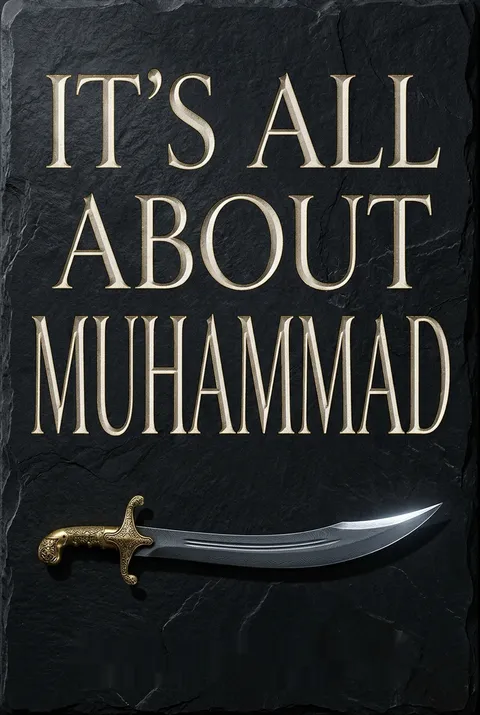
The argument is openly adversarial. Burleigh says he closely examined roughly 20,000 pages of Islamic biographical and traditional literature, including works attributed to Ibn Ishaq, al-Tabari, al-Bukhari, Muslim, and al-Waqidi. He treats these accounts as evidence in an indictment of Muhammad, arguing that religious authority and violence grew together. His narrative follows Muhammad from Mecca to Yathrib, through battles and conquest, and ends by urging readers to expose what the author sees as a dangerous legacy.
The framing matters. The author declares his conclusion early, uses loaded descriptions, and often presents disputed reports as settled fact. The account is best read as a forceful interpretation of traditional narratives, not as an impartial consensus biography.
What's striking is the book's prosecutorial design: episodes are selected and arranged to establish a case, rather than to test several explanations of Muhammad's rise. That approach can direct attention toward violence and coercion that reverential biographies may minimize. It also invites a standard question from legal history: Are the sources independent, contemporaneous, and consistent enough to support each charge? A source's religious authority does not make every report eyewitness evidence. The strongest reading keeps the moral questions in view while separating what a tradition reports from what the author infers.
See Mecca as a sanctuary whose trade made religious authority valuable
Ritual supported a town. In Burleigh's reconstruction, Mecca began as a protected sanctuary around the Black Stone, where the ban on violence helped pilgrims and merchants travel through a region marked by feuds. Pilgrimage brought people, donations, and business. The shrine was not only a religious center, but also an economic and political asset.
Leadership built on that value. The account credits Qusay with consolidating control over the town and its pilgrim duties. Later, Hashim and his relatives connected Mecca to caravan routes through trade agreements, pooled investment, and exports. These family histories help explain why control of the shrine, its ceremonies, and its revenues carried such weight when Muhammad began challenging Meccan custom.
The useful lens here is institutional, not merely theological. A pilgrimage center can coordinate travel, trade, dispute management, and shared identity, much as a market town or port does. Control over ritual therefore gives leaders practical influence as well as spiritual standing. Burleigh's detailed origin story is partly reconstructed from later traditions, so its specifics deserve caution. But the larger connection between pilgrimage, commerce, and authority is persuasive as a model for understanding why religious conflict in Mecca threatened more than private belief.
Treat the epilepsy explanation as a hypothesis, not a settled diagnosis
The author reads symptoms medically. Burleigh interprets reports of Muhammad collapsing, experiencing vivid sights or sounds, and emerging with saliva on his face as signs of temporal-lobe epilepsy. He also links Muhammad's early losses and isolation to later psychological disturbance, describing his prayer rituals as compulsive and his personality as pathological.
The evidence does not establish a diagnosis. These accounts come through religious biographies and traditions, not clinical observation. The book's explanation that seizures produced prophetic conviction, which then drove violence, is an interpretation rather than a demonstrated causal chain. Its clinical labels give the narrative a scientific tone, but the source material cannot confirm them.
Retrospective diagnosis can generate useful questions, but it cannot substitute for examination, medical history, or differential assessment. Epilepsy can involve unusual perception; it does not by itself explain a person's theology, politics, or actions. Treating a neurological condition as a shortcut to moral character also risks reinforcing stigma against people with seizures. The more careful insight is that reported experiences can be interpreted in multiple ways, and that biography should distinguish symptoms described in a source from a diagnosis inferred centuries later.
Track how a preacher became a ruler through migration and alliance
Mecca offered little protection. Burleigh recounts Muhammad's early preaching, the growth of a small circle of followers, and escalating conflict with Meccan leaders. After a boycott and the deaths of Khadija and Abu Talib, Muhammad's position became precarious. In 622, he left for Yathrib, where supporters had pledged loyalty and protection.
The new community had several jobs. Muhammad's mosque served as a place of prayer, a residence, a meeting ground, and a center for organizing the followers. The author describes the community's bonds as extending beyond older tribal divisions. Yathrib's alliances gave Muhammad a base from which to negotiate, govern, and fight. The migration was therefore both a flight from danger and a transformation in political power.
This transition is especially legible through political sociology: a movement survives persecution when it builds durable relationships, creates common practices, and finds a place to organize. The mosque becomes infrastructure, not just architecture. The narrative also shows that the migrants needed local allies, whose support was shaped by Yathrib's own conflicts and political ambitions. That context complicates a simple story of religious conviction alone. Protection, coalition-building, belief, and competition can operate at once without any one motive explaining every participant.
At Badr, promised paradise and plunder forged a fighting coalition
A raid became a battle. In 624, Muhammad's force set out to intercept a Meccan caravan, but encountered a much larger Meccan army near Badr. Traditional accounts cited by Burleigh put Muhammad's force at about 300 and the opposing force near 950. The battle ended in victory for Muhammad's side, with reports of about 70 Meccan deaths and 70 captives.
War brought both material and spiritual rewards. Captives could be ransomed, goods distributed, and Muhammad claimed a fifth share of the spoils, a practice called khumus. The book argues that promises of booty for survivors and Paradise for those killed helped turn religious commitment into military cohesion. Badr also intensified the conflict, making further retaliation and mobilization more likely.
The episode illustrates how movements can combine moral purpose with material incentives. In sociology, neither sincere belief nor self-interest has to be the sole explanation for participation; they can reinforce one another. The distribution of spoils also creates institutions and expectations that outlast a single battle. Yet battlefield numbers and individual stories come from traditional reports that require source criticism. The important analytical point is not that every fighter had the same motive, but that the movement made participation meaningful in both this life and the next.
Read Yathrib's expulsions as power consolidation, not theology alone
Conflict with Jewish tribes escalated. Burleigh describes Muhammad's early efforts to engage Yathrib's Jewish communities, followed by disputes over his prophetic claims and growing hostility. He recounts the expulsion of the Qaynuqa and Nadir tribes, with their property taken, and the siege of the Qurayza after the Battle of the Trench. Traditional accounts give varying figures for the Qurayza men and boys executed, from about 400 to 900.
Critics were also targeted. The book reports the killings of poets who wrote against Muhammad and argues that violence helped weaken opposition and strengthen his rule. These allegations are grave, but the accounts and numbers vary. Burleigh treats them as a coherent campaign of coercion, while the underlying reports require careful historical evaluation.
The political reading matters because control of land, security, and public speech can change a community as decisively as conversion. Burleigh draws attention to the material consequences of expulsions and to the risks faced by critics. At the same time, the chapter's most serious claims should not be treated as settled simply because they appear in influential traditions. Historians debate the reliability and development of these reports. A careful reader can acknowledge the weight of the allegations while keeping separate the reported event, its scale, and the author's interpretation of motive.
Notice how law, ritual, and household rules centered authority on Muhammad
Authority entered daily life. The book portrays Muhammad as moving from arbitrating disputes to issuing binding rulings on matters such as divorce, theft, alcohol, inheritance, sex, and prayer. It uses Sharia for the combined body of Koranic rules and Muhammad's example, or Sunna. Ritual routines and the call to prayer also gave the new community a shared schedule and public identity.
Household matters became public rules. Burleigh focuses on Muhammad's marriage to Zaynab, the former wife of his adopted son Zayd, and the subsequent abolition of adoption as a recognized family status. He also describes the limits on his followers alongside special permissions he claimed for himself. The author reads such rulings as ways personal choices acquired divine authority.
A governing movement becomes durable when its principles shape ordinary routines, family life, courts, and public time. That helps explain why prayer and law matter as much as battlefield victories in this narrative. The founder's special exemptions raise a genuine question about accountability: how can a system distinguish a general rule from a leader's exception? Burleigh reads situation-linked rulings as evidence of self-authorization. That is a plausible interpretation, but religious traditions can also understand law as evolving through particular cases. The distinction deserves examination rather than assumption.
Recast old pilgrimage rites to anchor a new religious order
The pilgrimage became a new sacred map. In Burleigh's account, Muhammad retained older rites but gave them new explanations. Circling the Kaaba, running between Safa and Marwa, standing at Arafat, stoning pillars at Mina, and sacrificing animals were connected to stories about Abraham, Hagar, and Ishmael. By the Farewell Pilgrimage in 632, these practices had been reorganized around Muhammad's monotheistic teaching.
Ritual made the transformation visible. Pilgrims followed Muhammad's example, performed prayers in ranks, and heard rules for the journey and its ceremonies. The author sees this as a deliberate remaking of inherited customs. The same evidence can also be read as religious reinterpretation: familiar rites were retained while their meanings and authority changed.
Ritual is an unusually effective technology for social continuity. People can inherit a practice while changing its explanation, allowing an emerging community to claim both innovation and deep roots. That process is common across religious history, so reinterpretation alone does not prove conscious fraud. Burleigh's emphasis on political authority remains valuable: the pilgrimage made Muhammad's interpretation public and repeatable. The strongest analysis holds both points together, recognizing the political work ritual performs without assuming that every participant experienced it as cynical manipulation.
After Muhammad died, succession became a contest, not a settled inheritance
Leadership was contested immediately. After Muhammad died in 632, Abu Bakr and Umar joined a meeting of Yathrib leaders and argued for a Quraysh successor. Abu Bakr was chosen, while Ali and his supporters were absent and initially refused allegiance. The book presents the episode as a struggle among the Meccan elite, Muhammad's relatives, and the Yathrib supporters who had helped him rise.
The movement did not end with its founder. Abu Bakr sent Osama's army toward Syria and fought rebellions across Arabia. Under subsequent rulers, the new state expanded into Syria, Egypt, and Persia. Burleigh concludes that Muhammad's example remained central to this expansion and urges public exposure as a remedy. His final claim that this history explains violence among modern Muslims is much broader than the evidence presented.
The succession crisis shows how charismatic authority can outlive its founder while remaining politically unstable. A movement needs procedures for transferring power, and competing claims of kinship, service, and coalition support can quickly become struggles over legitimacy. The subsequent conquests are part of the book's historical narrative, but they do not establish that all later believers share one motive or political program. Inferring present-day conduct from a founder's actions risks collective blame. Historical explanation is strongest when it tracks institutions, interpretations, and changing circumstances across time.
Analysis
This biography's clearest value is its insistence that religious movements should be studied as political and material formations as well as systems of belief. Its narrative links Mecca's pilgrimage economy, Muhammad's migration to Yathrib, the mosque's multiple functions, military recruitment, the distribution of spoils, legal authority, and ritual reinvention. That sequence helps readers see how a small preaching circle could become a governing community. The book also refuses to smooth over accounts of coercion, executions, enslavement, and the confiscation of property. These are important subjects for historical scrutiny, especially when devotional accounts treat them as beyond moral question.
Its method, however, is less reliable than its narrative confidence suggests. The biography uses later compilations and traditions as though their inclusion in respected collections makes them transparent records. Those sources differ in chronology, detail, and purpose, and a reported event is not automatically independently corroborated. Burleigh often moves from a report to a confident claim about motive, then uses that motive to support a sweeping thesis. His proposed neurological explanation is particularly speculative: epilepsy, obsessive-compulsive disorder, and psychopathy cannot be diagnosed from retrospective anecdotes, and none independently explains violence or religious belief.
The final leap from Muhammad's career to claims about modern Muslims is the book's largest analytical weakness. A founder can shape institutions and provide precedents, but later communities interpret, contest, and selectively apply inherited texts. Treating present-day violence as a direct expression of one founder's personality collapses enormous differences in politics, theology, geography, and individual practice. That is both a historical problem and a collective-attribution problem. The book is most useful when it makes readers ask how authority, belief, incentives, and force interacted in seventh-century Arabia. It is least persuasive when it presents that account as a complete explanation of a diverse global religion.
Review Summary
It's All About Muhammad receives polarized reviews. Supporters praise its extensive research and detailed portrayal of Muhammad's life, considering it eye-opening and well-documented. Critics argue it's biased, poorly researched, and inflammatory. Many readers find it disturbing but informative, while others view it as propagandistic. The book's depiction of Muhammad as violent and psychopathic is contentious. Some appreciate its challenge to Islamic beliefs, while others see it as intentionally provocative. Overall, reviewers agree it presents a controversial perspective on Islam's founder.
People Also Read

Glossary
Hijra
Migration to YathribThe migration of Muhammad and his followers from Mecca to Yathrib in 622. In the book's narrative, it marks the shift from a vulnerable preaching group to a community with territory, allies, and political organization. The migration also became the starting point for the calendar used by Muhammad's community.
Sunna
Muhammad's example and practiceThe body of practices and precedents associated with Muhammad's conduct. The book presents the Sunna as more than formal instructions: followers were expected to imitate his actions in worship, law, and daily life. Together with the Koran, it became a source for the religious and legal rules Burleigh calls Sharia.
Sharia
Religious law and practiceIn the book, Sharia refers to rules derived from the Koran and Muhammad's Sunna, including judgments about worship, family matters, property, and punishment. The word means a path or way. Its detailed interpretation has varied among legal traditions, so the book's description is a simplified account of a broad and historically diverse body of jurisprudence.
Jihad
Striving in God's causeA term with a range of meanings in Islamic traditions, including striving in God's cause. Burleigh emphasizes its use in the accounts he discusses as religiously authorized fighting and links it to promises of reward, booty, and paradise. That emphasis reflects the book's polemical argument rather than the full range of historical and contemporary interpretations.
Khumus
One-fifth of war spoilsThe allocation of one-fifth of booty to Muhammad, as described in the book's account of early raids and battles. The remaining spoils were distributed among participants. Burleigh treats this share as an important source of resources and an organizing feature of the movement's military economy.
Shahada
Profession of faithThe declaration that there is no god but God and that Muhammad is God's messenger. In the book's narrative, declaring the shahada marked entry into Muhammad's community and could also serve as a claim to protection from attack. Its meaning and implications have been interpreted within varied religious and legal contexts.
Ummah
Community of believersThe collective community associated with Muhammad's followers, extending beyond the older tribal divisions described in the book. Burleigh portrays the ummah as a new political and social identity, bound by shared belief and loyalty. The term is also used more broadly in Islamic history for the worldwide community of Muslims.
Constitution of Medina
Early community agreementThe name commonly given to a set of provisions associated with Muhammad's early community in Yathrib. The book describes it as organizing relations among followers and local groups, including provisions concerning mutual defense and dispute resolution. Scholars debate its composition, dating, and the extent to which it represents one agreement or a collection of arrangements.
Download PDF
Download EPUB
.epub digital book format is ideal for reading ebooks on phones, tablets, and e-readers.








