

Key Takeaways
Treat the mouth as part of the body, not a repair shop.
A overlooked starting point. Nischwitz’s central claim is that dental health belongs in any serious account of whole-body health. The book opens with a story about Brazil’s 1958 World Cup team: before the tournament, its coach arranged dental examinations. Of 470 teeth checked, 32 were diseased or inflamed and removed. The team went on to win, though the story alone cannot show that dental treatment caused its victory.
A professional change of mind. Nischwitz traces his approach to his own recurring illnesses, a dairy intolerance, and his later doubts about amalgam fillings. He moves from fixing visible damage toward asking how the mouth, immune system, diet, and dental treatment affect one another. Biological dentistry, as he defines it, treats oral care in the context of the whole organism rather than as isolated mechanical repair.
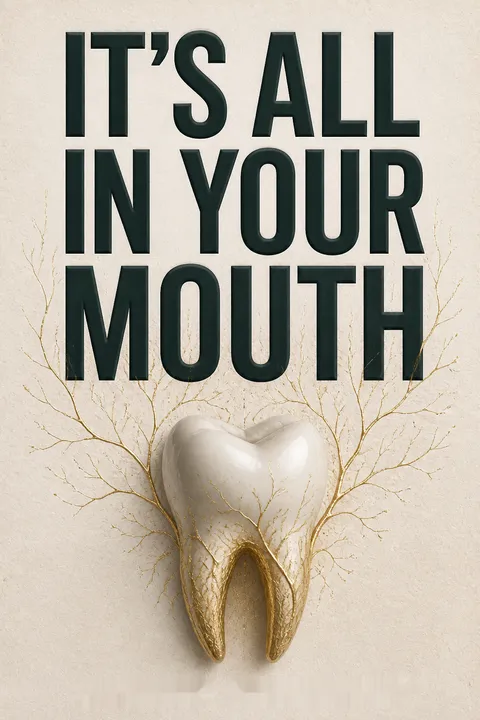
The book’s strongest organizing idea is not that every illness begins in the teeth, but that the mouth is a neglected part of the body’s environment. That emphasis usefully challenges the division of labor between dentistry and general medicine. The Brazilian team story makes the point memorable, but its sporting result is not evidence of a causal effect. Its value is as an illustration of a broader principle: oral health deserves attention in health assessment, without becoming a universal explanation for disease.
Protect a balanced oral ecosystem instead of trying to sterilize it.
A community, not contamination. The book describes the mouth as home to hundreds of microbial species, many of them harmless or beneficial. Their presence is not automatically a sign of poor hygiene. A biofilm is a community of microorganisms attached to a surface and embedded in a shared protective matrix. It begins forming on teeth before visible plaque appears. Some microbes help maintain a stable environment, while others can cause trouble when conditions favor their growth.
Balance beats eradication. Nischwitz argues that routine attempts to kill bacteria indiscriminately can disturb helpful organisms along with harmful ones. Saliva, the tooth’s protective pellicle, and the microbial community all contribute to oral defenses. The goal he advances is microbial homeostasis, a relatively stable balance among oral microbes, rather than a bacteria-free mouth.
This ecological lens aligns with a wider shift in biology: organisms function through relationships with microbial communities, not in isolation. It also clarifies why the mere detection of a bacterium is not proof of disease. The important question is what the surrounding environment enables it to do. Still, the caution against indiscriminate antimicrobial use should not be read as a reason to avoid prescribed treatment. Targeted care and ordinary hygiene can coexist with respect for a diverse microbiome.
Read a cavity as a failed balance between acid attacks and repair.
Damage and repair alternate. The book presents tooth decay as a changing process, not simply the work of one villainous bacterium. Acids can draw minerals out of enamel, while saliva buffers acidity and supplies minerals that help restore it. When mineral loss repeatedly outweighs repair, an early lesion can grow. Frequent sugar intake encourages acid production and can keep the mouth’s environment unfavorable for recovery. Acidic drinks and reflux can also erode enamel directly.
Look beyond the drill. Nischwitz discusses the ecological plaque hypothesis, which explains decay as a shift in the oral environment that favors acid-producing microbes. He argues that an early white or chalky spot may be arrested by improving those conditions, rather than automatically drilling it. His emphasis is on diet, saliva, and careful assessment, while recognizing that treatment depends on the lesion and the patient.
The useful distinction is between a risk factor and a complete cause. Sugar exposure, low saliva, and acidity can help explain why some microbial communities become harmful, which is more informative than blaming a single species. The account also makes prevention feel biological rather than moral: cavities are not proof that someone is lazy. However, a suspected lesion needs professional evaluation. Whether it can be monitored or requires treatment depends on its depth, activity, and clinical context.
Investigate bleeding gums before silent inflammation becomes a larger burden.
Gums are a protective boundary. Nischwitz describes the gum tissue around each tooth as a barrier between the body and the outside world. When inflammation weakens that boundary, bacteria and inflammatory signals can affect nearby tissue. Gingivitis is inflammation of the gums; when inflammation progresses and damages the tissues supporting teeth, it is called periodontitis. The book stresses that gum disease may be easy to overlook, even when it is doing lasting damage.
The body-wide link. The author connects periodontitis with chronic inflammation and discusses associations with diabetes and cardiovascular disease. He also explains how oral bacteria can enter the bloodstream during everyday activities or dental procedures. His practical message is to take gum symptoms seriously and seek assessment, rather than waiting for pain or loose teeth.
Periodontal disease deserves attention even when it is painless, and its links with broader health are a strong reason to coordinate dental and medical care. The key nuance is that association does not establish which condition caused the other. Diabetes, smoking, diet, and access to care can influence both gum health and general health. Treating gum disease is worthwhile on its own merits; claims that it directly causes a particular systemic illness require stronger evidence than a shared pattern of risk.
Treat root-canal risks and jaw lesions as clinical questions, not certainties.
A real anatomical challenge. The tooth’s inner canals branch in varied patterns, and microscopic channels in dentin are difficult to access. Nischwitz uses this complexity to question how completely root canal procedures can remove infected material. He argues that dead or root-treated teeth may remain sources of chronic inflammation, and describes NICO, short for neuralgia-inducing cavitational osteonecrosis, as a chronically altered area of jawbone that may remain after extraction.
The author’s strong position. He favors removing teeth he considers persistently diseased, and describes surgical cleaning and ceramic replacement as options. These are consequential, irreversible choices. The book’s account should not be taken as a reason to remove a root-treated tooth or seek surgery based on vague symptoms or a single interpretation of imaging.
This is where the book’s biological perspective most clearly exceeds what its evidence can establish. Difficult anatomy can leave unresolved infection in some cases, but it does not prove that every root-treated tooth causes systemic harm. Similarly, a proposed jaw lesion needs reliable diagnostic criteria and careful interpretation. Tooth preservation and removal each carry costs. Independent assessment by appropriately qualified dental professionals is especially important before irreversible treatment.
Choose dental materials with informed caution, not fear or convenience.
Materials have trade-offs. The author questions the routine use of metals in dental work, especially amalgam, which contains mercury. He argues that dental materials can release substances, affect oral microbes, or provoke reactions in some people. He also discusses composite fillings, titanium implants, and mixed metals, noting that none is automatically ideal for every patient. His preferred approach is to consider material compatibility and the patient’s health history, not durability alone.
Removal needs planning. Nischwitz recommends removing amalgam under protective conditions because drilling can expose patients and staff to mercury vapor. He argues for metal-free alternatives, including ceramic implants. Yet removal itself is a procedure with risks, and the book’s broad recommendation to remove metals is not a substitute for individualized clinical advice.
The general principle of matching a material to a patient is sensible, particularly where a confirmed allergy or local complication exists. The leap from possible exposure to a recommendation for routine removal is much less secure. Risk depends on the material, the clinical situation, and the proposed procedure. The safest reading is neither that all dental materials are harmless nor that they are all toxic. Patients should ask about benefits, risks, alternatives, and the consequences of leaving or removing an existing restoration.
Connect mouth and body, but do not confuse a plausible pathway with proof.
Systems affect one another. The book uses psychoneuroimmunology, the study of interactions among psychological processes and the nervous, immune, and hormonal systems, to explain how chronic inflammation can affect the body beyond its original location. The mouth may contribute through inflamed gums, infected tissue, or other persistent stressors. The author connects these processes with fatigue, metabolic problems, mood changes, and other chronic conditions.
Symptoms are clues, not diagnoses. Nischwitz recounts patients whose unexplained symptoms improved after dental treatment, including his own experience with jaw lesions. He uses these cases to argue for investigating oral sources when health problems persist. But fatigue, pain, and mood changes have many possible causes. The book’s framework supports asking broader questions, not assuming that the teeth explain every unexplained symptom.
The systems model is valuable because immune, nervous, and hormonal activity does not stay neatly inside specialty boundaries. It encourages clinicians to consider interactions rather than treat each symptom as a separate event. But a vivid recovery story cannot show that the same intervention will help another person, and symptoms alone cannot identify a dental cause. Good integrative care combines curiosity with differential diagnosis, checking plausible explanations without allowing a compelling theory to crowd out other possibilities.
Make meals support saliva, mineral repair, and a diverse microbial community.
Food shapes the oral environment. Nischwitz emphasizes limiting frequent sugar exposure and eating more whole, nutrient-dense foods. Vegetables and fiber support gut microbes, while protein and nutrients contribute to tissue maintenance. He also highlights saliva: it buffers acid, supplies minerals, and helps regulate oral microbes. Dry mouth, which can result from dehydration, stress, age, or medication, may reduce these protections.
A restrictive starting plan. The author proposes a 14-day Life Changer elimination phase that excludes several foods he considers inflammatory, including gluten, dairy, and sugar, followed by a less restrictive 80:20 or 90:10 eating pattern. He presents these plans as ways to improve health and metabolism. They are his recommendations, not universal prescriptions, and some people may need clinical or nutritional guidance before making major changes.
The strongest, most broadly useful dietary point is to reduce repeated sugar exposure and favor minimally processed foods, while keeping hydration and nutrient adequacy in view. The proposed elimination diets are more specific than the evidence described in the book can justify for everyone. Restriction may be appropriate for a diagnosed intolerance, but unnecessary exclusions can make eating harder and risk nutritional gaps. A structured trial is most informative when it has a clear reason, a defined duration, and a plan for reassessing results.
Prepare for dental procedures by supporting healing, not just scheduling surgery.
Healing takes resources. The book argues that dental surgery places demands on the body, particularly when bone and soft tissue must recover. Nischwitz recommends reviewing diet and nutrient status before procedures, with attention to adequate protein and micronutrients. He also advises reducing foods he considers inflammatory and correcting deficiencies before surgery. The broader point is that preparation and follow-up matter, not just the technical procedure itself.
Individual care matters. Biological dentistry, in the author’s account, considers a patient’s overall health, treatment goals, and material sensitivities when planning care. The book favors close coordination between dental and medical practitioners. Preparation can support recovery, but it cannot guarantee success or replace standard surgical planning, infection control, or appropriate follow-up.
This advice usefully expands the idea of treatment beyond the moment in the dental chair. Nutrition, medication history, smoking, and existing health conditions can all matter to procedural planning. The limitation is that broad supplement or elimination protocols should not be treated as universally necessary. Good preparation is tailored: identify documented risks, explain what can realistically be improved, and avoid delaying needed care for unproven optimization routines.
Keep daily care gentle and consistent, and use professional cleaning strategically.
Simple habits still count. Nischwitz recommends brushing with gentle circular movements rather than scrubbing, and having teeth professionally cleaned at least twice a year, with more frequent cleaning for some people with restorations. He is skeptical of antiseptic mouthwashes, which he says can disturb oral microbes, and favors supporting saliva through hydration and chewing. The book also recommends fluoride-free toothpaste, reflecting the author’s view that a healthy diet and saliva can support remineralization.
Separate the advice from the controversy. The author’s personal habit of brushing once daily is not presented here as a general recommendation; he advises a morning and evening routine for people who do not consistently follow his dietary plan. His rejection of fluoride is contested. Readers should discuss toothpaste and preventive care with a dental professional, especially for children or people at elevated risk of decay.
The practical strengths are the reminders to brush gently, keep regular checkups, and account for restorations that need extra care. The fluoride discussion needs a clear boundary: the book’s doubts are the author’s position, not an uncontested dental consensus. Preventive recommendations vary by age and risk, so a blanket rule is less useful than an individualized plan. Skepticism toward aggressive products can be healthy, but it should not erase established prevention without weighing the evidence.
Analysis
It’s All in Your Mouth is part memoir, part popular science, and part clinical manifesto. Its narrative begins with Nischwitz’s search for an explanation for his own illnesses, then broadens into an argument that dentistry and general medicine should treat the body as an interconnected system. The most persuasive material concerns oral biology: teeth are living structures, saliva supports repair, microbial communities are not simply good or bad, and gum disease can remain unnoticed while damaging tissue. The book also makes a useful case for taking oral health seriously in general medical care.
Its central weakness is a recurring jump from mechanism or association to strong causal conclusions. A plausible route for oral bacteria to enter circulation does not establish that a particular mouth condition caused heart disease, depression, or another chronic illness. Patient stories can suggest questions worth studying, but they cannot establish typical outcomes. The same caution applies to claims about root canals, NICO lesions, metals, and broad dietary exclusions. The book’s proposed interventions can be costly or irreversible, so the strength of evidence matters as much as the biological story.
The fairest reading distinguishes three layers. First are ordinary, well-grounded concerns such as cavities, gum inflammation, dry mouth, and restorative care. Second are reasonable system-level questions about how oral and general health interact. Third are disputed explanations and treatments that require independent evidence and individualized assessment. That separation preserves the book’s valuable challenge to medical silos without treating every symptom as dental or every dental material as dangerous. Its lasting contribution is a better question for patients and clinicians to ask together: what is happening in the mouth, and what evidence shows that it matters to this person’s wider health?
Review Summary
It's All in Your Mouth receives mixed reviews, with an average rating of 3.83/5. Many readers praise its informative content on biological dentistry and the connection between oral and overall health. They appreciate the holistic approach and easy-to-understand language. Some find it eye-opening and recommend it for everyone. However, critics argue that some claims lack scientific evidence, and the author's stance against conventional dentistry is controversial. Some readers find the information basic or disorganized, while others appreciate the new perspectives on dental health and nutrition.
Glossary
Biological dentistry
Whole-body dental careNischwitz’s term for an approach that considers the mouth in relation to the rest of the body. It emphasizes oral microbes, inflammation, nutrition, dental materials, and the patient’s general health when planning care. The book presents it as an extension of conventional dentistry, though some of its claims and preferred interventions are disputed.
Biofilm
Microbes in a shared matrixA community of microorganisms attached to a surface and surrounded by a shared protective matrix. In the mouth, biofilms form on teeth and other surfaces before they become visible as thicker plaque. Their composition and behavior depend on local conditions, including food, acidity, saliva, and the other organisms present.
Pellicle
Protective film on teethA thin coating that forms on tooth enamel from substances in saliva and food. The book describes it as a protective layer that reduces wear, limits contact with acids and other substances, and provides a surface where oral microbes can attach. It reforms after being disrupted by brushing or eating.
Microbial homeostasis
Stable microbial balanceThe relatively stable balance among microorganisms in the mouth. In the book’s account, oral health does not mean eliminating microbes, but maintaining conditions in which helpful and harmless organisms coexist without allowing disease-associated populations to dominate. The balance can shift when factors such as frequent sugar exposure, low saliva, or inflammation persist.
Ecological plaque hypothesis
Environment-driven decay modelA model of tooth decay that focuses on shifts in the oral environment rather than blaming one bacterial species. Repeated acidity and other unfavorable conditions can change the microbial community toward organisms that produce or tolerate acid. Decay develops when mineral loss repeatedly exceeds the tooth’s opportunity to recover.
Holobiont
Host and microbes togetherA term for a human or other host considered together with its associated microorganisms. The book uses it to emphasize that human biology depends partly on microbial communities living in and on the body. This perspective shifts attention from the individual human cell to interactions between host and microbes.
NICO
Proposed chronic jaw lesionAn abbreviation for neuralgia-inducing cavitational osteonecrosis. Nischwitz uses it for a chronically altered area of jawbone, often described in the book as occurring where a tooth was extracted and healing was incomplete. The diagnosis and treatment approach are disputed, so suspected lesions require careful professional assessment.
Psychoneuroimmunology
Mind, nerves, and immunityThe study of interactions among psychological processes, the nervous system, and the immune system. The book uses the concept to explain how stress and inflammation may influence several body systems at once. It frames oral health as one possible contributor to broader immune and nervous-system activity.
Neuromodulatory trigger
Persistent internal stressorA term used in neural therapy for a bodily site that continually sends abnormal signals to the nervous system. Nischwitz applies it to proposed oral sources such as chronic gum inflammation, dental materials, root-treated teeth, and jaw lesions. The concept guides his whole-body interpretation of symptoms but should not be treated as a diagnosis on its own.
Life Changer
Fourteen-day elimination planNischwitz’s name for a short dietary elimination phase intended to reduce foods he considers inflammatory or problematic, including sugar, gluten-containing grains, and dairy. He recommends it as a starting point before a less restrictive eating pattern. It is an author-designed plan, not a universal clinical protocol.
80:20
Mostly whole-food eating planThe book’s label for a dietary pattern built mainly around foods Nischwitz classifies as superfoods, with smaller portions of carbohydrate-rich foods and foods he considers potential triggers. The exact balance is intended as a flexible framework rather than calorie counting. Its food classifications reflect the author’s approach and may not suit everyone.
Download PDF
Download EPUB
.epub digital book format is ideal for reading ebooks on phones, tablets, and e-readers.








