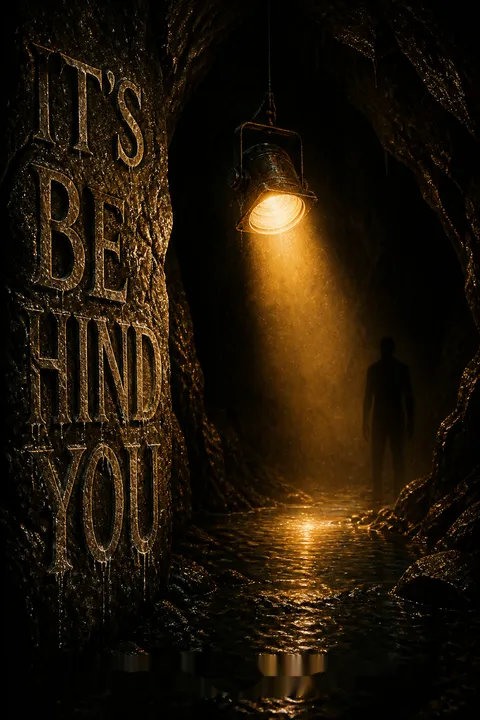


Plot Summary
Prologue
Before the cameras reach Umber Gorge, contestant Lex Hazelton sits for a producer’s interview and refuses to perform the fear or heartbreak the show wants from her. She has entered its overnight cave challenge for the prize money, not because she believes in ghosts.
Producer Jackie Stone presses her about her family and tries to shape her into a marketable character. Lex treats the interview as another game she can win by refusing to show what matters to her.
The interview establishes performance as the story’s first trap. Jackie wants contestants to turn private vulnerabilities into usable footage, while Lex believes that withholding feeling makes her the author of her own image. Her bravado is not simple confidence; it is a defense against being defined by other people, especially family expectations. The show’s premise therefore begins before the caves: the contestants are already being watched, edited, and assigned roles. Lex’s refusal to cooperate looks like control, but it also makes honesty difficult when danger later demands it.
Hearts Beneath the Lanterns
On the eve of filming, Lex sneaks away from her chaperone, Veronica, to watch Umber Gorge’s festival. Locals leave pigs’ hearts as offerings to the Puckered Maiden, a cave ghost said to prey on lovers. Veronica explains that the caves have claimed lives, including Laurie Cox, who died in a collapse two years earlier. Then a hooded boy steps off a bus and the celebration falters.
Security ushers him into Jackie’s vehicle, while Veronica freezes and afterward hurries to speak with Ben, a muscular local crew member. Lex nearly gets caught following them, but leaves with more questions than answers. Back at her room, a doll from the butcher’s window appears on her bed, and a strange nursery rhyme plays on her phone.
The town’s ritual gives fear a public, almost festive shape: the locals stage a bargain with a ghost because the caves have already taken real lives. Lex reads their ceremony as entertainment, but Veronica’s reaction to the returning boy hints that the town’s history is personal, not quaint folklore. The doll’s appearance then moves the threat from a communal legend into Lex’s private space. Her immediate assumption that Jackie planted it protects her preferred worldview, in which every disturbance has a human author and every fear can be turned into a joke.
Five Strangers Go Below
At orientation, staff warn the contestants to stay within six surveyed caves, though Lex suspects the briefing matters more than the safety arrangements. She persuades Veronica to smuggle in a torch, a multitool, and a sharp cream suit Jackie had rejected. Outside, protesters led by Sally-Ann Kingston oppose the show, and Sally-Ann splashes Lex with blood before she enters.
In the caves, Lex meets Python, a flamboyant YouTuber; Marla, an aspiring actress; and Abbie, a paranormal investigator. Lex’s surprise attack earns her a painful blow from Abbie’s equipment. The fifth contestant arrives late: Liam, the boy from the bus, whose bright smile and evasive claims about being a stranger to Umber immediately catch Lex’s attention.
The contestants enter with competing versions of control. Lex uses costume and mischief to resist Jackie’s casting choices; Python turns his existing online persona into a shield; Marla and Abbie arrive hoping the cameras will change what the world sees in them. Liam’s conspicuous lie about his connection to Umber makes him the first obvious mystery, but the group’s larger vulnerability is already visible: each person wants something from the show and trusts its rules to contain the risk. Sally-Ann’s protest, meanwhile, warns that the production’s intrusion has consequences beyond the contestants.
The Town Under Umber
A power failure plunges the group into darkness, and Lex uses her hidden torch to lead them to a locked gate. She spots a key before Python can mutilate a dead rat searching for it, then guides everyone through a narrow tunnel. The next cavern contains a miniature version of Umber and an elaborate account of Victoria Carlisle and Thomas Brook, lovers whose meeting supposedly ended with a ghost tearing out Victoria’s heart.
The tale leaves the contestants uneasy, especially when faint laughter and running footsteps seem to move beyond the exhibit. Lex dismisses the effects as production tricks, but she finds a recent photograph of Laurie Cox among the old portraits. Liam recognizes the girl and lies again about knowing her.
The fake town makes the show’s central uncertainty tangible: the old attraction is visibly artificial, yet its props sit inside genuinely dangerous caves. Lex’s competence with the key lets her keep treating the night as a contest she can manipulate, while Liam’s reaction to Laurie’s photograph introduces grief beneath his practiced charm. The past is not merely set dressing. Its names overlap with living people, and the production has placed evidence where it can provoke them. The group is beginning to confuse staged fear with private history, which makes every reaction both revealing and exploitable.
The Séance Names Liam
After exploring the fake town, the contestants find a staged séance in the butcher’s shop. Marla performs a possession scene, accusing Liam of abandoning someone in the dark. Liam bolts from the room in unmistakable distress, while Lex recognizes that his fear is not acting. The group returns to the campfire, where their suspicions deepen, and a doll’s destruction is followed by the smashing of Abbie’s equipment.
Her recorder captures a low warning that someone in the caves intends to kill them. Marla runs off, falls, and returns with blood on her head. When she pounds on the exit door, nobody comes. Lex realizes that the crew may not be watching, and the contestants understand that their injuries will not bring help.
Marla’s séance is meant to manufacture a horror beat, but it accidentally reveals a real fracture in Liam’s past. The scene shows how a staged performance can become dangerous when it touches a truth its performer does not understand. The dead equipment and unanswered exit turn that danger practical: the contestants can no longer assume a producer will intervene. Lex’s first useful insight comes from applying the safety briefing rather than the ghost stories. Her skepticism remains, but it now serves survival instead of mockery.
Laurie’s Echo Chamber
Convinced the crew has lost control, the group slips past a staff-only barrier. They solve a sliding-picture box, which reveals a photograph of paranormal investigator Brian Tobes, then crawl into Montgomery’s Auditorium, a natural cavern containing a still lake and the cave-in that killed Laurie. Liam finally admits that Laurie was his sister and that he returned to learn what happened to her.
He had been nearby when the ceiling fell and believes he heard her call from beyond the rubble. Abbie tries to recreate Tobes’s famous underwater ghost photograph with a doll, but the result looks false. As the group heads back, the caves rumble and they discover an old generator has been switched on, restoring some of the attraction’s lights.
Liam’s confession replaces the episode’s invented stakes with a genuine search for a loved one. His hope that Laurie might have survived is emotionally understandable, but it also makes him vulnerable to any clue that appears to confirm it. Abbie’s experiment exposes a parallel need: she wants evidence that her father’s supernatural obsession was not meaningless. Their quests differ, yet both are organized around refusing an uncertain loss. The generator’s sudden return of light offers the group practical hope while also extending the show’s reach into spaces its safety plan had supposedly excluded.
The Door Opens Nowhere
In the attraction’s zombie cavern, the group sees what appears to be Cameraman Carl’s bloodied body beside the water. They flee into a museum room, where a metal gate locks them in with five mystery boxes. A blood-smeared key card gets them out, but Carl has vanished when they return. Then the cave shakes and a section of the model town collapses.
Jackie arrives with Ben, who has been recruited because he knows the caves, and she insists the show continue. A second, larger cave-in seals the route back to the entrance. Veronica crawls through the dust, injured and shaken, revealing that she too was trapped in the earlier collapse that killed Laurie. Jackie still treats the disaster as footage rather than a reason to stop filming.
The apparent body and empty room create the book’s sharpest early break with the show’s promise of controlled danger. The mystery boxes still frame fear as a game, but the collapsing caves make that distinction grotesquely inadequate. Jackie’s insistence on continuing reveals that the production’s actual priority is not contestant safety but usable material. Veronica’s arrival adds a survivor’s memory to the group, yet she cannot offer an easy route out. The cave’s architecture has become both a physical prison and a record of how people have repeatedly chosen spectacle, secrecy, or self-preservation over intervention.
Jackie Keeps Filming
Jackie explains that a fire destroyed the production headquarters and that the contestants were never meant to lose contact with the crew. She nevertheless pushes them toward the attraction’s boat ride, hoping to preserve the episode.
On the journey, she exposes Marla’s boyfriend and her paid arrangement to pretend to be possessed and pursue Python. Python is more upset that the show used a plant than that Marla deceived him. Their boat derails, and the next boat arrives empty after Jackie and Abbie disappear from it.
When Lex, Python, Liam, Ben, and Veronica search the interconnected caves, they forget Marla, who had refused to leave her boat. They return to find her dead in the water, turning their careless separation into a lasting guilt.
The boat ride distills the conflict between performance and harm. Jackie converts private relationships into a planned segment, while Marla uses acting as a route toward recognition and Python depends on the show’s claim of authenticity. Their arguments make the deception visible, but the more immediate failure is the group’s own inattention: Marla is left alone because everyone assumes the emergency is elsewhere. Her death cannot be edited into a harmless scare. It forces the contestants to confront how easily a person becomes background when each is focused on a personal objective.
The Bone Road Floods
With the caves continuing to shift, Liam, Abbie, Ben, Veronica, Lex, and Python take the Bone Road, an old route toward the far side of the collapse. Ben guides them through cramped passages, but one tunnel is flooded almost to the ceiling. Lex pushes through first and reaches air, then the others follow.
In a narrow ravine, they cross a pair of deteriorating ropes above a river. When Veronica’s torch flickers out, Python loses his grip and drops into the water; Lex falls after him. The others continue ahead, believing Lex and Python may be dead. Soaked, injured, and separated, the pair crawl through submerged passages until they find an artificial door hidden behind a rock wall.
The Bone Road strips away the contestants’ usual defenses by making progress depend on breath, patience, and trust. Lex’s passage through the flooded tunnel is a concrete reversal: she cannot joke her way across, and survival requires her to act while frightened. Python’s fall then breaks the group’s fragile unity at the exact moment they have learned to rely on one another. The hidden door offers a route forward, but it also suggests that the caves contain a second, deliberately concealed history beneath the attraction’s theatrical one.
Laurie’s Hat in the Box
The hidden passage leads Lex and Python to a furnished room, then onward to Jackie, who is more concerned with salvaging the diary camera than with their injuries. They refuse her staged romantic segment and climb through another cave to find Liam, Abbie, Ben, and Veronica.
In the laboratory attraction, Jackie tries to resume filming, but the group rejects her demands and prepares to leave. A box of old costumes spills open, and Liam finds Laurie’s distinctive homemade hat among them.
He recognizes it as the one she wore the night she disappeared. Since the hat is on this side of the original collapse, the discovery undermines the story that Laurie was buried beneath the rubble. Liam confronts Ben and Veronica, who can no longer keep silent.
The hat functions as material evidence against a consoling version of the past. Liam’s belief that Laurie might have survived has kept him moving, but the object does not simply restore hope; it makes the friends’ account less reliable and forces a painful question about what happened after the collapse. Its presence among abandoned props also blurs the line between evidence and set dressing, the very confusion Jackie has cultivated. For Lex, the discovery confirms that the group’s hidden histories matter more than the show’s scripted scares.
The Maiden Has a Face
Ben admits that Laurie survived the initial collapse but, during a bitter argument, he left to find the Bone Road. Veronica also left her behind, and neither returned for her. Liam storms away, desperate to reach the rubble.
Later, a costumed Puckered Maiden abducts Veronica, but Python and Lex help her resist. The figure is Sally-Ann Kingston, who has used the legend and hidden passages to keep outsiders from her family’s caves. Jackie arrives and reveals that Sally-Ann is her grandmother.
Jackie planned to revive her failing show and punish the woman who dismissed her ambitions by making the caves famous. Their confrontation becomes violent, and the group flees. In the next cavern, they find Ben dead, with his body concealed near the water.
The unmasking gives the ghost story a human author, but it does not make the caves safe or the past simpler. Sally-Ann’s disguise is a defensive ritual meant to preserve a place, while Jackie’s production turns that same folklore into a marketable attraction and an act of revenge. Their family conflict echoes the contestants’ struggle over who gets to tell a story and who must live inside it. Ben’s death immediately limits the relief of solving the haunting: a false monster has been exposed, but a real killer remains among them.
Veronica’s Final Warning
Lex notices that Jackie’s dress is too dry for her to have killed Ben beside the water. Veronica leads the group toward a lake she claims is an exit, then turns off her torch and reveals the cleaver. In the cavern where Laurie died, she confesses that she pushed Laurie down the steps after their argument, weighted her body with rocks, and hid her in the water.
She also killed Cameraman Carl, Marla, Abbie, and Ben to prevent the truth from surfacing. Earlier, she sabotaged the generators and tried to force Liam off the rope crossing. Veronica insists that she is not evil, only desperate to preserve her life with Ben and her reputation. When she raises the cleaver against Lex, Lex kicks her down the same steps that killed Laurie.
Veronica’s confession transforms her earlier caution into a calculated effort to control what others could discover. The distinction she makes between being a good person and committing murder is psychologically telling: she treats each new killing as damage control, never as a choice that changes her identity. Her desire to protect a future with Ben has become indistinguishable from protecting the lie that makes such a future possible. Lex’s resistance is not a clever deduction alone; she refuses Veronica’s attempt to assign her the role of disposable sidekick and acts before the story can be rewritten around her.
Lex Swims Toward Light
Lex wakes beside Liam and Python, both injured but alive. Sally-Ann knows only one exit: an underwater route to the lake where Veronica escaped after Laurie’s death. Liam’s ankle is badly hurt, so he plans to swim out and bring rescuers back. Lex understands that he may not make the crossing, and for once chooses risk for someone else rather than for attention, money, or a story.
She kisses Liam, takes his torch, and dives before he can stop her. The passage is icy, branching, and soon completely dark as the light fails. Lex keeps swimming toward the uncertain way out, guided by her mother’s remembered reassurance that darkness can be crossed. Her survival remains unresolved.
Lex’s final choice reverses the motive that brought her to Umber. She entered for money and spectacle, convinced that dependence on others would diminish her; now she accepts danger because Liam needs help. The dive is not a tidy cure for her cynicism. She remains frightened, physically vulnerable, and unsure of the way forward. What changes is the direction of her attention: she is no longer asking how the experience will make her look. The unresolved ending preserves that change as an act rather than a reward, leaving the reader with her decision and its cost.
Epilogue
In a livestream, Python reviews the episode after the deaths, criticizing the company for turning real tragedy into entertainment even as he uses the footage to hold his audience. He says Jackie remains outside prison because the legal case is difficult to prove, and confirms that Liam survived and went to university.
Python has recovered from severe injuries and announces a move to television. Asked whether Lex lived, he leaves the answer to his viewers. A new comment appears in the style of Lex’s old defiance, and Python signs off without settling her fate.
The livestream refuses the comforting idea that the danger ends when the survivors leave the caves. Python condemns the audience’s appetite for disaster while continuing to feed it, a contradiction the book does not pretend he can easily escape. His recovery and career move suggest that public attention can reward survival without making the underlying exploitation disappear. Liam’s ordinary future contrasts with the spectacle that nearly consumed him. Lex’s uncertain fate is the final control the narrative withholds: she cannot be reduced to a confirmed death or a triumphant television image, so her identity remains beyond the audience’s verdict.
Analysis
The novel makes reality television more than a backdrop for a haunted-cave plot. Its production crew already treats contestants as characters before they enter the caves, selecting vulnerabilities and arranging relationships for an audience. Jackie’s methods are extreme, but the book links her appetite for footage to the contestants’ own performances. Lex wants control of her image; Python needs his persona to be loved; Marla hopes the camera will make her an actress. Their reasons differ, yet all have accepted a bargain in which attention seems worth exposure.
The caves intensify that bargain because they contain both fabricated horror and genuine danger. Fiberglass graves, mechanical puppets, hidden speakers, and Sally-Ann’s ghost costume encourage disbelief. Real collapses, hidden routes, and concealed bodies make disbelief hazardous. Lex’s skepticism is initially a form of self-protection: if every fright is a trick, she never has to admit fear or dependence. But the story does not simply reward belief in the supernatural. Human beings create the most consequential horrors, often through motives they experience as defensible: Jackie calls exploitation career survival, while Veronica calls murder protection of a future and a reputation.
Grief is the moral counterweight to spectacle. Liam searches for Laurie because uncertainty has kept hope alive, while Abbie seeks proof that her father’s obsession was not empty. Both desires make them vulnerable to false explanations. The truth is more ordinary and more painful: people left Laurie alone, and the caves preserved the consequences. Lex’s development follows a different line. She begins by treating care as a trap and attention as proof of agency. Her final dive does not promise a reward or even survival. It shows a change in what she is willing to risk herself for. By ending before her fate is known, the book denies the audience the neat closure the television show would demand, leaving responsibility, rather than spectacle, as the story’s final measure.
Review Summary
It's Behind You receives mixed reviews, with an average rating of 3.64/5. Readers praise its suspenseful plot, creepy atmosphere, and witty humor. Many enjoy the diverse characters and reality TV show premise set in haunted caves. However, some criticize underdeveloped characters, predictable twists, and a disappointing ending. The book is described as fast-paced and entertaining, but occasionally juvenile. Opinions on the main character, Lex, are divided. Some readers found the horror elements effective, while others felt the book lacked genuine scares.
People Also Read

Characters
Lex Hazelton
The sharp-suited provocateurLex is a witty, unruly contestant who treats rules, embarrassment, and other people’s expectations as invitations to push harder. She wants the prize money, but she also wants to avoid the small, polished life she associates with her parents. Her jokes and self-styled bravado let her seize attention before anyone else can define her, though they also keep people at a distance. Lex is bisexual, openly irreverent, and unusually alert to hypocrisy, especially when a person’s public image conflicts with their private behavior. Beneath the performance is someone frightened of loss and unsure how to make a life that feels genuinely her own.
Liam West
The guarded local sonLiam arrives under a name that conceals his connection to Umber, presenting himself as an easygoing horror fan despite the tension he carries around the caves. His warmth makes him approachable, but his evasiveness suggests that returning has forced him to revisit a painful family history. He is protective by instinct and more willing to help others than his nervous manner initially implies. Liam’s bond with his sister shapes his private sense of responsibility, while his ties to Ben and Veronica connect him to the town’s old grief. His gentle humor offers Lex a counterweight to her habit of treating vulnerability as something to outrun.
Veronica Sanderson
The watchful chaperoneVeronica is Lex’s local chaperone, a student saving for textbooks who hopes to leave Umber and study civil engineering. She is anxious around the production, guarded about the town’s history, and more observant than her shy manner first suggests. Her skeleton jewelry and carefully chosen vintage clothes give her an outwardly playful edge, while her careful compliance with rules reflects a strong need to keep danger contained. Veronica’s loyalty to people she has known for years complicates her desire to escape the town. She is a character shaped by the tension between wanting a fresh start and being unable to treat the past as finished.
Keith Gough, known as Python
The camera-ready YouTuberPython is the theatrical online personality of Keith Gough, a young YouTuber famous for reviewing the very show he has joined. He favors flamboyant clothes, loud reactions, and a stream of jokes that keep attention fixed on him. His confidence is partly performance, but his desire to matter is genuine, and he worries that the public persona has crowded out the person underneath it. Python knows the show’s conventions better than the others, yet his faith in its authenticity leaves him vulnerable when the production’s claims fail. His loyalty grows through shared danger, even when he expresses it through comedy and a camera lens.
Abbie Bailey
The evidence-hunting skepticAbbie is a paranormal investigator who approaches Umber’s legends with equipment, research, and a demand for evidence. She describes herself as a historian first and resists the show’s pressure to become a more entertaining character. Her serious manner can make her seem detached, but she cares intensely about what the caves might prove. Abbie is practical about immediate danger and attentive to social realities that the others would rather ignore. Her interest in the Puckered Maiden is more personal than she initially admits, giving her scientific caution an emotional undertow: she needs the truth to mean something beyond a camera-ready discovery.
Marla Colombo
The aspiring final girlMarla works in a supermarket and hopes to become an actress, bringing the insecurities and ambitions of an auditioning performer into the cave challenge. She is conscious of her beauty and how the camera frames her, but she resents being confined to the shallow roles other people expect her to play. Her enthusiasm for Python and horror stories often doubles as an attempt to shape how others see her. Marla can be sharp, demanding, and easily frightened, yet her ambition reflects a real hunger to be taken seriously rather than merely watched.
Jackie Stone
The ratings-driven producerJackie is the polished producer of It’s Behind You, skilled at extracting stories and turning personal vulnerabilities into television. She understands that contestants need a recognizable role for viewers, and she presses them to perform those roles even when they resist. Her appearance and controlled manner project authority, while her fixation on the success of the show hints at professional desperation. Jackie treats spontaneity as something that can be framed and sold, making her both a director of the spectacle and a participant in its escalating risks.
Ben Brennan
The strong local crewmanBen is a muscular local crew member who joins the production and knows the cave system better than the contestants. He needs work because his mother can no longer work, and his practical competence makes him useful in difficult terrain. Ben’s history with Liam and Veronica gives his reserve a personal edge. He tries to behave responsibly, but the old tragedy has left him carrying loyalties and regrets he has not openly resolved. His physical confidence contrasts with the emotional weight he brings back into the caves.
Sally-Ann Kingston
The cave’s fierce guardianSally-Ann is an elderly local who protests the filming and insists the caves should not be treated as a tourist attraction. Her family has a long history with the site, and she is quick to challenge outsiders who treat its legends as harmless entertainment. She can be abrasive and theatrical, but her opposition comes from a fierce attachment to the caves and the people connected to them. Her warnings are difficult for visitors to interpret, especially when they mistake local eccentricity for mere superstition.
Laurie Cox
The absent sisterLaurie is Liam’s younger sister, a lively local whose disappearance and presumed death have shaped the relationships among Liam, Ben, and Veronica. Her memory is vivid enough to influence how each of them understands the past, though she is known to the reader mostly through their accounts and the clues left in the caves. Laurie’s presence in the story is not simply a mystery to solve; she represents the difference between remembering someone and knowing what happened to them.
Cameraman Carl
The silent camera operatorCarl is the production’s bearded cameraman, tasked with following contestants through the caves and capturing intimate reactions. He rarely speaks and treats the contestants’ antics with weary indifference, becoming part of the show’s machinery as much as a person behind it. His camera records events the producers cannot fully control.
Lex’s mother
The steady family anchorLex’s mother values stability, appearances, and the ordinary routines Lex likes to provoke. She has endured difficulties in her marriage and family life, yet remains a source of practical reassurance for her daughter. Lex often mocks her caution, but the remembered advice she gives in moments of fear shows how deeply Lex has absorbed her care. Their relationship carries affection beneath the friction.
Mortimer Monk
The abandoned attraction’s ownerMortimer Monk once tried to turn Umber’s caves into a haunted tourist attraction, filling them with displays, animatronics, and a miniature town. The project never opened to the public, leaving behind the theatrical environment the production later uses. His failed venture gives the caves their uneasy mixture of natural beauty and cheap spectacle.
Plot Devices
It’s Behind You
The camera’s pressureThe reality show supplies the story’s rules, contestants, challenges, and constant surveillance. Jackie tries to make each participant legible to viewers by assigning them a role, while the cameras encourage the contestants to perform even when they are frightened or hurt. The show’s claim that it does not use plants or fake genuine hauntings becomes crucial when the production loses control of the caves. Its presence also sharpens the story’s ethical question: even after real people die, footage can still be packaged as entertainment.
The Puckered Maiden legend
Folklore as coverUmber’s legend describes a heart-eating ghost associated with the caves, local offerings, and the deaths of people who entered them. The story gives the production an atmospheric premise and lets the townspeople express their unease through ritual and warning. Its history is tangled with the cave’s real dangers and old tourist exhibits, so neither believers nor skeptics can dismiss it cleanly. Costumes, dolls, recordings, and displays make the legend seem manufactured, while the real human motives behind those performances remain hidden.
The Bone Road
A perilous escape routeThe Bone Road is a network of narrow natural passages that offers a route beyond the collapsed section of the caves. Liam and Ben know enough about the system to guide the group, but even their knowledge cannot make it safe. Flooded tunnels, unstable stone, a ravine crossing, and an underground river turn the route into a series of physical tests. The path also reconnects the present crisis with earlier cave explorers and with the friends’ previous escape, making movement through the caves inseparable from the unresolved past.
The hidden passages
A second cave systemSecret doors, concealed routes, and openings behind the attraction’s facades let people move through the caves without appearing where the contestants expect them. The hidden passages complicate every apparent sighting and make it possible for the Puckered Maiden to seem supernatural. They also transform the caves from a sequence of set pieces into a maze whose geography is controlled by people who know more than they admit. Their use keeps the group uncertain about who is nearby, who is watching, and which route actually leads out.
The diary camera
A witness that editsPython’s handheld diary camera lets him record the group when the production crew is absent. It captures his instinct to turn fear into performance, but it also becomes a possible record of what really happened in the caves. The device makes the characters conscious of how their actions might appear later, even when they face immediate danger. Its presence raises the same question as the larger show: recording an event can preserve evidence, but it can also convert suffering into content.
Download PDF
Download EPUB
.epub digital book format is ideal for reading ebooks on phones, tablets, and e-readers.








