

Key Takeaways
Treat the breakup as a verdict on fit, not a puzzle to solve.
The relationship needs two votes. The book’s central claim is that a breakup signals a failure of mutual commitment, even if one person still believes the relationship could be repaired. Greg tells how he kept calling an ex who had moved across the country and started seeing someone else. A hotel clerk’s simple question, asking whether he really wanted to place the call, helped him see that contact had only deepened his hurt. The other person’s choice cannot be negotiated into a shared future.
Pain is not proof. Grief can make the past seem fixable, but longing does not change the fact that one person has left. The authors argue that accepting this reality is the first step toward rebuilding, whether the decision came from the other person or from the reader.
The strongest part of this argument is its respect for mutual consent: a relationship cannot be sustained by one person’s persistence alone. That distinction can free someone from treating every unanswered question as a clue to decode. Still, a breakup is not necessarily proof that the relationship was worthless or that either partner was defective. It establishes that the relationship is not continuing by mutual agreement. Holding both ideas at once allows grief without turning the ex into a villain or the loss into a referendum on personal worth.
Give both of you sixty days without contact to let the bond loosen.
Make distance concrete. The authors prescribe sixty days without calls, texts, messages, visits, or checking an ex’s accounts. They call this period a “he-tox,” a deliberate break from the contact that keeps the old relationship active. Their reasoning is practical: each message can renew hope, provoke another rejection, or restart an argument about a relationship that has ended. In the book’s survey of well over 500 people, keeping in touch was a commonly named regret.
Keep necessary contact narrow. Sixty days is a proposed structure, not a universal medical rule. If former partners share children, housing, or work, the authors advise brief, courteous communication focused on those obligations. The point is not to punish an ex. It is to stop using contact as a way to seek reassurance or reopen the relationship.
A defined interval turns a vague intention to move on into a boundary that can be followed one day at a time. It also resembles stimulus control: reducing exposure to reminders can make an unwanted habit harder to repeat. The exact sixty-day duration, however, is the authors’ prescription, not a proven threshold that applies to everyone. Shared parenting, safety concerns, and practical responsibilities may require ongoing communication. The useful principle is to distinguish necessary coordination from emotional contact that repeatedly reactivates hope and distress.
Borrow a steady friend before heartbreak turns every impulse into action.
Choose one reliable ally. A “Breakup Buddy” is a trusted person who agrees to offer support during the first stretch after a split. The buddy can take a call when the urge to contact an ex hits, help return belongings, or make plans that get the newly single person out of the house. Greg connects the idea to the sponsor who supported him when he was trying to stop drinking. Amiira describes calling a friend instead of her separated husband during a no-contact period.
Ask clearly, and set limits. The buddy is not responsible for fixing the heartbreak. The authors suggest agreeing on when support is available, so one friend does not become an unlimited outlet for every repeated analysis of the ex. Support should include listening, honest perspective, and ordinary companionship.
This approach converts social support from a vague hope into a specific, consensual role. That matters because distressed people may struggle to pause between an urge and an action. A friend can create that pause without pretending to be a therapist or decision-maker. The book is also right to emphasize boundaries: support works best when the helper can say what they can offer. A buddy should encourage professional care when distress becomes overwhelming, rather than treating friendship as a substitute for treatment.
Let grief hurt, but stop paying for relief with tomorrow’s regret.
Temporary escape can prolong the mess. The authors warn against using heavy drinking, drugs, compulsive eating, shopping, revenge, or sex chosen mainly to provoke an ex as anesthesia for heartbreak. Such behavior may offer a brief distraction, but it can also create regret, risk, and fresh problems without changing the breakup. Greg recounts drinking heavily after a loss, then waking up ashamed and recognizing that his choices, not his ex, were making his life worse.
Treat danger as danger. The book distinguishes an ordinary attempt to comfort oneself from escalating or risky behavior. One reader’s misuse of leftover pain medication prompts a direct recommendation to seek professional help or addiction support. The larger advice is to experience grief without turning it into a reason to harm oneself.
The distinction between comfort and avoidance is useful, but it need not become a rule against every pleasurable distraction. A meal with friends, a date, or a drink is not automatically self-destructive; context, consent, safety, and consequences matter. The clearest warning applies when coping repeatedly impairs work, health, or judgment, or involves misused medication and substances. In those cases, the answer is not greater willpower alone. The book’s personal account of recovery supports a humane point: asking for specialized help can be part of taking responsibility.
Remember the whole relationship, not just its highlight reel.
Correct the edited memory. The authors call idealizing an ex while minimizing serious problems “Revisionist Romance Disorder.” After a breakup, a person may dwell on early affection and shared adventures while forgetting dishonesty, neglect, or recurring conflict. The book suggests listing both an ex’s admirable and difficult qualities, along with what will and will not be missed. Friends who saw the relationship from the outside may help identify patterns the heart is currently editing out.
Do not turn balance into a prosecution. The point is not to prove the ex was terrible. Greg describes eventually seeing that he and his former partner were not good together, while still recognizing her as a good person. The authors also name “Dumper’s Remorse,” the doubt that can follow ending a relationship, especially when loneliness makes its former problems seem smaller.
This is a practical application of a basic feature of memory: recall is selective, and current emotion can influence which episodes feel most available. A written record of both good and bad experiences can counter a one-sided story. Friends can add perspective, though their judgments are not automatically objective; they may have their own loyalties or incomplete information. The most useful goal is an accurate account, not a verdict. A relationship can contain real tenderness and still be an unhealthy or incompatible place to remain.
Move your body and calendar before waiting to feel motivated.
Action can come first. The book urges readers to resume ordinary life through small, repeatable steps: get out of bed, go to work, walk, exercise, see friends, or return to neglected interests. Greg describes being out of shape after his breakup and finding that his first attempt at running lasted only a short distance. He kept walking, then gradually added jogging. The immediate goal was simply to leave home and return.
Build manageable momentum. Exercise is presented as one way to interrupt rumination and regain a sense of competence, not as a cure for grief. The authors also recommend simple plans rather than ambitious transformations. If sleep, appetite, work, or basic functioning remain seriously disrupted, they advise seeking help from a qualified professional.
The approach resembles behavioral activation, a therapeutic strategy that uses planned, meaningful activity to counter withdrawal and low mood. Its practical insight is that action does not always need to wait for motivation; completing a small task can provide evidence of agency. But severe or persistent depression is not laziness, and exercise or busyness cannot replace clinical care. The book is most persuasive when it treats movement as a modest foothold, not a moral test. A short walk counts because it restores participation in daily life.
Change your rooms so daily cues stop reopening the relationship.
Make the home feel different. The authors recommend boxing up an ex’s belongings, photographs, and other reminders, then changing the arrangement of the living space. They suggest asking a friend to help, returning valuable items through that friend, and storing keepsakes out of sight rather than using them as reasons to visit or call. Rearranging furniture, changing bedding, or moving familiar objects can make the newly single person’s surroundings feel less like a preserved version of couple life.
Reduce avoidable reminders. Songs, objects, and familiar places can trigger memories, so the book treats environmental change as part of recovery, not mere decoration. Greg describes clearing clutter and sorting possessions after realizing his messy apartment reflected how stuck he felt. The aim is not to erase the past, but to stop encountering it at every turn.
This advice recognizes that recovery happens in an environment, not just in a person’s thoughts. Objects and routines can repeatedly cue memories, while changing a room can make new habits easier to begin. There is no need to discard meaningful keepsakes in a moment of anger; temporary storage preserves choice until emotions settle. The important distinction is between remembering a relationship and being surrounded by involuntary reminders of it. A changed setting cannot resolve grief by itself, but it can reduce needless emotional jolts.
Use the ending to identify the standards you will no longer trade away.
Make the loss informative. The book’s “breakover” idea is that recovery can become a chance to rebuild a life beyond the relationship. Amiira describes spending years in an on-again, off-again marriage before recognizing that she was accepting uncertainty and repeated disappointment. She eventually asked whether her partner would work on the relationship; his continued inability to decide helped her stop waiting indefinitely. The authors urge readers to examine their own patterns, needs, and part in staying in situations that were not working.
Carry the lesson into both roles. Self-respect means deciding what one will not keep accepting, not claiming perfection or blaming every problem on an ex. The authors also advise people ending relationships to be direct, avoid false hope, and give the other person space afterward. Their aim is a life built around the reader’s values, rather than a life defined by relationship status.
The emphasis on personal agency is strongest when it means examining choices that can change, rather than assigning blame for another person’s conduct. A breakup can reveal a mismatch between stated needs and tolerated behavior, but not every painful outcome reflects a failure of self-respect. Financial dependence, caregiving, safety, and other constraints can make leaving difficult. The book’s practical contribution is to turn a painful ending into questions about boundaries and priorities. Its advice to end relationships clearly extends that care to the person doing the leaving.
Analysis
This book is a humorous, story-driven breakup manual organized around a transition from accepting the loss to rebuilding daily life. Its memorable move is to treat recovery less as deciphering an ex and more as changing the conditions that keep the relationship psychologically present. The phone becomes a route back into rejection; shared belongings and familiar rooms cue old routines; an available friend interrupts impulsive contact; exercise and ordinary obligations restore a sense of agency. The proposed sixty-day no-contact period gives those recommendations a simple organizing rule.
The personal stories make the advice vivid, especially Greg’s account of drinking and Amiira’s description of a prolonged, unstable marriage. Readers see how hope can become a reason to discount behavior, and how repeated contact can prolong uncertainty. The book’s humor lowers the temperature around embarrassing impulses, though its sometimes shaming labels and mockery may land harshly on someone already feeling vulnerable. A more compassionate application keeps the behavioral advice while dropping the insults.
Its evidence is largely anecdotal, including a survey of more than 500 people, rather than controlled research. Accordingly, the sixty-day period should be understood as a practical rule of thumb, not a clinically established recovery schedule. The book also overgeneralizes about how men and women handle breakups. Its stronger insights do not depend on those claims: people differ in grief, contact needs, and recovery time, while repeated unwanted contact can keep distress alive. Co-parenting, shared employment, financial ties, and safety concerns require adaptations, not rigid silence.
At its best, the book offers a behavioral plan for a moment when emotion makes planning difficult. Accept the other person’s decision, limit avoidable triggers, recruit support, resume manageable routines, and inspect the relationship honestly. It does not promise that heartbreak will vanish quickly. It argues that the reader can choose what the pain leads to, and that choice is the source of its enduring value.
Review Summary
It's Called a Breakup Because It's Broken receives mostly positive reviews, with readers praising its humor, practical advice, and empowering message. Many found it helpful in dealing with post-breakup emotions and regaining confidence. The book's casual tone and relatable stories resonated with readers, although some criticized its gender-specific focus and occasional cheesiness. Several reviewers mentioned the book's effectiveness in providing perspective and encouragement during difficult times. While not groundbreaking, many appreciated its blend of humor and tough love approach to healing after a relationship ends.
Glossary
Breakover
Rebuilding after a breakupThe authors’ term for treating the end of a relationship as an opportunity to rebuild one’s routines, surroundings, confidence, and priorities. A breakover is not simply looking better or dating again. It means taking practical steps to create a life that is no longer organized around the former partner.
he-tox
A no-contact periodThe authors’ informal name for a sixty-day break from contact with an ex-partner. It includes not initiating or accepting calls, messages, visits, or social contact, and not using belongings as an excuse to meet. Necessary communication about children or shared responsibilities is an exception and should remain brief and focused.
Breakup Buddy
A designated support friendA trusted friend who agrees to provide bounded support during the early period after a breakup. This person can take calls when the urge to contact an ex arises, offer perspective, help with practical exchanges, and make plans for companionship. The role is supportive, not therapeutic, and the friend is encouraged to set limits on availability.
Revisionist Romance Disorder
Idealizing a past relationshipThe authors’ humorous label for remembering a former relationship mainly through its best moments while minimizing the problems that contributed to its end. The label describes a form of selective romantic recollection, such as excusing repeated dishonesty because the early courtship felt wonderful. The suggested corrective is to recall both positive and negative realities.
Dumper's Remorse
Doubt after ending thingsThe authors’ term for second-guessing a breakup one chose to initiate. Loneliness and anxiety about finding another partner can make an unsatisfying relationship seem more promising in retrospect. The book recommends remembering the reasons for leaving and distinguishing the discomfort of being alone from evidence that ending the relationship was a mistake.
Backhanded Breakup
Engineering the other person’s exitA breakup in which someone avoids directly ending the relationship and instead behaves in ways intended to make the partner do it. The book describes this as a passive, confusing approach that transfers the emotional burden to the other person. Its alternative is to state the decision clearly rather than manufacturing a rejection.
FAQ
What's "It's Called a Breakup Because It's Broken" about?
- Breakup Recovery Guide: The book is a self-help guide focused on helping individuals navigate the emotional turmoil of a breakup.
- Personal Stories and Humor: It combines personal anecdotes from the authors, Greg Behrendt and Amiira Ruotola-Behrendt, with humor to make the process of healing more relatable and less daunting.
- Practical Advice: The book offers practical advice and strategies to help readers move on from a broken relationship and improve their self-esteem.
- Empowerment Focus: It emphasizes empowerment and self-care, encouraging readers to see a breakup as an opportunity for personal growth and transformation.
Why should I read "It's Called a Breakup Because It's Broken"?
- Relatable Experiences: The book is filled with real-life stories and experiences that many readers will find relatable, making it easier to connect with the advice given.
- Humorous Approach: The authors use humor to address the painful aspects of breakups, making the content more engaging and less overwhelming.
- Actionable Steps: It provides clear, actionable steps to help readers take control of their recovery process and move forward with confidence.
- Focus on Self-Improvement: The book encourages readers to focus on self-improvement and personal growth, turning a negative experience into a positive transformation.
What are the key takeaways of "It's Called a Breakup Because It's Broken"?
- No Contact Rule: Implement a sixty-day no-contact rule to detox from the relationship and gain clarity.
- Self-Care and Empowerment: Prioritize self-care and empowerment, using the breakup as a catalyst for personal growth.
- Support System: Enlist a "Breakup Buddy" to provide support and accountability during the recovery process.
- Redefine Your Space: Remove reminders of the ex and redecorate your space to create a fresh start.
What is the "sixty-day no-contact rule" in "It's Called a Breakup Because It's Broken"?
- Purpose: The rule is designed to help individuals detox from their ex and gain emotional clarity.
- Implementation: Avoid all forms of contact with the ex for sixty days, including calls, texts, and social media interactions.
- Benefits: This period allows for emotional healing and prevents the prolonging of heartache by avoiding mixed signals.
- Outcome: By the end of the sixty days, individuals often find themselves in a better emotional state and more focused on their own well-being.
How does "It's Called a Breakup Because It's Broken" suggest using a "Breakup Buddy"?
- Support Role: A Breakup Buddy is someone who provides emotional support and accountability during the breakup recovery process.
- Selection Criteria: Choose someone who is a good listener, understands your relationship history, and is available to help during moments of weakness.
- Responsibilities: The Breakup Buddy helps prevent backsliding, offers a listening ear, and can assist with tasks like returning the ex's belongings.
- Emotional Anchor: This person acts as an emotional anchor, helping you stay focused on your recovery goals and avoid unhealthy behaviors.
What does "It's Called a Breakup Because It's Broken" say about self-care during a breakup?
- Physical Activity: Engage in regular physical activity to boost mood and improve physical health.
- Redefine Your Space: Change your living environment by removing reminders of the ex and redecorating to create a fresh start.
- Personal Growth: Use the breakup as an opportunity for personal growth, exploring new hobbies and interests.
- Emotional Well-being: Focus on activities that enhance emotional well-being, such as journaling, meditation, or therapy.
What are some of the best quotes from "It's Called a Breakup Because It's Broken" and what do they mean?
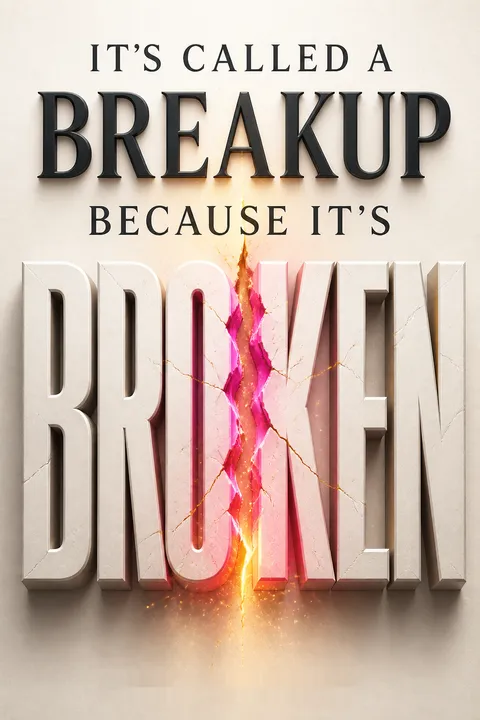
- "It's called a breakup because it's broken." This quote emphasizes the finality of a breakup and the importance of accepting that the relationship is over.
- "You are the prize, the sun, the moon, and the stars." This quote encourages self-love and the recognition of one's own worth, independent of a relationship.
- "No contact means no new hurts." This highlights the importance of the no-contact rule in preventing further emotional pain and confusion.
- "The best revenge is living well." This suggests that focusing on personal happiness and success is the most effective way to move on from a breakup.
How does "It's Called a Breakup Because It's Broken" address the concept of "backsliding"?
- Definition: Backsliding refers to any contact with the ex that disrupts the healing process, such as calls, texts, or meeting up.
- Consequences: Engaging in backsliding can lead to confusion, emotional setbacks, and prolonged heartache.
- Prevention: The book advises using a Breakup Buddy to help resist the temptation to backslide and maintain focus on recovery.
- Recovery Impact: Avoiding backsliding is crucial for making progress in the breakup recovery journey and achieving emotional independence.
What is "Revisionist Romance Disorder" as described in "It's Called a Breakup Because It's Broken"?
- Definition: Revisionist Romance Disorder is the tendency to romanticize and rewrite the past relationship, focusing only on the good parts.
- Impact: This disorder can prevent individuals from moving on by creating a false narrative of the relationship's quality.
- Reality Check: The book encourages readers to remember both the good and bad aspects of the relationship to gain a realistic perspective.
- Healing Process: Acknowledging the full reality of the relationship helps in accepting the breakup and moving forward.
How does "It's Called a Breakup Because It's Broken" suggest dealing with mutual friends post-breakup?
- Friendship Dynamics: Understand that mutual friends may feel caught in the middle and may not want to choose sides.
- Setting Boundaries: Set clear boundaries with mutual friends about what you're comfortable discussing regarding the breakup.
- Respect Their Choices: Allow mutual friends to decide their level of involvement with both parties without pressure.
- Focus on Supportive Friends: Prioritize spending time with friends who are supportive and understanding of your situation.
What role does humor play in "It's Called a Breakup Because It's Broken"?
- Coping Mechanism: Humor is used as a coping mechanism to make the painful aspects of breakups more bearable.
- Engagement: The humorous tone keeps readers engaged and makes the advice more relatable and less intimidating.
- Perspective Shift: Humor helps shift perspective, allowing readers to see the lighter side of their situation and reduce stress.
- Emotional Relief: Laughter provides emotional relief, helping to alleviate the heaviness of heartbreak and promote healing.
What is the ultimate goal of "It's Called a Breakup Because It's Broken"?
- Personal Growth: The ultimate goal is to use the breakup as a catalyst for personal growth and self-improvement.
- Emotional Independence: Achieve emotional independence by learning to love and prioritize oneself before entering a new relationship.
- Healthy Relationships: Prepare for healthier, more fulfilling relationships in the future by understanding past mistakes and patterns.
- Empowerment: Empower readers to take control of their lives, embrace change, and emerge stronger and more confident.
About the Author
Other books by Greg Behrendt

Download PDF
Download EPUB
.epub digital book format is ideal for reading ebooks on phones, tablets, and e-readers.








