

Key Takeaways
Serve the mission, then lead by serving the people who share it.
A crisis made it concrete. In 1996, five church officers told Gene Wilkes they had lost confidence in his leadership and asked him to consider his future. He returned to a meeting with them, knelt before the deacon chair, wiped his shoes, and asked forgiveness for their estrangement. The chair then did the same for Wilkes. Their reconciliation did not settle every question, but it shifted the encounter from a contest over authority toward shared responsibility for the church’s purpose.
The mission comes first. Wilkes calls a person a servant leader when that person serves an entrusted mission and leads by serving those working toward it. Service is not a substitute for leadership; it is the way leadership is exercised. The mission gives decisions direction, while care for the people makes joint work possible.
The opening episode matters because the leader accepts vulnerability before asking others to trust him. That resembles restorative practices, where acknowledging harm can reopen cooperation without erasing disagreement. The story also avoids portraying humility as a guaranteed tactic: some officers remained uncertain, and families left. This is important. Servant leadership is a commitment to the work and the people, not a clever way to secure loyalty. Its strength depends on whether the stated mission is genuinely shared rather than simply declared by someone with a title.
Turn a calling into a clear future, then equip people to build it.
Four ideas connect purpose to action. Wilkes organizes servant leadership around Mission, Vision, Equip, and Team. Mission is the purpose entrusted to the leader. Vision is the leader’s picture of what fulfilling that purpose could look like. Equipping prepares other people to contribute, and a team coordinates their contributions toward the goal. The sequence applies beyond churches: a parent, manager, or volunteer can clarify a purpose, describe its desired outcome, prepare others, and work with them.
Activity can disguise drift. Wilkes tells of a church that behaves like a warehouse, carefully storing programs and resources without producing the intended result: people becoming and making disciples. The analogy asks leaders to judge institutions by the purpose they serve, not by how busy or organized they appear. A mission statement is useful only if it guides choices and daily work.
This framework resembles a basic strategy cycle: define purpose, specify an outcome, develop capability, and coordinate execution. Its value is diagnostic. A group can ask whether it lacks direction, a vivid destination, trained contributors, or coordination. The caution is that a leader’s confidence in a calling does not by itself establish that the calling is sound or shared. In practice, purpose needs interpretation through dialogue, observable outcomes, and feedback from the people who carry out the work.
Step away from status and let character, not ambition, set your pace.
Humility changes the race. Jesus’ banquet story challenges guests who rush for prominent seats. Wilkes applies it to leaders who equate rank with importance and become too busy competing to notice who needs help. Humility, in this account, is not self-contempt. It is seeing oneself in proportion to God, the task, and the people involved. Recognition is received rather than seized, and the mission remains larger than any one leader.
Waiting can be active. Wilkes distinguishes quiet waiting, which makes room for reflection and prayer; expectant waiting, which prepares for a trusted promise; and frustrated waiting, which tempts people to force an outcome. He describes feeling impatient for a pastoral role, then learning to serve faithfully in his current work. He became an interim pastor about a year after that realization, following a long period of preparation.
Humility can improve judgment because it weakens the impulse to protect a public image and makes correction easier to hear. Reflection also gives leaders a chance to distinguish a meaningful delay from avoidable indecision. Yet humility and waiting can be misused to discourage initiative or keep people in unfair conditions. The practical test is whether waiting produces clearer action and greater service, or merely protects the comfort of those already in charge.
Follow before you lead; position cannot manufacture another person's trust.
The brothers wanted the seats. As Jesus headed toward Jerusalem, he told his followers that suffering awaited him. James and John responded by asking for prominent places in his coming kingdom. Jesus redirected them from rank toward the cost of following. Wilkes reads the episode as a warning against treating a position as proof of leadership. Appointment can grant responsibility, but people still decide whether they trust and follow the person holding it.
Trust makes honest speech possible. Jesus did not shame the brothers for their misguided request. He asked what they wanted, listened, and corrected their misunderstanding. Wilkes argues that followers need room to speak candidly if a leader is to understand them. Following also means putting a shared purpose into action, not merely admiring a leader’s ambitions. In this Christian framework, leadership begins with responding to a call before claiming a role.
The distinction between formal authority and earned influence is useful in any organization. A title can assign decisions, but trust affects whether people share problems, offer dissent, and commit beyond minimum compliance. Jesus’ response also models correction without humiliation, a combination that supports candor and learning. Still, followers’ approval is not the sole measure of sound leadership: popular leaders can be wrong, and necessary decisions can be unpopular. Trust needs to accompany principled accountability, not replace it.
Make service your definition of greatness, without confusing care with passivity.
Jesus reverses the status ladder. When the disciples quarrel over who deserves precedence, Jesus contrasts domination and rank-based authority with service to others. He describes greatness not as being served by a group, but as taking responsibility for its needs. Wilkes stresses that this involves surrendering the entitlement to be treated as more important, not abandoning the responsibility to lead.
Service needs a purpose. A leader may do unglamorous work, but the point is not to perform every task personally or accept every demand. The task is to serve the mission and the people entrusted to it. Wilkes draws on Jesus’ image of the servant and slave to confront self-interest, while applying the principle to family, church, and work. Genuine service aims at others’ good rather than applause or personal advantage.
This account usefully separates leadership from prestige while keeping it distinct from mere helpfulness. In contemporary organizations, service can mean removing obstacles, sharing credit, and ensuring that frontline workers have what they need. The language of surrendering rights, however, needs careful boundaries. It must not legitimize coercion, unpaid exploitation, or abuse, especially where power is unequal. Voluntary care is not the same as making one person permanently responsible for everyone else’s comfort.
Risk status when your identity rests on calling, not on rank.
Security makes service less frightening. In John’s account of the foot-washing, Jesus acts with confidence about his relationship to God and his destination. Wilkes draws a leadership lesson from that confidence: people can risk status when they do not treat a position as the source of their worth. He connects this to trust in God as creator, giver of a mission, and final home for the believer. The intended risk is purposeful service, not recklessness.
Use your actual resources. Wilkes’s S.E.R.V.E. profile names five kinds of material a person can bring to service: spiritual gifts, formative experiences, relational style, vocational skills, and enthusiasm. Daniel’s refusal to adopt the king’s food practices illustrates acting from conviction despite possible career consequences. The profile helps leaders notice that useful contributions need not come from a formal leadership talent or title.
The connection between identity and risk is psychologically plausible: people who anchor self-worth in status often defend it even when the group’s needs call for change. A inventory of skills, experience, and motivation can also make service more concrete than vague good intentions. The theological assurance in this chapter is specific to Christian belief, though the broader question travels: what source of worth allows a person to act courageously? Confidence should support principled risk, not excuse leaders from assessing consequences for others.
Let your actions teach the mission, and keep its purpose firm.
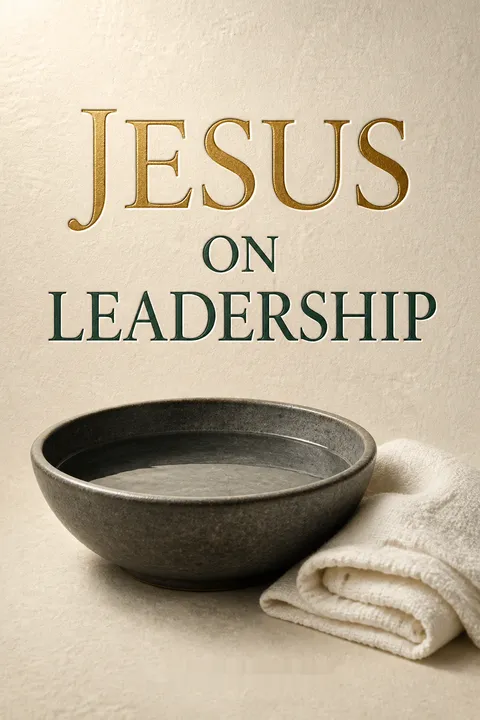
The towel made the lesson visible. While the disciples argued over status, Jesus left his place at the meal and washed their feet, a task associated with a servant. Wilkes presents the action as a living demonstration of Jesus’ mission, not a decorative gesture. Jesus also persisted when Peter resisted, because accepting the act meant accepting the kind of Messiah Jesus was. The account even places Judas among those receiving care, despite his coming betrayal.
Care is not people-pleasing. Wilkes applies the lesson to a leader who must serve people without letting every preference redirect the mission. He describes changing a church’s worship style to reach people unfamiliar with its traditions, despite resistance from some members. The leader’s work is to explain the purpose, model it, and respond to real needs while refusing to confuse popularity with faithfulness.
Visible behavior teaches norms more credibly than slogans alone. When leaders accept inconvenient work or share the burdens they assign, they make the group’s values observable. The chapter also draws a needed distinction between caring for people and granting every request. That distinction becomes dangerous if leaders alone define the mission and dismiss criticism as selfish preference. Listening is essential: dissent may reveal that the declared purpose and the people’s actual needs have diverged.
Give people authority with responsibility, or delegation becomes theater.
A neglected need exposed a leadership bottleneck. In the early Jerusalem church, Greek-speaking widows were missing out on food distribution. The apostles recognized that they could not manage this work while giving proper attention to teaching and prayer. They selected seven qualified members to oversee the distribution and publicly commissioned them. The account presents delegation as a response to a concrete failure, not merely a leader’s wish to have less work.
Permission must be real. Wilkes emphasizes that assigning tasks without decision-making power burdens people without empowering them. He summarizes equipping with the mnemonic EQUIP: encourage people to serve, assess their readiness, understand what they need, teach the specific work, and support them through prayer. The apostles shared authority as well as responsibility, allowing the seven to make practical decisions. The resulting division of work helped the community meet needs and continue its broader mission.
Delegation works when decision rights match the responsibility being assigned. Otherwise, every choice returns to the leader, creating delays and teaching the team that initiative is unsafe. The Acts example also shows that operational complaints can reveal a neglected constituency rather than mere resistance. A useful refinement is to clarify boundaries: people need enough authority to act, along with access to support and a way to escalate decisions carrying consequences beyond their remit.
Build teams that can carry the mission beyond your own presence.
A team multiplies a leader’s reach. Wilkes defines a team as people joined by commitment to a shared goal. Unlike a committee, which often exists to oversee or approve activity, a team exists to do the work. His example is Janet, who began an English-language ministry at her church. In four years, she equipped a team of seventeen people serving more than two hundred international participants, with three weekly opportunities for language instruction and Bible study.
Build for continuation. Wilkes’s TEAM mnemonic points to four practices: create belonging, give people authority and sustained support, hold the group accountable to its purpose, and mentor future leaders. Members need distinct contributions, a common goal, and shared expectations. Mentoring matters because the mission should not depend on one person’s permanent presence. A leader’s work includes preparing others to guide the team and carry its purpose forward.
The example makes multiplication measurable: one person’s initiative becomes a repeatable service sustained by a group. This is a stronger test of leadership than personal indispensability. Teamwork, however, is not automatically superior. It can obscure individual accountability, consume time, or preserve a dysfunctional consensus. Clear purpose, complementary skills, and honest review help distinguish a working team from a committee that has simply changed its name.
Analysis
The book’s central move is to relocate leadership from status to relationship with a purpose. Its most memorable image is not a leader issuing orders, but a leader leaving the prominent seat to attend to a concrete need. The opening account gives that image stakes: Wilkes faces a possible loss of his position and responds with a ritual of service that enables a difficult conversation. The seven principles then widen the image into a model of humility, followership, risk, example, delegation, and team-building.
The model is strongest when it translates conviction into organizational practice. Mission and vision clarify direction; equipping and teams prevent the leader from becoming the bottleneck. The Acts 6 account gives a practical case: complaints reveal a neglected need, and the response is to share both responsibility and authority. The book’s insistence that service does not mean passivity is equally important. Jesus serves while correcting misunderstandings and holding to his mission.
Its limits arise where a leader’s claimed mission is treated as self-authenticating. A stated divine calling can motivate sacrifice, but it can also shield a leader from criticism if followers have no meaningful way to question its interpretation. The book’s own emphasis on listening, trust, shared work, and accountability offers resources for that problem, though it does not supply a neutral procedure for resolving conflicts over purpose. Its language of surrender also needs safeguards in settings shaped by unequal power, where calls to serve can fall disproportionately on people already expected to yield.
The author’s updated discussion offers a final contribution: Jesus should not be reduced to an illustration for a preferred management theory. That warning improves the argument. It asks Christian leaders to let their moral commitments shape organizational choices, while recognizing that institutional settings and cultural contexts differ. The enduring question is not whether service sounds attractive, but whether it redistributes attention, agency, and care in ways that make the mission more humanly credible.
Review Summary
Jesus on Leadership receives mostly positive reviews, with an average rating of 4.03/5. Readers appreciate its Biblical approach to servant leadership, finding it practical and insightful. Many highlight its applicability in ministry and personal life. Some criticize its handling of race-related topics and occasional redundancy. The book is praised for its vulnerability, personal anecdotes, and challenging principles. While some find it more suited for Christian leaders, others recommend it for anyone in leadership roles. Overall, readers find it transformative in understanding servant leadership.
People Also Read










Glossary
Head-table mentality
Status-seeking leadership mindsetWilkes’s term for assuming that prominent positions make leaders more important or exempt them from ordinary service. The image contrasts the honored banquet table with the kitchen and the people doing unseen work. A leader caught in this mindset protects rank and recognition instead of attending to the mission and the people who help carry it out.
Mission, Vision, Equip, Team
Purpose-to-action leadership modelWilkes’s four-part map of servant leadership. Mission is the entrusted purpose; vision describes what fulfilling it could look like; equipping prepares others to contribute; and a team coordinates those contributions. The model connects a leader’s commitment to a purpose with the practical work of developing and mobilizing people.
S.E.R.V.E. profile
Personal service-resource inventoryA framework for identifying five kinds of personal resources that can contribute to service: spiritual gifts, experiences, relational style, vocational skills, and enthusiasm. Wilkes treats these as raw materials for a person’s distinctive contribution, rather than assuming that leadership depends on one personality type or a formal leadership gift.
EQUIP
Five-part equipping mnemonicWilkes’s mnemonic for preparing people to serve effectively. It involves encouraging participation, assessing readiness for a role, learning what support people need, teaching the specific work, and praying for those being equipped. The steps combine practical preparation with the book’s Christian emphasis on spiritual support.
TEAM
Four-part team-building mnemonicWilkes’s sequence for building a group able to pursue a shared mission: foster a sense of belonging, empower members with authority and support, keep the work accountable to its purpose, and mentor people who can continue the work. It emphasizes that team-building includes both action and succession.
Team ministry
Shared mission through a teamWilkes’s term for disciples joined under Christ’s authority to meet a particular need that contributes to the church’s broader mission. Unlike a committee focused mainly on institutional oversight, a ministry team is organized to carry out work. Members share a goal and accountability while bringing different gifts and skills.
FAQ
What's "Jesus on Leadership: Timeless Wisdom on Servant Leadership" about?
- Focus on Servant Leadership: The book explores the concept of servant leadership as demonstrated by Jesus Christ, emphasizing humility, service, and the empowerment of others.
- Biblical Foundation: It draws heavily on biblical teachings and examples, particularly from the life and ministry of Jesus, to illustrate how true leadership is about serving others.
- Practical Application: The author, C. Gene Wilkes, provides practical guidance on how to apply these principles in various leadership contexts, including churches, businesses, and families.
- Seven Principles: The book outlines seven key principles of servant leadership, each rooted in the teachings and actions of Jesus.
Why should I read "Jesus on Leadership: Timeless Wisdom on Servant Leadership"?
- Timeless Wisdom: The book offers timeless insights into leadership that are applicable across different contexts and cultures.
- Spiritual Growth: It encourages personal spiritual growth by aligning leadership practices with Christian values and teachings.
- Practical Guidance: Readers receive practical advice on how to implement servant leadership principles in their daily lives and leadership roles.
- Transformational Impact: The book aims to transform the reader's approach to leadership, focusing on serving others rather than seeking power or status.
What are the key takeaways of "Jesus on Leadership: Timeless Wisdom on Servant Leadership"?
- Humility and Service: True leadership begins with humility and a willingness to serve others, as exemplified by Jesus.
- Empowerment: Effective leaders empower others by sharing responsibility and authority, fostering a collaborative environment.
- Mission-Driven Leadership: Leaders should be driven by a clear mission and vision, aligning their actions with their core values and purpose.
- Team Building: Building and leading teams is essential for achieving larger goals and ensuring the sustainability of the mission.
What are the seven principles of servant leadership according to C. Gene Wilkes?
- Humility: Leaders should humble themselves and wait for God to exalt them, as taught in Luke 14:7-11.
- Follow First: Servant leaders follow Jesus rather than seeking a position, based on Mark 10:32-40.
- Greatness in Service: True greatness is found in serving others, as illustrated in Mark 10:45.
- Risk Taking: Leaders can risk serving others because they trust that God is in control, as shown in John 13:3.
- Towel of Servanthood: Leaders take up Jesus' towel of servanthood to meet the needs of others, based on John 13:4-11.
- Shared Responsibility: Leaders share responsibility and authority to meet greater needs, as seen in Acts 6:1-6.
- Team Building: Leaders multiply their leadership by empowering others to lead, as demonstrated in Mark 6:7.
How does C. Gene Wilkes define servant leadership?
- Mission and Service: A servant leader serves the mission and leads by serving those on mission with him.
- Empowerment: Leaders empower others by sharing responsibility and authority, enabling them to contribute to the mission.
- Humility and Trust: Servant leaders exhibit humility and trust in God's control over their lives and leadership roles.
- Team Orientation: Effective leadership involves building and leading teams to achieve shared goals and fulfill the mission.
What are the best quotes from "Jesus on Leadership: Timeless Wisdom on Servant Leadership" and what do they mean?
- "Servant leaders humble themselves and wait for God to exalt them." This quote emphasizes the importance of humility and patience in leadership, trusting that recognition and success will come in God's timing.
- "Servant leaders follow Jesus rather than seek a position." It highlights the priority of following Jesus' example and teachings over pursuing personal ambition or status.
- "Servant leaders give up personal rights to find greatness in service to others." This quote underscores the idea that true greatness is achieved through selfless service and putting others' needs first.
- "Servant leaders take up Jesus’ towel of servanthood to meet the needs of others." It illustrates the concept of leading by example, serving others in practical and meaningful ways.
How can the principles in "Jesus on Leadership" be applied in a business context?
- Empowerment: Share responsibility and authority with team members to foster a collaborative and innovative work environment.
- Mission Alignment: Ensure that business goals and actions align with the organization's core mission and values.
- Team Building: Focus on building strong, diverse teams that leverage the unique strengths and skills of each member.
- Service-Oriented Leadership: Lead by example, prioritizing the well-being and development of employees and stakeholders.
What role does humility play in servant leadership according to C. Gene Wilkes?
- Foundation of Leadership: Humility is the foundation of servant leadership, allowing leaders to serve others selflessly and effectively.
- Trust in God: Humble leaders trust in God's timing and plan, rather than seeking immediate recognition or success.
- Relational Focus: Humility fosters strong relationships, as leaders prioritize the needs and growth of their team members.
- Counter-Cultural Approach: Embracing humility challenges conventional leadership models that prioritize power and control.
How does "Jesus on Leadership" address the concept of risk-taking in leadership?
- Trust in God's Control: Leaders can take risks because they trust that God is in control of their lives and leadership journey.
- Mission-Driven Risks: Risk-taking is aligned with the mission and vision, ensuring that actions are purposeful and strategic.
- Empowerment through Risk: By taking risks, leaders empower others to innovate and contribute to the mission in meaningful ways.
- Learning from Jesus: Jesus' willingness to serve and sacrifice demonstrates the ultimate example of risk-taking for a greater purpose.
What is the significance of the "towel of servanthood" in "Jesus on Leadership"?
- Symbol of Service: The towel represents Jesus' act of washing his disciples' feet, symbolizing humility and service.
- Leadership Example: Leaders are called to take up the towel, serving others and meeting their needs as a demonstration of true leadership.
- Practical Application: The towel of servanthood encourages leaders to engage in acts of service, regardless of their position or status.
- Transformational Impact: Embracing the towel of servanthood transforms leadership from a position of power to one of genuine care and support.
How does "Jesus on Leadership" suggest leaders should handle authority and responsibility?
- Shared Authority: Leaders should share authority with their team members, empowering them to make decisions and contribute to the mission.
- Balanced Responsibility: Responsibility should be distributed among team members, ensuring that everyone is accountable for their part in achieving goals.
- Empowerment through Delegation: Delegating authority and responsibility fosters a sense of ownership and commitment among team members.
- Biblical Model: The book draws on biblical examples, such as the apostles sharing responsibility in the early church, to illustrate effective leadership practices.
How can "Jesus on Leadership" be used as a devotional guide?
- Spiritual Reflection: The book encourages readers to reflect on their relationship with Jesus and how it influences their leadership style.
- Biblical Study: Each principle is rooted in biblical teachings, providing a framework for studying and applying Scripture in daily life.
- Prayer and Meditation: Readers are encouraged to pray and meditate on the principles, seeking God's guidance in their leadership journey.
- Personal Growth: The book serves as a tool for personal spiritual growth, aligning leadership practices with Christian values and teachings.
Download PDF
Download EPUB
.epub digital book format is ideal for reading ebooks on phones, tablets, and e-readers.








