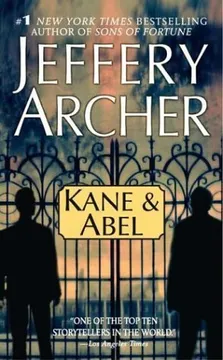


Plot Summary
Two Sons Born
On April 18, 1906, in Poland, a young hunter named Franck Koskiewicz finds a newborn beside his dead mother and cuts the cord with his rabbit knife. His mother, Helena, feeds the frail child despite her own hungry household, and the family names him Wladek.
That same day in Boston, wealthy banker Richard Kane celebrates the birth of William, already imagining him at the head of the family bank. Wladek enters life through an act of rescue, dependent on people who can barely feed themselves. William arrives amid nurses, gifts, and plans. Both boys have blue eyes, but one grows up uncertain of his place, while the other is expected to inherit one.
The paired births establish the novel's governing experiment: what makes a person, inheritance or effort? Wladek receives life from a family with no obligation to save him, while William receives a future already shaped by wealth and paternal expectation. Their parallel birthdays make the contrast feel almost deliberately balanced, yet neither beginning determines its outcome. The book also makes care visible as labor. Helena's decision to nurse a stranger costs her family food, while Richard's father treats the birth as another matter to organize. Each boy is claimed by a different kind of family before either can choose one.
The Castle's New Rival
Wladek grows sickly but reads before he can dress himself, and his foster sister Florentyna protects him as fiercely as Helena does. When Baron Rosnovski offers him a place beside the lonely young Leon, Wladek accepts only after the Baron agrees to bring Florentyna too.
At the castle, the boys share tutors, history lessons, games, and a rivalry that gives each a companion. The Baron treats Wladek as Leon's equal, even as the tutors hesitate to teach a trapper's foster child beside an aristocrat.
During a bitter Christmas visit home, Wladek learns that he was born outside the family. Rather than diminishing him, the discovery gives him a new sense of possibility. He returns to the castle knowing where he belongs emotionally, if not by blood.
Education first appears as escape from poverty, but the castle complicates that promise. Wladek gains books and status without losing the attachment that formed in Helena's cottage; his insistence that Florentyna accompany him reveals that advancement, for him, is never purely individual. Leon's friendship also gives both boys a way out of isolation: privilege has left Leon lonely, while Wladek's difference separates him from the Koskiewicz children. The revelation of Wladek's birth briefly converts shame into ambition. That response foreshadows how he will later use imposed identities as fuel, rather than accepting them as limits.
Slonim Is Taken
As war advances toward Poland, the Baron tries to move his household to safety, but German soldiers storm the castle before the family can leave. Leon shields Wladek from a rifle blow and dies; the soldiers kill the trapper, capture the Baron, and herd the surviving servants into the dungeons.
At nine, Wladek organizes food, shifts, and sleeping places for the prisoners, while Florentyna keeps the Baron alive and the cell clean. When the old man can no longer teach at a desk, he teaches Wladek from memory, filling the dungeon with poetry, languages, mathematics, and Polish history. Before dying blind and broken, the Baron names Wladek his heir and gives him the silver family band. The boy buries him beside Leon.
The invasion destroys the distinction between a home and a prison. Wladek's authority is not granted by age or title but earned through the practical work of keeping others alive, which makes the Baron's bequest feel like recognition of an existing bond. The dungeon education is especially consequential: knowledge survives when institutions, books, and freedom have vanished. Leon's death binds Wladek to a grief he cannot repair, while the silver band gives that grief a portable form. The boy inherits a name and estate in theory, but first must survive long enough to claim any future at all.
The Silver Band's Passage
After German forces retreat, Russian soldiers seize the castle and assault Florentyna while Wladek is held helplessly nearby. She dies after he carries her to the graves of Leon and the Baron, leaving him with the silver band and no family.
The Russians send him east with the remaining prisoners. In Camp 201, an imprisoned doctor, Dubien, treats Wladek's wounded leg and secretly prepares his escape with money, civilian clothes, and a hand-drawn route. Wladek reaches Moscow, then Odessa, where Stefan helps him hide aboard a ship to Constantinople.
There, a hungry Wladek is nearly punished by having his hand cut off for stealing food, until British officials recognize the band and save him. At Ellis Island, he rejects his peasant surname and is registered as Baron Abel Rosnovski.
The band changes function repeatedly: a family emblem, a concealed possession, and finally proof that can interrupt an execution. Its power is social rather than magical; strangers decide what its inscription means, and Wladek must keep surviving long enough for the object to be read. His escape depends on help from people who risk something for him, especially Dubien and the stationmaster's wife. Yet the new name at Ellis Island is his own choice. Abel's reinvention is not a denial of suffering so much as an effort to make that suffering legible as a future.
The Heir Loses Home
William's carefully ordered childhood breaks when Richard Kane dies on the Titanic in 1912. The six-year-old waits for weeks, searching survivor lists and the ocean for a father he cannot accept as dead. His grandmothers send him to school, teach him to account for every coin, and turn grief into discipline.
William becomes a gifted investor, but his home grows less secure when Anne marries Henry Osborne. Henry persuades her to spend her inheritance on his failing ventures, while William distrusts him and secretly seeks legal advice.
When Anne becomes pregnant despite medical warnings, William returns home as her blood pressure crisis brings on premature labor. Anne and the baby die. William forces the drunken Henry out of the house, then asks Alan Lloyd to remain at the bank rather than resign in guilt.
William's competence develops as a defense against helplessness. His ledger gives a bereaved child a rule-bound world in which losses can be recorded, assessed, and sometimes recovered; it cannot, however, make adults trustworthy. Anne's marriage exposes the cost of his emotional reserve: he sees the danger but cannot protect her from it. Her death repeats his first bereavement while adding guilt and anger, and his expulsion of Henry turns grief into a lifelong suspicion of people who claim intimacy. William's ambition is therefore not simply inherited. It is also a structure built to prevent another private catastrophe.
Two Climbers in New York
Abel arrives in New York with little money, shares crowded rooms with his friend George Novak, and works in a meatpacking warehouse before earning a place as a waiter at the Plaza. He studies English and economics at night, watches wealthy diners for clues about business, and builds a small fortune through careful stock trades.
William, meanwhile, wins a mathematics scholarship to Harvard, joins his father's bank, and proves himself through increasingly astute investments. At the Plaza, Abel overhears banker Charles Lester discussing a major Woolworth deal and profits by acting before the announcement.
He later accepts a management post with the Richmond hotel group in Chicago, where he hopes his education and discipline can finally command authority. The two men's paths are rising, but one advances through a family institution and the other through work and observation.
Both men turn attention into capital, but their access to information differs. William is trained inside institutions and receives authority as a family inheritance; Abel has to infer how those institutions work from the margins, listening while serving the people who control them. His education is self-directed, practical, and inseparable from labor. Their parallel success prevents the novel from treating wealth as proof of merit or poverty as proof of deficiency. Each man is formidable, but each also mistakes the route that helped him for a universal measure of worth.
The Richmond Collision
At the Chicago Richmond, Abel discovers that manager Desmond Pacey and much of the staff have been stealing from the hotel. He documents the fraud, persuades Davis Leroy to dismiss Pacey, and restores the business to profit.
The stock-market crash then wipes out Davis's investments, and the bank takes possession of his hotels. After Davis dies by suicide, Abel inherits his shares but not the properties securing the debt. William Kane gives him thirty days to find a buyer, refusing to risk the bank's money on a hotel chain.
A fire destroys the Chicago Richmond, and Pacey is later convicted of arson. Abel still finds a hidden financier who pays the debt and gives him day-to-day control, with a path to ownership. The anonymous agreement saves the chain and sets up a rivalry neither man can see clearly.
This collision turns a business disagreement into a moral wound. William sees liquidation as his duty to depositors; Abel sees the bank's refusal as abandonment of workers and of a business he has already proved he can repair. Both positions have internal logic, which is why the grievance lasts. The anonymous financing adds dramatic irony: William helps preserve the very enterprise he believes he is refusing to support, while Abel interprets his rescue as coming from someone else. Their future conflict grows from partial knowledge as much as from deliberate hostility.
Banks, Babies, and Loss
William joins Kane and Cabot, marries Katherine Brookes, and eventually wins the chairmanship of Lester's Bank after Charles Lester names him as successor. His closest friend, Matthew Lester, dies of Hodgkin's disease, leaving William to carry the grief and the bank's future without the partner he expected beside him.
Abel turns the rescued Richmond chain into the Baron Group, marries Zaphia, and welcomes a daughter, Florentyna. He expands through the Depression, opens a flagship Chicago Baron, and becomes a public figure.
Success does not make his marriage secure: Zaphia wants a quieter life, while Abel increasingly measures love through achievement and absence. Their relationship fractures, and they divorce, with Abel raising Florentyna and Zaphia retaining regular visits. Each man builds an institution, but family remains the part neither can manage by rules alone.
The two men's institutions function as extensions of their identities. William inherits a bank and earns its leadership through a contested succession; Abel turns a failing chain into a visible monument to his adopted name. Yet their private lives resist managerial control. William's friendship with Matthew offers companionship that ambition cannot replace, while Abel's devotion to Florentyna coexists with neglect of Zaphia. The novel refuses to equate professional success with emotional maturity. Both men can forecast markets and reorganize organizations, but they struggle to recognize that loved ones require presence rather than provision.
Remagen's Unknown Rescuer
When America enters the Second World War, Abel volunteers and is initially rejected as too old and unfit for combat. He loses weight, earns a commission, and serves as a quartermaster, feeding troops across North Africa and Europe.
William also enlists, leaving Kate and their children to join the advance through France. At Remagen, German fire ambushes William's unit; shot in the head, neck, and chest, he lies among the casualties. Abel, frustrated by his support role, leads a group forward to bring back the wounded and helps carry William to a field hospital without recognizing him.
William survives but spends more than a year recovering. After the war, Abel returns to a transformed family and resumes building his hotels, while William returns to Lester's with a new understanding of what he has nearly lost.
The battlefield briefly makes the rivals dependent on the same fragile human chain. Abel's logistical work, which he had treated as a lesser form of service, becomes the means by which William survives. Neither man knows who has helped whom, so the rescue cannot soften their feud yet; it exists as an unrecognized debt. This is the novel's clearest rebuke to their private histories of blame. Their lives have already crossed in ways neither can narrate, and the war's physical danger exposes the limits of the self-sufficiency each man prizes.
The Children Choose
In New York, Abel's daughter Florentyna works under the false name Jessie Kovats at Bloomingdale's, determined to learn retail from the floor up. She meets Richard Kane, William's son, when he repeatedly visits her counter to buy gloves and finally asks her to dinner.
Richard discovers her identity after following her to her elegant apartment, and she admits both her real name and her father's. Their love survives the revelation that their fathers hate each other. When both parents forbid the match, Richard and Florentyna leave New York with little money and marry on the West Coast.
Richard works his way through banking while Florentyna builds a fashion business; their partnership produces two children and an expanding chain of shops. Abel and William lose contact with their children because neither can set aside the grievance that shaped his own life.
Florentyna's use of an assumed name is not mere concealment. By entering Bloomingdale's anonymously, she tests whether her competence can stand apart from her father's fortune. Richard's repeated glove purchases show a courtship built on awkward persistence rather than family arrangement. Their elopement repeats the novel's central conflict in a new generation, but with a crucial difference: they refuse to let inherited identity dictate whom they may love. Their later business partnership makes the romance more than rebellion. Each contributes a distinct skill, showing that intimacy can enlarge ambition instead of demanding its surrender.
A Market Becomes a Weapon
Abel acquires six per cent of Lester's through intermediaries and installs Henry Osborne, now a politician, to help secure more shares and permits. William learns that Abel also owns a large stake in Interstate Airways, a company Lester's has underwritten.
After an aircraft crash in Mexico, Abel's companies sell millions of dollars in Interstate stock, driving its price down, then buy it back cheaply. The tactic damages the airline and threatens the bank's reputation, but the Securities and Exchange Commission identifies the pattern as market manipulation.
Abel avoids immediate disaster by stopping his stock trades, while William and his lawyers preserve evidence. At the same time, Abel uses political donations and his Polish-American influence to seek a role in relations with Poland. The attack is meant to punish William, but it exposes Abel to criminal charges and public disgrace.
Abel's financial attack recasts his talent as a weapon. He understands markets well enough to create panic, but obsession narrows his judgment: he risks his company and reputation for the symbolic pleasure of making William feel vulnerable. William's instinct to document the manipulation is sound, yet his later choices will turn institutional procedure into a personal instrument. The episode also links private vengeance to public power. Abel's Polish advocacy is sincere, but political donations blur service and self-interest, leaving his public idealism exposed to the same transactional logic that drives his business.
The Bankroom Reckoning
As Abel prepares to become America's ambassador to Poland, an anonymous file reaches the Justice Department, detailing bribes Henry Osborne arranged for Baron projects. Abel is arrested on seventeen charges.
Osborne agrees to testify, then dies by suicide in his cell before the trial; Abel pleads guilty to two minor charges and receives a fine and suspended sentence. He then buys Peter Parfitt's two per cent of Lester's, giving him the eight per cent needed to invoke Article Seven.
William offers his own money to shield the bank, but directors conclude that his personal feud has endangered the institution. They remove him as chairman by a seventeen to twelve vote. Abel sells his shares to new chairman Jake Thomas rather than continuing the takeover threat. His victory is complete on paper and hollow in private.
The boardroom vote is a reversal with no clean hero. William's intervention against Abel began as a defense of the bank, but concealing his role in the file makes it impossible to separate governance from vengeance. Abel gains the leverage he wanted, yet the price is a criminal case that destroys his diplomatic prospects and does not reunite him with Florentyna. The eight per cent clause, once designed as protection, becomes a mechanism for institutional paralysis. The episode shows how legal rules acquire moral meaning through motive: the same tools can safeguard an organization or let private anger occupy its machinery.
Fifth Avenue, Too Late
After two heart attacks and years of estrangement, William finally asks Kate to bring Richard, Florentyna, and their children back into his life. Abel, meanwhile, has won his fight against William but finds the victory empty; he still longs to see his daughter.
At Florentyna's Fifth Avenue boutique opening, William leaves his house alone and watches the crowd from the sidewalk, too frail to push inside. Abel stands nearby, also outside the celebration.
William recognizes the silver band on Abel's wrist and understands that the stranger has crossed his path before. The two old men lift their hats to one another, then walk away without speaking. William returns home expecting to meet his family that evening, but dies in his chair before they can reach him.
The recognition on Fifth Avenue arrives after both men have begun to change, but before either can repair what he broke. The silver band turns an ordinary street encounter into a sudden rereading of their shared history. Their exchanged courtesy is small, yet it replaces the old demand for victory with acknowledgment. William's death makes the missed conversation irreversible, giving his late decision to welcome Richard a painful tenderness: he has finally loosened his pride, but cannot enjoy the reconciliation he sought. The scene's restraint matters. Neither man receives a speech that could tidy away decades of damage.
The Benefactor Revealed
After William's funeral, Abel receives a letter Curtis Fenton had arranged to deliver only after William's death. It reveals that William, through his family trust, secretly supplied the money that saved the Richmond Group in 1930.
William had kept the investment anonymous to honor the bank's rules, while Abel spent decades believing the help came from another source. Abel goes to see Florentyna and Richard, and father and daughter reconcile. He welcomes Richard and their children, then asks the couple to accompany him to Poland for the opening of the Warsaw Baron.
Abel leaves his fortune to Florentyna and gives his grandson the silver band, now inscribed with Abel's title. The two men never meet again, but their children inherit a connection neither father could make while alive.
The final revelation does not erase William's refusal to back Abel openly or Abel's years of hatred. It changes the meaning of one crucial act: William had judged Abel capable of building something worth saving, even when Abel mistook that faith for indifference. The delayed letter transforms secrecy from a weapon into a restraint, though it also shows the damage caused when principled silence persists too long. The silver band passes from a lost European inheritance into the hands of the next generation. The ending offers not a repaired past but a different inheritance, one made of knowledge, work, and the chance to begin without repeating the feud.
Analysis
Kane and Abel builds its argument through parallel lives rather than a single protagonist's transformation. The men share intelligence, appetite, and an instinct for strategy, but their social starting points teach them different definitions of legitimacy. William sees institutions as inheritances that must be guarded; Abel sees them as structures an outsider can enter, master, and remake. Neither outlook is simply vindicated. William's prudence protects a bank but hardens into pride, while Abel's self-invention creates a vast enterprise but makes revenge feel like proof of survival.
The novel's most important reversals depend on incomplete knowledge. William secretly finances Abel's hotels, yet Abel interprets his earlier refusal as evidence of deliberate cruelty. Abel saves William at Remagen without knowing whose life he is preserving. The silver band and Fenton's delayed letter eventually reveal that their histories have been intertwined more generously than either man could imagine. This pattern makes secrecy both plot engine and ethical problem: protection can become injury when the protected person is denied the truth.
The sons and daughters inherit more than money. Richard and Florentyna inherit the feud itself, but they refuse its terms and create a partnership in which each person's competence matters. Their choice does not instantly reconcile the older generation; it exposes the cost of the fathers' pride. The ending therefore offers no simple victory. William dies before his family reaches him, while Abel learns too late that the man he hated had once believed in him. Their children can build a future because the letter makes a buried act of trust visible. The book's final measure of wealth is not the hotel chain or the bank, but whether a family can recognize care before time removes the chance.
Review Summary
Kane & Abel is widely praised as a gripping saga spanning decades, following two ambitious men from vastly different backgrounds. Many readers find the parallel stories captivating, with well-developed characters and historical events woven throughout. The writing style is simple but effective, keeping readers engaged. Some criticize predictable plot elements and dated attitudes. Overall, most reviewers consider it a compelling, emotional read that leaves a lasting impact, though a few find it overrated or problematic in its portrayal of women and coincidences.
People Also Read


Characters
Abel Rosnovski, born Wladek Koskiewicz
The self-made baronA Polish orphan and immigrant, Abel remakes himself through education, observation, and an iron refusal to remain powerless. His drive is partly practical: poverty and imprisonment have taught him that security must be built, not expected. It is also emotional. The Baron, Leon, and Florentyna become the family he has lost, and the silver band carries their memory into his American life. Abel can read a market or a hotel staff with remarkable precision, yet personal injury can narrow that intelligence into obsession. He measures achievement in visible form, from a restored hotel to a respected name, and has to confront the difference between providing for someone and truly listening to them.
William Lowell Kane
The disciplined bankerWilliam is raised to inherit a Boston bank, but his father's death and his mother's troubled second marriage turn discipline into a refuge as much as a virtue. He records money, studies markets, and treats competence as the strongest form of protection. His judgment is often sharp, especially when institutions are at risk, but pride makes him slow to distinguish principled caution from personal resentment. He wants to honor his father by earning authority on merit, not merely by claiming a family name. His loyalty is deep, expressed through responsibility and provision, though he is less fluent at asking forgiveness or admitting that those closest to him may choose differently.
Florentyna Rosnovski Kane
The independent successorAbel's daughter grows up surrounded by his ambition but refuses to accept privilege as a substitute for experience. She studies at Radcliffe, takes an ordinary sales position under an assumed name, and learns retail work from the ground level. Her confidence is practical rather than ornamental: she wants to be employable because of what she can do, not because of whom she belongs to. Florentyna inherits her father's persistence and her mother's emotional attentiveness, but she is more willing to negotiate between love and ambition. She builds her own identity while remaining deeply attached to her father, a balance that repeatedly tests the family's capacity to accept independence.
Richard Kane
The bridge between rivalsWilliam's only son is intelligent, musically gifted, and less governed by his father's expectations than his father first assumes. Richard studies mathematics and business, but his central choice is personal: he refuses to let family loyalty dictate whom he loves. His relationship with Florentyna asks him to tolerate conflict without making either partner surrender an independent identity. He is neither a copy of William nor a rejection of him. Richard values competence, but he is also capable of tenderness and patience, qualities that let him support Florentyna's commercial ambitions rather than treating them as competition.
Katherine Brookes Kane
William's steadying partnerKate is a young widow when she meets William, and her grief gives her a clear understanding of how loss can make a person retreat into work. She brings warmth and emotional steadiness to a family that often treats feelings as matters to be managed privately. Kate supports William's career without allowing it to define the whole household, and she remains a connection between him and Richard when their relationship breaks. Her persistence is not passive: she knows when to soothe, when to challenge, and when silence is the only way to keep a door open.
Zaphia Rosnovski
Abel's first loveZaphia meets Abel during their passage to America and represents a tenderness rooted in their shared beginnings. She values home, familiarity, and close family ties more than the expanding public life Abel pursues. Their different appetites do not make her shallow or him simply ambitious; they make their marriage increasingly difficult to inhabit. Zaphia's enduring bond with Florentyna gives the daughter a family connection beyond Abel's orbit, while her own directness challenges the idea that devotion requires unquestioning support.
Baron Rosnovski
The generous mentorLeon Rosnovski's father is an aristocrat whose pride in Polish history is matched by an unusual willingness to recognize talent across class lines. He brings Wladek into the castle because Leon needs a true intellectual rival, then treats the boys as equals. His lessons give Wladek a language for ambition and a sense of cultural belonging. The Baron is demanding but humane, and his authority is most meaningful when it protects someone who has no formal claim on his family.
Leon Rosnovski
Wladek's castle brotherLeon is the Baron's son, raised in privilege but isolated by the loss of his mother and the absence of children his own age. Wladek gives him competition, companionship, and an equal to share the castle's world. Leon's physical confidence contrasts with Wladek's intellectual drive, but their friendship does not depend on sameness. His loyalty is instinctive, especially when danger comes, and the bond between the boys becomes central to how Wladek remembers the home he lost.
Anne Kane
William's devoted motherAnne begins as a young Boston socialite whose life has been arranged around family, beauty, and social expectation. Her love for William becomes her deepest commitment after Richard's death, even as loneliness makes her vulnerable to a new marriage. She tries to preserve harmony rather than confront the warning signs in Henry's behavior. Anne's story shows how limited choices can look like consent when a woman is surrounded by people who assume they know what is best for her.
Henry Osborne
The opportunistic stepfatherHenry is charming enough to enter Boston society and persuasive enough to present risk as opportunity. He wants capital, influence, and a place in a world that has not naturally admitted him. His relationship with Anne is shaped by unequal knowledge: she trusts him with money and affection, while he guards his history and motives. Later, his political usefulness makes him an attractive but dangerous associate for Abel. Henry's talent for adaptation serves his immediate needs, but leaves little stable loyalty behind.
Matthew Lester
William's loyal counterweightMatthew is William's schoolmate, closest friend, and professional partner. He is athletic, sociable, and more at ease with pleasure than William, whose seriousness he constantly punctures. Their differences make the friendship durable: Matthew can draw William out of abstraction, while William gives Matthew a demanding intellectual companion. At work, Matthew's judgment matters to William as much as his friendship does, making their shared ambitions feel like a life plan rather than a business arrangement.
George Novak
Abel's steadfast partnerGeorge meets Abel on the immigrant ship and remains his closest friend through work, success, and family turmoil. He is loyal without being merely obedient; he will challenge Abel when pride blinds him, especially over Florentyna and Richard. George's practical good sense complements Abel's appetite for expansion. He understands that friendship sometimes means telling a powerful man what he does not want to hear, then staying beside him afterward.
Alan Lloyd
The bank's moral ballastAlan is a senior Kane and Cabot banker, Richard Kane's trusted colleague, and one of William's most important adult guides. He values prudence, confidentiality, and the bank's long reputation, but he is not emotionally indifferent. His hesitation during the Osborne crisis comes from divided duties, not lack of care. Alan helps William understand that leadership involves protecting people as well as capital, even when those duties collide.
Curtis Fenton
The discreet bankerFenton manages Abel's accounts and serves as a bridge between the Baron Group and the banking world. He is cautious, observant, and professionally loyal, though his discretion sometimes requires him to withhold information that would alter Abel's understanding of the past. Fenton's work is quiet but consequential: he helps turn a risky hotel rescue into a viable business and preserves the truth until it can be responsibly disclosed.
Thomas and Thaddeus Cohen
The trusted legal advisersThomas Cohen advises the young William when he needs to understand his legal position outside the family bank. His son Thaddeus later helps William investigate Abel and navigate the securities case. Both men are careful listeners who make the law legible without pretending it is morally neutral. Their professional relationship with William spans generations, but their counsel does not always simply affirm what he wants to do.
Davis Leroy
Abel's first business patronDavis owns the Richmond hotel group and recognizes Abel's ability when others see only an immigrant waiter. He gives Abel room to repair the Chicago hotel and later trusts him as a partner. Davis is warm, generous, and vulnerable to the financial culture of the boom years. His relationship with Abel turns a job into a shared enterprise and gives Abel a model of loyalty that is more personal than contractual.
Dr Dubien
The prisoner who plans escapeA French-trained doctor imprisoned at Camp 201, Dubien has survived by burying hope beneath routine. Wladek's determination reawakens his willingness to help another person escape. He gives the boy money, clothing, and a map, accepting that his own chance of freedom has passed.
Helena Koskiewicz
Wladek's first protectorHelena takes in the newborn Wladek despite hunger, exhaustion, and her husband's objections. Her faith makes care an obligation rather than a calculation. She becomes the first person to treat him as a child worth saving, and her cottage remains the earliest home he knows.
Jake Thomas
The next-generation bankerA younger Lester's executive, Jake Thomas sees the danger of letting William's personal feud control the bank. He forces the board to confront the conflict of interest behind William's actions. His ambition is real, but so is his concern for the institution's stability.
Plot Devices
The silver band
Portable proof of belongingThe engraved Rosnovski band begins as the Baron's family emblem and becomes Wladek's most valuable possession. It survives imprisonment, escape, and migration because Wladek hides it when authorities might confiscate it. In Constantinople, its inscription persuades officials to halt a punishment that would have cost him a hand. In America it helps him claim the name Abel Rosnovski, and decades later it allows William to recognize the stranger who has crossed his life repeatedly. Abel ultimately passes it to his grandson, turning a symbol of aristocratic inheritance into a gift to the next generation.
The family ledgers
Grief made measurableWilliam's childhood ledger teaches him to record every coin, invest carefully, and treat financial discipline as a form of control after his father's death. Later, his private calculations and investment reports help him judge businesses and protect the bank. The practice parallels Abel's habit of studying hotel accounts and stock movements from the margins. In both cases, numbers are not just technical tools: they offer order in lives shaped by loss and uncertainty. The limitation is equally important. A ledger can clarify money, but neither man can use one to calculate the cost of estrangement.
Article Seven
A safeguard turned weaponLester's bylaws allow a shareholder with eight per cent of the stock to demand a special proxy meeting and elect directors. William originally values the provision as protection against removal or outside interference. Abel later accumulates the necessary shares and invokes the same rule against him. The clause gives the final business conflict a concrete mechanism: personal anger can become corporate power without requiring a conventional takeover. Its use also tests the distinction between legal authority and responsible stewardship, since the bank's directors must weigh William's past service against the risks of continuing his feud.
The anonymous loan
Help hidden by principleWhen the Richmond Group faces liquidation, an unnamed financier supplies the money Abel needs and gives him operational control with a route to full ownership. The agreement lets the hotel chain survive while preserving the financier's anonymity. Abel assumes the support came from a businessman who admired his work, and William never corrects him because the trust rules forbid revealing family investments. This secrecy lets the feud intensify around a false account of William's character. When Fenton's delayed letter finally identifies the backer, the loan becomes the novel's most consequential act of generosity and its clearest example of how silence can distort a relationship.
The hotel empires
Ambition made visibleThe Baron Group and the Kane family's banks turn private values into public institutions. Abel's hotels are the physical proof that an immigrant can build a name and a livelihood in America. William's banks represent continuity, trust, and inherited responsibility. Their rival enterprises let the novel measure personal choices through jobs, credit, investment, and reputation, not only through family arguments. Hotels also become places of encounter and memory, from the Plaza where Abel learns how the rich operate to the Baron where he welcomes Florentyna again. Their scale magnifies both men's achievements and the damage their rivalry can cause.

Download PDF
Download EPUB
.epub digital book format is ideal for reading ebooks on phones, tablets, and e-readers.








