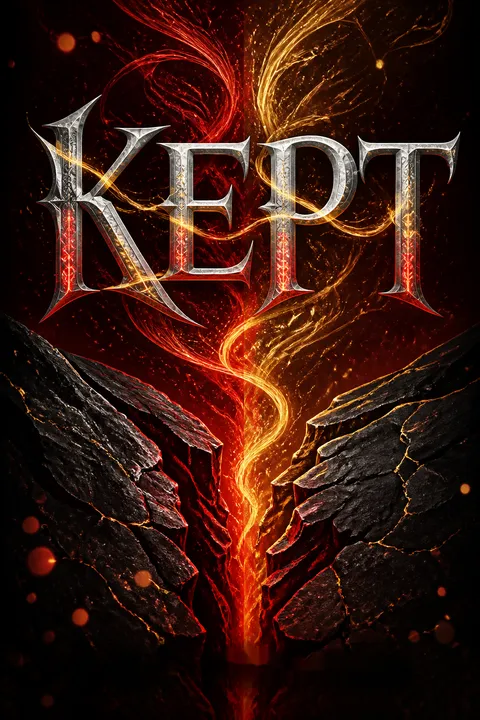


Plot Summary
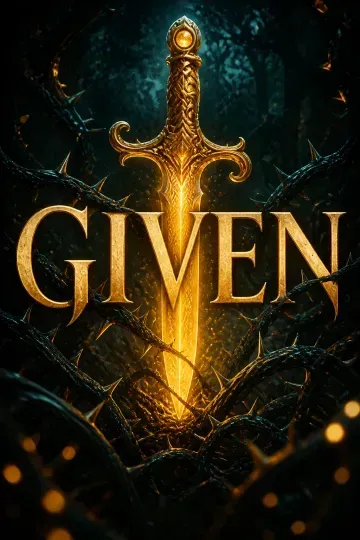
The Thorned Crown
Four days after killing her brother Rolund in self-defense, Given prepares to cross the Rift for his funeral. Sithistra has no king or clear heir, and its religious Brotherhood suspects her of murder while rejecting her vampire blood and claim to the throne. Given also fears the demon king Midian, who forced his blood into her and may be able to influence her thoughts.
Her husband, Laurent, gives her his mother’s living crown and swears a blood vow to stand beside her. He argues that the funeral invitation, written by Rolund’s First Queen Elissa, is a political test rather than a gesture of peace. Varick, Laurent’s general and longtime lover, expects a trap, but the royal party crosses anyway.
Given’s danger is both political and intimate: the same blood that may legitimize her claim may also give Midian access to her mind. Her brother’s death leaves a vacuum that others can fill with competing interpretations of prophecy, making her body a contested territory before she reaches the funeral. Laurent’s crown and vow offer support, but not uncomplicated trust. His promise matters precisely because he has previously manipulated her. Varick’s suspicion and Laurent’s calculation establish different forms of care: one anticipates physical danger, the other tries to shape how power perceives Given. Her decision to cross is not confidence. It is a refusal to let fear decide her public identity.
The Pyre Conceals Soldiers
At Rolund’s funeral, Laurent places Given between himself and Varick, making their unconventional household visible to the southern court. Given offers condolences to Elissa and Rolund’s younger queen, Lidia, but the Brotherhood’s Prelate, Crasor, refuses to honor her standing.
As the funeral pyre burns, Varick senses danger too late. Hidden beneath the structure, Sithistran soldiers emerge with mirrors that reflect the newly exposed sun. One kills High Priest Petru and throws him into the Rift; others scorch the Nor Doruvian party as they flee across the bridge.
Laurent calls the attack an act of war, but Rellan Blackmun, Elissa’s powerful father, denies responsibility and promises vengeance. The North escapes with losses, while the South has shown it can strike at the capital itself.
The funeral makes public ritual serve two opposing purposes. Given tries to recognize shared grief, while the Brotherhood and Rellan exploit ceremony as cover for political violence. The mirrors turn sunlight, normally a natural boundary between vampire and human power, into a weapon that can be aimed. Petru’s death also wounds Laurent beyond the immediate loss of a priest: it removes his mentor just as his kingship is coming under pressure. Laurent’s public retreat is militarily necessary, yet it reverses the North’s assumptions of superiority. The ambush makes the conflict harder to dismiss as a local dispute over succession. The South has discovered a way to attack the conditions on which Nor Doru’s security depends.
The Canopy Is Failing
After the survivors return, Laurent spends ten hours praying before Varick persuades him to face the Council rather than punish himself for Petru’s death. The lords argue over security and the missing High Priest.
When Lar Guna accuses Laurent of neglecting the failing Deepnight, Laurent finally explains that the Thicket protecting the demon-haunted remains of Eldenvalla is weakening too. Archmage Jordan believes the two barriers are connected: if the Thicket collapses, demons could reach every kingdom.
Laurent reveals that Given and Varick have encountered Midian and his possessed elves, and warns that Sithistra may be needed against the greater danger. Given’s royal claim and knowledge of southern politics become valuable intelligence, but the Council’s doubts and the Brotherhood’s hostility remain unresolved.
Laurent’s disclosure marks a shift from defensive rule to shared risk. He cannot restore the canopy by being a perfect king, and his attempt to answer catastrophe through private punishment only delays the decisions his subjects need. Varick challenges that self-destructive reflex without absolving Laurent of responsibility. At the Council table, the truth is politically costly: it exposes the kingdom’s dependence on a power its ruler cannot reliably control. Given’s knowledge provides a counterweight to the councilors’ inherited assumptions, though her usefulness risks reducing her to an instrument of policy. The linked barriers expand the novel’s scale while retaining its moral pressure. Nor Doru cannot survive by treating the South as its only enemy.
Sunlight Takes Lar Katerin
Before dawn, Midian intrudes on Given’s sight, briefly appearing as Varick’s brutal father. Then a wounded guard reports that the Deepnight above Lar Katerin has vanished and mirror-bearing soldiers are attacking.
Laurent and Varick rush into the streets; Varick orders Given to evacuate through the tunnels with Captain Radu. She disobeys by farseeing to a balcony and sees civilians burned alive under the exposed sun. Varick returns injured, sends her to safety, and goes back for Laurent.
In the streets, Laurent leads survivors toward the tunnels, but he cannot save a mother whose child has already been reduced to ash. When Varick finds him, Laurent is praying over the remains. The king leaves the captured capital with his people, carrying the failure as personal blame.
The attack makes the weakening Deepnight tangible in the bodies of ordinary people. Unlike a battlefield defeat, the city’s fall turns streets and homes into killing grounds, and the civilians have no power to meet the sun on equal terms. Given’s disobedience is ethically complicated: it violates a protective order, but it gives her direct knowledge of what the invasion means. Laurent’s helplessness when he encounters the mother’s loss exposes the limits of royal power more sharply than the Council’s accusations. His ritual response cannot undo the death, yet it refuses to treat the dead as logistical debris. The retreat is not cowardice. It is the painful choice to save whoever can still be reached.
Roses in the Refuge
At Lar Budina, Laurent tries to heal every refugee with his blood and collapses from the strain. Varick forces him to stop, feeding him and making him recognize the people who love him before bloodlust takes over.
Jordan then explains that Given may have inherited the Making, an ancient elven power to create life and shape the land. Her uncontrolled farseeing, he suggests, worsens when she suppresses it. Given tests the idea while making love with Laurent and Varick: white blossoms appear, and Laurent’s exhaustion lifts.
The next morning, the three recognize the larger possibility that she could use this gift beyond the bedroom. For a brief interval, Given feels less like a dangerous vessel and more like someone able to act upon the crisis threatening their world.
The Making reframes Given’s apparent instability as a capacity that has been denied a safe form of expression. Suppression has not eliminated her magic; it has made its emergence less predictable. Jordan’s account offers a possible explanation, not a complete manual, so Given must learn through embodied experience rather than obediently receive certainty from an authority. The flowers matter because they are a small, observable consequence, unlike the prophecy’s distant promise. Laurent’s recovery also makes intimacy practical without reducing it to a cure: the encounter creates a moment of restoration, not a solution to the war. Varick’s intervention with Laurent similarly separates care from indulgence. Each of them must accept limits as part of staying alive.
Midian Turns Refuge into Horror
As Given tends the wounded, Midian overlays Lar Budina with a vision of Sithistran soldiers massacring the refugees and torturing Varick. Given panics, tears at her own hair, and falls onto an injured man before Laurent breaks through the illusion.
The watching court sees only a queen apparently unraveling. As Laurent escorts her inside, Given also hears Lar Guna’s private thoughts: he plans to recruit Lar Bassa and persuade the Council to act against the king.
Laurent cannot safely punish a plot that exists only in thought, so he questions the lords while hiding what Given has heard. When Lar Guna’s allies show their guilt, Laurent uses his power words to immobilize and compel him, then orders him to accompany the campaign to retake Lar Katerin.
Midian’s assault is effective because it weaponizes Given’s deepest attachments. The imagined violence against Varick and the refugees is tailored to make her doubt her senses and lose public credibility. The aftermath creates a second danger: a true political warning arrives through the same mind that has just been manipulated. Laurent’s hesitation over Lar Guna reflects a real distinction between suspicion and proof, but his decision to use supernatural compulsion risks echoing the tyrannical rule he fears becoming. The scene also changes Given’s place in the court. Her power is not merely an asset; it makes her vulnerable to being dismissed as unstable. Laurent must choose whether to protect her by silencing her or trust her and act.
The King Enters the Sanctum
With reinforcements from the Wastes finally arrived, Laurent’s forces move to reclaim Lar Katerin. Laurent initially refuses to let Given join, but she insists on making her own choices rather than being treated as fragile.
Mira, a human thrall, helps devise bandage coverings that give the vampires limited protection from sunlight. The troops break through the Sithistran line and reach the Sanctum, where Laurent prepares to petition the gods. Given and Varick accompany him, while the lords are held inside to witness the rite.
The push through the city is not yet a full victory: Nor Doru still lacks reliable shelter from the sun, and the demon threat remains. But Laurent has returned to the place where his authority and faith can be tested directly.
Given’s insistence on joining the campaign is a demand for political personhood, not simply a taste for danger. Laurent’s initial refusal comes from fear, but protection can become another form of control when it excludes her from decisions that will determine her life. The bandages show a different kind of power at work: Mira’s practical knowledge helps an army adapt where royal magic cannot. This modest collaboration complicates the North’s established hierarchy of vampire rulers and human servants. Reaching the Sanctum brings the conflict into Laurent’s spiritual domain, where his authority must be demonstrated rather than presumed. The lords’ forced presence makes the rite a public answer to the challenge against his kingship.
Lega Gives Given a Word
During Laurent’s blood-draining Rite of Destru, Given is drawn into a divine encounter with Doru and Lega. Lega gives her the power word that can still a target, while Doru grants Laurent the word for killing and names him High Priest. Given also learns that the word for release completes the power she has just received.
Afterward, Laurent uses his new office to bind Given and Varick in marriage, then binds himself to Varick as well. The rites answer Lar Guna’s attempt to condemn their relationship by making their commitments public and sacred. Laurent releases the councilor but warns him not to betray the crown again. Nor Doru now has a king who is also High Priest, a more powerful position that carries new risks.
The divine encounter gives the characters tools, but it does not make power morally simple. Given receives a capacity to immobilize others, while Laurent gains lethal force and spiritual authority. Both gifts can protect the vulnerable or reproduce coercion, depending on how they are used. Laurent’s appointment as High Priest answers the institutional vacancy Petru’s death created, yet it also concentrates two kinds of power in one person. The marriages transform a private household into a publicly recognized bond, countering the Council’s attempt to make shame a political weapon. Their legitimacy is not presented as proof that the court has become egalitarian. It is a hard-won act of self-definition inside a system still capable of punishing difference.
The Rift Opens at Night
After Nor Doru retakes Lar Katerin, its leaders plan a night strike across the Rift, when the South cannot use sunlight as a weapon. Given practices her new power on Laurent, learning that stilling him leaves her dizzy and nauseated. On the approach, Rhys, Igrith, Jordan, and a small Wesyfeddan force arrive to help.
Laurent welcomes their fighters and archers, while Igrith names Rellan and Crasor as targets. The army advances toward the Bleak Pass in black armor, but the ground suddenly shakes. The bridge sways, rock breaks from the chasm, and Sithistran sentries spot the party. The planned surprise is gone before the crossing begins, leaving Laurent, Given, and Varick to face an enemy prepared to meet them.
The planned assault depends on a narrow tactical advantage: darkness can neutralize the mirrors that made the capital vulnerable. That advantage is fragile because the geography itself is unstable. Given’s practice makes the cost of her new ability concrete, preventing divine power from feeling effortless. The arrival of the Wesyfeddans also shifts the war from a two-kingdom rivalry toward a coalition, though their alliance is personal and strategic rather than automatic. The earthquake disrupts the plan without resolving the characters’ choices for them. They must decide whether to retreat or adapt while the bridge and the ground threaten everyone equally. The Rift is not just a border. It is an active wound in the world.
Two Queens Face the Rift
Sithistran soldiers cross the damaged pass, and Laurent kills them with his new power while Given stills others beside him. When the fighting pauses, Elissa, Rellan, and Crasor approach under a flag of truce.
Given urges both kingdoms to unite against the demons, but Rellan answers with insults and Igrith shoots him. The Sithistrans launch arrows; their breach of the truce restarts the battle. As the North and Wesyfeddans charge, Rhys saves Laurent from a soldier, then Elissa kills Rhys with an arrow.
Igrith kills Elissa in return. Laurent kills Crasor, and Rellan’s son Edwin, left without his father or sister and shaken by the voice from the Rift, surrenders Sithistra. Given and Varick survive, but victory arrives with grief and an unstable bridge.
The failed truce exposes how little room remains for persuasion once political leaders have made hatred a source of legitimacy. Given tries to redirect the conflict toward a shared existential threat, but Rellan’s response keeps the argument within the old language of insult and vengeance. Igrith’s decision to shoot him prevents another likely attack, yet it also forecloses negotiation before the others can judge the risk. The deaths that follow do not produce clean moral symmetry: Rhys dies protecting Laurent, and Igrith’s retaliation takes Elissa. Edwin’s surrender ends organized resistance, not the human cost of the war. The episode makes victory feel provisional, achieved through force while the deeper danger continues to gather.
Given Chooses the Rift
Back in Lar Katerin, Midian appears during a feast and makes Given see her friends and husbands murdered around her. He then takes control of her body long enough to mock the prophecy: Given is bound in blood, and saving the realm requires her to enter the Rift and spill her life. The next day, she shares a final night with Laurent and Varick without revealing her plan.
She farsees away before they can stop her, then meets Jordan near the chasm. He does not deny that many possible futures existed, but he reminds her that each choice has led to this one. Given asks him to walk with her. At the edge, she leaves his hand and steps into the void, choosing the risk of death rather than letting Midian dictate the terms.
Midian’s revelation is coercive even if its information is true: he delivers it through terror, control of Given’s body, and the claim that everyone she loves will die because of her. Given’s choice is therefore not free of manipulation, but neither is it simply obedience. She verifies the meaning of her path with Jordan, then makes the final decision herself. Her concealment from Laurent and Varick protects her ability to act, while repeating the painful pattern of making decisions alone to spare others. The scene tests the difference between sacrifice and submission. Given accepts danger, but she does not grant Midian ownership of her purpose.
The Making Fills the Shade
In the Shade, Given discovers she can create the Middling without relying on sex or ceremony. She fills the void with sky, grass, and flowers, while Midian tries to poison the new world with his envy and persuade her that Laurent and Varick will forget her.
Given understands that he wants the Making because demons cannot create life. She lets him believe she has no plan, then freezes him inside her mind with Lega’s power word and drives Avenor’s sword into herself. Her death traps Midian in her dying body and removes him from the Shade.
In the world above, the Thicket falls and the demons surge free. Jordan holds them back long enough to cast them into the Shade, dying from the effort. Given’s sacrifice has stopped Midian, but the survivors still face the loss of both her and Jordan.
The climax turns creation into an ethical answer to possession. Midian can imitate life and covet the Making, but he cannot create without taking a living host. Given’s solution is not greater force alone: she uses the sword that appears when needed, a power word she has earned, and a deliberate lie that Midian’s certainty makes him overlook. The world she makes becomes both refuge and trap. Above, Jordan’s sacrifice completes the containment of the demons, but the victory is not costless or neatly deserved. His death clarifies that foresight does not equal control. He can see the currents of possibility and still must choose where to stand when they break.
The Rift Gives Her Back
After Jordan dies, Varick uses the Voice Jordan has placed in him to call Given out of the Rift. She rises, dead and bloodied, and Laurent and Varick restore her with the power transferred through Varick’s kiss. Given returns with the Making intact. She repairs Eldenvalla, turns the Rift into healed ground, and reshapes the Thicket as a promise that demons will not be summoned again.
She restores the Deepnight over Lar Katerin and returns to Nor Doru with her husbands. The immediate crisis is ended, though rebuilding will take time. The resolution transforms the prophecy from a sentence of inevitable death into a passage through death that Given survives, while the flowers named for Jordan preserve the cost of the victory.
The return completes the book’s central reversal: Given is treated as a means by prophecy, court, and demon alike, yet she ultimately becomes the agent who decides what the world will be. Varick’s Voice and Jordan’s transferred knowledge make resurrection relational rather than solitary. The new Thicket also revises the old model of protection. Instead of a barrier that conceals a danger until it breaks, it becomes a promise embedded in the land. Given’s restoration of the Deepnight reconnects her power to ordinary public life, not just cosmic crisis. The flowers for Jordan hold grief inside the remade landscape, refusing the fantasy that repair erases the dead.
Epilogue
Years later, Given watches Varick care for their children while Laurent teases her at a feast. Nor Doru has ended its system of human thralls, and Edwin now rules Sithistra. Mira and Henrik have built a life in the North; Igrith and Lidia are married, and Sergiu has a husband.
The kingdom’s children carry names that honor the losses behind the new peace, including Jordan. On Given’s balcony, Varick asks what she saw when she died in the Shade. Given looks toward the nursery and answers that she saw everything. The story closes not with a claim that grief has passed, but with the family and future it could not prevent.
The epilogue makes political repair visible in small domestic details. Nor Doru no longer uses human thralls, and people once treated as food or servants occupy the roles of neighbors, friends, and honored namesakes. That change does not undo the old hierarchy or the losses that exposed it; instead, it shows how a kingdom can alter the habits that made its enemies’ accusations persuasive. Given’s children embody a future unavailable to the previous generation, while the names Jordan and Mira keep memory active inside ordinary family life. Her final answer resists reducing death to a lesson or a transaction. She has seen the totality of loss and possibility, then returned to choose the living.
Analysis
Kept binds its romantic and political plots through a shared question: who gets to decide what another person is for? Given is repeatedly assigned a function by others. The Brotherhood wants her removed to satisfy its reading of prophecy; Laurent’s court needs her royal claim; Midian wants her body as a route to the Making. Even protection can become possessive when Varick and Laurent try to keep her away from danger without asking what she chooses. Her development does not mean she stops needing others. It means she increasingly participates in decisions that affect her life and accepts care without surrendering agency.
The novel also distinguishes power by its relationship to life. Mirror shields turn sunlight into a tool of domination; bly’ad can stop or kill a body; Midian’s power depends on entering and exploiting what already exists. The Making, by contrast, produces something new. That distinction is not a claim that creation is harmless. Given’s gift carries enormous responsibility, and Laurent’s divine authority risks becoming concentrated in one ruler. The story’s answer is relational rather than institutional perfection: power must be bounded by accountability, affection, and the possibility of refusal.
The central relationship among Given, Laurent, and Varick matters because it makes visibility political. Their intimacy is initially managed as a secret, then acknowledged openly, and finally formalized through sacred vows. Their changing arrangement challenges the court’s assumptions without pretending that public recognition erases prejudice. Laurent must stop treating pain as proof of worth; Varick must distinguish protection from command; Given must risk being seen without becoming an emblem for someone else’s cause. The conclusion extends these personal changes into social ones, especially the end of thrall service and the rebuilding of the land. Its hope is not that loss can be repaired completely. It is that grief can remain present while the living choose different structures for the future.
Review Summary
People Also Read
Characters
Given
Heir with creation’s fireGiven is a royal daughter of Sithistra with human and elven ancestry, married to Laurent and deeply bound to Varick. Years of being treated as an embarrassment have taught her to anticipate rejection, but they have not made her passive. She is observant, compassionate toward people whom the court overlooks, and increasingly unwilling to let protection become another form of control. Her farseeing makes her powerful but vulnerable to confusion and intrusion. The possibility that her inherited magic can reshape the world forces her to distinguish fear from instinct and destiny from choice. Given’s defining tension is between being cast as a symbol by others and insisting on acting as a person.
Laurent
King kneeling to powerLaurent rules Nor Doru, serves the Sanctum, and loves both Given and Varick. His wit and sensual confidence conceal a childhood shaped by punishment, impossible expectations, and fear that he may become like his unstable father. He often treats pain as a debt he must pay for failure, and his instinct to save others can become dangerous when he ignores his own limits. Laurent is politically shrewd, intensely devoted to ritual, and less certain of his worth than his crown suggests. His central struggle is to lead without turning self-sacrifice into proof that he deserves to live. Given and Varick challenge him in different ways: one demands trust, the other insists that he stop hiding.
Varick
Warrior guarding his lovesVarick is Laurent’s general, oldest companion, and lover, as well as Given’s devoted partner. A veteran shaped by violence and military discipline, he trusts practical action more readily than prophecy or magic. His protectiveness can harden into command, especially when Given takes risks, but his loyalty is not merely obedience: he challenges Laurent when the king’s guilt threatens to destroy him. Varick’s humor is dry, his emotional life guarded, and his capacity for tenderness most visible when he is caring for someone who cannot protect themselves. He wants the people he loves to survive, even when survival requires retreat, compromise, or accepting a relationship that does not fit the court’s rules.
Jordan of Twyl
Seer carrying the futureJordan is the Archmage of Wesyfedd, a seer whose youthful appearance contrasts with the weight of what he perceives. He speaks cautiously because knowledge of possible futures can distort the choices of the people he hopes to protect. His cryptic manner frustrates Laurent and Varick, and his withholding can look indistinguishable from manipulation. Yet Jordan is also capable of loyalty, humor, and genuine sorrow. He understands that foresight does not provide a painless route through history; it can only reveal the costs attached to different paths. His relationship with Varick is particularly tense, shaped by the general’s dislike of being managed and Jordan’s belief that some truths must be reached through lived experience.
Midian
Demon king craving lifeMidian rules the demons confined beyond the Thicket and seeks access to the living world. He attacks through minds and perception, turning private fears into convincing scenes that can make victims distrust what they see. His envy is rooted in the demons’ inability to create life, a deprivation that has become an appetite for what others possess. Midian is patient enough to exploit prophecy and blood ties, but his power depends on deception, possession, and the vulnerabilities of a host. His conflict with Given is intimate as well as cosmic: he wants the creative capacity she carries, while she refuses to let his need define what her gift is for.
Igrith
Archer with unsettling sightIgrith is a Wesyfeddan huntress, skilled with a bow and marked by the Sight. She is direct, self-possessed, and impatient with political performances that conceal what she believes is inevitable. Her decisions can be decisive to the point of severity, particularly when she judges a threat to be immediate. Igrith becomes one of Given’s allies and later grows close to Lidia, whose openness contrasts with her own guarded competence. Her confidence in vision does not make her omniscient, and the gap between what she can foresee and what she cannot carries an emotional cost.
Rhys the Fair
Wandering chieftain allyRhys is the chieftain of Wesyfedd, a traveler and political outsider whose easy manner can disguise a sharp assessment of danger. His people value independence, so his willingness to join Nor Doru’s fight is meaningful rather than automatic. Rhys brings fighters and mobility to a conflict shaped by the Rift’s narrow crossing, and he treats Given with warmth. His alliance with the royal household is grounded in personal ties as well as opposition to Rellan’s ambitions. He represents a form of leadership that can choose solidarity without surrendering its community’s independence.
Rellan Blackmun
Ambitious southern lordRellan is Elissa’s father, a wealthy landowner whose forces, fleet, and control of Sithistra’s fertile Meadowlands give him influence beyond his formal rank. He is proud of his family’s royal history and sees political opportunity in the southern throne’s uncertainty. Rellan understands that military power depends on symbols and public claims as much as numbers, and he uses the Brotherhood’s hostility to strengthen his position. His ambition is not detached from the kingdom’s divisions: he can present himself as a defender of human interests even as his methods intensify the war.
Elissa
Grieving first queenElissa is Rolund’s First Queen and the daughter of Rellan Blackmun. She is composed in public, protective of her status, and deeply shaped by grief and resentment. Her relationship with Given is strained by family loss and by the political stories surrounding the royal succession. Elissa knows how to control a courtly exchange, but her authority is constrained by her father’s ambitions and by the religious forces surrounding the throne. Her treatment of Lidia also reveals how insecurity can become a form of domestic power.
Crasor
Brotherhood’s hardline prelateCrasor leads the Brotherhood, the powerful religious order in Sithistra. He regards the prophecy through a rigid doctrinal lens and views Given’s mixed ancestry and vampire ties as threats to religious and political order. He is adept at giving hostility the language of sacred duty, which lets him pressure rulers while claiming to serve a higher authority. His influence depends on the Brotherhood’s reach and on people who accept its account of who deserves power. Crasor’s presence makes clear that religious institutions can shape state violence without formally holding the crown.
Lidia
Gentle southern consortLidia is Rolund’s younger queen, warm-hearted and socially perceptive despite having spent much of her life under Elissa’s suspicion. She remembers Given with affection and is more inclined toward connection than courtly rivalry. Lidia’s softness is not stupidity; she reads the emotional temperature of a room and can respond with disarming honesty. Her developing friendship with Igrith brings her into contact with a world beyond the constraints of the southern court. She helps show that the political conflict contains people whose loyalties cannot be inferred from their titles.
Artur Lar Guna
Councilor guarding traditionArtur Lar Guna is a wealthy Nor Doruvian councilor, a devout follower of the Sanctum, and a longtime member of the royal court. He values religious tradition and the stability it promises, but his loyalty is also conditional on his belief that the crown serves the kingdom properly. Artur distrusts Laurent’s private life and worries that the king’s choices endanger the old order. His faith is sincere, which makes his political judgments more complicated than simple opportunism. He embodies the way institutional anxiety can turn moral disapproval into a claim to govern.
Petru
Priest king’s stern mentorPetru is the High Priest of the Sanctum and a formative presence in Laurent’s life. Blunt, demanding, and deeply committed to ritual, he treats the priesthood as a serious responsibility rather than courtly theater. His expectations can feel severe, but they arise from a genuine belief that Laurent’s power must be disciplined. Petru’s history of rising from poverty gives him a perspective different from the aristocrats who dominate the Council. For Laurent, he represents both institutional authority and the possibility of being corrected by someone who knows him well.
Sergiu Lar Bassa
Young lord with courageSergiu Lar Bassa is a young councilor who inherited his title after his father’s death. He is quieter than the older lords but attentive to the political and human costs they often overlook. Sergiu questions assumptions rather than reflexively defending them, and his understanding of the Council’s responsibilities makes him a useful voice during crisis. He is also cautious about revealing his private life in a court that expects men to marry women. His loyalty grows from a desire for a more honest form of authority, not simply deference to the king.
Mira
Thrall turned caretakerMira is a young human woman from a large farming family, serving as a blood thrall in Nor Doru. She is practical, industrious, and accustomed to caring for others, but her status exposes the coercive side of a system the vampires treat as ordinary. Her assistance to Given and the wounded shows that expertise and generosity exist among people the court barely notices. Mira’s relationship with Given begins to change how the queen understands service, social hierarchy, and what meaningful reform might require.
Henrik
Thrall turned helperHenrik is Mira’s fellow human thrall, raised on a farm and used to physical work. He helps care for the wounded and the horses, contributing quietly to the survival of the refugees. His presence makes the thralls’ ties to families and ordinary lives harder for the royal court to ignore.
Edwin Blackmun
Heir to southern powerEdwin is Rellan’s son and a powerful figure at the Sithistran court. Raised within a family that prizes its old royal claims, he has inherited both its political expectations and its military resources. His position gives him influence, but it also ties his future to choices made by his father and sister. Edwin’s judgment is tested by the widening conflict between southern ambition and the danger threatening every kingdom.
Captain Radu
Veteran captain loyalistRadu is one of Varick’s trusted captains and a disciplined soldier who carries out difficult orders without fuss. He protects Given during evacuations and campaigns, even when her independent decisions complicate his assignment. His practical steadiness gives the royal household a reliable link to the soldiers who bear the costs of its policies.
Avenor
Fallen elven kingAvenor was the last king of Eldenvalla and an ancestor whose choices shape Given’s inheritance. His power over the land and his relationship with Queen Vara are preserved through memory, the sword, and the surviving fragments of elven history. He is associated with extraordinary creative capacity, but also with a disastrous willingness to invite forces he could not safely control. His legacy offers Given both a source of power and a warning about treating creation as a remedy for every harm.
Helen
Given’s beloved nurseHelen raised and taught Given, passing on histories that the royal household preferred to suppress. Given remembers her as a source of comfort and knowledge, someone who treated a lonely child with care. The stories Helen shared give Given a way to understand her ancestry and the dreams that have followed her.
Valen
Varick’s brutal fatherValen is Varick’s father, a violent figure whose memory continues to shape his son’s sense of danger and self-worth. Given encounters him through a disturbing vision, where his presence is enough to make her question what is real. Valen represents the inheritance of cruelty that Varick fears repeating.
Rolund
Given’s southern royal brotherRolund is Given’s brother and the king of Sithistra at the start of the story. He was raised within a religious and political culture that treats the prophecy as a mandate, and his view of Given is shaped by that doctrine. Their family bond is entangled with the question of who belongs in the South and who has the right to rule it. His decisions set the political crisis in motion.
Plot Devices
The Prophecy
Destiny under disputeA prophecy says the realm’s savior will be bound in blood and reborn from the Rift. The Brotherhood, Jordan, Laurent, and Midian each interpret its language differently, using it to justify competing plans for Given’s future. Because it is cryptic, the prophecy can function as political leverage as well as supernatural warning. Its pressure drives the characters toward choices, but it does not erase their agency. The story repeatedly asks whether fulfilling a prediction means submitting to another person’s interpretation of it.
The Making
Creation against the voidThe Making is an ancient elven gift that allows its wielder to create life and shape the land. Given discovers that her scattered magic is connected to this power, first through flowers and altered spaces, then through her experience in the Shade. Its contrast with the demons’ inability to create gives the central conflict a concrete metaphysical distinction: Midian can possess and destroy, but cannot make life without taking from another. The gift is both a weapon and a responsibility, and its use depends on Given’s willingness to claim it rather than suppress it.
Bly’ad
Words that command realityBly’ad are power words in the gods’ language, granted through divine favor or earned through ritual and ordeal. They can compel, restrain, release, or kill, but using them exacts a physical and psychological cost. Laurent’s and Given’s powers differ in scope and capacity, so they must learn what each can do before relying on them in battle. The words turn language into immediate action while raising a question of restraint: the ability to command another body does not itself decide whether the command is justified.
Avenor’s Sword
A blade summoned by needThe elven king’s sword can appear in Given’s hand when she needs it, even when she has not carried it. It links her to Avenor and to the royal history hidden by the surviving records. The sword functions as a practical weapon, a sign of inherited authority, and a reminder that the stories people preserve may omit the most important truths. Its appearances prepare Given to understand that her ancestry is not merely a political claim but an active source of power.
The Deepnight and Thicket
Two barriers, one failingThe Deepnight shields Nor Doru from sunlight, while the Thicket confines the demons beyond Eldenvalla. Jordan reveals that the two protections are connected, so damage to one threatens the other. Their weakening converts distant magical instability into immediate political and physical danger: vampires lose shelter, humans gain a weapon, and demons may reach the whole realm. The barriers also represent an older strategy of containment. The story tests whether merely sealing danger away can remain safe when the boundary itself is built on unresolved history.
Bitten and Bound Series

About the Author


Download PDF
Download EPUB
.epub digital book format is ideal for reading ebooks on phones, tablets, and e-readers.








