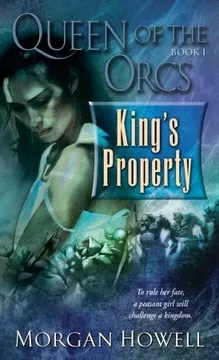


Plot Summary
The Crown Brand
Dar,1 a strong but unprotected highland woman, returns from gathering firewood to find royal soldiers waiting with her father, stepmother,20 and the village headman. The king's12 levy demands two recruits, but the soldiers have come for women to serve an orc regiment. Dar1 considers fleeing through the mountains, then recognizes that a woman without kin would have no rights or safe shelter.
She chooses the army over likely exploitation in the wild. At camp, soldiers pin her down and burn a crown into her forehead, marking her as the king's12 property and making escape punishable by death. Chained to another captive, Leela,14 Dar1 learns she is being sent to the orcs she has feared since childhood.
Dar's first decision is not a free choice between safety and danger. It is a calculation within a system that has already narrowed her options, a distinction the soldiers exploit when they treat compliance as consent. The brand makes that coercion visible and permanent. Yet Dar's refusal to flee matters: she assesses consequences rather than acting out a rebellion that would leave her more vulnerable. Her practical intelligence is not passivity. It is the first form of agency available to her, and the story will repeatedly test whether she can enlarge it.
Leela's Last Night
Leela,14 terrified that the orcs will eat her, climbs a tree during the night and hangs herself from the chain binding the two women. Tolum Krem cuts down her body, then orders Dar1 to carry Leela's14 severed head to the regiment as proof that he fulfilled his delivery order. At the camp, human soldiers abandon Dar1 to the orcs and point out the only woman still alive.
Garga-tok, an enormous orc wearing a cape fringed with human ears, calls Dar1 dirty and sends another orc to wash her in the river. Dar1 expects slaughter, but the orc is trying to make her clean before Neffa,15 the harried cook, assigns her to work. The terror of the transfer begins to give way to a new, bewildering routine.
Leela's death is not only a personal catastrophe; the army immediately converts it into paperwork, using her head to satisfy an order. Dar is forced into the role of witness and evidence, with no authority over what happens to the body. Her first encounter with the orcs is similarly misread through terror: a bathing order feels like a prelude to killing because she has no way to interpret their intentions. The scene establishes how ignorance compounds coercion. Dar's survival will depend partly on learning the meanings her captors and protectors attach to ordinary acts.
A Bowl of Porridge
Neffa15 sends Dar1 to cook and serve the orcs, where a missed ritual phrase earns her a clawed grip on the ankle. The orc Kovok-mah2 corrects her pronunciation instead of punishing her, beginning a cautious exchange. Human soldiers are less restrained: after Dar1 throws porridge at Varf for grabbing her, Murdant Kol4 stops him and tells Dar1 to claim she belongs to Kol4 if men threaten her.
She rejects the idea that she can be owned, but later invokes Kol's4 name when Varf tries to brand her with a hot stick. Meanwhile, a drunken soldier steals orc food, and Garga-tok plunges him headfirst into the porridge until he dies. Dar1 sees that the orcs are dangerous, but not in the way she expected.
Food exposes competing moral systems. The human camp treats women's labor and the orcs' provisions as resources to control, while the orcs regard food as a sacred gift and punish theft with lethal force. Dar survives by memorizing a ritual whose meaning she does not yet know, then uses Kol's possessive claim as a shield against another man's violence. Protection and ownership arrive in the same sentence. Her discomfort registers an important distinction: a refuge that depends on a powerful man's favor may protect her body while leaving her autonomy untouched.
The First March
Before the regiment leaves camp, Kol4 orders Dar1 to watch over Loral,6 a pregnant cook who carries his child, while refusing to explain what their relationship means. On the road, Murdant Teeg9 denies Dar1 a place in his wagon and leaves her to limp behind with an injured thigh.
Kovok-mah2 finds her alone, examines the swelling, and gives her a numbing herb that lets her reach camp. When Dar1 pleads for Loral6 to ride during a punishing rain, Tolum Karg17 calls her insolent and orders Teeg9 to flog her.
Kovok-mah2 later treats the wounds with healing herbs, baffled that humans hurt Dar1 for trying to help someone. Dar1 begins learning Orcish, hoping to understand the people around her and find a kind of safety the human chain of command cannot provide.
The march turns vulnerability into policy: an injury does not excuse Dar from labor, and compassion toward Loral is treated as insubordination. Kovok-mah's care offers a sharp contrast, but it does not make him an uncomplicated savior. He heals the wounds while still struggling to understand why humans would inflict them. Dar's language lessons begin as a survival tactic, a way to make an alien group legible. They also reveal that communication can alter the balance between people who have been assigned fixed roles: captive, soldier, monster, mother.
Loral's Daughter
When Loral's6 labor begins on the march, the soldiers refuse to stop, so Dar1 leads her into the heath with a kettle of supplies Taren7 prepared. Dar1 has never delivered a baby, but she stays through the long night and catches Loral's daughter,19 Frey.19 By dawn, Loral6 has bled to death.
Dar1 burns away the brand on her friend's6 forehead, carries Frey19 back toward the regiment, and kills a bounty hunter who discovers her mark and reaches for his sword. At camp, Kol4 takes the baby away. He later tells Dar1 that a family of weavers has adopted Frey,19 but his account is a lie: he throws the infant into the river. Dar1 mourns the child19 she believes safe, while Kol4 gives her Thunder to groom and ride.
Dar's care for Loral is intimate work without institutional support. She must improvise as midwife, witness, and protector because the army values the march more than a pregnant woman's life. Her choice to burn away Loral's brand gives the dead woman dignity the state denied her, while taking Frey with her turns care into a responsibility that follows Dar beyond the birth. Kol's deception is especially cruel because he understands how little Dar can verify. His false promise does not merely hide violence; it recruits her hope into maintaining his control.
The King's Own Subjects
As Dar1 settles into caring for Thunder, she grows closer to Kovok-mah2 and learns that orc women own their homes, food, and authority. That knowledge makes the next atrocity harder to absorb.
When a peasant boy resists the army with a pitchfork, Tolum Karg17 gives an order in Orcish that the orcs interpret as a command to kill. They slaughter the boy, his mother, and the other villagers, including children. Dar1 sees that Kovok-mah2 and his comrades obey human officers even when the victims are the king's12 own subjects.
Kol4 comforts Dar1 afterward and encourages her to keep her distance from the orcs, presenting himself as her protector. Dar1 can no longer accept that their apparent gentleness makes them harmless, or that human authority makes their violence just.
The massacre dismantles a comforting opposition between human cruelty and orcish innocence. The orcs are capable of tenderness toward Dar, yet they also kill civilians when an officer directs them to do so. Kovok-mah's literal obedience is not equivalent to human malice, but its consequences are just as real for the victims. Dar's moral awakening comes from refusing both easy explanations: the orcs are not monsters by nature, and the humans are not humane by default. Her trust becomes more discerning, grounded in what people do rather than what they are called.
Kol's Cottage Trap
Kol4 takes Dar1 to an abandoned cottage under the pretense of sharing food and offering her a fine dress. When he tears her shift and tries to force himself on her, she strikes him twice in the groin, throws Thunder's bridle onto the roof, and drives the horse away to create a distraction. Kol4 returns to camp and turns the other soldiers against Dar,1 falsely claiming she has been sleeping with Kovok-mah.2
The lie gives the men a pretext to assault her. When Muut drags Dar1 toward the barn, Kovok-mah2 intervenes, kills him, and declares Dar1 under his protection. The human women blame Dar1 for Muut's death, while Kol4 exploits the confusion to maintain control. Dar1 is ostracized by her own camp, and Kovok-mah2 gives her shelter among the orcs.
Dar's escape is a decisive act of self-defense, but it does not free her from the structures around her. Kol answers her refusal by manufacturing a story that turns her into a sexual threat and isolates her from other women. Kovok-mah saves her through the language of possession, using a claim he believes means protection, while humans hear ownership and adultery. That mismatch makes rescue emotionally costly: Dar gains physical safety but loses her place among the people she hoped might understand her. The scene shows reputation functioning as a weapon that can injure without touching.
A Little Bird
Kol4 retaliates by having the soldiers seize and brand Twea,3 a frightened child, intending to use her to punish Dar.1 Dar1 persuades Taren7 to let the girl serve the orcs, then introduces her to Kovok-mah2 as a young mother named Tahwee. The orc gives Twea3 a healing herb for her brand and takes responsibility for her safety.
When Kol4 demands the child3 back, Dar1 refuses; she then persuades Tolum Karg17 that she has no authority to countermand an orc's decision, forcing Kol4 to retreat. At the growing base camp, Dar1 and Twea3 gain permission from the Wise Sons to remain inside the sacred circle, Muth la's Embrace. Human soldiers gossip about Dar,1 but her reputation also deters them from touching her.
Dar's protection of Twea transforms a private survival strategy into a public challenge. Rather than ask the soldiers to be merciful, she uses the orcs' own sacred understanding of women to make the child difficult to seize. Her skill lies in translation, not simply between languages but between systems of authority. Calling Twea a mother gives her standing in a community where human children and women are otherwise treated as property. The tactic is fragile, dependent on the Wise Sons' judgment, yet it creates a real sanctuary where the army's usual commands do not automatically prevail.
Blood on Dar's Face
At the base camp, Dar1 meets Sevren,5 a red-haired King's Guard5 who treats her and Twea3 with unusual courtesy and arranges safer work in the royal kitchen. She remains wary of his interest, but he helps her learn knife defense and begins to earn her trust. Dar1 also has a vision of Twea's3 spirit walking toward death, a warning she cannot interpret.
Meanwhile, Zna-yat,8 Kovok-mah's cousin,8 blames Dar1 for Kovok-mah2 losing his leadership cape. He throws Dar1 into the Turgen River, but she survives by catching a submerged tree. The next day Zna-yat8 marks her face with his blood, establishing a period in which neither may kill the other. Dar1 keeps the mark and continues protecting Twea3 as danger gathers around the camp.
Dar's alliances remain contingent, not secure. Sevren offers gentleness and practical skill, but Dar's history makes trust a process rather than a reward for good manners. Zna-yat's attack exposes the cost of her place among the orcs: her presence threatens established ideas of who may speak for mothers. Her survival in the river becomes more than physical luck when the orcs interpret the tree as a sign of Muth la. The blood mark then converts hostility into a temporary obligation, a cultural pause that gives both Dar and Zna-yat time to reconsider.
The Mage's Warning
The King's12 arrival brings luxury to a camp built on rationing, but Dar1 and Twea3 experience the court's power at its most careless. At the banquet, drunk nobles pelt the serving women with scraps, and King Kregant12 strikes Twea3 in the head with a bone. Dar1 shields the child3 and takes her away. That night, the mage Othar13 sacrifices a peasant boy to consult enchanted bones, which warn him of an enemy threatening king and mage.
Dar1 dreams of Othar searching for her while a dark presence presses against a protective tree. She wakes convinced she must avoid the mage.13 Kol4 and the Queen's Man,11 General Tarkum,11 discuss removing Dar1 and the orcs who shelter her, while Tarkum's11 military plans make clear that the orcs are expendable.
The court's feast compresses the kingdom's political ethic into one image: the king's abundance depends on the humiliation of people who cannot refuse it. Dar's instinct to shield Twea is a direct refusal of that staged hierarchy, though it cannot prevent the injury. Othar's ritual makes power's hidden cost literal: he spends a child's life to obtain guidance, then treats the resulting warning as a tool. Dar's dream gives her an intuition before she has evidence, while the men's conspiracy supplies the political shape of the danger she senses.
The Town in Flames
The army advances into enemy territory and attacks a walled town at night, sending the orcs over its weakest defenses while Dar1 and Twea3 watch from an apple tree. The town falls, and at dawn the human soldiers enter to loot, drink, and celebrate.
The orcs instead gather their dead for a solemn funeral pyre, grieving without praise for conquest. Dar1 has another vision, this time of golden lights being swallowed by darkness, and wakes in tears. During the revelry she finds Twea3 in a soldier's tent, drunk and vulnerable.
Dar1 draws her dagger to stop the man's wandering hands, then takes Twea3 back to Kovok-mah.2 Sevren5 brings them bread and a clean shift, but Dar1 questions whether accepting goods taken from a conquered town makes her complicit.
The town's fall separates victory into two incompatible experiences. The soldiers treat captured goods as proof that violence has paid, while the orcs mourn comrades whose deaths they understand as a communal loss. Dar's visions refuse the triumphal story before she can explain why: the bright lights are vulnerable, and the coming darkness will erase them. Her rescue of Twea also shows that danger persists after battle, when celebration gives soldiers cover for predation. Dar's hesitation over Sevren's gifts reflects a conscience formed under scarcity, where accepting aid can feel dangerously close to endorsing its source.
Bait in the Valley
As King Feistav's defenders burn or empty every town, Kregant's12 army runs short of food and pursues reports of rich wagons. Sevren5 secretly brings Dar1 bread and warns that the route through the Vale of Pines is an obvious ambush, yet the generals intend to use the orcs as bait.
Dar1 tries to explain the danger to Kovok-mah,2 but Orcish has no ordinary words for lying, treachery, or a false promise, and Kovok-mah2 believes his queen's pact requires him to fight. Before the army enters the valley, Dar1 blesses the orcs she can reach, hoping Muth la will protect them. Kol4 searches for Dar1 and Twea,3 while Dar1 hides Twea3 beneath a wagon and runs toward the orc ranks.
The impending betrayal is difficult to communicate because it is not merely a lack of information. The orcs' culture gives little conceptual space to deliberate deception, so Dar cannot translate the human plan into terms Kovok-mah can trust. His obedience is a moral commitment to a promise made by his queen; the human commanders exploit that integrity as a weakness. Dar's blessings are an improvised response to helplessness, but they also mark a shift: she begins to act as someone whose judgment and spiritual authority might matter to the orcs.
The Valley of Dead
In the Vale of Pines, Feistav's hidden troops attack the orcs from the hills while Kregant's12 soldiers wait to exploit the fighting. The plan collapses when a second force strikes Kregant's12 own men, and the battle consumes both armies. From a tree, Dar1 watches the confused slaughter; when she reaches the baggage train, she finds Taren7 dead beside the wagon where she hid Twea.3
The child3 has also been killed. Kovok-mah2 and a handful of his shieldron return, including Zna-yat.8 Dar1 gathers the survivors and argues that the human kings have betrayed them and that Muth la does not demand their deaths. Kovok-mah2 accepts her judgment. Instead of rejoining Kregant's12 retreating army, the orcs choose Dar's1 plan to escape through the countryside.
The battle brings together the story's central failures of protection: Dar cannot save Twea, the orcs cannot defend their own ranks from a human strategy, and the soldiers abandon the people who sustain them. Taren's death beside the hidden wagon makes her earlier decision to trust Dar's plan tangible, while Twea's body realizes the vision Dar could not prevent. Dar's turn toward leadership does not erase grief or make her certain. It gives grief a direction. She asks the survivors to judge loyalty by its consequences, not by the authority that claims it.
The Trail Goes North
With Twea3 dead and most of the orc regiments destroyed, Dar1 rejects the idea that the survivors should return to the human army. She tells Kovok-mah2 and the others that they must stop acting as hunting dogs for kings and find a way home instead. Kovok-mah2 publicly acknowledges that Dar1 saw the danger he could not, and the surviving orcs accept her guidance.
Zna-yat8 remains wary, but agrees not to oppose Kovok-mah.2 Dar's1 final choice is not victory over the kings; it is the harder task of leading a small, hunted group through enemy country. Two days later, Sevren5 and Valamar18 search the battlefield and find Twea's3 body laid beneath a dead tree with flowers. Sevren5 concludes Dar1 survived and went north with the orcs.
The ending replaces military victory with a precarious act of refusal. Dar cannot undo the massacre or recover Twea, but she can prevent the survivors from being fed back into the same machinery. Her authority is earned through attention and judgment rather than rank: she recognized the trap, survived, and remained accountable to those who followed her. Sevren's discovery provides an outside witness to the care Dar and the orcs gave Twea, even as it confirms their separation. The novel closes not with safety, but with a chosen direction and a fragile community moving toward it.
Analysis
King's Property follows Dar1 from a remote highland village into a war whose institutions treat women as supplies and the orcs as weapons. The crown brand makes ownership literal, but the book's sharper concern is how domination recruits ordinary language: protection becomes possession, duty becomes an excuse for sacrifice, and rumors become a substitute for evidence. Dar1 survives not by discovering a clean refuge, but by reading the rules around her and learning when they can be bent.
The novel's central contrast is not between civilized humans and savage orcs. Human soldiers plunder their own king's12 subjects, officers use branded women as disposable labor, and the king12 turns a feast into public humiliation. The orcs can commit terrible violence, yet their customs also give mothers authority, treat food as sacred, and make room for grief. Kovok-mah's2 inability to grasp deliberate lying exposes a vulnerability that human leaders exploit. Dar's1 growing command of Orcish lets her communicate across that vulnerability, although language alone cannot undo military power.
Care becomes the story's most consequential form of resistance. Dar1 feeds and protects Loral,6 Frey,19 and Twea,3 then extends that protective instinct to the orcs who have begun to trust her judgment. Her visions offer warnings without mastery, so prophecy never relieves her of responsibility. When the final betrayal destroys the people she loves, Dar1 cannot reverse the losses; she can still refuse the king's12 claim over the survivors. Her emerging authority is earned through attention, honesty, and an ability to recognize danger others cannot name. The ending offers no easy victory. It offers a group of survivors choosing a path beyond the army that spent their lives.
Review Summary
King's Property receives mixed reviews, averaging 3.71/5. Readers appreciate the unique portrayal of orc culture, the strong protagonist Dar, and the unflinching depiction of women's wartime experiences. The book is praised for its world-building and page-turning quality. Common criticisms include one-dimensional human characters, a "noble savage" portrayal of orcs, inconsistent point-of-view shifts, and an unrelentingly bleak tone. Most agree it functions more as a series setup than a standalone novel, with many readers eager to continue the trilogy.
Characters
Dar
Reluctant orc allyDar is a hard-working highland woman whose independence has grown out of deprivation, grief, and a sharp reading of danger. She distrusts promises of male protection because the men in her life have treated dependence as permission to control her. Her instinct is to act, whether that means enduring a forced march, learning Orcish, defending a child, or judging when a powerful person is lying. Dar's courage is not fearlessness; she repeatedly feels fear and still makes a decision. Her developing bond with the orcs challenges the assumptions that shaped her world, but it does not make her naïve about their violence. She is drawn toward forms of belonging in which care can carry authority.
Kovok-mah
Orc wise sonKovok-mah is a formidable orc warrior whose authority comes from the respect of his peers, not a command rank. Raised in a society where women guide their families and Muth la speaks through mothers, he approaches human customs with sincere curiosity and often cannot understand their deceptions. His conversations with Dar1 expose both the ethical depth and the limits of his assumptions: he can offer care, yet he also obeys a human military structure whose violence he struggles to question. He is drawn to Dar1 because she is fierce, candid, and willing to learn. His loyalty develops through listening, an act that gradually becomes as consequential as his strength.
Twea
Dar's young chargeTwea is a small, observant girl who has been passed between adults and taught to think of herself as unwanted. Fear initially leaves her quiet and compliant, but she responds quickly to Dar's1 steady protection and Kovok-mah's2 gentleness. Her curiosity, humor, and readiness to trust provide a vivid contrast to the adult world around her, where kindness often arrives with conditions. Twea is not simply a symbol of innocence; she has her own judgments, asks direct questions, and forms genuine attachments. Through her, Dar1 practices a kind of care she was rarely given herself, while the orcs encounter a human child as someone to protect rather than command.
Murdant Kol
Protector turned predatorKol is the high murdant, an experienced officer who understands how authority works through fear, favors, and appearances. He presents his claim over Dar1 as protection, then treats her refusal as an insult to be punished. Kol is more calculating than the crude soldiers around him: he uses rumor, selective kindness, and the threat of other men's violence to keep control without always acting openly. His interest in Dar1 is shaped by the pleasure of pursuit and mastery, not mutual affection. He recognizes her intelligence and spirit, but interprets those qualities as challenges to be overcome. His polished restraint makes him dangerous in a different way from men who threaten openly.
Sevren
Southern King's GuardSevren is a red-haired guardsman from Averen who has spent years serving rulers whose wars contradict his youthful wish to protect the weak. He remains competent and loyal to his comrades, yet his growing disillusionment makes him attentive to the human costs of the king's12 campaigns. Dar's1 independence attracts him, but he does not immediately understand the danger she lives with or the difference between offering help and earning trust. He offers practical support, including knife instruction and safer work for Twea3, while trying not to demand affection in return. His struggle is between the obligations of his uniform and a conscience that increasingly questions what the uniform serves.
Loral
Pregnant camp cookLoral is a branded woman in the regiment, pregnant and exhausted from the work imposed on her. Her kindness toward Dar1 is one of the first moments of uncomplicated care Dar1 encounters in camp. Loral understands that women often depend on men's favor for basic goods, yet her own compromises do not erase her sympathy or her capacity to nurture. She offers Dar1 food and a place under her cloak, while Dar1 later becomes her companion through labor. Loral's friendship helps reveal the human cost hidden beneath the army's routine.
Taren
Battle-worn cookTaren is an experienced camp worker whose hard pragmatism comes from surviving earlier campaigns. She knows that battles leave women exposed, and she is quick to distrust hopeful talk about soldiers' generosity. Her sharp manner can seem cruel, but it is also a form of instruction: she prepares for emergencies and warns Dar1 about the likely consequences of defying men with rank. As Dar1 proves that her choices are not simply reckless, Taren's guarded judgment makes room for respect and trust.
Zna-yat
Kovok-mah's wary cousinZna-yat is Kovok-mah's cousin8 and fellow orc warrior, committed to the expectations that hold his community together. He fears that Kovok-mah's2 attention to Dar1 will weaken the respect on which leadership depends. His suspicion is not simple hatred: he believes he is protecting his kin and the orcs' way of life. Zna-yat's clashes with Dar1 reveal how even a society that honors women can distrust a human woman who crosses its boundaries. He is capable of reconsideration, but only when his own customs give him a path toward it.
Murdant Teeg
Brutal camp enforcerTeeg is a coarse, opportunistic murdant who enforces camp discipline through threats and physical punishment. He treats the women as labor and entertainment, and his loyalty is primarily to his own comfort and standing. Unlike Kol4, he makes little effort to disguise his appetite for power. Teeg's bluntness gives Dar1 an unvarnished view of the army's logic: hunger, plunder, and force are treated as ordinary necessities.
Neena
Competing camp womanNeena is a young branded woman who has learned to bargain for comfort through relationships with soldiers. She believes that adapting to the camp's rules is more useful than challenging them, and she judges Dar's1 refusal as both foolish and threatening. Neena's antagonism grows from insecurity as well as self-interest: Dar's1 different choices unsettle the compromises Neena relies on. Her rivalry shows how an oppressive system can turn women into witnesses and enforcers of one another's vulnerability.
General Tarkum
Queen's ManTarkum commands the human officers attached to the orc regiments and speaks to the orcs as the representative of their queen. He is an experienced strategist who understands the gulf between the orcs' beliefs and the army's political aims. His authority depends on their trust, a fact that gives his military decisions a particular moral weight. Tarkum can treat their customs with courtesy while still participating in a system that uses them as weapons.
King Kregant II
Expanding kingKregant II is a self-indulgent ruler pursuing territory and wealth in the name of inherited claims. He expects obedience from soldiers and deference from everyone below the court, while his appetite for display sits uneasily beside the hunger of his army. His treatment of the serving women reveals how casually he regards people outside his rank. Kregant's rule turns conquest into a personal entitlement, with human and orc lives spent to enlarge his power.
Othar
The king's dark mageOthar is the king's12 mage, an austere and unnerving figure who seeks guidance from enchanted bones through blood sacrifice. His authority rests on secret knowledge and on the fear his presence inspires. Othar is ambitious enough to promote predictions that serve his own interests, even when their human cost is clear. His magic does not remove uncertainty; it gives him a means to influence rulers who desperately want certainty.
Leela
Dar's fellow captiveLeela is a younger woman taken from her home and branded for service in the orc regiment. Unlike Dar1, she appears to have been sent away with signs of affection and care, making her terror of separation especially painful. Rumors about the orcs overwhelm her ability to imagine survival. Her brief companionship with Dar1 establishes the stakes of captivity before Dar1 reaches the regiment.
Neffa
Overworked head cookNeffa manages the regiment's cooking women under constant pressure from soldiers and officers. Her impatience reflects the exhausting labor and narrow authority she has been given. She enforces the camp's routines because she has little power to change them, making her both a source of pressure on Dar1 and a portrait of what long captivity can do.
Memni
Dar's fellow serverMemni is a branded young woman who befriends Dar1 briefly after their shared work serving the orcs. She has learned to endure camp life by maintaining a relationship with a soldier, despite the bruises and exhaustion that accompany it. Her perspective introduces a survival strategy Dar1 cannot accept for herself, without making Memni's choices seem simple or free.
Tolum Karg
Dar's regiment commanderKarg is the officer who commands Dar's1 shieldron. He prizes obedience and military convenience, and he responds to Dar's1 appeal for Loral6 with punishment rather than concern. His authority shows how routine cruelty can be administered by men who need not personally desire each act of violence.
Valamar
Sevren's wary comradeValamar is a fellow King's Guard5 and Sevren's friend18. He is a seasoned soldier who thinks in terms of risk, duty, and the likely cost of defying the king12. His caution contrasts with Sevren's5 growing willingness to act on personal conviction, but he continues to stand beside his friend5 when danger is real.
Frey
Loral's newborn daughterFrey is the daughter19 Loral6 delivers during the march. Her arrival gives Dar1 a chance to protect a child in a world that has treated women and children as property. The baby's dependence sharpens Dar's1 sense of responsibility and connects her care for Loral6 to her later commitment to Twea3.
Thess
Dar's hostile stepmotherThess is Dar's stepmother20, whose resentment and sharp remarks make home another place where Dar1 is unwelcome. Her strained relationship with Dar1 reflects the limited security available to women within a household organized around men's decisions.
Plot Devices
The Crown Brand
Marks ownership and dangerThe army burns a crown-shaped mark into the foreheads of women assigned to the orc regiments. The brand identifies them as royal property, makes escape dangerous, and gives bounty hunters a reason to seize them. It also turns a political claim into a permanent bodily fact: the women carry the king's12 authority even when they are far from his court. Dar's1 repeated efforts to defend herself and the people around her take place under a mark she cannot simply remove. When she burns away Loral's6 brand, the act becomes a small refusal of the state's claim over a dead woman's body.
Muth la's Embrace
Sanctuary through customThe orcs mark sacred ground with a circle of upright branches called Muth la's Embrace. They eat, sleep, pray, and bury their dead inside it, and they regard the space as protected by their creator. Dar1 learns that orc society treats women as mothers, whether or not they have borne children, and that mothers possess a spiritual and social authority humans deny them. She uses these customs to secure shelter for herself and Twea3. The circle is not an invincible wall, but it changes which rules apply inside it, creating a fragile refuge within a military camp.
Orcish Speech
Turns difference into leverageDar1 learns Orcish through daily exchanges with Kovok-mah2, first to understand orders and rituals, then to express ideas the human camp has no reason to hear. The language reflects a culture that values directness and has no ordinary words for lying, treachery, or deliberate deception. That gap becomes crucial when Dar1 tries to warn the orcs that human commanders plan to use them as bait. Her fluency also allows her to present herself and Twea3 as mothers, invoke orc customs, and argue that the human kings do not speak for Muth la. Language becomes both a survival tool and a way of imagining a different authority.
Visions and Bones
Foreshadowing without certaintyDar1 receives visions that arrive through sleep or sacred moments, including an image of Twea's3 spirit and a later vision of golden lights extinguished by darkness. The visions give her warnings but do not show her how to prevent what she sees, so they intensify responsibility rather than grant control. In parallel, Othar13 consults enchanted bones through blood sacrifice, seeking guidance for the king's12 campaign. His predictions help shape military decisions, but they are ambiguous and serve the mage's interests as well as the king's12. The two forms of foreknowledge contrast: Dar1 treats what she sees as a reason to protect others, while Othar13 turns prophecy into political leverage.
The Queen's Promise
A treaty weaponizedThe orc regiments fight for the human king12 because their queen has promised military service in return for powerful healing magic and other gifts. The orcs understand this arrangement as a binding obligation, while the human officers treat it as a means to deploy formidable fighters without regard for their losses. The Queen's Man11 claims authority in the queen's name, giving his orders a legitimacy the orcs do not suspect is being abused. This agreement explains why Kovok-mah2 and the others keep fighting even when the human army's motives become suspect. It also makes the eventual betrayal more than a battlefield maneuver: it exploits a bond of trust between rulers.
Download PDF
Download EPUB
.epub digital book format is ideal for reading ebooks on phones, tablets, and e-readers.








