

Key Takeaways
Treat a rupture as repairable, and let its seams tell the truth.
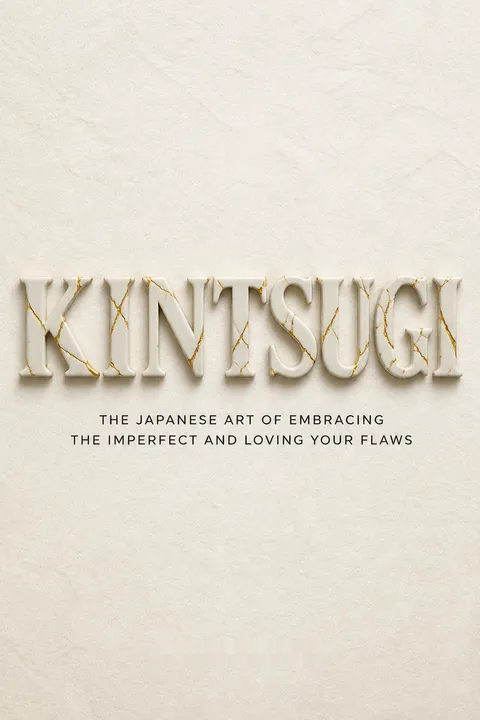
A bowl becomes a guide. The book opens with Sokei, a young ceramicist whose carefully made bowl breaks just after firing. His teacher shows him kintsugi, the Japanese craft of repairing broken pottery with visible seams, traditionally made with gold. The repaired bowl is not disguised as undamaged. Its history becomes part of its beauty. Navarro uses this as a model for emotional recovery: pain can leave marks, but those marks need not define a life as ruined.
The metaphor has limits. Sokei's workshop story is presented as an imagined reconstruction, not a verified historical account. Its practical message is to face what broke, repair it deliberately, and carry the experience without pretending it never happened.
The visible seam offers a useful alternative to the fantasy of returning unchanged after loss. In trauma studies, recovery is often better understood as integration than erasure: the event remains part of a person's account, but it need not control every future choice. The metaphor also risks making suffering sound automatically ennobling. Some wounds deepen without support, and some damage is simply unjust. The gold is not the harm itself. It is the care, meaning, and connection brought to the work of living afterward.
Measure suffering by its impact, not by how loudly it appears.
Pain has no public ruler. Navarro argues that emotional pain is subjective: the same loss can affect two people differently, and one person's pain can change in intensity over time. Mood, fatigue, context, attachment, and perceived ability to cope all shape the experience. In one classroom example, a student loudly announces a miserable bout of flu while another quietly hides what appears to be a severe toothache. Observers cannot reliably rank their suffering by who complains more.
Use four dimensions. To understand an adversity, consider its intensity, duration, expected course, and effects on daily life. A brief, intense crisis differs from a more moderate pain that steadily drains a person's capacity to work, sleep, or connect. These dimensions describe an experience, not a contest.
This distinction matters in families, workplaces, and health care, where visible distress can be mistaken for greater distress. It echoes a central problem in pain science: self-report is imperfect, but outside observers have no dependable shortcut to another person's experience. Taking suffering seriously does not require agreeing with every interpretation or response. It requires resisting the urge to dismiss someone because their display is quiet, dramatic, or unlike what another person would do.
Separate what you caused from what chance delivered.
Accountability is not self-punishment. When adversity strikes, Navarro recommends asking whether it arose from chance, from another person's actions, or from choices within one's influence. He contrasts a devastating aviation disaster, which families could not have prevented, with a driver who blames bad luck after crashing while checking a phone. The first event offers no fair basis for self-blame. The second contains a lesson about risk and responsibility.
Check your explanation. Psychologist Bernard Weiner's work on causal attribution informs this discussion. People explain events through ideas about where the cause lies, how much control they had, and whether the situation is likely to persist. These explanations can guide useful learning, or create unnecessary guilt and helplessness. The aim is proportion: own what can be changed, and do not claim responsibility for what cannot.
This balance avoids two familiar traps: blaming oneself for every misfortune and denying any role in preventable harm. Attribution research helps explain why explanations matter, because they influence motivation and expectations of control. Yet an event can have several causes, and hindsight makes preventability look clearer than it was at the time. A sound review therefore asks what information and options were genuinely available then, not what appears obvious after the outcome is known.
Write a factual account before trusting your memory's verdict.
Separate events from interpretation. Navarro observes that memory is reconstructed in the present, colored by current fears, desires, and moods. People may soften painful facts, add imagined details, or leave out their own part in what happened. He recommends writing an account like an impartial observer: what happened, what caused it, how you reacted, what followed, and what you learned. Revising the account can expose the difference between an event and the story attached to it.
Look for the root. A detailed review is meant to identify causes rather than merely treat symptoms. Someone may blame a parent for every difficulty when the more immediate problem is an inability to make decisions. If distress makes an account impossible to examine safely or clearly, Navarro advises seeking help from someone able to offer perspective.
Writing can slow rumination by turning a tangled experience into something that can be inspected, revised, and discussed. The distinction between observation and interpretation is also central to cognitive therapies, which ask people to test conclusions against evidence. But factual notes are not neutral by magic: the writer still chooses what to include, and painful memories can be destabilizing. The exercise works best as a tool for curiosity, not as a demand to relive trauma alone or produce a perfectly objective record.
Train emotional strength as skills, not as a fixed trait.
Strength is a toolkit. Navarro defines emotional strength as learnable skills and resources for handling emotions, making decisions, maintaining relationships, and responding to adversity. He lists abilities such as naming feelings, regulating their expression, balancing self-esteem, persevering, resolving conflict, and asking for help. People may be capable in one area and less practiced in another, just as physical abilities differ across tasks.
Notice your coping pattern. The book describes five common responses to adversity: active engagement, denial, fatalistic resignation, hopelessness, and anxious preoccupation. The most useful pattern treats adversity as a challenge and looks for meaningful action. This does not mean that every problem can be controlled. It means identifying whatever influence remains, rather than concluding that no response matters.
Treating coping as a set of skills makes improvement more concrete than labeling someone resilient or weak. It also fits the broader idea of self-efficacy: confidence grows through learning and successfully applying useful strategies, not merely repeating positive slogans. Still, a skills model should not imply that a person can overcome any hardship through effort alone. Money, safety, illness, discrimination, and access to care shape the choices available. Personal skills matter, but so do supportive conditions.
Turn recovery into a plan, balancing today's steps with tomorrow's direction.
Move from insight to action. Navarro's method moves from gaining perspective, to reassessing what happened, to acting on a workable plan. He urges people not to wait for a crisis to become unbearable before making changes, and not to mistake waiting for a solution. Small, immediate steps can create movement while longer-term aims provide direction.
Carla rebuilds around what matters. After sixteen years at a company, Carla loses her job and initially sees the dismissal as proof that her life has collapsed. A closer review distinguishes a layoff driven by company finances from a judgment of her worth. She examines the career she had built around status and recognition, then turns her enjoyment of cooking into a catering business. The Japanese term ikigai refers here to a personally meaningful reason for living or acting.
The combination of near-term action and longer-term purpose resembles effective problem-solving: reduce immediate overwhelm, then make choices in service of a valued direction. Carla's story also shows why a job title should not serve as a complete identity. However, career reinvention is not equally feasible for everyone, especially without savings, family support, or a favorable labor market. The practical lesson is not that every dismissal is a hidden gift, but that its meaning and next steps deserve careful examination.
Treat depression as illness, not as a failure of effort.
Distinguish illness from sadness. Navarro describes depression as a serious condition that can affect energy, sleep, appetite, concentration, decision-making, self-worth, and hope. In his story, Chloe's exhaustion and despair are not signs of laziness or ingratitude, even though people around her misread them that way. The book stresses that depression can go unnoticed and that a person may not recognize what is happening for a long time.
Bring in qualified care. The practical advice is to seek assessment from a qualified mental health professional rather than trying to solve depression through willpower alone. Scheduled activities, self-care, and supportive conversations may help, but the book explicitly says they do not replace professional diagnosis and treatment. Thoughts of death or suicide call for particular seriousness, not scolding or a demand to try harder.
This section's strongest contribution is its rejection of moral blame. Depression can reduce motivation and executive functioning, so treating inactivity as a character flaw may deepen isolation rather than help. Behavioral activation, the deliberate scheduling of manageable and meaningful activities, is a recognized therapeutic approach, but it is not a substitute for appropriate care. A self-help book should be a bridge to support, not a reason to delay it, especially when safety or daily functioning is at risk.
Grieve without making the dead the only life that remains.
Loss changes the landscape. Navarro describes bereavement as a period of shifting emotions, confusion, and difficulty thinking clearly. He argues that honoring someone who died does not require abandoning the living or giving up on one's own life. Support from trusted people, time for solitude, basic self-care, and activities that restore energy can all help a grieving person carry the loss.
Choose how to remember. He suggests collecting photographs and stories of good moments, then keeping one especially vivid memory as a touchstone. He also describes channeling grief into service or work connected to the cause of a loved one's death. These are possibilities, not obligations. Grief does not follow a schedule, and a person need not move house, complete a loved one's dream, or turn loss into a public mission to prove love.
The section resists the idea that continued sadness is the only legitimate evidence of attachment. Memory can hold both pain and affection, and a chosen positive recollection can provide a counterweight to distressing final images. This fits contemporary views of bereavement as an ongoing relationship with the deceased, rather than a task of simply forgetting. The important qualification is that no single ritual works for everyone. Personal meaning, cultural practice, and the mourner's own pace should guide the process.
Adapt cherished activities to new limits instead of abandoning them.
A changed body is not a changed identity. Elsa, once energetic and athletic, develops persistent pain and fatigue that disrupt her work and family life. She initially judges herself against what she could do before. Navarro's advice is to distinguish her identity from her circumstances, update expectations, and conserve energy for what matters.
Keep the value, change the form. Elsa loves cycling but can no longer manage her old rides. Rather than giving up, she tries an electric bicycle with assisted pedaling and can enjoy longer outings again. She also reshapes her interest in gastronomy into writing at a pace her health allows. The point is not to deny physical limits or assume illness is psychological. Medical guidance, practical adjustments, and support from family remain important.
This is a powerful example of preserving a valued activity by changing its demands. In rehabilitation, adaptation is not a lesser version of participation; it can be the condition that makes participation possible. The example also challenges all-or-nothing thinking, where an activity counts only if performed at its old intensity. That said, adaptive equipment, flexible work, and accommodating households are not universally accessible. A person should not be blamed for constraints that require resources or medical support they do not have.
Learn from heartbreak without converting one relationship into a rule about love.
Review the pattern, not just the ending. Navarro describes people who respond to failed relationships by shutting everyone out, becoming submissive, or assuming that all partners will hurt them. Such conclusions can turn one painful experience into a forecast for every future relationship. He recommends reviewing what each person contributed, what worked, and what did not, without rewriting the whole relationship as either perfect or worthless.
Test the lesson. Cognitive distortions include all-or-nothing judgments, broad generalizations, and attention fixed only on negative evidence. A person who decides that nobody can be trusted may be protecting against immediate vulnerability while also blocking the possibility of a healthy connection. The goal is not to rush back into dating. It is to learn specific, realistic lessons and choose future relationships with clearer boundaries and expectations.
The advice to extract a specific lesson rather than a sweeping rule parallels cognitive restructuring: replace an absolute conclusion with a claim that can be tested against experience. It is especially useful after betrayal, when protective strategies can outlast the danger that prompted them. Caution is not itself a distortion, however. For people leaving coercive or abusive relationships, distance and firm boundaries may be essential. Openness should never be treated as a duty or as evidence of recovery.
Put experience to work; don't let suffering become wasted material.
Mottainai turns loss into attention. Navarro uses the Japanese word mottainai for the regret of wasting something valuable, and extends it to time, experience, learning, and opportunity. He is clear that this extension is his own interpretation of the term. Applied to recovery, the idea is to use what an experience taught without pretending the experience was deserved or beneficial.
Give knowledge a next use. The book's recurring instruction is to apply what has been learned: rebuild a relationship with oneself, pursue a meaningful project, or offer informed support to someone facing a similar challenge. A scar can be a reminder of survival and a source of understanding, but it does not have to become a person's whole identity. The point is not to justify pain. It is to avoid letting pain make every future decision on its behalf.
The idea gives experience a forward direction without requiring a tidy redemption story. Learning can reduce the odds of repeating a preventable pattern and can make someone more attentive to another person's distress. But meaning is not a debt owed to suffering. Some people are not ready to teach, serve, or create from a painful event, and some experiences remain senseless. A humane version of mottainai leaves room for that: value what can be carried forward, without demanding that every wound produce a gift.
Analysis
Kintsugi offers a practical argument wrapped in a craft metaphor: people cannot prevent every break, but they can learn to assess damage, seek support, and rebuild without disguising what happened. Its most useful distinction is between the event and the interpretation attached to it. A job loss may expose a fragile identity built around status; an illness may require adapting cherished activities; grief may demand a new daily structure. In each case, the book asks the reader to move from reflexive verdicts toward specific observation and action.
The structure supports that purpose. Sokei's broken bowl provides an emotional frame, while the central method asks for perspective, clearer thinking, and concrete steps. Case histories then translate broad claims into contexts such as bereavement, relationship breakdown, depression, and chronic pain. This makes the book more usable than a collection of affirmations, particularly where it distinguishes accountability from blame and discomfort from catastrophe.
Its weakest tendency is overconfidence. The assurance that people can rebuild, and the suggestion that hardship can make them stronger, may comfort some readers but risks obscuring material limits, disability, ongoing abuse, and unequal access to care. Some advice also pushes toward leaving the past behind, though careful memory processing can be necessary, and no universal timetable governs grief. The book's own recommendation to seek professional help is therefore crucial, not a footnote to the self-help method.
The strongest reading treats kintsugi as an invitation rather than a guarantee. Recovery is not proof that damage was secretly good, and visible scars do not have to become inspirational. The craft metaphor works because it honors repair as deliberate labor: gather what remains, understand what can be changed, accept what cannot, and make a next life that fits present reality. Its lasting value lies less in promising invulnerability than in making recovery imaginable and giving it practical steps.
Review Summary
Kintsugi: The Japanese Art of Embracing the Imperfect and Loving Your Flaws receives mixed reviews. Some praise its inspirational and practical approach to healing, while others criticize its lack of depth on Japanese philosophy and patronizing tone. Readers appreciate the author's compassionate advice and relatable examples but note the content is basic for those familiar with self-help literature. The book's structure and writing style are divisive, with some finding it engaging and others finding it repetitive. Overall, it's seen as a decent introduction to emotional healing, though not groundbreaking.
People Also Read



Glossary
Kintsugi
Visible repair with goldA Japanese pottery-repair craft in which broken pieces are joined and the seams are left visible, traditionally highlighted with gold. Navarro uses the repaired object as a metaphor for rebuilding a life after adversity. The repair does not erase damage; it makes the history of breakage and care part of the object's appearance.
Emotional strength
Learned coping skillsNavarro's term for the collection of skills, resources, and competencies that help a person manage emotions, relationships, decisions, and adversity. Examples include identifying feelings, balancing self-esteem, persevering, resolving conflict, and asking for help. The concept treats these abilities as developable rather than fixed personality traits.
Ikigai
A reason to liveA Japanese term that Navarro explains as a person's reason for living or being. In this book, it refers to personally meaningful motivations that can help someone begin rebuilding. These motivations may be large or ordinary, and a person may have several rather than relying on one role, relationship, or ambition.
Learned helplessness
Belief that action cannot helpA psychological concept associated in the book with Martin Seligman and colleagues. It describes a pattern in which someone concludes that their actions cannot change an adverse situation and therefore stops trying. Navarro applies the idea to coping, emphasizing that even when pain itself cannot be controlled, its effects on daily life may still be influenced.
Attributional style
How causes are assignedA person's habitual way of explaining why events happen. Drawing on Bernard Weiner's work, Navarro examines whether a cause is viewed as internal or external, controllable or beyond control, and temporary or lasting. These judgments affect guilt, motivation, and expectations, so they need to distinguish realistic responsibility from blame for events outside one's influence.
Constructive resonance
A balanced meaning frameworkNavarro's term for interpreting events with curiosity and a constructive, reality-based outlook. It rejects both self-condemning explanations and naive optimism. The aim is to examine what happened without rushing to a comforting or catastrophic conclusion, then identify what can be learned and what actions are possible.
Mottainai
Avoid wasting what mattersA Japanese word Navarro associates with regret over wasting something valuable. He extends its meaning to experiences, lessons, time, and opportunities, while acknowledging that this broader philosophical use is his own interpretation. In the book, it encourages readers to make practical use of what they have learned without claiming that suffering was necessary or deserved.
Drive to repair
Capacity to recoverNavarro's analogy for the body's healing response, extended to the mind's potential to recover from emotional wounds. The concept suggests that people have resources for adaptation that may become available under pressure. It is a motivating metaphor, not a guarantee that every wound resolves without time, social support, or professional care.
Appraisal theory
Assessing threat and resourcesThe book's account of psychologist Richard Lazarus's work on how people evaluate events. A person first judges whether something is irrelevant or threatening, then considers whether they have resources to cope. These judgments help shape emotional responses such as fear and anxiety, and can be reviewed when they are distorted by past abuse or low confidence.
FAQ
What's Kintsugi: Embrace Your Imperfections and Find Happiness - The Japanese Way about?
- Focus on Kintsugi: The book delves into the Japanese art of kintsugi, which involves repairing broken pottery with gold, symbolizing the beauty in flaws and the strength found in overcoming adversity.
- Emotional Healing: It offers a method for healing emotional wounds and rebuilding one’s life after experiencing pain or trauma, emphasizing that life can be repaired just like ceramics.
- Personal Growth: Author Tomás Navarro shares insights from his psychology background, providing practical advice and real-life stories to inspire readers to embrace their imperfections.
Why should I read Kintsugi: Embrace Your Imperfections and Find Happiness - The Japanese Way?
- Practical Guidance: The book provides actionable steps and a clear method for dealing with adversity, making it a valuable resource for anyone facing challenges.
- Emotional Resilience: It teaches readers how to cultivate emotional strength and resilience, helping them thrive despite difficulties.
- Cultural Insights: Readers gain an understanding of Japanese philosophy and the concept of kintsugi, which can shift their perspective on failure and imperfection.
What are the key takeaways of Kintsugi: Embrace Your Imperfections and Find Happiness - The Japanese Way?
- Embrace Imperfections: Imperfections and scars are part of life and can be sources of strength and beauty.
- Active Repair Process: The book outlines a method for repairing one’s life, including analyzing situations, learning from experiences, and connecting with emotional strength.
- Transform Adversity: Readers are encouraged to view adversity as a challenge rather than a setback, fostering a mindset that promotes growth and resilience.
What is kintsugi, and how does it relate to emotional healing in Kintsugi: Embrace Your Imperfections and Find Happiness - The Japanese Way?
- Art of Repair: Kintsugi is the Japanese art of repairing broken pottery with lacquer mixed with gold, highlighting the beauty of the cracks rather than hiding them.
- Symbol of Resilience: This art form serves as a metaphor for emotional healing, suggesting that our scars and past traumas can be transformed into something beautiful and meaningful.
- Rebuilding Life: The book uses kintsugi as a framework for readers to understand how they can repair their own lives after experiencing emotional pain.
How can I connect with my emotional strength as suggested in Kintsugi: Embrace Your Imperfections and Find Happiness - The Japanese Way?
- Identify Emotional States: Recognize and name your emotions, which is the first step in managing them effectively.
- Practice Self-Compassion: Treat yourself with kindness and understanding, especially during difficult times.
- Develop Emotional Skills: Navarro outlines various emotional strengths that can be learned and practiced, such as perseverance, self-esteem, and effective communication.
What are the fifteen actions to heal emotional wounds mentioned in Kintsugi: Embrace Your Imperfections and Find Happiness - The Japanese Way?
- Confront Adversity: Face challenges head-on rather than avoiding them, as avoidance prolongs suffering.
- Engage with Support: Connect with supportive friends and family to share your burdens and gain perspective.
- Accept Change: Embrace the changes that adversity brings and adapt your life accordingly to move forward.
How does Kintsugi: Embrace Your Imperfections and Find Happiness - The Japanese Way suggest I analyze my past experiences?
- Objective Reflection: Write down what happened without filters or biases to gain clarity on the events.
- Identify Causes and Reactions: Explore the reasons behind your reactions to adversity and the consequences of those reactions.
- Learn from the Past: Extract meaningful lessons from past experiences to prevent similar pain in the future.
What does Tomás Navarro mean by "make your scars beautiful" in Kintsugi: Embrace Your Imperfections and Find Happiness - The Japanese Way?
- Embrace Your Scars: View your emotional scars as symbols of survival and strength rather than sources of shame.
- Transform Pain into Art: Just as kintsugi highlights the beauty of repaired pottery, individuals can learn to appreciate their scars as part of their unique story.
- Inspire Others: By sharing your experiences and how you’ve healed, you can help others who are struggling with similar issues.
What are some practical steps to take after experiencing adversity, according to Kintsugi: Embrace Your Imperfections and Find Happiness - The Japanese Way?
- Acknowledge and Accept: Start by acknowledging and accepting what has happened, then actively work on repairing your emotional wounds.
- Set Realistic Goals: Focus on small, achievable steps that lead to rebuilding your life and moving forward.
- Seek Support: Reach out to friends, family, or professionals who can provide guidance and encouragement during the healing process.
What is the significance of the phrase "the most important thing in this life is to live" in Kintsugi: Embrace Your Imperfections and Find Happiness - The Japanese Way?
- Live Fully: Embrace all experiences, including pain and adversity, rather than merely surviving.
- Emotional Engagement: Engage deeply with your emotions and experiences, fostering personal growth and resilience.
- Courage to Face Life: True fulfillment comes from actively participating in life rather than avoiding risks.
What are the best quotes from Kintsugi: Embrace Your Imperfections and Find Happiness - The Japanese Way and what do they mean?
- "A scar reminds us that we have been strong.": This signifies that our scars, both physical and emotional, are reminders of our resilience and ability to overcome challenges.
- "Transform your pain into art.": Encourages channeling suffering into creative expression, suggesting that art can be a powerful tool for healing and self-exploration.
- "You are a compendium of virtues.": Reminds readers that everyone possesses unique strengths and qualities, urging them to recognize and embrace their inherent worth.
How can I apply the Kintsugi method in my life as suggested in Kintsugi: Embrace Your Imperfections and Find Happiness - The Japanese Way?
- Engage in Creativity: Participate in creative activities such as painting, writing, or crafting to express and process your emotions.
- Reflect on Experiences: Analyze past experiences and identify lessons learned to gain perspective and foster personal growth.
- Embrace Your Scars: Acknowledge your emotional and physical scars as part of your journey, using them as reminders of your strength and resilience.
Download PDF
Download EPUB
.epub digital book format is ideal for reading ebooks on phones, tablets, and e-readers.








