

Plot Summary
Prologue
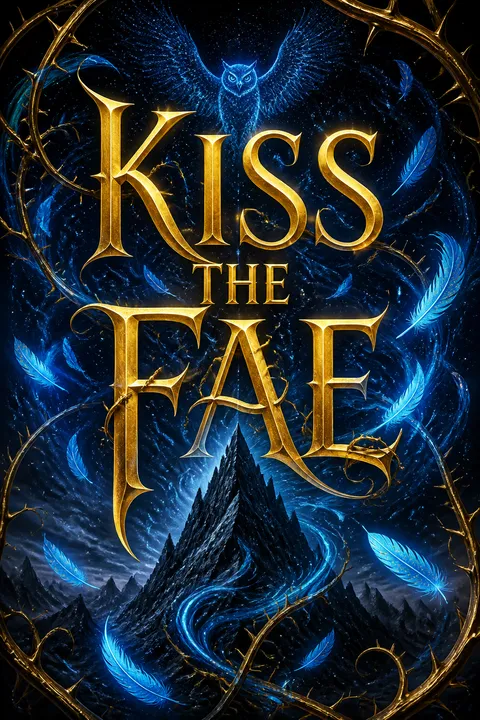
The prologue warns that Faeries haunt the borders of human life, using disguises, music, and elemental magic to lure people into danger. It names the three Solitary rulers: Cerulean of the sky, Puck of the woodland, and Elixir of the river.
Years earlier, Reverie Hollow’s villagers tried to weaken the Faeries by capturing their sacred animals; only three Faeries escaped, and they became rulers of the wild. Since then, the prologue says, the Solitaries have grown more dangerous. Its practical warning is stark: stay out of their lands, keep lights burning, and never answer the wind, trees, or water.
The prologue presents local folklore as both protection and inheritance. Its rules promise safety, but they also preserve a one-sided account of the conflict: humans remember Faerie cruelty while the villagers’ own violence remains largely unexamined. The three rulers are introduced as frightening figures before the story can complicate that image through Lark’s experience. This framing makes the book’s central uncertainty immediate. The danger is not simply whether the stories are true, but what each community has left out of them, and what a person must risk to learn the difference.
The Feather in the Satchel
Lark, a nineteen-year-old animal rescuer, brings a wandering man to bed at the family sanctuary, unaware that he is a trade poacher. When she finds his secret marking and a rare blue feather in his belongings, she takes the plume back. Her sisters, Juniper and Cove, arrive armed, but the poacher’s hidden companions are already waiting outside to raid the sanctuary’s animals.
Lark knocks the man down with her whip, locks her sisters away from the fight, then escapes on the family mare, Whinny Badass, to draw the pursuers from home. With the men closing in and the forbidden Solitary Mountain ahead, she rides through the boundary trees into Faerie, where no mortal is supposed to return.
The feather links Lark’s ordinary work of protecting animals to the supernatural conflict before she understands the connection. Her mistake in trusting the poacher is consequential, but her response reveals a practiced ethic: she protects her sisters and the sanctuary even when doing so requires her to become the bait. The escape is not a deliberate quest for Faerie. It is a choice made under immediate pressure, which preserves Lark’s agency without making her reckless entry seem voluntary. The poacher’s greed also echoes the older human violence that shaped the conflict between the village and the Solitaries.
A Joke Takes Shape
Inside the Solitary wild, Lark and her sisters hide from their pursuers and encounter signs of the three rulers: impossible music, burning fireflies, wings, hooves, and rushing water. They make it home alive, but that night, while the sisters recite a favorite Fable in their sanctuary wagon, Lark improvises its missing ending. Juniper and Cove vanish.
A gust blows out the lanterns, and a horned owl leads Lark to Cerulean, the blue-haired ruler of the sky. He tells her that what she speaks cannot be withdrawn, though he claims the sisters were not taken until now. Soon, each sister receives an invitation bearing a different ruler’s seal. The messages direct them to separate landscapes and forbid them from sharing the terms of their games.
Lark’s joke becomes dangerous because speech in this world can act upon reality. The scene turns a familiar family ritual into the mechanism that divides the family, making play and peril occupy the same space. The sisters’ disappearance also exposes the limits of their usual intimacy: they can read one another’s habits, but they cannot know what each ruler has planned. Cerulean’s insistence that the sisters were not initially taken complicates simple blame without reducing his power over Lark. The invitations transform accidental trespass into an enforced contest with collective stakes.
The Mountain’s First Traps
At the three-way entrance, the sisters learn that each must enter a different realm and that all three must win or all three will die. Lark receives the Solitary Mountain and a riddle about wind, direction, and finding her way. Cerulean offers her a thirteen-day challenge to reach the summit, with death as the alternative, then leaves her to navigate a shifting maze.
She follows a gust toward the Wayward Steps, where false stones collapse beneath her. After crossing by testing each slab, she backtracks for her fallen whip and drops through a hidden shaft into the Black Nest, a cage on a cliff edge. The mountain has made even a successful route dangerous, and Lark’s weapon is now outside her prison.
The first mountain trials make perception, rather than strength alone, the central survival problem. Lark cannot assume that a marked path remains safe or that progress can be retraced. Her habit of leaping before planning is both resource and liability: it moves her forward, then nearly costs her the whip she depends on. The game’s rules also reproduce the sisters’ separation in physical form. Lark must act alone while knowing that her survival is tied to people she cannot reach or advise. The setting turns uncertainty into an active opponent.
Moth’s Unwanted Shelter
A moth-winged Faerie named Moth questions Lark through the Black Nest’s bars, curious that Cerulean’s flute has not controlled her. Using the blue feather, Lark opens the cage, knocks Cerulean down, and escapes into the hedge maze. A hornet swarm later stings her, and Moth shelters her in her cottage while she recovers.
Cerulean finds her there, treats her wounds, and argues with her about the villagers’ past attack on Faerie animals and children. Lark reaches the Mistral Ropes, where a storm sends her falling; Cerulean’s enormous owl catches her and carries her to his animal refuge, the Fauna Tower. The mountain’s ruler has saved her, but he keeps her there during the Middle Moon revel.
Moth’s shelter and Cerulean’s care disrupt the roles Lark has assigned them. Both Faeries are still hostile, and neither acts from uncomplicated kindness, yet each chooses to preserve her life. The debate over the Trapping forces Lark to acknowledge that human resistance harmed innocents, while Cerulean must confront the difference between his people’s suffering and his assumptions about every human. The rescue does not erase his coercion; it makes their relationship morally harder to classify. The Fauna Tower introduces a refuge that contradicts the image of Faeries as merely destructive.
The Boy in the Forge
Nine years earlier, ten-year-old Lark sneaks away from Juniper and Cove after hearing a strange birdcall. At a glassblower’s forge, she discovers a young Fae imprisoned in an iron cage, his skin blistered where he has struggled against the bars. She visits him for thirteen nights, bringing bread and milk, tending his wounds, and inventing imaginary professions with him.
When the glassblower returns, Lark picks the lock with a feather and urges the boy to escape. He kisses her before fleeing. The villagers later report that he was caught and killed, so Lark keeps the feather and blames herself for his death. That private grief explains why the blue plume matters to her long before she knows its owner is near.
The flashback reframes Lark’s distrust of Faeries as something learned alongside affection, not as a fixed prejudice. She recognizes captivity through her own childhood labor and responds to the imprisoned boy with practical care rather than abstract pity. Their play creates a brief intimacy without resolving the inequalities between them: he is a captive with magic, she is a child risking punishment to help him. The reported death turns her rescue into a source of guilt, teaching her to associate love with loss. The feather becomes an object that preserves both tenderness and an unverified story.
The Horizon’s Answer
At the Fauna Tower, Lark sees Cerulean care for animals injured during the Trapping and shares her own history as a chimney sweep and sanctuary keeper. He admits that a mortal girl once helped him escape captivity, but neither names her. At the Horizon That Never Lies, Lark gives up her blue feather to learn whether its Fae owner survived.
The answer confirms that he is alive and already beside her: Cerulean is the boy from the forge. The Horizon also reveals that their childhood kiss bound them as mates, though Cerulean does not know this. He explains the games’ purpose: each human death can restore one animal lost in the Trapping, a desperate bargain meant to keep the Faerie lands from fading.
The revelations make the romantic bond inseparable from political harm. Lark and Cerulean share a genuine history, but the game he administers still turns human lives into payment for Faerie survival. His motives are not merely revenge, yet necessity does not make the chosen method just. The Horizon’s answer also distinguishes knowledge from interpretation: Lark must decide what to do with a truth that confirms both her hope and her fear. The childhood kiss creates a bond without informed consent, complicating any easy claim that their attraction proves destiny has made their choices for them.
Masks at Middle Moon
With Moth’s enchanted thread, Lark fashions a teal masquerade gown and a feathered mask, then sneaks into the Faeries’ Middle Moon celebration to observe Cerulean among his own people. When the disguise slips, she pretends to be glamoured and uses the crowd’s assumption to move through the aviary. Cerulean finds her, and they dance.
A loose feather on her mask recalls the clumsy childhood visor he once saw in the forge, and he recognizes her. Away from the revelers, they confess what they remember and share a night together. Their reunion gives Lark the answer she wanted, but dawn brings the challenge back: her sisters are still trapped in their own games, and their fates remain bound to hers.
The masquerade turns concealment into both protection and revelation. Lark enters to gather information, but the disguise she builds from memory becomes the very clue that exposes her identity. Her act of pretending to be under glamour reverses the usual direction of control: the Faeries mistake her performance for their power. Recognition is emotionally real, yet it does not dissolve the game’s material stakes. The reunion gives Lark a personal homecoming while leaving Juniper and Cove in danger. Affection therefore intensifies her conflict rather than offering an escape from responsibility.
The Lost Bridges
As Lark approaches the Wild Peak, Cerulean tells her to leave, but she refuses because the sisters’ shared rules make her victory necessary. On the final route, he invokes his earlier bargain and forces her to outrun him across the Lost Bridges.
Their duel appears to confirm betrayal, though Lark realizes he is performing for the watching Faeries and secretly helping her. A cougar attacks; Cerulean uses the wind to keep it from killing her, exposing his disobedience. When Faeries turn on him, he fights beside Lark.
A phoenix knocks her over the bridge, Cerulean catches her, and his damaged wings leave them both falling. Lark releases his hand to spare him, but the mountain’s wind cushions their descent and raises a new summit beneath them.
The apparent betrayal tests whether Lark can read Cerulean’s actions without letting either trust or suspicion dictate the answer. His deception serves as protection, but it also repeats the book’s pattern of withholding information from her. The bridge fight makes their intimacy visible to the Faerie community, shifting private disobedience into public defiance. Lark’s decision to let go is not surrender; she acts to save Cerulean even when doing so may cost her life. Their survival depends on a landscape that is dangerous but not reducible to the rulers’ control.
The Animals Rule
At the new peak, hostile Faeries accuse Lark of winning only because Cerulean helped her. She remembers the unfinished Fable about an Owl and a Lark and completes it: they can fly separately while sharing a direction. The insight changes how she reads the mountain. The fauna, not the Faeries, are the true rulers of the landscape, so her victory does not make her the sacrifice required to restore a lost animal.
Cerulean confirms that he and Lark are bonded and declares that he no longer rules the sky. The animals protect them from further attack, and the Faeries bow to the creatures they had revered without recognizing their authority. Lark has won, but Juniper and Cove’s games continue elsewhere.
The climax resolves the mountain’s puzzle by changing the question from who holds power to who sustains the land. The Faeries’ reverence for animals had been visible throughout the story, yet reverence did not equal recognition of their authority. Lark connects ritual, Fables, and lived care to expose that contradiction. Her victory is not simply personal escape: it challenges the premise that restoration must be purchased with human lives. But the solution is incomplete. Her sisters remain subject to their rulers, leaving the newly discovered alternative to sacrifice in need of practical negotiation.
Home Is Not Enough
Cerulean urges Lark to leave the mountain while he stays behind to tend his injured wings and face his people. She returns to Reverie Hollow, where Papa Thorne catches her on the porch and nurses her wounds. Lark recounts the captivity, the maze, and her history with Cerulean, while withholding parts of their intimacy.
As she recovers, she cares for the sanctuary animals and tells the villagers only that she escaped. Papa understands that she loves Cerulean and does not demand that she choose between love and humanity. Lark realizes she can return to Faerie without abandoning her family or the sanctuary. She promises Papa she will bring Juniper and Cove home, then sets out toward the Triad on foot.
Homecoming does not restore Lark to her former life; it gives her the security to choose what comes next. Papa’s care lets her admit that attachment to Cerulean need not cancel her loyalty to her human family. Her return to Faerie is therefore neither romantic flight nor rejection of home. It is an attempt to hold multiple commitments at once, even though she cannot yet guarantee success. The sanctuary remains a concrete responsibility, not a symbol she can leave behind, and Papa’s response models affection without possessiveness.
A Shared Direction
At the Triad, Puck, the woodland ruler, confronts Lark but refuses to explain what game Juniper faces. His evasions reveal that Juniper may be exceeding his expectations, though he gives no reliable assurance of her safety. Lark reaches Cerulean at the Fauna Tower and tells him about Puck.
She admits she has returned for both her sisters and Cerulean, and they agree to work together: she will remain human, travel home when needed, and help him seek a way to save the Faerie lands without sacrificing mortals. Their plan is still uncertain, and Cove and Juniper remain in their separate trials. Yet Lark and Cerulean now choose their partnership openly, rather than leaving it to the bond that joined them as children.
The ending offers commitment without pretending that love solves the political conflict. Lark does not surrender her human identity, and Cerulean does not ask her to. Their agreement centers on reciprocal action: she will remain connected to her family and world, while he will help her understand his. The unfinished games keep the cost of the original bargain present, particularly through Puck’s evasions about Juniper. The childhood bond matters, but the decisive change is that Lark and Cerulean choose one another with adult knowledge of the risks and obligations involved.
Epilogue
From Cerulean’s perspective, Lark has made the Fauna Tower her home while keeping her ties to Reverie Hollow. He watches her at the promontory, then approaches in secret and teases her into a chase through the wildlife park.
He remembers how often he has watched her across the years and how completely she changed his judgment of humans. Now, when Lark asks him to explain himself, he turns the answer into a playful bargain. Their relationship remains mischievous and unsettled, but the chase ends in flight together, with Lark choosing where they go.
The epilogue shifts the gaze from Lark’s uncertainty to Cerulean’s devotion, but it does not turn him into a simple romantic reward. He still watches, teases, and bargains; what changes is that Lark knows him well enough to answer his games on equal terms. Flight, once Lark’s private longing, becomes a shared activity in which she can direct their course. Cerulean’s memories of watching her also recast observation as both desire and restraint, though the story leaves room for her to challenge that behavior. Their intimacy is sustained not by perfect harmony but by continued play, negotiation, and mutual choice.
Analysis
Kiss the Fae builds its romance inside a conflict over survival, memory, and who is allowed to define justice. The villagers’ Trapping began as resistance to Faerie violence, but their attack on animals and children reproduced the cruelty they feared. Cerulean’s human trials arise from a real threat to his land, yet the bargain still turns vulnerable people into instruments of restoration. By giving both histories moral force, the novel refuses a simple division between innocent mortals and monstrous Faeries.
Lark’s care for animals is the practical knowledge that lets her question that division. She recognizes the value of creatures through work: rescuing injured wildlife, learning their behavior, and building a sanctuary with her sisters. That knowledge helps her understand the mountain’s hidden order, where the fauna hold authority the Faeries have failed to recognize. The climax therefore answers a political question through attention rather than conquest. Lark wins by noticing what the powerful have overlooked.
The romance likewise tests the difference between destiny and choice. A childhood kiss creates a bond without either child’s informed consent, and the magical connection cannot, by itself, establish trust. Lark and Cerulean have to face the harm he caused, the grief they carried, and the separate obligations that shape their lives. Their eventual partnership depends on preserving Lark’s humanity and her ties to Papa, Juniper, Cove, and the sanctuary. Love does not erase their disagreements; it gives them a reason to negotiate across them.
The ending is deliberately unfinished. Lark and Cerulean choose a shared future and a search for alternatives to human sacrifice, but Juniper and Cove remain in danger, and the wider feud is not resolved. That incompleteness makes the book’s hope consequential rather than effortless. Repair requires more than a revelation or a romantic promise. It asks both communities to change the practices through which they protect themselves.
Review Summary
Reviews for Kiss the Fae are deeply divided. Fans praise Natalia Jaster's lyrical, poetic prose, immersive world-building, and the enemies-to-lovers chemistry between Lark and Cerulean, with many drawing favorable comparisons to Laini Taylor and noting clear Labyrinth-inspired elements. Critics, however, frequently condemn the writing as overwrought "purple prose," citing jarring tonal inconsistencies, excessive synonym substitution, repetitive phrasing, and confusion around the word "digit." The plot concept and characters are generally considered promising, though execution divides readers sharply.
People Also Read
Characters
Lark
The sanctuary’s wild heartLark is a daring animal rescuer with white hair, storm-gray eyes, a whip, and a habit of acting before she has a complete plan. Abandoned as a child and forced to work as a chimney sweep, she understands captivity as a physical fact, not an abstraction. Papa Thorne gave her a home, and she treats Juniper and Cove as the family she refuses to lose. Her humor, sexual confidence, and quick temper shield a deep fear of helplessness. Lark’s commitment to animals gives her a way to turn old vulnerability into care, while her curiosity keeps her from accepting the village’s stories about Faeries as the whole truth.
Cerulean
The sky’s elegant tricksterCerulean is the blue-haired ruler of the Solitary Mountain, known for his flute, javelin, command of the wind, and talent for turning bargains into tests. He is elegant and provocative, often hiding sincere feeling behind riddles and theatrical indifference. His devotion to the mountain’s animals is rooted in a childhood spent among them, while the violence of the Trapping left him wary of captivity and loss. Cerulean’s responsibilities make him both protector and antagonist to Lark. He believes survival requires difficult choices, but his relationship with her challenges his assumptions about humans and about what leadership demands.
Juniper
The family’s sharp plannerJuniper is Lark and Cove’s fiercely practical sister, recognizable by her spruce-green hair, crossbow, and reading spectacles. She studies Faerie customs and thinks in plans, contingencies, and consequences, partly because knowledge gives her a defense against dangers she cannot control. As a child, poachers forced her to help hunt animals, leaving her with both hard-won skills and a painful connection to the trade she now opposes. Juniper is impatient with Lark’s improvisation, but her scolding is an expression of protective loyalty. She values competence, yet her family often asks her to trust people and situations that cannot be fully predicted.
Cove
The family’s gentle defenderCove is Lark and Juniper’s tall, teal-haired sister, a compassionate animal caretaker who carries a spear and tries to soothe the people around her. She once survived by pickpocketing, but her present life is shaped by the safety and affection she found with Papa Thorne and her sisters. Cove is an earnest speaker and a poor liar, which makes her emotional openness both a strength and a vulnerability. Her gentleness should not be mistaken for passivity: she protects the sanctuary and stands beside her sisters when danger arrives. Cove’s empathy is practical, expressed through patient care for injured creatures.
Moth
The prickly animal keeperMoth is a small, moth-winged Faerie with topaz eyes, a sharp tongue, and a close connection to Cerulean. Her parents were skilled tailors, and she serves as a keeper of the animals at the Fauna Tower. The Trapping gives her deep reasons to distrust humans, yet her care for vulnerable creatures creates a point of connection with Lark. Moth protects her independence with hostility and rarely offers help without pretending she has another motive. Her wit makes her a comic foil to Lark, while her grief gives that prickliness emotional weight.
Papa Thorne
The family’s steady refugePapa Thorne is the guardian who took Lark, Juniper, and Cove in when they were abandoned children. He runs the Fable Dusk Sanctuary and gives the sisters a home built around practical care, shared meals, and stories from the Book of Fables. His gentleness does not make him naïve: he understands the sisters’ habits well enough to notice when they are hiding trouble. Papa offers affection without demanding obedience or gratitude, creating the secure base from which Lark can take risks and later choose her own path.
Puck
The woodland’s sly satyrPuck is the red-haired, antlered ruler of the Solitary Forest and one of Cerulean’s sworn brethren. He carries a longbow and plays a cello, but his most formidable weapon is his teasing, sexually charged evasiveness. Puck delights in parties and misdirection, testing people by withholding the information they most want. His approach differs from Cerulean’s elaborate challenges and Elixir’s direct menace. Lark’s concern for Juniper forces her to confront Puck before she knows what his game requires.
Elixir
The river’s vengeful rulerElixir is the dark-haired ruler of the Solitary Deep, known through the sisters’ invitation and Cerulean’s description of him as a direct, vengeful presence. He carries forked daggers and plays a harp. Unlike Puck’s appetite for revelry or Cerulean’s layered games, Elixir is associated with striking decisively. His role places Cove in a separate and uncertain trial, while reminding Lark that she cannot assume her own experiences on the mountain predict what her sisters face.
Tímien
Cerulean’s one-eyed guardianTímien is the great horned owl who raised Cerulean and remains his trusted companion. A brutal human attack cost him an eye and injured his wings, but he retains his dignity, strength, and independence. He can shift to a vast size and carry riders over the mountain. Tímien’s bond with Cerulean is built through years of shared care rather than formal authority. His presence gives Lark another example of a Faerie and an animal relating as family.
Whinny Badass
The sanctuary’s fearless mareWhinny Badass is the family’s pinto mare. She carries Lark away from the sanctuary during the poacher attack and later waits safely outside the Faerie boundary. Her loyalty and speed help turn Lark’s desperate escape into a viable one.
Plot Devices
The Book of Fables
Lore that hides a keyThe Book of Fables is the shared guide through which humans learn about magical creatures, customs, and dangers. Juniper studies it for practical advice, while Lark remembers its tales through family recitation. The book is useful but incomplete: its cautionary stories preserve pieces of truth while reflecting human interpretation and omission. One Fable becomes especially important when Lark struggles to recall its ending, then later recognizes how its image of an Owl and a Lark clarifies the mountain’s real order. The book functions as both survival manual and interpretive puzzle.
The Triad
A boundary with teethThree trees, hawthorn, oak, and ash, mark the passage between human territory and the Solitary domains. The boundary is not an absolute wall: Lark crosses it while fleeing poachers, and the sisters later enter again after receiving invitations. Beyond it, the landscape conceals routes and dangers that ordinary maps cannot reveal. The Triad gives the community’s warnings a physical form, but it cannot prevent the conflict from crossing into human life. Its threshold turns Lark’s desperate escape into an entry from which she cannot simply retrace her steps.
The Mountain Labyrinth
A test of perceptionCerulean’s mountain is a maze of shifting paths, deceptive signs, unstable bridges, false steps, and environmental hazards. Lark must decide which clues to trust, especially the wind, which can guide her or mislead her. The maze tests her endurance, but it also tests whether she can revise her assumptions when the scenery changes. Its apparent destination is not its true summit, and its rules bind each sister’s fate to the others. The labyrinth gives the story’s physical journey a second purpose: it makes Lark question who has the right to rule and what counts as a fair victory.
Music and the Wind
A lure, a languageThe three rulers use instruments associated with their realms: Cerulean’s flute, Puck’s cello, and Elixir’s harp. Their music can carry glamour and draw mortals toward danger. Cerulean’s relationship with the wind is more complex than simple control; he communicates with it and can influence it, but its power is not wholly his to command. Lark’s unusual resistance to his flute becomes an early mystery. Later, the wind becomes a language between them, enabling flight, danger, and intimacy. The device links the book’s sensory magic to its question of consent and control.
The Childhood Kiss
A bond without consentThe brief kiss shared by Lark and the imprisoned young Cerulean carries a consequence neither child understands. The Horizon later explains that a genuine kiss between a human and a Faerie can create a mate-bond, a connection that shapes their present relationship without giving either person the choice to form it knowingly. This device complicates the romance rather than proving that destiny settles every question. Lark and Cerulean must distinguish an imposed magical link from the feelings and commitments they choose as adults. Their conflict over identity and consent remains central even after the bond is revealed.
Download PDF
Download EPUB
.epub digital book format is ideal for reading ebooks on phones, tablets, and e-readers.








