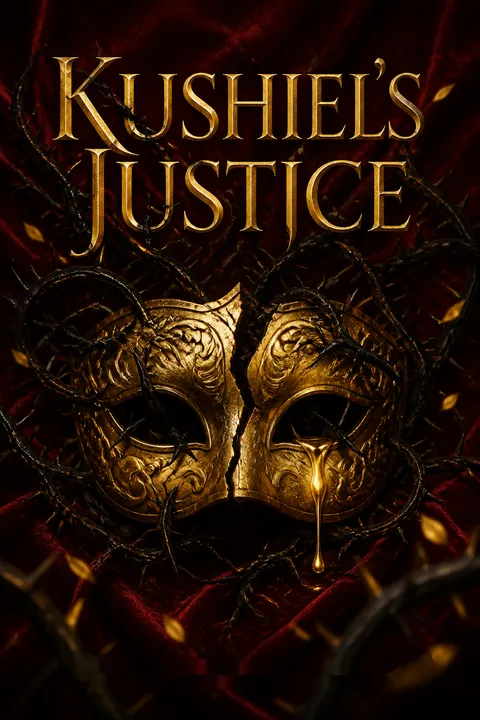


Plot Summary
A Mother's Letters
Home from the siege of Lucca, Prince Imriel reads the letters his mother, Melisande Shahrizai, sent for three years. Her account of loving him does not erase the treason that shaped his childhood, but it cracks his certainty that he was only a tool in her ambitions.
He also confronts Bernadette de Trevalion, who hired a killer in Tiberium to avenge her executed mother and brother. Imriel keeps the proof of her crime as leverage, but offers silence if she renounces vengeance. She agrees. In the Palace portrait hall, he studies his dead father and the veiled image of Melisande, feeling the weight of two legacies he did not choose.
The letters change Imriel’s understanding without absolving Melisande. He can recognize maternal love and still condemn the political violence that made his life a consequence of her ambitions. His bargain with Bernadette repeats that distinction in action: he refuses to inherit another generation’s revenge, but he does not pretend the injury never happened. The portraits make ancestry visible as a burden rather than a destiny. Imriel sees resemblance, history, and political danger, yet must decide what kind of person he will be.
Penance by Choice
Imriel asks to visit a temple of Kushiel, the god associated with punishment, despite Joscelin’s fear that the ritual will reopen memories of his enslavement. At the temple, masked priests bathe him, bind him to a post, and flog him until memories of Darsanga and the dead in Lucca overwhelm him.
He chooses to endure the blows, confesses remorse, and leaves feeling calmer because this pain was his decision. At the Queen’s modest welcome fête, he returns to court life and meets Morit, a Sabaean scholar whose people are reconsidering their beliefs. The gathering also reminds him that political intrigue, religious questions, and old wounds have all followed him home.
The temple does not cure trauma; it gives Imriel a limited form of agency inside it. His body remembers Darsanga, but the ritual differs because he consents and can stop it. That distinction matters to a character whose childhood trained him to experience pain as another person’s instrument. The fête then returns him to a world where power is less visible but no less active. Private recovery and public politics are not separate lives for Imriel; both demand that he interpret what has happened without allowing it to dictate every choice.
The Bear's Hidden People
As Imriel and Princess Alais study Alba with the bard Firdha, they learn the island’s histories, laws, and four recognized peoples. Firdha refuses to discuss the Maghuin Dhonn, the Brown Bear folk, though Alais remembers Drustan mentioning them. Imriel questions the Cruithne honor guard and learns that the Maghuin Dhonn are feared for old magic and blamed for sacrificing their guiding spirit.
A tale of a Tiberian bear that killed spectators, then seemed to contain a human body, deepens the mystery. Meanwhile, Imriel tests the Night Court’s pleasures and discovers that staged shame can awaken memories he does not want. He seeks Naamah’s blessing before continuing his exploration.
The Maghuin Dhonn first appear as an absence in the official story. Firdha’s refusal and the guards’ superstition show how a community can preserve order by excluding inconvenient history, but silence also makes fear easier to manipulate. Imriel’s questions resemble his broader struggle with inherited narratives: he has learned that the version of events accepted by a court is not necessarily the whole truth. His experiments in the Night Court add a personal parallel. He is trying to distinguish chosen desire from trauma’s involuntary echoes, just as he tries to separate fact from legend.
The Sun Princess's Kiss
At the Longest Night masque, Imriel dresses as the philosopher Diogenes, carrying a lamp that signals his awareness of the Unseen Guild. The Ephesian ambassador recognizes his Guild medallion, sharpening a secret political thread he cannot yet follow. More urgently, Sidonie appears as the Sun Princess, publicly asserting her place as heir.
After the ritual honors her, she and Imriel slip behind the stage mountain and kiss. Their attraction is no longer an embarrassing possibility but a mutual choice, dangerous because she is the Queen’s daughter and he is soon to marry into Alba. Imriel spends the rest of the night at Elua’s vigil with Joscelin, carrying the memory of the kiss into dawn.
The masquerade lets public symbols and private desire occupy the same room. Sidonie’s gold costume is a political claim to succession, while the hidden kiss exposes a wish neither can safely acknowledge. Imriel’s Guild token similarly turns knowledge into a visible signal, though its meaning remains uncertain. These parallel acts show how often the characters must communicate indirectly, through costume, gesture, and controlled appearances. Their secrecy may protect them for a time, but it also prepares the conditions for misunderstanding and danger.
A Year of Stolen Love
Imriel and Sidonie begin meeting secretly in Amarante’s rooms, and their physical closeness becomes a committed love neither can dismiss as a passing infatuation. He tells Sidonie what he endured in Darsanga; she listens without reducing him to a victim and meets his vulnerability with affection and appetite.
On her birthday, Mavros and Amarante help secure a night alone in Sidonie’s chambers, where she and Imriel bind themselves to a private intimacy and admit they love each other. They also understand that her inheritance and his promised marriage make a future together uncertain. Imriel chooses to leave for Alba rather than ask Sidonie to abandon her duties before either knows whether their feelings will endure.
The relationship’s intimacy is not a cure for Imriel’s past, but Sidonie’s response gives him a different experience of being known. She neither recoils from his history nor treats his trauma as a claim on her. Their love is made consequential by what they cannot yet choose: her political role and his obligation to Alba. The separation is therefore not a simple sacrifice for duty. It is an attempt to test whether love can survive distance without converting either person into a possession or a political weapon.
A Wedding He Cannot Want
Drustan arrives with Dorelei, the Alban princess Imriel has agreed to marry, and their D’Angeline ceremony proceeds while Imriel mourns the impending separation from Sidonie. He tries to be gentle with Dorelei, but their first night exposes how little they know one another.
When Eamonn returns from Skaldia with his wife Brigitta, he proposes a journey to visit his mother, the Lady of the Dalriada. The excursion offers Imriel a way out of court and a chance to fulfill a debt of honor. He, Dorelei, Phèdre, Joscelin, Eamonn, and Brigitta travel together. Imriel hopes distance will quiet his attachment to Sidonie and allow him to become a good husband.
Imriel’s marriage begins as a political solution, but the novel does not let that erase Dorelei’s personhood. His tenderness toward her is real even when his desire is elsewhere, and his failure to understand her is part of the harm he must confront. Eamonn’s return provides movement at a moment when Imriel feels trapped between incompatible duties. The journey is not yet an escape from responsibility; it is an attempt to discover whether a life built on duty can become emotionally honest.
The Piper in the Dark
At Innisclan, the Dalriadan household welcomes the travellers, but strange music and a woman’s laughter disturb Imriel’s sleep. He follows the summons outside and meets Morwen of the Maghuin Dhonn, who reveals that she used the seed he spilled on sacred ground to bind him through desire. She wants a child by him, claiming it could preserve a balance between old and new Alba.
Imriel resists by recalling the language of ill thoughts and deeds that helped him withstand his trauma, and Morwen withdraws. Conor, the Lady Grainne’s youngest son, then admits that a Maghuin Dhonn bard has approached him and may be his father. The household’s secrets are no longer safely buried.
Morwen turns Imriel’s inner life into a means of control. The charm exploits desire he already feels rather than inventing it, making its coercion difficult to separate from his own body. Imriel’s resistance depends on recognizing the difference between sensation and consent, a distinction learned through earlier trauma. Conor’s revelation widens the conflict beyond Imriel: the Maghuin Dhonn are not merely an external threat but a family history hidden within Alba’s ruling households.
Oaths Beneath the Stones
The Lady Grainne sends Imriel and Conor to Aodhan, a Dalriadan ollamh who confirms that Morwen’s charm can be contained but not destroyed. Aodhan ties red yarn around Imriel’s wrists and ankles and gives him a protective stone, muting the desire that could summon Morwen. Imriel then renews his marriage to Dorelei in an Alban rite, pledging himself to her for a year and a day.
The couple settle at Clunderry, where Dorelei becomes pregnant. They grow closer through shared work and honest conversations, though Imriel’s feelings for Sidonie remain sealed behind the charm. The protection offers peace, but it also divides him from his own emotional life.
Aodhan’s protection is not a neutral solution. It prevents Morwen from using Imriel’s desire, but it also blunts the very feelings that could guide his choices. The binding therefore resembles both a shield and a partial amputation. Dorelei’s pregnancy deepens the marriage’s stakes, while the year-and-a-day vow creates a clear limit and a chance for reconsideration. Their growing affection is modest but meaningful, built through daily care rather than the overwhelming passion Imriel associates with Sidonie.
Clunderry Wins Its Lord
At Clunderry, Imriel learns the estate’s work and its customs, while the villagers watch the unfamiliar D’Angeline lord for signs that he will impose his own ways. When a neighboring lord’s expected cattle raid threatens to define him as an unfit warrior, Imriel decides to raid Briclaedh first.
He leads Urist’s men into the pastures, fights off the defenders, and keeps the Bastard from being captured. The raid succeeds without anyone dying, and Imriel accepts the joke that Urist had let him face the danger largely alone. The village celebrates him, and his practical work on the estate begins to matter more than his foreign appearance.
Imriel earns belonging through action rather than ancestry. The cattle raid is absurd by his D’Angeline standards, yet he recognizes that authority in Alba depends on participating in shared customs. His choice to accept Urist’s risky test preserves the commander’s respect without escalating the encounter into a blood feud. The episode also marks a shift in Imriel’s self-conception: he is no longer merely enduring his assigned role but learning how to inhabit it on local terms.
His Father in the Snow
During Alba’s Feast of the Dead, Imriel joins the torchlit procession through the oak grove and standing stones. Along the path, he sees the spirit of his father, Benedicte, riding silently beside him before vanishing. The encounter makes Imriel reconsider the bitterness exile bred in Benedicte and resolve not to impose D’Angeline superiority on any child he might have.
At Clunderry, he and Dorelei build a shrine to Elua, while Alais begins to question her own betrothal to Talorcan and asks for more time to study her dreams. Drustan agrees to postpone their wedding. Imriel’s family life seems briefly settled, even as his bonds keep the future dim.
The dead do not provide Imriel with instructions; his father’s silent appearance leaves him to interpret the warning through his own fears. He sees how political exile can deform love into resentment, and he decides that a child’s mixed heritage must never become a reason for shame. Alais’s request also challenges the assumption that dynastic arrangements are inevitable. The scene links private grief to political inheritance, while the shrine gives Imriel a place to practice his faith without pretending it resolves his uncertainty.
A Future Bought with Blood
With Dorelei near childbirth, Morwen returns and offers to end the Maghuin Dhonn’s claim if Imriel will witness a vision. Firdha administers a severe oath of protection, and Imriel enters the ring of standing stones unarmed. Morwen cuts his protective yarn, gives him the hidden mannekin charm, and shares a ritual that opens his sight.
He sees a possible son grow into a ruler who wages war, appoints D’Angelines over Albans, hunts the Maghuin Dhonn, and destroys sacred groves and standing stones. The vision does not explain what made the boy cruel, but it reveals why the Maghuin Dhonn fear Imriel’s marriage and why they have tried to steer his fate.
The vision converts political anxiety into a personal nightmare. Imriel sees not an inevitable future but a possible one, and the distinction offers no comfort because he cannot identify the choices that would prevent it. The Maghuin Dhonn’s attempt to control the future is itself morally compromised: they use Imriel’s desire and expose Dorelei to danger while claiming to protect their people. The scene asks whether foresight produces wisdom or tempts its possessors to treat living people as pieces in a design.
The Bear at Clunderry
As Imriel leaves the stone circle, he realizes Morwen has withheld the full truth and rushes back toward Clunderry. At the same time, Leodan of Briclaedh launches a retaliatory cattle raid, drawing the garrison away from an open gate. A huge bear breaks into the estate.
Urist and the guards try to stop it, but the beast kills Uven and reaches the castle. Imriel charges it at the gate and is slashed from shoulder to hip. When he wakes, Dorelei and their unborn child are dead. Morwen has also died, while Berlik escapes. Imriel’s vision has become a present catastrophe, and his grief hardens into a vow to find Berlik.
The catastrophe is not a clean fulfillment of prophecy but a collision of human decisions and magical fear. The cattle raid leaves the gate vulnerable; the Maghuin Dhonn’s intervention has already fractured trust; Imriel’s attempt to protect his household places him directly in the bear’s path. Dorelei and the child die despite everyone’s intentions. The loss exposes the limits of both political planning and supernatural foresight: knowing danger exists does not guarantee the ability to prevent it.
The Widow's Last Wish
Imriel wakes in a temple in Bryn Gorrydum after ten days of fever and learns that Dorelei, their child, and Celeste are dead. Alais keeps him alive through his worst despair. Drustan asks him not to punish every Maghuin Dhonn for Berlik’s crime; Imriel instead claims the right to kill Berlik himself while pleading mercy for the innocent.
Urist reveals that he kept Morwen’s mannekin and, on Dorelei’s instruction, cuts Imriel’s protective bindings on D’Angeline soil. Dorelei had wanted him to return to Sidonie rather than let guilt consume him. Imriel accepts the charge, though he knows he must first finish the hunt.
Grief initially makes revenge seem like the only remaining purpose, but Dorelei’s final act prevents it from becoming Imriel’s entire identity. Her trust in Urist and her wish that Imriel be free are forms of care that continue after her death. Imriel’s distinction between Berlik and the wider Maghuin Dhonn also matters: he seeks accountability without endorsing collective punishment. His return to unbound emotion is painful, but it restores his capacity to choose rather than merely endure.
The Dauphine Defies Court
Back in Terre d’Ange, Imriel goes straight to Sidonie’s rooms, where they embrace before Queen Ysandre arrives and calls their love unacceptable. Imriel leaves rather than let grief turn the confrontation violent, and Sidonie follows him into the public hall, kissing him before the watching court.
Mavros offers the Shahrizai hunting manor as refuge, while Urist chooses to remain with Imriel and help pursue Berlik. Sidonie comes to the manor and hears the full account of the bindings, Dorelei’s death, and the vision of their possible son. She and Imriel take one night together, then he leaves to finish the hunt.
Sidonie’s public kiss transforms a private relationship into a political fact. Her act does not solve the conflict with Ysandre, but it refuses the fiction that Imriel’s love is a secret conspiracy. Their reunion is tender and intensely physical, yet neither mistakes it for a permanent resolution. Imriel leaves because Dorelei’s death still requires an answer. Love becomes a reason to return, not an excuse to abandon the dead or the living who depend on him.
The Road Turns North
Imriel, Urist, and a small Clunderry party follow Berlik’s trail through Azzalle and the Flatlands. At Maarten’s Crossing, Adelmar of the Frisii refuses to let them enter Skaldia without a substantial payment, then offers a faster route: two men may travel with a merchant caravan to Norstock and seek passage to Vralia.
Imriel chooses hope over waiting for a larger Alban delegation, taking Kinadius with him while the others remain behind. A Vralian ship carries them north, but a storm drives it onto a barren island. Urist breaks his thigh, and the stranded crew must salvage food, repair the vessel, and work together to survive.
The route north is a practical choice made under uncertainty, not a heroic shortcut. Adelmar’s refusal forces Imriel to accept that moral urgency does not automatically command political cooperation. The shipwreck then strips the expedition of status and resources. Imriel’s survival depends on ordinary labor and mutual reliance rather than noble birth or supernatural protection. The episode also makes the cost of his mission collective: Urist and the sailors suffer alongside him.
A Vralian Prisoner
After the crew repairs the ship, Imriel and Urist reach Vralgrad and meet Micah ben Ximon, the Yeshuite commander trained by Joscelin. Micah learns that they seek a pilgrim who killed Imriel’s wife, but warns that Tadeuz Vral protects anyone who adopts the faith. Imriel travels east, hoping to find Berlik among the pilgrims.
In Tarkov, a Tatar raid on a horse fair and Imriel’s old brand make him look like an accomplice. Imprisoned with the young raider Kebek, he escapes during a drunken feast and gives Kebek a chance to flee. Imriel reaches Miroslas, where the Rebbe confirms Berlik passed through and continued into the wilderness.
The Vralian journey complicates Imriel’s clean division between justice and mercy. He is mistaken for a spy because his body carries an old mark, then chooses to free Kebek despite the risk to himself. That kindness does not cancel the consequences of his actions, but it reveals a capacity to see a person beyond a category. The Rebbe’s shelter and advice likewise challenge Imriel to distinguish vengeance from justice, even while the hunt remains unfinished.
Berlik Beneath the Oak
After weeks searching the snowy wilderness, Imriel nearly gives up, but a bear’s appearance leads him to Berlik’s remote cabin. Berlik admits that he killed Dorelei to protect the Maghuin Dhonn from the future he foresaw, then explains that he fled in remorse and found comfort in the teachings of Yeshua.
He asks Imriel to kill him, believing his death can atone for the broken oath. Imriel does so with a single sword stroke, then builds a pyre and burns Berlik’s body. He keeps the skull for Dorelei’s grave. The act fulfills his vow but leaves him grieving rather than triumphant.
Berlik’s confession prevents the climax from becoming a simple defeat of evil. He acted to preserve his people, but his willingness to sacrifice Dorelei and her child makes that purpose impossible to excuse. His faith offers him consolation without undoing the harm. Imriel’s sword therefore serves several ends at once: punishment, mercy toward Berlik’s chosen death, and an acknowledgment that no explanation can restore the lives taken. The absence of triumph is the moral center of the encounter.
The Rebbe's Hard Bargain
Imriel returns to Miroslas carrying Berlik’s skull and tells Rebbe Avraham what happened. The Rebbe remains troubled by the killing but recognizes that Berlik sought his own end and that Imriel acted under the burden of grief. He asks Imriel to return to Tarkov and explain the deaths of the two guards, offering absolution but not erasing responsibility.
Imriel accepts. Meanwhile, Maslin and the Tarkovan riders catch up with him; Maslin admits he followed to help, despite knowing Sidonie’s love belongs elsewhere. Their uneasy rivalry shifts into a genuine friendship as they begin the return journey together.
The Rebbe refuses to let spiritual forgiveness function as a shortcut around civic accountability. Imriel may be absolved in one sense and still owe an explanation to the families and community harmed by his actions. Maslin’s arrival adds another form of reckoning. He does not stop feeling jealousy, but he acts beyond it, choosing to help the man he once resented. Their friendship grows not through a sudden reconciliation but through shared danger and honest admission.
Vralia's New Faith
At Tarkov, Imriel admits he killed the guards and accepts the Rebbe’s judgment; the captain forgives him in light of the Rebbe’s authority and Imriel’s account. In Vralgrad, Tadeuz Vral confronts him for lying about his purpose and killing men under Vralian rule.
Imriel answers that Berlik was not a pilgrim in the end and that he cannot submit his justice to Tadeuz’s religion. The Grand Prince grants clemency, but orders the matter kept quiet. Imriel and his companions witness a thousand prisoners take vows as Yeshuites, an uneasy spectacle of faith joined to political power. With the ice breaking, they prepare to leave for Alba.
Imriel’s return to Tarkov completes a moral obligation he could have avoided. He does not ask the Rebbe’s absolution to erase the guards’ deaths; he submits himself to judgment. Tadeuz’s clemency then contrasts mercy with coercive power, since the mass vows are both religious ceremony and settlement after defeat. Imriel can respect the hope of a new faith without overlooking the political force shaping it. The novel leaves that tension unresolved, as faith and rule remain entangled.
Home, With the Future Unsettled
In Alba, Imriel places Berlik’s skull beneath Dorelei’s grave while the assembled household mourns her and their lost child. He then travels with Sidonie and his family toward Terre d’Ange. At Pointe des Soeurs, he returns the golden ring Sidonie gave him as a pledge, and she welcomes him before the watching court.
The love between them is no longer secret, but Ysandre still opposes their union, and the political consequences remain unresolved. Imriel arrives home not as a healed man, but as one who has survived grief, accepted responsibility, and chosen to face the future beside the woman he loves.
The ending gives Imriel a homecoming, not a complete solution. Dorelei receives the burial and justice he promised, while Sidonie receives the ring that marks his return. Yet their love still stands against the Queen’s opposition and the history attached to Imriel’s name. The book closes with a chosen direction rather than guaranteed happiness. Imriel has stopped treating duty and desire as mutually exclusive, but he must now live with the political costs of bringing them together.
Analysis
Kushiel’s Justice makes the cost of a good intention visible. Imriel wants to be loyal, merciful, and useful, but each role can become a trap when he mistakes self-punishment for responsibility. His marriage to Dorelei is an act of public duty that develops into real affection; his love for Sidonie is private and initially treated as a danger to political order. The Maghuin Dhonn intensify this conflict by trying to manage the future through magic. Their fear of cultural erasure is credible, but their decision to control Imriel and Dorelei turns protection into violence. The book refuses to make that violence abstract: it ends in a gate left open, a family destroyed, and a man forced to live with the consequences.
The novel also places competing forms of faith beside one another without treating any as simple. Elua’s precept gives Imriel a language for chosen love, while Kushiel’s justice insists that actions have consequences. The traditions of Alba preserve knowledge through memory and ritual; the Yeshuite communities seek a homeland and debate what salvation requires. In Vralia, religious belief becomes entangled with state power, and Imriel recognizes the danger without claiming easy answers. He learns that neither oral history nor scripture can prevent human beings from misreading what they inherit.
Most importantly, grief does not make Imriel morally pure. He kills Berlik, then accepts responsibility for the guards who die because of his choices. His return to Sidonie does not cancel his love for Dorelei or make their losses worthwhile. It allows him to carry grief without letting it dictate every future decision. The final journey home is therefore a beginning rather than a resolution: Imriel and Sidonie must still face the Queen, the court, and the political history attached to his name. What changes is that they no longer mistake secrecy for virtue or duty for emotional absence.
Review Summary
Kushiel's Justice receives mostly positive reviews, with readers praising Carey's world-building, character development, and writing style. Many find Imriel's journey compelling, though some struggle with the pacing and romance elements. The book explores themes of love, duty, and vengeance. While some readers prefer the original trilogy, others find this installment equally engaging. Critics note excessive sexual content and predictable plot points. Overall, fans of the series appreciate the continuation of Imriel's story and the rich, immersive fantasy world.
People Also Read


Characters
Imriel de la Courcel
The divided princeImriel is the son of Melisande Shahrizai and Benedicte de la Courcel, raised by Phèdre and Joscelin after a childhood of enslavement and rescue. His many identities make him alert to how people use ancestry, loyalty, and reputation to define one another. He wants to be good, but his compassion often arrives tangled with guilt and impulsive courage. His emotional life is shaped by the tension between desire and duty, and by the knowledge that his choices can affect whole families and nations. He is not naturally a strategist, yet he learns to listen, take responsibility, and distinguish justice from revenge.
Sidonie de la Courcel
The guarded heirSidonie is the eldest daughter of Queen Ysandre and heir to Terre d’Ange. Publicly controlled and exacting, she has learned to protect her private feelings in a court that treats every gesture as political evidence. Her composure is not coldness so much as discipline: she knows that a future ruler cannot indulge every impulse. Imriel sees the humor, appetite, and fierce loyalty beneath that surface. She values love, but does not assume love cancels duty. Her central tension is how to remain her own person while carrying a crown’s expectations.
Phèdre nó Delaunay
The searching foster-motherPhèdre is Imriel’s foster-mother, a former courtesan and seeker of knowledge whose courage has repeatedly drawn her into political and spiritual danger. She loves Imriel with an alert, protective tenderness, but understands that protecting him cannot mean preventing him from living. Her intelligence is interpretive: she reads people, histories, and silences with unusual precision. She is also capable of being wrong, frightened, and emotionally overwhelmed. Her bond with Joscelin anchors her, while her curiosity keeps her engaged with questions that others would rather leave unanswered.
Joscelin Verreuil
The steadfast protectorJoscelin is a Cassiline warrior-priest and Phèdre’s beloved companion. He is disciplined, physically formidable, and protective without confusing protection with ownership. His history with Phèdre taught him that devotion may require accepting another person’s freedom, even when it causes pain. He trains Imriel in the sword and offers direct counsel, but knows that some lessons cannot be transferred secondhand. His dry humor often softens his severity. Beneath his martial reserve lies a man who has chosen love over the certainty and safety his order once promised.
Dorelei mab Breidaia
The honest Alban brideDorelei is a princess of Alba and niece to the Cruarch, raised in the traditions of the Cullach Gorrym. She is kind, observant, and more forthright than Imriel first realizes. Rather than pretending their political marriage is romantic, she asks him to treat her as a person and gives him room to become honest. She is skilled with a bow, attentive to her land, and shaped by a family tradition of meaningful dreams. Her warmth is neither naïveté nor submission; she can acknowledge difficult truths while still choosing tenderness.
Berlik
The sorrowful magicianBerlik is one of the Maghuin Dhonn, an ancient people whose magic and identity are bound to Alba’s wild places. He carries an immense sense of responsibility for his kin and a grave awareness of what cultural change can destroy. His presence is quiet rather than openly threatening, and his sadness complicates the fear he inspires. He believes that foreknowledge imposes obligations, a conviction that can turn care into control. His character embodies the danger of treating a possible future as permission to harm people in the present.
Morwen
The fate-binding witchMorwen is a Maghuin Dhonn magician who uses a charm made from Imriel’s own desire to bind him. She is curious, forceful, and convinced that her people face an existential threat. Her willingness to manipulate another person grows from fear, not simple cruelty, which makes her actions more troubling rather than less. Morwen sees futures as tangled possibilities and tries to force them into a safer shape. She reveals how protective motives can become coercive when a person trusts her own vision more than another person’s right to choose.
Urist
Clunderry's veteran commanderUrist commands the Cruithne garrison at Clunderry and has served Alba through war, loss, and political change. Blunt and practical, he judges a leader by conduct rather than bloodline. He tests Imriel through the cattle raid, then becomes one of his most dependable allies. Urist’s own history of having killed a traitorous brother gives him a sober understanding of guilt and loyalty. He is not sentimental, but his loyalty to Dorelei and Imriel is profound, expressed through difficult promises and steady action.
Alais de la Courcel
The dreaming younger princessAlais is Ysandre’s younger daughter and Imriel’s closest friend among the royal family. Warm, clever, and often underestimated, she feels out of place at the D’Angeline court but comes alive in Alba. Her capacity for true dreams makes her curious about the meanings and limits of knowledge. She loves both Sidonie and Imriel, though their bond can make her feel displaced. Alais is learning to distinguish her own ambitions from the interpretations others place on her visions, while imagining a future in which she may help shape Alba.
Drustan mab Necthana
The measured CruarchDrustan rules Alba and is married to Queen Ysandre, a union that helps sustain peace between their nations. He is an attentive father, a pragmatic leader, and a keeper of difficult balances. His respect for custom does not prevent him from recognizing that Alba must change, but he refuses to force change through repression. Drustan understands the political value of Imriel’s marriage while also treating Imriel as a person. His restraint is not indecision; it is an attempt to keep justice, law, and national survival from consuming one another.
Eamonn mac Grainne
Imriel's candid friendEamonn is a prince of the Dalriada and Imriel’s closest friend from their years together at Montrève. Loud, affectionate, and adventurous, he often speaks before he has considered the consequences, but his loyalty is dependable. His pursuit of Brigitta through Skaldia shows the stubborn romantic courage he recognizes in Imriel. Eamonn also thinks practically when it matters, helping create the journey that brings Imriel into Alba’s wider family. His easy manner makes him a counterweight to Imriel’s tendency to brood.
Mavros Shahrizai
The teasing Shahrizai cousinMavros is Imriel’s Shahrizai cousin, a charming and irreverent man who enjoys pleasure and games of power. His teasing can be sharp, but beneath it lies a strong loyalty to family. Mavros helps Imriel navigate the Night Court and later offers him refuge when court politics turn dangerous. He understands that desire and discretion are often intertwined, and he is more perceptive than his languid manner suggests. His support shows that family loyalty can be chosen and practiced, not merely inherited.
Maslin de Lombelon
The proud rivalMaslin is the unacknowledged son of the late Isidore d’Aiglemort and the heir to a small estate Imriel once gave him. Proud, ambitious, and skilled with a sword, he resents being treated as a beneficiary rather than an equal. His feelings for Sidonie intensify his rivalry with Imriel, while his sense of honor complicates his resentment. Maslin wants recognition and a place he has earned himself. He is capable of harshness, but not merely cruel; his struggles arise from the wound of being overlooked and from the difficulty of separating love from possession.
Hyacinthe
The Master of the StraitsHyacinthe is a Tsingano seer and the powerful Master of the Straits, whose control of wind and water protects Alba. Once a lively childhood friend of Phèdre, he bears the burden of a supernatural office that has cost him years of ordinary life. His marriage to Sibeal and care for their children reveal a domestic tenderness beneath his formidable authority. Hyacinthe’s sea-mirror lets him observe distant events, but its limits remind him that knowledge is never complete.
Firdha
The formidable ollamhFirdha is a senior Alban bard and teacher, entrusted with passing down law, history, and dream lore through memory. She insists on the dignity of the old traditions and initially refuses to speak of the Maghuin Dhonn. Her reserve comes from fear of violating sacred knowledge as much as from prejudice. Firdha is demanding with Alais and Imriel, but she wants them to understand the responsibilities attached to their place in Alba.
Aodhan
The hermit protecting ImrielAodhan is a Dalriadan ollamh who lives simply in a cave, tending herbs and fishing the streams. He has long experience with the Old Ones and understands the risks of their magic. His protection for Imriel comes with a price: it suppresses the desire Morwen has bound. Aodhan is plainspoken and impatient with ceremony, but his knowledge is careful rather than showy. He also encourages Conor to face his unusual heritage.
Micah ben Ximon
Vralia's Yeshuite commanderMicah ben Ximon is a skilled warrior and commander who helped establish Tadeuz Vral’s rule in Vralia. Joscelin taught him the Cassiline fighting style when he was young, and its discipline remains part of his identity. Micah believes in Yeshua, but he questions how political authority is reshaping that faith. He aids Imriel cautiously, balancing personal compassion against his obligations to the Grand Prince and the thousands who depend on his leadership.
Avraham ben David
The searching RebbeAvraham ben David leads the quiet community of Miroslas, where people come to study, pray, and think. He offers Berlik a refuge but does not simply endorse his choices. Avraham wrestles with the tension between forgiveness and justice, and with the uncertain future of Yeshuite belief in Vralia. His counsel urges Imriel to accept responsibility without pretending that mercy erases consequences.
Tadeuz Vral
Vralia's believing rulerTadeuz Vral rules a new kingdom in the name of Yeshua and sees himself as an instrument of divine purpose. He is ambitious, energetic, and capable of personal warmth, but his confidence in prophecy can turn political decisions into tests of faith. Tadeuz seeks to unite Vralia under one authority while shaping the religious identity of its people. His rule raises questions about whether spiritual hope can remain freely chosen once it is backed by an army.
Adelmar of the Frisii
The calculating border lordAdelmar rules a strategically placed part of the Flatlands and prefers trade to the glory of war. Having witnessed the devastation of conflict, he builds influence through routes, agreements, and careful bargains. His aid is never wholly disinterested, but he understands that stable commerce can protect smaller peoples better than military ambition. Adelmar’s decisions shape Imriel’s route into Vralia without making him either a simple ally or an enemy.
Melisande Shahrizai
The absent strategistMelisande is Imriel’s mother, a brilliant political player whose choices helped bring war and treason to Terre d’Ange. She is beautiful, perceptive, and driven by an appetite for power, but her feelings for her son are more complicated than her reputation suggests. Her letters force Imriel to confront the possibility that love and destructive ambition can coexist. She remains absent from his life, yet her legacy continues to shape how others judge him.
Plot Devices
Melisande's letters
A mother's hidden truthThe letters Melisande wrote over three years give Imriel a private account of his birth, her ambitions, and her love for him. They do not erase her crimes, but they disrupt his belief that he was merely a political instrument. The letters also keep her psychologically present despite her physical absence, influencing how Imriel thinks about parenthood, betrayal, and inherited character. Their effect is not revelation alone: they make forgiveness possible without making it compulsory.
The Unseen Guild
A hidden political networkThe Guild is signaled through a lamp emblem, a notched medallion, secret tactile writing, and the reactions of people such as the Ephesian ambassador. Imriel refuses recruitment but shares what he learns with Phèdre, who recognizes that the organization may have allies and rivalries across nations. The Guild connects the novel’s intimate story to a larger contest of influence, and its secrecy makes even ordinary meetings feel politically charged. Its wider purpose remains unresolved in this volume.
The mannekin charm
Desire turned into a leashMorwen shapes a charm from Imriel’s spilled seed and Alban soil, then uses it to bind him through his own desire. The magic can summon and influence him, while Aodhan’s yarn and croonie-stone restrain its effects by suppressing his feelings. The device makes a private emotional conflict physically dangerous and gives the Maghuin Dhonn leverage over Imriel’s choices. Its destruction and the removal of the protective bindings force him to face his feelings without magical interference.
The protective bindings
Safety at emotional costAodhan ties red yarn around Imriel’s wrists and ankles and gives him a pierced protective stone to block Morwen’s charm. The wards make him safer, but they also dull his emotions and complicate his relationship with Dorelei. Their state becomes a practical measure of danger: when a strand breaks, Morwen can summon him again. The bindings embody the book’s central problem of protection that restricts agency, and their later removal restores Imriel’s capacity to feel both love and grief.
Dreams and the sea-mirror
Glimpses, never certaintiesAlais and Dorelei receive fragmentary dreams, while Hyacinthe’s sea-mirror reveals distant scenes and possible futures. These forms of knowledge provide warnings but not clear instructions. Morwen and Berlik treat visions as grounds for intervention, with disastrous results; Alais gradually learns that a dream must be interpreted cautiously rather than forced into the shape of personal desire. The device tests the difference between foresight and control, showing that glimpsing a possibility does not grant mastery over it.
Kushiel's Universe Series
About the Author
Other books by Jacqueline Carey
Download PDF
Download EPUB
.epub digital book format is ideal for reading ebooks on phones, tablets, and e-readers.








